• Skip to primary navigation
  • Skip to main content
Danny Brown

Danny Brown

podcaster - author - creator

  • About
  • Podcasts
  • Journal

Latest posts from Danny Brown

Enjoy the latest posts from Danny Brown, and feel free to add your own thoughts in the comments after the post.

Global Survey Shows Influence Marketing Seen as Lead Generation Tool, Not a Branding Exercise

Robots replacing humans

Mention “influence marketing” today and it’s a good bet that the majority of people will think of social scoring platforms like Klout, Kred and PeerIndex.

These early movers in the influence space have carved a niche for themselves and the brands they’re looking to work with, by attempting to provide data on who the most influential online users are.

By connecting brands with these online influencers, the hope is that brand’s message will be amplified to the Nth degree and more awareness around the brand will ensue.

However, a new report based on a global survey of 1,3000 marketers, PR professionals and brand managers/agencies highlights brand awareness as being less of a goal when it comes to influence marketing.

Instead, lead generation and customer acquisition are much more important, and where brands are allocating their budgets in the next 12 months and beyond.

The report also shows that social scoring platforms lack trust and authority when it comes to the very people these platforms are looking to work with.

Brand Awareness Alone Doesn’t Pay the Bills

There are a few key insights that the report provides, from how influence marketing is perceived today to how effective those using influence marketing as part of their overall strategy perceive today’s more popular platforms.

However, it’s the fact that influence marketing is seen as a lead generation and customer acquisition tool that stands out.

It also lends weight to why scoring platforms like Klout, etc, come under fire for the lack of results (perceived or actual) when used as the influence marketing tool of choice.
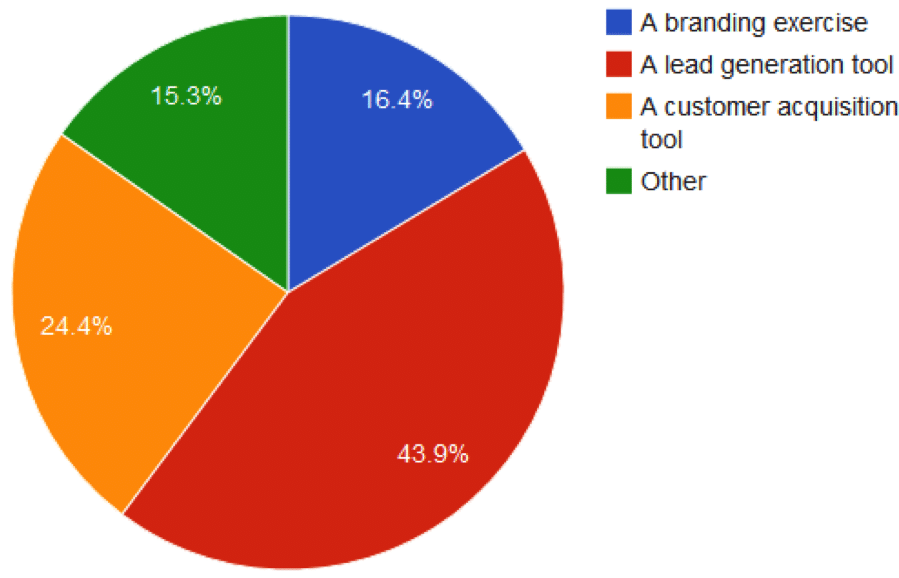
influence leads

As shown by the image above, almost 44% of respondents see influence marketing as a lead generation tool, with almost 25% seeing it as a customer acquisition tool. Just over 16% see it as a branding exercise.

With social scoring platforms like Klout (currently) not sharing the kind of measurement that shows what leads and customer acquisition their client promotions have resulted in, it leads to another concern for marketers – how effective are these platforms?

influence effect

This is reflected in the survey responses, with more than half feeling today’s scoring platforms aren’t effective at identification of the type of influencers that can drive leads and customer acquisition goals.

Additionally, more than one fifth felt the results were too varied, with only 5% of respondents believing today’s scoring approach to influence were effective for their goals when starting a campaign.

While not every influence marketing campaign needs to drive sales all the time, the fact of the matter is brand awareness doesn’t pay the bills nor drive profit.

Blog posts and social shares are nice to have for social proof, but businesses are placing success metrics on the financial and customer return influence marketing campaigns drive, not X amount of social network updates.

Social Scoring May Be Waning But True Influence Marketing is Just Beginning

While the report shows there’s a clear gap between what PR/marketers see as the strategy and the results generated by scoring tools, it also shows that they clearly differentiate between “social scoring influence” and “influence marketing”.
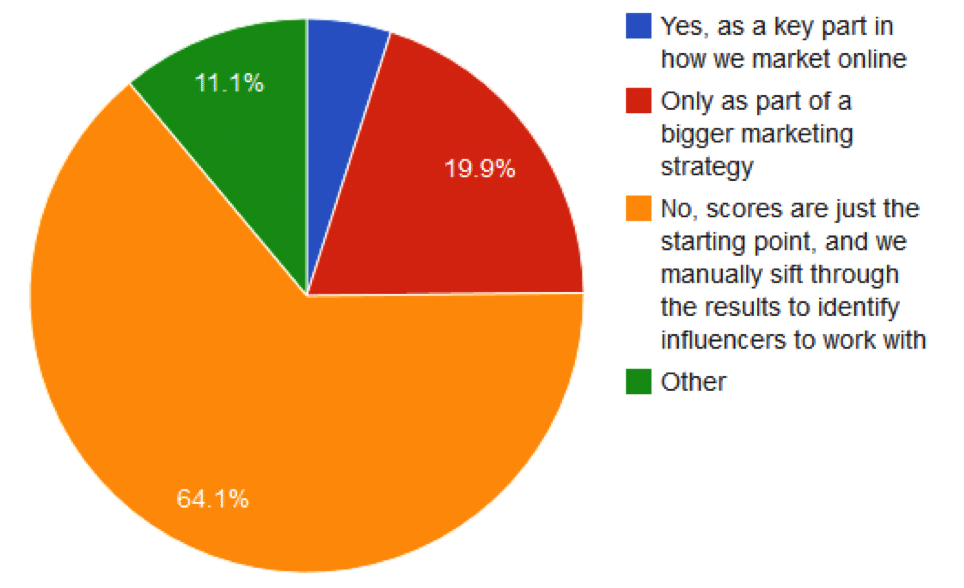
influence difference

As the above figure shows, almost 2/3 of all respondents identify social scores as simply a starting point in their campaign – they still see the need to filter through the results manually and filter the most relevant influencers.

Additionally, almost 20% use scoring as part of a bigger marketing strategy and not as a standalone tool. Less than 5% use scoring as a key part of their overall strategies and tactics.

This ties in perfectly to further data from the report, when discussing how whether they’ll be using influence marketing, and how much of their marketing budgets are being allocated for the next 12 months and beyond.

influence marketing allocation

According to the report, almost half – 44.1% – will be creating an influence marketing campaign in the next 12 months, with just over 30% indicating the likelihood of using influence marketing as part of an integrated strategy.

When it comes to actual budgets, however, there’s a clear gap between how much will be allocated to “social scoring” and how much will be allocated to actual “influence marketing”.

influence scoring use

The figure above represents how many respondents will use social scoring as part of their influencer outreach. Almost two thirds say it’s unlikely, as the methodology is not seen as a valid identification/measurement tool.

Just over one fifth will use scoring, but only as part of a bigger strategy, while less than 9% are sold on scoring as a key part in the influence marketing arsenal.

The Future of Influence Marketing

The full report makes for some pretty interesting reading overall, but it’s the takeaways shared in this post that I find to be particularly illuminating.

While I’ve personally questioned the value of social scoring when it comes to true influence versus online popularity and amplification, it’s been seen from a biased bubble, if you like.

The survey carried out by Sensei Inc. and ArCompany was open to anyone to complete, although they had to be representative of marketing, PR and communications disciplines.

Over 1,300 respondents from across the globe represented a good mix of professions and business functions. In fact, business-to-business (B2B) was serviced just as much as business-to-consumer (B2C) markets – another interesting statistic, given social media’s penchant to be more acceptable in the B2C market.

Because of this mix, the results took me completely by surprise when it came to how scoring was perceived by the very professionals and verticals these platforms are hoping to sell their services too.

Yet perhaps I shouldn’t have been as surprised.

As both Sam Fiorella and I have found, in numerous interviews and research for our imminent Influence Marketing book, we’re moving beyond today’s approach of amplified distribution when it comes to influence, and into true, measurable and actionable data, metrics and identification of true influence.

While scoring may continue to be popular when it comes to consumer awareness and where people stand with their score on these platforms, the business decision-makers are looking for more tangible results.

That bodes well for the future of influence, and for businesses working in this space.

Here’s to the next wave.

You can access the full report here.

The Sunday Share – Creating Super Sticky Content

sticky content

As a business resource,?Slideshare?stands pretty much head and shoulders above most other content platforms.

From presentations to educational content and more, you can find information and curated media on pretty much any topic you have an interest in.

As a research solution, Slideshare offers analysis from some of the smartest minds on the web across all verticals. These include standard presentations, videos, multimedia and more.

Which brings us to this week?s Sunday Share.

Every week, I?ll be sharing a presentation that catches my eye and where I feel you might be interested in the information inside. These will range from business to content to social media to marketing and more.

This week, an excellent and punchy little Slideshare from Katherine Drew and Justine Webse?of content marketing specialists Most contentious.

With the social web becoming ever more convoluted and noisy, attracting an audience to you and/or your brand’s content is becoming more difficult.

This presentation offers Katherine?s insights into what it takes to make your content sticky.

Enjoy.

Social Media Doesn’t Create a Crisis – Companies Do

If you type the term “social media crisis” into Google, you’ll receive about 1.7 million results. Remove the quotation marks, and you’ll get almost 700 million results.

Social media consultants will point to the likes of Motrin, Chick-Fil-A, Applebee’s, Kenneth Cole, United Airlines and others like them as examples of a social media crisis, where a business has come under heavy fire online on their own social channels, as well as blog posts and social updates elsewhere.

While it’s true that social media amplifies a crisis when it happens, it doesn’t actually create the crisis – the company does.

Social Media Crisis or a Crisis on Social Media?

Over the last few days, two more companies have found themselves the target of online unrest and extremely vocal criticism of their business practices.

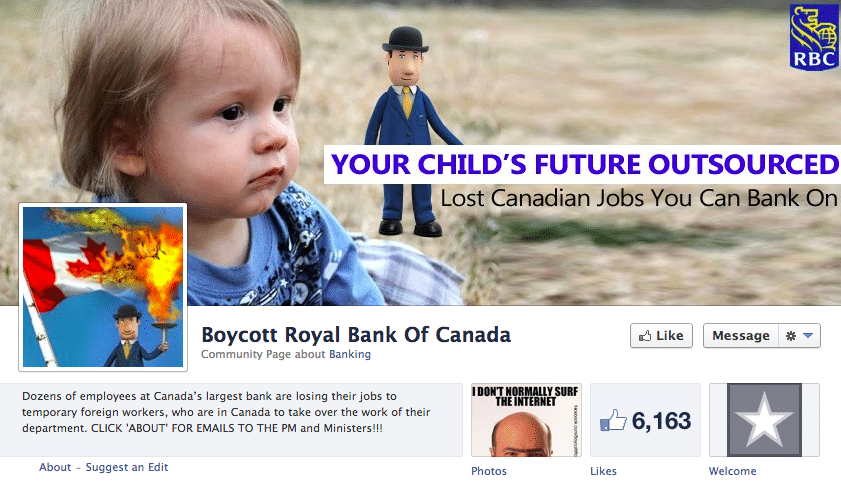
The Royal Bank of Canada – RBC – is currently facing a firestorm of vitriol surrounding media reports that they’re laying off full-time employed Canadian workers and replacing them with temporary workers from abroad.

This is counter to a Canadian government Temporary Foreign Worker Program that only allows such workers to be used if there are no suitable Canadians. As someone who kind of went through this process when I moved to Canada, I understand why they have it in place.

According to the media reports, RBC is bypassing this program by using an outsourced company based in the U.S. to hire temporary workers, and then have the current full-time workers train the temporary staff to replace them.

The response on social media has been swift and forceful.

Boycott Royal Bank Of Canada

On Facebook, a “Boycott Royal Bank of Canada” page went up and has (at the time of writing) garnered more than 6,000 likes in less than 24 hours.

The page shares links to articles on how this situation arose, other related content in the provincial government’s part, and stories from current customers looking to close their accounts.

RBC, for their part, issued a statement on their Facebook page, but unfortunately that fuelled the flames even more (click to expand).

RBC Facebook page

It’s not just RBC that’s under fire today. Fellow Canadian company Hootsuite, developers of one of the leading social dashboard’s, is facing criticism for using unpaid interns.

In a recent “job listing” on their careers page, Hootsuite offered the following:

Note this position is a three month internship at present with a commitment of Monday to Friday with core hours of 9 a.m. -5 p.m. and that the role is unpaid.

The word “internship” divides a lot of business owners, as well as potential interns. In the past, internships were mostly unpaid – the applicant would normally be a college student looking for work experience, and for that experience they would provide free labour to the business that “employed” them.

However, in recent years, unpaid internships have become a hot topic of debate, with calls for them to be abolished and students paid accordingly.

In Hootsuite’s case, where the main outcry has gained even more steam is that it’s illegal in the Canadian province where Hootsuite are based to not pay for the work the interns would be doing.

The British Columbia Employment Standards Act states:

…employees must be paid at least the minimum wage (currently $10.25 per hour), and an intern performing duties and responsibilities that would normally be assigned to an employee must be paid the same wages and benefits that an employee would collect.

The key point from that statement is “…performing duties and responsibilities that would normally be assigned to an employee…”.

Since the original internship ad was for positions covering “affiliate marketing”, “strategic accounts analyst” and “social media coach”, it’s a pretty safe bet to assume these would normally be handled by full-time employees.

While Hootsuite has since removed the ad, and their CEO responded to the criticism that the process is “under review”, their social channels are pretty quiet, particularly Facebook where questions are being asked.

Hootsuite Facebook criticism 1


Hootsuite Facebook criticism 2

It’s not that these questions have simply been missed – Hootsuite is still answering questions on Facebook, but they’re just skewed towards non-negative ones.

Hootsuite Facebook positive response

The two examples above, and the ones from the introduction of this post, are core reasons why it’s not social media that causes a crisis, but the actions of a business.

Business Practices Are What Cause Outrage

While social media is the perfect channel for amplification of criticism and the kind of outcry we’re seeing here, it’s not the instigating channel.

Instead, that lay with the executive decision at RBC and the hiring policy of Hootsuite. Both of these decisions are made offline.

The fact they’ve now made their way online and are evoking such vocal condemnation – more so with RBC – is a perfect example of how social communications may have changed the way we do business, but the underlying business practice is the one that still defines a company’s perception.

My friend, and super smart communications professional, Ann Marie van den Hurk offers some insightful thoughts. Ann Marie is Principal of Mind the Gap Public Relations, as well as author of upcoming book?Social Media Crisis Communications: Preparing for, Preventing, and Surviving a Public Relations #FAIL.

Business practices are what cause outrage against companies. Outrage is outrage, regardless of where it starts. It could start online or offline and then move to social media and spread. It doesn?t matter. It is real either way. It is the business practices and then their response to customers’ concerns and anger. Or, in this case, lack of response to the outrage.

As shown by the lack of response (so far) on both RBC and Hootsuite’s Facebook pages, silence from a brand can do more damage than interaction. The ease of social media in enabling people to vent their frustrations – and vent even more if/when these frustrations are unanswered – can make life pretty uncomfortable for brands caught in this kind of crossfire.

Social media is a perfect tool for outrage exasperation. It is a better tool than any other channels for spreading outrage. People are more linked. The cost of access is very low. People who were angry at an organization or a situation before social media had limited options. Instead of shrugging it off and throwing up their hands, the outraged can now use those same hands to take to social media, expressing themselves and organize with like-minded individuals.

This is the new battlefield brands continue to find themselves in today. Some are better prepared for it; others, less so.

While both RBC and Hootsuite have posted official “responses” on either their own Facebook pages or to specific media channels, the bigger bulk of the questions being asked – from individuals – are being left unanswered.

In Hootsuite’s case, answering “positive” questions while bypassing critical ones during the same time phase could be seen as avoiding the issue, despite the communication from Hootsuite elsewhere.

Organizations are slowly getting more sensitive to outrage and are putting a higher priority on dealing with it; however organizations aren?t moving that the same speed as those outraged. The open, interactive attitudes of social media and the traditional business culture aren?t exactly well matched. Most organization?s management teams have not been able to keep pace with the explosion of social media usage and are ill equipped to manage community outrage.

As Ann Marie points out so eloquently in all three quotes above, social media is a challenging space when it comes to crisis communications.

It can be a very fine line to tread – when do we respond, who do we respond to, and should we respond or will be be flaming the fire even more?

In some cases, there really is no victory to be had by the brand, regardless of how well they respond, which doesn’t help matters.

One thing we can learn, though, is social media will continue to be the torch bearer to hold companies to task. Perhaps the lesson is to look internally first and improve the business practice (perceived or real), before the external voices react to the internal actions.

Time will tell.

Note – my sincere thanks to Ann Marie for her time and sharing her expertise.

Why You Need to Go Beyond Just Local Search

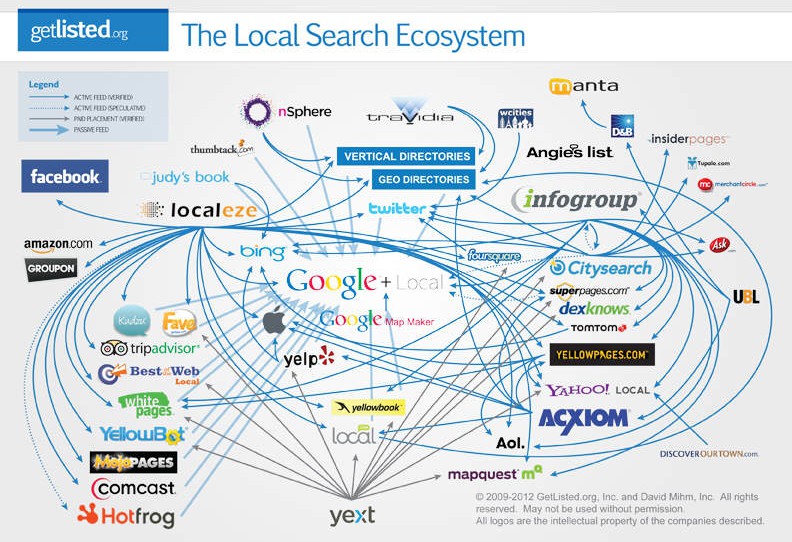
Local search ecosystem

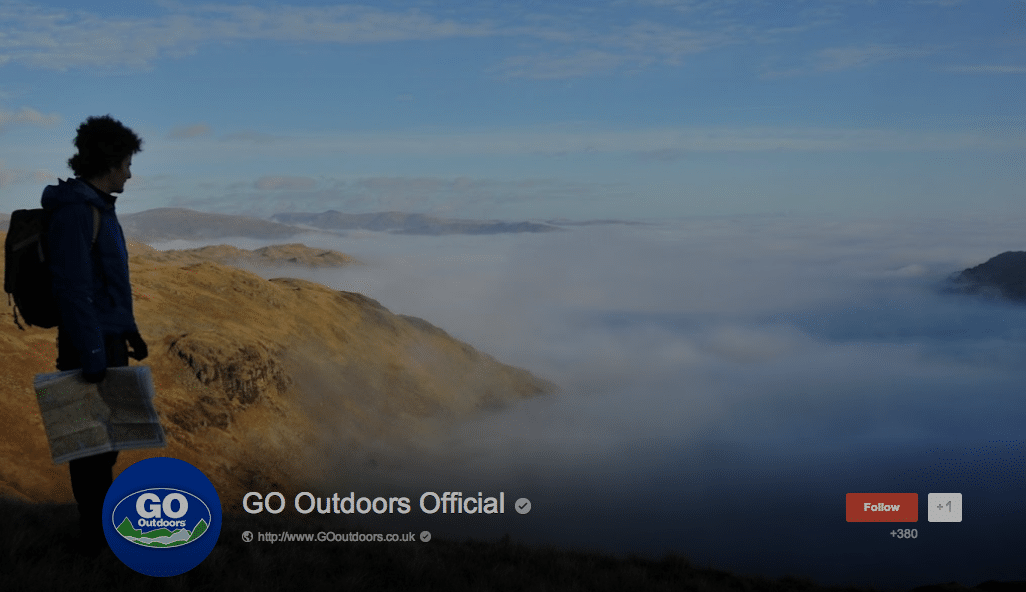
GO Outdoors Official Google +

This is a guest post by Adam Smith.

Like many things on the internet, Local Search has always existed – long before Google, Google Maps or Google+ Local.

In this article I?m going to explain how you can increase your company?s exposure through Local Search, with examples from current client Technojobs to past clients including GO Outdoors and Mothercare.

I?ll also cover how to the work involved and potential rewards, how to estimate where you’ll appear, how much traffic Google Keyword Tool says you’ll get, how much traffic you’ll actually get and to not just focus on towns and cities, but counties too.

Local Search as it was

In the dawn of time (well, the start of the internet), there was no Google Maps and the concept of Local Search hadn?t been dreamt up yet.

But you had major retailers, like Mothercare for example, who had stores in every major town, city and shopping centre throughout the UK.

So to help their customers find their stores, they created Store Finders on their websites, which in turn created a page for every single one of their stores.

It was still early days and SEO was virtually unheard of. So none of these pages were optimised beyond having ?Brand Name + Town Name? as their Title Tag. They were purely there for usability.

In fact, these pages haven?t changed since then.

However, they ranked top whenever someone typed ?Mothercare Edinburgh? into Yahoo, Lycos or any other search engine.

Understandably, these Store Finder pages still rank top for these brand related search terms today.

Local Search as it is now

In recent years Local Search has become more complicated with Web Pages, Google+ Local results and Google Maps embedded in the SERPs.

So while there is a tendency for marketing professionals to focus their Local Search efforts on Google+ Local pages, this is only a small piece of Local Search, because where the Web Pages, Google+ Local results and Google Maps actually appear in a Local SERP (if at all) tends to vary from search term to search term.

So why not create a strategy to optimise all of it and increase your exposure?

Linking your Local Search pages

When I worked on GO Outdoors, they were in a similar position to Mothercare, with lots of Store Finder pages, but no Google+ Local pages.

GO Outdoors Official Google +

So I set about creating all of the Google+ Local pages (filling out all the fields, including the correct categories and cramming as many relevant keywords into the on page description as possible!) and then linked each and every one of them to their relevant Store Finder pages.

The Store Finder pages were then made to be as beautiful and user friendly as possible with loads of big bright photos and lovely content to entice people to visit the stores ? which is the most important part of the business model for GO Outdoors.

It sounds simple, but you?d be surprised how many businesses still haven?t done it. Or how many businesses have linked all of their Google+ Local pages back to their home page *cough*Next*cough*.

This really baffles me, because Local Search is a very specific user action. Users are actively searching for a page relevant to their location, not a company home page (unless your business only has one location). Otherwise you?d be putting your customers all the way back to the start of their search journey. Now there?s a cue for search abandonment if ever there was one.

Obviously, we don?t want to do that.

Non Brand Search

Because GO Outdoors is such a big, powerful website it was very easy to rank in Local Search for a variety of terms without any Title Tag optimisation, for example:

“camping shop” “town name” / “outdoor shop” “town name”

Instead, Google seemed to rank the Store Finder pages based on keywords highlighted from the on page content and/or Meta Description, which was interesting. There?s also a high volume of long tail traffic around each of the pages as a result.

The same could be said for county related Local Searches:

“camping shop” “county name” / “outdoor shop” “county name”

But if Google wasn?t ranking their Store Finder pages in this way, or GO Outdoors wasn?t such a monster of a website, I could have gone even further and included more keywords in the Title Tags of their Store Finder pages.

For example: ?GO Outdoors Basildon? could be changed to ?GO Outdoors Camping Shop in Basildon Essex?.

This would help the page to rank for a variety of Local Search terms that include “camping shop”, “town name”, “outdoor shop” and “county name”.

For the rest, your store needs to be close to the centre of your location, have links, reviews and a number of other things summarised below.

Google+ Local Best Practice Guidelines

Setting Up

  • Lots of locations can be a gradual and time consuming process
  • Login/set up using Google Account
  • Bulk upload form for multiple stores
  • Fill out all fields for maximum exposure
  • May need to manually place Map Pointer for each store
  • Store photos should also be added to aid visibility after set up
  • Some fields can only be filled out after initial set up
  • Listings will not appear publicly until they are confirmed

Confirmation

  • Every Google+ Local listing requires confirmation from its specific location
  • This can be a telephone confirmation or postal confirmation
  • However, listings manually approved by Google can be extremely slow to action
  • Any changes (like uploading photos) will put the listing status back to Pending Approval

Ranking Factors

  • Optimisation of keywords for local search terms in title and description
  • Optimisation of categories
  • Include location related keywords. Eg: ?Brand? ?Shop Type? ?Village/Town/City? ?County??
  • Look at Mobile Search results in Google Analytics to get more location related search ideas
  • Physical distance from city centre
  • 5 or more Google reviews.
  • Links!

Link Building

  • Regular anchor text link building to Google+ Local results page
  • Review Sites reviews: Google scrapes info from leading review sites
  • Examples: reviewcentre.com, trustpilot.co.uk, shopsafe.co.uk, idealo.co.uk
  • Google+ Local reviews placed by users with Google Accounts

Reporting

  • Google+ Local dashboard shows Impressions and Actions for each listing for 30 days
  • Google+ Local dashboard also shows status of each listing

Google Location Advertising

  • Companies can pay for their stores to be displayed in the Google AdWords results
  • This appears as a blue pointer in Google Maps

Local search for non-physical businesses

Here at Technojobs we have a London office, so our home page ranks for IT jobs London. But we also display thousands of jobs across the UK with the majority of permanent jobs in the IT industry based in London, Bristol and Manchester.

In this niche Local Search isn?t for a physical location. It?s for a specific type of IT job in a location. So everyone is creating pages for all the different types of jobs in major towns, cities and counties.

However, Google is starting to include Google+ Local results and Google Maps in the SERPs for ?IT Jobs? + ?Major City? Local Search terms.

Because Technojobs is a jobs board, we only have 1 physical location, so there?s a chance that the jobs boards could lose out to recruitment agencies with physical locations in the major towns and cities nationwide.

But are these physical locations really relevant to the intentions of users? searches?

Probably not.

But it?s something to be aware of for anyone whose business receives Local Search traffic without the need for a physical location to visit.

In the meantime I have a lot of link building to do, because our website isn?t one of the strongest, which means it isn?t going to rank itself like GO Outdoors did.

Forecasting the Impact of Local Search

If you?re trying to pitch a Local Search strategy to your boss or client, they will want to know the ROI for the amount of work involved.

You can start by planning out the search terms you intend to rank for, then put them all into Google Keyword Tool.

Google keyword tool

Go through the first page of results for each search term and estimate where your Store Finder Page will rank based on the overall strength of your website. It?s also worth checking your Google Analytics to see how much traffic you get for Local Searches already, which will help you get a better ?feel? for this.

As you go through the first page of results for each search term, also estimate where your Google+ Local Page will appear if Local Listings are appearing. This can also be based on the overall strength of your website, as well as the location of your business in relation to the centre of town.

Next, search online for the most recent Click Through Rates for each position in the SERPs.

Calculate how much traffic you expect to get for each search term based on estimated rankings, traffic and CTRs. Then apply a very big pinch of salt to manage expectations.

Once again, compare to any existing Local Search rankings and traffic in your Google Analytics so you?ve got something based in reality as a guideline for these measurements.

Authorship Markup, Geo Location, Personalisation other Google things

Local and social search are really big topics, and while I would love to dig deeper, we can only scratch the surface at this stage, because it?s all so new.

But, we can make some assumptions based on what we know!

Authorship Markup

We know that Google+ Author Markup is about giving authority to a Google+ Profile that posts and gets links back from niche specific content.

So does this mean that a highly successful Google+ Profile of a food critic could Review your restaurant and leave a 4 Star review on the restaurant?s Google+ Local page and it would benefit that page greater than a good review from the average joe?

Let?s break this down another way into basic link building and relevancy to a Google+ page from lots of other pages.

You have a page that has 1,000 links from high Page Rank websites in the motorsports niche. Any links from that page with 1,000 links will have a lot of authority (and relevancy) if they point to a web page that?s motorsports related.

The page with 1,000 links just happens to be a Google+ Profile page. That?s the only difference.

What does it mean for your Google+ Local or Store Finder page? Basically that these are the kinds of people you?d really like links from? *ahem* I mean, to invite to your restaurant, motorsports event or in-store promotion. Especially if they?re local to your location.

Which brings me on to?

Geo Location and Personalisation

We all know that if you?re logged into your Google Account, you?ll see personalised search results in the SERPs based on your user behaviour and the user behaviour of your connections.

The same goes for Local Search results. And you?ll see if your friends have +1?d a restaurant or other website you?re seeing in your results.

So that?s an obvious benefit for online marketeers to promote their business to prominent bloggers, community leaders and other Linkerati.

But there?s also Geo Location to consider. If you open a Google Incognito Window in your browser and make a generic search, like ?Toy Shop? for example, you will see different results based on your location. This is partly caused by personalisation.

Geolocation mapping

Rand Fishkin over at SeoMoz was explaining how at one conference he got everyone in the room to change their web browser location to the city they were in at that moment and then to make a specific search and click on a specific result.

Due to the sheer number of people searching in that location and choosing a particular result, it was promoted higher in the rankings for searching in that Geo Location the next day.

Scary stuff!

Similarly, insurance brand More Than have a TV advert where a marching band decked in the brand’s colours, accompanied by a giant teapot arrives in St Albans in Hertfordshire.

Now in theory (this is very unlikely, but bear with me), More Than could have used their analytics to identify St Albans as an affluent hot spot for their business where a high volume of insurance related searches are made.

And what better way to appear socially, geo-locally and search enginely than a marketing campaign targeted at St Albans to give their brand association with that hot spot of their prime target audience?

That?s the theory anyway.

Summary

Obviously the impact of Local Search is proportional to the reach of your business.

If you?re a nationwide retailer, you?ve got a lot of search terms to chase after. But if you?re teaching people to ride motorcycles in a car park in Hemel Hempstead, you?ll have a lot less.

But as with anything you do, the better you do it, the more rewarding it will be. Not just from a search engine ranking angle, but from a usability perspective as well.

So just continue to do good, quality online marketing and keep all the SEO and user experience in mind as you do it.

After all, Google Bot is always getting smarter and there are just too many search terms to manually link build for. Just be awesome instead!

Adam SmithAbout the author: SEO, copywriter, and internet marketeer, Adam Smith lives a life of swashbuckling adventure in the digital spaces while working in house for Technojobs in the UK as an Online Marketing Manager. For more detailed insights track him down on Google+.

Influence Marketing: The Book

Danny Brown Sam Fiorella Influence MarketingIdentify and Manage the Influence Paths That Convert Brand Awareness to Customer Acquisition

Today, you face a brutally tough, maddeningly elusive new competitor: the ?wisdom of crowds.??Social media gives consumers 24?7 access to the attitudes and recommendations of their most?engaged peers.

These?are the views that shape buying decisions.

These?are the views you must?shape and use.

Influence Marketing?won?t just help you identify and enlist key influencers: it will?help you manage the influence paths that lead consumers to buy.

By sharing empirical evidence?of hard-won lessons from pioneering influence marketers, Danny Brown and Sam Fiorella provide?a blueprint that moves influence marketing beyond simple brand awareness and into sales?acquisition and customer life time value measurement. They integrate new tools and techniques?into a complete methodology for generating more and better leads?and converting them faster,?at higher margins.

  • Put the?customer?not the influencer?at the center, and plan influence marketing accordingly
  • Recognize where each prospect stands in the purchase life cycle right now
  • Clarify how your consumers move from brand preference to purchase
  • Identify key micro-influencers who impact decisions at every stage
  • Gain indispensable insights into the?context?of online relationships
  • Recognize situational factors that derail social media brand recommendations
  • Understand social influence scoring models and overcome their limitations
  • Re-engineer and predict influence paths to generate measurable action
  • Master the ?4 Ms? of influence marketing: make, manage, monitor, measure
  • Transform influence marketing from a ?nice-to-have? exercise into a powerful strategy

Available May 13, 2013,?Influence Marketing?provides a blueprint for predicting and managing influence paths that generate measurable action and impact on the business? bottom line for both B2B and B2C organizations.

This book heralds in the next phase of this evolving industry and provides actionable strategies that will define how influence marketing is executed for the next 10 years.

Buy from these bookstores below:

Influence Marketing book Influence Marketing book Influence Marketing book Influence Marketing book

  • « Go to Previous Page
  • Page 1
  • Interim pages omitted …
  • Page 89
  • Page 90
  • Page 91
  • Page 92
  • Page 93
  • Interim pages omitted …
  • Page 283
  • Go to Next Page »
© 2026 Danny Brown - Made with ♥ on Genesis