• Skip to primary navigation
  • Skip to main content
Danny Brown

Danny Brown

podcaster - author - creator

  • About
  • Podcasts
  • Journal

Latest posts from Danny Brown

Enjoy the latest posts from Danny Brown, and feel free to add your own thoughts in the comments after the post.

The Business of Influence

The business of influence

Since announcing our book at the tail end of last year, both Sam and myself have been asked why write a book on influence marketing.

Additionally, some people have said they’re looking forward to the book because “it will put social scoring [Klout] in its place” (paraphrased).

The answers to both points are simple.

For the first question, while there have been books written about social scoring and growing your own influence, we wanted to write a true business book on how influence marketing can be used for that most important element of business longevity – lead generation, sales, and the customer life cycle.

For the second question, this is definitely not an anti-social scoring or an anti-Klout book.

Instead, we offer our methodology (and the platforms that can use this framework), to truly understand what influence marketing is, why it’s important to business, and how to use it as a lead generation tactic with true measurable results and clear strategies to build advocacy, profits and customer engagement.

It’s what Sam and I call The Business of Influence, and for us it’s where the third wave of influence comes into play and will move the space forward.

Beyond Social Scoring

As I mentioned at the start of this post, we don’t discount social scoring platforms, contrary to the popular belief of some people.

We see where they offer value (initial identification of groups and conversations), but we also understand where their limitations lie. PeerIndex in particular are open about who they cater to – the mass information and data regarding ?the 70,000 people relevant to a topic versus the truly influential seven who can drive real actions and contextual reactions.

For businesses, however, social scoring currently doesn’t dive deeply enough into moving the customer along the purchase life cycle; nor does it offer the kind of in-depth analysis and the way an influence campaign can be disrupted via several situational factors.

It’s this kind of data – how a message is disrupted, how it can be put back on track, who are the secondary and tertiary influencers that can step up to redirect a disrupted message, etc, – that brands are clamouring for, and which we provide the framework for in the book.

The Influencer of Tomorrow

Another reason we wrote the book is because, as marketers ourselves, we saw a core area that the popular definition of an influencer was missing.

Whereas the route for an influence campaign on scoring platforms may be built around identifying mass numbers and attracting with brand perks or similar, to entice conversations around a product, this was still placing the influencer themselves at the heart of the marketing circle.

But, as we’ve seen countless times before from brand campaigns and case studies, if the influencer is either generic or one built on amplification and sponsored by a brand, does their trust factor get diluted? And, if it does, where does this leave brands looking to actually drive sales from these campaigns?

What was needed was a clearly defined path to where influence tips – that moment a decision moves from interest, to intent, to action (ideally, a purchase), and beyond.

By identifying this tipping point, brands could clearly identify who the true influencer is – and, as we share in the book, it’s not the usual suspects of today’s influence model, and is one of the key reasons influence marketing as it stands today is still seen as something of an enigma.

Brands know getting influencers to promote their product or service can be beneficial – but, much like celebrity endorsements, can be rife with risk as well, if the influencer isn’t chosen wisely.

This is where we felt a new methodology had to come into play.

The Path of True Influence

By implementing our methodology with our own clients, and the feedback we’ve received about our framework from leading influence technology vendors like Appinions, Traackr?and?Tellagence, as well as Social CRM vendors like Nimble?and oneQube, we’re confident we’ve created an influence marketing blueprint that will redefine how the medium is used today.

It reduces risk, grows sales, increases leads, builds influence paths and follows the customer at every touchpoint in the decision-making process.

In the next few weeks, we’ll find out whether others agree when our book is released.

If you’re ready to be part of this new method of influence identification and nurturing, and truly take influence beyond awareness and into measured business results, you can preorder now via Amazon, Barnes & Noble or Chapters Indigo.

We look forward to moving the next wave of influence marketing forward with you.

The Sunday Share ? 10 Google Reader Alternatives

what does google want to be

As a business resource,?Slideshare?stands pretty much head and shoulders above most other content platforms.

From presentations to educational content and more, you can find information and curated media on pretty much any topic you have an interest in.

As a research solution, Slideshare offers analysis from some of the smartest minds on the web across all verticals. These include standard presentations, videos, multimedia and more.

Which brings us to this week?s Sunday Share.

Every week, I?ll be sharing a presentation that catches my eye and where I feel you might be interested in the information inside. These will range from business to content to social media to marketing and more.

This week, a particularly useful Slideshare from professional blogger Ana Hoffman of Traffic Generation Cafe.

With the big news this week that Google is closing down its popular Reader service in July, Ana shares 10 great alternatives to Google’s service, including a surprising addition to the mix.

It?s short but offers some great options for bloggers and blog readers.

Enjoy.

Is Microsoft the Dark Horse in the Social Graph Race?

ViralSearch Microsoft

Mention “social graph” to social web users, and the two most likely names that you’ll get in return are Google and Facebook.

Popularized by Facebook founder Mark Zuckerberg in 2007, the accepted definition of social graph is as follows:

The global mapping of everybody and how they’re related… users [can] benefit from the social graph by taking advantage of the relationships between individuals… to offer a richer online experience.

While Zuckerberg was talking about Facebook directly, this social graph mapping isn’t just restricted to the world’s largest social network. The other main proponent of this is Google, specifically with what they’re doing with their Google+ platform.

Understanding how connections online relate to each other, and at what level, allows Google and Facebook to provide a myriad of services and targeted solutions, both for end users and advertisers.

Sponsored stories on Facebook; recommendations of people you might like based on current connections; user specific Google Ads no matter what site you visit; web usage and click action determining product features and smartphone integration. All this and more can be defined by your social graph, the people in it, and the actions taken.

For end users, it’s meant to offer a better experience – you only see the things you want to see, and you only connect with and recommend the people and brands you want to be involved with.

For advertisers and marketers, it makes it a richer playground, since now you have the kind of information at your fingertips that allows you to laser focus your ad spend – demographic, web usage, likes, dislikes, friends, peer recommendations, etc.

It’s the ideal mix of user generated content with an advertorial twist.

But there’s another twist to this social graph power game – and it comes in perhaps the least likeliest of forms in the shape of Microsoft.

Microsoft Gets Real About Social

When thinking cutting edge social media technology, you probably don’t immediately think of Microsoft. Instead, computers, software and smartphones might come to mind, along with the Xbox360.

However, in the last 24 months or so, Microsoft has been steadily adding to its social toolset, with each addition making an interesting statement about where Microsoft might sit in the social graph race.

  • In 2010, Microsoft added more social search functionality to its Bing search engine, allowing you to see what friends on Facebook liked and have that appear in your related search results. This was in addition to tweets appearing in search results;
  • In 2012, Microsoft bought internal social chat platform Yammer, to strengthen its enterprise social solutions;
  • Also in 2012, Microsoft and Klout announced a partnership that would show someone’s Klout score in Bing search results;
  • And at the end of 2012, Microsoft officially launched their own social network, Socl, for anyone with a Microsoft or Facebook account.

These alone would offer interesting combination possibilities.

For example, an organization looking to launch a new product with a large amount of fanfare could identify the employees with the highest Klout scores, and use them as ambassadors online to promote the product within the most effective conversations.

Yammer could be used while tracking social search clicks based on friend recommendations, to alert Microsoft sales or service employees or partners to follow up for add-on sales, or enhance the loyalty factor by making sure everything is running as it should be.

These are the simple options that could be used now, to start to build a better understanding of how the social web interconnects users and what it means for business.

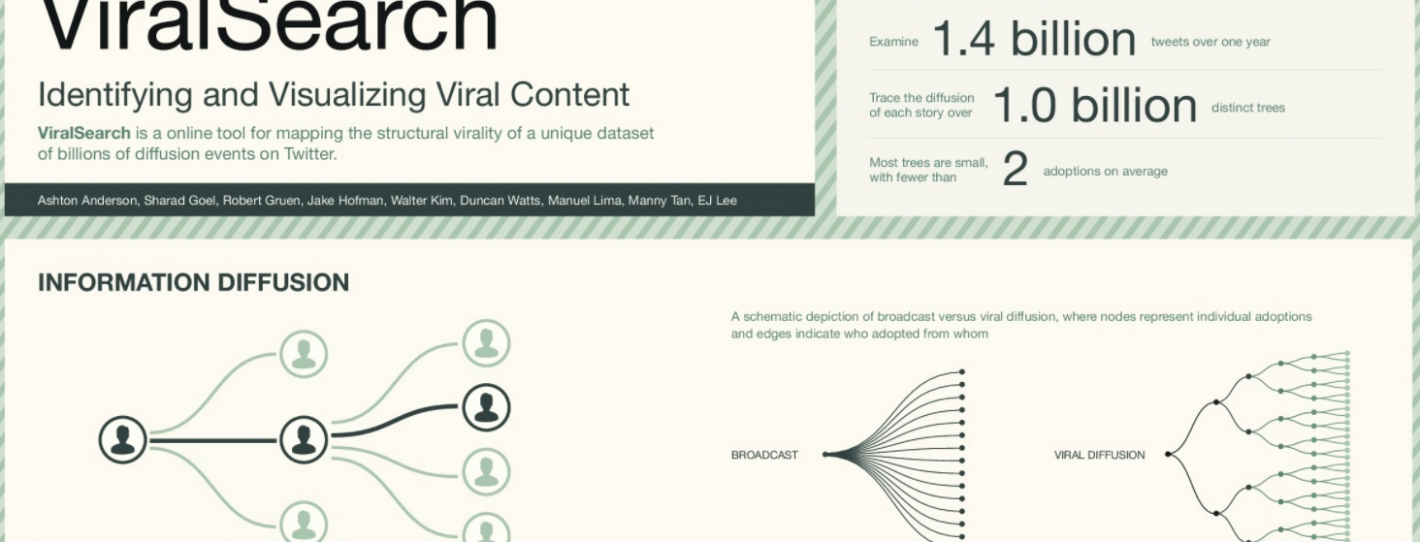
Yet it’s the announcement of Microsoft ViralSearch that really ups the ante and places Microsoft right up there with Google and Facebook in the social graph equation.

The Ripple Effect of the HyperConnected Web

Currently in product demo stage, ViralSearch could be Microsoft’s big play when it comes to understanding how the social web works, and what motivates people to do something. By understanding this, brands can begin to understand what makes a topic go viral, and (the thinking is) be more effective at creating their own viral content.

ViralSearch does this by analyzing millions of conversations on Twitter (the only platform supported at the minute), and monitoring the different actions, reactions and – ultimately – results of shared content.

By doing this, ViralSearch can then identify the tipping point of a viral sensation. This shows who propagated the most distribution and resharing – which can help brands identify true influencers.

Not only this, but ViralSearch can dig into multiple levels of connections, or generations of sharing.

ViralSearch generations

Over time, this would allow brands to truly understand what makes a connection so connected; what content do these connections share and talk about; and if historical sharing and discussion can help predict what that person (or persons) may share in the future.

Once brands can identify that information, marketing tactics are completely turned on their head and targeting ad campaigns becomes far more scientific.

The Micro-Level Social Graph

Currently, today’s “social graph” is helping network developers, end users and brands identify what they’re truly interested in, both from a consumer point of view and brands looking to connect with these consumers.

But this is just the start.

As Facebook rolls out its Graph Search solution, and Google continues to place growing importance on its Google+ platform, understanding how people operate and how they connect online is becoming less of a mystery.

Today’s social graph is tomorrow’s micro-level social graph, where interests, purchase intent, archival behaviour and the minutest detail can be identified and reacted to – perfectly identified by the levels of generational actions that ViralSearch displays.

While Google and Facebook may be leading this race at the minute, Microsoft’s activity in the last two years suggest they’re putting all the pieces in place to grab their own slice of the social graph pie.

Who knows – it may even end up being the biggest…

[youtube]http://youtu.be/wSwOszoHuoI[/youtube]

The Third Wave of Influence

Influence Marketing the book

Influence marketing is at a crossroads. As we know it today, influence marketing is primarily defined by social scoring platforms like Klout, Kred and PeerIndex.

However, while these platforms are decent starting points for brands looking to identify influencers, they don’t really go deep enough into contextual and situational human relationships to offer a true metric of influence.

What’s needed is a bigger understanding of how the human psyche works; what makes us tick as people; what impacts our decision process; and where we can predict paths of influence based on transactional relationships, where historic interactions can be merged with current knowledge and the likelihood of a future action based on that knowledge.

To get to that level, though, we need to move to the Third Wave of Influence Marketing.

The First Wave of Influence: Celebrity Endorsements

While Dale Carnegie can arguably be called the Grandfather of Influence as we knew it before social scoring entered the fray, it was the late Dan Edelman and his championing of celebrity endorsements that ushered in the First Wave of Influence.

Edelman saw the value in connecting celebrities with brands to share that brand’s message. The middle of the last century saw Edelman employ people like movie star Vincent Price to be the voice of the California wine industry, and people like baseball legend Nolan Ryan and activist Gloria Steinem.

This type of brand recommendation resulted in several successful campaigns, and turned Edelman’s fledgling self-named company into a global public relations powerhouse.

However, in recent years, the sheen has started to dull with celebrity endorsements. In 2008, Bloomberg BusinessWeek published an excellent article on the dangers of celebrity endorsement, which included (lack of) relevance of the celebrity to the brand.

On her agency blog, Margie Clayman took it one step further and highlighted the worst case scenario for brands when using celebrity endorsements – that of the celebrity “going rogue”.

Tiger Woods and his infidelity; Lance Armstrong and his doping scandal; Oscar Pistorius and the killing of his girlfriend (drawing comparisons to the OJ Simpson murder trial).

The combination of dangers associated to celebrity endorsement, as well as consumers becoming smarter when connecting the dots between endorsement and context, paved the way for the next wave of influence.

The Second Wave of Influence: Social Scoring

The social web has opened up a veritable treasure trove of opportunities for individuals to become the “new celebrity”, or influencer. By having access to social networks, blogging and more, everyday web users can grow a sizable audience and loyal following.

Brands began to take notice of this and naturally wanted to connect. There was just one problem – old school broadcast messaging didn’t quite work on the new web. Instead of connecting with influencers, brands came across as spammy. They needed a conduit.

Enter social scoring.

Early movers in the social influence space like Klout, Kred and PeerIndex saw the opportunity to create a platform that could connect these social influencers to brands looking to use them to promote their goods.

Soon, public scores were attached to individuals, with the higher scoring ones being invited to accept free products from brands, in the hope of exposure to that influencer’s audience.

This was all well and good, until the cracks started to appear.

Opting out Klout

Questions arose over the validity of the data being used, since it was just based on publicly available information versus more in-depth conversations happening behind closed networks and privacy settings.

People also questioned the right of these platforms to create a public profile and attach a score to you, without your specific content.

Privacy violation was also a hot topic, as well as the creation of profiles of minors – a big no-no for the social networks where the scoring platforms were scraping information from.

Perhaps the biggest crack was the resulting shift in how influence was perceived. Instead of context and micro relationships, influence was now judged by a score and how well a user played into the algorithm of the scoring platforms.

Even today, after improvements to the data, people with Klout profiles see their scores drop if they stay away from the likes of Twitter and Facebook for a few days. This “you’re only influential if you’re online” approach has left people questioning the validity of scoring as a method of influence.

Much like celebrity endorsements before them, social scoring platforms are being questioned over the context of how their influence is measured, and where the true transactional influence – that where trust, relationship and more comes into play – sits in their algorithm.

Which leads us to the next wave.

The Third Wave of Influence: The Business of Influence

The biggest problem facing brands today when it comes to influence marketing is the actions and end result that come from their campaigns, and did they result in leads and customers.

While there are various aspects to an influence campaign – short term buzz, new product awareness, donation run for non-profits, etc – the long tail aspect is often forgotten: customer acquisition and loyalty.

The reason for this can be attributed to many things, but the biggest overriding factor is clear – brands are still using influence marketing campaigns as one-offs, and with a campaign mindset.

This means they find their influencers, agree on the promotion, let the influencer do his or her thing, and then analyze how successful that campaign was.

However, this misses a huge opportunity – to turn influence into true advocacy, and build a loyal and engaged army of fans that are also customers. To do this, brands need to start looking beyond the short-term (potential) viral effect of an influencer, and instead address the need of the customer via the influencer.

A CRM platform like Nimble can help in this process, and taking influence beyond buzz and into true actionable business return is the natural next step.

Otherwise, the current direction of influence may erode brand trust. The recent indifference to the Kred and LinkedIn Top 1% emails showed early signs that perhaps consumers are getting tired of where we are today.

Instead of generic, we need to address complexity.

  • We need to decipher opinions of those that matter and how they impact us;
  • We need to adapt to fluid influence and how it continuously changes;
  • We need to move beyond public personas and into micro influencers;
  • And we need to stop confusing popularity and amplification for influence.

The stage is set for The Third Wave of Influence Marketing, and we look forward to continuing to move the discussion forward when the book is released in the next few weeks.

Social Media Doesn’t Have to Be This Way

Get your marketing right

Six years ago, I began a love affair with the potential that social media could offer.

While I’d been online for much longer, meandering from blogging to forums and gaming, it was only when I started really getting into what MySpace, Facebook and Twitter offered that I saw something bigger than just talking about random stuff.

I saw the opportunity for everyone to truly have a platform to share from. I saw the opportunity for business to both understand and connect better with their audience.

But most of all, I saw a medium that would finally negate the crappy jobs that people and businesses were doing when it came to being honest and transparent, because now there was a viable way to cross-check the shit and converge on the real.

Yet for all that potential, here we are, six years later, and that potential seems to be fighting a losing battle in the war of attrition for eyeballs and attention.

Social Media Used to Be More Than This

Recently, I posted two articles that looked at the BS metric of standalone reach, as well as (the lack of) transparency in social media.?These posts had been brewing on my mind for a little while, as more and more examples of crappy methods and the people behind them come to the fore.

I thought they may have been isolated examples, but as comments on the posts as well as discussions elsewhere proved, there’s a growing malaise forming in social media circles. People are getting tired of BS, and finding more instances of this numbing state of affairs now that the rose-coloured blinkers have come off.

  • Margie Clayman wrote about her new awareness of questionable practices by some of social media’s early adopters;
  • Pam Moore talked of well-known “community leaders” being as fake as Hollywood boobs (that last part may have been my takeaway);
  • My friend Hessie Jones sent me a link to an article on Social Media Today that talks about “socializing your business” but instead is simply another article on creating, managing and measuring a social media marketing campaign (big difference in the two terminologies);
  • Jamie Notter shared his frustration about bandwagon jumping on humanizing your business.

These are just some of the examples in recent weeks – if you go back a few months, there are more to be found where the wheels seem to be coming off the potential of social media, and are being replaced by retreaded tires masquerading as profound content and authenticity.

Why? Why are we throwing away such an opportunity for true change and growth? Is it really in exchange for easy eyeballs and links to our content? Does “success in social media” truly equate to numbers of followers, fans, subscribers and having a higher social score than others in your niche?

Social Media Doesn’t Need to Be This Way

As we see more examples of questionable practices coming to the fore, the net effect is that they’re essentially saying it’s okay to be false. If you want to be someone, or a successful business, be either an ass or a fake.

Which is sad, since social media can be so much more.

  • It can be the focal point to raise almost $140 million for charitable causes;
  • It can be responsible for inspiring case studies;
  • It can help complement the biggest sales day in a company’s history;
  • It can be the fastest way to head off a potential brand reputation crisis;
  • It can simply be a way to tell a wonderful story.

As these examples above and many more like them show, success can come without faking it. Success can come by being real. Success can come by building small armies to do great things.

Simply put, success can come without the need to link bait for traffic, buffer numbers, bandwagon jump and similar.

If you’re still not sure about the dilution process that social media is going through at the moment, ask yourself this question:

When someone asks you what you do, or you’re attempting to convince a new client or business the value of social media. do you get a questioning stare and a smile that says, “Yeah, right”?

My guess is you do. Many times.

Until we counter this crap that seems to be pervading social at the minute with real work; real results; real numbers; and real honest-to-goodness quality, that look and smile will continue.

And no-one likes to be questioned and laughed at for too long. Do they?

  • « Go to Previous Page
  • Page 1
  • Interim pages omitted …
  • Page 91
  • Page 92
  • Page 93
  • Page 94
  • Page 95
  • Interim pages omitted …
  • Page 283
  • Go to Next Page »
© 2026 Danny Brown - Made with ♥ on Genesis