• Skip to primary navigation
  • Skip to main content
Danny Brown

Danny Brown

podcaster - author - creator

  • About
  • Podcasts
  • Journal

Latest posts from Danny Brown

Enjoy the latest posts from Danny Brown, and feel free to add your own thoughts in the comments after the post.

On Fostering the Long Tail Effect of True Brand Loyalty

building long term brand loyalty

One of the things I’ve always been a huge proponent of is fostering true brand loyalty for the long tail – strategic and continuous and ?growth – versus getting quick buzz hits then using the rinse and repeat formula.

This stems from various reasons but the core overall one is simple – create a loyal army of consumers-turned-customers-turned-advocates, by providing solutions that meet their needs, and much of your marketing will be done organically.

This creates three benefits:

  • You have a true two-way relationship with your customer;
  • You have word-of-mouth from trusted resources that no amount of money could buy;
  • Your brand has an immediate advantage for new innovations, feedback and growth through shared ideas.

Loyalty also has another added benefit – more often than not, the cost of new customer acquisition versus existing customers satisfaction is much higher. Not always, but mostly.

If you can reduce the spend on acquisition, you can re-allocate that to reducing churn of existing customers, enhancing the loyalty and appreciation factor immensely.

Two brands that understand the implementation of long tail loyalty are?BlogOnCloud9?and Livefyre.

Brand Loyalty: BlogOnCloud9

BlogOnCloud9 WordPress

When I switched over to WordPress hosting experts BlogOnCloud9 back in 2010, I wrote a post then on how happy I was with the move and service. Almost three years later, nothing’s changed – except the service and approach of Dana and Karen, the founders of and partners in the service, is even better.

Last weekend, on a Saturday evening, I was tinkering with my blog to add some CSS code in order to change the email sign-up box I have at the end of every post.

Because I’m not a CSS guy, I messed up the copy/paste and completely borked my blog. Since I’d changed some code in the functions.php file, it messed up the rest of the site and all I had was a scary blank white screen of death.

I resigned myself to the fact I did something stupid on a Saturday night, and pinged Dana and Karen an email saying what had happened, and if they could help resolve. This was done not expecting anything until Monday at the earliest.

Not one hour later, Dana emailed to say he had found the bad code, fixed it, and that the site was now fully operational again. This was at 8.00pm on a Saturday night!

I was floored. BlogOnCloud9 isn’t a massive hosting company employee-wise, but that service and response at the weekend outdid competitors far “larger” than Dana and Karen’s baby.

Brand Loyalty: Livefyre
Livefyre comments system

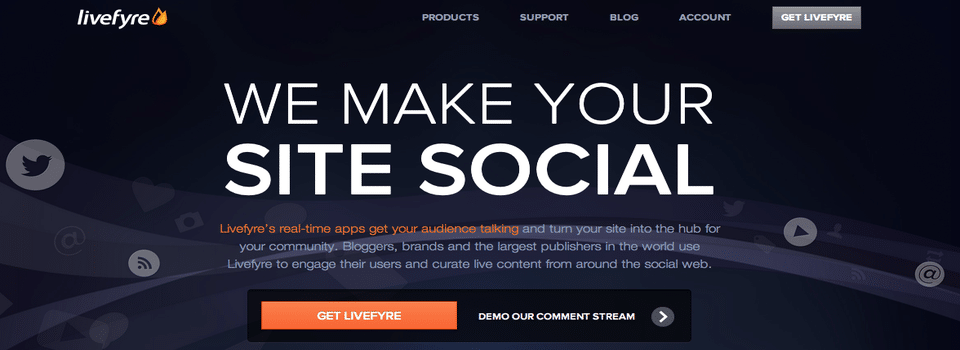
Ah, Livefyre. Regular readers and subscribers here will know I’m a huge fan of the?Livefyre comments system. There’s just something about the platform that behaves like a true comment system should.Social integration; real-time chat functionality; community fostering, and more. It’s just an awesome platform.

Recently, I moved away from Livefyre and reactivated Disqus following a crowdsource survey of my subscribers, who preferred Disqus over Livefyre (although Livefyre had a huge amount of fans in the responses too).

But I began to have issues with Disqus. Mobile load time could be slow; Reactions (how your post has been shared on Twitter) were unreliable; and valid comments were getting caught in the spam filter.

I knew Livefyre were working on a major update to their platform, Livefyre 3. The beta version is on this blog, with the public release due imminently. And I knew that I still loved the platform, even though I’d made the move away from them recently.

So I emailed Livefyre support, and the awesome Dhara Mhistry?was immediately on the case. No reprimanding (even in jest) for being “disloyal”, simply happy to help get Livefyre back on the blog.

Not only did Dhara and the Livefyre technical team ensure none of my Disqus comments were lost, she also answered all my questions regarding styling the comments to be more in line with the colour scheme here.

And, just like BlogOnCloud9,?Livefyre was there testing the comments on the weekend to make sure the change back over had been a smooth one.

The really impressive thing? I’m not even a paying customer – Livefyre Comments is free, although it does offer premium features for businesses and media properties.

Building Loyalty Really Isn’t That Hard

What’s key in both these examples are two things that both BlogOnCloud9 and Livefyre clearly understand:

  • Customers (and/or users) mess up, and being able to clear a way through that mess together fosters trust and loyalty;
  • Losing patronage for a while doesn’t mean the brand has lost an advocate or loyal user – you have to find out for yourself why you loved that brand in the first place when compared to someone else.

A lot of brand struggle to understand loyalty – true loyalty. Offering discount vouchers and early usage of a new product may win you favours – but what you do after that to build on that quick-hit loyalty is what will define your long tail success.

BlogOnCloud9 and Livefyre already know this. Now it’s up to your brand.

Note: BlogOnCloud9 recently launched BlogDroid (affiliate link), for a seamless WordPress experience no matter what level of knowledge you have.?

Can the Everyday Influencer Still Exist?

Influence marketing grade

Earlier this month, Twitter published an article on their developer blog, about new metadata being added to the Twitter API. There were two additions – one to help identify the language of a tweet, while the other was the ability to allow developers to “rank” tweets.

This second addition is of particular interest when it comes to influence marketing, and how we identify influencers, since – in our opinion – it offers the potential to further dilute the ability to truly connect relevant influencers and advocates to the brands that are looking to work with them.

Now, in fairness, Twitter hasn’t divulged exactly how the ranking ability may work, apart from the option to possibly gauge tweets by a “none”, “low”, “medium” and “high” rank. It may be there’s a lot more context to the way the API will identify these tweets.

However, in the meantime, the worry is that true influence, yet again, is being demoted to nothing more than an algorithmic rank with no real context behind it. When this happens, it takes us back to the “influencer elite” we’ve talked about on here previously.

Which begs the question, can the everyday influencer still exist?

The Grading of the Social Web

It’s not just Twitter that’s taking this approach. Take a look at Google and the importance they’re placing on their Authorship Markup algorithm. Or Facebook with its ever-changing algorithm that places more emphasis on paying for a Sponsored Story to have your content seen, versus organic appearance in a feed.

There’s no doubt that the social web is becoming an arena of rank and perceived import – yet questions remain as to the validity of the import when it’s based on how well you play with a platform’s rules.

For example, let’s say you don’t have Google Authorship enabled on your blog or website, yet you write a fantastic white paper on the origins of mankind that challenges everything we’ve believed until now.

When someone searches for “the origins of mankind” on Google, your expertise would (should) probably be the one that people should read. Yet because someone with less expertise utilizes the Authorship Markup script, they actually appear more reverential than you for that particular search.

The same goes with Twitter’s new API. Let’s say they base their authority score on the amount of retweets and engagement a tweet receives. While this is a good starting point, it lacks the more important aspects of context, perception and situation at the time.

This is particularly true when large events are happening.

Let’s say someone uses the hashtag for the Oscars to post an asinine comment about the price of popcorn at their local 7-Eleven. It gets 1,000 reweets and 500 favourites. That may appear as a high scoring tweet based on the new API.

But does it have the context of an Empire Magazine journalist in the UK only getting 20-30 retweets as he/she live-tweets from the UK? Doesn’t their expertise in the movie arena make them more authority-driven?

This is the problem with grading importance based on reactions versus instilling a true action – the sign of an influential impact. It also changes the very fabric of influence – no bad thing on its own, but when it comes to trying to clear the muddied waters of the last few years, it can add to the confusion.

Which brings us back to the topic of this post.

The Everyday Influencer and Where They Fit Today

One of the criticisms levied at influence marketing today is the lack of results for brands using the medium. And that’s a fair criticism.

This can be attributed to several things – generic social scores with no real relevance to the brand in question; lack of understanding and education on the brand’s behalf; and the gamification of social media channels to be seen as someone of influence.

Whatever the reason, influence has undergone some drastic changes in the last few years when compared to Carnegie’s view, and not always for the better. The biggest impact this has had is in nullifying true individual influence, the kind that brands really want – and need – to connect with.

Activity and popularity online has led to people being seen as influencers, when the true influencers – the ones not worried about social scoring and perceived ranking – are the ones that should be the ones being identified.

These “everyday influencers” are finding themselves marginalized because they’re not playing to a computational score; nor are their hands being tied by a search engine’s goal of making you use all their products to be seen as relevant.

The problem is, these are exactly the people brands should be connecting with. They’re the advocates; the consumer marketers; the people who truly have the ear of those that make a difference when it comes to the purchase cycle of their friends, colleagues and peers.

As public scoring and authority plays continue to evolve and find bigger footholds across the web, the question becomes:

Can the everyday influencer still exist, when the games being played to “be” one nullify results based on much deeper questions?

We believe so. In May, we’ll show you why and, more importantly, how.

Beyond Contests: How Facebook Apps Can Boost Your Brand’s Visibility

Grow your blog

Facebook fact checking

This is a guest post by Jim Belosic.

Facebook contests, especially giveaways and sweepstakes, are popular on Facebook for a good reason: if the prize is right, the contest generates buzz and motivates people to spread the word about the contest and the brand that?s hosting it.

We?ve seen ShortStack users install a contest app and gain of thousands of Likes within a few days in response to a well-run contest.

A contest or giveaway isn?t the only way to increase engagement, though. In fact, there are lots of fun ways you can use Facebook apps to increase interaction with your followers month after month, allowing you to use contests sparingly so they?re something they look forward to.

Since contests generally last about 30 days, and it would be difficult to run one month after month, it?s important to think about other ways you can boost visibility day in and day out.

Here are a few ideas:

1.? Use a Fan Reveal App to Get Users Excited About New Features

Ask your customers/users to Like your Page and in exchange reveal new products/features or make product-release announcements. Fans of your brand want to know what they can expect next from you, and whether you own a bakery or a manufacturing company, people who use your products want to know what you?ve got in the pipeline.

A Facebook app is a great way to let them know. A few movie and video game companies have teased their fans with snippets of trailers from upcoming releases — the caveat is that the trailer is only revealed with new Likes so existing fans are motivated to ask their friends to Like the page.

2. Inform Your Customers With a Newsletter App

Adding a newsletter signup app to your page is an easy way to increase your business? visibility. You can even ask people to like your Page in order to reveal the newsletter signup form. That way you have an additional way to communicate with your users.

You can use status updates to tease newsletter content and then direct your fans to the app where they can sign up to receive the newsletter.

3. Let Your Customers Request Reservations With an Appointment App

Any small business owner who wears many hats should try using an app that allows his or her clients/customers to request or even book appointments or reservations via Facebook.

You can ask for name, telephone number and times that a customer wants to come and then call them to book or confirm an appointment. You can also iFrame in a more sophisticated reservation system that will actually make the reservation for your customers, something like OpenTable.

4. Add Another Communication Channel With a Request for More Information App

A small staff can be overwhelmed by phone calls and email requests for more information about your company?s products. Using a ?request? app gives prospective customers access to the information they seek, such as lists of products or services, or even cost estimates.

And if you?re collecting data via a form, take the opportunity to sign your customers up for a newsletter, to gauge their interest in a new product or service you?re thinking about adding to your line-up or ask for their location or age.

5. Increase Efficiency Even More With a Contact Us/Customer Support App

The easier you make it for people to get in touch with you, the better. Using a ?contact us? app allows your fans/customers to send an email to specific departments within your company.

For example, you can send them straight to whomever handles sales, customer support, press inquiries, etc. streamlining the contact process. You also link to this type of app whenever someone comments on a post or or asks for more information, keeping them inside your Facebook ?property.?

6. Collect Feedback With a Testimonials App

At ShortStack we have an app we call ?Make us Better? where customers can leave us feedback about our service. It?s a great way for us to learn what we?re doing right and what our users would like us to do differently.

As tempting as it may be, avoid posting only glowing reviews of your business — prospective customers might not believe what they read because, well, no one is perfect!

7. Do Some Good With a Donation App

You can use an app to let your friends and followers make donations — or match your company?s donations — to charities. Various apps have different features, but donation apps typically show your giving history, let your followers know which charities you?ve donated to, and give them an opportunity to share donation messages.

8. Reduce the Risk of Investing in Unwanted New Products or Services With a Voting or Survey App

People like to participate in surveys. As a business, using a survey or voting app is a great way to learn what kinds of service your customers wish you would provide, or even what color coffee cup they?d be most likely to buy.

Using a voting or survey app can ultimately reduce the risk of investing in new products or services only to have them bomb.

For example, if you own a bakery and results from a survey include tons of requests for gluten-free desserts, you might consider adding equipment to your kitchen that would allow this.

If you own a hair salon and a ?What new service are you most likely to use? poll suggests that you?d do a booming business in massage, you? might decide to invest in a massage table and hire a massage therapist.

Gut feeling is good, but data that backs it up is even better.

9. Connect With Other Services

Using apps to connect with other platforms and services that you use allows your users to have a seamless social media experience with your company, using Facebook as the hub.

For instance, you can install apps that allow you to display videos from YouTube or Vimeo on your Page, display photo sets from Flickr, display Tweets or share podcasts, songs or any other recording you made on SoundCloud.

These are just a sampling of ways that you can use apps to build your presence on Facebook without hosting a contest. Have you experimented with non-contest apps? Which ones? do you find the most useful for building engagement?

Jim Belosic ShortStackAbout the author: Jim Belosic is the CEO of ShortStack, a self-service custom app design tool used to create apps for Facebook Pages, websites and mobile web browsing. ShortStack provides the tools for small businesses, graphic designers, agencies and corporations to create apps with contests and forms, fan gates, product lines and more. Connect with Jim on Twitter.

The Sunday Share ? Social Media Measurement for Solo PR Pros

Social media measurement

As a business resource,?Slideshare?stands pretty much head and shoulders above most other content platforms.

From presentations to educational content and more, you can find information and curated media on pretty much any topic you have an interest in.

As a research solution, Slideshare offers analysis from some of the smartest minds on the web across all verticals. These include standard presentations, videos, multimedia and more.

Which brings us to this week’s Sunday Share.

Every week, I?ll be sharing a presentation that catches my eye and where I feel you might be interested in the information inside. These will range from business to content to social media to marketing and more.

This week, an excellent Slideshare from award-winning PR professional Kami Huyse, founder of Zoetica Media, offering communication services for non-profits and social good.

For many businesses, measuring social media is still an enigma, yet it’s key to knowing whether your strategies are working or not.? This presentation shares how to design PR and marketing programs in social media from the beginning, and what tools can be used without breaking the bank.

Enjoy.


Why Heineken Understands the Importance of Employee Culture

Heineken employee culture

When you look at a lot of the talk on the social web around brands, much of it centers on a few core mindsets:

Be your customer; listen to your customer; be there for your customer; be where your customer is.

Wise words, and definitely core for any business to succeed, not just on social. Yet as important as customers are to the longevity of a business, there’s another very core component – the employee.

The Internal Customer

I’ve written before about the value of your employees, and the very smart Leon Noone has shared his thoughts on the value of looking after your employees by creating the right culture and expectations from the start, as well as continuing to live by them.

Yet so many businesses miss this, and instead talk a good talk about customers while missing the walk when it comes to internal customers – your employees.

They’re the folks that represent your brand in public; they’re the folks that determine the customer experience; they’re the folks that keep the wheels turning. The importance of having the right culture and making sure there’s a good fit on both sides – brand/employee and employee/brand – is evident, as highlighted in this article from Forbes:

  • Companies that acknowledge employee value can see three times as much return on brand equity than those that don’t;
  • Aluminum producer Alcoa saw income growth of 500% over 10 years when employee safety was made the #1 priority;
  • A study by Bright Horizons showed 89% of employees who felt appreciated were more productive.

This should be common sense, but unfortunately it’s not, as seen by the high amount of employee churn at many businesses and corporations. Which is why the video at the end of this post from Dutch beer manufacturer Heineken made me smile.

The Right People for the Right Culture

The video follows the hiring process for a new intern position at Heineken. It opens with something we’ll all recognize – the canned answers to interview questions that candidates hope will be what the hiring company wants to hear.

For Heineken, though, getting the right person for their culture is much more important than being spoon-fed answers that may be complimentary, but don’t really show the personality of the potential employee, and whether they’d be a good fit or not.

While the video itself may be part of a marketing campaign on showing what Heineken is all about, the actual company culture speaks for itself – Heineken’s core brand values are Respect, Quality and Enjoyment.

These have seen Heineken receive numerous employee-centric awards and features, including Britain’s Top Employers 2012, features in People Management, shortlisting for the Employee Benefits Awards 2012 and much more.

As I mentioned at the start of the post, it’s key to appreciate your customers, especially in this fast marketing world we live in today where the smallest dissatisfaction can become the biggest online buzz.

Just remember the equally important internal employees, too – get that part right and your customers will automatically benefit.

[youtube]http://www.youtube.com/watch?v=j5Ftu3NbivE[/youtube]

  • « Go to Previous Page
  • Page 1
  • Interim pages omitted …
  • Page 93
  • Page 94
  • Page 95
  • Page 96
  • Page 97
  • Interim pages omitted …
  • Page 283
  • Go to Next Page »
© 2026 Danny Brown - Made with ♥ on Genesis