• Skip to primary navigation
  • Skip to main content
Danny Brown

Danny Brown

podcaster - author - creator

  • About
  • Podcasts
  • Journal

Insights

Is Microsoft the Dark Horse in the Social Graph Race?

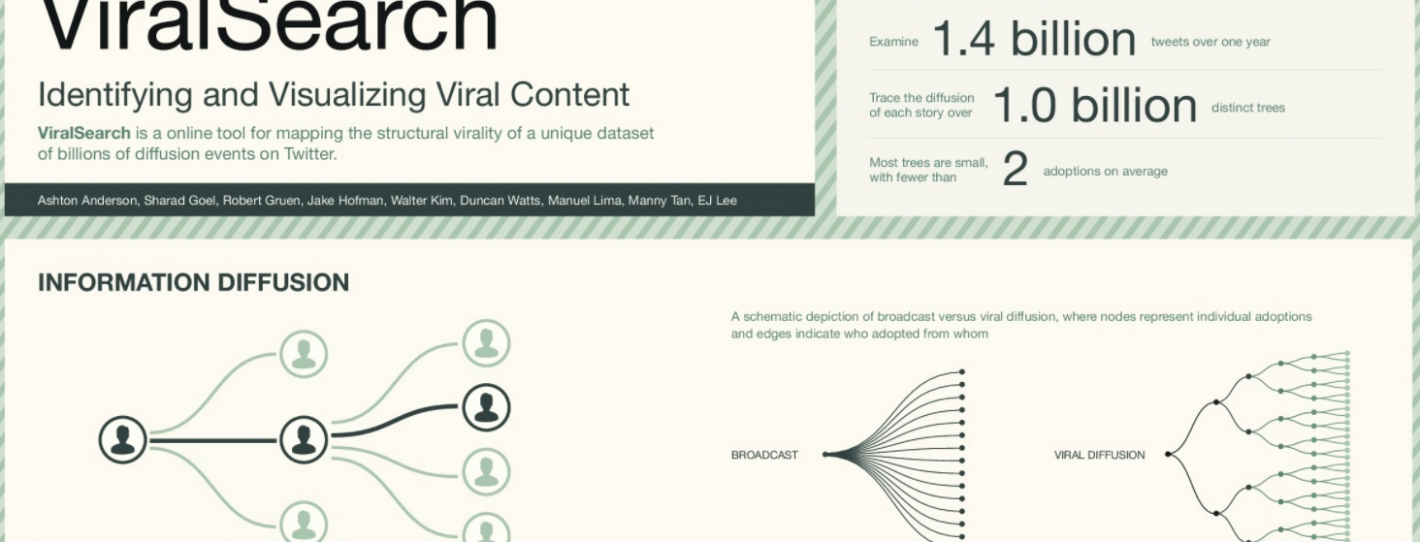
ViralSearch Microsoft

Mention “social graph” to social web users, and the two most likely names that you’ll get in return are Google and Facebook.

Popularized by Facebook founder Mark Zuckerberg in 2007, the accepted definition of social graph is as follows:

The global mapping of everybody and how they’re related… users [can] benefit from the social graph by taking advantage of the relationships between individuals… to offer a richer online experience.

While Zuckerberg was talking about Facebook directly, this social graph mapping isn’t just restricted to the world’s largest social network. The other main proponent of this is Google, specifically with what they’re doing with their Google+ platform.

Understanding how connections online relate to each other, and at what level, allows Google and Facebook to provide a myriad of services and targeted solutions, both for end users and advertisers.

Sponsored stories on Facebook; recommendations of people you might like based on current connections; user specific Google Ads no matter what site you visit; web usage and click action determining product features and smartphone integration. All this and more can be defined by your social graph, the people in it, and the actions taken.

For end users, it’s meant to offer a better experience – you only see the things you want to see, and you only connect with and recommend the people and brands you want to be involved with.

For advertisers and marketers, it makes it a richer playground, since now you have the kind of information at your fingertips that allows you to laser focus your ad spend – demographic, web usage, likes, dislikes, friends, peer recommendations, etc.

It’s the ideal mix of user generated content with an advertorial twist.

But there’s another twist to this social graph power game – and it comes in perhaps the least likeliest of forms in the shape of Microsoft.

Microsoft Gets Real About Social

When thinking cutting edge social media technology, you probably don’t immediately think of Microsoft. Instead, computers, software and smartphones might come to mind, along with the Xbox360.

However, in the last 24 months or so, Microsoft has been steadily adding to its social toolset, with each addition making an interesting statement about where Microsoft might sit in the social graph race.

  • In 2010, Microsoft added more social search functionality to its Bing search engine, allowing you to see what friends on Facebook liked and have that appear in your related search results. This was in addition to tweets appearing in search results;
  • In 2012, Microsoft bought internal social chat platform Yammer, to strengthen its enterprise social solutions;
  • Also in 2012, Microsoft and Klout announced a partnership that would show someone’s Klout score in Bing search results;
  • And at the end of 2012, Microsoft officially launched their own social network, Socl, for anyone with a Microsoft or Facebook account.

These alone would offer interesting combination possibilities.

For example, an organization looking to launch a new product with a large amount of fanfare could identify the employees with the highest Klout scores, and use them as ambassadors online to promote the product within the most effective conversations.

Yammer could be used while tracking social search clicks based on friend recommendations, to alert Microsoft sales or service employees or partners to follow up for add-on sales, or enhance the loyalty factor by making sure everything is running as it should be.

These are the simple options that could be used now, to start to build a better understanding of how the social web interconnects users and what it means for business.

Yet it’s the announcement of Microsoft ViralSearch that really ups the ante and places Microsoft right up there with Google and Facebook in the social graph equation.

The Ripple Effect of the HyperConnected Web

Currently in product demo stage, ViralSearch could be Microsoft’s big play when it comes to understanding how the social web works, and what motivates people to do something. By understanding this, brands can begin to understand what makes a topic go viral, and (the thinking is) be more effective at creating their own viral content.

ViralSearch does this by analyzing millions of conversations on Twitter (the only platform supported at the minute), and monitoring the different actions, reactions and – ultimately – results of shared content.

By doing this, ViralSearch can then identify the tipping point of a viral sensation. This shows who propagated the most distribution and resharing – which can help brands identify true influencers.

Not only this, but ViralSearch can dig into multiple levels of connections, or generations of sharing.

ViralSearch generations

Over time, this would allow brands to truly understand what makes a connection so connected; what content do these connections share and talk about; and if historical sharing and discussion can help predict what that person (or persons) may share in the future.

Once brands can identify that information, marketing tactics are completely turned on their head and targeting ad campaigns becomes far more scientific.

The Micro-Level Social Graph

Currently, today’s “social graph” is helping network developers, end users and brands identify what they’re truly interested in, both from a consumer point of view and brands looking to connect with these consumers.

But this is just the start.

As Facebook rolls out its Graph Search solution, and Google continues to place growing importance on its Google+ platform, understanding how people operate and how they connect online is becoming less of a mystery.

Today’s social graph is tomorrow’s micro-level social graph, where interests, purchase intent, archival behaviour and the minutest detail can be identified and reacted to – perfectly identified by the levels of generational actions that ViralSearch displays.

While Google and Facebook may be leading this race at the minute, Microsoft’s activity in the last two years suggest they’re putting all the pieces in place to grab their own slice of the social graph pie.

Who knows – it may even end up being the biggest…

[youtube]http://youtu.be/wSwOszoHuoI[/youtube]
Social Media Doesn’t Have to Be This Way

Get your marketing right

Six years ago, I began a love affair with the potential that social media could offer.

While I’d been online for much longer, meandering from blogging to forums and gaming, it was only when I started really getting into what MySpace, Facebook and Twitter offered that I saw something bigger than just talking about random stuff.

I saw the opportunity for everyone to truly have a platform to share from. I saw the opportunity for business to both understand and connect better with their audience.

But most of all, I saw a medium that would finally negate the crappy jobs that people and businesses were doing when it came to being honest and transparent, because now there was a viable way to cross-check the shit and converge on the real.

Yet for all that potential, here we are, six years later, and that potential seems to be fighting a losing battle in the war of attrition for eyeballs and attention.

Social Media Used to Be More Than This

Recently, I posted two articles that looked at the BS metric of standalone reach, as well as (the lack of) transparency in social media.?These posts had been brewing on my mind for a little while, as more and more examples of crappy methods and the people behind them come to the fore.

I thought they may have been isolated examples, but as comments on the posts as well as discussions elsewhere proved, there’s a growing malaise forming in social media circles. People are getting tired of BS, and finding more instances of this numbing state of affairs now that the rose-coloured blinkers have come off.

  • Margie Clayman wrote about her new awareness of questionable practices by some of social media’s early adopters;
  • Pam Moore talked of well-known “community leaders” being as fake as Hollywood boobs (that last part may have been my takeaway);
  • My friend Hessie Jones sent me a link to an article on Social Media Today that talks about “socializing your business” but instead is simply another article on creating, managing and measuring a social media marketing campaign (big difference in the two terminologies);
  • Jamie Notter shared his frustration about bandwagon jumping on humanizing your business.

These are just some of the examples in recent weeks – if you go back a few months, there are more to be found where the wheels seem to be coming off the potential of social media, and are being replaced by retreaded tires masquerading as profound content and authenticity.

Why? Why are we throwing away such an opportunity for true change and growth? Is it really in exchange for easy eyeballs and links to our content? Does “success in social media” truly equate to numbers of followers, fans, subscribers and having a higher social score than others in your niche?

Social Media Doesn’t Need to Be This Way

As we see more examples of questionable practices coming to the fore, the net effect is that they’re essentially saying it’s okay to be false. If you want to be someone, or a successful business, be either an ass or a fake.

Which is sad, since social media can be so much more.

  • It can be the focal point to raise almost $140 million for charitable causes;
  • It can be responsible for inspiring case studies;
  • It can help complement the biggest sales day in a company’s history;
  • It can be the fastest way to head off a potential brand reputation crisis;
  • It can simply be a way to tell a wonderful story.

As these examples above and many more like them show, success can come without faking it. Success can come by being real. Success can come by building small armies to do great things.

Simply put, success can come without the need to link bait for traffic, buffer numbers, bandwagon jump and similar.

If you’re still not sure about the dilution process that social media is going through at the moment, ask yourself this question:

When someone asks you what you do, or you’re attempting to convince a new client or business the value of social media. do you get a questioning stare and a smile that says, “Yeah, right”?

My guess is you do. Many times.

Until we counter this crap that seems to be pervading social at the minute with real work; real results; real numbers; and real honest-to-goodness quality, that look and smile will continue.

And no-one likes to be questioned and laughed at for too long. Do they?

Beyond Social Scoring – The Situational Factor of Influence

Influence marketing

Influence marketing

If you thought influence marketing was a hot topic at the moment for marketers and brands, it?s only just beginning to really take shape.

While much of the conversation both here on this blog and across various networks has concentrated on where social influence is today, this is a just the prelude to where influence marketing will be tomorrow and beyond.

In the next few weeks,?our book will be released?and we?re excited to share the concepts and methodologies that we?ve come up with in both our research for the book as well as real-life case studies we?re documenting with our clients, using our framework.

Our goal with the book is simple ? while early movers in the social influence space have provided a starting point for brands to understand this tactic, the real business value requires actions and solutions that go deeper than a score and an ?influencer? based on amplification and popularity.

Additionally, online influence is just one component of a very large picture, and only paints a small part of that same picture. Let?s talk about that a little more today.

Decisions Based on Limited Information

Social influence data as it stands today is based primarily on one core metric: public social profiles and footprints. So if you have your Twitter account set to public, then companies like Klout and Kred will create you a ?profile? and allocate you a score, based on their algorithm.

If you sign up and connect your other accounts, like Facebook, LinkedIn and Google+, the score will change, since these companies now have more information about you. So far, so good.

The problem comes when the accounts aren?t set to public, or you have different privacy settings for different accounts. So, Twitter and Google+ may be public, but Facebook may be primarily for friends, so your sharing method on that network is very different.

But let?s say it?s these private conversations where the decisions on the majority of the choices you make are made, when it comes to making a purchase.

These choices are the ones that are defining the influence factor at that time:

  • Is it situational, where your current situation (financial, need for a product or service, etc) comes into play?
  • Is it emotional, where the desire for something outweighs the logic of not actually needing it?
  • Is it personal, where your partner/wife/husband puts the foot down and says no?

These are three simple factors that can?t be measured directly ? and yet they have a direct impact on you as a person, because they influence your decision.

Because this process isn?t measured by public scoring algorithms, it can lead to distortion of data when measuring a brand influencer program.

You may have initially shown positive signs of interest in a new product launch, as featured on an influential blog, and that would go down as a success metric. But the truth is, the real influence was exerted when the situation came into play in your private conversation(s).

It?s this missed data that (currently) limits the reporting metrics on some of today?s platforms.

The Offline Influence Equation

Another part of this equation is the fact that most influence platforms don?t take into account what happens offline ? they simply measure online noise and conversations.

While this approach still allows for a lot of data to be collated about someone and their influence, as well as who and what influences them in return, it?s still only half the big picture.

As Pierre-Loic Assayag mentioned when we interviewed him about?the approach his Traackr platform takes, imagine trying to decide a large bank loan with only half the financial information about a person available to you ? you just wouldn?t make that call.

In fairness, this limitation is being recognized by the influence platform developers. Kred, for example, allows you to upload your offline achievements (although they don?t validate them so you could still upload false information), while Appinions measures reactions and opinions from traditional media as well as online publications.

However, as much as we try and measure how offline decisions impact measurable public conversations online, there?s still the question of what truly impacted the decision to take an action or decide to pass at this moment in time?

To get to that stage, we need to move beyond just public personas when it comes to influence, and begin to look at the macro and micro influencer level, and where they sit in the influence circle around each of us.

In the next few weeks, we?ll be doing just that. We look forward to sharing with you.

A version of this post originally appeared on the official Influence Marketing blog.

The Question of Reach as a Viable Metric

hopes for good metrics

Last week, I posted the following update across a couple of networks: “Please don’t use ‘Reach’ as a viable metric. It’s a BS number to get clients to pay more for data: don’t go down that road.”

The update resulted in some great discussion on both sides, with agreement and counterpoints on how viable reach is as a metric.

These included:

Let’s not be so quick to disregard Reach. After all, big companies buy Superbowl spots exactly for the Reach it gives them. – Dino Dogan.

Reach has 2 parts. How many people saw something (actual reach) and how many potentially could see something (fictitious reach). If I have a reach of 2 million but at the time I post every day only 3 people see the post what is the real reach? 3. – Howie Goldfarb.

Reach is definitely?ephemeral because reach doesn’t really matter. Action does. Click throughs, downloads, sticky site traffic, purchases, that kind of thing is what really matters. – Shelly Kramer.

But what about quantifiable reach? Meaning, reach is tracked against response & metrics? – Mitch Arno.

All good points – yet (for me personally, anyhoo), I’d disagree on Dino and Mitch’s points on when reach could be used as a viable metric. Here’s why.

The Attraction of Reach

By definition, reach is simply a potential number. It can be broken down a few ways:

  • On social networks, reach can be the amount of people that may interact with your content, through either seeing it directly, or through one of their connections, or even a social ad;
  • On blogs, reach can be the amount of people that interacted with your post, through direct readership, a shared link, or a forwarded email;
  • On media, reach can be the amount of people that could see a TV show, a print ad, billboards, etc, through direct contact or shared discussion later.

Marketers like to use reach as a client metric because it sounds impressive. Instead of having to be restricted by real actionable data, reach can be used instead.

  • “Twitter User X has 1,000 followers, but a reach of 100,000. That’s 100,000 new customers just waiting for us.”
  • “Blogger Y has 10,000 subscribers as well as 1,000 followers. Even more new customers just waiting for us.”
  • Free Local Newspaper Z has a reach of 50,000 homes delivered to. That’s 50,000 new customers waiting for us.”

And so on, and so on. Which would all be great and dandy if reach was a viable metric, but it’s not.

The Problem With Reach

The reason reach isn’t truly viable as a metric is simple – it’s based on the hope that eyeballs are available.

On Twitter, for example, reach is defined by the potential audience of a user you’re connecting with. So, someone may have 1,000 followers, but the followers of these connections combined may equal 100,000 (at least).

When User X with the 1,000 followers tweets something, the hope is that person’s followers will see the tweet and reshare with their audience. If a follower has 100 followers themselves, that’s now another 100 eyeballs to potentially see the share. Potentially being the key word.

Because no-one is online all the time, just waiting for a tweet. And that’s just the live, organic stuff – when you add bots and fake followers into the equation, things become even less impressive, as we can see by the following example of the same Twitter power user.

Twitter Reach

In the image above (click to expand), I used TweetReach to gauge the potential reach and visibility a certain power user could offer. The user in question has over 217,000 followers.

As you can see from the image, the estimated reach is just short of 200,000, with potential exposure (followers of followers) at just over 2.6 million. Impressive, right?

But this is where reach as a metric falls down, as we can see in the next image.

Status People Fake Follower Check

Using the Fake Follower Check software from Status People, I entered the same user’s details, to see how many of his 217,000+ followers were real. The definition of “real” here is simple – active and not bots or fake accounts.

As you can see by the image above, there’s a huge disconnect between how many of this user’s 217,000 followers are classed as real, active followers.

Suddenly, instead of having access to a potential 2.6 million impressions (which is what the potential reach of the followers pre-fake check would give), you’re now down to 182,000. Still impressive, but a hell of a lot less than 2.6 million.

And that’s assuming that each of the 182,000 “real” numbers are around when this power user sends out a tweet.

This is why reach is such a crappy metric to be using – and yet many marketers use it to increase their rates when charging clients for audience size.

The Real “Reach” Metrics

To Dino and Mitch’s earlier points at the start of this post – I agree, to a small degree, where reach is used by the likes of the Super Bowl ad buy agencies, as well as quantifying the reach. But there’s still the overarching problem that it’s a hit-and-hope metric.

In the Super Bowl example, companies use data from Nielsen, one of the world’s leading audience measurement companies – but it’s aggregated data based on average audience behaviour, versus specific targeted individual behaviour. This means it doesn’t take into account people getting up during ads to grab more beer, food, etc.

With Mitch’s example of quantifying reach, this gets closer to viable metrics, but it’s still relying on the bigger number that can’t be quantified. If we move the conversation over to quantifiable metrics based on more in-depth filtering, then we can get more actionable insights.

  • Ignore the big number and target the demographic instead – male/female, locale, language, age;
  • Use search history to identify common keywords and themes relevant to your brand;
  • Use software like oneQube to identify when users are on Twitter, for instance, and who they’re talking to. Do the same with software relevant to the platform you’re interested in;
  • Collate this information with Google Analytics or similar to understand what content is attractive and what content was physically shared and acted upon;
  • Set goals based on real action (as Shelly mentioned in her examples) – click throughs, recommendations, downloads/purchases, referrals, etc;
  • Compare these actions to the target audience size to determine reach vs. actual ratio.

By doing this, you’re now beginning to bypass reach alone and get to the real nitty gritty – ?your true audience size, as well as the real numbers to filter and use as a proper business metric.

Reach itself can be a starting point when it comes to social proof and how many eyeballs could be reached – but only as a starting point. You need to then do the legwork to define your captive audience.

Otherwise you’re constantly just reaching for what could be – and few businesses, if any, can live on that alone.

The Fallacy of Transparency in Social Media

Social media transparency

Video and social media

Spend any amount of time around social media conversations, and one word usually pops up more than any other – transparency.

People talk about social media empowering consumers, because now brands have to be “transparent” in every communication.

People talk about social media sorting the wheat from the chaff, because Google is their friend and ideas can be challenged.

People talk about snake oil salesmen losing their grip because transparency (or lack of) will eventually show the frauds from the real deal.

All good ideals. All good hopes. If it were really true.

Transparent Only If We’re Allowed to Be

The thing is, this whole “transparency thing” in social media isn’t actually happening, because we’re essentially not allowing it to happen.

There’s this unwritten rule in social media that it’s best to focus on what you can achieve versus calling out fakes and bad practices. It’s the way the social web works best, folks say.

And that may be true – but then that approach also dilutes the whole transparency argument too.

For example, there’s a very well-known blogger-turned-author in the U.S. that talks a lot about community and how humble he is to have one of the best. Yet the same blogger is quick to send nasty emails to people who don’t offer anything but platitudes for his book(s).

Then there’s the Canadian social media guy who talks a lot about how to be active online, but – much like his American counterpart – sends rather nasty emails and direct messages on Twitter to folks who dare to question his approach.

You’ll notice I didn’t refer to these two people by names (and there are many more like them). Because, as I mentioned earlier, it’s just not done in social media. People call you a hater, and you’re seen as unprofessional.

Transparency, indeed.

Rewarding Silence

Yet should we really care? After all, as so many people say, we should concentrate on what we do, right, not what others do?

The thing is, if we do that when the behaviour of some people verges on bullying, by staying silent we’re encouraging this behaviour. We’re essentially saying, “You know what, you continue to show one face in public and a completely different one in private, because it doesn’t affect us.”

But it does affect us.

It’s our friends that are being picked on. It’s our colleagues that are being affected. And, most importantly, it’s our morals that are being compromised by staying silent.

So what do we do? Do we do anything? Do we contact these people directly and say we know what’s happening and try stop it? Do we publicly question them? Or do we continue with this idea that social media has made everything transparent, so leave the status quo as it is?

The decision is yours.

  • « Go to Previous Page
  • Page 1
  • Interim pages omitted …
  • Page 35
  • Page 36
  • Page 37
  • Page 38
  • Page 39
  • Interim pages omitted …
  • Page 174
  • Go to Next Page »
© 2026 Danny Brown - Made with ♥ on Genesis