• Skip to primary navigation
  • Skip to main content
Danny Brown

Danny Brown

podcaster - author - creator

  • About
  • Podcasts
  • Journal

Insights

On Fostering the Long Tail Effect of True Brand Loyalty

building long term brand loyalty

One of the things I’ve always been a huge proponent of is fostering true brand loyalty for the long tail – strategic and continuous and ?growth – versus getting quick buzz hits then using the rinse and repeat formula.

This stems from various reasons but the core overall one is simple – create a loyal army of consumers-turned-customers-turned-advocates, by providing solutions that meet their needs, and much of your marketing will be done organically.

This creates three benefits:

  • You have a true two-way relationship with your customer;
  • You have word-of-mouth from trusted resources that no amount of money could buy;
  • Your brand has an immediate advantage for new innovations, feedback and growth through shared ideas.

Loyalty also has another added benefit – more often than not, the cost of new customer acquisition versus existing customers satisfaction is much higher. Not always, but mostly.

If you can reduce the spend on acquisition, you can re-allocate that to reducing churn of existing customers, enhancing the loyalty and appreciation factor immensely.

Two brands that understand the implementation of long tail loyalty are?BlogOnCloud9?and Livefyre.

Brand Loyalty: BlogOnCloud9

BlogOnCloud9 WordPress

When I switched over to WordPress hosting experts BlogOnCloud9 back in 2010, I wrote a post then on how happy I was with the move and service. Almost three years later, nothing’s changed – except the service and approach of Dana and Karen, the founders of and partners in the service, is even better.

Last weekend, on a Saturday evening, I was tinkering with my blog to add some CSS code in order to change the email sign-up box I have at the end of every post.

Because I’m not a CSS guy, I messed up the copy/paste and completely borked my blog. Since I’d changed some code in the functions.php file, it messed up the rest of the site and all I had was a scary blank white screen of death.

I resigned myself to the fact I did something stupid on a Saturday night, and pinged Dana and Karen an email saying what had happened, and if they could help resolve. This was done not expecting anything until Monday at the earliest.

Not one hour later, Dana emailed to say he had found the bad code, fixed it, and that the site was now fully operational again. This was at 8.00pm on a Saturday night!

I was floored. BlogOnCloud9 isn’t a massive hosting company employee-wise, but that service and response at the weekend outdid competitors far “larger” than Dana and Karen’s baby.

Brand Loyalty: Livefyre
Livefyre comments system

Ah, Livefyre. Regular readers and subscribers here will know I’m a huge fan of the?Livefyre comments system. There’s just something about the platform that behaves like a true comment system should.Social integration; real-time chat functionality; community fostering, and more. It’s just an awesome platform.

Recently, I moved away from Livefyre and reactivated Disqus following a crowdsource survey of my subscribers, who preferred Disqus over Livefyre (although Livefyre had a huge amount of fans in the responses too).

But I began to have issues with Disqus. Mobile load time could be slow; Reactions (how your post has been shared on Twitter) were unreliable; and valid comments were getting caught in the spam filter.

I knew Livefyre were working on a major update to their platform, Livefyre 3. The beta version is on this blog, with the public release due imminently. And I knew that I still loved the platform, even though I’d made the move away from them recently.

So I emailed Livefyre support, and the awesome Dhara Mhistry?was immediately on the case. No reprimanding (even in jest) for being “disloyal”, simply happy to help get Livefyre back on the blog.

Not only did Dhara and the Livefyre technical team ensure none of my Disqus comments were lost, she also answered all my questions regarding styling the comments to be more in line with the colour scheme here.

And, just like BlogOnCloud9,?Livefyre was there testing the comments on the weekend to make sure the change back over had been a smooth one.

The really impressive thing? I’m not even a paying customer – Livefyre Comments is free, although it does offer premium features for businesses and media properties.

Building Loyalty Really Isn’t That Hard

What’s key in both these examples are two things that both BlogOnCloud9 and Livefyre clearly understand:

  • Customers (and/or users) mess up, and being able to clear a way through that mess together fosters trust and loyalty;
  • Losing patronage for a while doesn’t mean the brand has lost an advocate or loyal user – you have to find out for yourself why you loved that brand in the first place when compared to someone else.

A lot of brand struggle to understand loyalty – true loyalty. Offering discount vouchers and early usage of a new product may win you favours – but what you do after that to build on that quick-hit loyalty is what will define your long tail success.

BlogOnCloud9 and Livefyre already know this. Now it’s up to your brand.

Note: BlogOnCloud9 recently launched BlogDroid (affiliate link), for a seamless WordPress experience no matter what level of knowledge you have.?

Why Heineken Understands the Importance of Employee Culture

Heineken employee culture

When you look at a lot of the talk on the social web around brands, much of it centers on a few core mindsets:

Be your customer; listen to your customer; be there for your customer; be where your customer is.

Wise words, and definitely core for any business to succeed, not just on social. Yet as important as customers are to the longevity of a business, there’s another very core component – the employee.

The Internal Customer

I’ve written before about the value of your employees, and the very smart Leon Noone has shared his thoughts on the value of looking after your employees by creating the right culture and expectations from the start, as well as continuing to live by them.

Yet so many businesses miss this, and instead talk a good talk about customers while missing the walk when it comes to internal customers – your employees.

They’re the folks that represent your brand in public; they’re the folks that determine the customer experience; they’re the folks that keep the wheels turning. The importance of having the right culture and making sure there’s a good fit on both sides – brand/employee and employee/brand – is evident, as highlighted in this article from Forbes:

  • Companies that acknowledge employee value can see three times as much return on brand equity than those that don’t;
  • Aluminum producer Alcoa saw income growth of 500% over 10 years when employee safety was made the #1 priority;
  • A study by Bright Horizons showed 89% of employees who felt appreciated were more productive.

This should be common sense, but unfortunately it’s not, as seen by the high amount of employee churn at many businesses and corporations. Which is why the video at the end of this post from Dutch beer manufacturer Heineken made me smile.

The Right People for the Right Culture

The video follows the hiring process for a new intern position at Heineken. It opens with something we’ll all recognize – the canned answers to interview questions that candidates hope will be what the hiring company wants to hear.

For Heineken, though, getting the right person for their culture is much more important than being spoon-fed answers that may be complimentary, but don’t really show the personality of the potential employee, and whether they’d be a good fit or not.

While the video itself may be part of a marketing campaign on showing what Heineken is all about, the actual company culture speaks for itself – Heineken’s core brand values are Respect, Quality and Enjoyment.

These have seen Heineken receive numerous employee-centric awards and features, including Britain’s Top Employers 2012, features in People Management, shortlisting for the Employee Benefits Awards 2012 and much more.

As I mentioned at the start of the post, it’s key to appreciate your customers, especially in this fast marketing world we live in today where the smallest dissatisfaction can become the biggest online buzz.

Just remember the equally important internal employees, too – get that part right and your customers will automatically benefit.

[youtube]http://www.youtube.com/watch?v=j5Ftu3NbivE[/youtube]

So You’re the Top 1% on Generic Social Network X. Great – Now What?

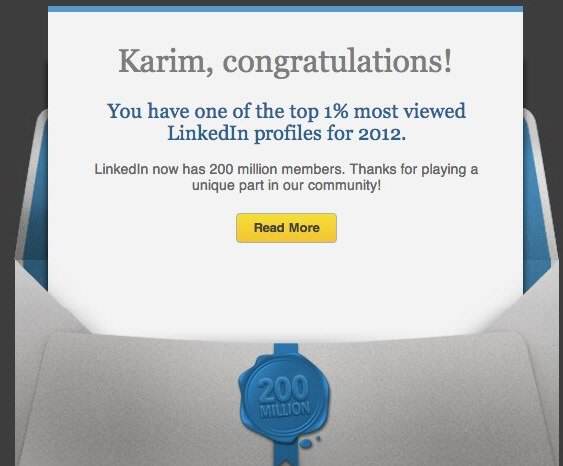
You might be aware of a certain email that’s doing the rounds at the minute from LinkedIn that’s generating some online buzz.

In the email, LinkedIn shares its milestone of reaching 200 million users. Then they go one step further and add in (for certain users) where you personally fit into LinkedIn.

Some users received emails saying they were in the Top 1%. Some received saying they were in the Top 5%, and so on.

It’s a smart but lazy move on behalf of LinkedIn when it comes to some viral buzz around the platform.

Smart, because it plays to peoples’ egos (as Bilal Jaffery points out in a Facebook discussion around the email), and lazy, because this kind of short-term hit and ego-massaging offers little in the way of context and long-term value.

Top 1% of What, Exactly?

The email itself is pretty generic, as you can see from the screen grab below from the email received by my friend, Karim Kanji:

LinkedIn 1% BS

In Karim’s own words:

Thanks LinkedIn, but I’m calling bullshit on this.

It’s not only Karim who views this as no more than a numbers play by LinkedIn to create buzz, possibly due to their slip down the pecking order of social network user numbers when it comes to active users.

Over at MarketingTechBlog, Douglas Karr shares his view on the email:

This is the kind of campaign that drives me nuts. The percent is a ridiculous number that means nothing? truly nothing. If you?re a superstar in your field that is picky about who you connect with on LinkedIn, you didn?t get one of these emails. But if you?re in an industry with heavy recruitment with a big network? and you?re crappy at your job? you still received one of these emails.

At Soshable, J.D. Rucker, while congratulating LinkedIn on savvy marketing for stroking egos, muses:

When you really think about it, it?s not as much of an accomplishment as a great marketing ploy by LinkedIn to get their name out there and into conversations on Twitter. Top of mind? The math makes it seem less impressive. Even those who received the top 1% email might not have been as quick to brag about it had they realized they were one of over 2 million users to receive the honor.

And this is what it boils down to – there’s a complete lack of context as to what the “award” really means.

Without Context, It’s An Empty Metric

If LinkedIn truly wanted to share who had the most viewed profiles on their network – and, by definition, who people should connect with from a business point of view – they should have included at least some modicum of context with the statement.

For LinkedIn’s message to offer value to me, I’d want to understand the following:

  • What does the 1% mean?
  • Who’s viewing these profiles – recruiters, headhunters, or just old colleagues and friends from high school?
  • What are the industry specifics of those viewing?
  • What’s the likelihood of all these views resulting in a job offer or consultancy hire?

These are just four basic but immediate questions that spring to mind. There’s much more value to be had in knowing it’s people that want to do business with you viewing your profile, rather than the majority of views coming from ex-colleagues and college buddies.

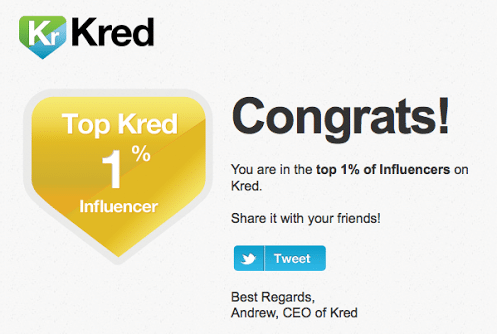
The email has been compared to a recent campaign by social scoring platform Kred, who sent out Top 1%, 5% and 10% emails to their users.

Kred top 1%

This email generated a great discussion over at Geoff Livingston’s Google+ account.

Andrew Grill, Kred CEO, stepped into the discussion to answer questions and criticism, much of which centred around the same mindset as that of the recent LinkedIn email – is it truly recognizing top users, or simply a mass market email to generate buzz?

One of the areas that Andrew accepted could have been better was the area of context within the email. Again, Kred – like LinkedIn – simply sent a generic message with the percentage of where a user fell inside the Kred database.

Had the message been more specific – say, “Congratulations, you’re in the Top 1% Marketers / Bloggers / Social Good Advocates”, etc, then that shows the algorithm was used to determine your niche listing and they’re sharing that with you.

The smallest amount of context can make the biggest amount of difference when it comes to perception of a campaign, as highlighted by some of the reaction around both LinkedIn and Kred’s emails.

Stroking Egos and Long Term Benefits

One of the things that both sides of the coin mostly agree on is that stroking the egos of users is a smart move from LinkedIn.

By advising users of their mythical status within the ecosystem, and encouraging recipients of the email to share on Twitter and other networks, it ensures a healthy amount of buzz around the platform.

The problem is, ego-stroking this way generally doesn’t work long-term. Now that LinkedIn has placed these “1% leaders” on a pedestal, will they continue to make them feel special with regular outreach? Will they answer their email questions to support quicker than the rest of LinkedIn’s non-1% userbase?

Because that’s the funny thing when egos become involved – once it feels like it’s no longer being massaged, the owner of the ego can be quick to move elsewhere where they’re treated in a manner worthy of such lofty percentile.

If you truly want to sustain long-term benefits and buzz around your brand, it takes more than a warm, fuzzy email as a one-off viral push.

Then again, truly smart brands already know this.

Special Announcement – Introducing ArCompany

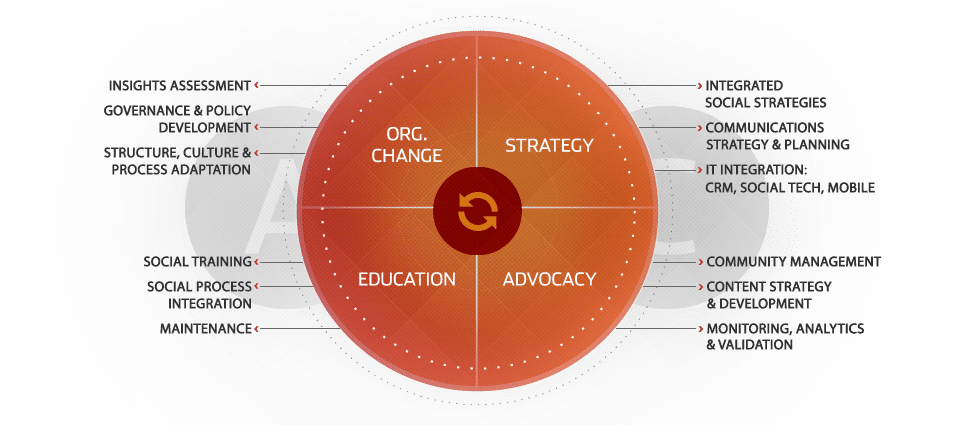
ArCompany services

A?social business?is one that becomes engaged, transparent?and?nimble. – John Mell, IBM

So it’s been a bit of a milestone week. First, I celebrated 1,000 posts here, and my daughter Salem turns one year old today so about to shoot off and get the party ready!

And, since these things always seem to happen in three, yesterday saw the official launch of ArCompany, the new business I’m part of dedicated to helping organizations and Enterprise operationalize social through business intelligence.

From the introductory blog post:

In the past, the value between a company and its customers was based on transaction history. A true value has emerged that includes customer relationships and behaviours outside of the organization and provides him/her with a stronger voice that the company must heed.

However, companies, for the most, part are not ready [to operate in this manner]. They don?t have the ability nor forethought to recognize the value of the data.

Companies are not ready to shape their processes and structure around this information to properly receive, manage and analyze and action on it (in the appropriate timeframes)?all in an effort to mitigate reputational impacts, to capitalize on potential revenue streams, and to reduce customer churn.

This is where ArCompany enters the equation.

We Are Not Just an Agency

It’s clear organizations needs strong education and guidance/governance when it comes to the business landscape we find ourselves moving in today.

In the past customers may have had the benefit of being listened to if the service team deemed them worthy. Today, however, businesses are increasingly finding themselves having their hand forced into listening, due to the myriad of options the connected customer has to air grievances.

Additionally, employees are true brand ambassadors for a business whether they have officially signed up to be one or not. Every action taken by an employee online reflects on the brand, and often the most innocuous statement leads to a crisis of reputation and perception.

These murky waters are making it increasingly difficult for businesses to just run the day-to-day operations, never mind the extra resources and expertise needed to oversee other core factors like the ones mentioned above, and more.

This is why ArCompany is not just an agency. We’re not just a marketing house. We’re not just a digital services team.

Instead, as befits the way the company name is pronounced, we are the driver of your business when it comes to accountability for the customer at all levels, internally and externally, from employee to consumer to stakeholder.

Understanding the Connected Customer

Through three key areas, we will help organizations be the drivers of change, bridge gaps by elevating the relationship between customer and brand, and allow businesses to focus their resources in driving the other parts of their business to meet market needs and expectations.

These three key areas are:

  • Comprehensive Data Analysis – ArCompany filters through the noise of the social web allowing you to have meaningful conversations with your customers and stakeholders;
  • Strategies That Drive Business Return – We help evolve companies to the changing communication landscape and build programs to set up organizations for success;
  • Customer Experience Solutions – Helping your business understand and evolve with your customer’s expectations and increase loyalty and advocacy.

The team at ArCompany has an average of 18 years experience each in helping businesses transform the way they do business to meet ever-changing marketplace demands.

ArCompany team

It feels like this company has been a long time in the making. Organizations are ready to make the jump into being a true social business – they just need the right guidance across all parts of the business to make this jump and implode the silos that currently exist.

ArCompany will be that company.

Our partnership with you will be?a true collaborative effort to move you to the next level, through education, technology partnerships and implementing business objective initiatives. The word ?arc? shows steady momentum and progression. Taken together with ?company? it sounds like ?Our Company?. The next generation of business will have accountability to the customer? at?all?levels of the organization.

We look forward to getting started.

You can get more information on ArCompany on our website, as well as Facebook, Google+, LinkedIn and Twitter (minor tweaks are still being made to the social profiles).

1,000 Blog Posts Later – An Introspective

Danny Brown

Today’s post marks a bit of a milestone for me, as this post is the 1,000th one since I started this blog back in September 2008.

While I tend not to “celebrate” various milestones too much, with the exception of (occasional) annual birthday posts, the 1,000th one is a little bit different. It’s one of these weird numbers that “says” something, whatever that something is.

It’s funny to think of the number 1,000 – it truly only seems like yesterday when I started this blog. I’ve been blogging since way back in 1999, and had a few writing projects that have morphed into blogs since then – but this one is the one that’s truly stuck and, I guess, the one that defines my goals and outlook.

So today’s post is going to be a bit of an introspective (and thanks to everyone on Facebook who gave me some great ideas on what to write about) on what’s changed since that very first post. If this is something you’re not interested in, I hear you and feel free to come back on the next post when normal service will be resumed.

For those of you still hanging around, I thank you – and let’s dig in.

Everything is Fluid

When I first started here, it was a continuation of a public relations blog that I had, back in my early solo consultancy days. The goal was simple – to share thoughts and ideas on social media and where that fit in the business world.

For the first six months or so, I was probably way too myopic for my own good – everything was based around social media in the purest form. Don’t do this; be like that; it’s all about the conversation, blah blah blah.

And you know, perhaps at that time it was okay to write about things that way. But everything’s fluid – we need to keep moving. Staying in the same place leads to boredom and stunted knowledge.

Looking back, I probably listened to and read too many kumbaya social media blog posts and bought into the mantra. I come from a traditional marketing and communications background, where everything is set in stone and the relationship to the sale is a true and trusted path.

Yet this path doesn’t allow for too much veering off to try new things, so seeing the risks people were taking (or appearing to take) in social media was a bit liberating.

However, it soon became apparent that these risks weren’t truly born with any business acumen – it was more from a “I’m pretty popular with this stuff I’m saying and I’m just making shit up – maybe I’ll keep this up a while!”

Once that realization kicked in, the tone of this blog changed quite a bit and I was determined to make this part of the web one that’s always evolving, and letting its vision, voice, whatever you want to call it, be shaped by the readers and commenters as much as it was by me.

Thankfully, that’s worked so far.

Being Wrong is Okay

Most people hate to be wrong. Most people hate to admit they’re wrong even more. For many people, admitting you’re wrong is a sign of weakness. And if you’re a blogger and you admit you’re wrong, then why should the community you’ve built up hang around?

Yet it’s okay to be wrong. In fact, we need to be wrong more and celebrate that fact – because it’s the only way we grow.

I’ve written posts on here where I’ve been cocksure in my belief that the opinion stated in it is the right one. Heck, perhaps the only one. But, of course, that’s bullcrap.

[pullquote position=”right”]None of us have all the answers. Hell, very few of us have a decent amount of answers when it comes to most things[/pullquote]

So why do we feel we should be right the majority of the time when it comes to our opinions?

The biggest learnings I’ve taken from this blog is when someone comments on a post and completely blows my point of view out the water, whether from their opinion or from backing it up with facts and statistics.

Does it make me look an idiot? Sometimes. But ignoring the better opinion or statement when it’s right there in front of you and everyone else that reads the post is more idiotic.

If we truly want to grow as people, whether personally or professionally, we need to be open to other points of view. If we’re putting our thoughts out for the world to see, we really need to be open to other points of view.

Otherwise, why even share in the first place?

The Fallacy of Numbers

We get so wrapped up in numbers at times.

At Christmas, we want more presents than we got the year before – same goes for birthdays.

In high school, we want to lose our virginity at a younger age than our friends (and then have more girlfriends/boyfriends than them). At work, we want to get bigger raises and more recognition than our colleagues.

And yet, numbers are so superficial.

Sure, they may make us feel better and enable us to have a better “life”, but that depends on your definition of what a better life is (for me, it’s being able to spend evening and weekend time with my wife and kids).

When I first started this blog, I was so wrapped up in checking the numbers that everyone says matters – new subscribers, new social shares, unsubscribers, comment count, etc.

And, sure, I still afford a little smile when a new subscriber joins, since that offers an opportunity to get to know them in the comments and see what makes them tick.

But this concentration on numbers hurts us. Just as chasing more presents at Christmas turns us into spoiled brats, so does chasing blog numbers turn us into the blogger we don’t want to be.

We start writing generic list posts, just to try and hit that viral social share gold. We stop being opinionated and lose the voice that attracted readers in the first place. We write linkbait and ass-kissing posts so the highlighted folks will come by, say we’re great, share and then maybe, just maybe, invite you to their next conference.

Do we really want to be that blogger? Is that why we started in the first place, and continue when others stop?

By all means, care about how your content is perceived – but don’t let the numbers rule you. Now when I get email alerts that tell me someone has unsubscribed and they offer the reason why, it simply tells me we’re not a good fit anymore and they’d be better catered to elsewhere.

And that’s okay, and the way it should be.

A Blog is Just a Blog

We hear so many people (and I’ve been guilty of this) telling us what we should do when it comes to our blog. “Build your list!”; “Cover it with ads!”; “Sell shit!”. And, yes, we can do all that.

But we don’t have to.

[pullquote position=”right”]The great thing about a blog, and something I’m seeing more of, is that we control what it is and what it does for us[/pullquote]

As I mentioned earlier, this blog has taught me that being wrong is okay. It’s also (I believe – feel free to disagree!) made me a much better writer and thinker than I was four years ago. It’s enabled me some wonderful opportunities, for which I’m eternally grateful.

And it’s allowed me to meet some of the funniest, smartest, humblest, caring and downright awesome people, either in the comments, discussions around the web, or at speaking events I’ve been invited to because someone was kind enough to read something here and ask me to come out and speak.

But, at the end of the day, a blog is just a blog.

Because this one is primarily a business one, it makes sense that business things happen because of it. But, to be honest, if they didn’t, I wouldn’t care – it would just mean I’d have to do some more “hustling”, if you like, away from here.

And that’s something we can all do.

Don’t let anyone tell you your blog needs to be about this, or you need to do that, to make it a success. I know people who don’t give a crap if their blog is read or not – it’s an escape valve for their innermost thoughts and fears, and just getting it out of their system into something physical makes their lives easier.

A blog is what we wish it to be – and every choice is the right one, for us. It can be world-changing globally; it can be world-changing personally. And isn’t that all that really matters at the end of the day?

The Next Chapter

So I guess I’ve rambled a little bit here, and I apologize if you’re still here and bored out of your skin. I don’t often write posts this long, and it probably won’t happen again for a looooong time (if it does at all).

I’m also wary that this post may come across as a delusion of self-grandeur (to paraphrase Han Solo) – hopefully if it does, it’s not too much.

I sincerely thank you for being here at whatever part of the 1,000 posts you jumped in on and, whether you’re a regular or an occasional visitor, I hope you find at least some of the stuff here useful.

I don’t know what lies ahead in between now and the next 1,000 posts. I have an idea of some things that will happen (and more on that in the next post, probably), but then that’s the fun part – taking it as it comes.

Thanks for the first 1,000 memories – here’s to continued fun ahead. Slainte!

  • « Go to Previous Page
  • Page 1
  • Interim pages omitted …
  • Page 36
  • Page 37
  • Page 38
  • Page 39
  • Page 40
  • Interim pages omitted …
  • Page 174
  • Go to Next Page »
© 2026 Danny Brown - Made with ♥ on Genesis