• Skip to primary navigation
  • Skip to main content
Danny Brown

Danny Brown

podcaster - author - creator

  • About
  • Podcasts
  • Journal

Insights

Being In The Physical, and Turning Memories Into Moments

This week, I returned from a two week trip back to my birth country of Scotland.

I took the trip with my good friend, Sam Fiorella, who had wanted to do this trip for a few years (he was meant to do it two years ago for his 50th birthday).

Given my own 50th is fast approaching this October, I revisited the idea with him, and we took off on an adventure of whisky tasting, scenic views, a trip to his beloved Liverpool FC near the end of the trip, and a stay-over in Amsterdam on the last night.

And it was glorious.

Being able to switch off, and simply view and breathe in the experiences around us, was truly a gift, and one that has created memories that will last a lifetime.

It’s something we don’t do enough of and, watching how those around us in the places we visited lived life, made us both realize how differently life is meant to be enjoyed.

Digital Seconds, Physical Lifetimes

It’s been a while since I was in Scotland and I was originally from Edinburgh, so I was used to busy lives where streets are full, and people have places to go, fast.

It’s not too different from Toronto, where I now work – heads down, feet driving people forward, meetings to make as opposed to conversations.

And I get that. It’s modern life, city style.

But the contrast in the Scottish Highlands and Islands, where Sam and I visited, was marked and welcome.

People ambled along amiably, smiling, nodding acknowledgement, taking life one slow step at a time.

Pubs were full of laughter and faces at once new yet not, as they struck up conversations with us and invited us into their circles.

Strangers became fast friends, and no-one looked at their cell phones. Seriously – not one single time.

Instead of wasting digital seconds, the locals were enjoying physical lifetimes of laughter.

Contentment, easiness around people, and showing how people with no rush to be in the next place lived life in a much happier place than we allow ourselves to in our own everyday lives.

It was almost like being in a place before cell phones, before social media, before always-on became a norm as opposed to an abnormality.

And I loved them for that.

Making Memories More Than Just an Image

This peace, this serenity, left me with an increased desire to at least try and replicate it back home in Canada.

I’ve spoken before about leading meaningful lives, and turning off the overwhelm, and I try my best to switch off where I can for some quality time.

Yet one thing I’ve taken away from the stay in the Scottish Highlands and Islands is this: just switching off only lasts so long. It’s the mindset that has to change.

Enjoying moments for what they are, as opposed to what you pressure yourself to gain from them.

Enjoying people for who they are, as opposed to what you expect to take from them.

Enjoying life for what it is, as opposed to what you’re told it should be for it to mean something.

In short, not thinking of memories of that time in Scotland and how relaxed I felt, but making these memories ones that exist every day because we’re living that ethos of peace, contentment, and appreciation.

No doubt there will be times it’s not possible to do so but, for the most part, it’s easier than we often allow ourselves to believe it is.

We just need to open our eyes and breathe.

If you’d like to view a collection of some of the pictures I took on the trip, including some amazing panoramic views, you can find them here.

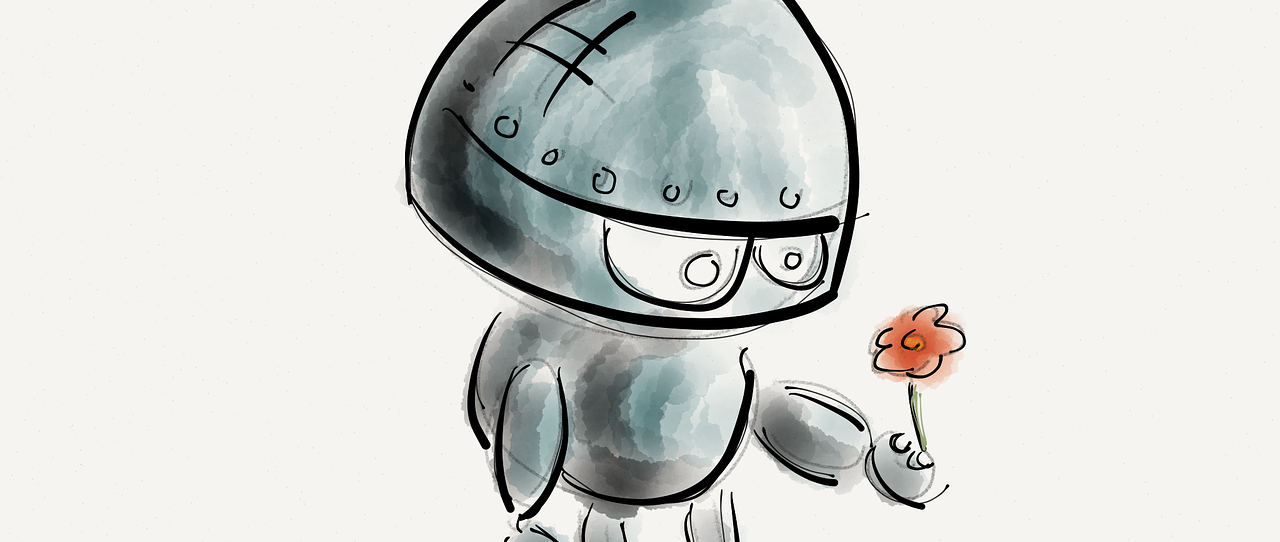
Forever Chasing Shadows

Chasing shadows

From the moment we can, until our moments are no more, we’re forever chasing shadows.

As children, we chase the shadow of ourselves that the streetlight throws in front of us.

As teenagers, we chase the impossible date with the most popular boy or girl.

As adults, we chase the dream job that never happens, or the pot of gold we never reach.

We know – subconsciously or otherwise – that some shadows can never be caught, and yet we chase them anyway.

And the damage is catastrophic.

People chase after opportunities around the world and watch marriages collapse because of it.

People chase popularity online and see children forget who they are.

The damage gets done; and yet still we chase the elusive shadows.

Some shadows we catch, and it makes the chase worthwhile.

But for how long? The make-up of a shadow means it’s always on the move – can we afford to always be on the move too?

We all make choices every day. Some have a clear outcome, some don’t.

The clear ones may not be the most rewarding financially, but money never cured a broken soul.

The non-clear ones live in the shadows, and the thrill of the chase appears again.

Some of us succumb; some step away and accept the futility of chasing that particular shadow.

There’s nothing inherently wrong with chasing shadows; there is something inherently wrong chasing futile shadows.

Alfred A. Montapert once said,

Nobody ever did, or ever will, escape the consequences of his choices.

Our shadows are our choices. Our consequences are the future and the past of these choices.

Make sure you’re choosing wisely.

We Are Not Free From America’s Hate

Love and hope

Last weekend, the city of Charlottesville in the U.S. saw an eruption of violence, led by hate, bigotry, and white supremacists.

It led to the murder of a 32-year-old woman named Heather Heyer, and dozens more injured, when a speeding car was deliberately driven into a crowd of anti-fascist protesters.

Two state troopers also died, when the helicopter they were monitoring the situation in crashed and burst into flames.

Demonstrators on both sides were injured as fights broke out, and pepper spray and weapons replaced speech and taunts.

Meanwhile, the so-called Commander-in-Chief, “President” Trump, remained silent until his hand was forced by the backlash against the White House’s silence on the violence.

Given Trump’s penchant for denouncing retailers that don’t stock his daughter’s products, to his tirades against “radical terrorism”, his silence on the white domestic terrorists was deafening, even though the hate could be heard so clearly.

However, as the world looked on in horror at what was unfolding on American soil, we have to remain cognizant that it’s not something that “could never happen here”.

Hate is Everywhere

Here in Canada, there’s a growing fear that the hateful rhetoric we saw at the weekend could raise its head here.

While my adopted country is often heralded as one of the most welcoming and friendliest countries in the world, we have our own sordid history and characters.

In the northern city of Thunder Bay, Ontario, racism against indigenous people (the original Canadian citizens) was brought into sharp focus with the deaths of seven First Nations students.

Their deaths highlighted not only racism in the city, but how their deaths were treated by the authorities, and led to almost 150 recommendations on combatting the issue.

In British Columbia, the racism against Canadian aboriginals is so inherent that it’s almost become invisible to the local eye, and is ingrained into many of the non-native society.

Elsewhere, there’a a media site called Rebel Media that has seen its co-founder leave due to its views on immigration and Islam.

Add “everyday Canadians” asking for a white doctor, and the ease in which we can feel smug that we’re a multi-cultural and welcoming destination, and it’s clear to see that America’s northern neighbours have our own issues.

Over in the UK, hate-filled rhetoric and ignorance was used to engineer the Brexit vote, and the departure of the UK from the European Union.

While there were some valid beliefs in Leave voters that leaving the EU made economical sense, in truth much of the arguments came from the belief that Britain had to take back its money and jobs from “Johnny Foreigner”.

You only have to look at the aftermath of the Leave vote to see how this argument emboldened the festering racism that had been on the rise in the UK.

  • Over a third of ethnic and minority groups in the UK suffered from racial abuse following the vote
  • 20% were assaulted because of race
  • 41% witnessed or heard racial abuse

Neighbours and communities turned on each other, and small-minded bigots unleashed their pent-up hate.

In Europe, there’s been a rise in the far right and their opposition to the immigration policies of these countries.

As cities like Brussels and Paris become victim to terrorist attacks, racists use these as proof that Muslims need to be banned from entering the country, regardless if certain death waits on them at home.

Refugee camps are attacked, violence simmers underneath, and the uneasy peace threatens to be ripped apart at any minute.

Where Do We Go From Here?

I’m not a politics major, or a societal expert. That’s why we have smart people in power looking for answers, looking for ways to ensure the targeted are protected while the ignorant are – hopefully – educated.

And, thankfully, political results would suggest more people are ready to push back on hate than embrace it.

In France, the far-right party suffered a devastating loss in the recent election, as newcomer Emanuel Macron became French President.

In Canada in 2015, the incumbent Conservative Party’s campaign of trying to divide Canadians through cultural difference backfired spectacularly. Their party was wiped out in the elections and Justin Trudeau took office.

In Germany, Angela Merkel has seen off far-right parties through her stance of a united and prosperous country, and a defence of her country being a safe haven for refugees.

These are just three examples, three leaders, three countries.

As mentioned earlier, are these countries perfect? No – far from it. But they offer hope that hate and violence can be countered with acceptance and sensibility.

However, these are just starting points. We need to be more vocal, more protective, more active when it comes to denouncing hate and protecting others.

  • We can’t live with the mindset “never here” – history tells us otherwise
  • We can’t stay silent in the belief someone else will speak up – we are that someone else
  • We can’t allow ignorance and lies to go unchallenged – that’s the real fake news and it has to be pushed back on
  • We can’t allow our kids to be educated by unchecked media – we need to instil love, truth, acceptance
  • We can’t hide behind the term “not all white people” or similar – that simply negates the issue

There are many people who say Charlottesville was a turning point. A recognition of the issue in the U.S., and what’s needed to correct it (getting the white supremacists out of the White House would be a start).

But if it is recognition of any kind, then it’s only realizing that this is the face of hate that all too many people deal with every day. The only difference is we saw it on TV and social media.

Understand that, and understand that it could happen “here”, and probably will unless we do something, and we may just have a chance at fighting this problem effectively.

Otherwise, it’s only a matter of time before Charlottesville becomes your town or city. And by then it’ll be too late.

Oh Noes, Google+ is Removing Its Share Counts – Who Cares?

/endsarcasm

I could just leave this post here, and it’d be enough for my take on the news that Google+ (yeah, remember that?) is removing share counts from its sharing button.

Much like Twitter did a couple of years back, Google’s platform will no longer show how many times your post or article has been shared on its network.

And, as expected, content creators are making all sorts of noise about this loss. Which is understandable, given they make money from a social sharing plugin, amongst other things.

But, in the grand scheme of things, does this really matter?

Social Proof, or Social Proof is in the Pudding?

At the start of last year, I removed social sharing buttons from my blog altogether after a couple of experiments around their value, both perceived and real.

My take was (and remains) they’re simply an interruptive part of the content consumption for both reader and post author.

The experiment (for my blog, at least) bore that belief out, with more shares happening as a result of there being no share buttons – go figure!

Now, the argument from many social sharing button fans is that it makes it easier to get shares, thereby increasing your share count, thereby making your posts seem more popular.

This is called “social proof” – by having large numbers of shares, visitors to your site will believe you’re more influential than other bloggers, and will therefore share your content versus similar content elsewhere.

[clickToTweet tweet=”Oh noes, Google+ is removing counts from its sharing button. It’s a disaster! /endsarcasm” quote=”Social proof via social sharing numbers – valid authority metric, or fuzzy fluff?”]

And, to a degree, that can be true. But is that adding to your goals?

  • Does a thousand shares of your latest post mean you have a thousand new subscribers, or a thousand new customers for your online store?
  • Are the shares going out to the right audience when being shared?
  • Are the shares delivering on the message when a visitor comes to your site from it?

These are just three simple examples, but let’s break then down a little further.

Shares versus results

So let’s say your post gets a thousand shares across various networks. How does that impact your content goals? Are you just raising awareness, or is there a strategy behind the shares?

Numbers of shares are all good, but if all that’s happening is your post getting more numbers on your sharing buttons, are these numbers actually providing any value?

Especially when social media users are more likely to share a link than click on it.

Is it the right audience?

So your reader/visitor shared on Twitter, or Facebook, or Google+. Great – more eyeballs for your content, right? Or is it?

Who are the followers of your sharer? Because that’s what really matters – not the amount of shares, but the relevance of that share to new eyeballs.

Although not 100% definitive, this graphic shows how little online content can mean in the grand scheme of things when it comes to what’s shared on social media (using the U.S. as an example).

This ties back to relevance to the visitor – if your sharer is primarily followed by non-buyers of your product, or non-readers of your topics, I don’t care how many times that post is shared, it’s probably not going to mean much in the grand scheme of things.

Does your site deliver?

Most social media sharing is done via mobile now, given the mobile-first nature of the various networks, and their individual apps.

So let’s say a share goes out via a desktop visitor, and is clicked on by a mobile reader – except your site still isn’t set up for mobile visitors (yes, this still happens in 2017!).

Your visitor is going to bounce from the site pretty much immediately, and you’ve lost a potential prospect – but, hey, that sharing count looks great, right?

The Argument Against Share Counts

As I mentioned at the start of this post, there are a lot of people who put social share counts into a bracket of value.

And, for some, maybe that number beside the sharing button validates their content, and they offer examples of why it’s important – and that’s fine.

But, for me at least, the arguments don’t completely hold up.

Social share counts attract advertisers

Maybe they do – initially. But if your analytics don’t back up the numbers, you can bet the advertiser(s) will look elsewhere.

After all, what do you think is more attractive to an advertiser looking for a blog partner – 1,000 shares with 12 visits, or 1,000 visits with no share numbers in site?

Fewer shares can lead to less interaction

Again, maybe, maybe not. As my own experiment showed, having no sharing buttons didn’t negatively impact my blog or the goals I have for it, including interaction.

Besides, what type of interaction are you looking for?

  • Visits?
  • Comments?
  • Subscribers?
  • Downloads?
  • Bookmarking?

There are many forms of interaction, and you don’t need share counts to encourage that.

Share Counts versus Content Goals

Look, I get it – social sharing is a success metric for some, and that’s all good. If that’s part of your content goals, knock yourself out.

But by focusing on the share numbers versus what’s happening behind these numbers (many of which can be inflated any way), you get sucked into creating content to attract shares, as opposed to content to meet goals.

And that type of content will never attract the kind of quality visitors you want, regardless of how many times it’s shared.

So, stop worrying about share counts. Start concentrating on what really matters, then work out how to get there.

Everything else is just a distraction.

How Do You Solve a Problem Like Facebook Live?

As social networks continue to try to outdo each other with new features, one of the most popular additions has been that of live video.

Facebook, Twitter, Instagram are increasingly putting the?focus on video content, with reports that Facebook could be video-only by 2020.

It’s understandable that video could become the de-facto method of content consumption due to the simple buy-in for the audience.

A video is visual, quick, snappy. Words require more thought and more investment by the reader (which is why I’m eternally grateful to the readers of this blog and your choice of consumption method).

The success of Facebook Live is a testament to how social network users are adopting video, not just as consumers but as users too.

Yet, as the last 12 months have shown, the instant production and gratification that video offers could also be its downfall.

Facebook Live and the Dangers of Unfiltered

Over the Easter period, Cleveland Police began a manhunt after a video of a murder was uploaded to Facebook.

Steve Stevens shot Robert Godwin, 74, and shared the video of the killing to his Facebook profile (initial reports suggested the murder was streamed via Facebook Live, but this was later corrected).

The video remained on Facebook for at least two hours.

After almost 48 hours on the run, Stevens killed himself when his car was cornered by law enforcement.

Just a few days ago new broke of a Thai father who hanged his 11-month-old baby on Facebook Live before killing himself.

The video was shared on his profile, and according to reports remained online for 24 hours (Facebook has yet to confirm the details of the time).

In March of this year, the rape of a teenage girl by six assailants was filmed and streamed live on Facebook. In January of this year, a special needs man was beaten and tortured by four assailants, and his assault was also streamed on Facebook Live.

Also in January, the gang rape of a woman in Sweden was also streamed via Facebook Live.

These are just some examples amid the growing number of crimes and assaults?streamed on Facebook Live and its peers?like Periscope and others.

There seems to be little way to combat it, either. As the examples with Steve Stevens and the?Thai father show, disturbing content can remain on the site for as much as 24 hours.

While its?content team does monitor the site for inappropriate content (and live streams can be pulled immediately),?Facebook essentially relies on the public to report such content for its team to review.

Unfortunately, while the review is pending, the videos are live on the site in full view of victims of a crime, or surviving family members of a murder.

Facebook’s CEO Mark Zuckerberg has himself admitted it’s a huge problem and one that’s almost?impossible to manage given the amount of content uploaded to Facebook every day.

Given the difficulty of managing the medium, and the damage that can be caused because of that difficulty, is it time to consider how Facebook Live and others like it is approved?

How Do You Solve a Problem Like Facebook Live?

The biggest problem with trying to manage live streaming videos is that they’re used in so many ways that are good, and educational, and – in some cases – can provide vital evidence to a court of law.

Consider the killing of African American Philando Castile by a police officer in St. Paul, Minnesota, in the summer of last year.

Despite calmly obeying the officer’s instructions, and advising that he was in legal possession of a concealed weapon, Castile was killed when the officer opened fire.

Inside the car were Castile’s girlfriend and her four-year-old daughter. As Castile lay dying in the driver’s seat, his girlfriend live-streamed the aftermath, and that helped convict the office in question on manslaughter. That trial is still undergoing today.

Indeed, Facebook Live has been used to broadcast demonstrations against police brutality, government dictatorships, and even examples of corporations treating their customers with disdain.

Then you have the fun aspects of Facebook Live, with vacation moments captured in time. Heck, we even use it for The Friendship Bench launch events.

But do the “normal uses” outweigh the depraved and harmful ones? Do we need to look at how users can access Facebook Live, and should there be some form of delayed broadcast for checks to be made?

I posted a quick poll on Twitter, asking if it was maybe time to only allow news organizations and accredited sources access to Facebook Live, and the opinion was split down the middle.

https://twitter.com/DannyBrown/status/856982416036159491

Andrea Meyer shared her thoughts of the medium itself not being the “culprit”, so to speak.

The tool is not the issue. Needs a mechanism to stop quickly. Agencies & companies can share events in real time. Opt in function?

Over on Facebook, I asked some friends what could be done to try and minimize the use of Facebook Live for harmful purposes, given the difficulty of monitoring at such scale.

Suggestions ranged from limiting it to news organizations and delayed feeds, to simply limiting access and making video pre-recorded (although that could still be circumnavigated by uploaders).

It’s clear that video is here to stay, both live streaming and personal content creation. But as social networks start to experience the difficulties news organizations have faced in the past when it comes to censorship and what’s allowed on-screen, the growing pains are beginning to show.

I’m not a tech guy or developer, so I’m unsure of what could be done (apart from the unenviable approach of restricting access). I do feel something needs to be done, though.

How about you?

How would you solve the current use of Facebook Live and stop the kind of videos from the start of this post from being published (or staying published too long)?

  • Page 1
  • Page 2
  • Page 3
  • Interim pages omitted …
  • Page 174
  • Go to Next Page »
© 2025 Danny Brown - Made with ♥ on Genesis