• Skip to primary navigation
  • Skip to main content
Danny Brown

Danny Brown

podcaster - author - creator

  • About
  • Podcasts
  • Journal

Marketing

Internet Fame and the True Impact of Influence

Affiliate marketing masks

DSCN1849.JPG

You may be aware that there is a big debate going on in the social media blogosphere about ?influence? (and you can see links to several blog posts at the end of this one for examples of these discussions).

How we need to leverage influencers in our communities in order to get the word out about our causes, brands or services, etc. And that makes total sense from a generating-word-of-mouth point of view.

But hold on.

If you?re trying to do this, what if you don?t actually know who your industry influencers are? Perhaps because you?re not really immersed in your own open community, or because your community is too large or public-facing to be able to list your champions in an organic way, you?re just not seeing it?

So you begin to use some of the tools out there that purport to measure influence, and you start to think, ?This isn?t as easy as it sounds.?

Maybe you?re starting to think that influence is not about how many followers someone has on Twitter. ?Maybe you?re starting to think that ?influencer scores? are totally meaningless for your goals and objectives.

So what is influence, really?

Can it be measured (and if so, how)? How can you find the influencers in your industry? Do apps?like Klout or Twitalyzer really work to automate this? Or?is this all bunk?

A group of us are going to be talking about Internet Fame and the True Impact of Influence in a new BlogTalkRadio show on Wednesday February 9 at 10pm ET.

This new show is the brainchild of some really smart social media practitioners and consultants from various industries, and the purpose of the show is to debunk some of the social media bubble/hype around various issues. The tone will be irreverent, but the conversation and concerns around the topic are very real.

I hope you?ll be able to join us (expect the accompanying chat to be lively and extremely snarky!), or listen to the podcast afterwards (bookmark this page and come back to listen!).

I?ll be hosting this inaugural episode (uh-oh!) and Tamsen McMahon, Lisa Thorell, Allyson Kapin, Rich Becker and Olivier Blanchard will be chatting live with me on the night. But, as it?s BlogTalkRadio, anyone can call in and ask the panel questions. Lots of other people with thoughts on the topic will be listening in and participating by chat.

In preparation for the radio show, here are some of the blog posts the group may be referencing.

  • 4 Things You Need to Know About Influence ? Tamsen McMahon, on Brass Tack Thinking
  • It?s About Impact NOT Influence ? Allyson Kapin on Frogloop
  • The Influence of Trust ? Danny Brown
  • Artifacts of Influence: grassroots movements, familiar strangers and the power of the social media daisy chain. ? Olivier Blanchard
  • Flipping The Scale: Influencers Are The Most Influenced ? Rich Becker on Copywrite, Ink.
  • Klout & Critics: Time to Close the Door or Kick it Wide Open? ? Lisa Thorell on Digital, Ink.
  • Strength of Community Supersedes Influence ? Geoff Livingston
  • Why I?m 10X As Influential As Ashton Kutcher On Twitter* ? Chris Yeh, Adventures in Capitalism
  • The Holy Grail of Online Influence vs Our Current Measurement Limitations ? Beast of Traal
  • How do you evaluate influence? ? Jeremy Porter, on Journalistics

So put the kids to bed, grab your tipple of choice, and join us on Wednesday evening!

This post is derived from Maddie Grant and SocialFish.

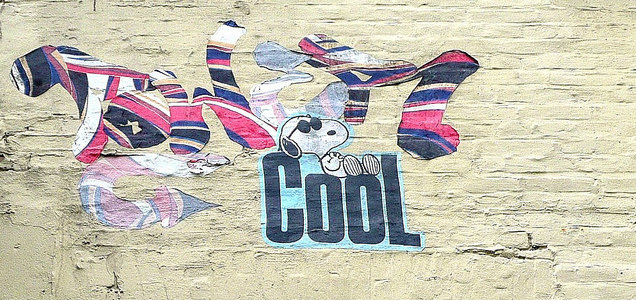
Sorry, Social Media, But Marketing Is Still Cool

Marketing is cool

Marketing is cool

As social media continues its assault onto the mainstream audience, one of the side-effects has been the emergence of the view that marketing isn’t allowed in the space.

Conversations on blogs, Twitter, LinkedIn and elsewhere are vocal in the opinion that marketing is dead; we choose who we buy from and whose reputation we ruin; what gets our eyeballs and what doesn’t.

Simply put, old school is dead; long live the King (of new media school). And, to a degree, it’s correct – old school is dead.

But let’s not get too carried away by our new best friend social media, either.

Any time a new marketing platform comes out means that the “old school” is dead as it was; but now you use it in conjunction with the new. The view that we (as consumers) have all the power and that brands now need to listen to us is nothing new, either.

Sure, we have a soapbox on which we can stand now that allows us to share our likes, dislikes and outright hatred of a brand, product or service. Not only that, but we can share it with a worldwide audience looking for the next fix of brand assassination on YouTube.

But at the same time, is this really new? Haven’t we always had the power over brands?

It doesn’t matter how great advertising, marketing or PR messages are – if we don’t like something, we vote with our wallets. This has been happening since the dawn of the first trade agreement. Just because Coca-Cola runs a great Christmas advertising campaign doesn’t mean I’m going to suddenly buy Coca-Cola. I don’t like the stuff, so their marketing and advertising is lost on me.

The view that social media has allowed us to force marketers to think differently isn’t completely true either.

Good marketers have always planned with their audience in mind – it’s one of the key tenets to marketing in the first place. We don’t just come up with an idea and hope it works – like a duck on water, there’s a lot more going on that you can’t see, while the pretty stuff on public view looks effortless.

Additionally, good marketers have always known when a message is right, if the timing is there, and reacted as a campaign has progressed, using analytics and feedback. Kind of like social media does – the main difference is now you have instantaneous feedback to work from, as opposed to waiting on figures coming in from print or TV/radio media.

There’s no doubt that social media is one of the biggest changes in the marketing landscape (and the business one in general). When it comes to tracking, measurement and engagement prior to, during and after the launch of a product or service, social media offers a great range of options.

To say that it means marketing is no longer needed, though, is missing the boat slightly. Like any sound business, the good marketing tactics will work and the lesser ones won’t, especially when they’re integrated as opposed to segragated.

But isn’t that how it’s always been?

image: MIgracionTOtal

What I’d Like to See From Location Based Marketing Services

Find your customers LBS

Find your customers LBS

Location based (or geo-located) marketing is getting a huge amount of buzz at the minute, as?Twitter apps connect location tweets to its service,?Foursquare is credited with Domino?s Pizza?s UK success and?smartphone users get ready for augmented reality to guide their leisure time.

And then there’s Facebook’s continued assault on world domination with its new Places app.

All good stuff. And yet?

For the most part, we?re still being safe and boring when it comes to how we, as marketers, use these geo-location services such as Foursquare and?Gowalla to drive traffic and sales to our clients and own business.

And there are some great opportunities to set yourself apart.

Cross-Platform Marketing

One of the cool things about Foursquare is the ability to offer specials to folks who check in at your place. Yet even this is being underused, and generally stops at offering mayorships.

Why not tie it into other social media platforms you use?

For example, let?s say you have a?Facebook page for your brand. When you set up a reward for your Foursquare users, why not show the message, ?Thanks for checking in! Why not friend us on Facebook too, and download your exclusive code for?Facebook-only offers??

Not only does this strengthen the relationship with you, you?re offering a great call-to-action to grow your Facebook page while giving your customer even easier ways to make a purchase with you.

Mayorship Shmayorship

Check out any of the offers that businesses using Foursquare promote, and it?s usually rewarding the mayor of that location only.

Great for the mayor, but let?s face it, that can be gamed ? I can check in at the coffee house across the street from my office without even entering the premises, so no sale there!

So why not offer a Happy Hour promo instead? An alert goes out to your followers, something along the likes of, ?Hey guys, between 6 p.m. and 7 p.m. today, all purchases are 2-for-1 on everything up to $50 when you stop by and check in.?

Not only are you opening up the offer to everyone, you?re offering it with urgency ? something that?s hugely effective at getting buy-in from customers.

Cross Promotion Retailing

When we shop, we don?t always go for the cheapest offer. More often than not, we go for the one that best suits our needs. That could mean mix-and-match purchasing ? we get jeans from one store, a top from another, and shoes somewhere else.

So why aren?t we offering that more often via geo-location marketing?

For example, let?s say I go to the movies to see the new Batman movie. Obviously I check in there and maybe even write a note to say what I?m there to watch.

Now, imagine if that movie theatre was partnering with the local comic book store or chicken wings diner. As soon as I come out of the theatre, there?s a Foursquare alert from the comic book store that tells me I can get 10% off all Batman purchases that day.

Or if I go to the wings place, I can get 2-for-1 on special Bat wings (not real bats, obviously!) for that day only. Or good for a limited time from the update ? say, 72 hours.

Again, it?s tying into something I already like so I?m more than likely to check it out. And if I like Batman, there?s a pretty good chance I?m going to like comic books, too.

Like I said at the start, there are a ton of options available for smart marketers to use when it comes to geo-location.

All they need to do is find them. Do that and they might just find more customers, too.

This post first appeared on Spin Sucks, the business blog of Arment Dietrich, a non-traditional marketing agency headed up by Gini Dietrich. Spin Sucks looks to dismantle industry buzz and hype with thought-provoking insights and discussions.

image: mhartford

The Influence of Trust

The influence of trust

The influence of trust

What is trust, exactly? Is it the same for everyone, or can it be different?

Can trust in a celebrity, for example, be as strong as trust in a friend or family member? It might seem a strange concept, but if that celebrity has a lot of influence over you then isn?t that just as strong as advice from a close friend?

And how about a business? Does the sales or marketing message from a business hold more sway than word-of-mouth from a friend or connection if the business hasn?t been wrong so far?

Sony, for example, used CGI-rendered demos for their soon-to-be-released Playstation 2 console back in 1999 yet claimed they were in-game graphics. When the actual games came out, they couldn?t possibly live up to the hype, yet the console would go on to become one of the most successful ever.

So can trust be overcome with huge marketing and advertising budgets and sheer brute force of numbers?

It?s often said that the capital of trust is crucial for any business success. It?s also part of what makes us who we are, and how we view others (and are viewed ourselves). But can trust be manipulated to the point that it?s difficult to differentiate between a sales pitch and a genuine recommendation?

As paid blogging and sponsored tweets continue to come under both praise and criticism, it?s clear that trust will define who is successful and who isn?t. Or will it? Does trust disappear when monetary value comes into play?

How does your trust come about? If it?s broken, is that forever or do you offer second chances? Can companies be trusted implicitly, or is it it the means to an end for selling a product?

I trust your views ? feel free to share them and let?s open up the conversation.

image: scottburnham

Protecting Your Assets

Assets and growth

Assets and growth

My friend and business partner Troy Claus wrote an interesting post the other day, looking at personal versus professional branding. It raises some great questions about focus and recognition, and where the value lies in both.

It got me thinking about how the line between figureheads and financial results in business can be a frail one, and how companies need to take a look at how their audience perceives them if they want long-term success.

It?s a question that not too many businesses look at, especially if the employee is either a founder or boardroom level. Yet it?s something that every business needs to be aware of, and not just at the highest level.

One Minus One Equals?

Look at Apple and Microsoft for a minute. Everyone knows who the number one employee is (or was) ? Steve Jobs and Bill Gates respectively. They?ve become the face of their companies and are synonymous with the two brands.

Yet for anyone outside the tech and associated arenas, could you say who?s immediately after these guys? Timothy D. Cook is the Chief Operating Officer for Apple and Steve Ballmer is the CEO of Microsoft. I know of Ballmer, but that?s purely from being an Xbox 360 owner and his name pops up a lot in that field, but Cook I didn?t know.

This is why there?s always a big reaction to any news about Steve Jobs? health ? most people (or at least the ones that really matter, the consumers) see Jobs as Apple and vice versa. All of Apple?s successes have been because of Jobs (again, in the eyes of the general consumer), so no Jobs means no Apple.

You only have to look at the way Apple?s share price dropped when a citizen journalist incorrectly reported on Jobs? death. While the story was criticized for lack of research, it did raise a valuable point ? is being the face of a company detrimental to your overall business strategy?

Strength in Numbers

There are two key factors in the success of a business ? customers and product. Sure, you can have the best personnel but without customers it doesn?t matter if you have the most kick-ass team in business history. While market forces and economy also play a part, it?s customers and product that go hand-in-hand with each other that either make or break a business.

Normally they won?t care who?s running a company ? all that matters is they can get a product they need at the price they want to pay. However, if they see a front person for that company, it?s natural to associate that person as the company itself. So if something happens to that person, it?s also natural to think the company will be affected. Which is what?s happened with Apple in the past, despite the fact they have a tremendous backroom team in place to steady the ship.

If you have a face to your business, ask yourself if it?s the best approach. It?s always good to be recognizable as a brand but can there be too much recognition?

  • Make your business the brand as opposed to having a figurehead. These are usually only good for shareholders and investors, and they don?t normally stick around too long when your customer base starts disappearing.
  • Spread the love. Businesses with just one or two key personnel are always at risk from one or both of them leaving. Where does that leave the business? Encourage others to step up and reward innovation across the company with increased responsibilities.
  • Talk to your customers. Keep them up-to-date with current events behind-the-scenes ahead of announcements and help head off speculation before it happens.
  • Build the confidence that your business isn?t just a one-man show. If there are public trade shows, send multiple employees to deliver keynote speeches in their niche. A ship full of knowledge is more powerful than a knowledgeable ship.

No-one likes to hand the reins of their baby over to anyone else. You built the business; you made the early sacrifices; so you should be the one leading from the front, right?

Yes, you should be leading. But do your customers really care who?s leading as long as your business meets their needs?

image: antony chammond

  • « Go to Previous Page
  • Page 1
  • Interim pages omitted …
  • Page 14
  • Page 15
  • Page 16
  • Page 17
  • Page 18
  • Page 19
  • Go to Next Page »
© 2026 Danny Brown - Made with ♥ on Genesis