• Skip to primary navigation
  • Skip to main content
Danny Brown

Danny Brown

podcaster - author - creator

  • About
  • Podcasts
  • Journal

Social Media

The Two Faces of Social Media Buzz

Social media buzz

One of the biggest benefits of social media is the way the medium can help you get in front of people you’d never normally reach. From cost savings (financial) to the sharing between friends, social media offers opportunities like never before.

Of course, like anything that gives you a bigger audience – or the potential for one – there’s always the danger that the buzz or visibility you receive won’t always be the kind you’re after. For every good example, you get a bad one.

The Good Social Media Buzz

Christina is a little girl from Arkansas, with severe medical issues. She recently had skull/brain surgery and is on treatment for the pain. To help her recover, she visited Park Lane Mall, where there is a Build-a-Bear store (that makes personalized teddy bears).

Christina’s mom didn’t have the money for the bear then, but chatted with the manager of Build-a-Bear about Christina’s story. She then took Christina over to look at the Lego store across the mall.

The manage and his colleague decided to make a bear anyways for Christina, on their own time, and made it their and then. Christina named the bear Jenny, after someone she knows. The Lego store manager also gave Christina some Lego toys.

Two stores, three kind-hearted people, and one happy little girl that could forget her pain for a while. Kudos, Build-a-Bear and Lego.

Good social media buzz

The Bad Social Media Buzz

I’m a huge fan of the UFC, or Ultimate Fighting Championship. As someone that’s trained in martial arts, I respect the strategy, discipline and bravery that these fighters bring to the ring each time they fight.

As a business, the UFC has also shown that when it comes to building a profile of a sport that has as many opponents as proponents, it’s extremely savvy, in no small part due to the business skills of UFC President Dana White.

Which made his decision to portray a homeless man in a skit for Fox NFL Sunday a poor one. He may have been trying to be humorous and show what can happen on the way to the Octagon if fighters aren’t successful, but the stereotype that all homeless people drink booze instead of eating food wasn’t a smart move.

Dana White homeless skit

But then, White doesn’t seem to care. Despite a backlash starting on Facebook and Twitter, White was unrepentant and lashed out at his critics, calling them pussies and whiners. His views were supported by various UFC fans.

Perception and Reality

When you see examples like this and the reactions of those watching these stories unfold – complete positive sentiment for Christina’s story and vitriol and support in apparent equal measure for Dana White – it highlights how quickly something can spread on these channels.

It might be said that White’s example won’t hurt the UFC in the long run, since there were several views supporting his skit. His multi-million dollar empire can probably sail over it too (although his tweets and Facebook update seem to have been removed).

As a typical business, though, could your brand handle the backlash of a (potentially) offensive approach to getting your name out there?

Wouldn’t it be better to go after the positive instead, and be a Build-a-Bear or Lego story? Your choice.

Marketing Is So Much More Than Just a Sales Tool

Devotion

Over at Mashable, Todd Wasserman wrote a piece about most social media marketing being a waste of time. Todd’s premise is simple:

…a lot of the buzzword-laden blather around social media marketing the past few years was itself a form of marketing for self-conferred experts looking to make a buck off scared blue-chip companies. That?s not to say there aren?t bright, honest people plying their trade. It?s just that I keep waiting for one of them to have a?Jerry Maguire?moment.

He then goes on to use examples of why social media marketing (or most of it) is a waste of time.

These include buying Likes and Followers being pointless, how only the famous like Steve Jobs get customer service resolution on Twitter, and that brands aren’t publishers and that because of this, there’s an instant suspicion that brand content is merely a promotion for the brand.

While Todd makes some good arguments, the overall one – that marketing in social media is a waste of time – is a flawed one, for one simple reason: marketing is so much more than a sales and promotional tool.

Tunnel Vision and the Bigger Picture

The problem with Todd’s main point is that he’s using marketing in the truest sense of the word – to sell products (or, occasionally, service). While it’s true that the main goal of marketing is to instill desire to make a purchase, that’s the tunnel vision approach. There’s a lot more at stake.

1. Education

For example, how do you get that desire in the first place? You need to know the audience and what makes them tick. How do you get that knowledge? Research. How do you carry out that research? Analytics, raw data and a shitload of legwork.

So immediately you’ve swung marketing away from sales/desire to knowledge and power. Let’s class that as the education part of marketing.

Takeaway: Use social media search and monitoring tools to educate your business.

2. Intelligence

Next on the list is knowing what the marketplace is ready for, as well as what your competitors are doing in the space or, more importantly, have planned. You can have the greatest product or service, but if you haven’t scouted the landscape then you’re launching something that may be a complete wet noodle (as my wife would say).

Intelligence comes from using the research you found while educating yourself in the previous example, and actually making sense of that data and what it means to you and your customers. It formulates your strategy and tactics from that, and ensures you’re as prepared as you can be when going to market.

Takeaway: Dissect search results and prioritize which platforms you should be on, and when.

3. Profitable Effect

One of the biggest takeaways from any marketing campaign is how effective it makes you as a business moving forward.

Results can show you what message worked and what didn’t, and help you answer the question of branding and positioning. They can also highlight strengths and weaknesses of a team and help you allocate better resources.

When you start to become tighter as a business, you have an immediate return on cost through savings – from money saved from poor targeting to money invested back into the parts of the business that need it.

Takeaway: Using social as another channel of your business (customer service, recruiting, etc) allows costs and time to be cut and used elsewhere.

The Best Marketing Isn’t Even Marketing

This is why Todd’s piece in Mashable is a little misplaced, even though good points are made. I completely agree that buying popularity is dumb and will backfire; and yes, brands often boast of their awesome customer service but then appear to service only the chosen few.

But then that’s pretty much true of business in general, and not just limited to social media.

Taking marketing at face value – as purely a sales or purchase-led tool – also limits the real potential of what marketing can offer. It’s like saying PR agencies just do press releases, when there’s a whole scope of activities and disciplines behind the scenes.

Marketing on social media isn’t a waste of time – it just needs to be viewed the right way.

SPECIAL ANNOUNCEMENT: Introducing Influence Marketing – The Book

Influence Marketing book

You may have noticed there’s been more emphasis on influence and the role it plays in marketing and social media on this blog recently. Well, there’s good reason for that.

Available next Spring, Influence Marketing: How to Create, Manage and Measure Brand Influencers in Social Media Marketing will be my first print book – woot woot!

Published by Que/Pearson, and co-authored with Sam Fiorella of Sensei Marketing, Influence Marketing will go beyond social influence scoring and give you a start-to-finish blueprint for making influence marketing work in your organization.

With case studies, empirical evidence, digital workshops and much, much more, Influence Marketing is something both Sam and I are very excited to be working on, and we look forward to sharing a lot more info in early January.

In the meantime, you can take advantage of the pre-order offer on Amazon and get 35% off the full price – so hop on over and reserve your copy of Influence Marketing now. You can also pre-order on Barnes & Noble if you prefer to shop there, with the same 35% offer.

We look forward to continuing the conversation soon!

Note – above Amazon links are affiliate links.

Social Influence and The Marketer’s Dilemma

The Four A's

Just 20 short years ago, marketing was pretty easy. You got your budget, you allocated it to the media buy (TV, print, radio, direct), and away you went.

If you were conscientious, you’d collect results and give them to your clients. If you weren’t, you’d correlate any increased foot traffic to a store or business to your awesome marketing efforts.

Everyone was (kind of) happy, and marketers went about their merry way of sitting in a lofty seat, controlling the message and how that message was disseminated.

Then everything changed.

With the advent of the World Wide Web in 1990 by Tim Berners-Lee, consumers now had a legitimate way to take a little bit of control back from the marketers.

While it was still in its infancy, and search wasn’t as advanced as it is today, private forums and message boards soon sprung up and consumers could connect with peers and fellow customers, and offer true feedback and advice versus the limited face-to-face conversations taking place in the home, workplaces and bars.

Jump forward 15 years, and the growth of Facebook, Twitter, enhanced forums and real-time review sites, and now the marketer’s game – or at least, the bad marketer’s game – was pretty much truly up.

Messaging was no longer the domain of the few – now it had to live up to its claims or be shot down in public, in the full gaze of a paying client. Not only that, but now the power of the budget was being taken away by the introduction of social influence – and the marketer’s dilemma began.

If Everyone’s an Influencer…

Before social media, if brands were looking to truly get their message in front of a certain group of people, they’d buy celebrity endorsements.

From Paris Hilton in a bathing suit washing cars to Madonna being paid $5 million for an advert that was pulled by its sponsor, celebrities have been big draws when going after a certain demographic.

The problem with this approach is when a celebrity takes a fall and the brand takes a hit because of it (or would do, if action wasn’t taken on their behalf).

Think about Tiger Woods and his extra-marital problems; or Lance Armstrong and his recent doping scandal. When heroes fall, they taint a brand too – if you don’t take action, you’re seen as endorsing wrong-doing or questionable behaviour.

Additionally, consumers are much more savvy now and aware of how advertising works – do we really believe that Celebrity X drives Automobile Brand Y? No.

Instead, we move back to where we’ve always been prior to the golden age of advertising and marketing – peer recommendations and trusted resources. In social media, these trusted resources are the new influencers, and brands are now looking to connect with them versus celebrity endorsements.

That in itself leads to the next problem – when social media can empower anyone to become an influencer, who do brands connect with?

It’s All About the Four A’s

Thanks to some social scoring sites, anyone can appear influential. Increased activity on Twitter and Facebook can see your score on the likes of Klout skyrocket.

For brands that can’t afford to put the legwork in that truly identifies the real influencer for their audience, social scoring sites offer a quick overview of who may be the right person, and let you filter out only those that meet a certain score and above.

While this can give you a quick introduction to the kind of people you’re after, it can also see you miss these very people as context and relevance can often be missed by a simple score.

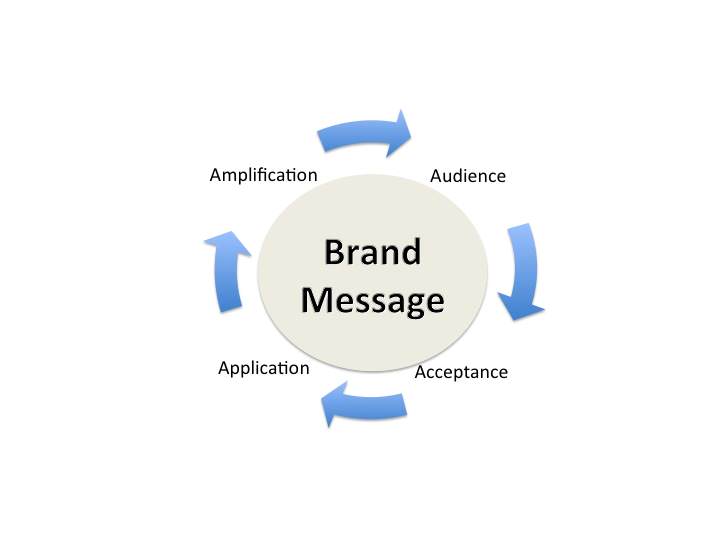
Additionally, whether social scoring helps you identify people or not, to truly get your message out there you still need the Four A’s:

The Four A's

  1. Audience – It used to be the medium was the message, but now the audience is the driver – without knowing them, the message is useless, no matter what medium it’s on.
  2. Acceptance – You can have the greatest product and message ever, but if the audience isn’t ready to accept it, will it even be heard?
  3. Application – How you’re perceived can define your success, and how you approach us defines how you’re perceived.
  4. Amplification – The golden ticket, and not just for brands but for social scoring and influence: how far can you get your message?

These four tenets are core to the marketer’s success – but without knowing how to identify true influencers, how can you get all four aligned and working together?

The conversation is just starting on that one…

The Continuous Challenge of Social Influence

The influence of trust

Matt Hixson

This post from Matt Hixson of Tellagence originally appeared on the Jugnoo blog.

I was flattered (and a bit surprised) when? Jugnoo asked me to speak at their summer social media event in Toronto, Social Mix 2012.

We?ve been in conversation about the challenges around measuring the marketing effect of social media since we met. I guess I said something of interest.

So what did I speak about? My presentation was titled “Influence: Today and Beyond”.

When I was first asked me to speak about influence I thought, “Either people are going to be excited about this or they are going to want to punch me in the throat.”

I hear from enough people to know that the market is fed up with the influence conversation but they know they need to be able to get their messages heard and acted upon in social networks.

[Read more…] about The Continuous Challenge of Social Influence

  • « Go to Previous Page
  • Page 1
  • Interim pages omitted …
  • Page 6
  • Page 7
  • Page 8
  • Page 9
  • Page 10
  • Interim pages omitted …
  • Page 38
  • Go to Next Page »
© 2026 Danny Brown - Made with ♥ on Genesis