• Skip to primary navigation
  • Skip to main content
Danny Brown

Danny Brown

podcaster - author - creator

  • About
  • Podcasts
  • Journal

Insights

Where You Fit In

the perfect fit

What?s your goal? What?s your aim when it comes to social media? Or defining who you are? Or building your brand (personal or otherwise)? Or growing your blog?

Do you have targets? Do you have a measurement point of where you are now (or where you were at the start of your journey) to where you want to be in 3, 6, 12, 18 months or more?

What?s your end goal? What do you need to be seeing as a return?

Who do you want to impress? Who do you want to emulate, to build from, to surpass? Who do you want to be compared to as ?the next Blogger X, or Author Y, or Educator Z??

Stop.

Stop what you?re doing?right now.

Unless you?re doing it for you, you?re doing it wrong. Unless you?re?being you, you?re doing it wrong. Unless you?re doing it for goals that you want to achieve, as opposed to goals someone else has set, you?re doing it wrong.

Everything you?re doing, in fact, you?re doing it wrong.

Unless it?s?as you.

People aren?t interested in clones.

Blog readers don?t want you to be the next Blogger X.

Shoppers with kids don?t want you to be the next Toys R Us.

Fast food lovers don?t want you to be the next McDonald?s.

Why? Because these brands already exist, and they have their audience, fans and detractors. They don?t need more, and people looking for the ?more factor? won?t be their customers anyway.

But they will be yours.

If you work at it, and let them. And the best way to let them? Be yourself. Don?t try to emulate the brands they?ve stepped away from. If you do, they?ll simply step away from you too.

Instead, just be you.

Be yourself. Be honest. Be the brand you believe you should be. Because that?s where you fit in.

And?that?s where your customers will find you.

image: Stuck in Customs
How Many Relationships Are You Building?

relationship to the sale

?When dealing with people, remember you are not dealing with creatures of logic, but creatures of emotion.? ? Dale Carnegie.

When you close a deal, what?s your next step? When you sign the contract, shake the hand and file the paperwork ? what comes next? Is there a next? Or simply a next customer?

Businesses talk a lot about ROI, or return on investment. They look at the man hours, financial costs, ad spend and more to get a customer to make the purchase. Every sale has to justify the outlay. But what about the customer??What about?their ROI from?you?

A sale isn?t just about closing the deal. A sale isn?t just about dipping your pen into the inkwell again before the previous signature has dried. A sale isn?t one-way traffic of the customer into your sales lair. At least, it shouldn?t be.

Imagine you?re Joe Average. You work 60 hours a week to make ends meet. You do your time, pay your bills, feed your family and keep a roof over their heads. Everything you buy has to be fine tailored to fit the budget. You see something you want and you put aside money diligently every week to buy it.

You go to the store, or car showroom, or furniture showroom. You talk shop with the sales guy, and he?s nice. Interested in you. Wants to help you make your choice. So you do. You pay the price, say thanks and go home and wait for your new purchase to be delivered. A week later it arrives, then that?s it. End of story.

Now, imagine it a little differently.?Imagine it as a relationship.

The Relationship Behind the Sale

You go to the store, or car showroom, or furniture showroom. You talk shop with the sales guy, and he?s nice. Interested in you. Wants to help you make your choice. So you do. You pay the price, say thanks and go home and wait for your new purchase to be delivered. Within 24 hours, the sales guy calls and confirms your delivery time. A week later it arrives.

A couple of days after delivery, your sales guy calls again and asks how your new purchase is. Not customer service. Not the after-sales team, but the sales guy who sold you your new toy. He wants to make sure you?re happy and that to call if you have any issues at all. You say you will, then hang up the phone with the biggest smile on your face. Now?that?s service!

Sales guys don?t have time to follow up, they?re too busy selling? No-one offers?that kind of service? This example is unrealistic? They do, and it?s not.

Sales is Service is PR is Service is Marketing

People are emotional beings. We live by how we feel; act on how we?re acted upon; respond to how we?re treated. All our decisions are based around our emotions and how we experience a moment.

Think of any business transaction you?ve had as a customer. The best ones will remain in your mind for all the right reasons, and chances are you?ve made repeat purchases with these vendors because of your user experience. The bad ones? They remain with you too; but your business with the vendor doesn?t.

So the next time you make a sale or win a new client, try this checklist if you?re not already using any of them:

  • Add the details to a database and set alerts for relevant promotions. Not just every promotion you have, but ones that are?relevant to your new customer.
  • If you received personal details like date of birth, send a birthday gift or card.
  • Set up calendar reminders for regular check-ins. Nothing so frequent to annoy, but regular enough to care.
  • If there?s a business near your new customer they can benefit from that ties into your sale, refer them. It shows you really have their best interests at heart, not to mention builds a great business relationship with the other business.

Sales are important ? every single business needs sales to survive. But quick buck sales only last so long; they?re simply bush fires that will run their course. Relationship sales that?genuinely caress our emotions, though??That?s the money right there.

How many relationships are you building?

image: dann_z

Revamps, Workshops and Telling Your Story

Bonsai Interactive Marketing

Bonsai Interactive Marketing

Though I try not to use this blog too much for self-promotional needs, I just wanted to give you a heads-up on some of the stuff that’s been happening behind the scenes.

Some you might be interested in, some not – and feel free to skip today’s post and come back tomorrow when normal scheduling has been resumed if you wish.

So, on with the heads-up.

Revamp of the Bonsai Interactive Website

Over at Bonsai Interactive Marketing, we’ve just unveiled the revamped design of our website. The previous one, while functional, didn’t really say who we are as a business. And, to be fair, it was a little too much show without there being a lot of tell.

So we got rid of the old and brought in with the new.

Now it’s a lot easier to navigate; you know exactly what we do; you can see examples of who we’ve helped; our calendar keeps you up-to-date with events and workshops you can attend; and our blog has also had a makeover. There’ll be a lot more focus on trends, analysis and case studies. This recent post about mobile marketing and loyalty is a good example of what to expect.

So please, feel free to check out the new site and subscribe to our blog if information is your bag. And if you’re looking for an integrated agency for your next project, hey, we might be able to help there too…

Upcoming Workshops and Webinars

As I mentioned above, one of the new additions to the website is our Events Calendar, to show you what workshops we have going on. For the most part, these have been with local or national businesses. But we’re opening these up a little bit further afield.

We’re in the process of putting together a series of webinars and online workshops (along with a very cool business resource that we’ll be sharing more details about soon – think For Bloggers By Bloggers, but for business). And we’d like your feedback.

While we already have set courses in place, what would you really like to get out of a webinar and training course? What topics do you feel are rarely covered, and what information would be really useful for you and/or your business? Leave your ideal topics in the comments below, and we’ll look at tailoring webinars around your suggestions.

Telling Your Entrepreneur’s Story

Over at my business partner Troy’s blog, he’s just launched a new series called The Entrepreneur’s Journey. It’s an ongoing series that looks at one of the hardest, yet often most rewarding, occupations – the entrepreneur.

It looks at the ups, the downs, the successes, the failures, the lessons and much, much more from some of the most tenacious people you’ll meet. It’s a great education in what it takes to be an entrepreneur, and offers pointers that you can take and use if you’ve ever thought about going into business for yourself.

The Entrepreneur’s Journey has already featured the likes of Marcus Sheridan, Mark Harai and Brandon Forder (disclosure: client), and, having seen some of the upcoming stories, it’s fast becoming one of my favourite blog series’ around (and that’s not due to any bias of Troy being my friend).

Check out The Entrepreneur’s Journey for yourself, and if you want to share your story, Troy has a form where you can let him know all about you.

So, these are the updates. Thanks for letting me share (and I really do recommend Troy’s new series if you have even the slightest interest in entrepreneurship) and hopefully we’ll see you over at the Bonsai blog or our next workshop.

Cheers!

Is CheckPoints Showing the Way Forward for Location Based Services?

CheckPoints mobile app rewards

CheckPoints mobile app rewardsDespite there being 6.5 million users on Foursquare and almost a million users on Gowalla, location based services still haven’t enjoyed the uptake of other social network sites.

Most reasons cite the lack of innovation from marketing companies and businesses using these services, saying there aren’t any real incentives to check into locations just to receive bland rewards.

Although Facebook has entered the fray with Facebook Places, there’s still a lot of confusion about the benefits of location based services for both users and businesses trying to attract these users.

This has led to the apathy that’s starting to hang around the likes of Foursquare, Gowalla and more.

It’s this apathy and feeling of blandness that CheckPoints is trying to shake up with their approach.

Shopping Rewards and Points Systems

Built by a family-owned enterprise in Venice, California, CheckPoints tries to counter the boring Mayor rewards that many businesses use on Foursquare, and offer more relevant rewards based on the user’s preferences.

The way CheckPoints works is simple:

  • Download the CheckPoints app.
  • Go shopping at your favourite mall.
  • Use CheckPoints to see if there are any promotions in the area.
  • Use your phone to scan the barcode of a product.
  • Scanning gives you points, which you can redeem for gift certificates, electronics, air miles and more.

Companies taking part in the CheckPoints rewards program include Amazon, GameStop, iTunes, Nieman Marcus, Bose, Louis Vuitton and more.

You can also redeem your points for good, with KIVA, AID Haiti, Research Breast Cancer and other non-profit organizations benefiting from your shopping and scanning habits.

Building the Loyalty Mindset

It’s this approach that puts CheckPoints a little bit ahead of the game when comparing it to the likes of Foursquare, Gowalla and other similar services.

By offering you the choice on where you redeem the points you’ve accrued, and on what, CheckPoints is taking the same approach as loyalty card programs. This is one of the biggest (yet underused) markets for many businesses – after all, who doesn’t want loyal customers?

Additionally, tying in the non-profit angle is genius. People want to give and help; it’s in our nature. The problem is, we don’t always do so because we’re not sure how to. CheckPoints makes it easy to support charity while doing what we normally do, so it’s a win-win all round.

So CheckPoints seems the natural progression for location based services, right? Yes and no.

What Benefit to the Retailers?

I had a look around the CheckPoints site, and I couldn’t see anything that said you need to make a purchase to get points added to your account.

So where’s the benefit for the retailer? Yes, they’re getting extra foot traffic through their doors. But if I don’t need to buy anything, and just scan a product for my points to be added, then what does the retailer get out of it? There’s no sale, so no profit.

Additionally, the service is only available in the U.S. at the minute, so users in Canada, Germany and the U.K miss out (these are countries where those types of services have the most uptake). And then there’s Japan, where location based services are huge – so a big market being missed (for now).

Also, I’d like CheckPoints to recognize my scanning habits, and react accordingly – just show me relevant offers as opposed to all offers (something we’re working on at Bonsai with a couple of apps that are in beta at the minute). Making it relevant makes it useful – otherwise it’s just another mobile app.

CheckPoints definitely has a lot going for it, and I really like the way you choose your rewards, as opposed to being told you get a free coffee for being Mayor of Beanville.

If they can address the profit benefit to retailers, as well as really amp up the relevance – and grab that global audience – then it might just be the next logical step for location based services.

And for many mobile location users, that can’t come soon enough…

This post contains a video. If you can’t see it displayed properly in your feed, you can view it directly here.

Are You Telling or Asking?

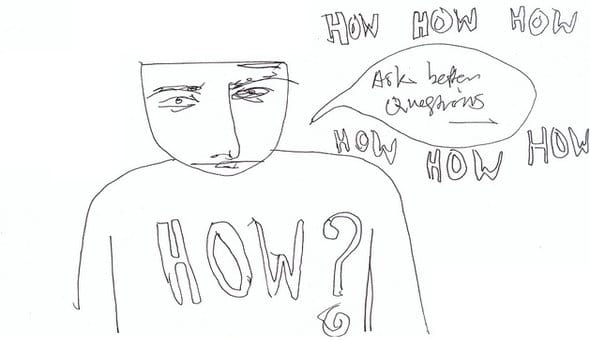
Ask your customers better questions

Ask your customers better questions

When was the last time someone asked you what you want? What you?d prefer to have, over what their perception thinks you?d like to have?

Are you looked after by the services you use on a regular basis? If not, why not ? isn?t it about time you were?

I?m a business owner, but I?m also a consumer and a customer. So why am I told what I need instead of being asked what I need, as a customer?

When I go to a store to buy goods or services, I?m offered AirMiles as an incentive. But if I don?t fly often, what good is that to me?

When I receive an email to fill out a business survey I?m offered Barnes & Noble gift vouchers, but I?ve never shopped there in my life. Are they really incentives?

There are countless communication methods to speak with your customers and ask what they want. You have mailing lists to stay in touch with your most loyal ? use them. Customer service questionnaires, website forms, Twitter, telephone calls ? make it your task to ask.

Speak to your customers and instead of offering non-essential incentives, and offer something they would use. How many of your customers drive? Wouldn?t a gas loyalty card offer with a certain level of purchase be a better incentive to spend money with you?

Frequent flyers part of your customer base? Instead of offering a discount at just a specific store within the airport, how about a discount in any shop within the airport? Leave the choice to your customer as opposed to making the choice for them.

Good business sense is all about listening. Where are your listening posts?

image: Dan Morelle

  • « Go to Previous Page
  • Page 1
  • Interim pages omitted …
  • Page 70
  • Page 71
  • Page 72
  • Page 73
  • Page 74
  • Interim pages omitted …
  • Page 174
  • Go to Next Page »
© 2026 Danny Brown - Made with ♥ on Genesis