• Skip to primary navigation
  • Skip to main content
Danny Brown

Danny Brown

podcaster - author - creator

  • About
  • Podcasts
  • Journal

Insights

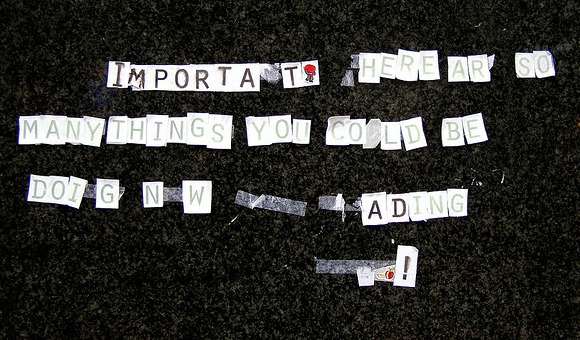
The Most Important Job in the World?

Important

Important

In life, we often place merit on someone by the job they have. We may not mean to, but it’s no real fault of ours if we do – it’s been ingrained from us almost since we could walk.

Parents tell us to get an education, or we won’t get a good job.

Teachers tell us to study harder, or we won’t get a good job.

Potential girlfriends and boyfriends can decide whether or not we’re worthy of their attention, based on the job we have and the material things that can bring.

We see someone being chauffered from place-to-place and feel they must be really important.

Ironically, in social media, this feeling can be exacerbated.

Our blogs become popular; we get hundreds of thousands of followers on Twitter; conferences invite us to speak; we have badges of merit that show how smart we are.

When you have that kind of “adulation”, it’s easy to mistake your importance and think your job is something it’s not. Sure, you may have a great job with a personal secretary; or your golf course fees cost more than it takes to send a child through college; or your blog is quoted in the New York Times.

But does that make you owner of the most important job in the world?

Think about it:

If every single blogger in the world stopped blogging tomorrow, we’d still get our news and opinion pieces. They might be watered down a little, but we’d still get them.

If every chauffeur quit tomorrow, we’d still have cabs, buses, trains, motorbikes and even bicycles to get around on.

If every girlfriend or boyfriend dumped their partners tomorrow, we’d still get by on our imaginations. Life would go on.

Now think about some of the jobs we often look at as lesser, and ask the same question:

If every trash collector quit tomorrow, we’d be faced with disease on the streets as the rats came to town.

If every security guard quit tomorrow, our businesses might follow suit, as we see the bad people come to town.

If every sewage worker quit tomorrow, our streets would be overrun by crap.

If every school crossing guard quit tomorrow, how long would our children stay safe at busy intersections?

We look at life through funny lenses. We see people in lesser light when often we should be shining the light on them. We celebrate our own importance when, often, that importance could be survived if it were to disappear overnight.

The point is, we all have important stuff to do and offer. Let’s try remember that more – yes?

image: Auntie P

The Difference Between Acumen and Accruing

Acumen

Acumen and accruing. Two words that share a few letters, and yet are miles apart in every other sense.

Acumen means you have something of use; accruing means you’re in the process of gathering stuff that isn’t necessarily useful.

Acumen means you connect the dots between idea, execution and success; accruing means you’re more concerned with collecting the dots as opposed to connecting them.

Acumen means you know your shit; accruing means you think anything below a certain number is shit.

In other words, someone with acumen will always – ALWAYS – beat someone that prefers accruing.

Because the numbers that come as a result of acumen far outstrip any importance that the simple act of accruing numbers offers.

Something to keep in mind when you next want results in anything you do…

Lessons From An Asshole

Robert Scoble and Aimee Giese

Over on Facebook yesterday, technology blogger Robert Scoble opened a discussion about Twitter versus Facebook versus Google+, based on an observation by Digg founder Kevin Rose and how these platforms offered different engagement.

One of the commenters, Aimee Giese, left her take, and offered a counter to Robert’s view that Twitter was basically a dead zone now, and all the social media interaction is happening on Google+ and Facebook. To which Robert offered the reply as seen in the image below:

Robert Scoble and Aimee Giese

If you think Robert’s reply to Aimee, and his claim that she can’t have many friends or family members, is over the top, you wouldn’t be alone.

As well as people that continued to have a debate about the merits of Twitter, Facebook and Google+, many offered their take on Robert’s jibe (intentional or otherwise):

Stephanie Quilao

As you can see, the responses ranged from disbelief to anger and disappointment. Yes, we all get riled up, and yes, we say things we probably regret – but that used to be to a limited crowd. Friends down the pub, or work colleagues, for example.

With social media, though, that local crowd has become millions-strong, and everything we say is up for grabs. And if you’re in a position of “influence”, as Robert Scoble is to many, then that amplification becomes even louder (as of writing, the image Aimee uploaded to TwitPic has had just over 16,500 views).

In fairness to Robert, he did apologize to Aimee on Google+, and admitted he had been an asshole and stepped over the mark (although an apology on the original Facebook thread would perhaps have made more sense).

So can we learn anything from what happened yesterday? After all, it’s a prime case of what many brands are afraid of when it comes to social media – a negative interaction. There are a few things.

We Are Always On Display

You might think that a comment or notification is flippant, or not as important as others might see it. The problem is, people have very different views when it comes to what they see as acceptable and what they see as insulting.

Before we (or brands) make a statement, we need to think a little bit more to see if it will be misconstrued. Many of the people that commented on Robert’s apology feel Aimee took it too personally, and Robert wasn’t in any way to blame. Personally, I disagree with this – I think it’s exactly what Robert said it was in his apology (“way over the line”).

But others obviously disagree.

So just consider if the tone of response is appropriate, and even needed. Brands especially have detractors (customers hate to be let down), so it’s even more important to be on your game when making public statements.

Apologies Are Better When Immediate

When the Facebook wall lit up last night with support for Aimee, it was clear that many felt she was owed an apology from Robert. And, as I mentioned, he quickly apologized over on Google+, and made sure to tag Aimee too, so she knew he had mentioned her.

Too many people and brands leave their apologies until long after the event – this doesn’t help their cause. The belief then is that it’s just a carefully orchestrated corporate PR ?response, and the intent isn’t really there.

Sure, for some cases an apology and how it’s worded may have to go through legal channels for approval, to ensure more damage isn’t done. But for something like Robert’s gaffe, a speedy (and honest) apology not only helps douse more flames, but shows people you actually have the balls to admit when you’re wrong, and take ownership.

That goes a long way in reputation management.

Fanboys Wear Shit Goggles

One of the interesting/sad aspects of the whole thread was how many people “Liked” Robert’s reply to Aimee (17 at current count). Does this mean 17 people think it’s okay to insult someone, and raise questions about that person’s ability to make friends?

Then on Robert’s Google+ apology, more people are chipping in and saying Aimee (and those that felt Robert’s comment was out of place) are over-reacting, and need to grow up. A couple of examples:

At least DeWayne Lehman admits to being a professional asshole…

Yes, healthy debate is good, and that’s the beauty of the web – we’re offered far more open options to have a debate, as opposed to just having the views of one with no option to disagree.

Unfortunately, you’ll always have the fanboys that seem to wear shit goggles, as it feels like anything others say is just shit (unless it’s from the object of their affection).

We just need to accept that some people’s opinion will more than likely always be skewed, and no amount of debate is going to change that view. So don’t waste your energy there, and move on to where you can have a healthy debate.

We all make mistakes. Or we all say something that can be viewed as a mistake.

Some people handle it better than others. Kudos to Robert for rectifying his. If only more would step up to the plate in the same way…

Help Yourself to Help Your Clients

Client relations

Client relationsThere’s a great scene in the movie Jerry Maguire. In it, Tom Cruise’s sports agent character has finally lost it with his one client (a football player brilliantly played by Cuba Gooding Jr.).

Frustrated by Gooding Jr.’s frosty relationship with the media, Cruise implores, “Help me to help you.” It’s a pivotal moment in the movie for both characters – and it’s one that should be used more in the PR industry.

Although it’s true of many industries, public relations is at a pivotal stage in its history.

New media sources and resources have changed the way PR is handled – and if it hasn’t made your agency change with it, then perhaps questions should be asked why.

So how can you help yourself to help your clients?

Use the Tools Effectively

We continuously hear how great social media is for PR. Yet are clients seeing why social media is so effective?

Try this experiment. The next time you have a promotional campaign, organize a pre-determined Twitter Q+A session between your client and users of that brand. Use a hashtag to keep the conversation separate and set up a Twitter username for that particular discussion.

Let your client see how he or she can immediately engage with their consumer base. They get both positive and constructive criticism in the open, and the customer feels appreciated because their brand is listening. Relationship building like that is priceless and if your client doesn’t get social media’s benefits then, they probably never will.

Encourage Greatness

I’ve met a lot of PR agency bosses (corporate and boutique) that seem to have their head up their asses when it comes to growing their agency. They seem to feel that they’re the only ones that have something of value to say, or offer. Get over yourself.

Some of the brightest voices are being unheard because of the way you think. The industry is changing and new blood is heading the rush. Instead of trying to hold that back, embrace it.

Do you have team meetings? Hand over the floor to a junior executive or intern and see what they have to say. While their ideas might not all be gold, what happens if you discover that one nugget that blows you away so much you wonder why you weren’t doing it in the first place? Greatness is in everyone – allow it to shine and it can only benefit you and your client in the long run.

Share the Accolades

There’s nothing better than seeing a carefully crafted PR campaign come to fruition and be a major success. You’re cock-a-hoop because it shows your agency knows its stuff and your client is over the moon with the resultant interest in his or her company. So why not share the success?

Suggest a fun agency/client get-together where everyone from both companies can get to know each other better away from a corporate environment. Your team feels more involved, and they should – after all, they were an integral part of the success as well, weren’t they? And your client sees you’re appreciative of their involvement in helping your campaign, therefore strengthening the relationship. It’s a win-win.

Change is all around us. Are you keeping up?

Creative Commons License photo credit: Jose T?llez

How to Use Social Media for Your HR Needs

Searching

Searching

According to the LinkedIn press centre, 1-in-20 of all LinkedIn profiles are held by recruiters.

Additionally, Oracle’s Chief Finance Officer Jeff Epstein was headhunted for the position via his LinkedIn profile.

And with 80% of companies using LinkedIn as a recruitment tool, it’s clear to see that social media (at least from LinkedIn’s side) is a great tool for any recruiter or human resources department to find their next employee (or for employees to find their next position).

But what about the other main networks and platforms? How could you use them as part of your employee needs, current and potential?

Twitter

Because of its instant conversations and weekly chats, there are a ton of ways that Twitter could be used as a recruitment tool. Think of some of the ways you operate your HR team or recruitment agency offline:

  • You check resumes.
  • You make phone calls.
  • You place job ads.
  • You interview.
  • You cold-call potential clients (more from a recruitment agency point-of-view).

Now, flip these around and see how Twitter could replace them (or work alongside them).

  • You see how people act online and what they’re discussing (resume checking).
  • You have conversations with folks you’re interested in (phone calls).
  • You share a link to your latest offerings (job ad placement).
  • You talk and get a feel for people directly (interview).
  • You use Twitter Search to look for keywords of company hiring needs then make contact through your tweets (cold calls).

Same needs, different approach. You also have a ton of weekly chats that you can participate in – there’s a great and ever-growing resource on Google Docs if you need to find one in particular.

Facebook

A different platform with a frequently different mindset, Facebook is still a great outlet for your HR needs. And as the platform continues to evolve into a business-friendly one, it’s a platform that offers a lot from a recruiting angle.

  • Build a company Facebook Page and have a dedicated tab for your latest positions.
  • Use your page to show the culture of the company and why people would want to work there.
  • Set up a dedicated Facebook group purely for job-hunters. Make it a resource on best practices for interviews, career progression, etc.
  • Go to Facebook Search and type in “jobs” – you’ll find a huge amount of companies and people on various pages, groups, etc, sharing and looking for work. Use these existing resources to find your next superstar.
  • Build a Facebook widget that can be added to a user’s profile and shared with others. Update this with your latest jobs, news, careers, etc, and update interested parties as soon as your position goes live.

There are also a bunch of other ways you can use Facebook as both job hunters and employee seekers – these are just some of the immediate ones.

Website/Blog

This should be a given, but you’d be surprised how many companies don’t advertise their latest positions on the company website. Instead, they’d rather rely on external ads and agencies to do the hard work for them.

Fair enough – but wouldn’t it be better to be the source of information about your company to a job seeker as opposed to them getting third-party reviews? Again, there are a few ways you can start to use your site now.

  • Like your Facebook Page, have a dedicated tab or area that not only has all your latest positions, but also positions recently filled. This shows interested parties that, while they may have missed out this time, at least you’re occasionally looking for their skill sets.
  • Add an HR blog and have your employees tell their stories. We all love stories – it’s how we connect best. Having your people share why you’re great to work for is a huge way to humanize your business.
  • Offer an HR newsletter sign-up to alert folks when you have a position coming up. By giving them “first refusal”, you’re immediately building rapport because you’re looking out for those that are really interested.
  • Have a client services section, that shows what roles and what companies your new employees would be part of. Seeing the scope of project can help make someone’s mind up if they’re unsure of career growth and fulfillment.

Again, these are just some of the ways your site (or blog) can be adapted to be more beneficial to potential employees.

You don’t need to stop there, either. These are just the main outlets you can use.

Think of other ways to share your HR needs. It might be a YouTube channel where you give insights to the company. Or it could be a niche community or network you sponsor that’s tied into your current and future needs. And with Google+ about to set business accounts live, candidates finding you through social search could be about to step up to another level.

The main point is, you want the best. So are you making sure you’re presenting yourself as the best?

image: mhartford

  • « Go to Previous Page
  • Page 1
  • Interim pages omitted …
  • Page 60
  • Page 61
  • Page 62
  • Page 63
  • Page 64
  • Interim pages omitted …
  • Page 174
  • Go to Next Page »
© 2026 Danny Brown - Made with ♥ on Genesis