• Skip to primary navigation
  • Skip to main content
Danny Brown

Danny Brown

podcaster - author - creator

  • About
  • Podcasts
  • Journal

Insights

A Klout Upside the Head

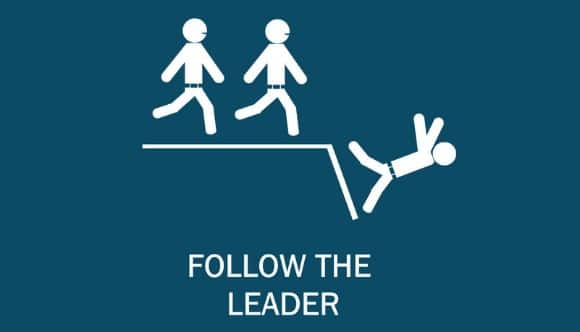
Klout sheep

Klout sheep

This is a guest post by Bob LeDrew.

I?ve been an observer of things Klouty for a while now. But I?ve been darned if I could work up a lot of excitement over it, positive OR negative. Until now.

I got pointed to a post on the Klout blog today about their reworked formula. Since I haven?t any accounts linked to their service, I didn?t have much reason to care.

But then I began to read the comment thread, and I was transfixed. The first comment set the tone: ?My score went from 73 down to 53. 20 point drop. I’ve been working for months to increase my Klout score. Please fix this.?

Others quickly chimed in:

  • This is going to cost me big time.
  • Went from 71 to 56 here. Time to get back to work.
  • You are killing our blogs here!
  • This trashed a 6-month effort to get our organization to use Klout as a measure of social media marketing effectiveness.
  • If I was searching for a job in Social Media right now I’d be concerned.
  • Klout set itself up as an authoritative measure of influence, and many organizations have coupled economic functions and job-related selection to?your scoring system.?By making this change, you have negatively impacted the job market viability of many loyal supporters of Klout at a time the?job market is in free-fall.
  • I have been promoting Klout to clients as one of the various metrics to use in measuring the impact of social media campaigns. This change has already caused me to lose clients, and I have to start over using PeerIndex instead.
  • I am beyond irritated over my 10 point drop, plus demotion in title! I work in Social Media Marketing, this point drop will hurt me in gaining clients! What the hell?!?
  • Sadly, expecting prospective clients to know how to hire someone based on their future delivery of results is not realistic. A score like Klout gives busy people a simple litmus test in advance. It’s the same reason people eat at McDonalds or AppleBees; the food is crap compared to the independent restaurant across the street but at?McDonalds or AppleBees they know what they are going to get.
  • I was just presenting a lecture today on the value of social media?efforts using monitors such as Klout and PeerIndex as a benchmark of impact, influence and effectiveness. Only, when I set it up this morning, I was at a 58 but when I opened that page, I’m now?a 40. Not terribly helpful – the whole presentation went south.
  • I have been feverishly working at increasing the Klout score for my company, as it is part of my MBO’s. Now, with a sudden 12 point drop, it will reflect poorly (and?inaccurately) upon my efforts.

I have a feeling that Katie Paine hasn?t waited to find a grave, but is spinning in her office somewhere in New England.

So I checked with a couple of people I know and trust. Surely, I asked, businesses aren?t seriously considering Klout scores when choosing consultants or working on a measurement strategy for a communications initiative?

And my trusted friends told me that while they felt it ridiculous, businesses were using Klout numbers as part of the decision-making process on who is most influential and that there are instances where brands or agencies won?t work with people who are Klout-challenged.

I responded to this with a bad humored string of profanities that would have embarrassed my mother and impressed my father, if they were in earshot.

The Klout Kraziness

I?m not sure whether I?m more upset with the sellers of services seizing Klout scores as indicators of worth, value-add, or influence, or with the BUYERS of services doing the same.

I don?t think much of Klout. I have several reasons for that, mostly based on the limitations of their methodology and the crudity of a 1-100 score in representing the vague concept of influence. As a game, it?s amusing.

But as a serious business tool, it?s horrifying. I?ve been trying to come up with an equivalent to the Klout score in the business world, but I haven?t been able to.

FICO score? No, that actually seems to have some predictive ability and a more transparent methodology.

Ad-value equivalency? No, that took a useless measure (how much space X would cost) and multiplied it by an arbitrary number (the mysterious ?multiplier?) which represented the credibility of editorial coverage. Closer, but not there.

Cost per contact acquired or cost per dollar raised? Nope, that?s clear and understandable. Click-through rate? Nope, easily calculated and clear.

Right now, Klout represents something that we all should be concerned about. A fun little statistic is one thing; a valid and credible measure of influence is another; but a fun little statistic that?s being treated like a business tool is akin to the correlation between storks and fertility rates.

Except nobody I know of is making policy decisions based on stork density…

Bob LeDrewAbout the author:?Bob LeDrew has been working in the words and ideas salt mines since the 1980s, when he edited audio with a razorblade. Since then, he’s been a writer, editor, public relations practitioner, and podcaster. Among other things. You can find him blogging at Translucid.ca?or on Twitter at @BobLeDrew.

A Letter to Joe Fernandez of Klout

Prisoner of Klout

Prisoner of Klout

A couple of months back, I wrote about online influence tool Klout, and their approach to how they build their membership (they use opt-out profiling, versus the more widely-used opt-in).

The main concern I had was the fact it was so difficult to leave Klout if you didn’t want to be seen as endorsing their product. As of today, two months later, my profile is still live, despite requests to be removed.

While the likes of Twitter, Facebook and Empire Avenue allow you to delete your account with one click, Klout has a bunch of hoops to go through – and even then, it would appear it doesn’t make much difference.

To his credit, Joe Fernandez – the CEO of Klout – reached out to me via email and addressed the fact that they were still working on how to best approach the opt-out / opt-in process, and that he would love to hear some ideas.

I sent an email back to Joe, but haven’t heard back yet – understandable, I can appreciate he’s busy. So here’s the reply below:

Hi Joe,

I think the single biggest issue is that it’s so difficult to leave.

I understand completely how you gather the information, but the advice from your marketing manager Megan on how to stop yourself from being measured isn’t very business-friendly. Megan’s advice is to make your feeds private – but for someone who does a lot of their business online, making your feeds private is like committing commercial suicide.

Let’s say every single person online did that – Klout itself would have no reason to exist, since your information-gathering tools would have nothing to gather. So you can see the folly of that approach.

There are millions of people wanting to use Klout as a barometer of their “existence”. Fair enough – that’s your audience and the people you sell to investors and companies buying into the Klout ideal.

But there are also many people who don’t wish to be a part of a non-regulated system, and one that can (rightly or wrongly) be used as a third-party validator for expertise. For those people, it should be a simple option of “Delete My Account”, which the likes of Empire Avenue, Facebook, Google, Twitter and more offer.

Making it easy to leave should be as simple as it is for Klout to set up an account for you in the first place, whether you approve it or not.

Thanks for listening,

Danny.

As an addition to this, my friend Lucretia Pruitt had a great idea. Simply have a page that says “This user does not wish to be profiled by Klout, and we respect his/her wishes.” And for that user, don’t allow the option of being pinged by people on Twitter to check their Klout score, nor be invited to Klout itself.

I know there are many people for whom Klout is incredibly useful. I know there are also many people for whom Klout is just a bit of fun, or something they want no part in (especially when it comes to affecting your career path, based on a limited algorithm).

For these people, let them have the option of not being profiled on Klout. Then everyone is happy, and no-one can accuse the platform of just trying to boost numbers by having profiles on there that don’t want to be.

How about you – what would you suggest Klout does better when it comes to people who have no interest in being on their platform?

Update: As of November 1st 2011, there is an Account Deletion option in the Klout dashboard. Finally.

image:?remuz

The Art of Flying Blind

Storm clouds

I was flying home from Utah earlier this year, and it included a stopover at Houston. The clouds over Houston were super thick, and it seriously looked like we were flying into mashed up cotton wool on our descent approach to the airport.

Because it was an evening flight, it was starting to get pretty dark and you really couldn?t see anything but cloud.

The pilots, for all intents and purposes, were flying blind. They were looking at the same cloud cover I was; they were seeing the same nothingness that I was. Except they were having to navigate 200+ people through it, of course.

All they had to guide them was the technology in their hands and a voice on the ground that was giving them their flight course.

Three people, putting faith in technology and each other, to guide a 30-tonne piece of metal through a sky of nothing. Trusting the voice on the ground that nothing would pierce through the clouds and into our jet; and trusting the pilots to do their job without fear of the darkness ahead of them.

We can learn from that, in everything we do. We have technology around us that makes our lives easier and helps impossible tasks become possible. But we need to trust the people that are around the technology as well.

  • On our blogs, we need to trust our readers and invite them to share their knowledge with us. We don?t know everything; our readers can help.
  • In our businesses, we need to trust each employee and involve them in the process. Sure, there will be moments that levels need to be maintained for some decision-making; but don?t keep employees in the dark while these decisions are being made. They?re our lifeblood; without our employees we have no business.
  • Our online and offline connections put trust in us every day. They trust us to be open with them, and not BS them. In return, we trust them as well; we share their news and promote their content. We use the latest technology to do so, but it comes down to mutual trust and faith between people to enable that sharing in the first place.

We?re all flying blind; but if we build enough trust in each other, at least we can fly blind together and maybe guide each other home. Ready to fly?

Building a Culture of Success

Business cultures and success

Business cultures and success

No matter what business you?re in, your success can very often boil down to one thing ? your people culture.

You may have the greatest product with the big dollars to promote it, but it?s the people that will really define how successful the product is. This is true for internal people as well as external.

Customers Are Your External People

You need to build trust and loyalty with them.

Get your relationship right with your customers and you?ll be in a far stronger position to build from within and continue to enhance that relationship.

  • Keep them up-to-date with what?s happening.
  • Don?t trick them with false offers.
  • Listen to their feedback and act on it.

These are just some of the?ways to get your?external?people culture right.

Employees Are Your Internal People

They have the power to make or break your brand.

Unhappy employees don?t care if you had the best sales year; unhappy employees have no incentive to come to work except for the paycheck; unhappy employees don?t live the culture that happy employees do.

How do you encourage happy employees? Become part of their culture as much as asking them to be part of yours.

  • Be involved?in their lives.
  • Allow them time to be with those that matter.
  • Promote a healthy work/personal time split.
  • Have an open door policy.
  • Be genuinely interested in what they have to say as opposed to just offering them a sympathy nod.

Getting it right with your internal people is just as important as getting it right with your external people; sometimes more so.

Help Your People Grow

The most successful companies are the ones that build a strong people culture around everything they start; the most successful companies are those where the customers and the employees aren?t classed as customers and employees. Instead, they?re classed as?your people.

How are you building?your?success?

image:?iLenny

Three Years and Counting at DannyBrown.me

Silly numbers

Three years ago today, I posted the first article on this blog. It was a pretty simple piece – short, and more of an overview of what to expect in the days ahead.

Three years later, and it’s interesting to look back and see how I’ve changed in that time, both in style and in views on a variety of topics. While I’ve been blogging on and off since 1999, this blog is the one that I’ve made my own, if you like (with you guys playing a huge part, obviously).

So, if you’ll allow me, I’d like to take a little look back at some of the changes, and see how things have developed since that little post back on September 30, 2008.

It Takes Time to Find Who You Are

When I first started on here, I had a different “voice” than the one I have today. Okay – let me rephrase that; I was probably guilty of trying to please too many, as opposed to pleasing myself first.

I’d write some posts with nothing but traffic in mind, or the approval of certain folks in mind (although I wasn’t averse to calling out even back then!), when I should have been writing what was in my head instead. That’s not to say that I didn’t care about what was in the posts – far from it.

But, naively perhaps, these posts seemed to be going with the popular point of view, as opposed to having the balls to disagree with other stuff I was reading because it belonged to someone from the “in-crowd”.

My, how times have changed…

I’m not sure what the tipping point was. Heck, I’m not even sure there was a specific tipping point – perhaps I just got tired of reading lameness, or felt there had to be a better way. Either way, I’m a lot happier now than I was in my early days on here.

If there’s something I’ve learned from that time that I hope you can, it’s that it’s always – always – better to write for you first, and everyone else second. Be true to you, and you’ll be true to your readers.

People Come And Go And That’s Okay

As bloggers, we often put a lot of stock into numbers. Readers; visitors; subscribers; social shares; comments, etc. And there’s nothing wrong with that – after all, we all like to see that the blood, sweat and tears that goes into our blog is worth it, and social proof from numbers is a great way to see this.

Yet we can let these numbers become too important, and that can see us lose sight of who we are and what we want to say.

Instead of writing naturally – and being better bloggers because of it – we begin to look at subscriber counts, and fret when we lose readers. We wonder whether we should be writing differently, or going for list posts as opposed to thoughtful ones.

But we need to stop thinking this way – because at the end of the day, the numbers are meaningless if they’re false.

Silly numbers

If you’re writing a post just to get X amount of retweets, or Facebook shares or whatever, you’re probably straying from why you wanted to blog in the first place.

Anyone can write for traffic – but writing for validity and genuine thought? That’s the gold right there.

Besides, there are a ton of reasons readers won’t like your blog – celebrate them, and allow that freedom to let you hang out with people that actually care and want to be with you, as opposed to those who’re just looking for the easy stuff.

It took me a while to realize it but damn, it’s liberating!

It All Comes Back to Being a Person

When I first started blogging many years ago, I wrote about anything and everything – technology, video games, favourite actresses, TV shows, and much, much more. There was no real rhyme or reason to my various blogging endeavours back then – just a desire to write.

One thing I do recall, though, is that because of that scattered approach, I never really let the topics get in the way of who I was – I simply wrote what I was feeling, and that was it.

Jump forward to September 2008, and perhaps the first 8-12 months of this blog, and for whatever reason, I seemed to get mired in the technology and platforms as opposed to what people could do behind them.

Ironic, really, given the goals that I laid out in my first post.

I’m not sure why this happened – perhaps I felt that was the approach I needed to take, or perhaps I was suckered into thinking that’s what people wanted to read (it’s what the most popular blogs were doing, after all).

But, as I’ve found out time and time again, and not just from blogging, people connect more with stories of real people, doing real things, with real results. And that’s what turns my blogging mind on, if you like – being genuine over generic, either from a writing or reading standpoint.

Simply put, being a human being and offering your frailties as well as your perfection (or perceived perfection, since no-one is perfect, not even Batman).

Everyone Has Different Favourites

Sometimes you write a post and you think, “Damn, I nailed that!” – and then no-one reads it! Or, if they do, they don’t let you know, since you don’t get any comments or your social shares are way below some of your other posts.

Again, it boils back to the numbers mindset and why we need to get out of that – because at the end of the day, it doesn’t really matter. What we might think is some of our best work can be seen as lame by everyone else, or vice versa.

And that’s natural – we all react to different things in different ways. We all have different emotional switches – and that’s okay. It’s what makes us an individual – and that carries across into blogging as well.

So, don’t worry if you feel some of your best work has been bypassed, or some of your favourite posts have disappeared with a whimper instead of a bang. As long as you’ve enjoyed writing it, and garner pleasure and satisfaction from it, that’s all that really matters at the end of the day. And there’s always tomorrow to start anew.

Tomorrow

Besides, blog posts are evergreen by nature – there will always be someone that finds your masterpiece. And if it can touch just one single person and make their life better because of it, that’s a million times more satisfying than a thousand retweets or Facebook Likes.

Having said that, hehe… here are some of the posts I’ve been most proud of here, whether they’ve been read or not:

  • The Kids Are Alright – because a community came together and made some very ill kids extremely happy. Thank you.
  • You Don’t Have to Die to Live – because opening up about my suicide attempt helped others open up too.
  • Pale Blue Dots – because it’s just a simple post with a simple message that seemed to connect.
  • Response to Barbara Talisman – because it was an amazing show of how people can care about something they’re emotionally invested in.
  • Virtual Stalking – because it encouraged people to speak up and take action.
  • Could This Be Your Child? – because it made for uncomfortable reading on a rarely-discussed topic and a thoughtful discussion in the comments.
  • A-Listers Behaving Badly – because this guest post was the most commented on here for a reason, and helped bring the protagonists together in agreement.

So there we have it – three years of change, evolution and learning.

It’s been a fun ride so far, and it wouldn’t have been anything like it has been without you. It doesn’t matter if you’re a one-time reader; an infrequent commenter; a long-time subscriber or otherwise – every word you read means the world to me, and I sincerely appreciate you coming here as opposed to anywhere else you could be at that given time.

I hope you’ve enjoyed the ride so far, and here’s to many more together in the years to come.

Happy anniversary – thanks for allowing me to have it!

image: cso237
image: jimmedia
image: jasohill

  • « Go to Previous Page
  • Page 1
  • Interim pages omitted …
  • Page 59
  • Page 60
  • Page 61
  • Page 62
  • Page 63
  • Interim pages omitted …
  • Page 174
  • Go to Next Page »
© 2026 Danny Brown - Made with ♥ on Genesis