• Skip to primary navigation
  • Skip to main content
Danny Brown

Danny Brown

podcaster - author - creator

  • About
  • Podcasts
  • Journal

Marketing

Let’s Talk About Social Business

Social business or social crm

Social business or social crm

This post is by Joey Strawn?from Social CRM Insider.

There?s an old example many of my teachers used growing up to display a number of different points.

My teacher would show a jar on a table surrounded by a plethora of different-sized rocks. The task is to get all of the rocks into the one jar. No matter how you try, the only way that works is to put all the big rocks in first, then the medium-sized rocks, then fill the rest of the space with the pebbles.

The point of the exercise is to show the importance of priorities and how to organize your life.

Priorities are key to school, life and, of course, business. We?re going to talk about a major rock today that you need to have an understanding of if you?re going to be bringing in a Social CRM to your company or brand: Social Business.

We?re putting our normal curriculum aside today to address the issue of Social Business which, as you?ll find out, I feel is a larger goal than purely Social CRM.

Building a Business That?s Social

In her book Get Bold, Sandy Carter defines a ?Social Business? as the following:

At its core, a Social Business is a company that is engaged, transparent, and nimble. A Social Business is one that understands how to embrace social technology, use it, get value from it, and manage the risk around it. A Social Business embeds social tools in all its processes, and for both employees and clients?the entire ecosystem. A leadership company explores the social techniques that really matter to its business with a sympathetic approach, by creating a bold, unique Social Business agenda.

That?s one of the best definitions I?ve ever read and I highly suggest Sandy?s book to anyone who cares about creating a business that works with its customers. I?m not going to fill more in with what she said, but I am going to give you a couple seconds to read it again and take it all in??..

??..good.

Social Business is important and it?s vital to your brand surviving the next 15-20 years intact. I?m not going to dispute the fact that everyone needs to be paying attention to this phenomenon, but does Social Business makes Social CRM obsolete?

Social CRM vs Social Business?

A few weeks back, Michael Brito had a wonderful post focusing on this very question. Does the importance and eventual necessity of Social Business negate the need for a focus on Social CRM, or should it all be wrapped up into the same idea and eventually just be called ?business as usual??

Honestly, I agree with Michael?s post in almost every way, even though it seems at first glace we would be in disagreement.

While I may not totally agree completely on every single semantic, I think we will get to a point where Social CRM in the larger context of a Social Business is not only necessary, but expected. If you aren?t starting now with your plans, you will be left behind and a Social CRM is part of that emerging business.

Where Michael and I differ is that I believe it?s not as important to shift focus away from the components that make up a Social Business, with Social CRM being a part of that. Just as 50-60 years ago marketing was a new idea, 60 years before that the telephone was a new idea – but both?are now ?standard operating procedure? in successful companies.

We will always have to understands the components of what we do for the good of our brands and users, while at the same time understanding the larger pictures that encompass all those little things.

Social CRM may be a little component at this point and in the future be a natural aspect of all companies, but we?ll still be supplying top-notch Social CRM advice, innovations, trends, topics and strategies to help your businesses understand it now and in the future.

What do you think? Is there still a place to discuss smaller components of Social Business? Do you agree with Michael that Social Business will eventually be just ?business?? Where does Social CRM fit in?

Thoughts?

  • This post originally appeared on Social CRM Insider, part of the Jugnoo family of apps and publications to help people and businesses make the social web simple, accessible and monetizable. Joey Strawn is the Blogger in Residence at Social CRM Insider. You can read more posts here, and make sure to subscribe for the latest updates from Joey.
Why Businesses Should Take a Note from the Fisher Association of Marketing Professionals

Fisher College of Business

Fisher College of Business

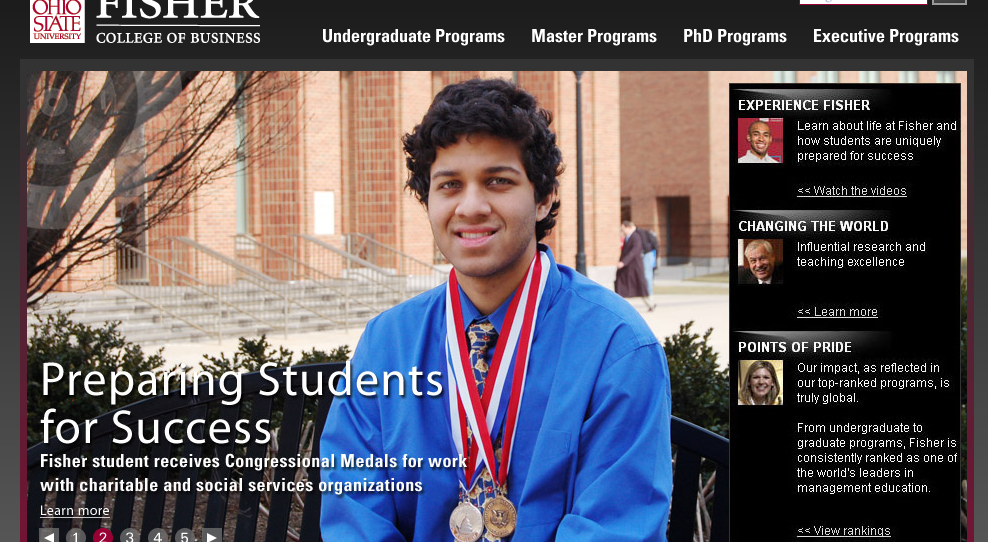
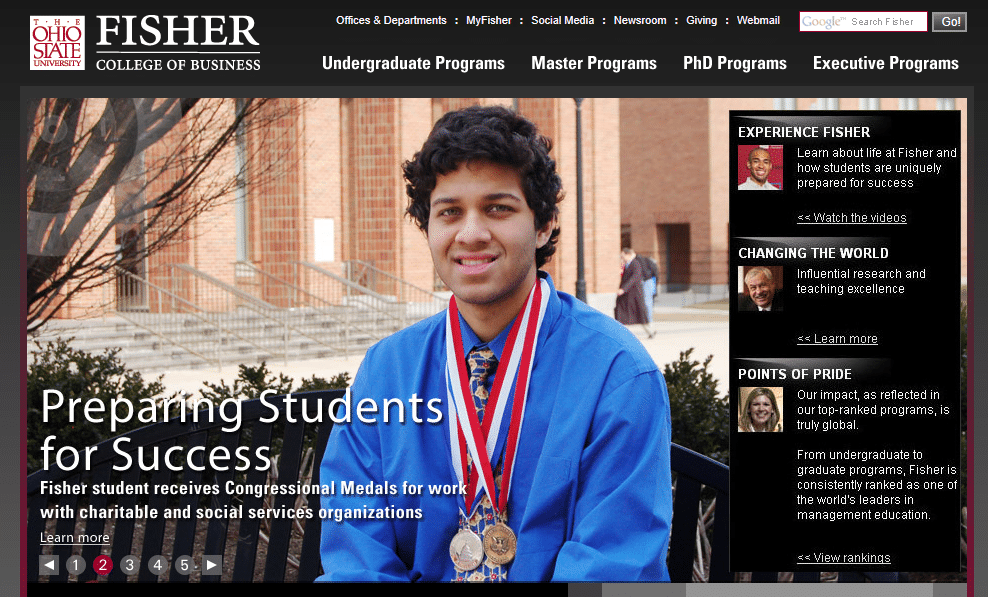
Over in Columbus, Ohio, the marketing and advertising students at Fisher College of Business are setting the example when it comes to how business should be run.

I’ve just come from speaking at the college for their flagship Future Camp event, and I was hugely impressed with the set-up; the staff; the students; and, more than anything, the tangible passion that every student has to make a difference in the world through doing business right.

It’s clear that the combination of Dean Christine Poon and Professor Shashi Matta, who’s the Clinical Assistant Professor of Marketing at Fisher, have played a large part in this. In both their closing comments, Christine and Shashi praised the students for making their jobs so easy, so it’s clear (and great) to see the respect is both ways.

Talking to some of the students, they’re not only smart and driven, but really believe that business when done right can make so much of a difference in peoples’ lives. And they’re right.

While we might often look at business as that beast that swallows our money, there’s no denying the impact it can have on lives. Building a kidney dialysis unit; handing over a $100,000 insurance check to people whose home has been damaged; building an excavator that can dig a well in a third world country; and more.

The Fisher folks also have a strong sense of what should be done to make the experience everything, for consumers and colleagues alike. Again, it’s something that permeates throughout the air there, and I was left suitably impressed and optimistic at the same time.

To see exactly how these guys really want to be leading the way when it comes to business and the relationships that exist within, take a look at their oath below. Then imagine if every business owner adhered to it…

Thanks, Fisher College – you were a pleasure to be with, and here’s to all of your successes.

The Oath

On my honor, I will do my best to always put the consumer first.

And to never accept the status quo.

I will innovate until my audience is fully immersed.

I will act with integrity to instill awe and wonder with brand-expanding glee.

And be a kind collaborator with agencies and cross-functional teams.

To make the world a better place through consumerism.

Collaborative Marketing and the Natural Progression to Real Customer Satisfaction

Collaborative marketing

Collaborative marketing

I?ve been thinking a lot about collaborative marketing lately, and how we can turn co-existing businesses?more into partners and less about missed opportunities. I think there?s a great untapped market for someone that really wants to grab collaborative marketing and run with it.

For example ? imagine you?re going on a trip. You have to fly to get there, so there are a few processes you need to go through before, during and after:

  • Buying your ticket.
  • Driving to the airport.
  • In-flight activities.
  • Hotel or accommodation when you land.
  • Rental car.

These are just the basics ? I?m sure there are a lot more depending on what your individual needs are.

Now.

Instead of doing this all separately, what if there was some form of collaborative marketing behind it to make your life easier? I don?t know about you, but I know when my own life is made easy, I?m inclined to use the same service or product again. So.

Imagine if, when you buy your ticket (online or offline), the airline has a deal with all the major car hire firms like Hertz, Enterprise, Avis, etc. So, you buy your ticket and you have an option to hire your car at the same time. The rental firm then comes out and drops your car off. Or, better still, the airliner has a deal with airport cab firms to pick you up and take you to your flight.

Now, let?s also say that when you?re buying your ticket, you have the option of logging onto the booking site via Facebook Connect. If you?ve filled out your Movies and Music preferences on Facebook, the airline sees this. They then load this information into the media options available to your flight using something like iTunes. You can then watch your type of movies (if there?s a screen on the back of the seat in front of you), or your favourite music via an iTunes console.

With regards the hotel or accommodation, if you have to look after it and your company isn?t paying for it, again the airline has a partnership with hotels, motels, bed and breakfasts and more, and not just the big ones but of all sizes. You fill out a short cheat sheet when buying your ticket and the three most suitable?accommodations pop up.

And the rental firm that started it all off?

They?re there (obviously) at the other end. But what they?ve done when you booked initially is ask what type of trip you?re having, and?the kind of things you like to do when relaxing. So, when you pick up your car at the other side, the GPS is loaded with some destinations you might enjoy. And they?re tied in with local businesses that are part of the collaborative marketing approach of all the above.

Now, this is a pretty simple take on basic marketing 101. Yet, as an example of true collaborative marketing, it?s a start.

But it’s got to be?better than a non-starter, no?

image: Ranjith Shenoy

First Impressions Count, But Second Impressions Are What Really Matter

Second chances are lost like falling stars

feature image by Eric Martin

What do people think of you when they first meet you?

What do you think their immediate impression is? If it’s personally, you might not care too much – after all, to each their own, right? But what if you’re a business offering a service – does that change your train of thought? Does the view of the same new face now hold more sway?

Even more so, what if your service is one that defines people’s first impressions of your customer – would you place even more emphasis on every single interaction you have, to make sure the impression left is the right one?

First Impressions

I have certain alerts set up via Google (as well as other social monitoring platforms), to alert me to words and phrases that could point to articles or blog posts relevant to me or my business needs. One of these alerts came in recently, so I thought I’d check it out.

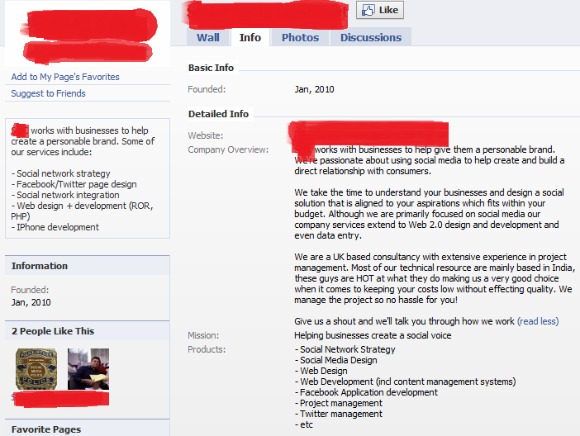
It led me to this Facebook Page (note: image was taken prior to the brand pages makeover, but the “content” remains the same).

I’ve blocked out the name of the company (and forgive the blotchy red strokes – art was never my strong point), but you can still see the details of their service.

What stands out for me is that, as part of their service, they offer Facebook and Twitter page design. Since a branded Facebook page can really help you differentiate yourself from everyone else, it’s a service that’s becoming more popular. Yet the company’s own Facebook page is pretty lacklustre, with just the standard options.

Where’s the dedicated landing page, or more interactive tabs and features that some of the best Facebook pages have?

So, not a great start – but it was better than their main point of call…

Second Chances

It may have been that the Facebook page was a work in progress. I wasn’t so sure about this, since administrators of Facebook pages have the option to keep the page private until ready for launch.

But, give the benefit of the doubt – so I thought I’d check out the company’s website instead. Where I found this.

Probably not the best landing page in the world for a company that offers web design and development as part of their core services.

Couple this with the Facebook page – while you can have works in progress, you can also have landing areas that show this information, as opposed to a “parked here free of charge”-type message. For a company who wants to help you design the face of your business, the combination of the non-existent website and standard Facebook page doesn’t bode well.

Second Chances – Learning Points

Now I don’t want to be too down on this company, since it could be a fledgling business from some young entrepreneurs looking to realize their goal of owning their own business.

Yet at the same time, they’re not doing themselves any favours either by launching into the public too soon. So what could they have done differently?

  • Have a dedicated landing page. This relates to both the Facebook page and the website (in its current form). Having a pre-launch landing page on a website looks a lot more professional than a web host message. The same goes for having a dedicated Facebook landing page as opposed to the standard Wall – especially for a Facebook page design company.
  • Keep everything under wraps. While you might be excited to launch a product or business, unveiling it too soon can do more damage than good. Instead, keep everything private with maybe the odd teaser, and make sure you’re 100% ready for the public gaze. Because they’ll be ready for you, finished or not.
  • Beware of search engines. The reason I received the alert that took me to this company’s Facebook page is simple – their information box is full of keywords relevant to my industry. Tying into keeping everything under wraps, don’t stuff keywords into something that’s public but not ready – it’ll just bring you eyeballs you may not want. Hold off until launch instead.

While first impressions count, you can get past a less-than-great one with an awesome second impression – but you need that second impression to be solid. This company’s website would have been their chance for a second impression – and they blew it.

Now. It could be that this company is one of the best in the world at web and Facebook page design, among other social media skills.

But given their first and second chance to impress, would you hire them to paint the face of your business?

How smoyz Helped Kleenex Deliver the Feel Good Factor Online and Offline

For me, the best marketing or advertising success stories are exactly that – real stories. People connect with people, and that’s when the magic happens.

Sure, brands and products are important – but if you don’t touch that inner emotion that takes a potential customer from intent to the buying trigger, then you won’t get the sale, simple as.

Israeli creative agency smoyz clearly understand this, as their recent Facebook campaign for Kleenex shows.

The goal was simple – to create buzz around the Kleenex product in Israel using social media. The delivery by smoyz was simple too, when you think about it – Kleenex makes tissues, so let’s find people that need tissues and help them out.

Using Facebook and social search keywords, smoyz soon began to find the target audience on Facebook, and with the help of friends of those targeted, made their winter blues a little bit easier to overcome.

Watch the video below to see how it all happened, and the results that smoyz achieved for their client – they’re pretty impressive (as are the turnaround times for delivery of the Kleenex Feel Good care packages).

Just goes to show, if you create a great story and deliver that to your audience, you’ll get the success you’re looking for.

Simple when you think about it, eh?

[youtube]http://www.youtube.com/watch?v=bGFflwe4mtI[/youtube]

  • « Go to Previous Page
  • Page 1
  • Interim pages omitted …
  • Page 10
  • Page 11
  • Page 12
  • Page 13
  • Page 14
  • Interim pages omitted …
  • Page 19
  • Go to Next Page »
© 2026 Danny Brown - Made with ♥ on Genesis