• Skip to primary navigation
  • Skip to main content
Danny Brown

Danny Brown

podcaster - author - creator

  • About
  • Podcasts
  • Journal

Marketing

Influential Mentions Aren’t the Same as Word Of Mouth Returns

True reach through word of mouth

True reach through word of mouth

Earlier this week, I took a look at why the social influencer – as identified by the likes of Klout, Kred, etc – isn’t anywhere near as valuable as an Instigator.

The post created a great discussion (which is still ongoing) around both sides of the coin, and whether it was just a case of semantics or if an Instigator was the true “influencer”.

I just wanted to expand on that a bit more, especially on why the influencer marketing model (as it currently stands) may be even more worthless (at least as far as real results go).

The Reach Effect

Looking at how Klout sells the “benefits” of its service, it attracts brands by selling them the golden ticket of putting their product or service in front of Klout’s army of influencers.

After all, the social web is built on who’s the most influential, right? The more followers, the more reach – the more reach, the more action. Eh – maybe not.

Reach is one of the most overrated metrics around. While saying “Reach 200,000 consumers” might sound great to a brand, it’s a bullshit metric. It’s assuming all 200,000 followers of a Twitter influencer, for example, are online at a given time, waiting to see that one awesome tweet about a product.

The other issue with reach is that it’s just a calculated number. Twitter user A only has 1,000 followers, but the combined number of all the followers that follow Twitter user A and their followers make up the “200,000 consumers” reach. And half of them might be bots.

So, reach is out of the question.

The Return on Perks

Once Klout (and others) have sold an ad campaign to brands, they turn that into Perks (or Rewards). This allows people with a certain score or above to apply to get free stuff – shower gel, cookies, or even a test drive in a new car.

A recent example is car manufacturer Chevrolet, who offered a loan of the newly-launched Sonic to 130 “influencers” with a Klout score of 45 and above. Looking at the results, you’d say it was a success:

  • 16,000 positive mentions online
  • Three discount requests
  • One car sold

As a case in raising awareness, 16,000 mentions isn’t chump change. Or is it?

The cost of a Klout Perk starts at $25,000. Considering Perks can be shampoo giveaways, let’s assume the Chevrolet campaign cost more than $25k. You’ve then got to add gas costs for the loans. And insurance. And sales people’s time for both the test drives and then the follow-up calls. And the discounts offered.

And these are just the basic costs. So, for that one sale that brought around $14k into the Chevrolet coffers, there’s a major negative return sales-wise. And I don’t care what business you’re in, you can’t survive on goodwill mentions alone.

Now, it’s true that a car purchase isn’t an impulse buy – there’s a longer process involved, to compare models, showrooms, offers, and more. So it may be that we’ll see more returns on the Chevrolet campaign. Let’s just hope the 130 people involved actually like the Chevy brand and weren’t just along for the free ride.

The Return on Silence Versus Word of Mouth

Of course, this is all conjecture, since Klout are very quiet when it comes to reporting the financial successes of their Perks programs. Sure, they’ll bleat about having 700,000 Perks across 350 campaigns since launching two years ago, but how many of these resulted in real sales to the brands involved?

If I had 350 campaigns, and even if just 10% of them resulted in positive ROI for the companies involved, I’d be shouting that from the rooftops, to both attract more brands and silence the critics.

Klout’s own silence in this regard is deafening, and can be taken however you wish to view it.

Compare that to true word of mouth campaigns and researched demographics – where the idea of Instigators versus Influencers comes up – and it’s a different story.

Paramount and Super 8

When Paramount was getting ready to launch their big Steven Spielberg and J.J. Abrams collaboration, Super 8, they created a hashtag on Twitter for the event, #Super8Secret. This was to build buzz and awareness for the movie with secret early showings across the U.S.

The result?

  • 9 million impressions in 24 hours (impressive, even for a flawed metric)
  • 150 tweets per minute
  • Over $1 million sales for sneak preview tickets
  • Exceeded Paramount’s expectations for opening weekend sales by more than 50%

Unfortunately, I don’t have the cost of the campaign – but creating a hashtag on Twitter and then letting it run amok is probably less than the instant million dollars it created, never mind the opening weekend sales.

The reason the Paramount effort worked – and offered a profitable financial return as opposed to just mentions and a negative sale – is the audience was eager, targeted, and actual fans of the product (in this case, the joining of Spielberg and Abrams).

They took action from Paramount’s instigation instead of just tweeting about the deal. Compare that to the Klout Chevy Perk, and how that (so far) offered more reactions (loans for free) over actions (one purchase, negative return).

Look Beyond the Numbers

The comparisons and results between Chevy and Paramount shouldn’t come as? surprise, though. Klout puts its partners in front of eyeballs based on their in-house metric, which has shown to be flawed time and time again.

Additionally, Klout creates the profiles on its site – you, as a number, don’t have a say in that unless you opt out. So the numbers they promote to their ad partners is skewed from the start.

A proper marketing campaign, on the other hand – media buy, ad buy, email campaign, social media – integrated and targeted will trump the influencer buzz every time (or pretty much every time).

Because smart marketers look beyond the numbers and look to how their effort contributes to the numbers that matter instead.

Which, at the end of the day, is what really matters, no?

Social Influencers Are Dead – Long Live the Instigators

Meet the social instigators

Meet the social instigators

Social influence. The need to prove how wonderful you must be to get such a high Klout score. The golden nugget for brands looking to tell their story to the masses.

Yep, social influence – and, by association, social influencers – is a hot potato and continue to divide opinion.

On the one hand, you have the likes of Klout, Kred, PeerIndex and others allocating scores to you based on your perceived influence, according to their algorithms.

Included in this camp are the evangelists for these services – the score bleaters, pimping themselves looking to score freebies from brands that have bought into the unscientific scoring systems, as well as those that genuinely wish to be seen as more influential through a high score or number.

On the other hand, you have the naysayers and doubters, who believe it’s impossible to allocate a score to an individual, because no individual can truly be measured. There are way too many variables involved – I may be excited by something tweeted to me online, but if my wife says no, my wife says no.

And not one of the influence ranking platforms knows a single thing about my wife and her “influence”.

However, it’s clear we’re looking at the wrong people.

There will always be tools like Klout to offer those needing validation for the stuff they do online, just as much as there will always be people whose validation comes from the results they get for themselves or their clients, both online and offline.

And it doesn’t matter – because the term Social Influencer is pretty much dead. The real power online lies with the Instigators.

Influence Comes And Goes, But The Instigator Thrives Indefinitely

Before the term “social influencer” bastardized the origins of influence, it was a mark of respect to be known as an influencer. Now, though, the term has lost a lot of its marquee, because it’s tied directly to who can be the noisiest online to try and improve influence scores and grab some freebies.

It’s why many people are pushing back on influence scores, by dropping out of the system altogether, or simply refusing to care.

And while some brands are still willing to take a risk on signing up to offer free perks to those that play the game in the hope of getting more return for their money, many others are bypassing the score takers and going direct to the source.

This is where the Instigator is the new power, and the one that should be followed and courted.

Because the Instigator has always been around, long before any social influence “metric” was thought of. The Instigator has been the real influencer, and caused actions and reactions far larger, and in greater numbers, than the perceived influencer.

And they continue to do so, long after the last Klout Perk has shriveled up and become the butt of online jokes at the irrelevance.

So who are the Instigators, and why should you (as a brand or business) care?

The Trust of the Instigator Community

Instigators are the drivers of actions and conversations, and it’s down to one simple fact – they have the innate ability to create conversations and actions based on those conversations, as opposed to being a shill for a brand.

And their community knows this.

Instead of slapping the latest affiliate ad on their site for a product they’ll never use, Instigators always show both sides of the coin. They offer the good and the bad of a brand, product or service.

They treat their audience as equals – because their audience are equals. And, by being treated as equals and partners in the conversation, the audience of an Instigator takes the message further than any brand could (arguably) hope to see from an influencer campaign.

Because many brands are focusing on the wrong platforms. They’re looking to Twitter and Facebook, and throwing hundreds of thousands of dollars into Sponsored Tweets and Stories.

In the meantime, the real action is happening on blogs and inside forums – and only the smartest brands have cottoned onto this. And it’s (more often than not) not just the “accepted influencers”, or usual suspects, that are driving this action.

Take a look at Ken Mueller, who drives lively conversations across his blog comments and Twitter around his ideas. Or Jack B., who also gets smart people, that would be classed as influencers, discussing the merits of his thoughts on his blog and across the social web.

Because here’s the simple fact any marketer worth their salt will tell you – word of mouth and getting people talking about you is the real relationship to the sale.

Ad spend may get you awareness; great customer service will keep customers with you. But getting the buy? That’s the final step between desire (ads) and decision and – again, more often than not – this is where the conversations, pros and cons around your brand influence that decision.

The Social Influencer Is Dead – Long Live the Instigators

You can still chase the influencer model if you wish. After all, there’s some merit to knowing how someone is perceived online, and if they can drive interest in your perk, giveaway or new promotion.

But if you want real results and real long-term buy-in, you’ll be chasing the wrong crowd. The term influence has already been tainted to the effect that people are now wary and gun-shy when they hear it.

That’s an issue that won’t go away until the algorithms are more solid and locked down.

But that’s okay – because influencers are short hit affairs. The Instigators – the people that instigate immense conversations and let them run free, and then see them propagate even further around the web – are the real influencers.

They’re the folks that are making people think. And when you think, you look for a solution. And if you’re a brand with that solution, you’ll be instantly on that person’s radar – as long as you know where that person has come from. And, chances are, it’s not going to be a social influencer.

Time to rethink who you’re looking to connect with.

Connecting Your Brand to Your Customers the Whyte & Mackay Way

Connect to your customers

Connect to your customers

In social media, we often talk about the need to connect to our customers more. Yes, we speak about that outside social media too, but the medium allows us the opportunity to do this better and on a larger scale.

However, saying something and actually doing it are two very different things. It’s all well and good saying, “Let’s connect!”, but implementing isn’t always easy.

Except, it can be.

Every business is a customer – if you’re not thinking like that, you’re already behind. We’re not just providers – we’re recipients of knowledge. The feedback our customers give us should be viewed higher than any financial transaction they give, because that helps us improve, and grow, and understand how we connect better.

Whyte & Mackay understand this. Instead of just buying blanket ads and dead space to fill, they speak of what their customer loves – the experience of being a whisky drinker.

They talk of the smell; the warmth; the delivery. Their words help the customer experience their product to the fullest, and when you enjoy something the way it’s meant to be enjoyed, you want to experience that feeling again. And again. And again.

This video by Whyte & Mackay Master Blender Richard Paterson is the perfect example of how to sell your product while truly connecting with your customer.

[youtube]http://www.youtube.com/watch?v=Zjrkd_RZFFY[/youtube]

It’s fun; informative; no buzz words; and takes pot shots at some industry practices while educating on the reasons why they’re wrong.

Now, while not every brand can deliver a video in this way, it’s a great primer on what works – being yourself and being your customer.

Works for me. You?

Hat-tip Phil Baumann for sending me the video.

Related articles
  • The Richard Paterson Experience – Tasting 1868 Dalmore (scotchhobbyist.com)
  • Whyte and Mackay – The Sample Room (scotchhobbyist.com)
  • How to Beat the Clutter and Your Competition (inklingmedia.net)

The TRUE Power of Influence and Emotional Impact

People talk about influence ? what it is, how to get it, how influence is guided by numbers and how to attract the attention of influencers for promotional needs.

There?s no doubt that influence is a constant hot potato.

But sometimes, influence comes from the strangest of places. Sometimes influence comes from folks we might never look twice at. Sometimes influence comes from nothing but emotion.

Look at this video from Australian Juan Mann. One guy, who started a campaign offering free hugs to try and bring a touch of humanity back to the city of Sydney in his native Australia.

He wasn?t an A-list blogger commanding an audience of thousands. He wasn?t a celebrity with a million-plus Twitter followers. Instead, he was just a guy with an idea built on emotion.

Yet as you can see, not only did he influence folks in his city (as seen by the fast collection of petition signatures), he also influenced millions of people worldwide (almost 73 million and counting on YouTube).

There are also a ton of Free Hugs movements worldwide, both online and offline. All from a single guy?s belief in humanity and emotion.

Funny how influence works, huh?

[youtube]http://www.youtube.com/watch?v=vr3x_RRJdd4[/youtube]

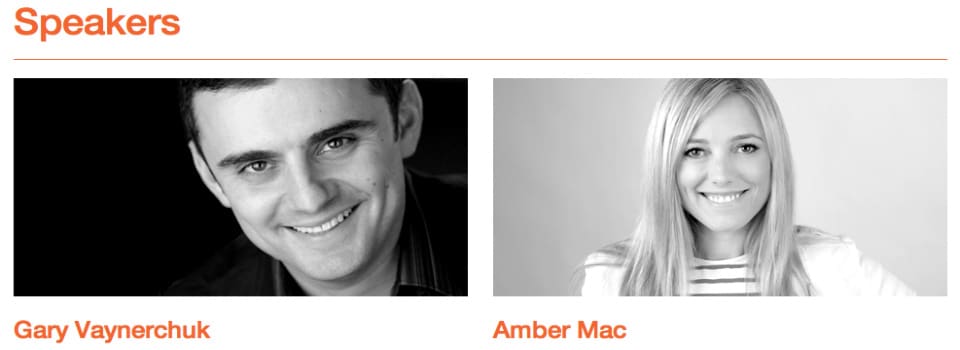
Join @GaryVee and @AmberMac in Toronto July 26 for Social Mix 2012 #SoMix2012

Social Mix 2012

If you’re in the Toronto, Ontario area on July 26, make sure you keep the day free for what promises to be one of the city’s leading social media and business events this year.

Top business and marketing folks Gary Vaynerchuk and Amber Mac will be keynoting at the inaugural Social Mix, presented by Jugnoo (hey, that’s where I work!). They’ll be sharing their insights and expertise on what it takes to succeed both online and offline, and how to build your business for long-term success.

Alongside Gary and Amber, we’ll also be bringing the highly respected Gini Dietrich and Geoff Livingston, co-authors of the new Marketing in the Round book, and two of the most influential voices on marketing in the social media world today.

As well as shaping up to be a kickass event, there’s a great cause we’ll be donating all proceeds to in the Remix Project, a Toronto organization that helps marginalized youth become the creative change makers of tomorrow.

It promises to be a great event, and one that will offer great insights to all attendees, from solo entrepreneurs to small-to-medium business owners and much, much more.

Check out the full Social Mix website for more details on the event, as well as the schedule and how you can buy your ticket(s) to join us on the day.

And as a special bonus, all JugnooMe users will be receiving a 20% discount on ticket prices – so if you haven’t signed up yet to try the JugnooMe beta, now’s the perfect time.

Cheers!

[youtube]http://www.youtube.com/watch?v=ZizUQQNRq-4[/youtube]


  • « Go to Previous Page
  • Page 1
  • Interim pages omitted …
  • Page 9
  • Page 10
  • Page 11
  • Page 12
  • Page 13
  • Interim pages omitted …
  • Page 19
  • Go to Next Page »
© 2026 Danny Brown - Made with ♥ on Genesis