• Skip to primary navigation
  • Skip to main content
Danny Brown

Danny Brown

podcaster - author - creator

  • About
  • Podcasts
  • Journal

Latest posts from Danny Brown

Enjoy the latest posts from Danny Brown, and feel free to add your own thoughts in the comments after the post.

The Difference Between Ideas and Doing

All about the ideas

All about the ideas

A few years back, I knew a guy who always had a great idea up his sleeve.

He?d share these ideas with anyone that was in his company, and tell of his grand plans for when his ideas made him rich. They would invariably involve?Salma Hayek, a yacht and six months at sea?

Everyone smiled and asked him not to forget us when he was rich and famous. After all, we were the sounding boards for his ideas and we?d say which ones sounded good, and which ones wouldn?t get him Salma.

Jump forward a few years, and needless to say he?s not dating Salma Hayek for six months of the year. Nor does he have his yacht, or his millions in the bank. The last I heard, he was a baker in a small village just outside of London in the U.K.

Not that there?s anything wrong with that. He?s making an honest living, and keeping a roof over his head. But knowing his mind and ambition, I can?t help but feel he?d be a little disappointed that his grand plans never came to fruition.

And there?s one simple reason.?While he talked a great talk about ideas and plans, he never followed through on them.

Never.

Instead, his great ideas remained just that ? ideas. Pipe dreams that could have been great had he taken just one of them and attempted to do it. But he didn?t. Instead, he chose to live anonymously, if you like, and remain ?that guy with the ideas.?

Again, there?s nothing wrong with that. Nothing at all.

But ask yourself one question, if you?re currently thinking great ideas ? what will you do next?

  • If it?s for a business, there are a ton of resources available for you, both online and offline. Google is your friend online, and your local?Chamber of Commerce?(or equivalent) is your friend offline.
  • If it?s for a product, and you want to test run it first, why not try something like?Etsy?to start with (or the equivalent for your product?s niche)? Again, Google is your friend ? use it to find sites to sell your product with little investment.
  • If you?re looking for feedback?to see if your idea is needed, set up your version of customer satisfaction?listening posts?and see what people are saying. If there are a lot of complaints and not a lot of resolutions, that?s an immediate in.
  • If you want to write a book, there are a host of self-publishing platforms available, like?Blurb?and?Lulu. Better still, write an ebook and sell it through your own blog or website.

The main point is, there are a ton of folks with great ideas. But many never make it past the idea stage.

So, the question remains.

What will?you?do next?

Image:?k-ideas

InNetwork, the Drive for Authentic Influence and What It Means for Brands

InNetwork influence roster

In the book Influence Marketing, we dedicate a chapter to some of the platforms we felt were leading the way in the next wave of influence marketing.

These platforms include Traackr, Tellagence and others, for the way they’re moving beyond generic influence and actually delivering business intelligence and results.

Of course, the limitations of a book, as well as how fast this space moves, meant as soon as we’d finished, new platforms came into play that impressed just as much.

One such platform is InNetwork, from Nova Scotia, Canada.

Quality Assurance and Influence

The beauty of the platforms that are moving the influence conversation forward is that they all have something different to offer, and can either complement each other or be used because of these differences for specific campaign needs.

  • Traackr, for instance, has their new INA solution, which allows you to see who influences the influencers (a key factor for success in the methodology we present in the book);
  • Appinions takes into account offline data, which counters the “you’re only influential if you’re online” approach that the likes of Klout take;
  • Tellagence tracks the ebb and flow of influence across communities, and helps identifies the next layer or generation of influencers.

For InNetwork, their differentiating factor is the authority stance they take when identifying influencers.

InNetwork initial influence

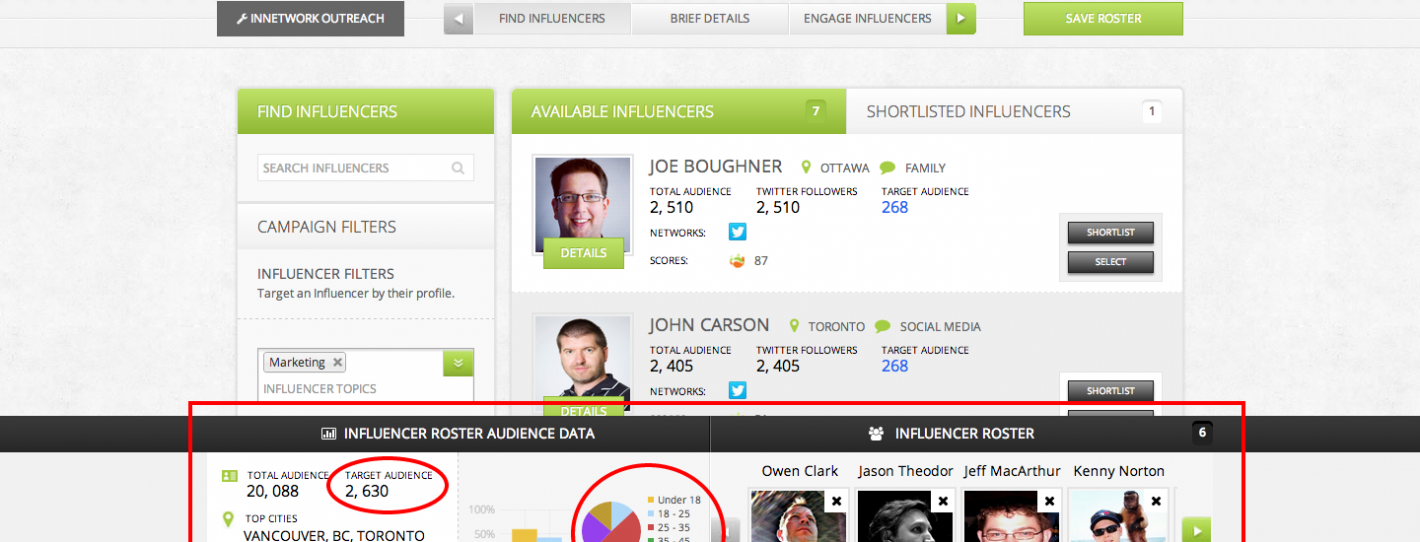
When you use InNetwork as a marketer and you set up your first campaign, you enter the keywords around the industry you’re in, and the target audience for that industry. That starts to populate InNetwork’s influence roster, as highlighted in the image above.

There are two types of influencers on InNetwork – registered and searched. The registered ones are those that have connected their data to the InNetwork database, and these are highlighted by blue stars.

The searched ones are those that haven’t registered with InNetwork, but have dropped into your search based on keywords used.

This is where the first part of the InNetwork Authority metrics comes into play.

When an influencer registers, they are manually curated by the quality control team at InNetwork, who verify authority on a topic, that they aren’t a bot or fake account, that the numbers add up, and that the influencer actually knows what they’re talking about. Only then do they gain access to the system.

This offers an immediate benefit for brands used to using social scoring platforms for “influencer outreach” campaigns. No more generic, no more false expertise – instead, real influencers with real audiences.

But the authority doesn’t stop there.

The True Audience of Influence

Once you start to use the various filters while setting up your campaign, the audience number of the influencer changes.

While someone may have a collected “follower” number of 10,000 across Twitter, Facebook, blogs, etc, not all 10,000 are going to be interested in the same thing.

For instance, a marketing blogger’s audience may be made up of small business owners, Fortune 50 executives, non-profit volunteers, etc. They need different information for different strategies.

Likewise, a lifestyle blogger may have married moms with teens, single moms with a toddler, retired moms, etc. Again, they’re going to need different messages targeted to their different buying needs.

As you add extra keywords and demographics into the InNetwork algorithm, it starts to show you what the true audience size for these filters looks like, as shown in the image below.

InNetwork true audience size

Now, instead of a non-targeted couple of thousand followers, you have access to a very targeted couple of hundred, that are in your target audience demographic and trust the advice of that particular influencer on that topic.

It immediately ramps up the success potential versus throwing a generic message at 5,000 audience members and seeing what sticks.

The more filters you add, the more targeted results you get, until you have a roster of influencers with a warm and engaged audience that’s right for your brand and the message/product/service you’re trying to promote.

The One to One Relationship Factor

Now that you have your chosen influencers, InNetwork adds the final piece of the authority puzzle.

Brand managers, or whoever’s responsible for the relationship with the identified influencers, now have access to a Brief and Statement of Work area, as well as a private messaging function directly with the influencer, as shown in the two images below.

InNetwork 5 brief

InNetwork engage influencers

Here, the brand can connect with the influencer directly, and propose their project as well as their requirements, goals, expectations, compensation and more.

In return, the influencer can negotiate that statement of work, to ensure that the message that’s shared with their audience is right for them; doesn’t impact the trust of the influencer; and offers a fair reward for the work that’s being done.

With both sides working together like this, it ensures the brand’s message is going to the right audience, and that the brand is allowing the influencer to share the message in a way that’s relevant to their community.

It’s one of the core reasons any campaign succeeds and, more importantly, moves beyond a short-term campaign and into a longer term loyalty and advocacy relationship.

Once the campaign finishes, the influencer can be “ranked” for relevance of message, results, goals met, and general working relationship. This again helps InNetwork connect the strongest influencers for brand messages, based on their proven metrics and successes in similar campaigns.

The Future Looks Bright

InNetwork only came into public beta launch at the beginning of June, but already you can see they put a lot of legwork in when it comes to providing the type of solution agencies want and need.

The fact they carried out a lot of pre-build conversations with brands and agencies as to what solutions would be useful shows in the features highlighted here.

There are some features currently missing that I’d love to see added – the ability to add your own search terms, versus the pre-defined ones, for instance. Additionally, reports are currently generated by a client services team versus being able to define your own metrics and apply that data manually.

However, it’s still early days for InNetwork and these are two features that have been promised in either the next iteration, or an update before the year end.

For brands right now, the platform offers a solid, very easy-to-use solution that takes the pain out of identifying the true reach and relevant audience for an influencer roster, as well as baking in authority data throughout the whole platform.

It takes influence marketing into another excellent and much-needed direction and for that I’m extremely optimistic about what InNetwork is adding to the influence conversation.

The market continues to mature – and that’s never a bad thing.

This post is part of a demo program I’m running in partnership with InNetwork, to test the platform and offer feedback and direction on the platform itself. No financial compensation was exchanged, and these opinions are my own.

If you wish to trial the platform, you can sign up here. During the beta phase, InNetwork costs $499 per month for an agency site license for up to 5 users on unlimited campaigns. Brands can use it directly for $249 per month for three users. ?

InNetwork, the Drive for Authentic Influence and What It Means for Brands

InNetwork influence roster

InNetwork influence roster

In the book Influence Marketing, we dedicate a chapter to some of the platforms we felt were leading the way in the next wave of influence marketing.

These platforms include Traackr, Tellagence and others, for the way they’re moving beyond generic influence and actually delivering business intelligence and results.

Of course, the limitations of a book, as well as how fast this space moves, meant as soon as we’d finished, new platforms came into play that impressed just as much.

One such platform is InNetwork, from Nova Scotia, Canada.

Quality Assurance and Influence

The beauty of the platforms that are moving the influence conversation forward is that they all have something different to offer, and can either complement each other or be used because of these differences for specific campaign needs.

  • Traackr, for instance, has their new INA solution, which allows you to see who influences the influencers (a key factor for success in the methodology we present in the book);
  • Appinions takes into account offline data, which counters the “you’re only influential if you’re online” approach that the likes of Klout take;
  • Tellagence tracks the ebb and flow of influence across communities, and helps identifies the next layer or generation of influencers.

For InNetwork, their differentiating factor is the authority stance they take when identifying influencers.

InNetwork initial influence

When you use InNetwork as a marketer and you set up your first campaign, you enter the keywords around the industry you’re in, and the target audience for that industry. That starts to populate InNetwork’s influence roster, as highlighted in the image above.

There are two types of influencers on InNetwork – registered and searched. The registered ones are those that have connected their data to the InNetwork database, and these are highlighted by blue stars.

The searched ones are those that haven’t registered with InNetwork, but have dropped into your search based on keywords used.

This is where the first part of the InNetwork Authority metrics comes into play.

When an influencer registers, they are manually curated by the quality control team at InNetwork, who verify authority on a topic, that they aren’t a bot or fake account, that the numbers add up, and that the influencer actually knows what they’re talking about. Only then do they gain access to the system.

This offers an immediate benefit for brands used to using social scoring platforms for “influencer outreach” campaigns. No more generic, no more false expertise – instead, real influencers with real audiences.

But the authority doesn’t stop there.

The True Audience of Influence

Once you start to use the various filters while setting up your campaign, the audience number of the influencer changes.

While someone may have a collected “follower” number of 10,000 across Twitter, Facebook, blogs, etc, not all 10,000 are going to be interested in the same thing.

For instance, a marketing blogger’s audience may be made up of small business owners, Fortune 50 executives, non-profit volunteers, etc. They need different information for different strategies.

Likewise, a lifestyle blogger may have married moms with teens, single moms with a toddler, retired moms, etc. Again, they’re going to need different messages targeted to their different buying needs.

As you add extra keywords and demographics into the InNetwork algorithm, it starts to show you what the true audience size for these filters looks like, as shown in the image below.

InNetwork true audience size

Now, instead of a non-targeted couple of thousand followers, you have access to a very targeted couple of hundred, that are in your target audience demographic and trust the advice of that particular influencer on that topic.

It immediately ramps up the success potential versus throwing a generic message at 5,000 audience members and seeing what sticks.

The more filters you add, the more targeted results you get, until you have a roster of influencers with a warm and engaged audience that’s right for your brand and the message/product/service you’re trying to promote.

The One to One Relationship Factor

Now that you have your chosen influencers, InNetwork adds the final piece of the authority puzzle.

Brand managers, or whoever’s responsible for the relationship with the identified influencers, now have access to a Brief and Statement of Work area, as well as a private messaging function directly with the influencer, as shown in the two images below.

InNetwork 5 brief

InNetwork engage influencers

Here, the brand can connect with the influencer directly, and propose their project as well as their requirements, goals, expectations, compensation and more.

In return, the influencer can negotiate that statement of work, to ensure that the message that’s shared with their audience is right for them; doesn’t impact the trust of the influencer; and offers a fair reward for the work that’s being done.

With both sides working together like this, it ensures the brand’s message is going to the right audience, and that the brand is allowing the influencer to share the message in a way that’s relevant to their community.

It’s one of the core reasons any campaign succeeds and, more importantly, moves beyond a short-term campaign and into a longer term loyalty and advocacy relationship.

Once the campaign finishes, the influencer can be “ranked” for relevance of message, results, goals met, and general working relationship. This again helps InNetwork connect the strongest influencers for brand messages, based on their proven metrics and successes in similar campaigns.

The Future Looks Bright

InNetwork only came into public beta launch at the beginning of June, but already you can see they put a lot of legwork in when it comes to providing the type of solution agencies want and need.

The fact they carried out a lot of pre-build conversations with brands and agencies as to what solutions would be useful shows in the features highlighted here.

There are some features currently missing that I’d love to see added – the ability to add your own search terms, versus the pre-defined ones, for instance. Additionally, reports are currently generated by a client services team versus being able to define your own metrics and apply that data manually.

However, it’s still early days for InNetwork and these are two features that have been promised in either the next iteration, or an update before the year end.

For brands right now, the platform offers a solid, very easy-to-use solution that takes the pain out of identifying the true reach and relevant audience for an influencer roster, as well as baking in authority data throughout the whole platform.

It takes influence marketing into another excellent and much-needed direction and for that I’m extremely optimistic about what InNetwork is adding to the influence conversation.

The market continues to mature – and that’s never a bad thing.

This post is part of a demo program I’m running in partnership with InNetwork, to test the platform and offer feedback and direction on the platform itself. No financial compensation was exchanged, and these opinions are my own.

If you wish to trial the platform, you can sign up here. During the beta phase, InNetwork costs $499 per month for an agency site license for up to 5 users on unlimited campaigns. Brands can use it directly for $249 per month for three users. ?

The Sunday Share – 50 Stats You Need to Know About Content Marketing

video and content marketing

video and content marketing

As a business resource,?Slideshare?stands pretty much head and shoulders above most other content platforms.

From presentations to educational content and more, you can find information and curated media on pretty much any topic you have an interest in.

As a research solution, Slideshare offers analysis from some of the smartest minds on the web across all verticals. These include standard presentations, videos, multimedia and more.

Which brings us to this week?s Sunday Share.

Every week, I?ll be sharing a presentation that catches my eye and where I feel you might be interested in the information inside. These will range from business to content to social media to marketing and more.

This week, an excellent presentation from content marketing agency NewsCred.

As content marketing becomes an ever more important staple in marketing, businesses need to understand how they can benefit from the content they produce. These 50 stats show the growing importance of content in the marketing mix and why you should be using it as part of your strategy.

Enjoy.


Why Google is Missing the Point on Sponsored Content

Over at the InNetwork blog this week, I wrote about why influencers deserve to be paid. It essentially looked at why brands should be treating influencers more professionally, and respecting them as a key partner in any marketing mix.

In the comment section after the post, Kari Rippetoe, Content Marketing Manager at Search Mojo, left an interesting statement:

Interesting post – you pulled me in with that title, because I wasn’t quite sure I agreed. I totally get where you’re coming from regarding the time an influencer not only spends in writing a post, but also in cultivating and managing their influence and community. But, from an SEO standpoint (and I work for a search marketing firm, so we’re very sensitive to this), paid posts (if you’re indeed compensating the influencer with money) can be detrimental to SEO. Google doesn’t like paid links, and while its algorithm can’t necessarily detect all paid links, I’m not sure if it’s worth the risk. That’s why we don’t pursue requests from bloggers to write posts for payment – because that’s a risk we can’t take on behalf of our SEO clients.

Kari’s point about paid links, and Google’s view on them, is a pertinent one, since – while there are other search engines around – Google is the search algorithm that most people take notice of and adhere to, rightly or wrongly.

The thing is, for me, Google’s wrong regarding their stance on sponsored content.

Sponsored Content – The Google Take

To get a better idea of what Google’s take is, here’s what’s being said around the web with regards what Google does and doesn’t “allow” when it comes to sponsored [paid] content:

Google made it clear that they do not want sponsored content indexed in Google News, and sites that mix in promotional articles with their regular news content could be excluded from Google News entirely.

To clarify, the second warning refers to advertorials or articles created entirely by or for a sponsor, along the lines of what?BuzzFeed does… Adam Sherk.

So, essentially, Google is trying to avoid clearly advertorial content that offers nothing but promoting a brand’s message or paid media. Fair enough – there’s enough crap online that’s been paid for and bypasses the good content, which gets lost in amongst the paid stuff.

Where it gets a but muddied, though, is in what Google deems acceptable, as highlighted by the opening sentence in the paragraph that follows Adam’s quote above:

It does not apply to instances in which regular editorial content is given a sponsor treatment.

So, for example, a blogger could write a piece about hair gel and have Garnier Fructus sponsor the post. This means the blogger writes and Garnier might offer free samples. The blogger’s words, the brand’s product.

See a flaw there? Yep, it can still be viewed as paid content by the blogger’s readers. Why would Garnier sponsor without something being in it for them? Did the blogger remain unbiased, or were they tempted by bigger partnerships if they slipped in a couple of favourable mentions of Garnier throughout the post?

While there may not have been physical dollars exchanged, the question is still there – “can this opinion be trusted?”

Once that happens, it counters the very reason Google wants to clamp down on sponsored content: false advertising, inferior products, etc., and how they’re displacing quality-led, honest content.

Sponsored Content – The Irony Factor

Which brings us to the point that Kari made in her comment over at the InNetwork post, about Google not liking paid links and how that can impact a brand that uses this marketing method.

As I mentioned earlier, I can understand why Google wants to keep their results quality-driven. It helps the consumer, who uses Google more, who can charge more for ads, and… oh, right. Ads. Otherwise known as paid content.

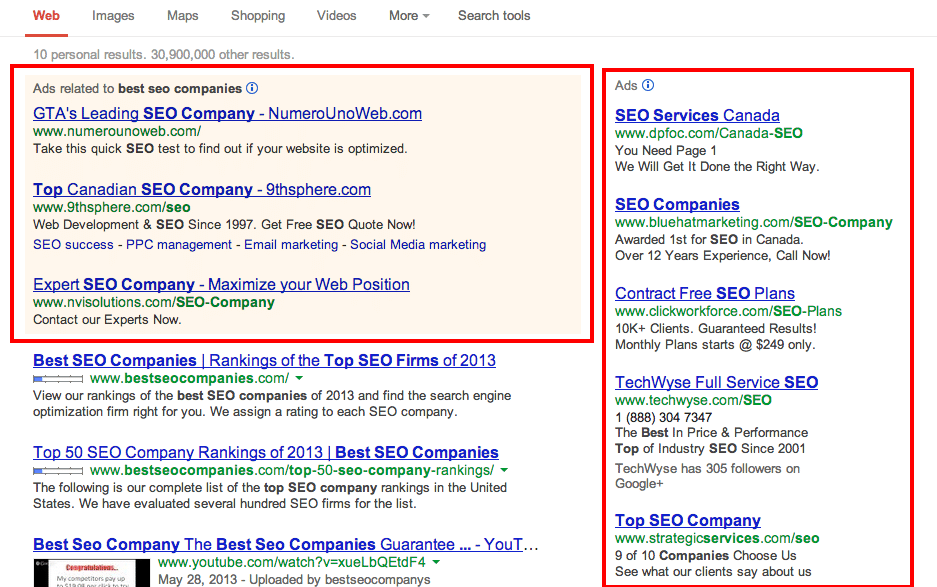
Look at the image below, based around a search for “best SEO companies”.

best seo companies Google Search

There are 11 results visible in the screen shot – essentially, above the fold results (or what people see without needing to scroll down on their screens).

Of these 11 results, only three are organic, and clearly show a solid understanding of SEO by the company involved, which holds the #1 and #2 spot, with #3 being a YouTube video.

Every other result is an ad. Or, for want of a better description, Google accepting paid content to promote a business over another one. Sound familiar?

So it would appear that sponsored/paid content is fine if it’s ads with Google but not if it’s ads appearing within?Google.

This is kind of messed up. Especially since, as I talked about in the post over at InNetwork, trust is the ultimate currency of a blogger, and isn’t something that can be bought at any price.

Sponsored Content – The Trust Factor

Are there bloggers that don’t give a crap and will write any old thing for a brand in exchange for regular sponsored content campaigns? Unfortunately, yes, and these are the ones that Google should quite rightly hammer.

But I’ve tended to find that they’re mostly in the minority.

Instead, what you have are bloggers looking to make a living doing the thing they love – sharing content, making recommendations, helping their community find a solution to help with a certain need.

That love, and that desire to help, allows the blogger to build a loyal and trusted audience – one that they would never deceive or whose trust they’d break, for the sake of a positive review when in fact a product or service was crap.

On the flip side, good brands know that the best way to meet customer needs is to listen to them. Because of the inherent mistrust of brands by consumers, often the only way this listening can happen is by sponsoring a post, allowing a blogger to write about you, offer some trial product, and then monitor the feedback over the coming weeks.

This understanding on both sides sees the blogger write an unbiased view, with the brand allowing that to happen in order to truly understand their target customer’s mindset.

As you can see, it’s a win-win for all involved. Except it’s not – because Google doesn’t really want this type of exchange to happen.

Instead of getting honest and quality content throughout their engine, Google would rather allow other types of paid content – ads – that have no indication of the quality of the company behind them.

At best, this seems a completely flawed approach. At worst, it could ironically enhance the current issue.?After all, if solid content via honest sponsorship and disclosure is being punished and grouped in with the crappy stuff, why even bother…

Thoughts?

  • « Go to Previous Page
  • Page 1
  • Interim pages omitted …
  • Page 84
  • Page 85
  • Page 86
  • Page 87
  • Page 88
  • Interim pages omitted …
  • Page 283
  • Go to Next Page »
© 2026 Danny Brown - Made with ♥ on Genesis