• Skip to primary navigation
  • Skip to main content
Danny Brown

Danny Brown

podcaster - author - creator

  • About
  • Podcasts
  • Journal

Latest posts from Danny Brown

Enjoy the latest posts from Danny Brown, and feel free to add your own thoughts in the comments after the post.

The Sunday Share ? 8 Steps to Build Your Content Hub

video and content marketing

video and content marketing

As a business resource,?Slideshare?stands pretty much head and shoulders above most other content platforms.

From presentations to educational content and more, you can find information and curated media on pretty much any topic you have an interest in.

As a research solution, Slideshare offers analysis from some of the smartest minds on the web across all verticals.

These include standard presentations, videos, multimedia and more.

Which brings us to this week?s Sunday Share.

Every week, I?ll be sharing a presentation that catches my eye and where I feel you might be interested in the information inside. These will range from business to content to social media to marketing and more.

This week, an instructive presentation from Michael Brenner, VP Marketing and Content Strategy at enterprise software solutions provider SAP.

As the social web continues to lead marketing strategies for organizations everywhere, it’s not just important to have a content strategy, but also how to present it. This Slideshare shows you how.

Enjoy.


Why Influencers Deserve to be Paid

Influencers and paid

Ever since sponsored posts were made popular by the likes of Izea, the question has remained: should influencers be paid for their promotion of your brand?s message, product or service?

On the one hand, you have those that say paying an influencer removes the validity of the review of promotion, since you can?t possibly remain non-biased when there?s been an exchange of money.

On the other hand, you have those that say it?s no different from any other marketing channel, and you pay for that, so why should influencers be any different?

As someone who?s on both sides of the coin ? I?m a marketer who uses influencers for client campaigns, and I?m fortunate enough to work with brands as an influencer for their campaigns ? here?s my take on the topic.

Time is Money

How long do you think the average blog post takes to create? If you, the marketer, don?t blog yourself, how long do you think it takes to put together what you?re reading now?

10 minutes? 30 minutes? An hour? More, less?

The truth is, blog posts take as long as they need to be ready. This might sound clich?d, but it?s true. There?s much more to a blog post than just stringing some words together (or images and sounds, if you?re a video blogger or podcaster).

  • Ideas and research;
  • Content;
  • Format;
  • Links and attribution to relevant topics;
  • Images and media;
  • Proofreading.

That?s just the creation part. Then you have the marketing of a post, along with replying to comments and encouraging further discussion. All told, a blog post can easily take up a few days of your time, if you were to add up all the components.

And that?s just one post, where the blogger knows the topic inside out and can create content on the fly. If there?s a brand message involved, there needs to be further research into the product, testing any giveaways, liaising with the brand, etc.

So that single post has now turned into a mini-campaign. And you want that for free? Um??NO.

Trust Can?t be Bought ? But It Deserves to be Rewarded

When I started my main blog, the one core tenet I made it my mission to adhere to was to never break the trust of whatever community managed to grow around the blog.

That meant all opinions would be treated equally, as long as they were respectful and on topic, and I would never promote or recommend something I hadn?t used myself, or didn?t 100% believe in.

It?s a big reason there have been very few ads on my blog, with the exception of the WordPress theme I use. It?s also why there has been very few sponsored posts on my blog ? perhaps two in five years plus of blogging there.

Simply put, if I?m going to recommend something to my community ? whether as a non-paid fan or a sponsored ?influencer? ? it needs to be right for my audience. There?s no amount of dollar value you can pay to erode the trust that?s built between a blogger and his or her community.

Money comes and goes; trust and a legacy doesn?t.?That can never be bought back.

If you, as a brand manager or agency, want to connect an influencer?s hard-earned community trust to your client, you need to understand what it?s taken to build that trust. It?s the ultimate endorsement, for that influencer to introduce your brand to the community, and not only introduce, but honestly recommend.

You can?t buy that kind of advertising ? but you can reward it.

Relevance Equals More Effective Outreach and ROI

There?s a reason today?s definition of influence ? social scoring platforms like Klout, etc. ? have been very slow at sharing public success stories when it comes to their influencer outreach campaigns.

While generic influence as offered by these platforms can help brands gain share of voice and brand amplification, the fact is the identification process of influencers to use lacks true context and relevance to an audience.

Influence decision process

While a lifestyle blogger with 10,000 subscribers and demographics of 25-44 year old women might be attractive to a brand looking to promote their latest healthcare product, how many of that 10,000 is right for the brand?

Let?s say the product is for women with sensitive skin; that might be one-third of the audience. So what about the other two-thirds? A generic target by score ???this blogger has a score of 72 in women?s products, they?re perfect!??? will immediately reduce your brand?s success rate.

However, get in touch with the blogger that?s 100% right for your brand, and who has a higher engaged audience around that topic, and you?ll immediately see both financial benefits and more positive sentiment around your outreach campaign.

It?s why the InNetwork solution of filtering out the true audience size is so key. Instead of wasting time and resources on partnering with bloggers with 10,000 subscribers but only 1,000 actual interested readers,?you can connect with a blogger with 1,000 subscribers and 900 interested readers.

That?s a big difference in relevance and the ratio for success is much bigger. It?s the smarter way to market, and paying the influencer for connecting you to that more engaged audience means?less risk, more return, and better campaigns.

Influence Marketing is a Key Business Strategy ? Don?t Treat It Like a Cheap Date

At the end of the day, the old adage??you get what you pay for??has never been more true when it comes to influencers and how they can really help turn a promotional campaign into a loyalty-driven customer base.

There?s a reason people are ?influential? in their community: expertise, respect, trust and the ability to make things happen.

You have the choice to pay or not to pay what they?re worth ? in reality, though,?if you?re serious about your campaigns, there?s only one choice to make:?how much is true influence and what it can offer your brand worth to you?

Don?t be cheap with your answer.

This post originally appeared on the InNetwork blog.

image: H.Michael Karshis

The Sunday Share ? 25 Mind Blowing Email Marketing Stats

email-1As a business resource,?Slideshare?stands pretty much head and shoulders above most other content platforms.

From presentations to educational content and more, you can find information and curated media on pretty much any topic you have an interest in.

As a research solution, Slideshare offers analysis from some of the smartest minds on the web across all verticals.

These include standard presentations, videos, multimedia and more.

Which brings us to this week?s Sunday Share.

Every week, I?ll be sharing a presentation that catches my eye and where I feel you might be interested in the information inside. These will range from business to content to social media to marketing and more.

This week, an informative presentation from leading enterprise cloud solutions provider Salesforce.

According to a study by ExactTarget, 77% of consumers prefer to receive permission-based marketing communications through email. ?As many brands and consultants try to tell us email is dead and social is the way forward, this is a good reminder of how powerful email still is.

Enjoy.

Turning Fans Into Performers ? Dan Deacon and the Power of Youtility

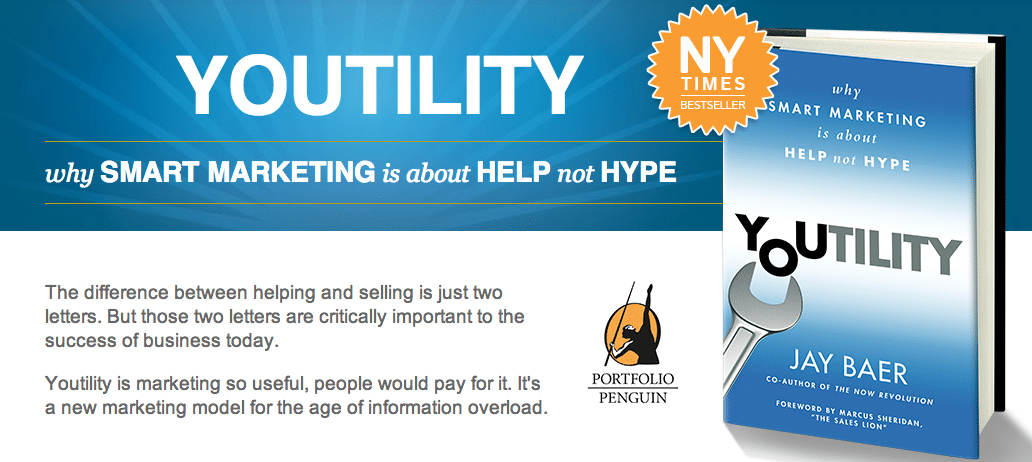
Youtility Why Smart Marketing Is About Help Not Hype

Youtility  Why Smart Marketing Is About Help Not Hype

This is a guest post from Jay Baer.

Today?s consumers are staring at an invitation avalanche, with every company asking for likes, follows, clicks and attention. This is on top of all the legacy advertising that envelops us like a straightjacket.

Lots of books have been written that tell you the way to break through is just to be an ?amazing? company. Pretty much all of them say you can win hearts and minds by doing things differently, providing knock-your-socks-off customer service, or fundamentally changing your corporate culture.

But your company probably isn?t amazing. And becoming amazing is incredibly difficult, and doesn?t produce reliable, linear results. So instead of betting all your money on amazing, what if you just focused on being useful? What if you decided to inform, rather than promote?

If you sell something, you make a customer today; if you help someone, you can create a customer for life.

Marketing Sideways

I call this Youtility. Not utility because a utility is a faceless commodity. Youtility is marketing upside down.

Instead of marketing that?s needed by companies, Youtility is marketing that?s wanted by customers. Youtility is massively useful information, provided for free, that creates long-term trust and kinship between your company and your customers.

Youtility In Your Pocket

But Youtility isn?t all business, and Dan Deacon is proving it every night.

“For the first time, having your phone out at a concert is not a jerk move,” says the description of the official app for Dan Deacon, a Baltimore-based electronic musician known for his engaging live performances. The app turns concert-goers’ phones into a synchronized light show and even an extra instrument that Deacon can “play” from the stage. A short YouTube video demonstrates the app in action.

[youtube]http://youtu.be/R8UlLBuzy6Q[/youtube]

With the app installed and running on a smartphone, Deacon can control the devices en mass by playing audio tones that “instruct” the phones to flash, change color, make sounds and more. It’s quite a spectacle, and a surprise even to fans who have downloaded the app and ostensibly have an idea of what to expect.

“It’s a really cool moment when Dan first plays the tone and then all of the phones change color,” app co-creator Keith Lea says. “Usually people are a little shocked. They’re not really ready for it to work. People are used to their phones being magic, but this registers as a different sort of magic.”

The app has created significant industry chatter for Deacon and Lea, with articles in Rolling Stone, Billboard, SPIN, CMJ and more.

The technology and story behind the genesis of this example of situational Youtility is remarkable.

An Obvious Answer

Says co-creator Lea, “Me and Dan and Alan Reznick, who is also involved with the app, we were all on a bus together. I was running tech and they were both performing on this little tour around the East Coast….I guess Dan had seen the Beijing Olympics Opening Ceremonies and he saw that they handed out LED bracelets and had them sync up. Dan’s idea was why did they bother going through the effort of handing out all of these little LEDs when everybody has, essentially, a little light in their pocket.”

Lea recalls that, as Deacon’s “nerdiest friends,” he and Reznick were asked about the feasibility of using smartphones in this way, which instigated weekly meetings to work on the project, which was more difficult than initially imagined.

“You’d think getting a bunch of pretty sophisticated little mini computers to do something all at once would be easy,? Lea said. ?We first thought the obvious thing was to use WiFi…but we called a couple of networking contractors and just none of them had any ideas because of the need to get 500 to 1,000 people on a wireless network that needs to be torn down and put up every night.”

Simple Solution, Big Outcome

After abandoning WiFi as the syncing technology, the team considered using existing 3G and 4G cellular networks as a connection point but realized that access wasn’t universally strong at all show locations, and music festivals often feature overloaded cellular networks.

Digging deeper, they took an inventory of all the sensor arrays present across all smartphones and realized, “Oh, well every phone obviously has a microphone and a speaker,” remembers Lea, who used the neo-lithic days of dial-up Internet connections as inspiration. “Back in the 90’s we all got on the Internet through a phone connection, and it’s just audio that’s being used to transmit data.”

Deacon and team have no plans to charge for the application, and, while licensing the technology to other artists is certainly a possibility, this is one instance where Youtility isn’t about marketing and brand-building.

“Maybe this is a little trite, but it is pretty cool that a couple artists and a programmer got together, and for a really tiny budget came up with something that is transforming the way people look at their cell phones in this performance context,” Lea says.

Excerpted from the New York Times best sellerYoutility: Why Smart Marketing is About Help not Hype by Jay Baer. See YoutilityBook.com for other resources.

Youtility Excerpt:

Youtility: Why Smart Marketing is About Help not Hype – Exclusive Free Excerpt from Jay Baer

Jay Baer Marketing Keynote SpeakerAbout the author:?Jay Baer is a hype-free social media and content strategist & speaker, and author of the New York Times best selling business book?Youtility: Why Smart Marketing is About Help not Hype. Jay is the founder of http://convinceandconvert.com and host of the Social Pros podcast.

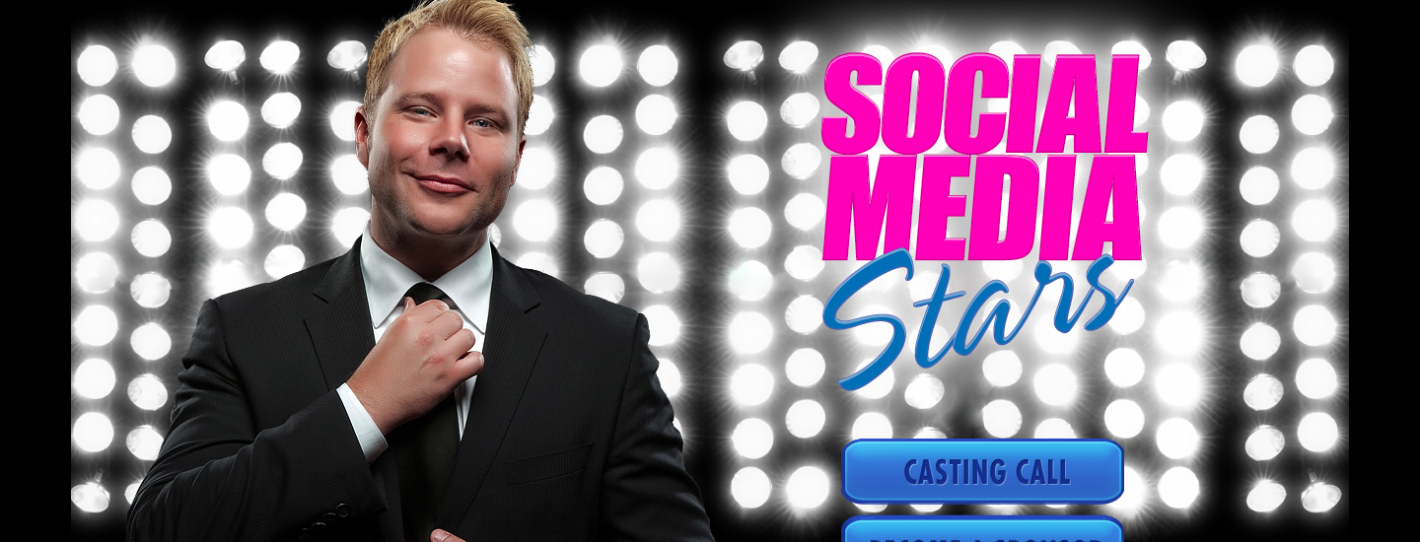
Why the Best “Social Media Stars Reality Show” is the One That Doesn’t Need Made

Social Media Stars Reality Show Season One

Social Media Stars Reality Show   Season One

Over on Facebook, strategist and author Olivier Blanchard shared this golden nugget of TV brilliance (if brilliance shares the same stage as pointless and lameness): there’s going to be a reality TV show on “social media stars”.

Okaaay…

So sure, social media has embedded itself into the mainstream, with sporting events and news stories relying on live social feeds to add to their coverage. As a driver of social change, it’s an incredibly powerful tool.

For businesses, small or large, social media can also be hugely effective at offering alternative solutions for brand awareness campaigns, hiring new employees, competitive analysis, customer experience and more.

So, there’s no doubt that social media can be, and is, a key part of our everyday lives, personally and professionally.

Yet a reality TV show purporting to showcase “social media stars”? Come on.

Why It’s a Joke to Begin With

When you take a look at the promo page for the show, it greets you with this outstanding sales pitch:

Social Media Stars Reality Show?is looking for YOU! This is your shot at stardom! Live in a Miami Beach Mansion, hang with fellow superstars and engage in social media challenges to show your stuff! From the creators of?Top Recruiter: The Competition, comes Social Media Stars Reality Show.

Are you legendary on LinkedIn, a prodigy on Pinterest, talented on Twitter and fabulous on Facebook? If your friends ask you to ?teach them Twitter? and their jaws drop when you?re done,?we want YOU!

Now, I get that, for the sake of brevity, the pitch may be limiting itself to the platforms mentioned here. Either way, it doesn’t bode well for the show (if anything could – but I digress…)

At best, it’s Social Media 101: “Oh hey, we need to do that social media thing, let’s get on the Twitter and start Pinteresting stuff.” Because at the end of the day, that’s all social’s really about anyway.

Apart from the stereotypical pitch, though, are we really saying there are “social media superstars” that deserve a TV show (even in a medium as tacky as reality TV)?

Then again, when you think of it like that, it does start to make sense.

The Ego Has Landed

One of the things that social media has enabled is the ego to be not only heard, but amplified to the Nth degree. If you thought people buffed up their resumes pre-social to sound interesting, that was nothing compared to the ego-driven narcissism that social media empowers certain folks with.

Now authors can be bestsellers with just over a thousand books sold; social scoring platforms pretend you’re the most influential person on topic X; social media consultants list their physical address as social networking site Empire Avenue (I’m not making this shit up!).

And on, and on, and on…

In that respect, perhaps a reality TV show would be perfect. Now, instead of those in the social media bubble knowing the amount of self-loving assholes that can be found in this space, the wider general public can laugh along too.

It’d be like the Fast Company Influencer Project all over again.

Fast Company  Influence Project Proves Online Influencers Have No Actual Influence   TechCrunch

Then again…

Real Stars Just Get on With the Work

The Social Media Stars reality TV show is simply an evolution of the conversation that’s been happening on social media for a while now – that of building yourself up versus building the success of your clients.

Social media, for some strange reason, seems to continue to reward those that shout the loudest versus those that just get on with the work and deliver results.

To some degree, you can blame social scoring for encouraging an ego-driven points game to see who is the “best”. It’s not just restricted to scoring, though – even respected business network LinkedIn seems to be placing more emphasis on being part of a self-congratulatory Top 1% Users list… wahoo.

We can also blame ourselves. We don’t carry out due diligence on the claims of the social media folks we have placed on some fabled dais, rock gods who can do no wrong and espouse pearls of wisdom that are no deeper than a thin crust pizza with no toppings.

Meanwhile, the real stars, if you like, are just getting on with the job and getting results.

  • Companies like Lebanon Ford, who showed what can be achieved with a solid social team and strategies.
  • Businesses like Canadian Pet Connection, who’ve successfully bridged their offline customer experience into the online field, and are enjoying an increased community and ROI because of it.
  • Organizations like Razoo, who’ve raised more than $160 million for charitable causes.

The list goes on, and on, and on.

These are the stars of social media. These are the folks that are delivering, day in, day out. These are the people that don’t care about some reality TV show where you might get 15 minutes of questionable fame – because the reality is, they’re already famous, but for the right reasons.

I’ll celebrate that kind of fame any day.

Influencer Project image: TechCrunch

  • « Go to Previous Page
  • Page 1
  • Interim pages omitted …
  • Page 82
  • Page 83
  • Page 84
  • Page 85
  • Page 86
  • Interim pages omitted …
  • Page 283
  • Go to Next Page »
© 2026 Danny Brown - Made with ♥ on Genesis