• Skip to primary navigation
  • Skip to main content
Danny Brown

Danny Brown

podcaster - author - creator

  • About
  • Podcasts
  • Journal

Insights

How to Optimize Your Blog for Faster Loading in Three Easy Steps

Recently I’ve shared why your site needs to be ready for mobile, both for visitors in general as well as potential customers (not to mention how Google is calling foul on sites that don’t offer an optimized mobile experience).

However, while mobile is important, just as important is the user experience when it comes to load time of your site, whether that’s a business site or a blog like this.

While Google hasn’t come out directly and said they will penalize low performance sites when it comes to how fast (or slow) they load for visitors, the clues are definitely there:

  • How Website Speed Actually Impacts Search Rankings (Moz)
  • 50 Reasons Your Website Deserves to Be Penalized By Google (KISSmetrics)
  • How Load Time Affects Google Rankings (QuickSprout)

And as mobile becomes ever more pervasive for browsing habits, slow performing websites on desktop browsers are really going to suffer on mobile – which is why you need to look at optimizing your site for faster loading.

To help you, I’ve put together this short walkthrough on using a combination of CDN and caching solutions that I use on this blog as well as my other domains.

It’s made a huge difference since I made the changes (I share the results of one before and after in the walkthrough) – hopefully it should do the same for your site(s) too.

Note: While the walkthrough is primarily for self-hosted WordPress blogs, the CDN solution supports multiple platforms.
The Influence Marketing Book and Its Impact on the Influence Conversation

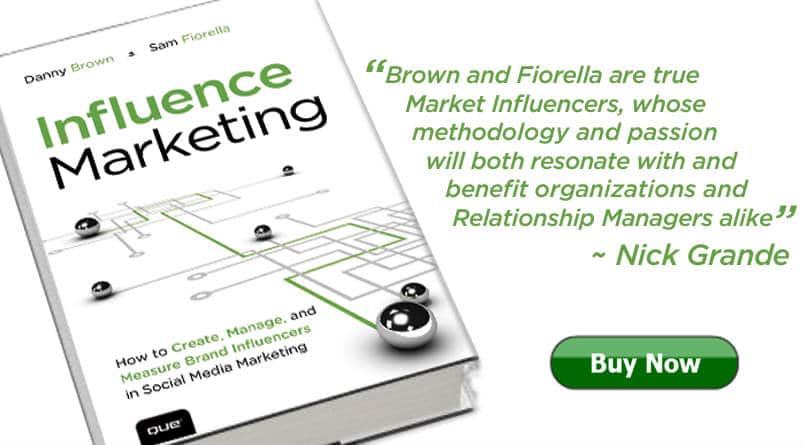
Influence Marketing bookWhen Sam Fiorella and I sat down to write Influence Marketing, we had a very defined goal as to what we wanted to achieve.

This ranged from the tone of the book itself, to the reaction of readers, to the long-term goals for uptake of the book’s methodology.

With Influence Marketing having just “celebrated” its six month anniversary since its publication date, I thought it might be fun/interesting to take a look back and see how the book’s not only been received, but also how our original goals have fared.

Influence Marketing Commercial Success

While both Sam and I were very much focused on the reaction to the methodology we present in the book, along with how readers could implement it within their own businesses, a book still has to sell to make the publisher’s investment worthwhile.

By the end of the first week of launch, Influence Marketing had shipped its complete first print run. This took us completely by surprise – while we had high hopes for sales, we weren’t expecting such a response.

I think this can be attributed down to our pre-launch strategy.

  • We created a Google+ community where we hosted regular Hangouts on the topic of influence marketing with various leaders in the space.
  • We created a series of whiteboard videos, that shared our belief in how today’s definition of influence had to change, and put the focus back on the customer.
  • We stayed away from the typical “Buy X amount of books in return for…” strategy (although we did offer some incentives post-launch) and instead worked with organizations, Social Media Clubs, and influence marketing platforms on live events where the book’s methodology could be dissected.
  • We released a carefully chosen free sample chapter that showed just how deep we were diving into the influence marketing conversation.
  • We carried out a survey of more than 1,300 marketing and PR professionals on where influence is today and where it needs to go.

By doing this, we offered information and insights into where the conversation around influence was headed, versus pure promotion. For us, this less direct approach culminated in the first week’s results as well as its healthy ongoing sales.

We’re grateful that the book has continued to be well received, and the other week saw it reach #1 on Amazon Canada! So thank you for your continued interest.

Amazon.ca Best Sellers Influence Marketing

Influence Marketing Critical Success

As grateful as Sam and I were with the commercial response, it’s the critical one that was always going to be the measuring stick for us. Yes, sales were (and are) important – but sales can be inflated, with authors paying companies to help them make the New York Times Bestseller lists, for example.

Critical success – how the book is received not only by the target audience, but also respected peers and publications in the industry – is, for authors, a more accurate reflection of how you met your goals.

Thankfully, we’ve seen some great results in this area too.

  • Nielsen BookScan recognized the book as one of its Top 100 Business Books in America.
  • Evy Wilkins, VP of Marketing for influence platform Traackr, quotes the book as having “…done nothing short of skyrocket the practice of influencer marketing from a misunderstood and poorly executed social media technique to a fully-fledged business necessity.”
  • The book has been picked up to be part of the curriculum at the likes of Georgetown University in Washington, U.S., and Seneca College in Toronto, Canada.

Georgetown University and Influence Marketing book

In addition, reviews on the likes of Amazon and blogs have universally alluded to the academic approach the book takes.

  • “This book is a serious read and hands down the best of any of the social media books I have read to date. Danny and Sam provide facts, case studies, examples, charts, data and concepts that will likely cause a shift in the way the reader thinks about influence marketing.” Christine DeGraff.
  • “This book went further into brand building and sales acquisition than I could have possibly imagined. This will be part of my favourite ‘evergreen’ books because, in the end, this book will be relevant for many, many years to come.” David Boozer.
  • “This is a deep read that’s not for the faint of heart. Bring coffee and plan to stay awhile. However, the result will be enlightenment regarding influence marketing that goes beyond a [social] score…” Brian Vickery.
  • “This book provides fantastic analysis and details for deploying social influence models that deliver the right results. Some may think the analysis is too academic but I disagree – the world of marketing and social media needs deeper thought [and substance]. The substance included in Influence Marketing will see the book have a shelf life of several years.” Brian Hansford.

While it might seem contrary to what authors should say, both Sam and I love hearing folks saying the book is a hard read, because it should be. Influence marketing – as well as marketing in itself – and understanding your customers takes hard work, research, and in-depth execution and measuring.

The fact this has been picked up by readers of the book is validation for Sam and I’s approach to how we wrote the book, and kudos to our publisher for allowing us to take this route versus making it a simpler read for the mass market.

Influence Marketing and What’s Next

However, this is just the start of the ongoing influence marketing conversation. While the book was the instigator of this conversation, the real “work”, if you like, is only just beginning.

We’ve seen influence platforms begin to adopt our methodology and, with the book being picked up to be used as part of academic curriculums, the next generation of marketers will be taking that methodology forward into new areas of implementation and discussion.

In the meantime, the Influence Marketing book website – and the various communities around it – will continue to be a living resource for the methodology and long-term goals of the book – to move influence marketing beyond just social influence and amplification, and into customer acquisition and real business ROI.

Coming soon, we’ll be presenting a very special webinar/workshop series with partners that are leading the way when it comes to where the influence conversation needs to go. We’ll also be sharing more whiteboard videos, as well as creating a resource that offers which platforms are really driving influence forward, to help you make the right decision for your needs.

Both Sam and I sincerely thank you for all your support so far – it means more than you can imagine, so thank you. Here’s to the next stage.

A version of this post originally appeared on the Influence Marketing blog.

5 Reasons Why You Need to Be Mobile Ready for 2014

Mobile advertising

Despite statistics to the contrary, many businesses continue to ignore the need for mobile solutions when it comes to their customers.

On this blog alone, I’ve shared why you need a responsive design for your site; how mobile was already starting to be a major player back in 2012; and how design trends are being shaped by the mobile customer.

Across the web, there are countless articles and presentations that share why the imminent future is mobile and how to initiate and track mobile marketing and advertising. So, yeah, mobile is pretty big.

And yet there are still some businesses that seem to be happy to rely on desktop visits and interactions, regardless of the preferences of their customers. While this is entirely their prerogative, it’s also potentially dangerous thinking, as a recent joint study between Google and Nielsen shows.

1. Mobile and the Research Stage

As Sam Fiorella and I talk about in the Influence Marketing book, understanding where your customer is in the purchase life cycle is key to understanding what message needs to go out to them, and how it should be delivered. Unsurprisingly, with the uptake of mobile browsing, research is a key action for mobile customers.

Mobile research

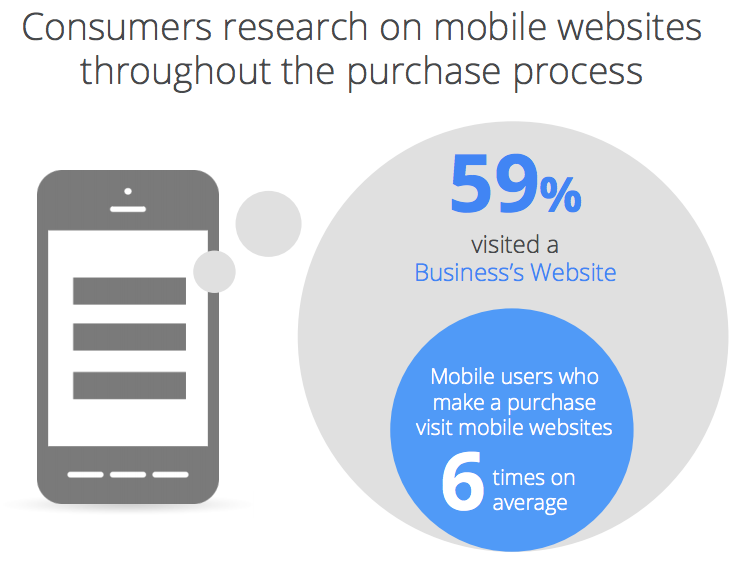
  • Mobile consumers spend more than 15 hours a week researching products, deals, services and more;
  • 59% visited a business’s website;
  • It takes up to 6 visits to a site for a mobile consumer to make a purchase;
  • Mobile web browsing is almost on a par with mobile app usage (7.3 hours per week for the former, 8 hours per week for the latter).

These are just some of the basic statistics around mobile browsing when it comes to the research stage. Taking a look at the figures, more than half the mobile audience visit sites on their phone, and make return visits to confirm/validate product research on your brand elsewhere.

If you’re not making it easy for your customers to carry out these actions, you’re simply turning them away to a competitor who will.

2. Mobile and Search

Tying in naturally with the usage of mobile for Research is the action of Search. Despite the fact that mobile web browsing and app usage accounts for a good percentage of consumer habits around your brand when it comes to research, mobile search still leads the way.

Mobile search

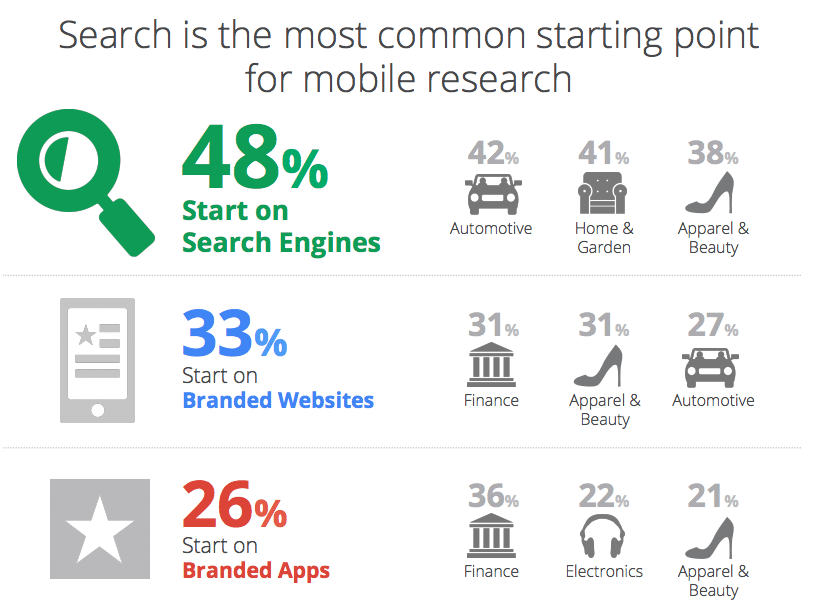
  • 74% of consumers used a mobile search engine in the overall shopping process;
  • The breakdown of mobile search versus corporate branded properties (site or app) sees mobile search lead with 48%, compared to 33% on business sites and 26% on mobile apps.

This not only helps brands answer the question of whether they should have a mobile optimized site or app, but also how they should be planning out their mobile ad and marketing campaigns when it comes to raising brand awareness at the point of search.

3. Mobile and GeoLocation Benefits

There’s been a bit of a backlash against geolocation marketing in the past 12 months or so. Platforms like Foursquare and Facebook Places have come under fire, with many questioning the benefits of mobile check-ins at physical locations and if they drive any real benefit.

While there might be some merit to this form of geolocation, today’s mobile consumer wants to know that a researched location is local when it comes to actual purchases.

Mobile geolocation

  • More than 2/3 of consumers (69%) expect a business to be within 5 miles of their radius when carrying out a search;
  • 10% actually expect businesses to be within just one mile;
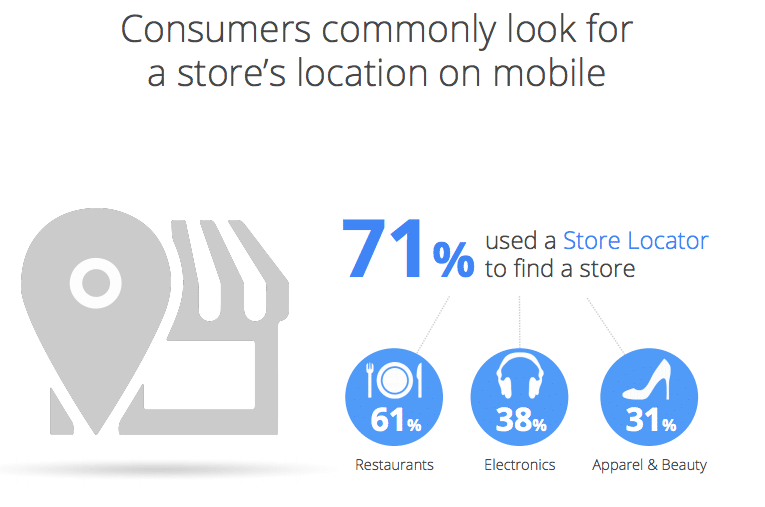
  • Store locator details on websites and searches are key, with 71% using this feature to locate their nearest location.

While both Foursquare and Facebook have mixed reviews when it comes to their geolocation services, the point is people are looking for businesses and services based on location and proximity. Having Foursquare Ads tied into geographical searches is one way for local businesses to benefit.

And with Google’s continued evolution of its search algorithms, its own Google Places for Business solution is expected to play an even bigger part for logged-in Google Apps users when using mobile search.

4.Mobile and the Immediacy of Purchase

Perhaps the biggest takeaway from the report, and one that every business should consider, is the way customers are adapting their purchasing decisions based on mobile usage.

Given that research and validation by peer reviews across social networks are now just a finger swipe away, consumers are far more immediate when it comes to purchases instigated by mobile search versus desktop browsing.

Mobile immediacy

  • Within an hour of validation (research, search, peer recommendation), 55% of consumers will make (or want to make) a purchase;
  • As many as 83% will make (or want to make) a purchase within 24 hours.

So, more than half of your potential target customer want to be at your store within an hour, and another 30% want to shop with you the next day. Do you really want to be the business that’s turning this away?

5. Mobile and the Point of Purchase

If the above statistics aren’t starting to paint a pretty graphic picture of how mobile is driving consumer behaviour, then you might as well ignore the following data, since clearly your business is one that doesn’t see the bigger (and smaller) picture of why mobile is so key to your future strategy.

If, however, you’ve been starting to take notes on how to get the right team to start implementing your mobile strategy, this one’s for you.

Mobile purchase

  • Despite mobile browsing accounting for the majority of research and validation, most purchases are still made in-store, with mobile driving up foot traffic for those businesses with a strong mobile strategy in place;
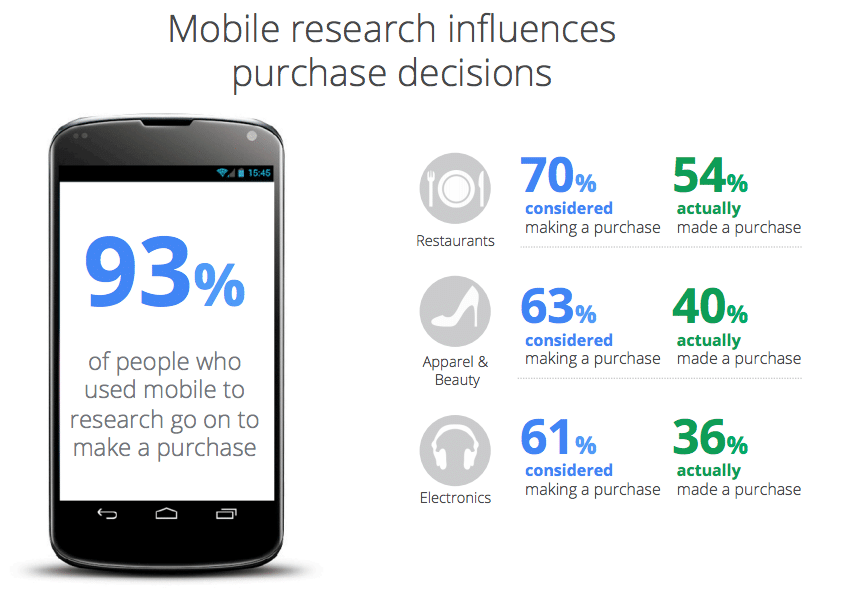
  • 93% of mobile searches and research result in a purchase of a product or service;
  • When it comes to purchasing, 82% purchased directly at a physical storefront, 45% waited until they were online via desktop or tablet, and 17% made a purchase there and then on their handset.

Make no mistake – mobile drives business as well as traffic.

What This Means for You

As I mentioned (perhaps rather glibly) at the start of point five, if you’re not considering a mobile strategy now, and these statistics don’t encourage you to consider one, then you may find yourself starting to fall behind next year and beyond.

It’s clear that mobile is fast catching up on “traditional browsing” when it comes to the key points of purchase decision-making: Awareness, Research, Validation, Intent, Purchase.

With consumers increasingly spending more time on mobile, as well as making purchases almost instantaneously upon validation, it’s not so much a question of whether businesses should consider whether to have a mobile strategy.

Rather, it should be how much of a mobile strategy is needed. The clock on that question is ticking – and the countdown has already begun.

The Nielsen/Google study was carried out across nine different verticals: Restaurants, Food and Cooking, Finance, Travel, Home and Garden, Apparel and Beauty, Automotive, Electronics, and Health and Nutrition. There were 950 participants, and each user had to be over 18 and have made a purchase within one of the verticals in the previous 30 days.?

images: Nielsen/Google

Don’t Be the Company Sending a Crappy Email Pitch That’s Breaking the Law

Ignorance

Ignorance

Back in 2003, President George W. Bush passed the CAN-SPAM (Controlling the Assault of Non-Solicited Pornography and Marketing) Act, that was meant to establish standards when it came to commercial email and help protect consumers from errant businesses filling email inboxes with their crud.

While well-intentioned in its creation, unfortunately its been much less effective when it comes to actually making marketers and promotional companies any better at respecting the wishes of those they seek to target.

This, despite specific instructions as to what can and can’t be done by these marketers:

  • There must be a visible and operable unsubscribe mechanism present in all emails;
  • A message can’t be sent without an UnSubscribe option;
  • A message cannot be sent to a harvested email address;
  • A message should contain at least one sentence.

There are many more do’s and don’ts attached to the CAN-SPAM Act, but for this post, I’m highlighting these four in particular, since it’s clear Haworth Marketing + Media don’t really care about them.

Poor Pitch or Ignorance of CAN-SPAM?

I received this email from Haworth yesterday (click image below to expand).

Haworth email pitch

I’ve blurred out the name of the person sending, as it appears they’re in a more junior role and have been tasked with sending out this pitch by an account manager or more senior person.

As you can see, it ignores all the points of the CAN-SPAM Act I referenced: there’s no unsubscribe option, I don’t recall ever signing up for updates from Haworth, and there’s no sentence – not even a single one – within the email body itself.

Instead, as you can see by the red highlighted box, there’s an attachment that I’m meant to trust, download and open – all from a source I don’t know and have never asked to know (to the best of my recollection).

Quite the winning pitch…

It Doesn’t Need to be This Way

The fact that Haworth sent this out like this is disappointing enough. It shows a lack of understanding of what makes a good blogger outreach program. It’s not as if there aren’t enough reference points, either.

Posts like this, or this, or this, or this, or this, or… you get the picture. And that’s just on this blog.

There are countless other posts, articles, and more, on what makes a blogger outreach campaign work. Just Google “blogger outreach tips” and you’ll get around a million results, with excellent advice to be found here, here, here and here, just for starters.

Haworth themselves claim to understand what makes a promotional campaign work. In their own words:

Our differentiation comes from changing the conversation in media; through inspired media design and thoughtful collaboration with communication partners, we generate impactful, lasting impressions that translate into deep, emotional connections.

Having said that, when you dig a little more into their site and look at their client services, they don’t offer blogger outreach as part of their solutions. They do offer content marketing, but not blogger outreach specifically – so perhaps the email approach I received shouldn’t be a surprise after all.

Which is a shame. Bloggers are an increasingly important part of any online marketing or promotional component for today’s brands – just ask Martha Stewart about that point.

Educate Yourself Now or Be Left Behind

As shared throughout this post, there are a ton of resources around to ensure you craft the right type of approach for your campaign – one that will bring a better result than being criticized by the person you’re trying to engage with.

  • Respect the CAN-SPAM Act in its entirety (I requested removal from Haworth’s list after a previously dubious email, to no avail);
  • Don’t send attachments without prior acceptance and a description of what the attachment is;
  • Don’t fob off your email blasts to a junior employee, thus relieving yourself of any responsibility when called out;
  • Educate your marketing/promotional staff on company expectations (hint: these shouldn’t be the example used for this post);
  • Read publications and blogs that speak of this increasingly important outreach outlet, and understand the nuances it needs.

Yes, it will be a pain to make the switch and, yes, it might even mean you refocusing on areas you had been loosely paying attention to before.

But, as “old media” – traditional ads, TV and radio spend, etc – begin to see their effectiveness eaten up by newer media, particularly by bloggers with a relevant audience, taking the approach of sending out a blast email with nothing but an attachment is just a poor promotional decision.

Especially when it’s effectively breaking the law…

image: Max Bisschop

Google Hummingbird, Content Authority, and How Atomic Reach Can Help

Danny Brown blog

Last month, Google released the Hummingbird algorithm. Since then, many articles and blog posts have been written about its impact on key areas for publishers – SEO, Page Rank, web authority and, perhaps most importantly, content authority and marketing.

The link at the start of this post is from Search Engine Land and offers a thorough overview of what this new Google algorithm means. However, to give you a quick idea of what Hummingbird is, here are a few of the main points from the article:

  • It’s a new search algorithm that should provide much better and more contextual results;
  • There are more than 200 factors making up the Hummingbird algorithm;
  • It wants to increase focus on “conversational search”;
  • It is not an “SEO killer”.

These are some of the main takeaways/concerns – for the bigger picture, I recommend checking out the SEL post for more details.

In short, though, Hummingbird is excellent news for publishers and content creators that care about quality over quantity, and should theoretically help improve the web when it comes to information and data.

However, for many businesses, brands and publishers, understanding what that quality content may look like can prove a challenge, which is where Toronto-based Atomic Reach comes in with its content authority software.

Content Marketing and Scoring Engine

I met up with the Atomic Reach guys a few weeks ago, and I’m impressed in where they see quality and targeted content fitting in the bigger publisher picture.

They understand the difficulties of creating content, whether that’s a blog, podcast, video or more, and their content scoring engine looks to help publishers overcome these difficulties.

This comes in the shape of three main areas.

Get Scored

By creating an account with Atomic Reach, you can either score your existing content to see how relevant it is for your target audience (based on goals you set when creating your account), or upload a draft version. Their algorithm then scores it based on natural language processing, to “measure the content’s quality, relevance and performance potential prior to publishing.”

Danny Brown Atomic Reach 1

Discover and Share

Within the Atomic Reach dashboard, you have the option to select the topics and industries that matter to you, both as a content consumer and a content creator. This allows you to connect with like-minded audiences that are right for your content, as well as discover the best time to share for maximum impact.

Measurement

Measurement is everything, and everything is measurement. Or something like that. I’m a huge proponent of measuring all that can be measured, and Atomic Reach is no different. They track audience engagement, website performance, and social media reach amongst other factors. They can then help you make adjustments based on your content goals.

By covering these three core bases, the goal is to ensure you not only have the right content for the right audience at the right time, but your metrics will either confirm this is happening, or advise how to make it happen.

Using Atomic Reach to Work with Hummingbird

One of the ways Atomic Reach can help you benefit from the recent Hummingbird update is by helping you craft the kind of content authority articles Google looks for – those with reference links, facts, statistics and content that helps your audience with what they need to know.

Atomic Reach shows you exactly how you’re performing in this area, with a breakdown of what you’re doing right versus where you can improve. This can make for some very informative (if a little scary!) reading.

Danny Brown Atomic Reach content analysis

As you can see by my analysis, I need to work on increasing post length based on my revised goals (which I have been doing recently); be more aware of my grammar and spellcheck; and improve the links on my posts, both internally and externally.

This analysis can only help me be a better content creator which, in turn, can only help me follow the kind of content improvement that Google is looking to enable for the social web with the Hummingbird algorithm.

Additionally, as more publishers connect within the content community area of Atomic Reach, the more content you’ll be able to reference and potentially partner with, providing you with instant resources to use for your own content (and vice versa).

It’s a smart way of not only improving your own digital presence, but finding potential partners/clients/content providers in your own industry and within audience segments you haven’t yet reached.

What Atomic Reach Still Needs

As I mentioned earlier in the post, I’m impressed with what the guys over at Atomic Reach are trying to do, especially now more than ever, given the Hummingbird announcement from Google.

There are some areas I’d love to see fleshed out, though.

  • More in-depth reporting. Granted, I’ve been messing with the free version, and there are three versions available – Blogger (the one I tested), Brands and Publishers – so it may be there are more in-depth reports available for the premium version. But it’d be great to know who my most vocal sharers are, who they influence, and how that helps my content goes beyond my first line of content sharing (my immediate community).
  • Content scoring for podcasts and videos. Currently, Atomic Reach is for written blogs only. However, they did mention that video is something they’ll be looking at, based on natural language filtering, so that could be coming, which would really change the game.
  • The ability to measure without having to sign into the Atomic Reach dashboard. This is more from a blogger point of view, versus a brand one, but currently you need to run everything through the Atomic Reach admin area. It’d be great if there was a WordPress plugin (much like the Scribe SEO one) that analyzes and advises directly from your blogging dashboard.

These are just some of the ways the product could really be fleshed out into something that publishers of all shapes and sizes could use.

In fairness, though, Atomic Reach is still in beta, and has a major update due imminently, so it may be some of these suggestions are already being worked on, or are covered by different versions.

Either way, the potential for Atomic Reach is huge, and – having seen it in action at the company itself and within my own account – I definitely recommend checking them out if you’re in any kind of serious content creation market.

Update April 2nd 2014: There are now a bunch of apps, including a dedicated WordPress plug-in, available for Atomic Reach.

  • « Go to Previous Page
  • Page 1
  • Interim pages omitted …
  • Page 28
  • Page 29
  • Page 30
  • Page 31
  • Page 32
  • Interim pages omitted …
  • Page 174
  • Go to Next Page »
© 2026 Danny Brown - Made with ♥ on Genesis