• Skip to primary navigation
  • Skip to main content
Danny Brown

Danny Brown

podcaster - author - creator

  • About
  • Podcasts
  • Journal

Insights

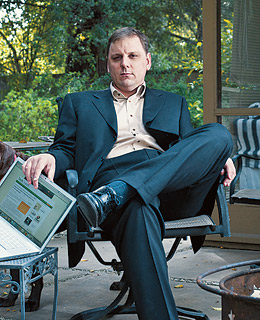
The A-Z of Social Media Part 1 – Michael Arrington

As social media begins to find its feet, so the major players in it stand out – Michael Arrington is one such player. Widely recognized as one of the more “vocal” inhabitants of the social media world, Michael Arrington is undoubtedly one of the more successful proponents of it as well.

He is the founder of TechCrunch, one of the leading weblogs dedicated to profiling new Internet companies and products as well as those that are making a cultural impact on the Internet. From a small beginning as just another blog, TechCrunch has been built by Arrington and his team into a site that is consistently featured in online Top 100 lists.

As well as TechCrunch, Michael Arrington has also been involved in numerous other social media start-ups. These include OmniDrive, Dogster and Seesmic amongst others. This has led to Arrington being named as one of the most influential people on the Web.

As much as he is respected for his role in online and social media development, Michael Arrington also draws his fair share of criticism as well – most notably, that he often uses TechCrunch as nothing more than a soap box for his Silicon Valley friends. He’s also been criticised for posting stories on TechCrunch and lambasting people without knowing all the facts, as the debate about a recent story regarding a dying ex-corporate lawyer attests to.

Whether you’re a fan of Arrington or feel he’s been overhyped by both the mainstream and specialist media, there’s no denying the part played by both him and his companies in the rise of social media as a viable medium. For that alone, he deserves his part in the A-Z of social media.

If you enjoyed this post, please consider leaving a comment and subscribe to my RSS feed or via email to ensure you can enjoy the latest post(s).

Are We Turning into Social Media Snobs?

From its inception, social media has always been about the romantic notion of connectivity. Full connectivity. Whether it?s being able to interact with the Internet in a more open manner than we?d ever known previously, or connecting with other like-minded people to share, advise and learn, social media and full connectivity have gone hand in hand. Until now.

I read a lot of blogs – some by the biggest names in social media, some by the rising stars, and some that are just entertaining reads by people starting to find their feet in this whole social media world. Then there are the non-niche blogs that are worth anybody?s time.

What I like most about these blogs (and the others that are recommended to me by friends) is the openness and free-to-all approach that they offer the reader. There?s no hidden agenda here – simply the proponents of social media and those interested in it, sharing views along the way.

Recently though, I?ve been leaving many of these blogs with the feeling that the authors are beginning to believe a little bit too much in their own hype. Instead of sharing openly with their readers and asking for opinions on how they view social media, the authors are instead preaching how to approach the medium.

This would be okay if it was merely helpful advice from someone who?s been there and done that. Sadly, it?s becoming less so. Instead, we?re treated to people virtually attacking the medium that gave them such a popular voice to begin with.

Example – there?s a particularly well-known tech blogger that recently chastised other bloggers for not name-checking thousands of blogs a day, or for not using tools like Google Reader in their sidebar to let other bloggers know what they?re currently reading. This irks me.

Not everyone is (or wants to be) a professional blogger. Many simply use the medium for sharing their innermost thoughts with a curious world. So what if someone doesn?t want to link to another blog, or website, just for the sake of linking? Does that make them any less of a person (or blogger)? Does it mean they don?t deserve to be mentioned in the same breath as this tech blogger that raised the point in the first place?

Of course not.

There are many ways that bloggers can show appreciation of the work of others without blatant shout-outs and name checks all the time. Blogrolls, or links, for example. Or using an application like CommentLuv, that shows the last blog post of anyone leaving a comment.

Blogging shouldn’t be a private playground where the ?privileged few? set the rules. Nor should social media. Instead, both should be methods of bringing people together to ultimately make the world a friendlier and better place. Shouldn?t we try keep it that way, before the snobs ruin it for everyone?

Blog Action Day and Social Media – The Perfect Combination

When I sat down to write this post for Blog Action Day 2008, I’ll be honest – I wasn’t sure what exactly I was going to say. Don’t get me wrong – I knew the reasons why I was participating and writing, and I knew roughly what I wanted to say. It was just… how could I convey a message against poverty from a social media viewpoint? And then it hit me – Blog Action Day 2008 and social media are intertwined because we’re all in this together.

I don’t want that comment to come across as glib – that is the last thing I would ever do, or want to be thought as. When I say we’re all in this together, I mean that the social media medium is probably the ideal partner to the changes and issues that Blog Action Day 2008 is having us all discuss.

(For anyone who hasn’t heard about Blog Action Day 2008, it’s a special one-day event for bloggers around the world to stand up and speak out against world poverty).

Apart from the obvious connection of writing a blog post, there is so much more that social media can offer to begin the changes we need to put in place to make a difference. The figures alone from Blog Action Day 2008’s website bear testament to this – 10,723 blog owners (at time of writing this) writing posts on a single subject, with an expected readership of just over 11.5 million people.

But we shouldn’t stop there. There is so much more we can all do, and as a social media advocate there’s a lot that I feel our particular medium can do as well. One of the great things about social media is it gives everyone with an Internet connection a voice – and that’s a pretty powerful thing. If you want an example of how powerful, just look at how serious the US election candidates are taking social media and networking.

So what can we do with this voice, this collection of opinions and influence? The first thing to do is make sure that Blog Action Day (and the similarly themed Bloggers Unite initiative next month) isn’t just an annual event. We need to keep people informed as much as we can throughout the year; we need to make the people that have the power to make a change hear enough of us to do so.

For my part, this is what I will do from today:

  • For every unique comment received on this post and every post between now and the end of the year, I will donate $0.10 to the Make Poverty History fund. Then, each year end from today, I will continue to donate $0.10 for every unique comment left.
  • With every new project I take on at my PR agency, I will donate 5% of my fee to the fund.
  • I will continue to make posts to keep awareness of poverty, its cause and effects via my blog and beyond
  • I have a project that I have in mind regarding this subject, and will share with you all shortly and ask for support.

This is my personal donation to Blog Action Day 2008 and beyond. At the end of each year, I will let you know how much was donated. Yet as I said, we’re all in this together. Social media brings everyone together, so let’s open up our arms and bring in the poverty-stricken of the world into our network.

For your part, it’s entirely up to you what you wish to contribute. It may be a donation to a worthy cause like Make Poverty History. It may be that you offer pledges yourself for the comments on your blog. It may be something as simple as getting two cookies at the coffee shop and giving one to the next homeless person you see. After all, poverty affects each and every country.

Whatever you do, make sure you do something. It’s taken Blog Action Day 2008 to open up a lot of people’s eyes to what’s going on in the world. Let’s make sure that we never have to discuss poverty again, unless it’s with our politicians. In the meantime, let’s be grateful for programs like Blog Action Day 2008 and make our voices heard.

If you enjoyed this post, please consider leaving a comment and subscribe to my RSS feed or via email to ensure you can enjoy the latest post(s).

Jason Calacanis and the Contradiction of What Defines Great

I’ll be the first to admit that I’m not a huge fan of Jason Calacanis. The entrepreneurial CEO of Mahalo, and the co-founder of Weblogs, Inc and TechCrunch50, Calacanis is the epitome of self-promotion and flag-waving. However, that’s not to say it’s wrong – it’s just an approach I’ve never favored.

Additionally, there’s no doubting that Calacanis has a never-say-die attitude that, while potentially grating, is better than the fatalistic approach that too many people take when faced with any kind of crisis. However, a recent jobs posting for his company Mahalo seems to contradict everything he advises his readers.

Posted on the Fresno area job board of Craigslist, this is the description for positions available at Mahalo:

  • Mahalo.com seeks freelance remote writers to build search results pages on breaking news, politics and entertainment topics. Candidates must be excellent writers capable of creating perfect, concise copy at a fast pace. Familiarity with online research, journalism and wiki markup language strongly recommended. Shifts are flexible, ability to work weekends/nights a plus. Pay: $10 – $12 / hour. Please attach your resume and writing samples in an email with subject line: “Remote Guide Application” to evanb@mahalo.com.

While any company hiring in these times of uncertainty should be applauded, the job posting raises other questions, due to the views Calacanis shared with his email subscribers in a recent newsletter (also available at his website). When talking about how to improve your company’s success, Calacanis writes:

  • 3. Firing the average people: Again, it?s totally politically incorrect, but I highly recommend firing anyone who is good or average. Startups are an Olympic sport and every slot on your team is critical. You wouldn?t put a ?good? swimmer in a relay, would you? Don?t have one in your startup. Fire the good and replace them with the great.

If indeed the right thing to do is fire anyone that’s doing a good job at a company (something I’m against – I tend to find the good workers are the ones that give the superstars the solid platform from which to work), then the economic crisis must be really hitting home. I can’t think of how else Mahalo will attract superstars with an hourly pay rate that may be able to buy a movie ticket.

Unless it’s an example of another piece of Calacanis’s advice: “Cut spending everywhere you can.”

Social Media is Social – So Why Closed Comments?

Take a look at the phrase “social media” – what would your response be if you were asked its literal meaning?

The most obvious answer would be media that is social – whether that’s participating in an online group, sharing your views on a topic or leaving a comment on a blog, offering your opinion and insight. So why do so many proponents of social media come across as anything but social?

I’m mainly talking about blogs that either have closed comments, or require you to register with the site to leave a comment. Maybe it’s just me, but personally I feel that takes away the whole social aspect of social media.

My take on social media is that it’s a combination of different tools and communities, all coming together to offer an invaluable and co-operative journey with online friends. Even business social media is more about how businesses can reach their customers effectively and pro-actively, therefore building a loyal online database that ensures the company’s growth and sustainability.

So why potentially ruin this new world by sticking with the old cliquish approach of invite-only commenting?

I know that it’s down to personal choice as to whether you allow comments on your blog or not – after all, one of the negative sides of the blogosphere (at least in the early days) has been the puerile comments that are often left.

(Although thanks to the likes of BackType, the quality of blog comments should hopefully improve to a consistent level of maturity along the lines of those found on the leading social media blogs).

But isn’t this what comment filters are for? Having the option to approve all comment posts before publication eliminates (or at the very least, greatly reduces) playground-level comments.

Perhaps the blogs that have closed comments or require membership to post a response do so in the belief that it helps build their own specific community. This seems plausible, since the majority of blogs that I’ve come across with closed or member comments only do seem to be of the business variety.

I can’t help but feel that they’re missing out, though. Sure, a members-only comment option may encourage a number of people to sign up so that they can join in the discussion. Yet at the same time, you can pretty much guarantee this is a far smaller number than the amount of commentators you’d get with an open comment policy.

And if you don’t know what your readers are really thinking, aren’t you missing the whole point of building your brand and voice through the social media medium? Doesn’t seem like good business to me…

What do you think? Does it matter if comments are closed? Do you feel the need to share your opinion on something you’ve just read, or are you more interested in what’s being said as opposed to what you want to say? I’d be interested on your views.

  • « Go to Previous Page
  • Page 1
  • Interim pages omitted …
  • Page 169
  • Page 170
  • Page 171
  • Page 172
  • Page 173
  • Page 174
  • Go to Next Page »
© 2026 Danny Brown - Made with ♥ on Genesis