• Skip to primary navigation
  • Skip to main content
Danny Brown

Danny Brown

podcaster - author - creator

  • About
  • Podcasts
  • Journal

Insights

Don’t Tell Me – Sell Me!

Copyright IMMI
Image by IMMI

I read a report today that women multi-task better than men. Published by Integrated Media Measurment Inc, the survey looked at how almost twice as many women both use the Internet and watch television at the same time compared to men.

While I found the survey a little obvious (everyone knows women multi-task better than men!),? it did make me wonder – how is this information being used?

Let’s look at the key group, for instance.

The biggest percentages of women that are using the Internet while watching TV are the ones that fall between the ages of 19 and 39. For this age group, many of the most popular shows include Grey’s Anatomy, Ugly Betty, Medium, 30 Rock and Big Shots.

This doesn’t take into account the most popular genres like soaps, lifestyle, reality TV and chat shows. So the question then becomes are brands using this audience effectively?

Media Convergence

Let’s say I’m the marketing director for one of these shows. I find out that while my target audience is watching the show, there’s a good chance that they’re also online at the same time. So shouldn’t I be using that to my advantage? How about…

  • I offer fans of the show the option to register at my show’s website.
  • When the show is on, anyone using the Internet at that time gets pinged with a time-sensitive message offering exclusive offers for the duration of the show. It could be fan apparel, memorabilia, discounts on DVD boxsets, etc.
  • Pick random email addresses by location, give them free tickets to their favourite show and run their website username along the bottom of the screen as a way of saying, “Thanks for being a fan”.

These are the really obvious approaches and they’re also limited to first runs and live shows. Yet the concept is feasible and the technology is there. As far as costs go, take it a little step further with your advertisers. Show them the numbers of online users you have outreach to, and allow them to place similarly unique offers to those online users for a nominal fee increase in their advertising rates.

What do you think? Would you be interested in your favourite show or brand engaging you in this way? If not, and you fall into the group the IMMI survey mentions, what would you advise when it comes to brands interacting more with your online use?

If you enjoyed this post, please consider leaving a comment and subscribe to my RSS feed or via email to ensure you can enjoy the latest post(s).

Reblog this post [with Zemanta]

Is BubbleTweet The Coolest Twitter App Yet?

Now and again you come across something that’s just so cool you wonder why no-one did it earlier. Tonight I found one, thanks to Kevin Sherman – bubbletweet.

bubbletweet

Allowing you to record a video snippet and then have it displayed on your Twitter page for any new followers or visitors to see, bubbletweet is simple and fun – always a good combination.

It also has a lot of potential for both personal and corporate branding. Imagine being able to tell followers your latest news or information, but instead of tweeting it you can say it?

It also offers a further personal touch to the already social Twitter experience – giving your followers a look into who the person behind the bio is.

Since bubbletweet uses a custom URL to host your video message on, the best way to use it is as a link from your blog, website or email signature. Once your visitors have seen the video and the bubble window closes, it then reverts to your normal Twitter URL so you control its use.

I’ve seen this application used on blogs before, but not Twitter. It’s a great little tool and I recommend you check it out, as well as?Kevin’s Twitter profile for an example as well as other apps he’s created, while I disappear to record my own message. Look forward to seeing yours.

Forget Google, It’s All About The People

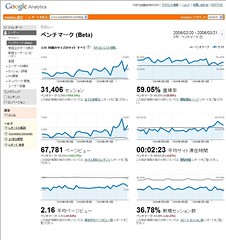
Google Analytics ??????
Image by suzukik via Flickr

What do you use to track success? It’s one of the first questions I ask new clients when we sit down to discuss a new project or campaign. Most of the answers that come back are either Google Analytics, Yahoo Web Analytics or a similar platform. While these tools are excellent in their own right, they can take you away from the most important analytic source – people.

Where else can you get real-world feedback that actually means something?

Where else can you foster relationships and brand loyalty?

Where else can you discuss your errors and work towards a common goal?

We get so lost in technology and what it can do for us that we forget the people behind the technology. Does Google Analytics buy your products? Or subscribe to your company newsletter? Or attend open days at your place of business? Or recommend you to your friends?

People do. Every day of the week.

We market ourselves and our businesses as people persons. We target the people that are in our niche and who have the resources to add to our company’s success. We use mediums like social media and networks to connect with other people.

Analytic software has its place and does its job well.

But talking to your customers and offering true analytical interaction makes it better. Doesn’t it?

If you enjoyed this post, please consider leaving a comment and subscribe to my RSS feed or via email to ensure you can enjoy the latest post(s).

Reblog this post [with Zemanta]

Clouding The Issue

You would think that industrial pollution woul...
Image by william.n via Flickr

How well do you keep your personal and business life separate? Are you able to separate the two relatively easy, or do they crossover too much to have significantly different views? Or to put it another way, if you had a personal issue with someone could you still work with them professionally?

I ask this as a situation arose today where I had to question whether I was in the wrong, someone else was, or was there even any wrong to start with. Okay, that sounded confusing – let me try again.

For anyone’s that’s been reading this blog or following me on Twitter for the last month or so, you’ll know that I founded a charity project for 2009, the 12for12k Challenge. While ambitious in its fund-raising aim, it’s also (to me) achievable, thanks to the way that myself and the partners that have joined me in the challenge are leveraging social media to raise funds.

Everyone involved in the project is giving their time for free – there’s no admin cost and any man (or woman) hours put in is on top of normal work and personal time. I don’t say this to make us sound like saints, although personally I’ll never be able to thank these people enough for the help they’re giving.

Rather, I say it to show that when it’s a good cause, people generally come out in force to help in whatever way they can. It’s called selflessness and it also goes to you kind people that are donating to each month’s chosen charity.

So today stunned me a little.

One of the hardest things with the 12for12k project (and, I’m sure, other non-profit causes) is raising awareness. Hitting people at the right time, driving traffic to the website for details, getting the word out – it’s not easy. Also, because of the economy and time of year, donations are a little slow at the minute. Which we always knew might happen – January is a tough month for countless charities.

To try and raise awareness, my partners and I are reaching out to our social media connections to ask if they’d help promote to their followers on Twitter. Or write a short blog post. Or record a video message for us, much like Jason Falls did. So far, everyone we spoke to has been brilliant – if they can’t do it right away, it’s definitely on the immediate future agenda.

Everyone apart from one.

Open and Shut Case.

One of the creative partners on the 12for12k team emailed a particular social media “power player” and asked if they’d be open to any of the above promotional suggestions. The response was, “No – I have an issue with someone on the team.”

Uh – run that by me again?

Now, unfortunately, I don’t know what the issue is or who it’s with since no further information was forthcoming, but I’m a little surprised and maybe just a tad disappointed.

This person prides themself on how open and helpful they are to other people, and helping others to attain the goals they set out to reach. Their blog has an excellent and loyal readership and their Twitter account is close to 20,000 followers.

So this is why I’m left scratching my head. I can’t see any issue this person would have with one of our team that they would put it above trying to change the lives of millions of people. I put the question out to Twitter, about personal issues clouding professional ones, and with few exceptions the answer was pretty unanimous – be professional, work around the issue and get the best results.

Of course, if it’s an ethical problem that this person has with either me or one of my partners, then I can understand their point of view. Ethics play a very large part in my personal and professional make-up, so I do understand.

Yet knowing the partners like I do, I just don’t see where an ethical issue could come into play. Which means it must be me, for some reason. Hopefully the person involved will respond to my email asking what the issue is and can it be resolved.

I know there will always be reasons for not liking someone, personally or professionally. I know there are times when you don’t want to work with someone. Yet for all these times, surely the greater good of a project should see you able to overcome personal feelings and get a professional job done.

Or is that asking too much? How about you – can issues be overcome or are the clouds too dense?

Why Scott Monty of Ford Motors Has My Respect

scottmonty_twitterBeing the lone line of defence when pretty much everyone’s after your blood is a thankless task that no-one should have to face, but Scott Monty of auto manufacturer Ford proves it can be done. As the lone social media face of the US car giant, Scott probably has one of the toughest jobs around at the minute:

– He has to face negativity surrounding his employers and their part in the auto-bailout

– He has to show social media’s worth in an industry not always associated with open minds

– He has to deal with some pretty vociferous opinions thrown his way as the face of a frequently unpopular company

I’ll be the first to admit, I’ve been one of the people that have thrown some of these tough question’s Scott’s way. I’m not a big fan of under-achieving companies being “rewarded” for their failures with a Get Out Of Jail card. Maybe it’s my Scottish upbringing, or my grandad’s socialist side showing a little. But to me, you live or die by your own sword and the auto and bank industries didn’t do that.

Yet that’s an argument for another time.

Anyone inside the social media bubble knows how difficult it can be to not only make your voice heard at times, but to make it respected. So many variants and opinions of what’s right and wrong – although is there actually a right and wrong in social media to begin with? So to use the medium and make it work for you is a skill.

What Scott Monty does goes beyond that.

While his parent company Ford were being publicly flogged for the company’s CEO flying into Washington in a private jet to state his case, news broke of Ford going after an enthusiast site for trademark infringement. With the climate already hostile toward Ford, word soon spread throughout social media sites and networks about Ford bullying “one of their own”.

Instead of ignoring the situation and letting the legal team resolve it, Scott engaged the hostility head on and promised to keep everyone up-to-date with proceedings. This he did from his Twitter account – from latest news from Ford, to conversations with the site in question, to bringing the full story into public view.

The fact that he did this and kept the owners of the website on his side (not to mention gained new fans into the bargain) says a lot about Scott’s value in the social media world. The guy epitomizes all that’s good about this field we play in – transparency, honesty, openness, interaction and trust. And he does this every day of the week.

Of course, people might say that this is what he’s being paid to do, so he should be responding to the public – and that’s true. But how many people can honestly say they’d keep putting themselves in the firing line of such an eager execution squad and remain positive about it? That’s the difference.

Being genuine isn’t always a visible trait in the PR industry – being genuine in an industry where you’re only as good as your last sale is particularly less obvious. Like anyone, I can be a pretty tough taskmaster when it comes to the everyman versus the corporate giant.

People like Scott Monty mean I have one less giant to worry about.

If you enjoyed this post, please consider leaving a comment and subscribe to my RSS feed or via email to ensure you can enjoy the latest post(s)

  • « Go to Previous Page
  • Page 1
  • Interim pages omitted …
  • Page 154
  • Page 155
  • Page 156
  • Page 157
  • Page 158
  • Interim pages omitted …
  • Page 174
  • Go to Next Page »
© 2026 Danny Brown - Made with ♥ on Genesis