• Skip to primary navigation
  • Skip to main content
Danny Brown

Danny Brown

podcaster - author - creator

  • About
  • Podcasts
  • Journal

Influence

Influence Marketing: Six Months On

Influence Marketing bookWhen Sam Fiorella and I sat down to write Influence Marketing, we had a very defined goal as to what we wanted to achieve.

This ranged from the tone of the book itself, to the reaction of readers, to the long-term goals for uptake of the book’s methodology.

With Influence Marketing having just “celebrated” its six month anniversary since its publication date, I thought it might be fun/interesting to take a look back and see how the book’s not only been received, but also how our original goals have fared.

Influence Marketing Commercial Success

While both Sam and I were very much focused on the reaction to the methodology we present in the book, along with how readers could implement it within their own businesses, a book still has to sell to make the publisher’s investment worthwhile.

By the end of the first week of launch, Influence Marketing had shipped its complete first print run. This took us completely by surprise – while we had high hopes for sales, we weren’t expecting such a response.

I think this can be attributed down to our pre-launch strategy.

  • We created a Google+ community where we hosted regular Hangouts on the topic of influence marketing with various leaders in the space.
  • We created a series of whiteboard videos, that shared our belief in how today’s definition of influence had to change, and put the focus back on the customer.
  • We stayed away from the typical “Buy X amount of books in return for…” strategy (although we did offer some incentives post-launch) and instead worked with organizations, Social Media Clubs, and influence marketing platforms on live events where the book’s methodology could be dissected.
  • We released a free sample chapter that showed just how deep we were diving into the influence marketing conversation.
  • We carried out a survey of more than 1,300 marketing and PR professionals on where influence is today and where it needs to go.

By doing this, we offered information and insights into where the conversation around influence was headed, versus pure promotion. For us, this less direct approach culminated in the first week’s results as well as ongoing sales.

We’re grateful that the book has continued to be well received, and last week reached #1 on Amazon Canada. So thank you for your continued interest!

Amazon.ca Best Sellers Influence Marketing

Influence Marketing Critical Success

As grateful as Sam and I were with the commercial response, it’s the critical one that was always going to be the measuring stick for us. Yes, sales were (and are) important – but sales can be inflated, with authors paying companies to help them make the New York Times Bestseller lists, for example.

Critical success – how the book is received by not only the target audience, but respected peers and publications in the industry – is, for authors, a more accurate reflection of how you met your goals.

Thankfully, we’ve seen some great results in this area too.

  • Nielsen BookScan recognized the book as one of its Top 100 Business Books in America.
  • Evy Wilkins, VP of Marketing for influence platform Traackr, quotes the book as having “…done nothing short of skyrocket the practice of influencer marketing from a misunderstood and poorly executed social media technique to a fully-fledged business necessity.”
  • The book has been picked up to be part of the curriculum at the likes of Georgetown University in Washington, U.S., and Seneca College in Toronto, Canada.

Georgetown University and Influence Marketing book

In addition, reviews on the likes of Amazon and blogs have universally alluded to the educational approach the book takes, versus a more Marketing 101-type approach that provides anecdotes and theory versus real-life empirical evidence and results.

  • “This book is a serious read and hands down the best of any of the social media books I have read to date. Danny and Sam provide facts, case studies, examples, charts, data and concepts that will likely cause a shift in the way the reader thinks about influence marketing.” Christine DeGraff.
  • “This book went further into brand building and sales acquisition than I could have possibly imagined. This will be part of my favourite ‘evergreen’ books because, in the end, this book will be relevant for many, many years to come.” David Boozer.
  • “This is a deep read that’s not for the faint of heart. Bring coffee and plan to stay awhile. However, the result will be enlightenment regarding influence marketing that goes beyond a [social] score…” Brian Vickery.
  • “This book provides fantastic analysis and details for deploying social influence models that deliver the right results. Some may think the analysis is too academic but I disagree – the world of marketing and social media needs deeper thought [and substance]. The substance included in Influence Marketing will see the book have a shelf life of several years.” Brian Hansford.

While it might seem contrary to what authors should say, both Sam and I love hearing folks saying the book is a hard read, because it should be. Influence marketing – and marketing itself – and understanding your customers takes hard work, research, and in-depth execution and measuring.

The fact this has been picked up by readers of the book is validation for Sam and I’s approach to how we wrote the book, and kudos to our publisher for allowing us to take this route versus making it a simpler read for the mass market.

Influence Marketing and What’s Next

However, this is just the start of the ongoing influence marketing conversation. While the book was the instigator of this conversation, the real “work”, if you like, is only just beginning.

We’ve seen influence platforms begin to adapt our methodology and, with the book being picked up to be used as part of academic curriculums, the next generation of marketers will be taking that methodology forward into new areas of implementation and discussion.

In the meantime, this website – and the various communities around it – will continue to be a living resource for the methodology and long-term goals of the book – to move influence marketing beyond just social influence and amplification, and into customer acquisition and real business ROI.

Coming soon, we’ll be presenting a very special webinar/workshop series with partners that are moving the influence conversation forward. We’ll also be sharing more whiteboard videos, as well as creating a resource that offers which platforms are really driving influence forward, to help you make the right decision for your needs.

Both Sam and I sincerely thank you for all your support so far – it means more than you can imagine, so thank you. Here’s to the next stage.

Influence Marketing vs Social Scoring and Mapping It All to Business Results

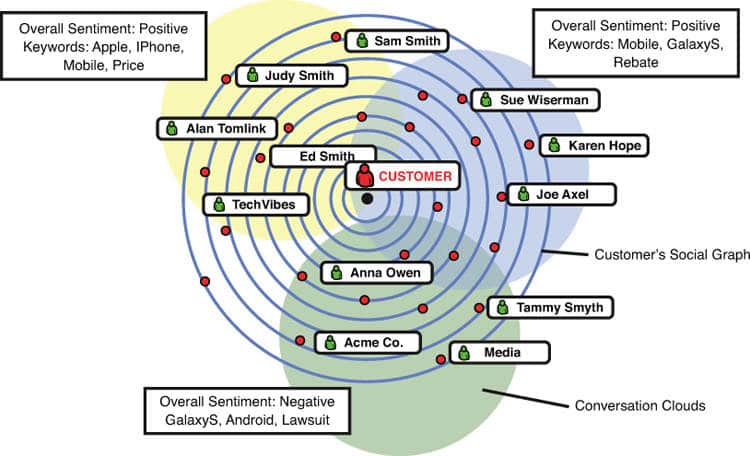
Influence Marketing bookSince before we had even published the Influence Marketing book, my co-author Sam Fiorella and I were frequently asked the difference between “influence marketing” (our definition) and “social influence” (today’s definition).

With the book, we delve deeper into the difference (influence marketing driving business ROI versus social influence driving social signals and amplification).

This week, I was fortunate enough to be asked onto Max Minzer’s #MaxImpact show on Google+, to discuss this topic, how to identify the decision-making process of your target customer and their immediate circle of micro-influencers, and much more.

It was a great discussion, with some great questions all round. Enjoy. (And if do you enjoy this conversation, continue it by buying the book today – just click on the book box below this post!)

[youtube]http://www.youtube.com/watch?v=zEDZZI6bOjs&feature=share[/youtube]

Why Influencers Deserve To – And Should – Be Paid by Brands

Original

Ever since sponsored posts were made popular by the likes of Izea, the question has remained: should influencers be paid for their promotion of your brand?s message, product or service?

On the one hand, you have those that say paying an influencer removes the validity of the review of promotion, since you can?t possibly remain non-biased when there?s been an exchange of money.

On the other hand, you have those that say it?s no different from any other marketing channel, and you pay for that, so why should influencers be any different?

As someone who?s on both sides of the coin ? I?m a marketer who uses influencers for client campaigns, and I?m fortunate enough to work with brands as an influencer for their campaigns ? here?s my take on the topic.

Time is Money

How long do you think the average blog post takes to create? If you, the marketer, don?t blog yourself, how long do you think it takes to put together what you?re reading now?

10 minutes? 30 minutes? An hour? More, less?

The truth is, blog posts take as long as they need to be ready. This might sound clich?d, but it?s true. There?s much more to a blog post than just stringing some words together (or images and sounds, if you?re a video blogger or podcaster).

  • Ideas and research;
  • Content;
  • Format;
  • Links and attribution to relevant topics;
  • Images and media;
  • Proofreading.

That?s just the creation part. Then you have the marketing of a post, along with replying to comments and encouraging further discussion. All told, a blog post can easily take up a few days of your time, if you were to add up all the components.

And that?s just one post, where the blogger knows the topic inside out and can create content on the fly. If there?s a brand message involved, there needs to be further research into the product, testing any giveaways, liaising with the brand, etc.

So that single post has now turned into a mini-campaign. And you want that for free? Um??NO.

Trust Can?t be Bought ? But It Deserves to be Rewarded

When I started this blog, the one core tenet I made it my mission to adhere to was to never break the trust of whatever community managed to grow around the blog.

That meant all opinions would be treated equally, as long as they were respectful and on topic, and I would never promote or recommend something I hadn?t used myself, or didn?t 100% believe in.

It?s a big reason there have been very few ads on my blog, with the exception of the WordPress theme I use. It?s also why there has been very few sponsored posts on my blog ? perhaps two in five years plus of blogging here.

Simply put, if I?m going to recommend something to my community ? whether as a non-paid fan or a sponsored ?influencer? ? it needs to be right for my audience. There?s no amount of dollar value you can pay to erode the trust that?s built between a blogger and his or her community.

Money comes and goes; trust and a legacy doesn?t.?That can never be bought back.

If you, as a brand manager or agency, want to connect an influencer?s hard-earned community trust to your client, you need to understand what it?s taken to build that trust. It?s the ultimate endorsement, for that influencer to introduce your brand to the community, and not only introduce, but honestly recommend.

You can?t buy that kind of advertising ? but you can reward it.

Relevance Equals More Effective Outreach and ROI

There?s a reason today?s definition of influence ? social scoring platforms like Klout, etc. ? have been very slow at sharing public success stories when it comes to their influencer outreach campaigns.

While generic influence as offered by these platforms can help brands gain share of voice and brand amplification, the fact is the identification process of influencers to use lacks true context and relevance to an audience.

Customer influence and advocacy


While a lifestyle blogger with 10,000 subscribers and demographics of 25-44 year old women might be attractive to a brand looking to promote their latest healthcare product, how many of that 10,000 is right for the brand?

Let?s say the product is for women with sensitive skin; that might be one-third of the audience. So what about the other two-thirds? A generic target by score ???this blogger has a score of 72 in women?s products, they?re perfect!??? will immediately reduce your brand?s success rate.

However, get in touch with the blogger that?s 100% right for your brand, and who has a higher engaged audience around that topic, and you?ll immediately see both financial benefits and more positive sentiment around your outreach campaign.

It?s why?InNetwork’s solution of filtering out the true audience size is a welcome addition to the influence software marketplace.

Instead of wasting time and resources on partnering with bloggers with 10,000 subscribers but only 900 actual interested readers,?you can connect with a blogger with 1,000 subscribers and 900 interested readers.

Considering you’ll rarely – if ever – have a blog that has 100% of its readers engaged, the 90% engagement of the latter example compared to the under 10% of the initial example is much more rewarding, especially given the probable cost to work with the former over the latter due to “audience” size.

That?s a big difference in relevance and the ratio for success is much bigger. It?s the smarter way to market, and paying the influencer for connecting you to that more engaged audience means?less risk, more return, and better campaigns.

Influence Marketing is a Key Business Strategy ? Don?t Treat It Like a Cheap Date

At the end of the day, the old adage??you get what you pay for??has never been more true when it comes to influencers and how they can really help turn a promotional campaign into a loyalty-driven customer base.

There?s a reason people are ?influential? in their community: expertise, respect, trust and the ability to make things happen.

You have the choice to pay or not to pay what they?re worth ? in reality, though,?if you?re serious about your campaigns, there?s only one choice to make:?how much is true influence and what it can offer your brand worth to you?

Don?t be cheap with your answer.

A version of this post originally appeared on the InNetwork blog.

image: H.Michael Karshis

Why MyPeerIndex is a Major Step Forward for Social Scoring

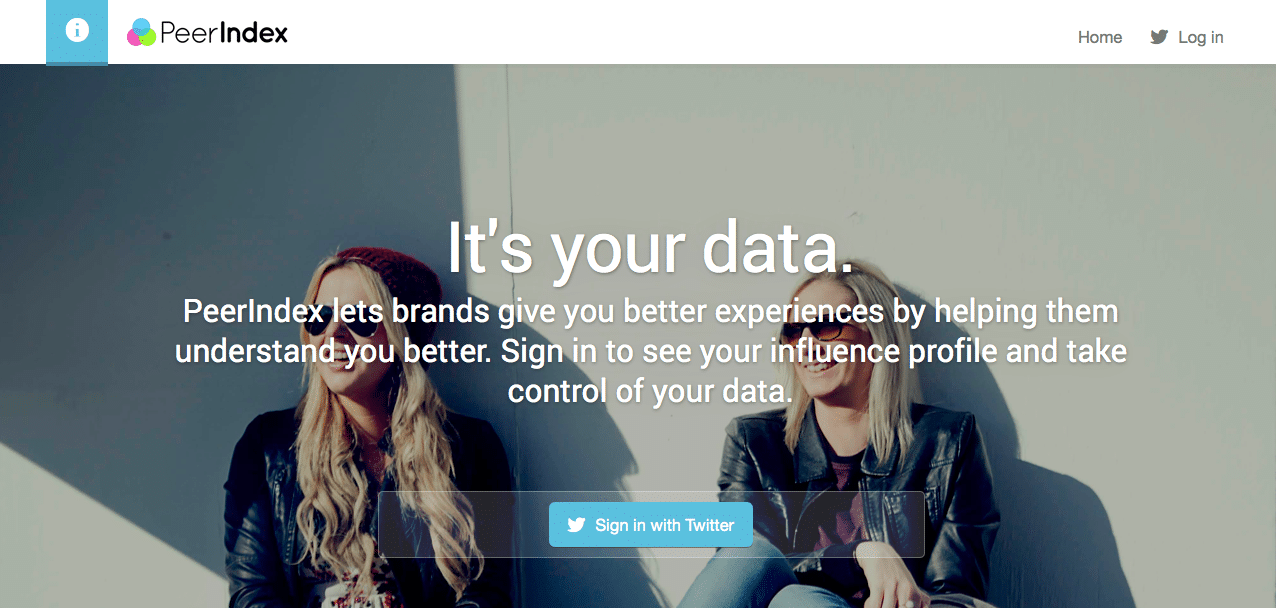
MyPeerIndex

MyPeerIndex

When we were writing?Influence Marketing, both?Sam Fiorella?and I spoke to several tech vendors in the social scoring and influence marketing space. This included?Ferenc Huszar, lead data scientist at?PeerIndex.

When asked about the future of social scoring and where it sits within the bigger influence marketing picture, Ferenc advised,

Currently, influence platforms calculate their scores and metrics based largely on social media interactions simply due to the fact that this data is most widely available. [However], I agree that one of the main goals of influence marketing should be to close the gap between social influence and actual sales figures or profit. This is certainly the long-term vision, and we have already taken steps to deliver on this vision.

PeerIndex?s recent unveiling of?MyPeerIndex?not only shows what these steps are, but opens up social scoring to be far more transparent to the consumer side of measurement.

What is MyPeerIndex and Why Does It Matter?

The biggest criticisms both Sam and I have had when it comes to social scoring as a real measure of influence can be boiled down to two main reservations:

  • Social influence has less authority because of the lack of transparency in how scores are measured (previously it was only?Kred?that publicly shared data on this);
  • Social influence was ego-centric versus customer-centric, because of their use of public scoring systems, leading to gaming of the algorithms and changing natural conversations on social platforms.

With the release of MyPeerIndex, PeerIndex has removed both of these barriers, leading to an easier understanding of scoring for both consumers and brands alike. From?the PeerIndex blog announcing the release,

As a data provider we feel that the most responsible way to handle our business is to be transparent with social media users. We strongly believe in the power of data to make your interactions with brands more helpful and relevant, but at the same time, we are firmly of the opinion that you, the customer, has to have the final say in whether brands get to see your data or not.

MyPeerIndex.com?is our new consumer transparency page where every user can see, download and remove the data we hold on them and provide to our partners through?our API?and?audience insights tool PiQ.

It?s that last sentence that stands out ? now it?s not only the clients using PeerIndex to gather data on consumers and social media users that can see what information is held, but also the consumers themselves.

MyPeerIndex JSON data

This is a huge announcement and leaves Klout as the only platform of the ?Big Three? ? Klout, Kred and PeerIndex ? that keeps their algorithm secret.

MyPeerIndex and Earning the Trust of Social Media Users

From a personal point of view, my biggest gripe with social influence platforms has been the Opt-Out mentality they employ ? they create a viewable profile of you if you have a public Twitter account, whether you know about their platform(s) or not.

This has led to various invasion of privacy concerns, as well as impacting professional lives (prospective job candidates have been turned down based on their previously unaware of scores).

While MyPeerIndex still creates a profile of you, it now allows you much more control of, and access to, that data.

Access to your information

When you access your own MyPeerIndex, you have the option of downloading a JSON file of the data PeerIndex provides to brands about you. This simple addition will let you see exactly why you?re being profiled and, in the longer run, help you protect your privacy better.

Removal of data, as opposed to deleting your profile

While social scoring platforms allow you to delete your account, there have been instances where people have still been tracked or appear to have not been fully removed. MyPeerIndex counters this by allowing you to remove you data.

Remove PeerIndex data

Removing the Search option

As mentioned earlier, publicly available scores have led to the bastardization of influence as people try and grow their scores, compete with friends, and attract brands to receive freebies. MyPeerIndex removes the ability to look at anyone else?s score, thus removing the ego-centric use by savvy consumers.

Why MyPeerindex Is a Smart Move

By both opening up their platform data to consumers, and moving away from ego-based influence to more contextual topic influence, MyPeerIndex is moving towards what brands really need from influence marketing solutions ? real data, real people, real results.

Additionally, being transparent about what data they use enhances the trust factor already enjoyed by Kred, who have always been open about how their algorithm works.

It?s a major step in removing the criticisms of scoring platforms in general, and leaves Klout increasingly marginalized when it comes to their data, especially given?the problems Klout is currently experiencing.

Kudos to PeerIndex for this step ? here?s to the continued maturation of the influence marketing space.

This post originally appeared on the Influence Marketing book blog.

3 Reasons You’ll Hate the Influence Marketing Book

Influence Marketing reviews

Back in May this year, Influence Marketing – the book I co-authored with Sam Fiorella – was published.

Published by the Que Biz-Tech imprint of business publisher Pearson, it was the result of 3-4 years of criticism of current influence models, as well as years of research, client work and case studies that highlighted what real influence means.

Since the book was published, a few folks have asked if the book would be of use to them, based on their goals, personal and professional. Instead of writing why the book would be a good fit, I thought it might be more fun to show why you’d hate the Influence Marketing book instead.

1. It Won’t Help You With Your Klout Score

When we first announced the book, a lot of people expected it to be an anti-Klout book, or anti-social scoring. After all, both Sam and I have been pretty vocal with our views on social scoring platforms and their take on influence.

However, contrary to popular belief, neither of us “hate” these platforms; nor do we discount the role they’ve played in starting the bigger conversation around influence within the social sphere, and what that looks like today.

That being said, we’re also realistic in what the likes of Klout can and can’t do, as this quote from the book shows:

We’re not suggesting that social scoring platforms are useless, only that basing influence marketing campaigns on them is shortsighted. To measurably and effectively generate business value from influence marketing, we must first understand and navigate the disruptive forces created by social media and the pervasive [social scoring] technologies previously outlined in Chapter 4.

One of my biggest “pet projects”, if you like, is the value of context when it comes to data, and for Sam and myself scoring platforms lack the level of contextual data needed to really define influence.

To that end, we share information on current social influence tools in Chapter 4, but that’s pretty much the only mention of these platforms. So if you’re looking to increase your Klout score or similar, this book isn’t for you.

2. It’s Not an Easy Read

When we first started the book process, one of the topics of discussion that came up was the language of the book. From the start, we knew that the direction of the book – a “true” business book versus a 101-type business book – would mean the language would need to complement the direction.

This meant deep conversations around text analytics, ontology, trend currents and more. Initially, the publisher wished for a simpler approach that would appeal to the everyday reader.

Ontology discussion

While we could have simplified the copy, that – for us – would have diluted the mature direction we wanted to move the influence conversation in. Full credit to our publisher, they acquiesced and allowed us to write the book we wanted.

Some reviews allude to the writing style – Alan Kelly mentions, “Beware, the authors do go geek. References to ontologies (p. 117) are spot-on and may scare the casual reader.” while Robert Clarke states, “…the tone and language felt a little too technical, and text-bookish for me.”

Funnily enough, the text book quip makes perfect sense, as Sam has already been approached by Rutgers to run one of their digital classes, and I’ll be presenting a 14-week course on Influence Marketing at Seneca College early next year. Since one of our goals was to make the book one that could be used in a scholastic setting, this was vindication we’d succeeded in that respect.

So, if you like an easy weekend read with little to make you stop and think, this book is not for you.

3. It Doesn’t Offer Short Cuts

Back in the “good old days” of marketing, there were no real shortcuts to identifying market opportunities and delivering strategies and tactics based on the information available to you.

Research was laborious, filtering data could be mind-numbing, and settling in for the long haul was expected when it came to setting goals and milestones for meeting these goals.

Enter social media and, by association, social scoring, and a lot of the legwork was taken care of – or so it would seem. Instead of having to research, identify and curate lists of target audience members, now you could pay a premium and have a ready-made list of “influencers” do your job for you.

Instead of having to correlate expenses to goals, what the success metrics would look like and how that impacted both top and bottom line, now you could promote the fact you got X amount of impressions and your social proof – Likes, retweets, etc., – was through the roof.

All well and good – except impressions, social proof and their ilk rarely equate to financial return on the scale needed to see the campaign recognized as a success.

In the book, we share the framework we’ve used, as well as the methodologies that will help your brand truly understand what influence is, and how to tie it directly to your Return on Investment (ROI) and profit metrics. But as we also point out in the book, this takes time and effort – lots and lots of effort.

If you’re looking for a quick buzz fire sale when it comes to influence and your brand, this book is not for you.

If You Can Get Past These Flaws…

So there you have it – three simple yet important reasons why you would probably hate Influence Marketing. Like any book, especially a non-fiction business book, it’s not for everyone, and I’d hate to see you disappointed with your purchase if you were to buy it.

However, if you can get past these flaws above, you’ll find why Nielsen BookScan recognized it as “one of the Top 100 Business Books in America”, and why Evy Wilkins, VP Marketing at Traackr said:

Sometimes a book comes along that changes the way we do business. Influence Marketing will be one of these books.

The choice is yours. If the three reasons here resonate, run for the hills and far away! If, on the other hand, that sounds the opposite of your approach, you can choose your preferred book retailer here.

Either way, don’t say you haven’t been warned… 😉

Ontology image: Francis Rowland

  • « Go to Previous Page
  • Page 1
  • Page 2
  • Page 3
  • Page 4
  • Page 5
  • Interim pages omitted …
  • Page 15
  • Go to Next Page »
© 2026 Danny Brown - Made with ♥ on Genesis