• Skip to primary navigation
  • Skip to main content
Danny Brown

Danny Brown

podcaster - author - creator

  • About
  • Podcasts
  • Journal

Latest posts from Danny Brown

Enjoy the latest posts from Danny Brown, and feel free to add your own thoughts in the comments after the post.

Influence Marketing vs Social Scoring and Mapping It All to Business Results

Influence Marketing bookSince before we had even published the Influence Marketing book, my co-author Sam Fiorella and I were frequently asked the difference between “influence marketing” (our definition) and “social influence” (today’s definition).

With the book, we delve deeper into the difference (influence marketing driving business ROI versus social influence driving social signals and amplification).

This week, I was fortunate enough to be asked onto Max Minzer’s #MaxImpact show on Google+, to discuss this topic, how to identify the decision-making process of your target customer and their immediate circle of micro-influencers, and much more.

It was a great discussion, with some great questions all round. Enjoy. (And if do you enjoy this conversation, continue it by buying the book today – just click on the book box below this post!)

[youtube]http://www.youtube.com/watch?v=zEDZZI6bOjs&feature=share[/youtube]

Why Influencers Deserve To – And Should – Be Paid by Brands

Original

Ever since sponsored posts were made popular by the likes of Izea, the question has remained: should influencers be paid for their promotion of your brand?s message, product or service?

On the one hand, you have those that say paying an influencer removes the validity of the review of promotion, since you can?t possibly remain non-biased when there?s been an exchange of money.

On the other hand, you have those that say it?s no different from any other marketing channel, and you pay for that, so why should influencers be any different?

As someone who?s on both sides of the coin ? I?m a marketer who uses influencers for client campaigns, and I?m fortunate enough to work with brands as an influencer for their campaigns ? here?s my take on the topic.

Time is Money

How long do you think the average blog post takes to create? If you, the marketer, don?t blog yourself, how long do you think it takes to put together what you?re reading now?

10 minutes? 30 minutes? An hour? More, less?

The truth is, blog posts take as long as they need to be ready. This might sound clich?d, but it?s true. There?s much more to a blog post than just stringing some words together (or images and sounds, if you?re a video blogger or podcaster).

  • Ideas and research;
  • Content;
  • Format;
  • Links and attribution to relevant topics;
  • Images and media;
  • Proofreading.

That?s just the creation part. Then you have the marketing of a post, along with replying to comments and encouraging further discussion. All told, a blog post can easily take up a few days of your time, if you were to add up all the components.

And that?s just one post, where the blogger knows the topic inside out and can create content on the fly. If there?s a brand message involved, there needs to be further research into the product, testing any giveaways, liaising with the brand, etc.

So that single post has now turned into a mini-campaign. And you want that for free? Um??NO.

Trust Can?t be Bought ? But It Deserves to be Rewarded

When I started this blog, the one core tenet I made it my mission to adhere to was to never break the trust of whatever community managed to grow around the blog.

That meant all opinions would be treated equally, as long as they were respectful and on topic, and I would never promote or recommend something I hadn?t used myself, or didn?t 100% believe in.

It?s a big reason there have been very few ads on my blog, with the exception of the WordPress theme I use. It?s also why there has been very few sponsored posts on my blog ? perhaps two in five years plus of blogging here.

Simply put, if I?m going to recommend something to my community ? whether as a non-paid fan or a sponsored ?influencer? ? it needs to be right for my audience. There?s no amount of dollar value you can pay to erode the trust that?s built between a blogger and his or her community.

Money comes and goes; trust and a legacy doesn?t.?That can never be bought back.

If you, as a brand manager or agency, want to connect an influencer?s hard-earned community trust to your client, you need to understand what it?s taken to build that trust. It?s the ultimate endorsement, for that influencer to introduce your brand to the community, and not only introduce, but honestly recommend.

You can?t buy that kind of advertising ? but you can reward it.

Relevance Equals More Effective Outreach and ROI

There?s a reason today?s definition of influence ? social scoring platforms like Klout, etc. ? have been very slow at sharing public success stories when it comes to their influencer outreach campaigns.

While generic influence as offered by these platforms can help brands gain share of voice and brand amplification, the fact is the identification process of influencers to use lacks true context and relevance to an audience.

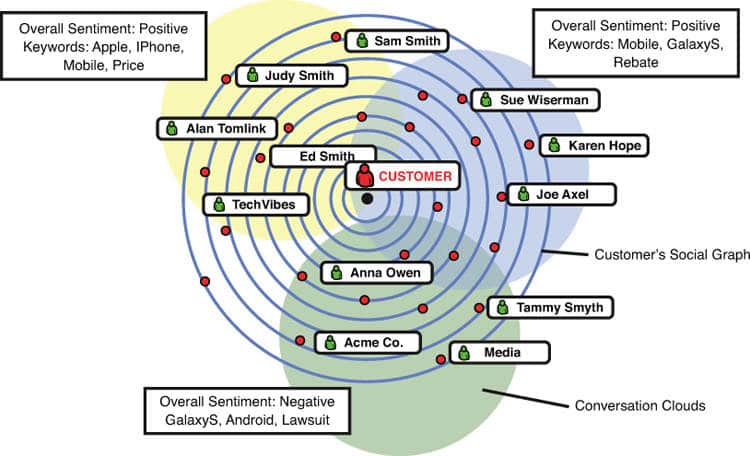
Customer influence and advocacy


While a lifestyle blogger with 10,000 subscribers and demographics of 25-44 year old women might be attractive to a brand looking to promote their latest healthcare product, how many of that 10,000 is right for the brand?

Let?s say the product is for women with sensitive skin; that might be one-third of the audience. So what about the other two-thirds? A generic target by score ???this blogger has a score of 72 in women?s products, they?re perfect!??? will immediately reduce your brand?s success rate.

However, get in touch with the blogger that?s 100% right for your brand, and who has a higher engaged audience around that topic, and you?ll immediately see both financial benefits and more positive sentiment around your outreach campaign.

It?s why?InNetwork’s solution of filtering out the true audience size is a welcome addition to the influence software marketplace.

Instead of wasting time and resources on partnering with bloggers with 10,000 subscribers but only 900 actual interested readers,?you can connect with a blogger with 1,000 subscribers and 900 interested readers.

Considering you’ll rarely – if ever – have a blog that has 100% of its readers engaged, the 90% engagement of the latter example compared to the under 10% of the initial example is much more rewarding, especially given the probable cost to work with the former over the latter due to “audience” size.

That?s a big difference in relevance and the ratio for success is much bigger. It?s the smarter way to market, and paying the influencer for connecting you to that more engaged audience means?less risk, more return, and better campaigns.

Influence Marketing is a Key Business Strategy ? Don?t Treat It Like a Cheap Date

At the end of the day, the old adage??you get what you pay for??has never been more true when it comes to influencers and how they can really help turn a promotional campaign into a loyalty-driven customer base.

There?s a reason people are ?influential? in their community: expertise, respect, trust and the ability to make things happen.

You have the choice to pay or not to pay what they?re worth ? in reality, though,?if you?re serious about your campaigns, there?s only one choice to make:?how much is true influence and what it can offer your brand worth to you?

Don?t be cheap with your answer.

A version of this post originally appeared on the InNetwork blog.

image: H.Michael Karshis

The Sunday Share: Serving the Connected Customer

Customer experience

As a business resource,?Slideshare?stands pretty much head and shoulders above most other content platforms.

From presentations to educational content and more, you can find information and curated media on pretty much any topic you have an interest in.

As a research solution, Slideshare offers analysis from some of the smartest minds on the web across all verticals.

These include standard presentations, videos, multimedia and more.

Which brings us to this week?s Sunday Share.

Every week, I?ll be sharing a presentation that catches my eye and where I feel you might be interested in the information inside. These will range from business to content to social media to marketing and more.

This week, a presentation from customer experience advocate Paul Taylor.

As customers become ever more connected on a variety of devices and platforms, businesses need to adapt to ensure they remain at the forefront of the customer decision-making process. This presentation shares some eye-opening statistics that every business owner should take heed of.

Enjoy.

image: Patricia Mellin

Don’t Be the Company Sending a Crappy Email Pitch That’s Breaking the Law

Ignorance

Ignorance

Back in 2003, President George W. Bush passed the CAN-SPAM (Controlling the Assault of Non-Solicited Pornography and Marketing) Act, that was meant to establish standards when it came to commercial email and help protect consumers from errant businesses filling email inboxes with their crud.

While well-intentioned in its creation, unfortunately its been much less effective when it comes to actually making marketers and promotional companies any better at respecting the wishes of those they seek to target.

This, despite specific instructions as to what can and can’t be done by these marketers:

  • There must be a visible and operable unsubscribe mechanism present in all emails;
  • A message can’t be sent without an UnSubscribe option;
  • A message cannot be sent to a harvested email address;
  • A message should contain at least one sentence.

There are many more do’s and don’ts attached to the CAN-SPAM Act, but for this post, I’m highlighting these four in particular, since it’s clear Haworth Marketing + Media don’t really care about them.

Poor Pitch or Ignorance of CAN-SPAM?

I received this email from Haworth yesterday (click image below to expand).

Haworth email pitch

I’ve blurred out the name of the person sending, as it appears they’re in a more junior role and have been tasked with sending out this pitch by an account manager or more senior person.

As you can see, it ignores all the points of the CAN-SPAM Act I referenced: there’s no unsubscribe option, I don’t recall ever signing up for updates from Haworth, and there’s no sentence – not even a single one – within the email body itself.

Instead, as you can see by the red highlighted box, there’s an attachment that I’m meant to trust, download and open – all from a source I don’t know and have never asked to know (to the best of my recollection).

Quite the winning pitch…

It Doesn’t Need to be This Way

The fact that Haworth sent this out like this is disappointing enough. It shows a lack of understanding of what makes a good blogger outreach program. It’s not as if there aren’t enough reference points, either.

Posts like this, or this, or this, or this, or this, or… you get the picture. And that’s just on this blog.

There are countless other posts, articles, and more, on what makes a blogger outreach campaign work. Just Google “blogger outreach tips” and you’ll get around a million results, with excellent advice to be found here, here, here and here, just for starters.

Haworth themselves claim to understand what makes a promotional campaign work. In their own words:

Our differentiation comes from changing the conversation in media; through inspired media design and thoughtful collaboration with communication partners, we generate impactful, lasting impressions that translate into deep, emotional connections.

Having said that, when you dig a little more into their site and look at their client services, they don’t offer blogger outreach as part of their solutions. They do offer content marketing, but not blogger outreach specifically – so perhaps the email approach I received shouldn’t be a surprise after all.

Which is a shame. Bloggers are an increasingly important part of any online marketing or promotional component for today’s brands – just ask Martha Stewart about that point.

Educate Yourself Now or Be Left Behind

As shared throughout this post, there are a ton of resources around to ensure you craft the right type of approach for your campaign – one that will bring a better result than being criticized by the person you’re trying to engage with.

  • Respect the CAN-SPAM Act in its entirety (I requested removal from Haworth’s list after a previously dubious email, to no avail);
  • Don’t send attachments without prior acceptance and a description of what the attachment is;
  • Don’t fob off your email blasts to a junior employee, thus relieving yourself of any responsibility when called out;
  • Educate your marketing/promotional staff on company expectations (hint: these shouldn’t be the example used for this post);
  • Read publications and blogs that speak of this increasingly important outreach outlet, and understand the nuances it needs.

Yes, it will be a pain to make the switch and, yes, it might even mean you refocusing on areas you had been loosely paying attention to before.

But, as “old media” – traditional ads, TV and radio spend, etc – begin to see their effectiveness eaten up by newer media, particularly by bloggers with a relevant audience, taking the approach of sending out a blast email with nothing but an attachment is just a poor promotional decision.

Especially when it’s effectively breaking the law…

image: Max Bisschop

Google Hummingbird, Content Authority, and How Atomic Reach Can Help

Danny Brown blog

Last month, Google released the Hummingbird algorithm. Since then, many articles and blog posts have been written about its impact on key areas for publishers – SEO, Page Rank, web authority and, perhaps most importantly, content authority and marketing.

The link at the start of this post is from Search Engine Land and offers a thorough overview of what this new Google algorithm means. However, to give you a quick idea of what Hummingbird is, here are a few of the main points from the article:

  • It’s a new search algorithm that should provide much better and more contextual results;
  • There are more than 200 factors making up the Hummingbird algorithm;
  • It wants to increase focus on “conversational search”;
  • It is not an “SEO killer”.

These are some of the main takeaways/concerns – for the bigger picture, I recommend checking out the SEL post for more details.

In short, though, Hummingbird is excellent news for publishers and content creators that care about quality over quantity, and should theoretically help improve the web when it comes to information and data.

However, for many businesses, brands and publishers, understanding what that quality content may look like can prove a challenge, which is where Toronto-based Atomic Reach comes in with its content authority software.

Content Marketing and Scoring Engine

I met up with the Atomic Reach guys a few weeks ago, and I’m impressed in where they see quality and targeted content fitting in the bigger publisher picture.

They understand the difficulties of creating content, whether that’s a blog, podcast, video or more, and their content scoring engine looks to help publishers overcome these difficulties.

This comes in the shape of three main areas.

Get Scored

By creating an account with Atomic Reach, you can either score your existing content to see how relevant it is for your target audience (based on goals you set when creating your account), or upload a draft version. Their algorithm then scores it based on natural language processing, to “measure the content’s quality, relevance and performance potential prior to publishing.”

Danny Brown Atomic Reach 1

Discover and Share

Within the Atomic Reach dashboard, you have the option to select the topics and industries that matter to you, both as a content consumer and a content creator. This allows you to connect with like-minded audiences that are right for your content, as well as discover the best time to share for maximum impact.

Measurement

Measurement is everything, and everything is measurement. Or something like that. I’m a huge proponent of measuring all that can be measured, and Atomic Reach is no different. They track audience engagement, website performance, and social media reach amongst other factors. They can then help you make adjustments based on your content goals.

By covering these three core bases, the goal is to ensure you not only have the right content for the right audience at the right time, but your metrics will either confirm this is happening, or advise how to make it happen.

Using Atomic Reach to Work with Hummingbird

One of the ways Atomic Reach can help you benefit from the recent Hummingbird update is by helping you craft the kind of content authority articles Google looks for – those with reference links, facts, statistics and content that helps your audience with what they need to know.

Atomic Reach shows you exactly how you’re performing in this area, with a breakdown of what you’re doing right versus where you can improve. This can make for some very informative (if a little scary!) reading.

Danny Brown Atomic Reach content analysis

As you can see by my analysis, I need to work on increasing post length based on my revised goals (which I have been doing recently); be more aware of my grammar and spellcheck; and improve the links on my posts, both internally and externally.

This analysis can only help me be a better content creator which, in turn, can only help me follow the kind of content improvement that Google is looking to enable for the social web with the Hummingbird algorithm.

Additionally, as more publishers connect within the content community area of Atomic Reach, the more content you’ll be able to reference and potentially partner with, providing you with instant resources to use for your own content (and vice versa).

It’s a smart way of not only improving your own digital presence, but finding potential partners/clients/content providers in your own industry and within audience segments you haven’t yet reached.

What Atomic Reach Still Needs

As I mentioned earlier in the post, I’m impressed with what the guys over at Atomic Reach are trying to do, especially now more than ever, given the Hummingbird announcement from Google.

There are some areas I’d love to see fleshed out, though.

  • More in-depth reporting. Granted, I’ve been messing with the free version, and there are three versions available – Blogger (the one I tested), Brands and Publishers – so it may be there are more in-depth reports available for the premium version. But it’d be great to know who my most vocal sharers are, who they influence, and how that helps my content goes beyond my first line of content sharing (my immediate community).
  • Content scoring for podcasts and videos. Currently, Atomic Reach is for written blogs only. However, they did mention that video is something they’ll be looking at, based on natural language filtering, so that could be coming, which would really change the game.
  • The ability to measure without having to sign into the Atomic Reach dashboard. This is more from a blogger point of view, versus a brand one, but currently you need to run everything through the Atomic Reach admin area. It’d be great if there was a WordPress plugin (much like the Scribe SEO one) that analyzes and advises directly from your blogging dashboard.

These are just some of the ways the product could really be fleshed out into something that publishers of all shapes and sizes could use.

In fairness, though, Atomic Reach is still in beta, and has a major update due imminently, so it may be some of these suggestions are already being worked on, or are covered by different versions.

Either way, the potential for Atomic Reach is huge, and – having seen it in action at the company itself and within my own account – I definitely recommend checking them out if you’re in any kind of serious content creation market.

Update April 2nd 2014: There are now a bunch of apps, including a dedicated WordPress plug-in, available for Atomic Reach.

  • « Go to Previous Page
  • Page 1
  • Interim pages omitted …
  • Page 75
  • Page 76
  • Page 77
  • Page 78
  • Page 79
  • Interim pages omitted …
  • Page 283
  • Go to Next Page »
© 2026 Danny Brown - Made with ♥ on Genesis