• Skip to primary navigation
  • Skip to main content
Danny Brown

Danny Brown

podcaster - author - creator

  • About
  • Podcasts
  • Journal

Latest posts from Danny Brown

Enjoy the latest posts from Danny Brown, and feel free to add your own thoughts in the comments after the post.

Three Mobile Social Networks to Keep an Eye On

Teens and technology

This April, technology and digital news site?ReadWrite?published an article titled?“The Future Of Social Media Is Mobile Tribes.”

Written by journalist and advertising strategist Matthew Bryan Beck, the piece looked at how digital users were moving away from bloated social networks like Facebook and Google+, and spending more time on networks that offered a more intimate and personal experience.

Specifically, Beck pointed to the increase in smartphone usage and the ubiquity of mobile consumption when it came to content and networking.

Beck called this movement “mobile tribes,” even noting Facebook founder and CEO Mark Zuckerberg’s goal of?“unbundling the big blue app”?and offering multiple versions of Facebook and the other apps the company owns (Instagram, WhatsApp, Messenger, etc.) so people could choose what to use based on their personal preference and needs.

If the mega-networks like Facebook are becoming a dying trend and mobile tribes are indeed leading the future state of social media, then the following three networking and communications platforms may not only affect the state of social media but your business as well.

Nextt: Merging Your Online and Offline Private Networks

Since their inception, social networks have primarily been criticized for the way they encourage “antisocial” behavior by encouraging usage that “rewards” frequency online with?the perception of being someone important.

Meanwhile, Facebook itself has been cited as being the?primary cause in at least one-third of failed marriages in which “unreasonable behavior” is a factor. Spouses have discovered “flirty” messages, photos of their partner with someone they weren’t supposed to be with or photos of them attending parties or events they never told their spouse about.

Into this sometimes-hazardous arena comes?Nextt, which looks to mix online friendships with offline socializing. Initially launched as an iPhone app but now also available on Android, Nextt describes itself as “a private network for close friends to connect online so they can do more together offline.”

Nextt

Primarily built to counter FOMO (the “fear of missing out” syndrome, which has become increasingly prevalent online), Nextt allows friends to use calendar templates and tools to arrange private get-togethers and make plans, without worrying about multiple email chains, lost messages, mistaken dates and more.

Nextt’s main distinction from similar networks is that it keeps activities between small groups of in-person friends versus the likes of Meet-Up that suggest get-togethers with online connections. Nextt allows for much more privacy, while making it easier to arrange date nights for couples or city getaways while minimizing who gets access to which activities. Once activities have been ironed out, an “It’s On!” notification is sent to all parties and calendars are updated and confirmed.

For users of online networks who are becoming increasingly disengaged because of the noise factor, Nextt offers an opportunity to take the social part back from social media and actually have experiences to remember with friends that really matter.

Nextt is available for both iPhone and Android.

Spayce: Making Better Use of the Space You’re In

There are a lot of similarities between Spayce?and Facebook. Both started as a student project at Harvard, both look to connect people, and both see mobile as the future of social networking. However, unlike Zuckerberg and Facebook, Spayce founder Patrick Colangelo is taking a very different approach to connecting people.

While Facebook sees its platform as a way to connect the world, Spayce wants to connect like-minded people who are within 100 meters of each other physically.

Making Use of Space with Spayce

These small spaces can range from classrooms to business meetings to local bars and more. The idea is simple: Users create a profile that’s separated into personal and professional personas, then use the appropriate persona with whatever social situation they’re in?personal for a bar, professional for a business meeting, for instance.

A personal profile shares pictures of the user, friends and three adjectives describing their interests. A professional profile simply includes a user’s occupation and the industries related to that user.

Spayce then uses facial recognition and hyper-location tools to highlight users within a specific vicinity, allowing people to connect with others who enjoy similar interests, tastes, discussions and more. Once connected, Spayce users can save these events and participants for future get-togethers or similar meetings.

Spayce has already enjoyed a successful trial run at Harvard, with one senior praising its ability to enable non-awkward ways to meet someone they haven’t previously met.

Pheed: Optimizing Your Feeds

It seems like only yesterday that all the buzz was centered on Vine, the popular short video app that Twitter bought for $30 million in October 2012. That buzz, however, has died down a bit, as?Pheed?started generating the latest chatter.

Optimizing Feeds with Pheed

Essentially a mish-mash of the best features of Twitter, Vine, Tumblr and SoundCloud, Pheed allows users to share text, images, videos, voice notes and audio tracks, as well as live events. These features form a user’s channel, and other Pheed users can subscribe to and connect with the owners of these channels.

Where Pheed gets interesting is its user monetization option. When they upload content, users can watermark their creations, tying copyright back to that user. Users can then charge for access or usage of that content?anywhere from $1.99 to $34.99?on a per-view or per-month basis. Pheed then takes a cut of the fees, with the user keeping the rest.

It’s a clever mix of premium and “freemium” that’s seen the platform explode in popularity over the past six to 12 months, with the Apple app consistently placing high in the iTunes store for both social apps and free apps overall.

Pheed is available for both iPhone?and Android.

Where Does Your Business Fit In?

Of course, much like Instagram and Vine before it (and now WhatsApp and SnapChat), mobile-led social networks are notorious for being non-business friendly. It’s part of the attraction of these networks?the pureness of friendships and networking without the push interruptions of marketers.

Looking ahead to more organic ways to connect with these services, however, businesses should be considering how they can offer real solutions and benefits for the users and not just thinking of ways to take advantage of the three networks highlighted here, and others like them that will surely follow.

For example, could a restaurant or bar sponsor a Nextt meetup? Or could a theater offer a VIP screening for a Nextt group of movie-loving friends? Additionally, could the likes of?Airbnb?partner with Spayce to offer collaborative work areas for like-minded users in the same vicinity? Or could Pheed see creative studios provide power users with access to high-end creative tools and editing studios to create licensed products?

These are just a few, simple ideas to spark thinking?depending on the goals of the networks and their users, they may or may not be ideas that could come to fruition.

But one thing remains clear: The social media landscape is changing ever more into a mobile-led arena, and businesses need to be thinking ahead in order to keep pace.

A version of this post originally appeared on my monthly American Express OPENforum column.
The Moments We Do Not Take

Salem beautiful two

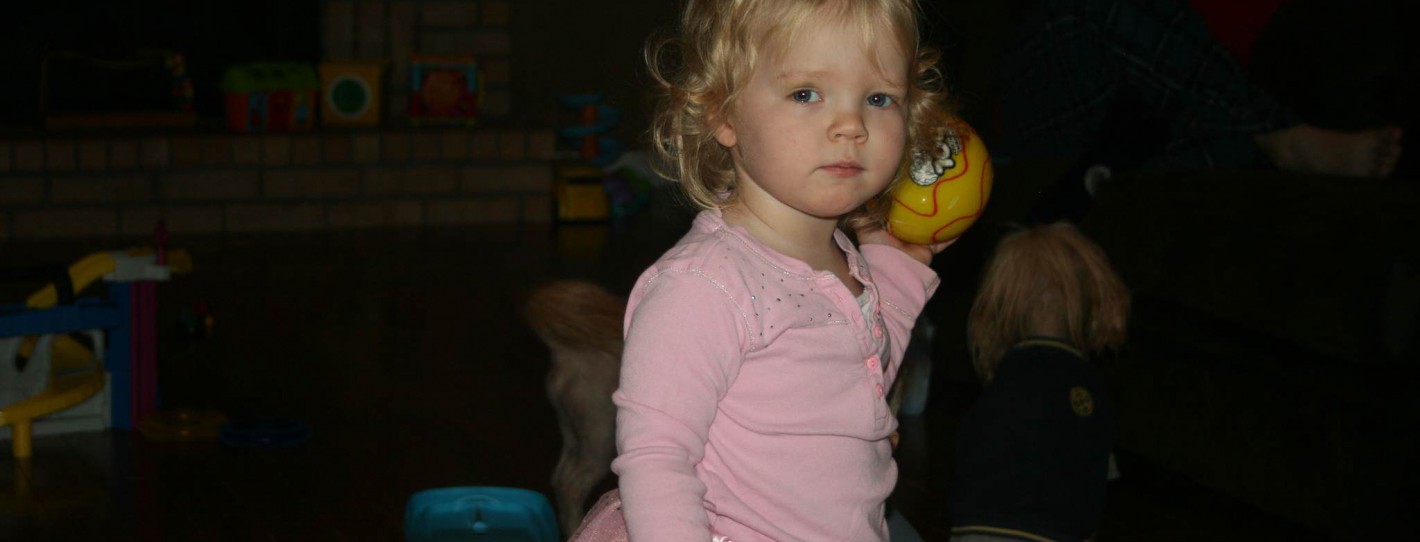
Just under two months ago, on May 7, I almost killed my beautiful little two year old girl. It doesn’t matter that it was an accident and that she escaped relatively unscathed – the fact of the matter is, had fate chosen to respond just 1% differently Salem wouldn’t be here.

Instead of writing this post as a potential catharsis, this page would probably be blank. As would all the other pages that have been published since that date.

The fact that this page isn’t blank does offer me some minor relief – after all, it means she’s alive and well – but it also stands as a major reminder that while we may create many moments to cherish, there are just as many we do not take.

The Accident

With Salem turning two in February of this year, the question of when she should have her first haircut popped up. My wife Jacki was dead against the idea of any haircut then (and Salem has beautiful curly locks, so I can see why), but I’d heard that if you cut (or at least trim) a little girl’s hair when it’s super curly then it grows out even more beautifully.

Salem ski suit

Given that Ewan, our four year old son, has a regular monthly haircut, we decided to take Salem along for her first haircut on one of Ewan’s scheduled appointments. After all, he was the seasoned pro – he’d look after his sister.

The haircut turned out great – Salem was a trooper, sat perfectly politely, enjoyed watching cartoons, and passed her first haircut “ordeal” with flying colours. That was the great part of that day.

On our way home, we (as per usual) carried both kids on our shoulders – Jacki had Ewan, I had Salem. As we walked onto our street, for some reason Ewan got spooked, and didn’t want to be on Jacki’s shoulders.

I walked over to my wife and son, looked at Ewan and asked what was wrong, since this wasn’t like him – he loved shoulder rides. He simply replied that he was scared and wanted down. So I did what any parent would – I nodded and reached out to get my son down.

All while forgetting I had my daughter on my shoulders.

The moment I reached out for Ewan, I knew something was wrong – the lack of body weight on my shoulders told me I had made a huge mistake, and my daughter was the one about to suffer for it.

I heard the thump at the same time I spun around, and my eyes connected the thump to seeing my daughter hit the ground after falling about five and a half feet (or twice her height) to hard concrete.

My brain told me she had fallen as “safe” as she possibly could have – straight down in a sitting position, as opposed to tumbling backward head-first – but my eyes saw the head bounce off the concrete as Salem fell back after landing, and immediately battled my brain for the truth.

Whatever the truth was, Salem screamed and started crying immediately. Later, I would find out this was a very good thing, but at that moment in time all I could think was I had hurt my daughter and I had to fix that.

The Fear

My wife was still holding Ewan, but lowered him to the ground as I dropped like a dead weight to our daughter, crying uncontrollably on the ground. I swept her up and let my wife take her so I could inspect the back of her head.

My fear of a cracked skull or worse ran through me as I looked for breaks in the skin, contusions, and every other thing you hear about on TV but don’t have a clue about until you wish you did.

While she did have some grazing and the start of a nasty bump, it seemed as though – outwardly – Salem was okay. As I finished checking her head, she turned in Jacki’s arms and reached out for me, still crying, still being brave.

I took her and told Jacki we need to get her to a hospital to check her out, and raced ahead to our home with Salem in my arms, cradling her, soothing her, apologizing to her, kissing her – all the while just wishing I was on the phone to get her to hospital.

Salem pool

The screaming was scary – I didn’t know if she’d had internal injuries to her head, and they were making her scream. You hear the horror stories of brains swelling with head injuries, and you don’t know that’s the case until too late.

Every worst thing you can imagine about head injuries went through my mind as we travelled to the emergency ward. Even when we had the X-ray results and they showed Salem was fine, just some very minor concussion and bruising, I still wondered if I had caused long-term damage. I still do.

I guess that’s what’s called the aftermath.

The Recovery

Even though Salem had been passed “fit” internally, externally the pain was evident. We couldn’t lie her down on her head – or at least with the back of her head on a pillow – for a couple of weeks. She’d scream any time her skull touched a pillow.

I’d sleep on the floor of Salem’s room with her resting on my outstretched arm, keeping her head off the floor and laying on her side. My wife would sleep on the sofa in our home’s grand room, buffering Salem’s head and making sure Salem slept soundly and with the protected snuggle mothers do so well.

It took a while, but eventually Salem slept on her own, with the back of her head on the pillow. That was a big step.

Salem Xbox

Big steps continued. While we haven’t had any of the kids on our shoulders since the accident, Salem does feel safe when we lift her up and hoist her in the air only to lower her quickly, to give her a feeling of weightlessness. She giggles at that.

While she still holds on a lot tighter to both Jacki and I when we lift her up, she does let us swing her through the air more than she did two months ago. And she giggles.

For all intents and purposes, Salem has recovered from that almost-oh-so-different moment two months ago. I should ask her her secret.

Reactions and Realizations

Since that day, I’ve run through the same scenario countless times, with many, many different outcomes. Sometimes I play these scenarios out in daylight; more often than not, I awake from a perspiration-filled nightmare, where the graphic images of how different that day could have been fill the place where sleep should be.

  • if she’d landed on her head instead of her padded pants;
  • if she’d twisted downward instead of falling straight;
  • if she hadn’t screamed immediately but fell and remained deathly silent when she hit the ground (a scream means no major damage, silence means something many times worse).

Even though my wife drums into me it was an accident, and even though Salem’s beautiful happy face is in our lives versus so many other outcomes that could have been the very real result, I still have almost daily nightmares.

Yet while the nightmares are the recurring guest of a trip I’d rather forget, they (and the fact that Salem is still here versus what could have been) remind me of the moments we do not take, and encourage me to make moments that are taken.

I could have lost my daughter shortly after her second birthday. While I have many wonderful pictures and videos of Salem since her birth, they’re a fraction of what should be recorded for future family dinners. That changed on May 7, 2014.

Salem read

I’ve always said my family is the number one priority in my life.?Almost losing Salem showed me how fragile that goal is, and how we all need to grasp at these kinds of goals whenever we have the chance.

We’re faced with choices every day:

  • do we really need to take that late afternoon meeting that means we won’t be home to see our kids go to sleep?
  • do we really need to text our friends when we’re out with our family at the park or at a dinner?
  • do we really need to say “in a minute” when just one minute with our kids will make them smile for the rest of the day?
  • do we really need to do anything that isn’t a matter of life and death at that moment in lieu of time with our loved ones?

In the grand scheme of things, we’re on this pale blue dot we call home for the shortest of time. Yet we have so many opportunities to create moments that will last a lifetime, and beyond.

Grab onto these moments. Grab them hard and don’t let go. Because you never know when these moments will become the ones we can never make again.

The Future of Content Part 2: with Lisa Gerber

The future of content

As content continues to become an ever-important staple for businesses of all shapes and sizes, I thought it?d be interesting to share some thoughts on what the future of content might look like.

However, instead of?sharing just my own thoughts, I wanted to bring you what the future of content looks like for some of the folks I look up to and respect in this space.

This mini-series will bring you some of the web?s most critical thinkers when it comes to content ? hopefully you?ll enjoy reading as much as I did, and these thoughts will spark ideas of your own on what the future of this thing we call content looks like.

Today?s thoughts come from?Lisa Gerber, founder of Big Leap Creative Integrated Communications.

Content and the Lack of Originality

I don’t know I can predict what will happen in the future when it comes to content but I’d love to share my hopes. I can share what will differentiate those who succeed from those who fail.

There will always be brands who are late to the game, and try to take the shortcut to get to the finish line by copying and/or stealing ideas.

This will never change.

Lisa Gerber on the Future of Content

Matt Cutts, head of Google’s web spam team, said,

Ultimately… we can’t have nice things in the SEO space: a trend starts out as authentic, then more and more people pile on until only the barest trace of legitimate behaviour remains.

He was referencing SEO tactics but it applies to anything that happens in marketing. Look at what happened after Oreo made the famous tweet in the dark. The following year, every brand was poised at the Superbowl waiting for their big moment in the Twitter spotlight.

We are out of original ideas.

Content and?Creating from the Heart

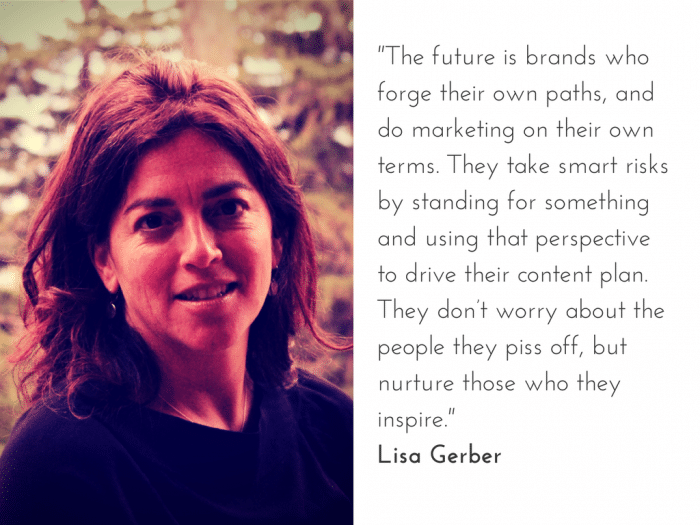
What I hope for the future is brands who forge their own paths, and do marketing on their own terms.

They take smart risks by standing for something and using that perspective to drive their content plan. They don’t worry about the people they piss off, but nurture those who they inspire.

Because when they take take that stance, they come from a place where they are creating from the heart; and it shows. In quality and substance.

Lisa Gerber on the Future of Content

As technology improves, our consumers expect a more personalized experience. Search engines are lagging when it comes to this because we’re still getting results based on who is best at SEO, not what is best for me, as a searcher.

So we’ll start to see better curated content sites – much like public radio programs that work hard to bring out indie musicians; we’ll see curators cherry picking better, deeper, content that doesn’t have the following and backlinks that allow them to compete with those early adopters who have too much track record to be able to compete with.

Content and the Fundamentals

The bottom line is, as always, the fundamentals remain the same. We need to continue to create helpful and relevant content.

Lisa Gerber on the Future of Content (1)

The difference is we’ll have to rely on other channels outside of search engines to get in front of audiences by building relationships with influencers and networks.

Which isn’t much different from present day.

Lisa GerberAbout Lisa Gerber: Lisa Gerber is the founder of Big Leap Creative Inc., an integrated marketing and communications company in Sandpoint, Idaho. Lisa is on the perpetual search to balance happiness with ambition. Read more from Lisa on the Big Leap Creative blog, or connect with her on Twitter @LisaGerber.
image: Emerson

Other posts in this series:

  • The Future of Content Part 1: with Clay Morgan
  • The Future of Content Part 3: with Richard Becker
  • The Future of Content Part 4: The Return to Pure Blogging

The Future of Content Part 1: with Clay Morgan

Content

As content continues to become an ever-important staple for businesses of all shapes and sizes, I thought it’d be interesting to share some thoughts on what the future of content might look like.

However, instead of?sharing just my own thoughts, I wanted to bring you what the future of content looks like for some of the folks I look up to and respect in this space.

Starting today, this series will bring you some of the web’s most critical thinkers when it comes to content – hopefully you’ll enjoy reading as much as I did, and these thoughts will spark ideas of your own on what the future of this thing we call content looks like.

Today’s thoughts come from Clay Morgan, Vice President of Operations at Arment Dietrich.

Content and Standing Out from the Crowd

In one of her recent speeches, Gini Dietrich said there are about 152 million blogs.

That?s just blogs.

It doesn?t include news sites that are generating tons of content or the millions (billions?) of websites that have some type of content on them. That means standing out from the crowd is going to be more and more difficult.

Clay Morgan on the Future of Content

I think there will be increased focus on how the content is presented, and I?m talking beyond design.

  • Is it written, and if so, long form or short form?
  • Is it video or audio?
  • A slideshow?
  • Infographics?

Something I think about is songs. I can?t sing, but children?s television has successfully delivered good content via songs for decades.

Should people look at packaging their content as other forms of art? Photography? Illustration? What about fiction writing? After all, children?s authors have used fiction to teach children for decades.

The point is, whether we see it or not, I think we should really get creative in our approaches when it comes to presenting our content.

Content and Distribution Channels

Right now as I write this, the girls are in Vacation Bible School.

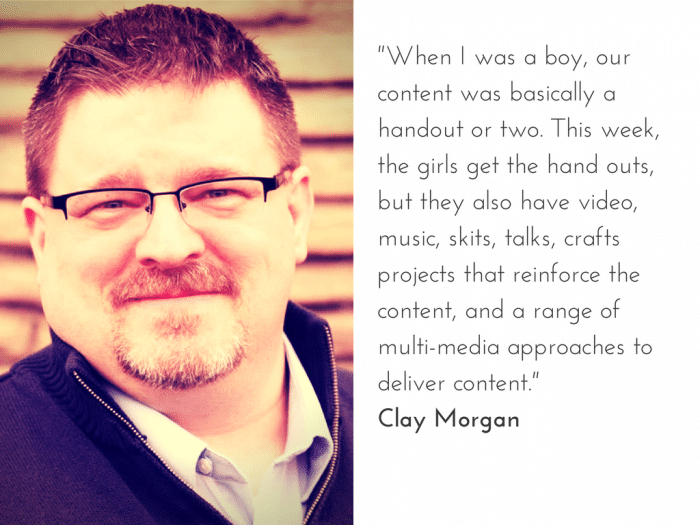
When I was a boy, our content was basically a handout or two. This week, the girls get the hand outs, but they also have video, music, skits, talks, crafts projects that reinforce the content, and a range of multi-media approaches to deliver content.

The content is being delivered in many different ways, and they are ways to which the children respond. Just something to think about.

Clay Morgan on the Future of Content Approach

The second thing I think (or hope) we?ll see is an increased focus and an increased sophistication in terms of distribution. There are large companies telling people that if they create a landing page or a blog, and post x amount of content each week, they will organically gain more sales leads than they know what to deal with.

Funny how ?organically? and ?magically? sound very much alike.

Organic growth is the result of strategy, planning, implementation – in other words hard work. There are no magic bullets and if you want your content to get to the right people, you have to hand it to those people.

I think we will see more people realize they need more sophistication and more strategy when it comes to distribution, if for no other reason there is so much content being developed.

Content and the “Smaller” Blogger

It is going to be critical for small bloggers to think about distribution.

Clay Morgan on the Future of Content Distribution

They will need to be very strategic in the use of SEO, email marketing, RSS feeds, social media, and other tactics in order to break through the domination of content offered by major bloggers and companies with deep resources.

The idea of organic growth through this type of strategic approach always reminds me of my aunt.

She?s quite a successful romance novelist. She works with a major publisher and has a real following. She?s one of the ?hot new stars? in romance fiction and an ?overnight success.? What she tells people is it took her 10 years of hard work before she became an ?overnight success.?

Organic growth always has hard work behind it. Always.

Clay MorganAbout Clay Morgan:?Clay Morgan is the vice president of operations for Arment Dietrich and is based in Nashville.

He believes if you can?t deliver content to the right people, and if you can?t make money off it, content will never be king…or queen.

He?s a husband, foster father, and has two cats and an unexpected fish. You can read more from Clay on Spin Sucks, or connect with him on Twitter and/or Google+.

image: Emerson

Other posts in this series:

  • The Future of Content Part 2: with Lisa Gerber
  • The Future of Content Part 3: with Richard Becker
  • The Future of Content Part 4: The Return to Pure Blogging

Three Non-Business Books for Your Summer Reading

Metrics

The other week, Gini Dietrich?published a blog post sharing her summer reading list. Since Gini normally pinches my ideas (she does!!), I thought it’d be nice to turn the tables and steal one of her ideas instead. 🙂

While I’m a big reader of business books – especially ones that make you think versus those that just repeat the same stuff you could find anywhere – I also love to take time out and really dig into some good fiction / non-fiction, non-business books.

It’s been said that to really develop your business brain, you need to read fiction and understand how its flow and narrative can help improve your business strategy.

So, with that in mind, here are three books I’ve read recently that should really be on your bookshelf, complete with my Amazon reviews to give you an idea of what to expect.

Try Not to Burn by Michael Matula

Try not to burnI gave this book a 5-star rating on Amazon, and quoted it as, “Quentin Tarantino Meets Clive Barker in Hell City”.

Here’s the review.

There are very few books that keep me turning the page the way “Try Not to Burn” did. From the very first scene-setting of violent death to the cliffhanger ending, this is a book that truly delivers in spades.

The reason? Simple – characters you invest in, hugely descriptive set-pieces that place you right in the thick of the action, and a plot that builds nicely into something much bigger than the original premise.

In the Gral, Matula has created adversaries to rival the best of Clive Barker’s “Hellbound” demons, and they’re just the beginning of the troubles facing our three main characters. And it’s the steady growth and unveiling of these three characters, and the strengths and flaws they bring to the table, that adds extra weight to an already excellent novel.

If you like your horror/fantasy tinged with sci-fi and a sliver of a bigger mythology at play, “Try Not to Burn” will NOT disappoint. Highly recommended, and please get to publishing the next book, Mr. Matula!

All I can add to that is, buy this book today. Seriously.

An Eagle’s Heart by Scott Butcher

An Eagle's HeartAnother 5-star rating on Amazon, this book couldn’t be more different from Try Not to Burn. A children’s book for everyone still a child at heart (or who simply loves great storytelling).

Here’s the review.

When I was a child growing up in Scotland, one of my favourite books was Watership Down. I loved the way Richard Adams shared animals (rabbits) in their natural habitats, while still offering a tale through eyes that we (humans) could enjoy. It also educated me in the hierarchy of nature.

In the book An Eagle’s Heart, Scott Butcher has perhaps written the closest thing to Watership Down while still standing on its own. The tale of two small birds that show strength and loyalty beyond their size, An Eagle’s Heart is a book that is truly for all ages (though some scenes may be a little distressing to younger children).

The way Butcher builds the characters, teases the story out until you realize you’re at the end before you know it (always the sign of a great tale), and how he weaves between the animal story and the human story running alongside makes this a new classic in the vein of the 1972 book from Adams.

On a blog post announcing the book, one commenter mentioned it reminded him of Watership Down, and this seemed an apt comparison for this review.

If you like books that educate in the ways of nature, while telling a gripping story that rewards loyalty, bravery and – above anything else – standing up to help others who need it, then An Eagle’s Heart will probably become one of your new favourite books.

An instant classic – congratulations all round.?

You can buy An Eagle’s Heart in multiple formats (for your preferred eReader) here.

Starting Over / Standing Up by Jaclyn Aurore

Starting OverFirst, a disclaimer – Jaclyn Aurore is my wife. Having said that, these two books surprised me. One, because I never knew Jaclyn could write so well (my bad!), and two, because they’re essentially Young Adult Fiction / chick-lit books. Not my genre at all! But I am so glad I read them.

The first two books in The Starsville Saga, not only do they have strong, believable characters, but I caught myself with goosebumps, a tear in my eye and lump in my throat many times.

Standing UpMy review of the first book.

While I don’t normally read YA, I am a fan of books that deliver characters as much as plot and this book didn’t disappoint.

While I’ve (rightly or wrongly) usually perceived YA as “kids’ books”, I’ve recently delved deeper into the genre, thanks to the likes of The Hunger Games and the Percy Jackson series. This book is a great addition.

It tells the dark history of a troubled girl named Maxine, who has essentially disappeared inside herself from her abusive upbringing. But this isn’t a straightforward girl-with-troubled-past-sees-light type of scenario; there are lots of tests for Maxine to go through, both physical and emotional.

How she gets through them, and how she relates to the people that help her do so, is where this book’s strength comes in, and leaves you on a cliffhanger just when you thought everything was going to end happily ever after.

Whether you normally read this kind of genre or not, if you enjoy books that grab you and truly make you want to keep reading until you’re done, you’ll enjoy both of these books.

You can buy Starting Over here, and Standing Up here.

And there you go – three (okay, four) books that I can’t recommend highly enough if you need some summer reading. I hope you check them out, buy, etc., and if you do, I’d love to hear what you thought of them.

Enjoy!

Support independent authors like Michael Matula, Scott Butcher and Jaclyn Aurore – visit their websites below and find out more about them and their other books.

  • Michael Matula
  • Scott Butcher
  • Jaclyn Aurore

image: Doug Wheller

  • « Go to Previous Page
  • Page 1
  • Interim pages omitted …
  • Page 58
  • Page 59
  • Page 60
  • Page 61
  • Page 62
  • Interim pages omitted …
  • Page 283
  • Go to Next Page »
© 2026 Danny Brown - Made with ♥ on Genesis