• Skip to primary navigation
  • Skip to main content
Danny Brown

Danny Brown

podcaster - author - creator

  • About
  • Podcasts
  • Journal

Latest posts from Danny Brown

Enjoy the latest posts from Danny Brown, and feel free to add your own thoughts in the comments after the post.

How to Build the Trust You Need for an Engaged Community

Trust

This is a guest post by Martin Edwards.

Building an online community takes time.

You’ve worked hard, you’ve built a good-sized following, and the likes are growing nicely.

But something?s not right.

You post links to your content regularly and even pay for ads to keep the likes building.

But no one is visiting your sales pages.

Signups on the email list are sluggish.

You?re tweeting your heart out but no one seems to notice.

Why doesn?t your ?community? seem to care about your brand?

What You Have is Not a ?Community?

Social media can help you build a huge collection of people around your brand.? You?re plugged into the global market, after all. What you?re hoping for is a crowd of devoted fans who will share your message with the world.

People can be quite obliging with the like button in return for a free T-shirt, but they may well be wearing your competitor?s T-shirt tomorrow.

You can get followers. You just follow a bunch of people and they?ll follow you back. You?re impressed with the number of key influencers with a Klout score to die for in your network.

So why isn?t anyone even sharing your content?

It?s your ?community.? You built it; you own it; so why can?t you influence it to do your bidding?

Tinu Abayomi-Paul?s recent post The Value and Meaning of Community in Marketing explained why attempting to command a community is fraught with pitfalls.
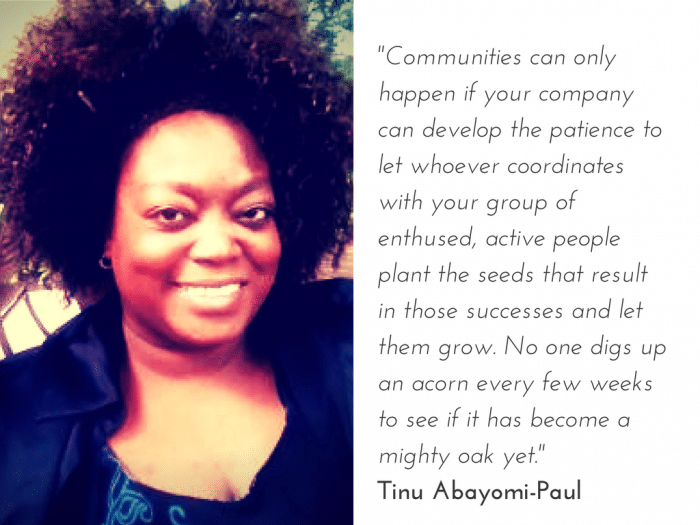
Tinu on community

Real people can be cynical, critical, capricious and fickle.

One foot wrong and it falls apart.

The fact is, in the cold light of day, you can?t own a community.

What you have probably isn?t even a community.

Likes and follows do not a community make!

The Crucial Insight That Holds the Key to Influence

To influence your community, you must build trusting relationships with the influential leaders of other communities.

Your community is not just your immediate fans. It?s far more than that. Understanding what actually creates a community will help you share your message several layers deep into the social ecosystem.

Think network rather than broadcast.

Just before you go rushing off to grab the latest Klout scores of everyone you know, you must understand how the complex trust structure of community decision making holds the key to influencing them.

Online Communities are Complicated

When we look at online communities, we tend to be looking at interest groups that are led by an authority.

The members of a community refer to authorities when they make decisions.? They calculate the level of trust they hold against the risk from the consequences of getting the wrong advice.

When trust exceeds risk, these authorities will be influential.

In the world of social media, these interest groups can be created at a moment?s notice by a trending hashtag for instance.? An authority may be influential for a few days when the conditions are right, but as the context changes, attention moves elsewhere.? Perhaps a development reveals an ulterior motive.

Trying to pin down this complex, constantly shifting pattern is a challenge.

An authority only becomes an influencer if they can create the desired action.

The ?Paths of Influence? That Lead to Your Sales Funnel

So identifying influencers is not just a matter of looking for authorities with a large number of followers. You must study the deeper structure of their trust community.
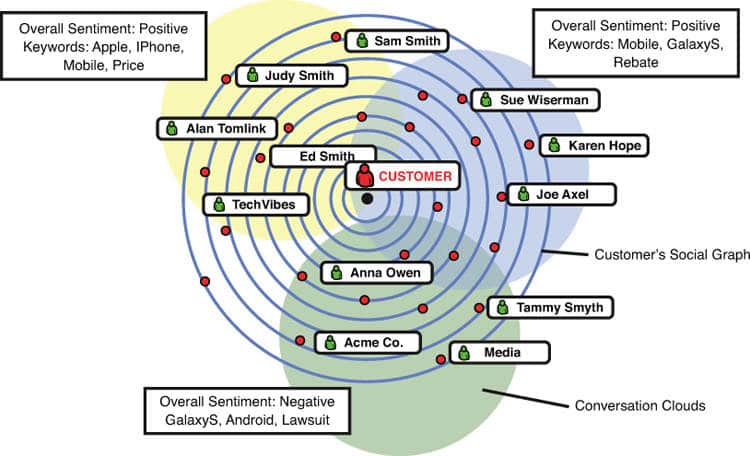
Customer influence and advocacy

For a large campaign, you could analyze the conversations around a particular buying decision and try to target only those who are open to influence. With current Big Data analysis tools, this is feasible if expensive and a tad intrusive.

As a more sociable alternative, you can look at the behavior of your audience. Those that engage with their audience and share your messages may well have the desired influence further down the path. There will be several people who overhear a discussion, read a post and put in an order or they may just re-share your message. You are revealing these paths of influence by testing your community?s reactions to various stimuli.

An influential leader may be a useful starting point, but the real influencers will almost certainly be further along the path of influence.

Wouldn?t it be nice to create these paths rather than having to find them?

The Secret Sauce That Creates Paths of Influence

In our social media connected world, the way we do business is changing rapidly.? You can make thousands of connections and build them into trusting relationships. You can present your brand to the world and make it easy for people to buy. You remove as many of the disruptors from the sales funnel as you can.? At the end of the day though, you can’t possibly cover all the bases.

Fortunately there is a way of amplifying your efforts so that the people who want to buy can put their hands up, the ones that want to share have the support and motivation they need and you get a community to work with.

Teamwork!

Talk to people, engage and collaborate.

That is what the social bit in social media is all about.

People like to test their trust bonds in safer waters. Every opportunity you get to prove that you and those around you can be trusted, the stronger those bonds will be.

The following are a few examples that will help you get people joining in:

  • Start a Twitter #tag group, set up a blog to go with it and have set times for participation.? The blog will help crystallize the best contributions and provide topics for discussion. Get people together to share their knowledge. To see an example drop in for a virtual coffee at #elevensestime sometime.
  • Invite specific people to write guest posts for your blog; they will bring all the people they know to read, comment and share.
  • Set up some collaborative games ? Firepole Marketing recently mounted a successful scavenger hunt that encouraged entrepreneurs to cooperate on many of the challenges. It was a free and public learning experience and really consolidated their community.
  • Publish interviews with some of the people who are most active in the communities you want to work with, and set up a Google hangout once a week to discuss a live issue.

All of these activities will build the trust that establishes your authority, but more importantly they will build the authority of the people around you.? These are the ones with the right attitude. These won?t be the big shot celebs — they?ll be too busy being awesome elsewhere.

No, these are the people who engage with their communities.
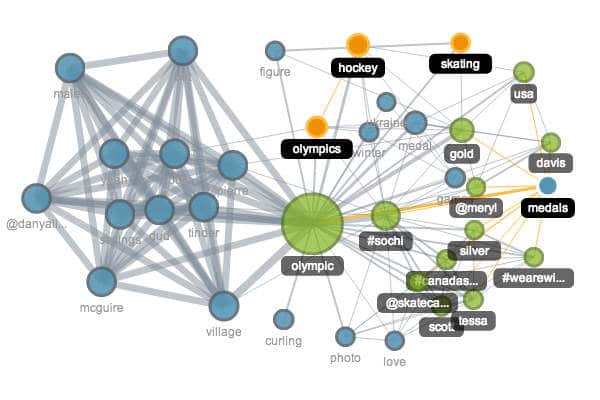
Data visualizerThey won?t necessarily be in the market to buy your product, but they will share your branded content if it covers an area of interest they are comfortable with.

Publish or share a wide range of content and these people will come to you.

Make it easy for anyone who has an interest in your content to get to the edge of your sales funnel and your community will do the rest.

So Let?s Get Together and Build That Community

Community spirit is a wonderful thing. There?s a world full of examples of people working together to make a difference. Some are genuinely altruistic; others sponsored by brands for the publicity but still doing a service to the community.

It?s up to us to decide what we are comfortable with.

It?s easy to be cynical.

People may doubt your motives as the brand at the center of an initiative, but authentic collaboration and a willingness to share the risk by engaging with your audience will win your community?s affection and trust.

People may say,

Real marketing is about targets and ROI.

or,

There isn?t the budget for this sort of approach.

This is true. It?s going to be tough to measure in the short term.

The real value of collaborating with a trusting community will, like a fine wine, take time to be appreciated.

And just like a fine wine, it is well worth the wait!

Martin EdwardsAbout the author: Martin Edwards is a web developer and social media consultant with The Canonbury Consultancy, helping writers, entrepreneurs and start-ups build lean & agile businesses using the wealth of low-cost tools that are now available online. You can get to know more about Martin at his blog MartinSocially.com and on Twitter, G+, and LinkedIn.

image: Kurt Qvist

Here’s to You, Dads – Happy Father’s Day

dads and father's day

To all the dads, dads-to-be and dads no longer with us – here’s to you. Thank you for all you do.

image: Paula Bailey

Endemic Cultures and Why We Need More Logical Indians

Culture of ignorance

If you keep up with world news, you can’t help but have read (and hopefully been horrified by) the heartbreaking and anger-inducing stories coming out of India with regards the recent rapes and hangings of Indian women.

Last month, news broke (with accompanying graphic images) of two teenage cousins who were gang-raped and then hung from a nearby mango tree. Five men were arrested for the crime – but only after relatives of the girls refused to let their bodies be cut down until police investigated.

Where the crime was exacerbated (if that’s even possible) is that two of the five arrested were police officers, who refused to help the families when they reported the girls as missing.

Even as the horrors of this crime were still fresh in the minds of those in the village of Uttar Pradesh where the rapes and murders happened, two more reports came out of identical crimes involving a woman in her 40’s and a 19-year old girl.

Tragically, these stories are nothing new. The world was outraged in 2012 when a 23-year old woman was gang-raped on a bus for almost an hour, beaten and then thrown to the side of the road to die. She later died of her injuries in hospital.

In 2013, three young sisters – aged only 7, 9 and 11 – were raped and murdered after disappearing from their school. Much like the other rapes, family members speak about the lack of gravity given to the cases by the police, who initially dismissed the deaths as accidental.

These are just the stories that make the news – external sources believe the numbers are in their thousands, if not more, with the perpetuators (and those that should be protecting the women of India) truly believing nothing wrong has been done. At least, not by the men…

Endemic Cultures and the Power of Belief

Much like many ancient cultures, India has a complicated history of women often being seen as second class to their male counterparts.

While the Hindu faith places women on an equal status?(and blames Muslim and western intervention for the change in mindsets),??the crimes committed in Uttar Pradesh and other parts of India highlight how some parts of India view women.

Some of this stems from the Dowry. Originally a transactional gift when the daughter of an Indian family was married, a dowry (or “street dhan”, its original Indian name that was replaced by the European-born dowry) could be cash, real estate or something else that had financial value. This enabled the women to enter the marriage as an equal, and able to support herself.

As the economic structure of India changed, so did the value of the dowry. Instead of giving equality to the bride, the dowry became something the husband used for his own personal gain.

  • If the woman gave birth to children, the husband could demand more money from his wife’s family;
  • If land taxes were raised, the husband could demand more money to pay for those hikes, in order to keep his wife housed.

If the wife’s family could not meet these new financial demands (and many couldn’t), this would often lead to abuse by the husband, leading to countless suicides. If the wife didn’t commit suicide, many husbands “simply” murdered them, often by dousing them in petrol and setting them alight (known as “dowry burnings”).

This culture of male empowerment led to the introduction of the Dowry Prohibition Act in 1961. Sadly, despite amendments to the act, the practices of dowry killings and abuse are still common and widespread throughout India, with more than 8,200 reported in 2012.

The culture of men being superior and having more rights than women isn’t restricted to “honour killings” and abuse such as those inflicted through dowry arrangements. Forced marriages are common even when not in India – the culture and mindset transcends the locale.

When a cultural mindset is so endemic, how can we change it? Can we?

The Logical Indian and the Road Forward

One way is to understand that cultures are not defined by the endemism of some of that culture’s subsets. A perfect example in the case of India and the recent outrages is The Logical Indian.

While the recent atrocities committed in Uttar Pradesh and elsewhere highlight much of what is wrong with a culture that holds women and female children in such disregard, The Logical Indian shows that this is not a universally-held mindset.

Their Facebook page is an educational (and eye-opening) resource for stories that may otherwise be missed by the mass media. These are strengthened by powerful images that stop you in your tracks – like this one about labeling women.

Women labels

Or this one, that highlights exactly why the battle to change mindsets and cultural upbringing is such a long one. After all, when your elected leaders and officials think there’s nothing wrong, what hope is there for the common voice to be heard?

Indian leaders rape beliefs

This is why The Logical Indian is so important. If you visit their Facebook page, you’ll see that it’s not only the page owner(s) that are pushing thinking beyond that which is widely accepted today.

Commenters, too, are sharing outrage, and frustration, and anger, as well as their own stories. Take a look at the comments from the image above, many of which come from men appalled and disgusted by not only the views of the politicians, but those of their “fellow men”.

The Logical Indian tackles many issues that, often, are left unreported or – worse – viewed as the acceptable dangers of making a profit. Like the 25 children, aged between 6 and 13-years old, that were rescued from dangerous working conditions in a residential building.

Kids India rescue

What’s equally empowering about this story, in addition to the highlighting of the rescue and the bigger story of economics and profits behind it, are the words that The Logical Indian posted beside the picture.

This is something which one can emulate all over the country where a vigilant citizen, a group of dedicated volunteers, administration and the government together rescue 25 children from a hazardous factory.?Our dream of freeing India from the clutches of social evils can be fast tracked when we take up responsibilities into our own hands.

It’s this belief that we still can change and – more importantly, have the power to make that change – that gives hope that this can happen not only in one culture, but others that are becoming “the norm”.

Culture is Not Defined by Religion

I’m wary, for want of a better word, of concentrating on the example of India and the stories and atrocities shared in this article. India is a beautiful, historical country with much to admire.

My goal with writing this is not to demonize a country, or faith, or culture, but hopefully encourage conversation around endemic mindsets and how we can change. This is equally true of other “cultures” that are becoming more pervasive and common-place around the world.

Take gun culture, for example. Using Tumblr to answer questions from young Americans about the seemingly-daily news of yet another shooting in everyday America, President Obama shared his shame and fear of what his country has become. From that address,

No developed nation on earth would put up with mass shootings that happen now once a week and disappear from the news within a day ? no nation except America.

When asked about the recent tragedy near the campus of the University of California, and the painful ?image of the father of one of the victims talking about his son’s death, Obama stated,

As a father myself I just ? I couldn’t understand the pain he must be going through and just the primal scream that he gave out. Why? Why aren’t we doing something about this?

Why indeed.

The growing fears around rapes at universities and campuses also highlights why endemic thinking offers excuses for the guilty and little protection and comfort for the victims.

High profile stories about Stanford and Cornell?(and the inaction and lack of severity initially afforded to the cases by officials) are cited as being just the tip of the iceberg for young women attending college or University in America.

Rape culture

When TIME Magazine published a piece suggesting “rape culture is hysteria”, it was quickly countered (also in TIME) by political analyst and speaker Zerlina Maxwell.

In her piece, Maxwell shares examples from a Twitter hashtag she created, #RapeCultureIsWhen, that offer powerful rebuttals to the earlier TIME piece.

  • Rape culture is when women who come forward are questioned about what they were wearing.
  • Rape culture is when survivors who come forward are asked, ?Were you drinking??
  • Rape culture is when people say, ?she was asking for it.?
  • Rape culture is when we teach women how to not get raped, instead of?teaching men not to rape.

It’s not just America, either. Canada – that friendliest of countries – is also finding itself in the kind of spotlight no-one should ever want to be in, including?a high profile case surrounding the University of Ottawa hockey team.

Rape culture a result of media hysteria? Clearly…

Where Do We Go From Here?

As I mentioned in the previous section, my goal in writing this particular post isn’t to demonize a culture, at least not from a religious point of view. Nor do I want to suggest that the actions shared in this piece are systematic across the various cultures and countries.

But there’s clearly a cultural problem when actions that would normally create instant outrage are in danger of being shrugged aside as “just another day or example of what’s gone before”.

I’m not a politician. I’m not smart enough to be a cultural analyst or behavioural scientist. I don’t profess to know what the answers are to the various topics discussed in the words on this page.

But, much like folks behind The Logical Indian, I am a human being that wonders just where we’re taking our planet and those souls that inhabit it. Have we truly set ourselves on a path that’s too late to recover from? Have our mindsets – and, by association, culture – already been irrevocably damaged beyond repair?

Or can we still effect change?

The Logical Indian thinks we can. So do amazing people like Debbi Morello, Amy Vernon and?Amanda Quraishi, who highlight the news that we’d otherwise miss and work tirelessly to educate and share the bigger stories and pictures.

What about you? Where do we go from here? How do we truly effect change? Can we?

The comments are yours – let’s have an honest discussion.

image: Alain Bachellier

Six Easy Metrics to Measure an Influence Marketing Campaign

Influence marketing metrics

Measurement is one of social media?s key advantages over traditional marketing and advertising.

Prior to social media?s rise as an essential business solution, marketing campaigns were primarily through print, media including TV and radio, and direct mail. The use of flyers, posters, billboards and print editorials were the staple method of promotion, often complemented with radio spots or television ads.

The main problem with these methods is that it was difficult to pinpoint which ones were working and driving foot traffic to a brick and mortar store.

  • If a business sent 10,000 flyers out, how could they guarantee their intended recipients saw all 10,000?
  • Or if a radio spot played during a certain time of day based on that radio station?s demographics, how could the brand be sure a certain percentage of that audience heard and acted on that ad?

The answer to both questions is simple ? they couldn?t. If there was increased foot traffic to a location or more calls to a call center for a company?s information pack, more often than not the source of that referral was virtually impossible to identify.

Social media changed that.

The ability to create extremely targeted campaigns, combined with platforms that measure which networks and content create the most return on investment, has made social media a key part of every smart business owner?s toolset.

This ability to measure business results is easily transferrable to measuring influencer results ? the difference is in what, and who, you measure.

Measuring the Brand Metric

There are two core metrics that brands need to measure in any influence marketing campaign. The first is the Brand Metric.

Investment

The investment metric is the pre-campaign cost of researching which influencers are right for you by identifying Micro and Macro Influencers; how much it costs to set the program up; and using that as a barometer against how much return (financial or awareness) you experienced.

Resources

The financial investment of an influencer campaign involves more than pure monetary costs. Resources like manpower (how many employees are needed and how many hours they need to allocate to the campaign) and education (how much time you need to allocate to train each influencer on your product and company culture) also need to be measured and added to the bigger financial investment.

Product

To encourage an influencer?s audience to connect with your brand from a lead generation or purchase decision angle, free samples of your product need to be made available to the audience as well as the influencer. Test or demo areas may also need to be set up for more technical-led products or software.

The cost to your company for the amount of products sent out, coupled with the hosting costs of the demo area online, need to be factored into the overall financial investment of the campaign.

Measuring the Influencer Metric

In addition to measuring the Brand Metric, the second key metric to track is the Influencer Metric, which can be broken down into three key areas.

Ratio

The biggest problem many brands have when it comes to results from social scoring platforms is the ?influencer? targeted is simply another number in a database with a large following and an amplified voice online. This lack of differentiation is guaranteed to provide poor returns.

Purchase life cycle paths

Instead, the ratio of community to followers is key ? a thriving, interactive community that reacts to an influencer is far more important than higher follower numbers. It?s these qualitative reactions that provide a higher propensity of actions taken by the influencer?s community.

Measure how many reactions an influencer is receiving when sharing your message as a percentage of their overall following to extract a more exact return on that specific influencer.

Sentiment

Every marketing campaign, whether online or offline, succeeds primarily for one main reason ? the perception of that campaign and the buy-in of the audience.

Using the same metrics to measure your influencer campaign will allow you to understand the sentiment around the brand message, and how the target audience perceives both your brand and the campaign itself. It also allows you to quickly identify areas that upset a certain demographic and amend the message accordingly, or instigate a crisis communication response if needed.

Additionally, you can see which influencer receives a favorable reaction and adoption, allowing you to increase awareness around him or her and helping improve the perception of a less well-received influencer.

Effect

The most valuable barometer to showing whether an influencer campaign has worked or not is the effect it has on your brand.

From a brand awareness point of view, measurement needs to include:

  • traffic generated to a website, microsite or landing page;
  • how many times your brand or product is mentioned online and how many people recognize your name when mentioned;
  • how many new fans or followers you accrue on the social networks your brand is on;
  • how many white papers or fact sheets were downloaded from your website;
  • and how many new subscribers you receive to your company blog or newsletter.

From a more dedicated business angle, it?s much more straightforward:

  • how many new inquiries did your inbound sales team receive;
  • how many referrals did your direct sales team receive;
  • and how many sales were directly attributed to your influencer?s work with their community.

Depending on your product or service, the purchase cycle of your customer may be a longer one than the duration of your campaign ? include a plan to continue measuring the effect of the initial influence campaign on this purchase path.

Customer influence and advocacyMoving Beyond the Metrics

While by no means exhaustive, both the Brand Metric and the Influencer Metric measurement examples are key parts of any kind of influencer campaign your brand partakes in. Each metric is a guideline to the core information that needs to be tracked in each example ? your own brand?s definition of additional metrics will be determined by the results you?re looking to achieve.

You may only be interested in awareness, in which case you?d place more emphasis on what platforms will show most return; what new platforms you can take advantage of; where your competitors are interacting online and how you can insert your brand into these conversations via your influencers.

If you?re more geared towards pure sales and lead generation, your outreach and subsequent measurement needs to be focused more on potential ecommerce partnerships with peers and colleagues of your influence; affiliate sales programs for your influencer?s community; strategic partnerships with other businesses in your industry who can benefit from increased exposure through your influencer while introducing you to their audience.

Either way, determining the end goal allows you to chart a path back from there and identify the milestones and metrics that matter for each one. Get this part right, and your influence campaign will move from being a nice to have to becoming an essential part of the puzzle.

image: antony_mayfield

It Makes Everything You Worry About So Pathetic

Worry

We worry about the smallest things.

We worry if our boss will like us. We worry if our colleagues will like us. We worry if our online “friends” will like us.

We worry.

But the truth of the matter is, we worry about the little things. We worry about peers; about colleagues; about promotions; about the little things.

Now to some of us, we may worry about big things. But, unless it’s life-changing, how big is that worry? Truly?

Want to see real worry? Here you go.

image: Len Matthews

  • « Go to Previous Page
  • Page 1
  • Interim pages omitted …
  • Page 59
  • Page 60
  • Page 61
  • Page 62
  • Page 63
  • Interim pages omitted …
  • Page 283
  • Go to Next Page »
© 2026 Danny Brown - Made with ♥ on Genesis