• Skip to primary navigation
  • Skip to main content
Danny Brown

Danny Brown

podcaster - author - creator

  • About
  • Podcasts
  • Journal

Latest posts from Danny Brown

Enjoy the latest posts from Danny Brown, and feel free to add your own thoughts in the comments after the post.

You Don’t Have to Be Epic Every Time

Teamwork

For the last two days, I?ve been sitting at my computer itching to write something epic.

Looking at the blank screen, thinking of words I can write to convey the feeling I have inside that I need to share something epic and life-changing.

And I come up blank.

I have an inkling of what I?m about to say, and then I ask myself how it will end.

How the words that precede the final sentence will be strong enough to hook the reader to guide them to the last sentence that will, undoubtedly, change their lives.

And I come up blank.

I imagine the story I?ll tell to convey a lesson, personal or business. I imagine the memories I?ll revisit to open up demons, to help others fight their own and make it to the other side.

I imagine the emotion I?ll invoke to make readers think this is one of the most amazing blog posts they?ve ever read, and ever will.

And I come up blank.

And that?s okay ? because we?re only fooling ourselves that everything needs to be epic.

[clickToTweet tweet=”When we produce #content, we tell ourselves it needs to be epic every time. But does it?” quote=”When we produce content, we tell ourselves it needs to be epic every time. But does it?”]

Everything we put out for others to consume is already epic, because we?re opening ourselves up to critique, belittlement, and crushing disappointment if others don?t like it.

And we continue to do so, even when harsh voices tell us not to ? because all we really need is our own validation that we did the best we could, every time we hit Publish.

So embrace the blank screen. Embrace the empty mind. Embrace the still keyboard.

Because sooner or later, the next epic chapter of that which is uniquely you will be live for everyone to see.

And that, my friends, is truly epic.

The Good, The Not So Good, and Turning Both Into Great

Good

In 1983, the biggest-selling album in the US was Michael Jackson’s?Thriller, still a pop classic more than 30 years later.

The second biggest-selling album was from a relatively little-known (at the time) UK rock band called Def Leppard. The album was?Pyromania.

Selling more than 10 million copies in the US alone,?Pyromania?launched Def Leppard into the melodic rock stratosphere, and introduced music fans previously against rock into their brand of catchy hooks and excellent live shows.

The point?

Prior to 1983, Def Leppard were as unfashionable as you could get.

A British rock band that were stuck between a rock and a hard place – trying to bridge the gap between old-school heavy metal and more mainstream rock. Their albums previous to?Pyromania?showed promise but were still mired in old school thoughts.

Step up producer and songwriter extraordinaire Robert John “Mutt” Lange, who helped Def Leppard reach the potential they had always shown.

Getting them to work in new ways, be open to new ideas, and experiment with new approaches to get their song messages across more effectively.

You can do the same.

Look at what you do each day and see how you can improve it by thinking differently. Look at the old you and see what’s good and not so good, and how you can?turn both into great.

If you blog, ask yourself how you can stand out from others.

Write about the things you want to read as opposed to what you think others want to read. Take existing ideas, put your personality into them and make them your own.

If you’re a business owner, be Mutt Lange. Make your employees your band and open up the recording studio to fresh views.

You’re still the producer at the end of the day, and you’ll make the final recording, but bands also know what their fans want – give them their voice too.

Safe and steady won’t harm you – you’ll always have a comfort zone around you.

But wouldn’t you rather take a risk and see how far you can really go?

Pure Blogging and the Experience We Give Our Readers

Create an experience

Recently, I read a blog post by Jack Steiner entitled Do People Really See You? It’s an insightful read about being there when it’s important to be, and what it means to follow through on your promised actions.

The post, like many others of Jack’s, really resonated with me, and I left a comment, which I’d like to share below.

Hey there Jack,

I remember when I was eight years old, and asking my schoolteacher a lot of questions. Like, a LOT. He said to me, ?Boy, don?t you know children should be seen and not heard??

I retorted, ?Well, how will we learn??

He answered, ?By remaining quiet and not asking questions. Now, silence!?

He sent a note home with me to advise my parents I was trouble. My grandfather was looking after me for a few days, as my folks were on a small vacation (yes, kids weren?t allowed, fun?).

My grandfather was furious. But not at me.

Next day, he came to my school and collared the teacher in front of the whole class. He pointed at us kids, sat on our chairs, and told the teacher, very calmly,

“See these children? THEY are YOUR teacher. You are old, and set in your ways. They are the future, and full of wisdom we need to allow. Don?t dare tell any of these children to never ask questions again. I pay your wages. Earn them, or you will lose them.”

I?ve never forgotten that. I think he?d like your take on who really sees us and which ones we should care about.

Thanks for the thoughtful read, mate, and making me recall a major learning point in my life.

The reason I wanted to share the comment was to show you what content?should do when it’s at its purest form – the kind of pure blogging I’ve been talking about for the last few weeks and months.

Think about it for a moment:

  • When was the last time you read a blog post that carried you to a distant but treasured memory?
  • When was the last time you wrote a blog post that inspired that action?

We talk a lot about social proof being a sign of a successful blog – shares that make our work seem popular, followers that make us feel popular, subscribers that make us feel popular.

And while they’re all metrics that can help deliver the goals we want to achieve,?the real gold of this thing called blogging is the experience we give our readers.

At least, it should be.

So let’s make a promise to each other. Let’s concentrate on finding the content that moves us, and share/subscribe to?that.

Blogging – pure blogging – should be about opening up and inviting others in to share an experience. But it needs help to find the audience it deserves.

Let’s get to work.

Your Product Will Catch Me, Your Service Will Keep Me

Real time or old time

I?m a marketer by trade. It doesn?t matter if it?s traditional marketing, or digital/online marketing ? at the end of the day, the tools may differ but the trade stays the same.

Yet in a previous life, I also headed up the main call centre for the U.K.?s largest communications company, and that was based around the service side of things.

And you know what?

Service beats marketing hands down any day if you want a successful company.

You can have the greatest product; the most amazing sales pitch; the must-buy item of all time. And yes, they?ll bring in the dollars.

But that?s where they stop.

Sure, you can regurgitate a sales or marketing message into a different campaign, and call it something different. But at the end of the day, it?s still a limited experience.

Service, on the other hand? That?s the gold in the jester?s hat.

A Tale of Two Service Superstars

The other thing about?great service is it not only builds loyalty to a company, but encourages organic marketing via the advocate(s) that service has created.

You listen to a customer, and show you care about their support of your product, and they’ll be the first to share your details to friends, colleagues, family, etc., when it comes to them looking for the types of product or service your company creates.

Point in case – MeanThemes and Postmatic.

Nothing Mean About MeanThemes’ Service

Anyone that’s been around this blog for a while will know I tend to change its design more than Madonna changes “dance partners”….

It’s become a running joke, and I’ll admit to tinkering with the look and feel much more than any blogger should. But, for me, it’s all part of the ongoing evolution to present the best experience possible, for both reader and myself.

The theme?you’re looking at now (at least, if you’re on-site – if you’re reading through email and haven’t seen it, pop on over, I won’t bite!) is Myth, from MeanThemes.

Mean Themes

I’m a huge fan of the Medium approach to content presentation – large featured image, clean typography, no distraction content area. So, for me, Myth was perfect.

Setting the theme up was pretty easy, but then I ran into some roadblocks with some settings (mainly, plug-in conflicts and some drop quote styling).

Any time I wrote to Chris, one of the co-founders of MeanThemes, through their ticketing system, he was on the ball and responded within 24 hours, often much less.

Not only that, but I’m currently looking at the Lasso plug-in for front-end editing to tell stories more effectively on here, and that has some weird CSS tricks it needs you to implement.

Chris spent a week looking at the plug-in, how it integrates with themes, what CSS improvements it needs, etc, and is submitting all that info to the Lasso creators.

Now, remember, this isn’t part of the MeanThemes toolset. Nor is it really any of Chris’s concern.

The fact he took all this on board, though, and advised me to wait until his suggestions reach the Lasso team, validates my decision to go with MeanThemes and make them my de-facto go-to if/when I decide to change up my theme again.

Postmatic and the Art of the Customer Journey

I’m a huge fan of Postmatic, as anyone who’s read my blog posts over the last 6 months can attest to.

For me, they make blog commenting fun and more social again, and they make it so easy that anyone can take part and enjoy.

They’re also great at implementing updates that make sense, both from a blogger and from a reader/subscriber perspective.

Postmatic

Yet, more than that, they have one of the most awesome user support teams in place.

For example, I mentioned earlier I’d had a conflict between Myth and a couple of plug-ins. Postmatic was one of them, where the little check box to subscribe to posts wasn’t showing.

While Chris from MeanThemes helped me resolve that issue (with some CSS, then a full theme update to fix the way the theme hides labels on the comment form), Jason from Postmatic set up a test server to go through the Myth theme and see how Postmatic could help.

I also had some issues with how Postmatic’s comment plug-in Epoch (currently in beta) displayed comments when activated.

Instead of blaming a theme, or citing incompatibility, the Postmatic team worked to add new features to Epoch that meant the native styling of a blog’s theme could be adapted by the Epoch plug-in.

And to put the icing on the cake, when I borked my theme because I dropped in some rogue code, Dylan – the Postmatic lead dev – jumped in to fix it for me. On the friggin’ weekend!

To say I was impressed would be putting it mildly…

The Relationship Behind the Sale

I speak a lot about the relationship behind the sale.

I see it as a key part to any business. As I mention at the start of this post, yes, marketing and sales and advertising and all the other cool and sexy stuff is great. They?ll get you the keys to the front door.

But the real business success stories come from service.

Service is the solution to any problems or aftershocks created by sales, or marketing, or advertising. Service is the host that?s waiting to look after you once you use the keys that sales and marketing have given you.

[clickToTweet tweet=”Service is the solution to aftershocks created by sales, marketing, or advertising. ” quote=”Service is the solution to any problems or aftershocks created by sales, or marketing, or advertising. “]

Simply put, by all means, have the best sales, marketing and advertising team around. But make sure you have a superstar service team or mindset, because that?s where your customers old and new will really be.

Just like I?ll be there for Chris and the MeanThemes team, and Jason and the Postmatic team, because?they?ve made me an advocate for their brand, personal and business.

Even if I personally stop using them, I?ll still be happy to recommend their businesses.

And that?s all you can ask for your company when building service success stories. Agree?

Note: If you want a top-notch WordPress or Ghost theme with awesome support, please do check out MeanThemes. And if you want to make blog comments and engagement fun and social again, sign up for Postmatic.?

What Turns a Blog Reader Into a Blog Subscriber?

Social media speakers

There are many success metrics when it comes to blogging – number of comments, social shares, visitors, etc.

Yet one that comes at the top of most blogger’s lists is subscribers – not just the amount of subscribers, but actually turning readers and visitors into subscribers.

After all, anyone can read or share or comment on a post. Subscribing, though, is another level of commitment by a reader, and validation for a blogger that their content is meaningful.

But what turns a blog reader into a blog subscriber? Instead of offering my own take, I decided to open up the question amongst my Facebook friends, to see what the tipping point was for them.

Given they have multiple tastes and preferences when it comes to content, I thought it’d be interesting to see what the collective reasoning was, as well as individual reasoning.

Their answers are below.

The Value Proposition

Everyone talks about blogs and bloggers needing to offer value. Yet value is defined in different ways – what may be valuable to me may be the biggest waste of time for you.

That being said, a blog’s value remains key in turning readers into subscribers.

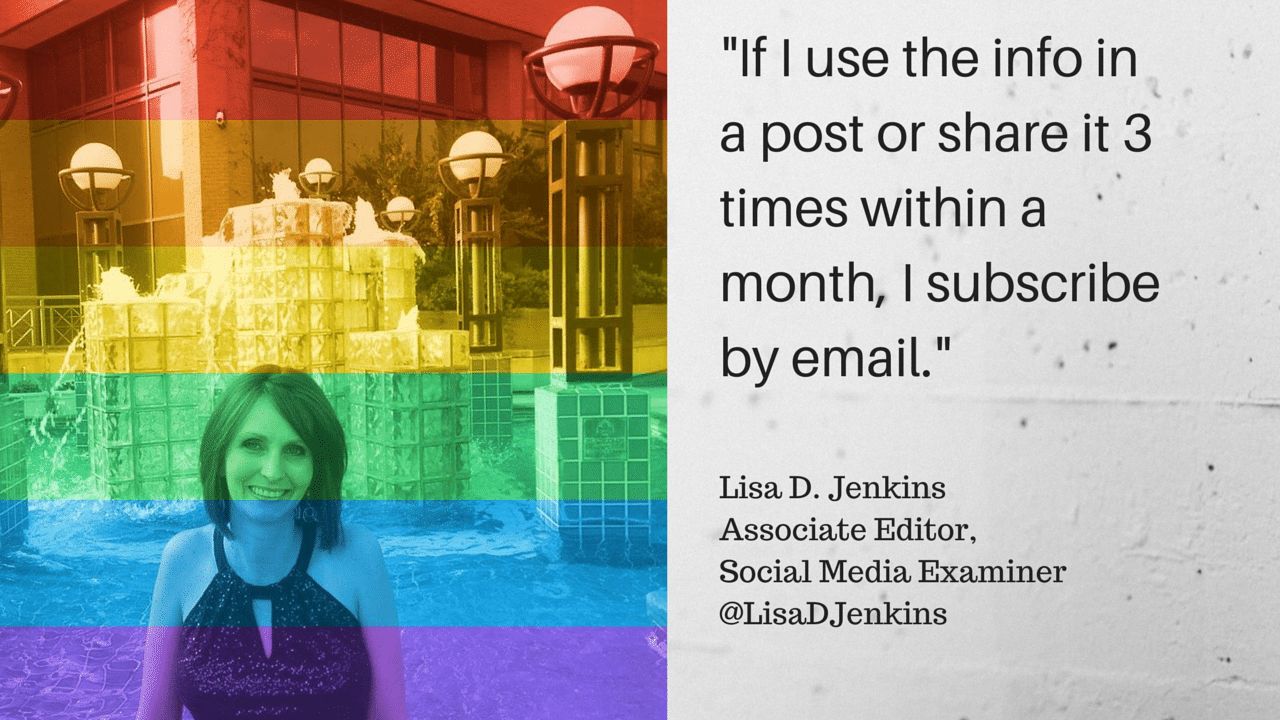
Lisa D Jenkins quote

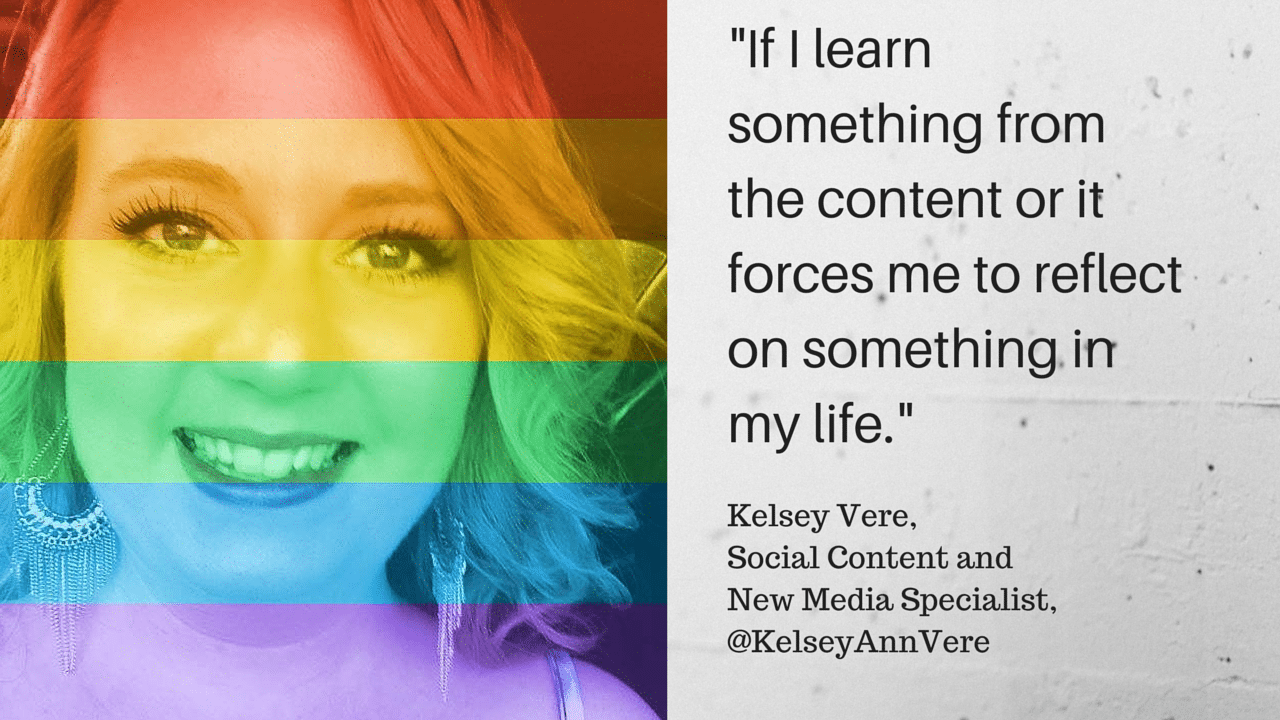
Kelsey Vere quote

Frank Strong quote

Three different people, but the definition of value remains the same – the info shared within the content needs to instill action, and be consistent in that action.

The Relationship Proposition

As someone whose moved more into personal blogging over business blogging (though I will still tie the two together), I often talk about how the relationship between blogger and reader is key for that type of content.

Yet relationships are so much more than like and/or love. They’re intrinsic to making the switch from reader to subscriber.

Amy Tobin quote

Nancy Davis quote

Paula Kiger quote

In the past, I’ve spoken about the “relationship to the sale” – it’s clear if you want to “sell” your content to a subscriber, the relationship with that content is core when it comes to a reader jumping into the subscriber boat.

The Voice Proposition

We’ve all heard it – “you need to find your voice”, “your voice matters”, “why you need to have a strong blogging voice”, etc. We hear it so much, the importance of what exactly your blog voice is, and why it matters, is lost.

But if you want more subscribers, having a voice is essential.

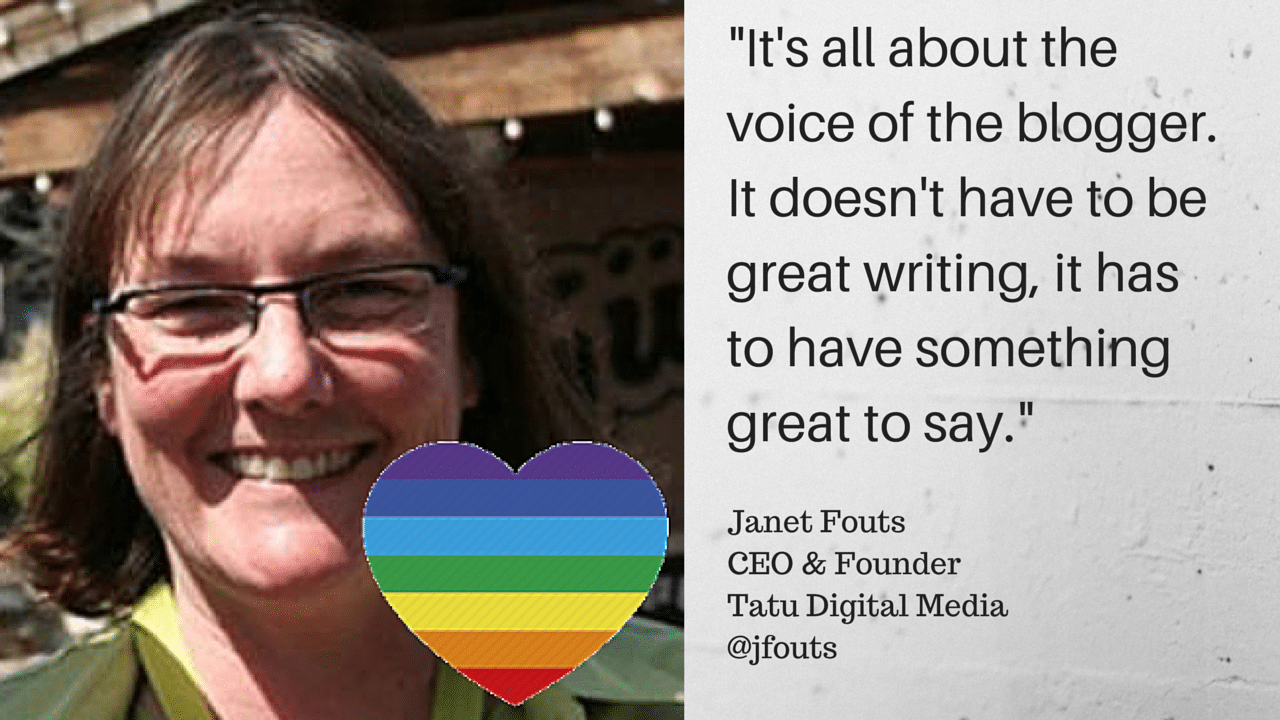
Janet Fouts quote

Brian Meeks quote

Liz Scherer quoteWhether it’s the way the blogger “speaks” to us, or the way they describe something in a way no-one else really does, that “voice” is an important piece of the reader-to-subscriber puzzle.

The Variables Proposition

Of course, if it were as easy as getting three things “right”, we’d all have tens of thousands (if not hundreds of thousands) of subscribers, whether by email or RSS, right?

But there will always be the variables – the subscribers who decided to make the jump after finding something to their liking that others may not have considered.

While not as clear-cut as style, originality and voice and how they sway a subscriber’s decision, these variables still play an important role in making a reader a subscriber.

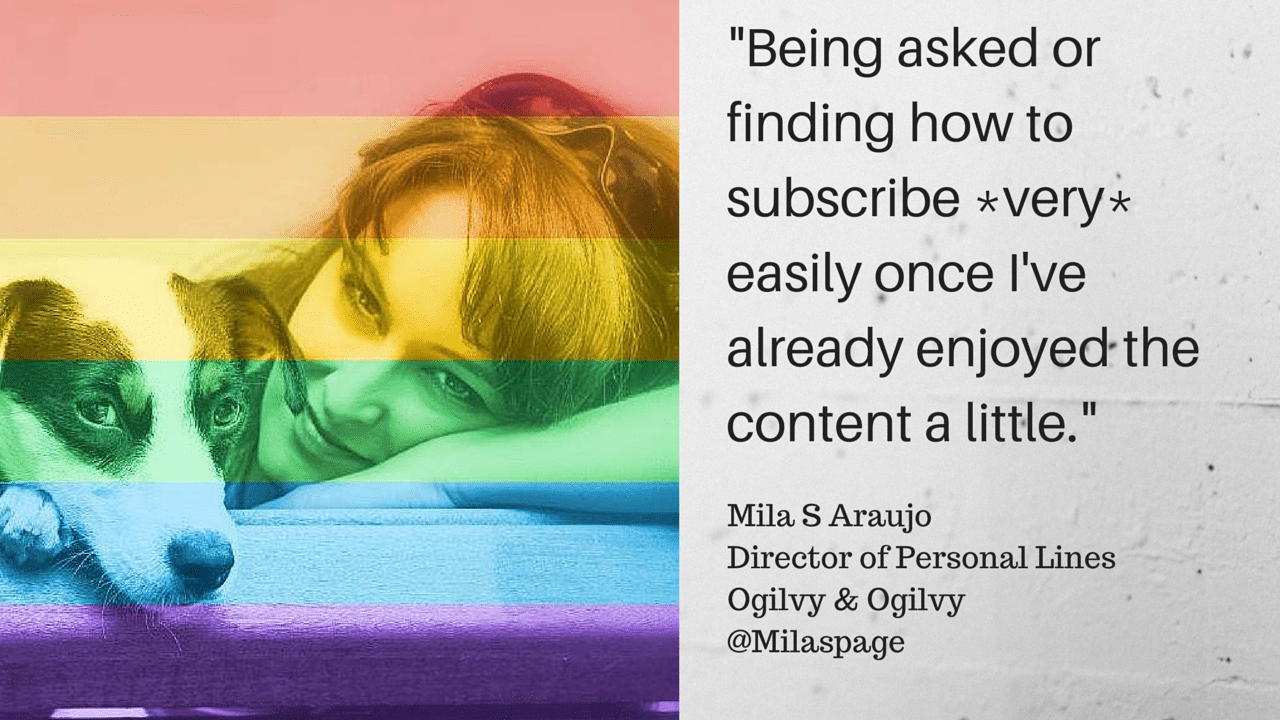
Mila Araujo quote

Clay Morgan quote

Tinu quoteThe three quotes above are quite telling, in that you’d think they’d be so obvious that every blogger is already doing them. But you’d be surprised.

To Mila’s point, I can’t tell you how many times I’ve landed on a post, really enjoyed the content, and only found an RSS option to subscribe (I’m an email guy).

Or to Clay’s point, while you don’t need to be specific about one topic, do be specific about the content, its goals, and how it will help the reader once subscribed.

And to?Tinu’s point – a quest for blogging greatness is impossible, no? After all, we can’t publish greatness every time, can we? Except we can – make every post something you’d want to subscribe to, and that will come over to your reader.

Make Them Want to Subscribe

I’ve shared 12 examples here of what my friends look for when deciding to subscribe to a blog. Each of the categories and reasons are valuable, and come from people who have been in the content “business” for years.

The great thing is, even with multiple viewpoints and decision-making methods, one thing is abundantly clear – you have to make your reader want to subscribe to your blog.

Content, voice, relationship, variables – individually, great reasons to subscribe. Integrate them, though, and you’ve pretty much covered any uncertainty over whether you’re a good subscription choice or not.

Mission accomplished.

  • « Go to Previous Page
  • Page 1
  • Interim pages omitted …
  • Page 42
  • Page 43
  • Page 44
  • Page 45
  • Page 46
  • Interim pages omitted …
  • Page 283
  • Go to Next Page »
© 2026 Danny Brown - Made with ♥ on Genesis