• Skip to primary navigation
  • Skip to main content
Danny Brown

Danny Brown

podcaster - author - creator

  • About
  • Podcasts
  • Journal

Latest posts from Danny Brown

Enjoy the latest posts from Danny Brown, and feel free to add your own thoughts in the comments after the post.

Stop Playing the Sympathy Card

Boo hoo life sucks

Boo hoo life sucks

Being in business for yourself is difficult.

Sure, you don’t have to answer to a domineering boss. Nor do you have to venture to a drab office on a biting cold day to be bitch-slapped by that same domineering boss. You’re also in the fortunate position of choosing the people you work with, as opposed to having them forced on you.

But it can also be difficult.

You lose the guaranteed paycheck. The company healthcare plan. You have to fend for yourself and not have someone else bring work to you. You have to have buy-in from your loved ones, because they suffer too if you don’t bring the food money to the table.

But here’s the thing – you chose this environment.

When you decided that you wanted to exchange payroll for pay dirt (as in work/life ratio and more freedom of choice), you signed up for the rollercoaster ride and the tough times.

You signed up for the projects that could go awry; the late hours; the blood, sweat and tears that often go hand-in-hand with risk-taking. Simply put, you signed up being responsible for what you do.

So why play the sympathy card when things don’t go your way?

Why blame the client because you missed deadlines? Why complain about not making enough money when you’re the one that billed the project in the first place and didn’t scope the work out properly? Why use the “single parent coping alone” cry when there are many other single parents in the same boat, but are just getting on with it?

Blame is easy to deflect onto others, because we can use it to cover up where we went wrong and failed.

But we all have failings. We all have mistakes we make. We all have issues with clients, with suppliers, with outsourcers. As they, no doubt, have with us.

But we make it work.

We make the trials part of our ongoing education, and grow stronger because of it. We use setbacks to strengthen our resolve and make sure we don’t follow the same paths the next time. Simply put, we use all the good and the bad of being in business ourselves to make us a better business.

If that’s not something that’s for you, then maybe an employed position is a better fit. And there’s nothing wrong with that – business is a tough nut to crack, and sometimes it makes sense to let others do it for you.

But let’s leave the sympathy card for hospital patients, eh?

image: Fran Simo

The Philosophy of Social Media

Social media navigator

Ancient philosophers believed life could be broken down into six different directions:

  1. Above, or Heaven – this reflects your dreams and hopes.
  2. Below, or Earth – this is your grounding and where you are now.
  3. Forward – where you want to be in your life.
  4. Backward – what you’ve overcome and left behind.
  5. Left – those who give you inspiration.
  6. Right – the people you trust most (both right and left are interchangeable; they’re basically your “armies”).

Whether you’re religious, philosophical or not, they’re pretty straightforward and common-sense beliefs that stand tall today. You can use these directions in so many ways.

So how would they fit into social media?

Above

Okay, so there’s no Heaven in social media (unless you count a night on Gary Vaynerchuk’s wine recommendations!), but there are ways to connect the Hope factor.

What do you hope to get out of social media? The connections to new people, or a more business-led scenario? Are you hoping to increase awareness of you or your business/brand, or simply hoping to find out useful information?

Make a list of your hopes and what you want from them. This will help you choose the tools you need when it comes to your Forward direction.

Below

If you’re a new arrival to social media, it can be difficult to find that piece of social media earth to steady yourself on.

How do you become more stable? Be comfortable with yourself. Know what makes you tick and you?ll find the best earth to walk on.

Community-minded? Try Ning. Conversationalist? Try Twitter. Business savvy? Try LinkedIn. Visual person? Try Viddler. Sharing a message? Try BlogTalk Radio. Picture lover? Try Flickr. Avid reader? Try Alltop.

These are just some of the tools that can help you find your own personal comfort zone. Find the one(s) for your needs and build from there. This will help you with your Left and Right direction.

Eyes on social media

Forward

This is a little more clear-cut if you’ve already covered the Above direction. Knowing your hopes make it easier to know how you’re going to get there.

Do you want to be recognized as someone to go to for information? Do you want to build a presence primarily on social networks and move away from a more traditional web presence, as Skittles did?

Know what your goal is, and use the tools from your Below direction to help you get there. To make this Forward momentum even more effective, make sure you jettison everything that is behind you and don?t look back.

Backward

We all make mistakes. We want to play with everything in the toy shop and taste all the goodies in the candy store. But sooner or later, we get bored with all these toys and sick from all the candy.

When this happens, it often leads to you moving Backward as opposed to the opposite.

Jumping into social media, you probably set up accounts on almost every network. The problem with this is that it spreads you too far, and makes it difficult to cover all the ground Below you.

Don?t worry – we all do this at the start. The trick is to recognize that your time and resources are being stretched and analyze which ones are actually working for you. Choose from the pack, make them the solid ground Below you, and start to move Forward toward your end goal with your Left and Right sides.

Left

When you move in any direction, it’s usually because an idea has formed in your head and you want to act on it. Inspiration comes from many places, and the best inspiration often comes from the most Left field ideas.

There are plenty of people in social media that offer thinking, knowledge and inspiration from the Left. Listen to them and use their knowledge and build on it for your own ideas. Use your blog comments – your readers are the greatest source of inspiration in your own community. Simply put, don’t always go with the flow – genius is never the norm.

Right

The saying “right hand man” is reserved for the most trusted advisor(s). These are the people that you listen to and respect implicitly. They’re the generals that can help you conquer new worlds.

As well as trusted people, your Right hand can also be the tools from the Below direction. Use them together (along with the Left) and you can really reach your Forward destination quicker.

Establish solid relationships with the people that you trust. Be the information guide for them as much as they are for you. This will help you grow the community and together you can reach the plateau that’s currently Above you.

Use tools that have proven their trustworthiness. If you need to be in the know about your name or business, for example, you can’t go far wrong with Google Alerts, Monitter and Social Mention from BrandMentions.

Or you want to know who’s in your neighbourhood that you can connect with and exchange views and ideas – MeetUp and Loaded Web are a couple of good resources for this.

These, and more like them, will help you connect to the future Left and Right directors.

Where You Are and Where You’re Going

While these six directions are tailored toward the social media community user, there’s no reason why you can’t transfer them to your offline community as well. All six can help you online and offline, personally and professionally.

So where are you on the path at the minute? Are you looking for direction, or can you help direct us as well? Where can you point us?

The comments are yours.

image: garymccafferty
image: faeks

Why a Blog Disclaimer Is Just as Important as a Disclosure Message

Why your blog needs a disclaimer

Why your blog needs a disclaimerLast week, I spoke with Joe Hackman about blogger ethics and transparency (you can listen to the podcast here), and one of the things we chatted about was the topic of disclosure.

My belief – and something we instill into any clients that have a blogger or social media outreach program in place – is that you need to offer full disclosure whenever necessary.

Professional relationships, sponsorships, financial or physical gifts, etc – basically, if you or someone you represent benefits from your blog post, you need to disclose that relationship.

Yet just as important as disclosure – and, perhaps even more so, depending on the circumstances – is the topic of disclaimers, and when you need to have that on your blog (or other social interactions).

What You Advise Isn’t Always What You Know

A good example of the need for a disclaimer is over at a post by Julien Smith, entitled How to Lose 20+ lbs in January 2011. In the post, Julien talks about? a diet regime that’s worked for him and some friends he’s helped lose weight (Chris Brogan is one of these friends that Julien is helping to lose weight).

As part of the diet, Julien recommends some of the following:

  • Cut out sugar and flour from your diet.
  • Intermittent fasting (in the post, Julien advises that he’s been fasting for 16 hours a day for the last three weeks).
  • Read books and educate yourself on fitness and health.

It’s advice that’s clearly worked for Julien, and is (probably) working for his friends. And that’s great. Yet the post also has some issues, and ones that should have been addressed in it.

The Problem with One Size Fits All

While it’s great that the diet and its tough-looking regime work for Julien, the post implies that the same advice will work for everyone. The first words to the post are, “This is probably the only diet post you will ever need.”

Further in, the post also makes the request to, “tweet this out and subscribe to the blog below with your email address.” This is to ensure that people who “need this kind of information, but… don?t know where to get it” can get the latest health tips direct from Julien (at least that’s what I take from that request).

It’s these words, along with the premise of a health post that doesn’t segregate its audience, that need a disclaimer (at the time of writing this post, there isn’t one) – because Julien is not a nutritionist or a physician. Julien’s reply to one of his commenters that questions his diet is a little bit worrying: “A degree does not make anyone right, nor does a lack of one make one wrong.”

Except in medical science, where a degree would be pretty important to show you know what you’re doing when dealing with someone’s life, no? And this is where a disclaimer is needed (and not just Julien’s post, but any like it).

Liability versus Responsibility

Say someone follows Julien’s advice. And say they have a reaction; or become ill; or collapse through hunger while fasting. Say they feel faint at the wheel of a car, and cause a crash.

“But I thought I’d be okay – I was following the advice of a blogger who the diet worked for.”

Okay, that’s maybe a little blase, but you get the drift. At no point in the post does Julien mention he’s not a dietician. Nor does he advise you to consult your own dietician or physician first. Nor that women have different needs than men, and children are different again. Age is also bypassed.

If there had been a disclaimer in the post advising this, then it’s making sure that you take precautions when starting the regime in question.

Because there isn’t one, Julien could potentially be liable for a lawsuit, particularly if someone has a serious reaction or something else, based on following the post’s advice. And it’s something many bloggers fail to take into account when writing.

I don’t know Julien, but he seems a good guy and not one to offer false advice randomly.

Yet – like any blogger – he has a responsibility to not only his blog’s community, but the fly-by first time visitor as well. Yes, we need to take personal responsibility too, and that can’t be discounted. But often we get into a relationship of trust with the blogs we read (especially one written by the co-author of Trust Agents), so we trust their words.

The problem is, the law doesn’t always take blind trust into the equation where liability is concerned…

image: whatnot

The Most Powerful Weapon in the World

Powerful images by Debbi Morello

Powerful images by Debbi Morello

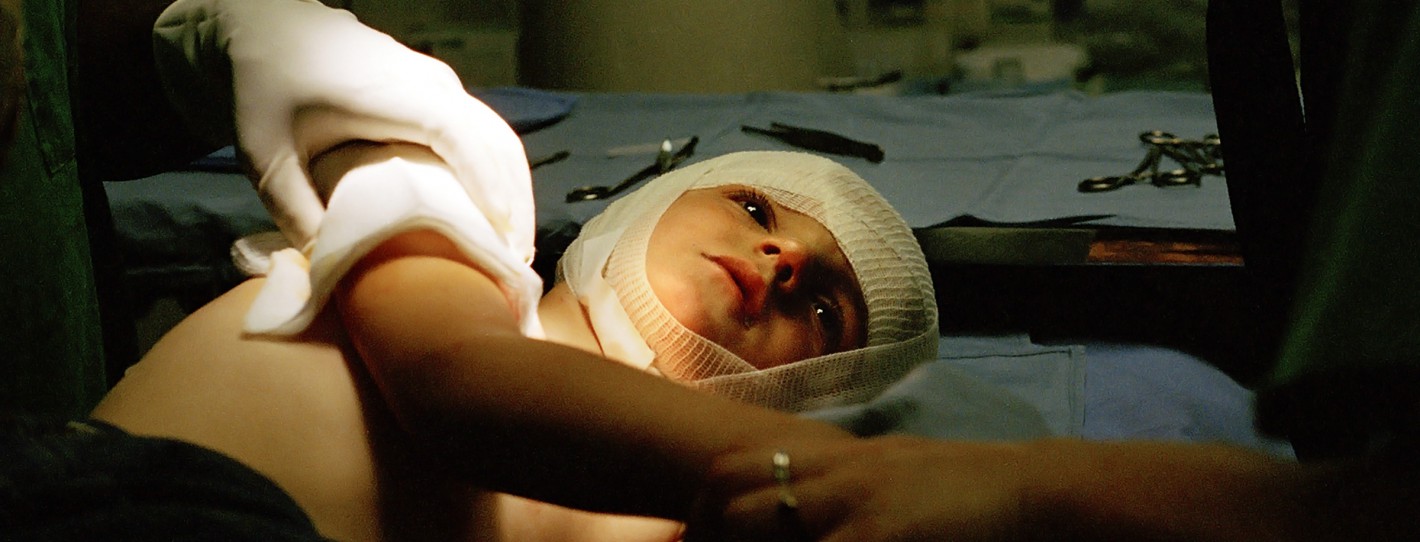
This is a guest post from Debbi Morello. It follows my recent post about child privacy and safety online, and draws on Debbi’s personal experiences to offer her take on the use of the image in that post.

After reading Danny?s post and insightful comments on ?Could This Be Your Child??, I got to thinking about the provocative image used with the post and some of the reactions to the image.

So, I wanted to speak to the power of images, whether they are shocking and controversial, stunning and serene. Certain images become iconic for one simple reason – they convey a powerful message or tell a story in a way that words never could.

You see, I believe in the power of images, no matter what the debate, or the controversy an image may raise – the adage ?a picture is worth a thousand words? is true. Iconic images have changed the world and many photographers have risked their lives to make them.

Danny?s choice to use the powerful yet grotesque image to depict child abuse was not an easy one. Most editors in today?s publishing environment would have taken the politically correct route to avoid the wrath of readers and parent companies.

However, one cannot argue there have been hundreds of thousands of images since the invention of the camera. If not for a particular image, or a body of work, outcomes or events would have been different.

I know about pictures that touch you in such a way it is impossible not to take action. I became a photojournalist because of the powerful effect pictures had on me. Soon I would understand how children are the most vulnerable of victims and yet, children are still our greatest hope.

I was struck by the devastation in the countries I worked – the horror of war, disease, natural and man-made disasters. I worked with NGOs and news organizations and time and time again, it was the pictures coming out of those situations that led to action.

UNICEF, other UN organizations and many NGOs now have programs to meet the needs of children affected by wars and disasters.

Sadly, despite international law to protect children, the laws are repeatedly broken; children are abducted, turned into child soldiers, sexually abused and exploited in other ways. Yet while we can read many reports and news stories, I believe nothing compels someone to act more than one image that says it all.

With today?s technology, communications and information is able to move around the globe in an instant. It is much more difficult to commit abuses and atrocities without touching the world?s conscience. It is also difficult for governments and civilized nations not to act, though we know oftentimes that the response falls short.

Powerful images have had the ability to mobilize a nation, move societies and the world to take notice. “Still photographs are the most powerful weapon in the world,” AP photojournalist Eddie Adams once said. Adams? image of an officer shooting a handcuffed prisoner in the head at point-blank range had great impact on the attitudes of Americans about the Vietnam War.

While we know the importance of images having a powerful effect for change, it is impossible to make those images without feeling the pain and grief of others.

When a photographer?s images make people feel the pain of others or motivates a community or the world into action, then perhaps we have made a difference.

Perhaps the picture worth a thousand words has changed the world. Just a bit.

Debbi Morello photographerAbout the author: Debbi has had an eclectic career path, including cause marketing for a little paper that was just getting started called USA Today. Inspired to pursue photojournalism, she spent nearly 15 years working for news organizations on several continents and winning international awards.

For the last 10 years she has combined her keen eye and storytelling skills as a communications and outreach specialist for humanitarian organizations, U.S. government and UN agencies worldwide. You can see Debbi’s work at DebbiMorello.com, connect with her on Twitter at @debmorello and read more of her thoughts at www.debmorello.amplify.com.

image: Debbi Morello

Tell Us Your Social Media Success Story

Success stories

Success stories

Over at Bonsai Interactive Marketing, we’re currently putting together our next ebook to join the likes of From Stats to Strats and others. And we’d like you to star in it.

We’ve all seen the great success stories in social media that are Dell, Zappos, JetBlue, etc. And that’s great, as success stories always are.

But they’re also the ones most used, and there needs to be new shining lights, from businesses of all sizes. So here’s the deal.

We’re using examples of some of the smaller clients we’ve helped, and how they’re using social media to both raise awareness of their business, and create lead generation and sales.

We’ll also be highlighting other small businesses that have jumped online and found success (often in the least likely of places and industries). We want to show that it’s not just big businesses with bigger budgets that can make social media work.

So let us know what you’re doing. How you’ve used social media to keep up with (and surpass) what your bigger competitors are doing. What challenges you faced, and how you overcame them. And how you see social media impacting your particular industry in the next 12 months.

It doesn’t matter if you’re a small business or a consultant/agency helping a small business navigate social media – we’d love to hear from you!

The ebook will be out in mid-February and we’re looking to make it a mix of highlighting some great small businesses, as well as using them as a case study in smart business practices.

As well as sharing the finished ebook on this blog, we’ll also be promoting and sharing through the Bonsai network and mailing lists, so you could potentially be in front of more than more than 60,000 people – a great way of letting people find out about you.

To tell us your story, just use the form below – you can either write it in the message box, or upload a Word document – whatever works best for you.

We’re really looking forward to hearing from you, and if you know of someone that’s doing great things with social media from a small business angle, feel free to send them this way to tell us all about themselves too.

Cheers!

[gravityform id=5 name=SmallBusiness Social Media Success Stories ajax=true]

image: knowyourmeme

  • « Go to Previous Page
  • Page 1
  • Interim pages omitted …
  • Page 157
  • Page 158
  • Page 159
  • Page 160
  • Page 161
  • Interim pages omitted …
  • Page 283
  • Go to Next Page »
© 2026 Danny Brown - Made with ♥ on Genesis