
• Skip to primary navigation
  • Skip to main content
Danny Brown

Danny Brown

podcaster - author - creator

  • About
  • Podcasts
  • Journal

Latest posts from Danny Brown

Enjoy the latest posts from Danny Brown, and feel free to add your own thoughts in the comments after the post.

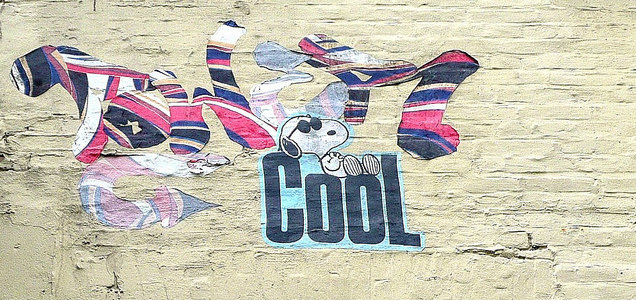
Sorry, Social Media, But Marketing Is Still Cool

Marketing is cool

Marketing is cool

As social media continues its assault onto the mainstream audience, one of the side-effects has been the emergence of the view that marketing isn’t allowed in the space.

Conversations on blogs, Twitter, LinkedIn and elsewhere are vocal in the opinion that marketing is dead; we choose who we buy from and whose reputation we ruin; what gets our eyeballs and what doesn’t.

Simply put, old school is dead; long live the King (of new media school). And, to a degree, it’s correct – old school is dead.

But let’s not get too carried away by our new best friend social media, either.

Any time a new marketing platform comes out means that the “old school” is dead as it was; but now you use it in conjunction with the new. The view that we (as consumers) have all the power and that brands now need to listen to us is nothing new, either.

Sure, we have a soapbox on which we can stand now that allows us to share our likes, dislikes and outright hatred of a brand, product or service. Not only that, but we can share it with a worldwide audience looking for the next fix of brand assassination on YouTube.

But at the same time, is this really new? Haven’t we always had the power over brands?

It doesn’t matter how great advertising, marketing or PR messages are – if we don’t like something, we vote with our wallets. This has been happening since the dawn of the first trade agreement. Just because Coca-Cola runs a great Christmas advertising campaign doesn’t mean I’m going to suddenly buy Coca-Cola. I don’t like the stuff, so their marketing and advertising is lost on me.

The view that social media has allowed us to force marketers to think differently isn’t completely true either.

Good marketers have always planned with their audience in mind – it’s one of the key tenets to marketing in the first place. We don’t just come up with an idea and hope it works – like a duck on water, there’s a lot more going on that you can’t see, while the pretty stuff on public view looks effortless.

Additionally, good marketers have always known when a message is right, if the timing is there, and reacted as a campaign has progressed, using analytics and feedback. Kind of like social media does – the main difference is now you have instantaneous feedback to work from, as opposed to waiting on figures coming in from print or TV/radio media.

There’s no doubt that social media is one of the biggest changes in the marketing landscape (and the business one in general). When it comes to tracking, measurement and engagement prior to, during and after the launch of a product or service, social media offers a great range of options.

To say that it means marketing is no longer needed, though, is missing the boat slightly. Like any sound business, the good marketing tactics will work and the lesser ones won’t, especially when they’re integrated as opposed to segragated.

But isn’t that how it’s always been?

image: MIgracionTOtal

Introducing Sunday Brunch

Sunday Brunch with Danny Brown

Sunday Brunch with Danny Brown

Last week, I asked for your help in coming up with a name for a new series I’m starting on the blog. With more than 80 comments (some including multiple suggestions), it was really hard to choose from the very awesome names you came up with.

After a sifting process and a lot of back and forth over the final few, the new series is going to be called Sunday Brunch, as suggested by Phil McDonnell.

The name is the one that sums up the new series perfectly – it’s on a Sunday; each post will be going live at 11.00am (Eastern); and the posts will be more of a nice, relaxed video approach as opposed to the text posts normally found here.

So, as of next Sunday, the new Sunday Brunch will be going live. Answering your questions on everything from marketing, social media, building brand loyalty, etc, I hope it’ll be a nice regular stopover for your blog reading travels.

You can use the form below to send in your questions, and I’ll pick one at the end of the week for the post next Sunday (and so on). And if you have a favourite spot where you go for brunch, use the file upload option to send in a picture of it and I’ll use alongside the post, with full credit to you (thanks for the suggestion, Tim).

Thanks again for all your help, everyone, I really do appreciate it, and cheers for the suggestion, Phil – I’ll be in touch soon for your mailing address to send a little thank you parcel out.

Look forward to seeing your questions!

image: cafemama

[gravityform id=6 name=SundayBrunch]

The Butterfly Effect of Entrepreneurship

Butterfly effect

Breaking out on your own is hard. Just ask anyone that runs their own business, and you can pretty much guarantee that the one answer that will be consistent across the board is that it’s hard to be your own boss.

No guaranteed pay-check; no water-cooler conversations to split the day up; no big corporate budgets for projects and pitches.

But no-one said it would be easy. It takes hard work, commitment, lots of compromise and hard knocks to get to the point where you want to be. But the satisfaction and kick-back that you get when you get there makes all the struggle worthwhile.

One of the ?tricks? I?ve used over the years (and offer up to clients that I feel fit the need for the example) is comparing entrepreneurship to the stages of the butterfly.

The Egg

A butterfly is one of the most beautiful things that nature has ever produced. Multi-faceted, colourful, elegant and varied – all the things a great business should be. All the things your business should be.

But a butterfly isn?t born this way. It starts off as an egg – tiny and in need of food to survive.

Your business is the same. No business is born huge; no entrepreneur starts with millions. It comes from small victories and winning the scraps you need to feed yourself and those that depend on you, and keep a roof over their heads.

The egg is where it all starts, so plan ahead:

  • Think about what you need to do to survive the egg stage.
  • Have enough savings to get you through six months with no paycheck.
  • Grab the food around you and keep looking for more.

Eggs are fragile. Their shells can break with the right amount of pressure; so plan to avoid the fall that could crack you.

The Larva

When a butterfly egg hatches, it?s still not the butterfly that?s inside – there?s still a way to go before the beauty of the butterfly reaches its full potential. Instead, you get the larva.

You probably know the larva in its most common form of a caterpillar. This is a big change for the egg, since it now moves from chasing scraps of food to having a ferocious appetite and eating everything in its way.

Once your business has moved past the gestation period of the egg/birth, you?re hungry for more. You?re ready for bigger clients; bigger projects; bigger paydays. The thing is, your current set-up may not be ready for this. But that?s okay.

A caterpillar can go through five or six growth spurts before it?s ready to move to the next stage. Your business can be the same.

  • Feast on the business that will help you grow.
  • Stay hungry and eat what you can.
  • Acknowledge that growth means change, and plan for staggered growth.
  • Prepare yourself for the ?wrap period?, where the finish line is in sight but you?re not quite there yet.

Caterpillars shed their skin as they grow. Don?t be afraid to shed what you?ve encountered so far – new is good, and the only way to truly grow.

Business growth

The Pupa

The third stage of the butterfly is where things get really interesting. As the caterpillar feasts to fill its over-sized appetite, its skin struggles to keep up. Instead of stretching, it sheds the old skin and replaces with a new one.

After five or six of these, it eventually stays inside the last skin, called the pupa. This skin envelops the caterpillar, and it?s in here that the transformation from caterpillar to butterfly takes place.

The funny thing with this stage is that it looks as if nothing is happening – the pupa attaches itself to a twig or branch, and lays pretty much motionless until the butterfly is ready to break out.

But thinking that nothing is happening will see you miss all the activity inside. The caterpillar?s body is being broken down to change to the butterfly, and all the food the caterpillar ate during its binge eating is what?s keeping the butterfly alive now, during the change. This process can take anywhere from a week to a year to happen, depending on the species.

Now think of your business. Your slow time usually comes after your early burst of activity when you?re new, as you chase clients and projects down. You use the money from that to help you grow to your next stage.

This is your own pupa stage.

  • Look at your business and see what you can eject, and what can grow with you.
  • Make sure you save enough from the early activity to see you through quiet times.
  • Make the changes slowly and with purpose to take you to the defining moment of your business – the identity.

Pupas are the heartbeat of life for both caterpillars and butterflies, and effect the transition from one to the other. Think of what you can achieve with your business in your pupa stage, as you get ready to unveil the complete you.

The Adult

The caterpillar is no more. The hibernation period is over. Everything the egg, then the larva and then the pupa has been working toward is finally here – the adult butterfly is born.

The pupa breaks open and the butterfly emerges. Its colour and shape is defined by the pupa stage. Now the real beauty is unleashed on the world, after taking the time to make sure it?s ready for the public gaze. Emergence; mating; and the cycle begins again.

Your business has been building up slowly, and eating what it needs to survive the early days. You?ve been working behind-the-scenes to plan your growth, and your transition from small business to medium and upward.

Now?s the time to let your business become an adult.

  • Emerge from the the cloud of preparation into the sunlight of opportunity.
  • Think of partnerships (strategic and otherwise) to mate to your goals and business.
  • Think of how you can continue the cycle, and the people and properties you need to make this happen.

An adult butterfly has a life cycle of around a week or two, but some can last a year and a half. Let?s say a butterfly week is equivalent to a year of a person. Think of your business?s current life cycle as a year or two, then look at refocusing again and choosing direction.

If you need to, cocoon yourself away again into your pupa, and plan for the next stage. The ever-evolving business is the one that will be ever-persistent to succeed.

And we all want that, right?

image: rondeboom
image: JarkkoS

This post originally appeared over at Beyond The Pedway, a resource centre for entrepreneurs and creative thinking. Hosted by Tim Jahn, it’s full of informative video interviews, tips and advice for starting and running your own business.

The Great Friends and Relationships Myth

Friends in business

Friends in business

There’s a lot of talk about relationships in business, and how to make business more human.

There’s also a lot of talk about how businesses need to be more like friends, and treat people the way you would your friends if you want to succeed.

Add in the view that businesses and their clients should be friends as well, and you could be forgiven for thinking you need to be either Ross or Rachel and sipping coffee in Central Perk to get anything done.

But here’s the thing – that viewpoint is a myth. Not only that, it can also be a dangerous myth.

Here’s why.

Friends Don’t Always Come With Benefits

Let’s look at the friends angle first. Can you have friends in business, or be friends with clients? For sure – you can be friends with anyone. But here’s why you shouldn’t be.

With friends, we let our guard down. If they’re going through a tough time, we support them. If they need to borrow money, we help, and let them pay it back when they can. If they need to pick our brains, we’re there for them.

But because we let our guard down, we very often don’t put it back up.

Transfer that to business, where either a client, or a supplier, or a customer, uses your service but doesn’t pay when they’re meant to. Or a supplier skims money off you left, right and centre without you knowing it. Or they talk with your competitors behind your back while you’re working on getting them airtime.

Business don’t have friendships. Businesses do what’s right for them at that given time, and rightly so – it’s why it’s called business and not high school.

If you’re friends with a business, you can put your own success and longevity at risk because you don’t want to ask too much of your friends. Unpaid invoices go unchallenged, and soon your business is struggling to pay an invoice. Once you start down that path…

Relationships Never End Well or They Wouldn’t End

The relationship angle is an interesting one, because obviously we can (and should) foster relationships in our business lives at every turn.

Relationships are the key to a long client/vendor arrangement over a one-hit-never-work-together-again one. Relationships are also the key to promoting relevant skilled resources to those that need them – say, you recommend one client to another, or an outsourcer to a client, etc.

But the key to remember is that, just like many personal examples, relationships come to an end. Girlfriends split with boyfriends, friends split with each other, families grow apart. The closer the relationship, often the harder the split is. It can turn nasty as sides are picked and grievances aired, and that’s no fun at all.

We’re currently working with a client whose previous agency always talked of their “special relationship”. Yet once the agency’s work and results were questioned, the owner went postal and demanded more money (even though they’d already skimmed the client of more than $12,000 for a project in limbo). So much for the “special relationship”.

So is it impossible to combine friendship and business relationships? No – if approached right.

Buddy Boundaries

In an ideal world, we’d all be friends together – people, businesses, ex-lovers, enemies, etc. The world would be an easier place for all if we lived on clouds and blew bubbles at each other.

But we know that life isn’t ideal.

Instead, we just need to realize that sometimes, it’s okay to not be friends. That doesn’t mean we can’t be friendly, though – similar word but a world of difference.

  • Respect boundaries. Appreciate that while tone and interaction can be friendly, at the end of the day you’re still in business to both make your clients and customers successful, and be successful too.
  • Maintain professionalism. I’ve seen some classic emails because of a “friendship” – because of the perception, professionalism goes out the window from the sender. Keep in mind that businesses are professional ventures, and don’t send a CEO an email better suited to pub talk.
  • Understand subtleties. While we look out for our friends unreservedly, often we can’t offer the same support to our clients, vendors, customers. Know where the cut-off point is and you know where the help can begin and end.

We all want to be friends. We all want to have the most amazing relationships. And, often, that can be the case (or a close resemblance to it).

But we also want to be successful – for our clients, our customers, ourselves and our families who depend on us to keep a roof over their head. If we confuse friendship and relationships with friendliness and professional relationships in that order, we run the danger of losing sight of crucial decisions that need to be made.

And none of us can afford to do that.

image: marie-II

21 Non-Business Blogs You Could Read Today

Through new eyes

Through new eyes

While you might come here to read about social media; or marketing; or strategy; or statistics;? it’s always nice to step back and read blogs from outside the business and social media circle.

So, over on my Facebook page last night, I asked for recommendations of blogs that weren’t business, to see what inspired others when they read. And boy, did the recommendations fly in! So, without further ado, here are 21 non-business blogs you could add to your reader today, with added reasons from the folks that recommended them.

  • The Mad to Live. Recommended by Mark Harai, for its “fun, smart and inspiring” posts.
  • Enjoying the Small Things. Recommended by Amy Fandrei, who said, “One of the more down-to-earth but inspiring bloggers out there.”
  • The Sales Lion. Recommended by Mark Harai, for being “inspiring and entertaining.”
  • Murrmurrs. Recommended by Samantha Collier, because it is “absolutely, positively the funniest blog I have ever read.”
  • The Skool of Life. Recommended by Mark Harai (the guy’s on a roll!), it’s full of posts that “throw down inspiring words.”
  • Confessions of a Pioneer Woman. Recommended by Tressa Robbins, for “taking me out of my element and putting me in hers.”
  • When Parents Text. Recommended by Sue Anne Reed, for “comic relief.”
  • C Jane, Enjoy It. Another recommendation from Sue Anne Reed, for the simple fact of “enjoyability”.
  • Smitten Kitchen. Recommended by Patricia Grow because “the recipes are always great, her photography matches and she shares the cutest pictures of her baby.”
  • Life, For Instance. Recommended by Bryan Cromlish, this blog is full of “pretty inspirational posts.”
  • Post Secret. Recommended by Geoff Livingston, for “making my jaw drop every week.”
  • NYC Bloggers. Recommended by Elaine-Cosme Petersen for news on “entertainment, life, situations, shock treatment… whatever you’re in the mood for.”
  • The Middle Finger Project. Recommended by Ingrid Abboud for its “powerful and inspiring stories.”
  • Redhead Writing. Another recommendation by Ingrid Abboud, this blog is “funny as hell” (and also full of awesome cuss words)!
  • Xbox 360 Fanboy. Recommended by Brandon Forder, because he’s “a video game nerd and proud of it.”
  • Blog-Blond. Recommended by Chris Benedict Valencia, for its ability to “be funny and relieve stressful days.”
  • Flight to Success. Recommended by Karla Antelli, for “inspiration.”
  • The Bold Soul. Recommended by Janis La Couvee for, amongst many reasons, having a “zest for life and inspiring me.”
  • Some Words, Written by Me. Recommended by Eileen Marable for being “good, thoughtful fun.”
  • Delco Forever. Also recommended by Eileen Marable, for offering “great thoughts by smart people.”
  • The Bloggess. Recommended by Jennifer Linnell Fong, because it “makes me snort out loud with laughter regularly” (and is another blog that uses cussing perfectly).

So there you have it. If you’re needing new blogs to read, or just want to mix up your business needs with some cool, funny and inspirational reading, there are some great starting points for you here.

My sincere thanks to everyone who took the time to reply (and some couldn’t make it here, since there were no URL’s to grab) – it’s readers like you that help bloggers like the ones you recommended get a new audience. And that’s always a good thing.

How about you – what non-business blogs would you recommend, and why?

Leave your recommendations in the comments (with links), and let’s see some new names we may not have known about.

Note – because of the anti-spam filter that I use, comments with several links may not appear immediately. Don’t worry – I’ll approve them as soon as I can, so no need to post a duplicate, just in case you thought yours hadn’t gone through!

image: -Rejik

  • « Go to Previous Page
  • Page 1
  • Interim pages omitted …
  • Page 155
  • Page 156
  • Page 157
  • Page 158
  • Page 159
  • Interim pages omitted …
  • Page 283
  • Go to Next Page »
© 2026 Danny Brown - Made with ♥ on Genesis