• Skip to primary navigation
  • Skip to main content
Danny Brown

Danny Brown

podcaster - author - creator

  • About
  • Podcasts
  • Journal

Latest posts from Danny Brown

Enjoy the latest posts from Danny Brown, and feel free to add your own thoughts in the comments after the post.

Social Influence and the Shift of the Carnegie Principle

Disruptive influence

When Dale Carnegie wrote the book on influence more than 75 years ago, he probably didn?t realize the impact he was about to make on society. Just ask the 15 million people that have bought the book since 1936.

But, more than just sharing some evergreen ideas on how people and ideas can really connect with each other, Carnegie also pioneered how we ? as individuals ? are perceived by others.

Swap that to social influence today, and brands are now looking to highlight those they perceive as influential, to market their services and products for them.

Whereas Carnegie looked to show you ways on how you could make friends quickly, get you out of a rut, and make you more effective all round, today?s influence is finding uptake with brands looking to (often) bypass the legwork that Carnegie advocated, and utilizing shortcuts instead.

These shortcuts mean quicker access to the many; identification of who can spread a message; and more cost-effective approaches to outreach programs and brand advocate partnerships.

This has led to the popularity of companies like Klout, Kred and PeerIndex, as well as niche offshoots like Reppify, Connect.me and Tawkify, to name but three. Each have their benefits, and proponents of these platforms highlight the importance of their place in today?s social media-led marketplace.

However, critics of the services point to today?s influence measurement being nothing more than activity based ? the more you are online, the more you?ll be measured as influential, whether you encourage people to act on your activity or not (the dictionary standard of influence).

Perhaps the middle ground offers an insight into where Carnegie?s vision and that of social scoring metrics need to be.

Context

One of the most-discussed areas of influence in the current iteration of social scoring is that of context. As mentioned earlier, proponents of social scoring platforms point to activity being a valid metric ? if you?re online a lot, you understand the nuances of the space and how it can be influenced.

Critics point to automated social feeds with little to zero engagement that ? while enjoying a high influence score ? would be rendered useless when it came to being an influencer to partner with in a social media campaign.

This is where the context argument plays its hand. By definition, context is:

? the interrelated conditions in which something exists or occurs.

By that definition, it?s the very thing that influence looks to do. By connecting the right people with the right brand, and sharing the right message to the right audience, the results should be favourable every time.

If the context of the message is right, and the relationship between the person and the product the message is promoting fits, then there is an immediate ?belief? in the message being more than just a sales promotion.

Find the context, and the pieces of the influence bubble begin to come together.

Relevance and Readiness

If context is important, relevance is equally so (if not more so). You may trust the person/influencer sharing a brand?s message with you; you may even be the perfect audience (based on demographics and research) for that message and that product at that given time.

Until you hit the relevance angle.

  • Are you really in the market for this new product right now?
  • Are you financially available to be the customer?
  • Has your situation or taste changed since you last bought a product from this brand?
  • Are there external issues at play here?

The relevance to how ripe you are as customer is something that no influencer can bypass, no matter how much you trust them, or trust the message.

It?s why the social influence market is only just beginning to grow and mature. Activity may be an early barometer of someone?s potential to a brand and its audience ? but there are far more pieces of the jigsaw puzzle to add.

Context, relevance and readiness are three ? but even they?re just the start.

To truly mature the social influence ? and, by association, the influencer ? market, we need to remember how many aspects there were to Dale Carnegie?s seminal book and how they all had to be aligned to work their magic.

Then we can really start to move the social influence needle.

Being Smarter with the Long Tail of Social Monitoring and Influence

digitalcity_0

When social media first began gaining popularity with brands, the first thing they wanted to know was, “What are people saying about us?”

It’s understandable – whereas before brands would only get to find out what the public’s perception of them was when the cash registers slowed down, now they could get insights on what was being said before it became a problem, and the perception of their response to that conversation (positive or negative).

This led to a booming market in social monitoring platforms. Companies sprung up with technologies that could monitor millions of conversations, send alerts to brand managers, and define the changing sentiment around a brand and the subsequent buzz that went with it.

All for a very nice premium, too, with licenses running into thousands of dollars per month for just a single license.

But the truth of the matter is social monitoring is flawed, and will continue to be flawed, while we still think in bits and bytes when it comes to human behaviour.

We Are Not Machines

The basic premise of a social monitoring platform is simple:

  • Choose your industry;
  • Choose keywords to monitor (brand, product, person);
  • Set up your alerts;
  • Define your goals (buzz, sentiment, volume, leads);
  • Gather data, report, refine, rinse and repeat.

Sure, there are other areas of data that brands may set up, depending on their goals – competitor intelligence, for example. But even this basic set-up of goals and tactics highlights the flaw in social monitoring – we’re hoping humans behave like machines to tell us what we want to know.

For most social monitoring platforms, the technology is still fairly basic in that all it does is monitor online conversations for certain keywords (much like Google scans the web for your search terms and then gives you a series of results).

The problem with this approach is it requires linear thinking on behalf of the target. Instead of true natural conversations like the ones you have with friends on Facebook, monitoring tools are often looking for non-connected scripts. Take the following example.

I’m in my house, freezing my butt off in a typical Canadian winter. I go online to moan, and say something as simple as “Being cold sucks.” There’s nothing really there for monitoring software to pick up. Or is there?

If the software was advanced enough, there are multiple reasons for me being cold. Is there a hole in my window? Is my roof insulation not working properly? Is my furnace broken? Am I struggling to pay heating bills?

Immediately, there are now four opportunities for four vendors to take an interest in me – glazier, roof insulators, HVAC companies and maybe even my bank, to see if they can help financially.

All from three little words, instead of a monitoring solution looking for me going online and asking “Know any good HVAC companies in Southern Ontario?”

You can see why we still have a way to go when it comes to monitoring. But that’s just a part of it.

Social Monitoring and the Influence Effect

Let’s take monitoring one step further, when it’s being used as part of an influencer outreach campaign.

When brands use influencers, they need to know who’s making the buzz happen and who’s creating action from intent. Otherwise, they’re just shooting in the dark while paying thousands of dollars to social scoring sites for putting them in touch with the influencers in the first place.

So, as a campaign unfolds, brands use monitoring platforms to see where the conversation is stemming from (influence solution partners can offer this information but you should be monitoring for your own needs as well). They track the times an influencer speaks, and whether this causes a trickle or ripple effect.

And this sets up another problem with monitoring at that high level – it doesn’t take into effect all the disruptive factors that help a decision be made, positive or negative.

Influencer disruptor paths

For example, I see an influencer talk about the new Ford F-150. I trust the influencer (he or she’s a car geek, just like me), and I like the mix of fuel economy and torque that the F-150 offers. I’m sold, and I mention as such to the influencer on their blog, so that goes down as a positive net.

But I’m not the decision maker when it comes to finances – my wife is.

So, as much as I love the truck and as much as I give off the vibe that I’m moving beyond intent to buy to actually buying, based on an influencer’s write-up, I don’t buy, because my wife has rightly said we need to go on vacation this year to unwind, and the money needs to go to that.

The effect of that decision isn’t felt, because the monitoring only stayed with me until I was a positive result for the brand and influencer. Had the monitoring or influencer program stuck with me for a week or two, they would have seen me jump online to say, “Vacation this year, truck next year.”

Instead, the brand wonders why there was a positive effect that didn’t correlate into a sale; the influence program is questioned for effectiveness; and the monitoring solution fails to follow up on my secondary conversation.

Take it one step further – let’s say the software really digs into who I’m talking with and can filter them into relevancy, as well as alerts if there’s a follow-up to our original conversation online. They would have picked up my wife speaking with her friends online and saying, “Danny wanted a truck, but we really need a vacation this year, so we’re doing that instead.”

The result would be immediate – the influencer program clearly worked, it’s just priorities that take precedence and, in this case, a vacation was a higher priority. But the message about the F-150 came through loud and clear and, had the vacation not been the disruptor in this case, the sale would have been completed.

We Need to Be Smarter with the Long Tail

Now, these are hypothetical examples, and there are companies that are trying to identify not just the main conversations, but the secondary and tertiary ones too. In our book, we highlight the ones we feel are making great inroads, and dedicate a chapter into using these platforms for your influence campaigns.

But as hypothetical as they are, they also clearly illustrate where we need to go, and that’s into the Long Tail of monitoring and/or influence. We can’t just stop at the result – we need to understand what made that result happen:

  • What diverted an action (my wife being the logic to my emotional decision);
  • Where the follow-up should be (in this case, reminders that I’m in the market for a truck in 12 months time);
  • What language tipped the emotional purchase (prior to the vacation becoming a disruptor);
  • Where the true result came from (in this case, a few weeks after the perceived success).

We’re not there yet, and while social scoring continues to be the lead when it comes to measuring influence online, we won’t get there anytime soon. The good news is, companies are moving away from scoring and really digging into all the data that’s available to us.

When monitoring catches up and combines its resources with the knowledge we get from identifying true influence, business will never be the same again.

Ready to start the next wave?

The Future of Influence Marketing Starts Here

Disruptive influence

Lofty blog post title? Perhaps – but we thought it an apt one to both herald the launch of the official site for our book, as well as talk a little about the future of influence both as Sam and myself see it, and the companies that are looking at influence beyond social scoring.

So, first things first – the site.

What You’ll Find on the Influence Marketing Site

As well as being the repository for all things new about the book, including launch info, where you can buy it, book tours, etc, we also want to make the book an interactive experience with you.

To that end, we’ll be hosting both live and recorded webinars, as well as interviews with the leading people and companies in the influence space today. We’ll also be live-streaming Google+ Hangouts, where you can take part and ask the questions on influence you need the answers for.

Once the book launches, we’ll be adding an exclusive forum for book buyers, where you can meet peers in your industry, get one-to-one’s with leading players, promote your platform and more.

In short, this site will become an all-encompassing depository for all good things about influence – and nary a social scoring badge in sight! Feel free to look around and check out what’s here.

So make sure you subscribe to our newsletter for all the latest updates, and you can pre-order the book now by clicking either of the banners below.

The Future of Influence

Social scoring is dead – or at least, the current iteration of social scoring is dead. While the platforms leading the scoring market report impressive numbers, the varying results and effectiveness of using scores to determine influence highlight their underlying problem – influence is too dynamic and fluid to be determined by a score.

The thought process of people changes frequently, based on situation; emotion; peers; external factors and more. This is something a score can’t adapt to efficiently enough, and is one of the key areas we dissect in our book as we present a new model for moving forward with influence marketing.

Scoring can certainly help in the initial stages of finding the right influencer for you – but then it gets way more complicated, and that’s why you need more than just a score to help your brand succeed with the right influencers for your audience.

We’re excited about the future of influence. We know the path we’re taking with the book, and the companies we’ve spoken to have been just as excited to talk about the ideas within and how that adds to what they’re currently doing.

It’s a great time to be in this space – and we’re only just getting started.

Here’s to the future.

Note – special thanks to Diane Court for taking the creatives from our publisher and turning them into the logo and other creatives seen on here, you rock!

5 Influence Platforms to Watch in 2013

As we enter 2013, social scoring continues to drive the perception of influence – currently. As the market matures, scores will become less prevalent and the models used to define influence will be much more user-centric based on actual needs, situations and other relevant actors.

Our book offers one such new model for defining influence and making it a key part of your business, and below you’ll find some of the brands that are moving in this direction too.

In no particular order, here are 5 influence platforms to keep an eye on in 2013.

1. Appinions

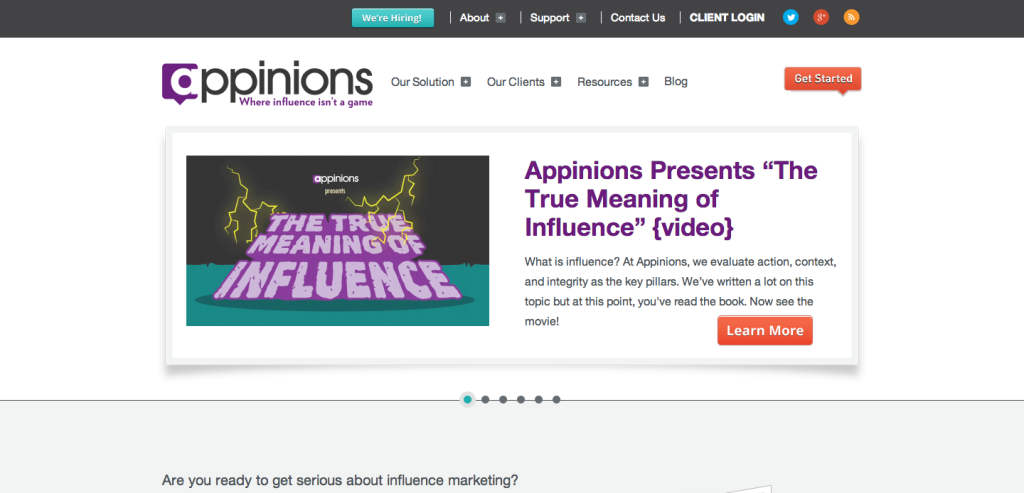
Recently I was asked what was one of my goals in 2013, and my response was to see social scoring as a means for measuring influence disappear. A number does not reflect a person?s influence ? context, relevance, action and integrity do, which is why I like the approach Appinions is taking to social influence.

Appinions

Working directly with brands ? they?re not interested in a consumer interface ? Appinions uses over a decade of research and academia from Cornell University to connect brands to influencers through a mix of earned, paid and owned media. They also offer strategic partnerships between these brands and their clients, with nary a social score in sight.

2. TrendSpottr

I?ve already featured these guys here earlier this year, but the reason I think TrendSpottr warrants a closer look in 2013 when it comes to influence is simple ? they truly have the potential to change the way content is used as a business strategy for companies of all sizes, and how that content influences your marketing strategies.

TrendSpottr

When you think of trends today, you probably think of something like what?s currently trending on Twitter. Yet that?s not a true barometer of trending ? that?s simply showing what?s currently popular. For true predictive trend analysis ? highlight what has the propensity to become popular based on organic and social conversations ? TrendSpottr is the platform to check out.

If you as a publisher or brand can tap into what content is going to go viral ? including YouTube videos ? and then prepare your own content around that optimized for search, your equity as a thought leader and, by correlation, an influencer has just grown.

3. Traackr

I?ll admit, I confused Traackr with the similarly-named service Trackur, and haven?t looked at them in too much depth before because of this. My bad, since Traackr offers much promise when it comes to highlighting the kind of influencers that really matter to your brand.

TRAACKR  Find the influencers who matter most to you

Instead of pure numbers and how they might amplify a message, Traackr looks to identify influencers based on three core concepts ? Reach, Resonance and Relevance. While the Reach part of the equation does take audience size into equation, it?s complemented by the Resonance (the ability to effectively engage that influencer?s community) and Relevance (how contextual that influencer is to your brand) factors, making the overall process much more targeted.

Having just written the chapter in our upcoming book on social influence marketing that looks at these factors as well as others that truly impact your company?s bottom line, I?ll be taking a much closer look at Traackr in the coming weeks for sure.

4. Wahooly

Apart from having a name that reminds me of something a drunken Scot would say in celebration, Wahooly has caught my eye for the approach they?re taking, which is more skewed towards crowdsourced influence.

Wahooly

Kind of like a KickStarter for influence, Wahooly tracks the conversations about startup companies in their database. The more influence your conversation effects around a chosen company, the more points you earn with that company. You can then redeem these points to enjoy ?rewards? with that company, from free samples to a chat with the founders and even equity in the company.

It?s an interesting concept, although one that could easily be gamed due to the nature of online chatter and adapting conversations to suit a need. However, the ability to potentially have a say in which startups succeed is one to admire ? here?s hoping they can keep the gamification aspect honest.

5. Tellagence

I?ve loved what the Tellagence guys are doing from the first moment I heard about them, mainly because these guys are doing everything right when it comes to online behaviours and understanding how influence truly works on the social web.

Tellagence

Geared solely for Twitter at the moment, but with more networks to follow, Tellagence looks at evolving variables in online behaviour, and how that translates into identifying an influencer at any given time. Instead of saying ?Joe is influential in sports?, Tellagence can say ?Joe is influential in sports this month, but Sarah will be more influential next month?.

This advanced analysis truly reflects the fluid nature of influence based on a person?s changing interests and makes Tellagence a strong player in the new wave of influence tools about to take off in 2013 and beyond.

Social Scoring is Over

Currently, when you ask someone about influence online, most people will say, ?Oh, you mean companies like Klout and Kred and other social scoring platforms?, mainly because that?s all the mainstream really knows about at the minute.

The problem is, social scoring isn?t anywhere near a true measure of someone?s online influence and the impact that can create. Instead, context, situations, relevance, audience behaviour and more are the new currencies of influence.

Or, perhaps they?ve always been the currency, and the platforms such as the ones mentioned above are helping to shape how influence can truly be measured and used in a business setting where lead generation and sales are the end result.

Which, for any business, is what matters the most at the end of the day. Here?s to the future.

Influence Marketing by Danny Brown and Sam FiorellaNote: As we gear up to the launch of our book in the near future, we?ll be hosting a series of exclusive webinars with the platforms and founders we feel are shaping the influence industry for the next 12-18 months and beyond. You can get access to these webinars, and choose which one you?d like to attend, when you pre-order our book and forward a copy of your receipt to info@influencemarketingbook.com ? look forward to seeing you there.
Blogging in 2013 : The Year of Crowd Curation?

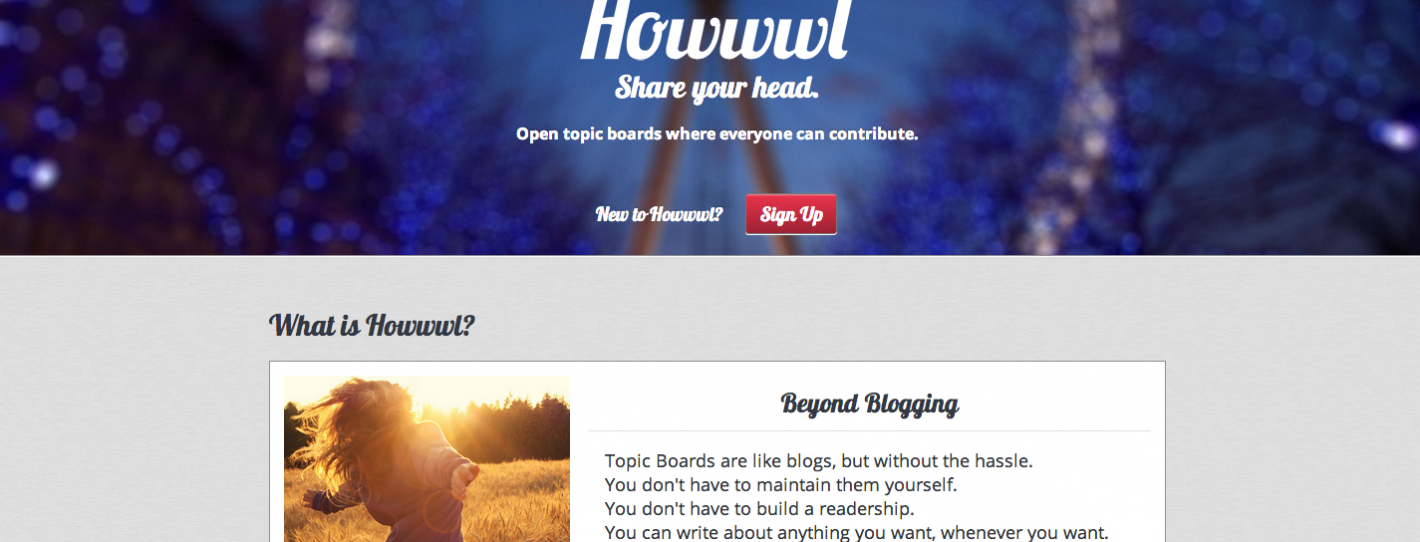
Howwwl Share your head.

This is a guest post by Paul Mayze.

The barriers to blogging are now lower than ever. ?At least, that is the theory.

On WordPress and Blogger it takes minutes, if not seconds, to set up your blog. On Tumblr, adding content is child?s play (and if in doubt you can repost something from someone else).

Of course, the reality is that blogging is harder than ever. Assuming your intention is to generate a readership for your blog, setting up a blog isn?t the problem. ?The problem is keeping it up.

But a new breed of content publishing and curation tools is focused on tackling this issue head on.

[Read more…] about Blogging in 2013 : The Year of Crowd Curation?

  • « Go to Previous Page
  • Page 1
  • Interim pages omitted …
  • Page 98
  • Page 99
  • Page 100
  • Page 101
  • Page 102
  • Interim pages omitted …
  • Page 283
  • Go to Next Page »
© 2026 Danny Brown - Made with ♥ on Genesis