• Skip to primary navigation
  • Skip to main content
Danny Brown

Danny Brown

podcaster - author - creator

  • About
  • Podcasts
  • Journal

Latest posts from Danny Brown

Enjoy the latest posts from Danny Brown, and feel free to add your own thoughts in the comments after the post.

Social Influence and The Marketer’s Dilemma

Meet the social instigators

Just 20 short years ago, marketing was pretty easy. You got your budget, you allocated it to the media buy (TV, print, radio, direct), and away you went.

If you were conscientious, you’d collect results and give them to your clients. If you weren’t, you’d correlate any increased foot traffic to a store or business to your awesome marketing efforts.

Everyone was (kind of) happy, and marketers went about their merry way of sitting in a lofty seat, controlling the message and how that message was disseminated.

Then everything changed.

With the advent of the World Wide Web in 1990 by Tim Berners-Lee, consumers now had a legitimate way to take a little bit of control back from the marketers.

While it was still in its infancy, and search wasn’t as advanced as it is today, private forums and message boards soon sprung up and consumers could connect with peers and fellow customers, and offer true feedback and advice versus the limited face-to-face conversations taking place in the home, workplaces and bars.

Jump forward 15 years, and the growth of Facebook, Twitter, enhanced forums and real-time review sites, and now the marketer’s game – or at least, the bad marketer’s game – was pretty much truly up.

Messaging was no longer the domain of the few – now it had to live up to its claims or be shot down in public, in the full gaze of a paying client. Not only that, but now the power of the budget was being taken away by the introduction of social influence – and the marketer’s dilemma began.

If Everyone’s an Influencer…

Before social media, if brands were looking to truly get their message in front of a certain group of people, they’d buy celebrity endorsements.

From Paris Hilton in a bathing suit washing cars to Madonna being paid $5 million for an advert that was pulled by its sponsor, celebrities have been big draws when going after a certain demographic.

The problem with this approach is when a celebrity takes a fall and the brand takes a hit because of it (or would do, if action wasn’t taken on their behalf).

Think about Tiger Woods and his extra-marital problems; or Lance Armstrong and his recent doping scandal. When heroes fall, they taint a brand too – if you don’t take action, you’re seen as endorsing wrong-doing or questionable behaviour.

Additionally, consumers are much more savvy now and aware of how advertising works – do we really believe that Celebrity X drives Automobile Brand Y? No.

Instead, we move back to where we’ve always been prior to the golden age of advertising and marketing – peer recommendations and trusted resources. In social media, these trusted resources are the new influencers, and brands are now looking to connect with them versus celebrity endorsements.

That in itself leads to the next problem – when social media can empower anyone to become an influencer, who do brands connect with?

It’s All About the Four A’s

Thanks to some social scoring sites, anyone can appear influential. Increased activity on Twitter and Facebook can see your score on the likes of Klout skyrocket.

For brands that can’t afford to put the legwork in that truly identifies the real influencer for their audience, social scoring sites offer a quick overview of who may be the right person, and let you filter out only those that meet a certain score and above.

While this can give you a quick introduction to the kind of people you’re after, it can also see you miss these very people as context and relevance can often be missed by a simple score.

Additionally, whether social scoring helps you identify people or not, to truly get your message out there you still need the Four A’s:

The Four A's

  1. Audience – It used to be the medium was the message, but now the audience is the driver – without knowing them, the message is useless, no matter what medium it’s on.
  2. Acceptance – You can have the greatest product and message ever, but if the audience isn’t ready to accept it, will it even be heard?
  3. Application – How you’re perceived can define your success, and how you approach us defines how you’re perceived.
  4. Amplification – The golden ticket, and not just for brands but for social scoring and influence: how far can you get your message?

These four tenets are core to the marketer’s success – but without knowing how to identify true influencers, how can you get all four aligned and working together?

The conversation is just starting on that one…

5 Influence Platforms to Watch in 2013

Meet the social instigators

As we enter a new year, I traditionally start by highlighting people and news to keep an eye on in the year to come.

This year is no different, (yeah, I?m predictable that way). Previously, I shared 5 bloggers for you to watch in 2013 as well as 5 blogs to subscribe to in 2013. In today’s final look ahead, and in no particular order, here are 5 influence platforms to keep an eye on in 2013.

1. Appinions

Recently I was asked what was one of my goals in 2013, and my response was to see social scoring as a means for measuring influence disappear. A number does not reflect a person’s influence – context, relevance, action and integrity do, which is why I like the approach Appinions is taking to social influence.

Appinions

Working directly with brands – they’re not interested in a consumer interface – Appinions uses over a decade of research and academia from Cornell University to connect brands to influencers through a mix of earned, paid and owned media. They also offer strategic partnerships between these brands and their clients, with nary a social score in sight.

2. TrendSpottr

I’ve already featured these guys here earlier this year, but the reason I think TrendSpottr warrants a closer look in 2013 when it comes to influence is simple – they truly have the potential to change the way content is used as a business strategy for companies of all sizes, and how that content influences your marketing strategies.

TrendSpottr

When you think of trends today, you probably think of something like what’s currently trending on Twitter. Yet that’s not a true barometer of trending – that’s simply showing what’s currently popular. For true predictive trend analysis – highlight what has the propensity to become popular based on organic and social conversations – TrendSpottr is the platform to check out.

If you as a publisher or brand can tap into what content is going to go viral – including YouTube videos – and then prepare your own content around that optimized for search, your equity as a thought leader and, by correlation, an influencer has just grown.

3. Traackr

I’ll admit, I confused Traackr with the similarly-named service Trackur, and haven’t looked at them in too much depth before because of this. My bad, since Traackr offers much promise when it comes to highlighting the kind of influencers that really matter to your brand.

TRAACKR  Find the influencers who matter most to you

Instead of pure numbers and how they might amplify a message, Traackr looks to identify influencers based on three core concepts – Reach, Resonance and Relevance. While the Reach part of the equation does take audience size into equation, it’s complemented by the Resonance (the ability to effectively engage that influencer’s community) and Relevance (how contextual that influencer is to your brand) factors, making the overall process much more targeted.

Having just written the chapter in our upcoming book on social influence marketing that looks at these factors as well as others that truly impact your company’s bottom line, I’ll be taking a much closer look at Traackr in the coming weeks for sure.

4. Wahooly

Apart from having a name that reminds me of something a drunken Scot would say in celebration, Wahooly has caught my eye for the approach they’re taking, which is more skewed towards crowdsourced influence.

Wahooly

Kind of like a KickStarter for influence, Wahooly tracks the conversations about startup companies in their database. The more influence your conversation effects around a chosen company, the more points you earn with that company. You can then redeem these points to enjoy “rewards” with that company, from free samples to a chat with the founders and even equity in the company.

It’s an interesting concept, although one that could easily be gamed due to the nature of online chatter and adapting conversations to suit a need. However, the ability to potentially have a say in which startups succeed is one to admire – here’s hoping they can keep the gamification aspect honest.

5. Tellagence

I’ve loved what the Tellagence guys are doing from the first moment I heard about them, mainly because these guys are doing everything right when it comes to online behaviours and understanding how influence truly works on the social web.

Tellagence

Geared solely for Twitter at the moment, but with more networks to follow, Tellagence looks at evolving variables in online behaviour, and how that translates into identifying an influencer at any given time. Instead of saying “Joe is influential in sports”, Tellagence can say “Joe is influential in sports this month, but Sarah will be more influential next month”.

This advanced analysis truly reflects the fluid nature of influence based on a person’s changing interests and makes Tellagence a strong player in the new wave of influence tools about to take off in 2013 and beyond.

Social Scoring is Over

Currently, when you ask someone about influence online, most people will say, “Oh, you mean companies like Klout and Kred and other social scoring platforms”, mainly because that’s all the mainstream really knows about at the minute.

The problem is, social scoring isn’t anywhere near a true measure of someone’s online influence and the impact that can create. Instead, context, situations, relevance, audience behaviour and more are the new currencies of influence.

Or, perhaps they’ve always been the currency, and the platforms such as the ones mentioned above are helping to shape how influence can truly be measured and used in a business setting where lead generation and sales are the end result.

Which, for any business, is what matters the most at the end of the day. Here’s to the future.

Influence Marketing by Danny Brown and Sam FiorellaNote: As we gear up to the launch of our book in the near future, we’ll be hosting a series of exclusive webinars with the platforms and founders we feel are shaping the influence industry for the next 12-18 months and beyond. You can get access to these webinars, and choose which one you’d like to attend, when you pre-order our book and forward a copy of your receipt to info@influencemarketingbook.com – look forward to seeing you there.

5 Blogs to Subscribe To in 2013

best practices blogger outreach

As we come to the year end, I traditionally wind down by highlighting people and news to keep an eye on in the year to come.

This year is no different, (yeah, I?m predictable that way). Previously, I shared 5 bloggers for you to watch in 2013 – today, and in no particular order, here are 5 blogs you really should subscribe to in 2013.

1. The Future Buzz

I’ve been a fan of The Future Buzz for a long time. The analysis of social media and where it belongs in the marketing mix has always been great brain fodder. With Adam’s recent appointment to Google, the blog is taking a much deeper look at data and analytics and where that fits in the real-time web. Required reading for all marketers and business folks in general.

Subscribe to The Future Buzz here.

The Future Buzz

2. The Realtime Report

Social media and the digital space move pretty fast, and it can be hard to keep up without a good resource. Thankfully, The Realtime Report offers that resource. Covering social media, mobile and the real time web, The Realtime Report shares the latest trends, statistics, buzz and more on today’s movers and shakers. Well worth your time if you have any interest in social media.

Subscribe to The Realtime Report here.

The Realtime Report

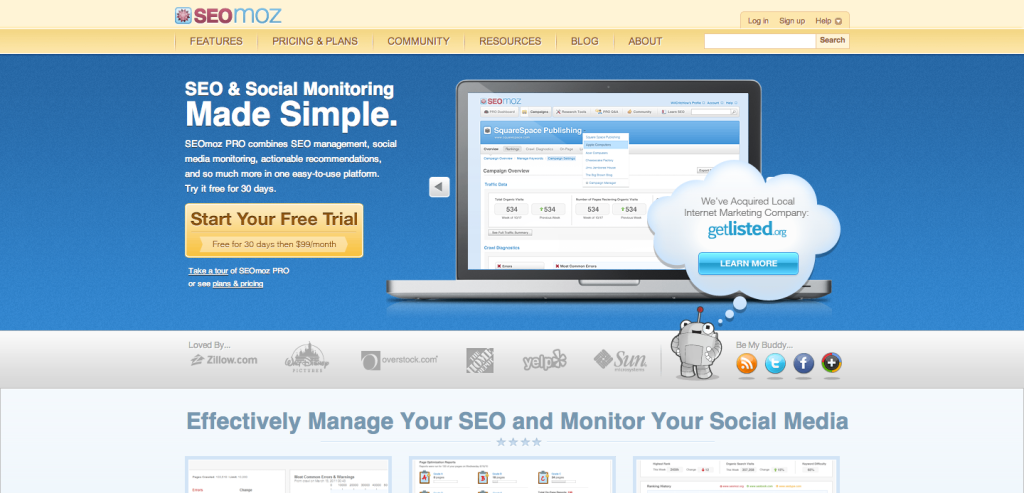
3. SEOmoz

Sure, social media is redefining search as we know it – Google and their use of Google+ as the hub that binds social and search together is proof of that. However, SEO still plays a key role in being found online, and the guys at SEOmoz are just the people to help guide you in mixing social search and SEO perfectly. Their Whiteboard Friday sections are essential reading, as is the rest of their blog.

Subscribe to SEOmoz here.

SEOmoz

4. tickrblog

Sometimes you want a really easy read, one that you can skim and be done with in a minute or so. Other times, you want solid data, facts, in-depth information and more – the tickrblog provides that. Dissecting industry expert analysis and taking social media to where it really needs to be for businesses – lead generation and sales success – the tickrblog isn’t easy reading, but it is damn fine reading.

Subscribe to the tickrblog here.

tickrblog

5. AGBeat

The problem with many business blogs that purport to be for businesses of all sizes is that very often they’re not. Instead, they simply cater to organizations and enterprises that can afford the solutions on display. Thankfully, AGBeat isn’t one of these blogs. Offering tips, advice and reviews for all business, but in particular the small-to-medium business owner space, it’s a great read covering a multitude of news and industries.

Subscribe to AGBeat here.

AGBeat

So there you have it ? 5 blogs that keep me thinking, and ones that?ll do the same for you. Next up I?ll be looking at 5 influence platforms for you to watch in 2013, so I hope you can join me then.

In the meantime, what blogs do you think we should be reading in 2013? The comments are yours.

5 Bloggers to Watch in 2013

best practices blogger outreach

As we come to the year end, I traditionally wind down by highlighting people and news to keep an eye on in the year to come.

This year is no different, (yeah, I’m predictable that way) so to kick things off, and in no particular order, here are 5 bloggers you really should subscribe to in 2013.

1. Jon Loomer

Jon LoomerJon Loomer is a guy that’s been on my radar a little while now. He’s been a fairly regular commenter here in the last 12 months, and we’ve interacted on Facebook and Twitter as well – but it’s only recently that I really checked out his blog (thank you, Disqus Community options!) and I’m glad I did.

His blog primarily looks at how you can use Facebook for your business, as well as answering questions you may have on the platform in general. A mix of analysis, podcasts and interviews, it’s a great read for anyone looking to make the most of the world’s largest social network.

Subscribe to Jon’s blog here.

2. Lisa Gerber

Lisa GerberI first got to know Lisa Gerber from working with her when she was part of Arment Dietrich, and I knew then that she was a smart cookie. Lisa recently left Arment Dietrich and started her own company, and her blog’s become a staple part of my reading diet.

Offering a mix of smart social media tactics, PR and communication best practices and more, Lisa’s Big Leap Creative blog will help you understand social media just that little bit more in 2013.

Subscribe to Lisa’s blog here.

3. Ryan Hanley

Ryan HanleyRyan Hanley is someone else I’ve known for a little while now, and we’ve shared some great exchanges in the comments of both this blog and others across the web. Ryan has an interesting approach – his day job is in the insurance industry and he uses his content marketing blog to advise not only his peers in the industry, but also anyone who’s looking to use content to market their business.

Currently offering a mix of podcasts and the written word, Ryan has big plans for his blog next year, making now the perfect time to get to know him.

Subscribe to Ryan’s blog here.

4. Ralph Dopping

Ralph DoppingI was fortunate to meet Ralph Dopping (albeit very briefly) at a social media event in Toronto this past summer. I’d known him before then through Twitter and the comments on this blog, and meeting him in person just confirmed what I already knew – that he’s a really nice guy with a great sense of humour. He’s also a great blogger.

Ralph’s View From Here blog – which is a team effort with his partner Janine – does exactly what it says on the tin – it offers Ralph’s take on a wide variety of topics, from social media and business to architecture and design best practices. It really is a blog that offers something for everyone, and deserves your attention in 2013.

Subscribe to Ralph’s blog here.

5. Mickey Gomez

Mickey GomezMickey Gomez is one of my favourite people in the whole world. She’s smart, has a wicked sense of humour, and is also one of the kindest people I know too, who supports so many charitable causes – and helps raise awareness and money for them – I don’t know how she has any free time to blog. But I’m glad she does.

Her Life and How to Live It blog is chock-full of anecdotes, pithy quotes and personal stories that will make you laugh and cry in equal measure (although it’s the good, sentimental storytelling kind of cry). If you’re tired of the usual social media and marketing fare, Mickey’s blog is the perfect remedy. Even if you’re not, it’s still the perfect remedy – trust me.

Subscribe to Mickey’s blog here.

So there you have it – 5 bloggers that inspire me to think more, and who’ll do the same for you. Next up I’ll be looking at 5 blogs for you to watch in 2013, so I hope you can join me then.

In the meantime, which bloggers do you think we should be watching in 2013? The comments are yours.

Instagram, Social Media and the Opt-Out Economy

Instagram terms

If you follow any kind of tech or social media news, you’ll know about the announcement from mobile photo app Instagram and its new Terms of Service that come into play on January 16.

If you haven’t seen any of the stories, the main gist of it is this:

  • Instagram’s owners, Facebook, will have the perpetual right to license all public Instagram photos to companies or any other organization, including for advertising purposes.
  • Ads may or may not be disclosed to the user.
  • A business may take your uploaded photo, use it in an ad, and not have to compensate you.
  • If you continue to upload images after January 16 and then decide to delete your account, your images can still be sold by Facebook as their property.

While there are some questionable inclusions on these new terms – I’d love to hear what the FTC has to say about non-disclosure of ads, which completely contradicts their edicts – it’s the last one that is the most concerning, since it enforces my view that we’re now part of the opt-out economy.

Whatever Happened to Permission Marketing?

In 1999, author and marketer Seth Godin published the seminal Permission Marketing. While the ideas in the book weren’t completely new, it was a wake-up call to marketers and businesses everywhere.

Instead of spamming people with crappy marketing messages they didn’t want, and invading email inboxes with newsletters they weren’t subscribed to, a new best practice emerged – let the people choose what they subscribe to, and what messages they received.

Since then, various laws have come into place to protect consumers – the CAN-SPAM Act covers all commercial messages, while the U.K. introduced the Privacy and Electronic Communications (EC Directive) in 2003, requiring opt-in for all email marketing campaigns.

So far so good, right? Except in today’s digital landscape, where it seems?we’re moving more towards the opt-out economy versus the opt-in one we fought so hard to create and support.

Social Scoring and Signing In Before You Can Leave

For most social networks – Facebook, Twitter, etc., – you still use the opt-in process. So, I need to physically sign up to use Twitter’s platform if I want to tweet. For the most part, this is how social platforms work. Then social scoring arrived and opt-out seemed to be the new opt-in.

The most well-known of the social scoring platforms, Klout, created a profile for you whether you liked it or not. If you had a public Twitter account, you had a Klout account.

If you didn’t want to partake in Klout’s promotion of you to their advertising partners, you actually had to create an account with Klout just to delete it, completely going against the idea of permission marketing and consumer wishes.

Klout’s reasoning is that they’re only accessing information that is publicly available, and that’s true. The main problem is your Klout score can impact how you’re perceived by companies and other online users – and you have no say in that, unless you sign up to try and play that system.

However, the bigger picture here is the question of opt-out versus opt-in, and Klout’s successes (millions of users and supporters and thousands of partners) seems to indicate opt-out can be a workable process.

The Instagram Question

Which brings us back to Instagram’s recent policy announcement. While it could be argued that unless you pay for the product you are the product, Instagram’s wording goes way beyond that. Consider this:

  • When you share photographs on Instagram that include other people, and that photo is then sold or used by an Instagram partner in a promotional campaign that goes against the beliefs of your friend in the picture (she supports PETA and Instagram use your image in a fur coat promotion), your friend can’t do anything about it because it’s your photo.
  • If Instagram has the right to access your friends’ details on Facebook during the sign-in process, you’ve essentially sold their details to Instagram’s partners and they may never know that until they start getting bombarded with partner ads.

These are just two areas that the new policy could potentially be used. Not only can you not opt-out of this happening if you stick around after January 16, your friends (who may not even be on Instagram) have even less of a chance to opt-out of their likeness being used for promotional gain.

Here’s another angle to take:

I get a picture taken with you. I work for a brand, and I use Instagram. I tell Instagram all pictures are my property and all people in them agree to be shared. Then I, as the brand employee, put that picture up with a promo for Westboro Baptist Church (let’s say they’re a client), with the caption “We support the ban on gays” next to a book entitled “Why The Real Family is a Man and Wife Family”.

By definition, and your inclusion in that picture, you now endorse both Westboro Baptist Church and are anti-gay. Would you be happy with that possibility?

Understanding this, and seeing what could potentially happen, is the reason Facebook posts and news article comments are alight with concern from current Instagram users, many of who have said they will be deleting their accounts.

You could argue that we give up the right to any true privacy when we open up an account with these apps and, for the most part, you’d be right. When you use something for free that costs money to maintain, there needs to be some revenue option that kicks in.

The problem with the Instagram change, though, is that Facebook are essentially saying “You’re our new freelance photographer but we’re not paying you” as well as curtailing your basic right to hold on to your property when you leave a platform.

And it’s that last point that could well be the straw that breaks the Instagram camel’s back. Time will tell.

Update: December 18, 5.00pm EST – Instagram co-founder Kevin Systrom has updated the corporate blog with an explanation (though it doesn’t address the FTC/non-disclosed ad concerns).

Update: December 23 – A class action lawsuit has been brought against Instagram for breach of contract.

image: Casey Neistat

  • « Go to Previous Page
  • Page 1
  • Interim pages omitted …
  • Page 99
  • Page 100
  • Page 101
  • Page 102
  • Page 103
  • Interim pages omitted …
  • Page 283
  • Go to Next Page »
© 2026 Danny Brown - Made with ♥ on Genesis