• Skip to primary navigation
  • Skip to main content
Danny Brown

Danny Brown

podcaster - author - creator

  • About
  • Podcasts
  • Journal

social media

Sunday Brunch – Small Steps in Social Media

Sunday brunch

Sunday Brunch with Danny BrownWelcome to a new episode of Sunday Brunch, where we talk about your questions on social media, marketing, business tips, entrepreneurship and more.

Today?s question is from Claire of Selection Criteria, an Australian-based recruitment firm for government (and my apologies for getting it the wrong way round in the video!). Claire?asks:

?What would your advice be for small business with limited time and budget in terms of setting up a social media strategy? There are lots of avenues to pursue, so where should they start, and what should they leave for later??

Thanks for the question, Claire, and I hope the video helps.

If you have a question, you can send it in via the form below. There?s also a file upload option, if you want to send in a picture of your favourite Sunday Brunch place.

Cheers, and see you same time, same place next week for some more Sunday Brunch chats.


This post contains a video. If you can’t see it displayed properly in your feed, you can view it directly here.

[gravityform id=6 name=SundayBrunch Question Form]

Common Courtesy? Yes Please, Thank You!

Thank you from Jugnoo

Ingrid Abboud

This is a guest post from Ingrid Abboud.

You’re at a dinner and someone compliments the outfit that took you 20 minutes to pick out. What do you say?

You’ve written an article which took you 15 minutes to research and another 30 minutes to write. Your friend likes it and shares it with some of his friends. What do you say?

Besides the Ghost Busters tune that’s now ringing in your head, err…at least in mine, do you get where I’m going with this?

Great, I had no doubt that you would.

Don’t get me wrong, I’m not preaching on how you should live your life and this is NOT another post on Twitter Etiquettes.

Let’s face it, we’ve all read enough of those to conclude for ourselves that:

  • Although there are preferred tweeting methods and friendly guidelines – there is no specific, agreed upon, set of rules.
  • Your technique may rock for you and your twitterverse – but it may suck for others.
  • No matter what and how you tweet – you can’t please everyone.
  • Common sense and courtesy may not always be applied. But then again, you should already know that by simply being alive.

Common Courtesy

Speaking of common courtesy, how many of you say “thank you” for retweets when you think it’s appropriate?

“Joey put your hand down for Pete’s sake, this isn’t grade school! I know you do.”

“Troy, don’t think I haven’t noticed you cheers’ing me in the @mentions a few times .”

“And Danny, we all know that behind the badass facade, is the most genuine of nice guys who never takes his friends and readers for granted.”

Now, if you know me well enough, you know that I say “thank you” somehow.

I may miss a few here and there, and that’s okay. But I’ll be damned if I don’t try my best. Hell, I even say “thank you” for #FF’s, especially if someone’s gone the extra step and added a little something to it.

It’s common courtesy folks and it goes a long way.

If someone’s taken the time to read and RT an article of mine, I’m gonna take 5 seconds to thank them – either through a @reply or a DM. Although, I don’t know whether they actually read it or not, I do know that for whatever reason, they thought it worthy of sharing.

So what do I do?

@DannyBrown: Hey Bonsai Boy. Thanks a lot for the RT on my Bring IT! post. Have a great week. Cheers.

That took all of 5 seconds to type.

Was it painful? No! Was it polite? Yes! Does it express my gratitude? Yes! Will Danny appreciate it? Probably.

Now if you plan on arguing that some people get RT’d 700 times and that it’s hard to keep up then, sure…I hear you and I agree. But let me ask you this – how many of you reading this piece get their blog posts retweeted 700 times? 300 times?

Hmm…that’s what I thought; not many.

Unless you’re someone like Godin, Brogan, Clark or Rowse, I sincerely doubt that the twitterverse goes into “RT-mania mode” every time you publish a post. But in case it does, then spill your guts and tell me your potion, cause I’m jealous but I’m all ears!

Clutter, Schmutter

Thank youDo “thank you’s” clutter a stream?

Well, if you’re looking at it that way, then everything is clutter. The noise is everywhere you turn. Twitter is one big chatter box and if you don’t like it then I suggest you consider a different “non-social” information network.

Seeing “thank you’s” in someone’s stream, only enhances it. It shows they’re human; it means they interact and care. Because if they didn’t give a whoop about their posts being retweeted, they wouldn’t have a tweet button on their blog now, would they?

In his panel discussion with Joe Hackman, Danny Brown said, “You’re only as influential as your audience allows you to be.”

How long do you think your audience will stick around if you don’t show them you’re listening or that you appreciate them? Granted, there are many other ways to do so.

That being said, I don’t hold it against you if you don’t thank me on Twitter. You’re probably doing something else that I like. After all, we all have our different ways or techniques that work for us.

Suh..weet Alternatives

So, if you’re not the “thank you” type of Twitterer for whatever reason – why not consider doing something else to show your appreciation?

Here are a few great alternatives which I sometimes use that work just as well.

  • Visit their blog and RT one of their posts
  • Leave a comment on a post I enjoyed
  • Subscribe to their blog
  • Link to a noteworthy article that they wrote
  • Give them an #FF shout out
  • Follow them back if I don’t already (if their Twitter profile interests me)
  • Vote for their blog post on SERPd
  • Stumble one of their blog posts
  • If I like their writing style, I can invite them to guest post for me (once I open my blog for GP’s)

Now it’s your turn to share…

Do you thank people when they RT your blog post?
Does it depend on who RT’d it?
What else do you do to reciprocate the gesture?

About the author: Ingrid Abboud aka ‘Griddy’ is a whole lot of things with a ridiculous amount of interests. For one, I’m a Social Media enthusiast with a tremendous passion for writing and blogging. I’m also a pretty cool Copywriter but a more serious MarCom Consultant. But most of all, I’m the proud owner and driving force behind?nittyGriddy.com – A Kinda Social Media Journal with entertaining SM ramblings, Net News & more. You can follow Ingrid on Twitter @nittyGriddyBlog.

image: NguyenDai

Internet Fame and the True Impact of Influence

Affiliate marketing masks

DSCN1849.JPG

You may be aware that there is a big debate going on in the social media blogosphere about ?influence? (and you can see links to several blog posts at the end of this one for examples of these discussions).

How we need to leverage influencers in our communities in order to get the word out about our causes, brands or services, etc. And that makes total sense from a generating-word-of-mouth point of view.

But hold on.

If you?re trying to do this, what if you don?t actually know who your industry influencers are? Perhaps because you?re not really immersed in your own open community, or because your community is too large or public-facing to be able to list your champions in an organic way, you?re just not seeing it?

So you begin to use some of the tools out there that purport to measure influence, and you start to think, ?This isn?t as easy as it sounds.?

Maybe you?re starting to think that influence is not about how many followers someone has on Twitter. ?Maybe you?re starting to think that ?influencer scores? are totally meaningless for your goals and objectives.

So what is influence, really?

Can it be measured (and if so, how)? How can you find the influencers in your industry? Do apps?like Klout or Twitalyzer really work to automate this? Or?is this all bunk?

A group of us are going to be talking about Internet Fame and the True Impact of Influence in a new BlogTalkRadio show on Wednesday February 9 at 10pm ET.

This new show is the brainchild of some really smart social media practitioners and consultants from various industries, and the purpose of the show is to debunk some of the social media bubble/hype around various issues. The tone will be irreverent, but the conversation and concerns around the topic are very real.

I hope you?ll be able to join us (expect the accompanying chat to be lively and extremely snarky!), or listen to the podcast afterwards (bookmark this page and come back to listen!).

I?ll be hosting this inaugural episode (uh-oh!) and Tamsen McMahon, Lisa Thorell, Allyson Kapin, Rich Becker and Olivier Blanchard will be chatting live with me on the night. But, as it?s BlogTalkRadio, anyone can call in and ask the panel questions. Lots of other people with thoughts on the topic will be listening in and participating by chat.

In preparation for the radio show, here are some of the blog posts the group may be referencing.

  • 4 Things You Need to Know About Influence ? Tamsen McMahon, on Brass Tack Thinking
  • It?s About Impact NOT Influence ? Allyson Kapin on Frogloop
  • The Influence of Trust ? Danny Brown
  • Artifacts of Influence: grassroots movements, familiar strangers and the power of the social media daisy chain. ? Olivier Blanchard
  • Flipping The Scale: Influencers Are The Most Influenced ? Rich Becker on Copywrite, Ink.
  • Klout & Critics: Time to Close the Door or Kick it Wide Open? ? Lisa Thorell on Digital, Ink.
  • Strength of Community Supersedes Influence ? Geoff Livingston
  • Why I?m 10X As Influential As Ashton Kutcher On Twitter* ? Chris Yeh, Adventures in Capitalism
  • The Holy Grail of Online Influence vs Our Current Measurement Limitations ? Beast of Traal
  • How do you evaluate influence? ? Jeremy Porter, on Journalistics

So put the kids to bed, grab your tipple of choice, and join us on Wednesday evening!

This post is derived from Maddie Grant and SocialFish.

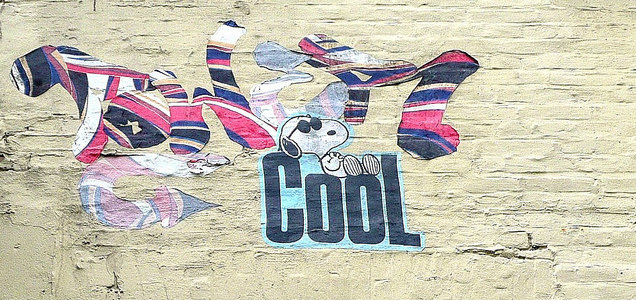
Sorry, Social Media, But Marketing Is Still Cool

Marketing is cool

Marketing is cool

As social media continues its assault onto the mainstream audience, one of the side-effects has been the emergence of the view that marketing isn’t allowed in the space.

Conversations on blogs, Twitter, LinkedIn and elsewhere are vocal in the opinion that marketing is dead; we choose who we buy from and whose reputation we ruin; what gets our eyeballs and what doesn’t.

Simply put, old school is dead; long live the King (of new media school). And, to a degree, it’s correct – old school is dead.

But let’s not get too carried away by our new best friend social media, either.

Any time a new marketing platform comes out means that the “old school” is dead as it was; but now you use it in conjunction with the new. The view that we (as consumers) have all the power and that brands now need to listen to us is nothing new, either.

Sure, we have a soapbox on which we can stand now that allows us to share our likes, dislikes and outright hatred of a brand, product or service. Not only that, but we can share it with a worldwide audience looking for the next fix of brand assassination on YouTube.

But at the same time, is this really new? Haven’t we always had the power over brands?

It doesn’t matter how great advertising, marketing or PR messages are – if we don’t like something, we vote with our wallets. This has been happening since the dawn of the first trade agreement. Just because Coca-Cola runs a great Christmas advertising campaign doesn’t mean I’m going to suddenly buy Coca-Cola. I don’t like the stuff, so their marketing and advertising is lost on me.

The view that social media has allowed us to force marketers to think differently isn’t completely true either.

Good marketers have always planned with their audience in mind – it’s one of the key tenets to marketing in the first place. We don’t just come up with an idea and hope it works – like a duck on water, there’s a lot more going on that you can’t see, while the pretty stuff on public view looks effortless.

Additionally, good marketers have always known when a message is right, if the timing is there, and reacted as a campaign has progressed, using analytics and feedback. Kind of like social media does – the main difference is now you have instantaneous feedback to work from, as opposed to waiting on figures coming in from print or TV/radio media.

There’s no doubt that social media is one of the biggest changes in the marketing landscape (and the business one in general). When it comes to tracking, measurement and engagement prior to, during and after the launch of a product or service, social media offers a great range of options.

To say that it means marketing is no longer needed, though, is missing the boat slightly. Like any sound business, the good marketing tactics will work and the lesser ones won’t, especially when they’re integrated as opposed to segragated.

But isn’t that how it’s always been?

image: MIgracionTOtal

Why Affiliate Vendors Need to Start Taking the Rap

Affiliate marketing masks

Affiliate marketing masks

There’s a lot of news about disclosure online at the minute.

I’ve written about it a ton of times (and spoke about it over at Joe Hackman’s radio show), and smart bloggers like Lorelle are giving some great tips on how bloggers (and other online network users) should go about disclosing their affiliate or professional relationships (thanks to Christina Kingston for the heads-up on Lorelle’s post).

It’s becoming even more important as the U.K. joins the U.S. in cracking down on non-disclosed social updates, whether it’s on your blog, Twitter, Facebook, or anywhere else.

Simply put, if you’re using your platform to promote a service or product on behalf of someone else, you need to state that relationship clearly. Unfortunately, many bloggers and social network users are failing to do this – and the blame’s not entirely theirs.

Instead, it’s the affiliate vendors who are letting their affiliate marketers down.

Yes, You Do Have a Responsibility

I once asked a vendor about their approach to disclosure. The vendor in question makes a product, and a lot of people sell it as part of an affiliate scheme. The product’s very popular, so the vendor has probably made a nice amount of income from it.

I’d seen a lot of tweets and blog posts about this product, where it was clear the affiliate link was being used but not disclosed. I asked the vendor if they were aware, and why they weren’t being more vocal in ensuring affiliate links were disclosed. The vendor’s response?

“Of course, we’d prefer all links to be disclosed. But it’s not our job to police all our affiliates to make sure they’re adhering to the guidelines.”

I disagree and call BS on that.

The minute you make someone a salesperson for your company – which is exactly what an affiliate seller is – you have a responsibility to make sure they’re representing your company properly, and that they’re not breaking any laws in the process of that representation.

It’s your responsibility to make sure that they’re aware of any online regulations, especially in the wake of the FTC and ASA rulings in their respective countries. Saying you have it covered in your Terms and Conditions is an easy out, as we all know how often people read the small print (hint – not a lot).

If you’re not making it clear to your sellers what they need to be aware of, you’re setting them up for legal action or, at the very least, a need to take down their promotion of your products.

But there’s another reason why you, the vendor behind the affiliate program, needs to make sure your bloggers, tweeters or whatever, are disclosing their affiliation to you. The FTC doesn’t really care about the bloggers.

Instead, the FTC will be coming after you.

Bloggers 1, Vendors 0

In the most recent update to their guidelines, the FTC makes it clear who’ll suffer for non-disclosure. “We’re not monitoring bloggers and we have no plans to. If law enforcement becomes necessary, our focus will be advertisers, not endorsers – just as it’s always been.”

Of course, this shouldn’t be taken that bloggers no longer have to disclose – that’s still a given, as it is with Twitter, Facebook and other social network updates. However, it does mean that vendors can no longer claim to have no responsibility to “police affiliates”, because it won’t be the affiliates who get taken to court for non-disclosure – it’ll be the vendors themselves.

The funny thing is, the vendors can make it easier on themselves with just a simple, big bold piece of copy that all new affiliates see when they sign up to an affiliate program:

“Due to regulations regarding the disclosure of beneficial partnerships, we must ask you to make sure you disclose any affiliate links when talking about our product, regardless of where you are.”

This covers everyone – even if they live in a country that doesn’t require disclosure at the minute – and the affiliate can’t say they weren’t aware of the regulations, because they’ve agreed to them before being allowed to become part of the affiliate program.

PR and marketing programs could also adopt this approach, so any bloggers or Twitter users, etc, that are part of a promotional program know they have to make sure they’re not misleading anyone with their promotional updates.

Heck, it’d even offer those vendors moaning about policing their affiliates a fix, since they’ve made it clear and simple to understand what’s required from their affiliates, as opposed to being hidden in some small print.

I don’t know – seems kinda simple to me. How about you?

image: poropitia outside the box

  • « Go to Previous Page
  • Page 1
  • Interim pages omitted …
  • Page 12
  • Page 13
  • Page 14
  • Page 15
  • Page 16
  • Interim pages omitted …
  • Page 55
  • Go to Next Page »
© 2026 Danny Brown - Made with ♥ on Genesis