• Skip to primary navigation
  • Skip to main content
Danny Brown

Danny Brown

podcaster - author - creator

  • About
  • Podcasts
  • Journal

Insights

You Don’t Always Need 100 Million Dollars or 100 Years for Traditional Advertising to Work

Elle advertising

First, a caveat: I’m a big fan of Brian Clark and his Copyblogger brand, so this post isn’t a “dig” – more an alternative point of view.

Over at Copyblogger, Brian recently posted this graphic:

Traditional Advertising Works Great ...
Like this graphic? Get more content marketing tips from Copyblogger.

Since Brian is in the content marketing arena (and been very successful in it), it’s understandable why he posted this. Since social media became more mainstream, traditional advertising has long been the brunt of points of view that it’s on its way out.

And it may well be – just not at this moment in time.

While there’s no doubting that social media can offer a much better return as far as in-depth analysis goes on campaigns, investments and success metrics, it’s missing the point a little to say this is where all advertising success happens.

While Pepsi may have switched their $20 million ad budget to social media for the Superbowl, the majority of advertisement at that event still comes from TV slots. And, looking at the results of the Pepsi social media experiment, perhaps that will continue for the foreseeable future.

The Traditional Advertising Effect

Perhaps the biggest problem is what exactly counts for traditional advertising? With the blurring of the lines between media, whether that be social, print, mobile or TV, it can be confusing to lock down what’s seen as new media and what’s classed as traditional.

For myself, traditional covers TV, print, direct mail and radio, although email marketing could be seen as traditional too, since it’s now been around so long.

With that in mind, here are some examples of why you don’t need the 100 years or 100 million dollars from the Copyblogger graphic.

Elle Magazine

Perhaps traditional advertising’s natural habitat, magazine ads still make up a huge amount of the advertising budget for brands. And when you look at something like Elle Magazine, it’s easy to see why.

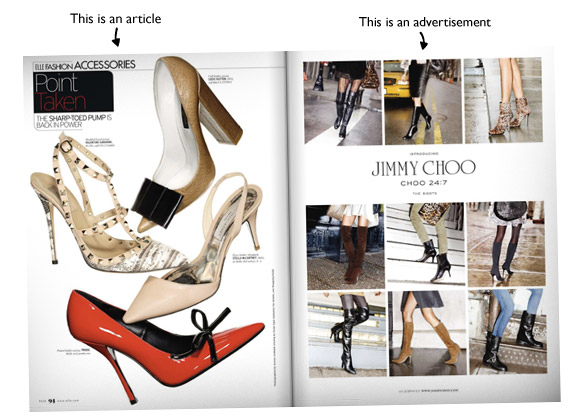
Elle encourages some of the smartest advertising out there, due to its mix of editorial content and related ads opposite the content. A perfect example is the image below (taken from baekdal):
Elle advertising

Immediately you can see how the fashion items being written about look when worn and, for any fashion-conscious person, you can never argue with seeing your new love in action.

It’s this kind of approach that saw advertising spend with Elle rise by over 12% last year. And advertisers don’t buy new ads unless their product campaigns – and, therefore sales – are successful.

Laconia Development

San Diego agency Castle Advertising share many success stories on their website, but one that stands out is their campaign for Laconia Development, a local residential developer.

Laconia’s goal was to sell the remaining units on an urban neighbourhood property, but they were struggling to do so due to the economy and slow real estate sales in general. Castle’s brief was to generate awareness and pre-qualified registrations for a one-day sales event.

Thanks to a strategy that included radio, TV, building banners and email marketing, as well as full-page ads in local publications and unique phone number tracking, the results were impressive: 70% of the units were sold, with 200 registrations pre-sale at a cost of less than $500 per registration.

James Ready Beer

If there’s one market that’s hugely competitive, it’s the beer market (just look at how much is spent by the likes of Budweiser on brand messaging and sponsorship at huge events).

Because of this competitiveness, smaller breweries have to look at ways they can stand out, catch peoples’ attention, and enjoy a return on their limited investment options. Case in point – Canadian brewer James Ready.

To take them to the next level of awareness and sales, James Ready hired Leo Burnett Canada, with media buying and planning support from Starcom MediaVest. Their approach? A billboard campaign.
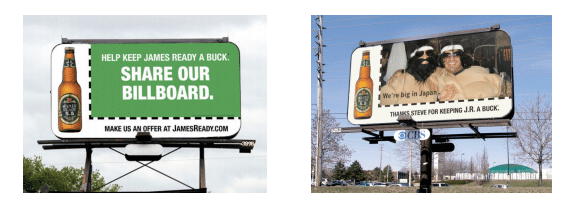
James Ready billboard campaign

But instead of this being a standard billboard approach, the creative saw the 10′ by 20′ billboards secured and rented out to fans of the beer for free. The mission? To let fans create ads about why they loved the beer, and the agency would turn this into the campaign to attract new fans and buyers.

The result? An increase of 55% on sales from the previous period, and a growth in market share of 31%, all from a spend of just over $140,000 (excluding production costs). All in all, not too shabby.

Traditional Advertising Does Work – But So Does All Great Advertising

The point of this post isn’t to lay doubts to the Copyblogger graphic. Like I mentioned at the start, social media (or “new”) advertising is hugely effective.

Yet there are many agencies and businesses flocking to social media, when traditional approaches still have their place. And when you couple both traditional and social together, the results can be outstanding.

At the end of the day, the medium that works best is the one that meets the needs and location of your target audience. For some, this may be a Facebook ad; for others, it may be a Sunday slot in the broadsheets.

One form of media doesn’t necessarily trump the other – far from it. Instead, all you need is what you’ve always needed – smart ideas and a solid strategy to back them up.

And that doesn’t have to mean spending 100 million dollars or a 100 year gestation period to be successful…

If You Want Fierce Loyalty, You Need To Be Fiercely Loyal First

Build fierce loyalty

Build fierce loyalty

Loyalty. A funny concept. One that can mean so many different things to different people at different times.

Sports teams have loyalty from their fans. Well, the true ones do. Think Manchester City as opposed to Manchester United, where the latter?s ?fans? are more interested in prawn sandwiches than a good soccer team.

Indie bands have loyalty from their fans. Until they sign that big record deal, that is, then they become sell-outs.

Humans have loyalty from their dogs. But then you would be pretty loyal as long as you had someone cleaning up your shit.

So, yeah, loyalty ? a funny concept. And yet it?s something that?s so important to so many people, they spend their lifetime(s) trying to work out how they can build loyalty around what they do.

After all, build loyalty, you build bigger success, right? More sales; repeat sales; referrals. Get that gold rush and you don?t have to worry about marketing.

Okay, maybe just a bit about marketing (I?m a marketer by trade, so I?d be dumb to say you didn?t need my services, right?).

So, yeah ? loyalty is something pretty much everyone wants to achieve in some form or another. And not just loyalty, but fierce loyalty. Because if you grab that piece of gold, the world is truly your oyster. That shit starts revolutions.

And so companies spend thousands (millions?) on trying to create loyalty programs. Bloggers spend thousands of words trying to say the things they think their readers want to hear to become loyal. Social media ?gurus? spend all day on Twitter when they should be doing real work, just to try and get that extra loyal follower to buy into their crud.

And it?s all a waste of time. Seriously.

Because you don?t need to spend thousands, if not millions, of dollars trying to build loyalty. You don?t need to be that desperate typist. You don?t need to be that good-for-nothing-except-quotes-for-Mashable social media douche whose only loyalty comes from those laughing at him religiously.

If you want loyalty ? fierce loyalty ? it?s easy. Be fiercely loyal first.

Show people you care. Show people you mean what you say. Every time. Show people they can trust you. Show people you deserve that trust. Show people you?re not a dick who simply panders to those stroking your ego (or your dick). Show people every one of them is equal.

And it?s not fucking hard to do this.

  • If you?re a blogger, encourage dissention of your views and don?t let fanboys be your voice.
  • If you?re a business, embrace your critics as much as your fans (if not more so).
  • If you?re a manager, let everyone speak and not just Tommy Kiss Ass.

In fact, no matter what you do, in what discipline and in what medium, it?s really not hard at all to build loyalty.

Think like the person you want to become loyal to you and ask what really matters to them.

Get that simple thing right and you?ll have loyalty so fierce you?ll wonder why you were making it so difficult to achieve to begin with.

This post originally appeared on Sarah Robinson’s 28 Days to Build Fierce Loyalty series.

image: Jean-

Change Your Routine Or Be Routinely Ignored

Your routine is killing you

You wake up. You wash or shower. You shave (or not). You brush your teeth. You comb or brush your hair. You get dressed. Have breakfast, drink coffee. You go to work.

Safe. Routine. You know what you need to do so well that it becomes automatic. You don?t even need to think about it. Routine is good. Routine makes your day easier.

But your routine is also killing you.

Think about your business. Your customers. Your clients. Your contacts.

Are you?routinely?writing a press release?and mass mailing it?

Are you?routinely messaging your email subscriber list?with the same routine message and the same routine deals and information?

Are you?routinely offering the same Happy Hour drink?deals or 2-for-1 meal offers?

Are you?routinely displaying the same point-of-sale banners?with the same discounts?

Why? Why are you doing this? Is it working for you? Or are you losing mailing list subscribers? Losing sales? Losing customers? Losing contacts from your media list?

Break the routine. Differentiate your contacts, your customers, your clients. Tailor the message. Look at your trends and who?s buying or reading and on what days, weeks or months. Make?that?information your routine.

Routine is good. Routine is safe. But routine also leads to automation and boredom. Break it up a little.

After all, would it really hurt you to brush your teeth?before?you shower?

image:?welovepandas

Why Research is Key and How to Create a Research Station For Your Social Media Strategy

Danny Brown research stations

Back in the day, if you wanted to know how successful your marketing had been you had to use expensive and time-consuming analysis.

You might have spent time putting together a direct mail package that had a call-to-action to return a slip with a customer’s details on it, and the amount returned to you would show how successful that campaign had been.

Of course, the problem is, if you sent out 10,000 flyers, you don’t know how many actually arrived at a home; how many were read versus how many were put in the bin; and how many never made it out the post office.

The only gauge of success were the returned slips, and when you’re spending money and time creating and distributing 10,000 flyers, knowing what worked and what didn’t becomes pretty damn important.

The same goes for radio ads, TV ads, newspaper ads – sure, you’re guaranteed airtime but unless you know who saw or read your ad and what their actions were afterward, you’re no better off than that wayward flyer.

Thankfully, that was back in the day. Now you have a lot more power at your disposal when it comes to grabbing results – and by using the research from that to tailor your future moves, you can have a research station ready for every campaign.

A Research Station?

Sales are great. Sales are what helps pay the bills, pay the employees, pay stakeholders – without sales, no business will succeed. Of course, to get sales, you need to market.

But to market effectively, you need to research and then use the research to prepare your future marketing for your next batch of sales. This is where your research station comes in.

All a research station is is clever use of information-gathering tools, and collating these tools into a cohesive action plan. There are a ton of tools to use, but I’m going to look at some of the best free ones and how you can use them for your needs.

So, first things first – where to start.

Building Your Research Station

To build a solid and practical research station, you need to know where to grab your information from. This isn’t as difficult as it sounds (although the level of information will vary – free is good, but premium research will always offer more).

The best way to carry out any research is to have the information at hand you want to know about. Then you start collecting the bricks to build your station.

  • Google Alerts. Still one of the best tools for knowing what people are saying about you and your company. Set up your keywords, set up the frequency of alert, and let Google Alerts do the rest.
  • Social Mention. One of the best free solutions for finding information across the social web, Social Mention even gives a basic overview of sentiment and shared value.
  • Social Search. Not a single tool as such, but using platforms like Twitter Search and Facebook Search (amongst others) can yield a ton of information.
  • Analytics. Research is nothing without analytics. Choose from Google Analytics, Quantcast, Expo-Maxx or Sitemeter for some free options.
  • Vanity URL’s. Having a call-to-action is great – having a call-to-action that appeals to your audience is better. Use URL services like bit.ly or budurl are great for providing URL’s to increase your level of attraction. (budurl is premium but offers a free trial.)

These are just some options I recommend. As I mentioned earlier, Google is your friend, so use its search to see which other platforms might interest you.

So now the bricks are in place to build, it’s time to solidify the foundations by mixing them together.

A Research Station Campaign

Because each tool above (and any you find to use) offer different strengths, the easiest way to show an example of how to use them together is with a dummy campaign. Hopefully, this can be transferred to your needs.

Let’s say you have a widget to sell. It’s not a revolutionary widget, but it’s a damn cool one. So you want to market the heck out of it and sell a ton, and retire to Barbados.

While you still use TV, or radio, or other “traditional media” to advertise, this won’t tell you why your widget is selling (other than folks like your advert, possibly). This is where you combine the research station with the media station.

Media station

Every flyer or ad you send out comes with a vanity URL (make sure the URL appeals to your audience and the needs your widget meets). This URL sends interested folks to a micro-site built specifically for the campaign.

Every area of advertising or marketing also has its own URL – so newspapers, radio, TV, etc, would be URL/tv or URL/radio (just as an example – you can be more creative).

To make your campaign even more effective, use multiple URL’s to take people to different pages of your site, based on demographics, type of widget, location, etc.

The micro-site has more call-to-actions, like a downloadable mobile APP or a QR code to scan, along with a newsletter sign-up for free updates about the widget, etc, where to find you online and more. Or you have coupons to download to get discounts from offline purchases, or to share with your friends.

You have your analytics package set up ready to grab the information about your visitors as they arrive and leave.

Your campaign is also set around specific keywords, which should also be in your micro-site URL for added visibility and measurement.

So now you have all the pieces in place, and you’ve sent the marketing out, it’s time to use your research station to gauge, measure and act upon.

Planning New Stations

By setting up your research station before your campaign – alerts, URL’s, micro-sites, type of media, what message is going to each, etc – you’ve created the basis of what information you want to receive.

This, coupled with sales of the widget from the campaign, can give you focused information that will make your next one even more effective.

So what do you take from each nugget?

    • Google Alerts. Set your keywords up from your campaign, as well as the widget name, the company name, the website address and “blog posts about WIDGET NAME”. See when you’re mentioned; where; who by; what topic they normally talk about, etc.


    • Social Mention. Type in your keywords and marketing efforts (WIDGET X on the radio, for example). Bookmark the most relevant mentions from the network results. Measure the Positive/Negative/Neutral feedback for each term.


    • Social Search. Much like Social Mention, but this time view more about the demographics on who’s talking about you. What Groups do they belong to on Facebook? Are they part of a bigger picture (mommy bloggers, widget enthusiasts, etc). Are they sharing you with their networks? If so, good or bad?


    • Analytics. Which URL’s were used? Which landing page had the biggest bounce rate? Why? Did your call-to-action work? How many apps or coupons were downloaded? What nationality was your biggest visitor base?


  • Vanity URL’s. Which keyword URL drove the most traffic? What medium offered the most return? Were location-based URL’s useful?

By collecting all of this information and more, you’re painting a picture of your customers, and how they want to be marketed to.

You’re no longer guessing about which media worked and which didn’t. No longer questioning traffic spikes and who was responsible for them. No longer wondering if people were liking your approach or if they bought on a whim.

Once you have that, it’s not rocket science as to what comes next – you use that information to get rid of the crud and build upon the good.

You eliminate the need for costly mistakes and solidify the best parts of your previous campaign into your next one. And your next one. And your next one.

You win, the customer wins – result.

How about you? How are you building stations and what binds yours together?

image: Zanthia
image: Krista76

The Clear and Continuing Need for Blogger Outreach Specialists at PR Agencies

Last week, I received an email pitch from a PR agency looking to feature their client on my blog. The pitch was friendly enough, but had one glaring error. Here’s the pitch:

Hi Danny,

Thanks to social giant Klout, Badgeville gamification customers can now associate a numeric score with social interactions.

Bottom line: companies will find it a whole lot easier to influence the behaviors of their customers.

Badgeville will leverage Klout?s influence-ranking technology to help enterprise leaders increase online engagement. The partnership will allow businesses to pinpoint which customer/employee carries the most influence and provide key analytics to score social influence.

I?d be more than happy to put you in touch with Badgeville and/or Klout to discuss what this means for social business. Please let me know if you are interested.

Thanks and Happy Friday!

Like I said, the pitch is friendly enough and offers a quick, punchy overview of why I might be interested, which is always a bonus. It sure as hell beats some of the pitches I receive!

But, as I also said, there’s one glaring error – the sender of the email clearly isn’t aware that there’s no chance in hell I’ll write about Klout in any way that promotes them.

As I’ve mentioned a few times, my opinion of Klout is that they’re unethical, they ignore user concerns, and?issue pat responses to criticism. Simply put, I think Klout is a joke.

Unfortunately, the fact I was sent the pitch demonstrates another example of how pitching needs to adapt, and PR agencies would do well to have either a blogger or someone that truly understands blogger outreach as a core promotional outlet versus just another?medium.

Bloggers Aren’t Special, Just Different

It used to be really easy to promote a client’s story. Grab some quotes, some images, meld into a news release, and send out to the wires. Newspapers and trade publications would run features, and clients would be happy with the exposure.

NB:?For my friend Gini, I know there’s a lot more to PR than news releases and publicity – I’m just using as an example here.

Then along came bloggers, and their taking over of the media as the perfect news channel. Since they weren’t (usually) limited by editorial, nor were they necessarily baised to brands or products, they offered a great alternative to traditional print media.

They also offered excellent SEO juice, as well as a captive and trusting audience in the blogger’s community of readers and subscribers. The problem was, the strengths and attraction of a blog were also its sore points, at least as far as PR agencies were concerned.

Because of the trust and non-bias bloggers could offer, they had to be approached differently.

Instead of blind pitching to a publication, where there were scores of journalists a pitch could be dispersed to, blogs are very often solo-driven. Sure, you have your Techcrunch’s and your Mashable’s but more often than not it’s individual bloggers with engaged communities that are approached.

And they need to be approached very differently.

Blogger Outreach – It’s Not That Hard, People

The difference in approach is exactly why you’ll hear good PR agencies (and marketers, and strategic advisors) talk about blogger outreach programs, and how they tailor their approaches and make sure the blogger is a fit for the client.

The reason for this is simple: a blogger’s key currency is their audience, and there’s no way a good blogger will ever risk that for a story that doesn’t fit and is clearly promotional.

If I suddenly started writing great things about Klout based on the pitch I received, my readers would call me out for double-standards, and rightly so. The same goes for any blogger, and emphasizes the point about the outreach hitting the right targets, which this one missed.

The thing is, blogger outreach is actually pretty easy – if you let it be:

Take the time to research the blogger.

Seriously. That’s all it takes. (Okay, it takes a wee bit more to build a great blogger program, and these six blogger outreach pointers from Monica O’Brien are great guidelines to help you with this.)

But as an example of knowing your target, all it would have taken was for the PR person that emailed me to use the search box in my sidebar, and type in Klout.

That would have shown my opinion of Klout and that I wouldn’t be interested, which?would save the agency time and negate the need to tell the client why they didn’t get editorial placement on certain blogs.

Because, ironically enough, bloggers (mostly) do?want to help PR agencies share their clients -?especially if it helps benefit their community and let the blogger share early news about an awesome and relevant product or service in their niche.

So, PR folks. It’s simple. If you don’t have a blogger outreach specialist as part of your make-up, it’s becoming increasingly important that you do.

Blogs aren’t going away any time fast – but your clients might if the coverage isn’t there because your outreach wasn’t researched…

image: bamalibrarylady

  • « Go to Previous Page
  • Page 1
  • Interim pages omitted …
  • Page 54
  • Page 55
  • Page 56
  • Page 57
  • Page 58
  • Interim pages omitted …
  • Page 174
  • Go to Next Page »
© 2026 Danny Brown - Made with ♥ on Genesis