• Skip to primary navigation
  • Skip to main content
Danny Brown

Danny Brown

podcaster - author - creator

  • About
  • Podcasts
  • Journal

Marketing

The Demand Metric 2014 Outlook Study: Highlights and Horizons

Danny Brown research stations

2014 outlook study from Demand Metric

As a global marketing research and advisory firm with over 38,000 marketing professionals, CEOs and business owners using their services, Demand Metric is perfectly placed to gather the kind of insights and data few advisory firms have access to.

This can range from custom research studies (like the one shared here today), to a repository of business tools, templates and more to help businesses align their goals with the right data, strategy and technology.

It’s from this data that Clare Price, VP of Research at Demand Metric, has collated and released their benchmark 2014 Outlook Study: Highlights and Horizons, which shares insights from 2013 and where that’s taking us in the year ahead.

The Highlights of 2013

If there were two major impacts on the business landscape last year, it was the year that the customer really came to the fore.

Sure, social media has enabled the average consumer a bigger stage on which to better communicate with brands – but now these brands had much stronger tools to analyze and learn from these conversations.

Additionally, it was also the year that saw Marketing consolidate its position at the forefront of revenue production, as well as enabling the customer life cycle to be better understood across all facets of the business.

As a result, some key shifts began to happen.

Quality Lead Generation is Playing a Bigger Role

While a digital strategy is still primarily about growing brand awareness and driving web traffic, lead generation is enjoying increased importance.

Better leads

Not just lead generation, but better quality leads, showing that segmentation and remarketing is being used properly in digital marketing campaigns. Conversion still needs to increase to complement the lead, but as data analytics improves, so should the lead to conversion ratio.

Making Digital an Experience

Because digital marketing has the advantage of being more fluid over more traditional methods, the customer experience is key in relation to revenue and growth.

Better customer experience

Instead of the typical spray and pray approach that marketing and advertising has been known for, now it’s about far more sophisticated data and building an experience around that (think of Canadian beer company Moslon and their beer fridge around the globe for Canadian passport holders).

Get the experience, get the mindset of the customer.

Enabling the Sales Team

Marketing is nothing without sales. We can get all the campaigns right, all the product or service in the right place, all the offers ready – but without a sales team to make it happen, marketing is simply a mindmap waiting to become physical.

Businesses are realizing that enabling the sales team for all possible outcomes (or as good as) offers an immediate advantage.
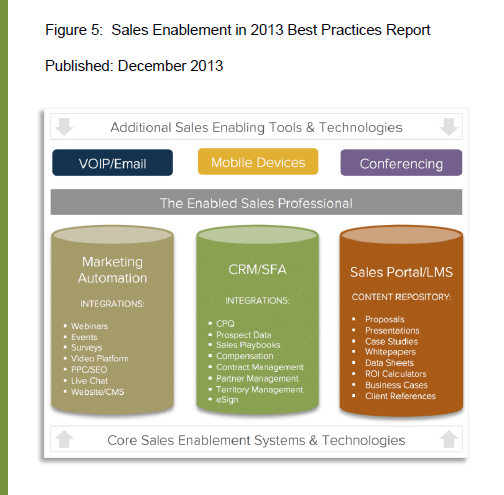
Enable sales team

Customers can take pre-sales research and compound their decision with a savvy sales rep; customized content makes for better presentations at corporate sales meetings; and marketing and sales are far more aligned in goals and what needed to happen, as ooposed to being silo’d.

The Horizon of 2014

So what does this mean for the next 12 months? To find out, Demand Metric took their findings of the past year and combined it with predictions from various stakeholders, clients and analysts/directors at the company.

These predictions include:

We’re moving towards a concept that I like to call ‘slow media’. Slow media compels your customers to want to hear what your brand is saying because you’re creating meaningful media that has context and relevance to your customers. – Jessica Ann, Senior Research Analyst, Demand Metric.

We now have linguistic mapping tools that allow us to… understand what the customer wants, connect archival history with our brand’s core business or competitors, and at what stage of the buying cycle they’re at, so you can prime your message for that exact moment… [allowing us] to truly take advantage of that technology and deliver. – Danny Brown (me!).

The results of predictive analytics, trends and patterns will be questioned when the ‘advice’ of these applications do not match reality. – Christine Crandell, Research Director, Demand Metric.

In 2014, I foresee a more equal share of marketing budget invested in both offline (store) and online (web) with an emphasis on linking the offline audience to online campaigns through smartphones and interactive media. – Han Verbaas, SVP Europe & Middle East, Demand Metric.

These are just some of the predictions (or Horizons) included in the report, and each prediction is combined with what the person saw as a key shift in 2013 and how that plays into the year ahead.

The Demand Metric 2014 Outlook Study offers an interesting look at where we’ve come from, and where we need to go to continue to grow not only the marketing discipline, but the integrated business discipline if businesses want to truly succeed in the ever-changing business landscape we find ourselves operating in.

You can download the full report for free here.

Disclosure: I’m a Research Director at Demand Metric on the topics of digital, social media, and data analytics.


Dear Marketers – It’s Not Empathy We Need, It’s Realism

Realism in marketing

As marketers, we like to coin cool new terms to make old tactics seem new and refreshing.

Among these terms is content marketing, influence marketing, relationship marketing, and perhaps the best of all, empathy marketing. This last one has seen some traction lately as marketers and consultants talk about understanding your customer’s needs better through empathizing with them.

Of course, any good marketer would already be understanding customer needs, but that’s another topic, another time.

The problem is, as we create these words and persuade people to adopt them (or, at the very least, create buzz around them), we tend to add to the problem versus creating solutions for it.

Let’s take “empathy marketing” as a case in point.

Unless You’re In Someone’s Shoes, You Can’t Empathize

Brands and marketers would like to think that by empathizing with their customers, they’re more likely to be the solution the customer is looking for.

For example, think of the lifestyle magazines that offer advice to women on regaining their shape after a pregnancy. The marketing spiel might go along the lines of,

We understand. You want your bikini body back, but babies can make that difficult. That’s why our Generic Product X is perfect for you – forget the baby body blues and get that bikini body back now!

This is a particularly lame example although sadly not too far from the truth.

Baby body marketing

Worse still, it’s almost a given that the majority of these marketing promotions are created by men, who somehow think that having a baby is a bad thing when it comes to the female form.

So how can a thirty-something male advertising executive empathize with a new mother on the topic of her body? Simple – he can’t.

Instead of this fuzzy feel-good empathy marketing, we need to look at realism instead.

The Power of Realism

When I was initially drafting this post, I saw an update on Facebook from my friend Helen Androlia that made me stop in my tracks.

While I had an idea on how I wanted this post to read, and what message I wanted to try and get across, Helen’s words summed up the problem of empathy marketing perfectly, and illustrates why we need to inject more realism in our marketing messages.

With Helen’s kind permission, I’ve reposted her Facebook status below.

Sometimes I call myself fat. It’s because I am. I’m not obese. I’m just… fat. I’m tall, too, but I’m also overweight. And this, this isn’t subjective. Being overweight is an objective assessment, untainted by body dysmorphia or whatever.

I have my reasons for gaining weight, and I am working on working out regularly because I want to. It’s not healthy (for me, though I know that there are a lot of healthy overweight people), and it’s not sustainable (for me; that’s important to mention). I already eat well, so I go to the gym as well, and I do what I have to do, but it’s a big task. In the meantime, I am fat. You know, I might go to the gym for years and always remain fat.

Here’s the thing though: people, who are very well-intentioned, always follow this statement up with a reaction, exclaiming that I’m NOT fat, or that I’m beautiful, or that I shouldn’t say things like about myself. I don’t feel like this is about me, really, and that’s why I’m writing this. I know that I’m attractive. I have very healthy self-esteem. I am worthy of being loved, and I know that. My weight doesn’t factor into that, so I don’t need to be told that.

Saying that I’m not fat is like saying I don’t need glasses, or that I don’t have dark hair – it’s objectively untrue, and it actually makes me feel badly about my weight.

Why?

Because when people say that, what they’re saying is that being fat is the opposite of being beautiful, or feeling good about myself. That I shouldn’t call myself fat because that is paramount to saying that I’m ugly, or unfuckable, or a failure. That describing myself accurately is cruel – not because it’s unrealistic, but because fat is a synonym for something much darker.

So friends, I appreciate the sentiment. I do. But remember that ‘fat’ isn’t a death sentence, or a self-inflicted punch to the face. It’s not a four-letter word, and it’s not the antonym to beauty. It’s just another state for our bodies to inhabit, whether we want them to be there or not.

I’m not going to the gym because I’m ugly. I go to the gym because I need to move more and sweat more. And when I call myself fat, it’s because that’s what I am.

I’m okay with it, I promise.

While Helen’s words were for her friends, they’re also a direct challenge to marketers – stop telling us what you feel we want to hear, and start being honest with us instead.

As a marketer, I’m all for that.

Why Realism Works Better Than Empathy

We’ve created this environment where we think we’re doing consumers a favour by “empathizing” with them. The problem is, we’re not really creating solutions when we think empathetically – because unless we’re in that consumer’s shoes, it’s impossible for us to empathize.

Instead of this faux empathy that brands are trying to build, we need to understand, not empathize. And yes, there is a difference.

  • Understand why a product is receiving such crap reviews and, instead of empathizing with your customers on the issues they’re having, fix the problem and understand why it failed, to make it right moving forward.
  • Understand why a campaign that worked in North America probably won’t work in Asia or Eastern Europe, instead of empathizing with these consumers who feel insulted by North American culture in their advertising.
  • Understand why consumers are concerned about your company’s privacy policy, instead of empathizing with their concerns but doing nothing about the policy itself.

But most of all, understand that the best marketing doesn’t come from your supposed customer empathy. Instead, it comes from the understanding of what they really want, and delivering a message that’s based on realism and not marketing spiel.

We can do that, can’t we?

Footnote: Interested in finding out more about Helen? Here you go.

Helen AndroliaHelen Androlia is a highly experienced social media strategist, digital creative and community manager currently working for Draftfcb Toronto.?

With an eclectic background spanning the technology sector to fine arts and culture (and everything in between), Helen creates engaging social media experiences for a number of large brands. ?

A featured speaker at this year’s PodCamp Toronto, Helen was also a keynote speaker at Mesh Marketing 2013. You can find her on Twitter @HelenAndrolia.

image: SamsumgTomorrow

A Conversation About SEO, Social Media and Content Convergence

Convergence

A few months ago, I sat down with Steven Sefton, Digital and Social Media Director for Think Zap, to discuss a variety of topics including the changing face of marketing; where different verticals fit; how the UK and North American markets are different; where influence marketing is heading; and much, much more.

Below, you can find part one of that chat (which originally appeared on The Social Penguin), centred around the shifting face of marketing, and how demographic buyer differences between the UK and North America impact tactics.

I hope you enjoy, and you can find the concluding part here.

————————–

Are companies truly embracing social media (or at least?seriously considering it) or do many still think it?s a fad?

Danny: No, although it?s much better than it was just a year or so ago. The problem?remains poor information and conflicting advice. ?Be everywhere?, ?be focused?,??blog?, ?don?t blog?, ?social media is owned by marketing?, ?social media is?owned by everyone?. And on, and on, and on?

When you have that kind of confusion coming at you from all angles, you can see?why businesses are unsure on what to do next. Combine that with the continued?and very wrong assumption that social media is purely for relationships, and you?can?t ? shouldn?t ? measure ROI on it, and I?m surprised any businesses are even?considering social!

The good thing is, there are some very smart people trying to change the?conversation and move us away from the warm fuzz mindset that so many?consultants are clinging to as their business model. The trick is in getting these?people heard, versus those with the easy soundbites.

What was the last social media campaign that was a success in your eyes?

Danny:?I?m going to cheat a little here, and share the one we used as the case study in the?opening chapter of our book.

MV-1 Canada was trying to launch their dedicated,?as opposed to retro-fitted, mobility vehicle into Canada.?With limited budget and?no market penetration, they used our model of influence marketing, combined?with social campaigns as well as on-foot outreach, and gained a 20% market?share in the first 12 months of sale.

For anyone that says social media doesn?t?equate to real business ROI, I respectfully suggest they think again.

They say social media and digital in the UK are lagging behind our northern?American friends. Do you believe this?

Danny:?I think it depends ? there are some great agencies and consultants in the UK.?People like Shannon Eastman, Paul Sutton, Andrew Burnett and more like them?are paving the way for some really great forward thinking.

And in Canada, I?d say?many businesses are lagging behind their American and UK counterparts, often?because of the longer buy-in cycle that many Canadian businesses have, as well?as the reduced budgets compared to their US counterparts.

It?s like most things?? there are great examples and there are poor examples. I think the greater are?starting to outweigh the poorer, and these countries are getting much closer to?each other.

How does social media and digital work compare in general by brands and?agencies from the UK to Northern America?

Danny:?I find the UK is still very much focused on email as the lead social marketing tool,?versus say an influence campaign or a social marketing one across networks.

This ties into UK social users preferring email as their primary means of?communication from retailers, versus social channels.

Buying signals are also very different. UK consumers are still very much geared?towards connecting with companies for discounts and low-cost goods, whereas?in the NA market, consumers need more data and information before they?commit to offering up their contact details. It?s a very two-way thing.

This means NA marketers need to have a far more tangible offer than a simple?discount or special offer, while UK marketers have a slightly easier buy-in. This?would suggest the loyalty factor would be something that NA brands focus on,?versus the stack-?em-high, sell-?em-cheap UK marketplace.

Many companies are still finding it hard to merge the different departments?within an organisation. How can companies manage the link between PR, Social?and SEO?

Danny:?By understanding they all need each other. There are still too many silos?within businesses of all sizes, not just the bigger organisations. Companies?that understand this and break down these silos are the ones that enjoy bigger?success, because they understand the strengths of a fully integrated approach.

Different consumers use different methods to research, connect, purchase and?review. If you?re still focusing on one core method over another, you?re going to?miss these nuances and then wonder why your conversions sucked.

True influence webinar

Understand that all three disciplines work better when aiming towards a?common goal. Let?s face it, it doesn?t really matter which department you feel?should lead ? every single one?s goal should be both the short and long-term?success of the business. Gelling currently silo?d departments together isn?t just?common sense, it?s business acumen sense.

How do you see SEO, social and content converging in the future?

Danny:?There won?t be any divergence ? there shouldn?t be today. It?s all marketing, pure?and simple.

  • SEO ? traffic to a destination for the goal of conversion (marketing).
  • Social ? building two-way conversation for brand awareness that evolve?into customers (marketing).
  • Content ? thought leadership and advice for the purpose of attracting?readers to your destination to evolve into customers (marketing).

Buzz words like content marketing, social marketing and yes, influence?marketing, are simply soundbites that take away from the simple fact that it?s all?still just marketing. That?s the hub ? everything else is the spoke that?s used as?and when needed.

It’s about how we use social search to define local SEO queries; how paid media drives social activity; how content educates and supports brand acquisition, whether that’s social ads, PPC, SEM, etc. There’s no separation – it’s simply marketing with a common goal.

Realise that, and we don?t have to worry about silos and how?disciplines will converge.

Don’t forget to check out the concluding part of this interview here.

image: Rubin Starset

7 Ways to Run an Unsuccessful Mobile Email Campaign

Mobile friendly blog

Mobile browsing habits

This is a guest post by Matt Zajechowski.

Mobile gadgets are the preferred media for opening email and responding to mobile marketing. That?s true across demographics, but especially among the youth set known as Millennials and Generation Y.

As revealed in the infographic below from our client?Reachmail, among the general population, 75 percent are using smartphones regularly to manage email. Millennials? use of iPhones, Android phones and iPads to scour daily mail is as high as 80 percent.

Most don?t even re-check mail on desktops and are intolerant of marketers who don?t cater to the small screen revolution.

This means a great deal for businesses who don?t wish to lose the business of new clients or customers.

Specifically it means that advertising will become a game of who can satisfy the most mobile users. The companies with most the mobile-friendly promotions and resources win.

They win not just profit from increased sales and website hits, but they win the trust of the mobile public and perhaps even long-term loyalty from mobile shoppers.

Are You Satisfying Your Mobile Customers?

Basic satisfaction of mobile users involves having email marketing messages that can be scaled down to fit a smartphone screen or a tablet screen without losing its wow factor and effectiveness.

That means the ads are pithy and persuading.

  • They dazzle without relying on too much Flash animation or Javascript that can freeze mobile devices and take an incredibly long time to load.
  • They have images that are optimal for small devices ? between 360 and 480 pixels.
  • They have the good content early in the page or email, along with a call to action that can be read without tedious scrolling.

Often it means having online stores that can be navigated and searched without too much hassle for those using small touchscreens and tiny virtual keyboards.

Satisfying mobile users might mean connecting with mobile shoppers through store apps that take users directly to favorite products or recommendations, and then quickly and efficiently to checkout without wasted clicks.

Closing the Loop Between Mobile and Offline

Increasingly, being mobile-friendly as an email marketer also means merging offline deals with online finesse by using email to preview promotions later reinforced through text messages, geolocation-based shopping deals and scannable QR codes that allow customers to learn about sales, coupons or general brand information without having to type any URLs.

QR codes have been slow to catch on, but nearly 25 percent of people ? mostly in America and Germany — have scanned one while on the go and research from eMarketer suggests the codes will trend upward in the future.

In a survey of 2,000, at least 14 percent of Millennials in the U.S. admitted they scanned a QR code that was included in a marketing email, while 16 percent of those between 25 and 34 said they had done so.

Respondents were most likely to scan codes in magazines or hard copy ads sent by snail mail. However, that was often because those types of media have been more eager to embrace the technology.

In the future, online marketers must be dedicated to using the codes more and ensuring that the codes deliver mobile users to sites that are legible and enjoyable to use on a mobile screen.

Lastly, remember, many mobile users are quick and impatient decision-makers who won?t give an email or website the chance to satisfy them again if they encounter even one instance of a landing page or target page that fails meet mobile standards.

Start now by assessing your company websites, blogs, stores and email campaign designs to make sure they are ready for the continuing expansion of mobile marketing.


ReachMail

Matt ZajechowskiAbout the author: Matt Zajechowski is a marketing specialist at Digital Third Coast Internet Marketing. You can read more from Matt on the Digital Third Coast blog, or connect with him on Twitter @Savard1120.

Google Hummingbird, Content Authority, and How Atomic Reach Can Help

Danny Brown blog

Last month, Google released the Hummingbird algorithm. Since then, many articles and blog posts have been written about its impact on key areas for publishers – SEO, Page Rank, web authority and, perhaps most importantly, content authority and marketing.

The link at the start of this post is from Search Engine Land and offers a thorough overview of what this new Google algorithm means. However, to give you a quick idea of what Hummingbird is, here are a few of the main points from the article:

  • It’s a new search algorithm that should provide much better and more contextual results;
  • There are more than 200 factors making up the Hummingbird algorithm;
  • It wants to increase focus on “conversational search”;
  • It is not an “SEO killer”.

These are some of the main takeaways/concerns – for the bigger picture, I recommend checking out the SEL post for more details.

In short, though, Hummingbird is excellent news for publishers and content creators that care about quality over quantity, and should theoretically help improve the web when it comes to information and data.

However, for many businesses, brands and publishers, understanding what that quality content may look like can prove a challenge, which is where Toronto-based Atomic Reach comes in with its content authority software.

Content Marketing and Scoring Engine

I met up with the Atomic Reach guys a few weeks ago, and I’m impressed in where they see quality and targeted content fitting in the bigger publisher picture.

They understand the difficulties of creating content, whether that’s a blog, podcast, video or more, and their content scoring engine looks to help publishers overcome these difficulties.

This comes in the shape of three main areas.

Get Scored

By creating an account with Atomic Reach, you can either score your existing content to see how relevant it is for your target audience (based on goals you set when creating your account), or upload a draft version. Their algorithm then scores it based on natural language processing, to “measure the content’s quality, relevance and performance potential prior to publishing.”

Danny Brown Atomic Reach 1

Discover and Share

Within the Atomic Reach dashboard, you have the option to select the topics and industries that matter to you, both as a content consumer and a content creator. This allows you to connect with like-minded audiences that are right for your content, as well as discover the best time to share for maximum impact.

Measurement

Measurement is everything, and everything is measurement. Or something like that. I’m a huge proponent of measuring all that can be measured, and Atomic Reach is no different. They track audience engagement, website performance, and social media reach amongst other factors. They can then help you make adjustments based on your content goals.

By covering these three core bases, the goal is to ensure you not only have the right content for the right audience at the right time, but your metrics will either confirm this is happening, or advise how to make it happen.

Using Atomic Reach to Work with Hummingbird

One of the ways Atomic Reach can help you benefit from the recent Hummingbird update is by helping you craft the kind of content authority articles Google looks for – those with reference links, facts, statistics and content that helps your audience with what they need to know.

Atomic Reach shows you exactly how you’re performing in this area, with a breakdown of what you’re doing right versus where you can improve. This can make for some very informative (if a little scary!) reading.

Danny Brown Atomic Reach content analysis

As you can see by my analysis, I need to work on increasing post length based on my revised goals (which I have been doing recently); be more aware of my grammar and spellcheck; and improve the links on my posts, both internally and externally.

This analysis can only help me be a better content creator which, in turn, can only help me follow the kind of content improvement that Google is looking to enable for the social web with the Hummingbird algorithm.

Additionally, as more publishers connect within the content community area of Atomic Reach, the more content you’ll be able to reference and potentially partner with, providing you with instant resources to use for your own content (and vice versa).

It’s a smart way of not only improving your own digital presence, but finding potential partners/clients/content providers in your own industry and within audience segments you haven’t yet reached.

What Atomic Reach Still Needs

As I mentioned earlier in the post, I’m impressed with what the guys over at Atomic Reach are trying to do, especially now more than ever, given the Hummingbird announcement from Google.

There are some areas I’d love to see fleshed out, though.

  • More in-depth reporting. Granted, I’ve been messing with the free version, and there are three versions available – Blogger (the one I tested), Brands and Publishers – so it may be there are more in-depth reports available for the premium version. But it’d be great to know who my most vocal sharers are, who they influence, and how that helps my content goes beyond my first line of content sharing (my immediate community).
  • Content scoring for podcasts and videos. Currently, Atomic Reach is for written blogs only. However, they did mention that video is something they’ll be looking at, based on natural language filtering, so that could be coming, which would really change the game.
  • The ability to measure without having to sign into the Atomic Reach dashboard. This is more from a blogger point of view, versus a brand one, but currently you need to run everything through the Atomic Reach admin area. It’d be great if there was a WordPress plugin (much like the Scribe SEO one) that analyzes and advises directly from your blogging dashboard.

These are just some of the ways the product could really be fleshed out into something that publishers of all shapes and sizes could use.

In fairness, though, Atomic Reach is still in beta, and has a major update due imminently, so it may be some of these suggestions are already being worked on, or are covered by different versions.

Either way, the potential for Atomic Reach is huge, and – having seen it in action at the company itself and within my own account – I definitely recommend checking them out if you’re in any kind of serious content creation market.

Update April 2nd 2014: There are now a bunch of apps, including a dedicated WordPress plug-in, available for Atomic Reach.

  • « Go to Previous Page
  • Page 1
  • Page 2
  • Page 3
  • Page 4
  • Page 5
  • Interim pages omitted …
  • Page 19
  • Go to Next Page »
© 2026 Danny Brown - Made with ♥ on Genesis