• Skip to primary navigation
  • Skip to main content
Danny Brown

Danny Brown

podcaster - author - creator

  • About
  • Podcasts
  • Journal

Latest posts from Danny Brown

Enjoy the latest posts from Danny Brown, and feel free to add your own thoughts in the comments after the post.

Why Social Media Speakers Need to Do Better By Their Audience

Social media speakers

One of the things you can always guarantee whenever a social media conference comes around is all the tweetable soundbites that ensue.

From mind-blowing statistics to feel-good messages, there’s never any shortage of social updates or blog posts that share the best of the best from these conferences.

And, sometimes, you do actually get some great insights from these types of conference, and they deliver on the often-exuberant price for tickets.

And then there are the quotes and statistics that make you go, “Hmm, really?” so you decide to check it out.

The ensuing result is usually a little different from the buzzworthy?soundbite that’s being shared across the web.

You Wouldn’t Eat Out of Date Food, Would You?

A good example of this is the annual Social Media Marketing World shindig put on by Social Media Examiner. It gathers over 100+ (maybe even 200+) speakers for its event in San Diego.

The lead speakers are the usual suspects that speak at the event every year, and then you have the speakers for whom the event is an opportunity to reach a wider audience.

For me, it’s these “secondary” and “tertiary” tier of speakers that actually offer the value – but they’re usually not the ones getting the soundbite love. Which is a shame, since they’re not using out-of-date statistics that get widely shared.

From a post that shares “50 brilliant social media insights” from the conference,

JB tweet SMM

As a statistic, that’s pretty impressive and damning at the same time.

Impressive, as it’s clear social is increasingly the channel of customer satisfaction; damning, as that’s a pretty high number of people unhappy with brands.

Except… when you look into the data that statistic is from, it’s a two year old survey by Dutch survey agency TNS Nipo?(that link is to the Dutch original – you can use Google Translate or see an English snapshot here).

In any kind of research, two year old data can be out of date pretty fast. In terms of social media, two years is a lifetime.

[clickToTweet tweet=”In social media, data that’s two years old is a lifetime. #relevance #insights” quote=”In social media, data that’s two years old is a lifetime.”]

Add to the fact that the original study is about how companies in Holland are perceived, and using that stat for a North American event might be a little misplaced, given the cultural differences and use of social media between the continents.

It’s All Fun and Games Until You Need to Sleep!

It’s not always statistics about customers, and how brands need to shape up or ship out when it comes to social, that makes the tweetable rounds.

Sometimes, it can be inspirational quotes to make you feel like you can do anything.

MH tweet SMM

And it’s true. We do all get 168 hours per week. As my wife likes to say when quoting Empire Records, “there’s 24 usable hours in every day”.

Well, except when we want to sleep… though I get the point, as that can fall into the eight usable hours for sleep, or however many hours you need personally.

But to the “we all get 168 hours” quote. It stems from a book called 168 Hours: You Have More Time Than You Think, by Laura Vanderkam. In it, the author shares her insights about making better use of our time, as well as the thoughts of others who have identified how to make the most of the time we have.

As a call-to-action to live more fulfilling lives on our own schedule, it’s great. As a realistic option? Maybe not so much.

While the book offers some thoughtful early insights, as it progresses the author switches it up a little, and the advice boils down to if you want to do less time doing the mundane things like laundry, dishes, even just looking after your kids etc, then just hire someone. This will free up the time you need to relax and do more personal things.

Erm… okay. That works if you’re a successful author. A day-to-day person and parent? Not so much.

A Percentage of a Percentage of a Percentage Equals…

Perhaps the most shareable of statistics is the kind that shows an almost overwhelming, mind-boggling number that pushes you back in your chair and burns your eyeballs with the sheer volume of the statistic.

These are the ones that immediately have you pumping your fist and shouting, “Hell yeah, social media!”

Such a case would be when a percentage is almost as complete as you can be.
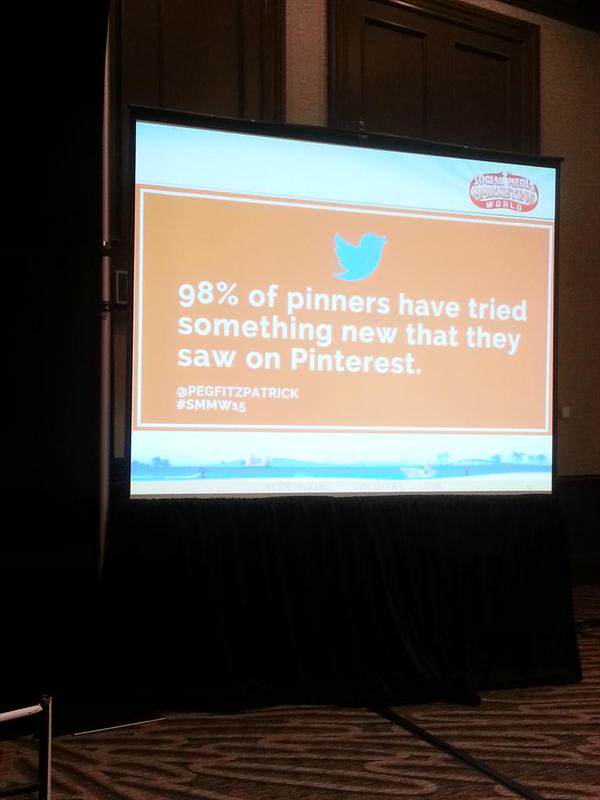
Pinterest percentage

98% – I don’t care what your math expertise is, that’s an impressive number by anyone’s standards.?Especially when you take into account that Pinterest is sitting around the 50 million active users mark in the US.

So, of course, it’d be great to get a little more background to this stat.

The figure used in the slide from the image above is taken from the Pinterest Media Consumption Study created by US agency Ahalogy, whose goal is to make marketing on Pinterest easy for brands and content creators.

When you look at their study in depth, they describe their methodology.

The?Ahalogy 2014 Pinterest Media Consumption Study?surveyed?1,300 males and females ages 15+ across the United States?between February 26 and March 11, 2014. Of the 1,300 people?surveyed, 500 were active Pinterest users, meaning that they?use Pinterest at least once a month.

1,300 isn’t a bad number to offer a representation of the public for a survey, though maybe a small ratio for something with millions of users like Pinterest.

Of that 1,300, only 500 were active Pinterest users. 500. Which is just less than 38.5%. So, to the image from the Social Media Marketing World talk, it’s more like 98% of 38.5% try something new – a little less impressive (though still not a number to sneeze at).

[clickToTweet tweet=”We need to all be better, and push for the data beyond the insights. #data #marketing” quote=”We need to all be better, and push for the data beyond the insights.”]

But when you’re talking about 500 users as an indicative number, versus almost 40% of 45 million users, and that is then used as a statistic at a conference where it’s re-shared as an important statistic…. you can see where I’m going with this.

A percentage of a percentage of a percentage isn’t all that much of a percentage after all.

Quotes Are Great, But Insights Are Better

While sharing statistics and numbers makes for great soundbites, the data needs to be current and addressed (in all fairness, it may be that both Jay and Peg advised the audience of the background behind the tweets shared in this post).

If an audience is looking to take away knowledge from a speaker’s session, or an event, or a panel, etc., going away with two year old data, or numbers that don’t tell the whole story, isn’t going to cut it.

The insights given by an event’s speakers relate to the data they share. If the data isn’t relevant to today’s market, the insights lose a bit of weight, and tie into the whole eleventy billion mindset.

We need to all be better, and push for the data beyond the insights. It’s how we learn as people and grow as businesses. Big can be great; focused is usually much more effective.

Something to keep in mind, both as a speaker and an attendee, the next time you’re about to share a quotable statistic.

Sorry Affiliate Bloggers, But Your About Page Disclosure Doesn’t Cut It

Way back in December 2009, the FTC finally launched its guidelines regarding the use of endorsements and testimonials in advertising.

The goal was simple – with the increase in digital advertising and the rise in bloggers monetizing their blogs through advertorials and paid content (sponsored, affiliate or otherwise), the FTC ?wanted to ensure consumers were aware when something was being promoted for pay versus being a genuine recommendation.

The guidelines covered all forms of advertising, but it was the part about social media – and blogs in particular – that had a lot of people up in arms at the time, despite the fact that all the FTC guidelines were doing was encouraging honesty between blogger and reader.

The?FTC made it clear what it expected of bloggers with an example regarding a video game blogger, summarized below:

A… video game expert maintains a blog where he posts about his gaming experiences. A manufacturer of a newly released game system sends…. a free unit and asks him to write a review. He… writes a favourable review [where his] relationship to the advertiser is not clear, [meaning] readers are unlikely to know that he has received the system free of charge.

The FTC continues that the blogger should “…clearly and conspicuously disclose that he received the system free of charge”, and that the manufacturer should advise him that disclosure should be forthcoming.

Seems simple enough, right? Clearly not, as the last five years plus since the new guidelines came into play show.

If The Big Guys Don’t Care, Why Should You?

Recently, a well-known social media blogger wrote a review of Google’s Chromebook. The blogger shared his experience on how the features of a $200 Chromebook helped his business make 150x its cost in revenue for a course the blogger ran.
Chromebook

All good, all excellent stuff. Lots of good reasons why someone should buy this particular Chromebook.

Then?you click the highlighted link for the Chromebook itself.

If you look at the URL in the image above, you’ll see “Link ID” and then a number. This is your typical Amazon affiliate link, which means the blogger in question is making a percentage of every Chromebook sold through his link.

Nothing wrong with that – except nowhere in the blog post is it mentioned an affiliate link is being used for the Chromebook link. But that doesn’t matter, right, because the blogger has a disclosure sentence on his About page.
Blog disclosure about page

As far as disclosures go, this is a pretty good one – it makes it nice and clear that affiliate links are to be expected, and that the blogger uses the products he endorses as well, increasing the relevancy of the promotion.

The problem is, this isn’t enough.

While having a disclosure section on your About page is fine, it only works if people actually visit that page and are aware of your affiliate tendencies.

Which, as the FTC makes clear in its updated guidelines, isn’t enough.
FTC affiliate guidelines

As highlighted in the image above, the guidelines are very clear when it comes to how endorsement is presented.

In some instances, where the link is embedded in the product review, a single disclosure may be adequate. When the product review has a clear and conspicuous disclosure of your relationship – and the reader can see both the product review and the link at the same time – readers have the information they need. Putting disclosures in obscure places – for example, buried on an ABOUT US… page – isn’t good enough.

And it’s this failure to disclose on-page where so many bloggers are tripping up, either deliberately or through lack of awareness.

But that isn’t really an excuse.

Why It’s Not Just Your (Blogging) Pocket That Could Be Hit

The FTC has made it clear that it will penalize non-disclosure, and examples of bloggers and advertisers making a profit from false advertising. Not disclosing affiliate relationships falls within this, as does not being clear on what’s a sponsored post.

The fact that bloggers are still bypassing this important part of disclosure is surprising, given it’s been more than five years since the original guidelines were published, and two years since the last update.

Not exactly new guidelines to get your head around, are they?

And it’s not as if there aren’t enough articles and blog posts around the web sharing why bloggers need to disclose or face the consequences.

Now for some, it may be that they genuinely think an About page disclosure is adequate.

For others, it may be they feel the FTC is being two-faced, and should go after celebrities and magazines that endorse products/run advertorials without disclosure (point is – there are laws already in place to prevent this).

But that’s neither here nor there.

If you’re a blogger, and you’re looking to make an extra few bucks through endorsements of any kind – paid, sponsored, affiliate – you need to disclose, simple as.

If you don’t, you run the risk of being fined by the FTC.

But, perhaps more importantly, if you don’t disclose, either knowingly or unknowingly, it suggests a couple of things:

  • You’re deliberately misleading me, the reader
  • You’re not up-to-date on the guidelines/laws that impact the industry you sell knowledge in

It doesn’t really matter which point you belong in, because they both mean the same thing – why should I trust your content if you either don’t care, or don’t know, about something that impacts the relationship with your readers?

For any blogger, the answer to that shouldn’t be a question they’re willing to pose.

Update April 8, 2015: Brian Hawkins made a good point in his comment about the FTC not making it clear where disclosure should be. This was addressed in their 2013 update, which you can find details of?here, or download the full PDF version here.?

I Don’t Always Like Who I Am

Trying to be better

When you look at yourself in the mirror, proverbial or otherwise, what do you see in the reflection looking back at you?

Do you see a person that you’re happy with, and wouldn’t swap for the world, or do you see a percentage of that happiness?

Do you see a person who is everything you want to be, or do you see a work in progress where sometimes the work is more needed than the progress?

I don’t know what I see. Sometimes it’s a little A, other times it’s a little B. Never one more than the other, at least for any prolonged period of time. Maybe that’s normal.

I know I don’t always like who I am, but I’m trying to be better.

I say things and do things I always regret later, but I’m trying to be better.

I advocate for many things but don’t always follow through on that myself, but I’m trying to be better.

I teach my kids to be good people, yet sometimes my own words to others don’t come from a good place, but I’m trying to be better.

I know who I want to be. I’m not always that person.

But I’m trying to be better.

Why You May As Well Say You Reached Eleventy Billion People

Eleventy billion people

Over at Collective Bias, a “publisher of high quality user generated content that drives sales for brands and retailers”, there’s a case study about one of their campaigns.

The case study shares some very impressive numbers:

Looking at the image below, it looks like the campaign ticked all the ROI boxes:

  • 405% increase in marketing equivalency ROI (Return on Investment)
  • 3.2 million potential blog page views
  • 40.2 million impressions
Retail Collective Bias
Collective Bias retail case study for Walgreen’s mobile app

If you were writing out these numbers fully, that’d be a heck of a lot of zeroes! Here’s the thing, though – do these metrics actually mean anything? Eh… not really.

Hit and Hope Marketing is Not the Same as Marketing a Hit

While there’s no doubt that numbers in the millions aren’t something to be sneezed at, let’s take a look at each metric and break it down a little bit further.

1. 405% marketing equivalency ROI

This sounds great on paper, because it mentions the fabled ROI term. Social media has long been criticized for its value when it comes to lead generation for businesses, versus simply being a relationship builder.

There have certainly been enough real case studies to show social can result in ROI (and Sam Fiorella and I share several in our Influence Marketing book), but for many detractors of social’s business value, the ROI question has always been their core weapon.

So when you see a 405% return on investment, that’s huge. Or is it? Not when it’s wrapped in “marketing equivalency” wording.

Instead of being an actual sales metric, marketing equivalency is simply a relative number that equates to whether this form of marketing would generate results that would cost more or less through other forms of marketing.

When Collective Bias says this campaign resulted in marketing equivalency of 405%, what they’re actually saying is they’d hope/expect 4x the results of traditional marketing for the same cost. Of course, that’s not the same as actually getting?that return.

2. 3.2 million potential blog views

Blogger outreach is a hugely effective marketing tactic when it comes to social, and helping brands grow both awareness and measurable returns. However, there’s a big difference between “potential blog views” and “actual blog views”.

Potential can mean all sorts of metrics and “maybes”:

  • a blogger has 10,000 subscribers, so the post may be seen by 10,000 people (the truth of the matter will be much less)
  • a blogger has a million Twitter followers, so the post may be seen by a million people (again, not very likely)
  • a blogger is syndicated across networks like Social Media Today and Business2Community and will be seen by that network’s audience (um… you can see where I’m going here)

So, yes, there’s the potential for 3.2 million blog views. But, heck, anyone can use that – there are 3 billion Internet users in the world, so this blog post you’re reading now could have 3 billion potential views. Potentially.

3. 40.2 million impressions

Much like the potential blog post metric highlighted above, 40.2 million impressions sounds impressive – after all, that’s 40.2 million potential customers, which I don’t think any brand would turn its nose up at.

Except then you see that word “potential” again – because that’s all impressions are, “potentials”.

Here’s why impressions as a metric suck (although they still don’t suck as much as reach). Impression metrics don’t care if you see the ad or not – if you, the target for that ad, are on the same “page” as the ad, that’s an impression, whether you see the ad or not.

Here’s an example. Let’s say you’re on Facebook, and you’re looking at your feed to catch up on how your friends and connections are doing. All these little ads that are in the sidebar (the marketplace ads) count as impressions, whether you look at them or not.

Better still, if you’re on your smartphone, and you’re reading an update from someone on your main screen, and just below the fold of that screen is an ad, it’s classed as an impression if it’s part of your feed “depth” (whether you scroll your screen down to see the ad or not).

See the problem with impressions? There’s no guarantee that anyone will see your ad, but if it falls within the measurement part of a page view, you (the client) are going to be charged for it.

How much do you think 40.2 million impressions cost, and how many of these impressions do you actually think were seen? More importantly, how many of these impressions led to real ROI?

You Need to Quantify Success, Not Quantity-fy It

Yes, I know – quantity-fy isn’t a real word. But maybe it should be – because there are far too many “case studies” and success stories that use quantities rather than quantifying the data.

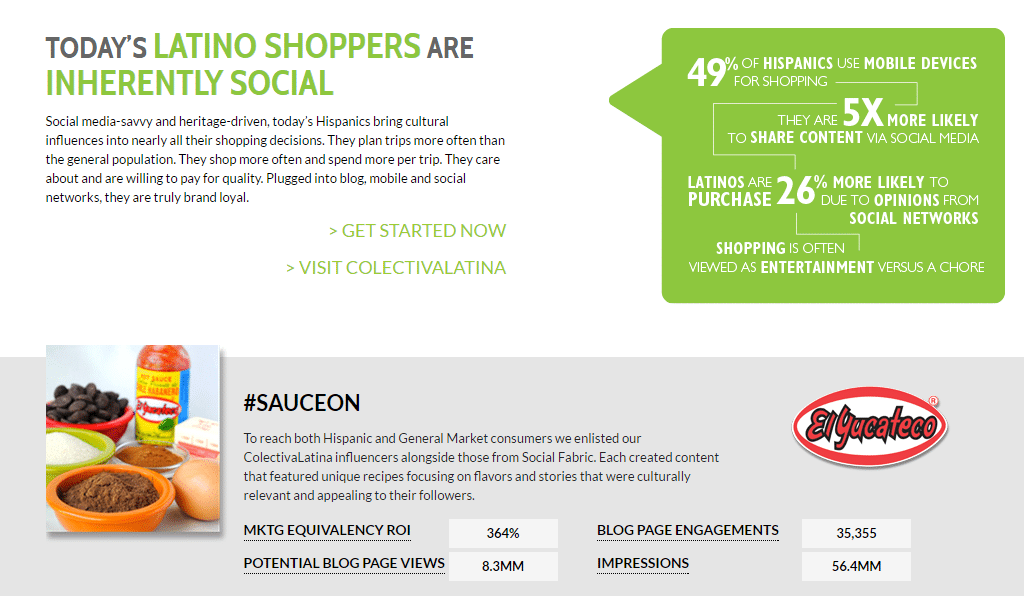
On the Collective Bias page that shares the Walgreens case study, there are zero links to share data that validates the numbers on display. The same goes for all of their case studies, including this one for their “ColectivaLatina influencers” campaign on behalf of client El Yucateco.

Hispanic Collective Bias
El Yucateco case study metrics

While the numbers may seem impressive, again they fall flat without reference points.

These reference points could help explain why, of a potential 8.3 million blog page views, there were only 35,355 engagements (which could be reads, shares, comments, skims, ?etc.), especially when there were 56.4 million impressions.

We’re in 2015. Social media purists and protagonists (and I count myself in the latter, for sure) argue that there’s never been a better time to be a marketer, or advertiser, or brand, because now we can actually measure the metrics of a campaign down to the most granular level.

And it’s true. We don’t need to rely on correlative data that suggests extra foot traffic to a retail store came from the radio ad that ran that day, versus the print ad that ran that same day, versus the flyer that went out that same day.

Now, we can see what percentage of our audience clicked, took an action, redeemed, returned, referred, complained, advocated and much more. We can filter and provide as much or as little data as we want (or our clients and/or finance departments want).

If we’re going to ignore that, and share case studies that use potential and equivalency as the ROI, we may as well say our campaigns reached eleventy billion people since it has the same ring of authority to it.

Just don’t forget to use the word “potential”…

You Cannot Change What You Do Not See

Cannot change that you do not see

Often, we change things based on what we see in front of us, or based on perceptions of what we feel is in front of us.

It may be that our sales channels are bringing in less than 12 months ago; so we change the sales team or manager.

Or, our customers are leaving in numbers that are scary; so we change the customer service team or manager.

The problem is, often what we see in front of us is a very small part of what?s happening behind the visual.

Our sales team may be bringing in the same sales, if not more, but economic fluctuations and inflation are resulting in lower numbers. Or customers aren?t leaving; they?re moving to a different part of the product line, but still with the company.

Just because we see something doesn?t mean we see everything. Take Nintendo, for example.

The Nintendo Guide to Sight

In the latter half of the 1990’s, Nintendo were struggling.?Where they had once (arguably) been the most dominant force in video games on the planet, they were now drifting in third place behind Sony and Microsoft, with their Playstation and Xbox platforms respectively.

The Nintendo 64 had failed to live up to the success of Nintendo?s previous console, the monster success that was the Super NES.

While no-one could doubt the gameply genius of titles like Super Mario 64 and Goldeneye, the new generation of gamers were all about the graphics ? something Sony and Microsoft had in abundance. Something Nintendo?s 64-bit system couldn?t muster.

Now, many companies might walk away at that point ? Sega certainly did, when they pulled out of the video game console market in 2001 and became just a game developer instead, due to the huge success of Sony?s original PlayStation taking a massive amount of market share away from Sega.

But Nintendo were built of stronger stuff, and had eyes that saw more than just decreased market share and the possibility of failure. And it was to be Nintendo?s competitors? strengths (ultra-realism through graphics and online play) that would become Nintendo?s key weapon in their comeback.

Real or Real Good

Due to the increasingly photo-realistic graphics that the likes of Playstation 3 and Xbox 360 could provide, parents became concerned about the effect this might have on their younger kids.

The governing body of video games was also becoming concerned with the amount of negative press these new games were getting. Kids were becoming lazy, since they could play online with their friends, and this was contributing to a new generation of obese children, which was obviously a health issue and one that was drawing more questions than the violent and realistic nature of some games.

While Microsoft and Sony defended their industry and products ? after all, who wants to lose a slice of the billions being generated in revenue? ? Nintendo saw an opportunity for something different.

Instead of defending the lazy gamer idea,?they embraced it head-on.

[clickToTweet tweet=”Want to really succeed? Embrace critics as valid voices and meet them head on.” quote=”Want to really succeed? Embrace critics as valid voices and meet them head on.”]

In a stroke of genius, Nintendo?s fortunes were about to take a massive turn for the better. The result of their vision? The Nintendo Wii, and Wii Fit.

They stayed away from super realistic graphics, and kept the family-friendly look Nintendo has always been known for. They made games for everyone; not just the hardcore gamer. They made it cheap; $250 instead of $400. And they made it part of you.

Instead of being tethered by a joystick, the Wii controller essentially made you the controller. Using a sensor that scanned you and fed your details into the Wii, you could now move your arms, and your character?s arms would move. You could bowl like you would in the bowling alley, and your character would.

By making games that were sensor-based, Nintendo brought the whole family together and off the sofa. Games like Wii Sports and Wii Fit were deliberate in their intent ? get the gamer active while having fun.

The result? This countered concerns of parents and press at the same time, and made the Wii a huge success.

Vision is a Two Way Thing

Nintendo could have blamed sales and numbers on their competitors. They could have said they were suffering because they were being tarred by the same ?too realistic? brush that Microsoft and Sony were. They could have blamed their engineers for not having more realistic graphics.

But instead, they took a deeper down look and saw more than the easy answers that were in front of them. They knew better than to accept what we first think, and to see if there?s another way.

Because of that, they saw what others could not see, and changed video game history in the process.

Sometimes we make changes based on what we see. But sometimes we?re not actually seeing anything at all, except what we want, or are told, to see. And that benefits no-one.

Want to succeed? Look deeper ? because you cannot change what you do not see.

  • « Go to Previous Page
  • Page 1
  • Interim pages omitted …
  • Page 47
  • Page 48
  • Page 49
  • Page 50
  • Page 51
  • Interim pages omitted …
  • Page 283
  • Go to Next Page »
© 2026 Danny Brown - Made with ♥ on Genesis