• Skip to primary navigation
  • Skip to main content
Danny Brown

Danny Brown

podcaster - author - creator

  • About
  • Podcasts
  • Journal

Latest posts from Danny Brown

Enjoy the latest posts from Danny Brown, and feel free to add your own thoughts in the comments after the post.

The Only Pinterest Post You’ll Ever Need to Read – EVER!

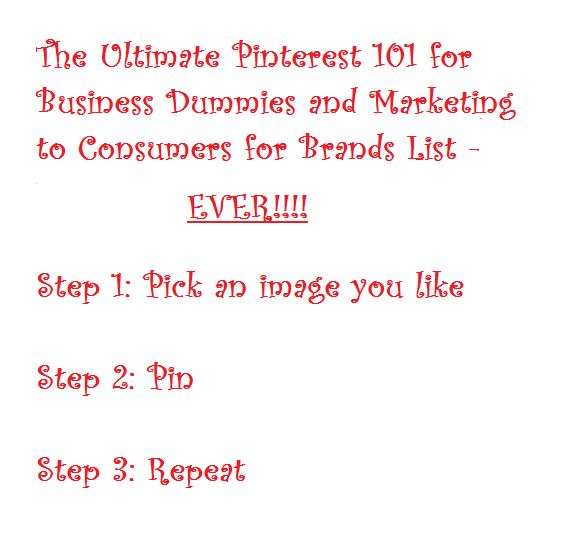
The only Pinterest guide you'll ever need

Unless you’ve been living under a social rock in the last few weeks, you’ll have seen about a trazillion blog posts about Pinterest.

If you are one of these rock-dwellers, here’s the skinny on Pinterest – it’s a picture board (kinda like the cork boards you have in the kitchen) where you can “pin” your favourite images, and share with your Pinterest friends.

It’s actually been around for just under two years, but recently exploded in users. Cue the requisite blog posts, and now books on how to use this phenomenon for [insert pretty much any topic here, but especially if it includes the words?”MARKETING”, “BRANDING” or “BUSINESS”].

While there’s no doubt Pinterest can be used for more than just friendly and social pinning, do we really need the huge glut of words being written (and yes, I see the irony of this very post here)?

Go to Amazon and type in “Pinterest” and you get 25 results in the books section.

Titles like “Pinterest for Dummies” (seems an oxymoron), “Pinterest Marketing Bible”,?“Learn Pinterest Secrets $$$”,?etc…

Now, I haven’t read the books and I’m sure the authors have great stuff they want to share – but 25 books this year alone?

Maybe. We’ll have to wait until the books are released to be sure. So, just in case you can’t wait until then, here’s the Ultimate Pinterest Guide to get you started AND?continuing to use Pinterest.

Maybe I’ll submit to Amazon… 😉
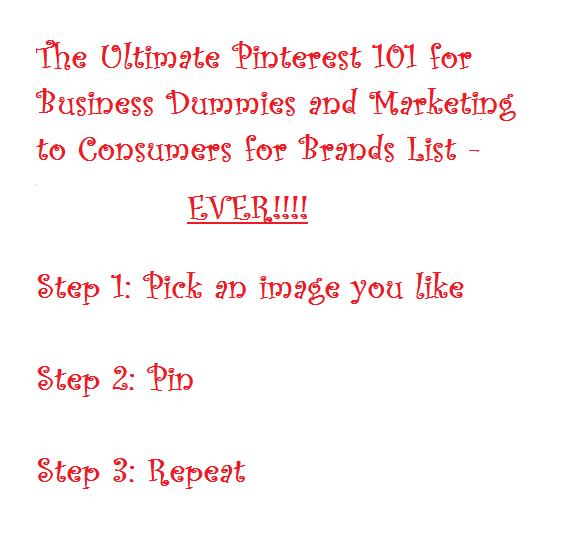
The only Pinterest guide you'll ever need

  • Full credit?to my friend Liz Scherer for the three steps guideline used in the image for this post.
You Don’t Always Need 100 Million Dollars or 100 Years for Traditional Advertising to Work

Elle advertising

First, a caveat: I’m a big fan of Brian Clark and his Copyblogger brand, so this post isn’t a “dig” – more an alternative point of view.

Over at Copyblogger, Brian recently posted this graphic:

Traditional Advertising Works Great ...
Like this graphic? Get more content marketing tips from Copyblogger.

Since Brian is in the content marketing arena (and been very successful in it), it’s understandable why he posted this. Since social media became more mainstream, traditional advertising has long been the brunt of points of view that it’s on its way out.

And it may well be – just not at this moment in time.

While there’s no doubting that social media can offer a much better return as far as in-depth analysis goes on campaigns, investments and success metrics, it’s missing the point a little to say this is where all advertising success happens.

While Pepsi may have switched their $20 million ad budget to social media for the Superbowl, the majority of advertisement at that event still comes from TV slots. And, looking at the results of the Pepsi social media experiment, perhaps that will continue for the foreseeable future.

The Traditional Advertising Effect

Perhaps the biggest problem is what exactly counts for traditional advertising? With the blurring of the lines between media, whether that be social, print, mobile or TV, it can be confusing to lock down what’s seen as new media and what’s classed as traditional.

For myself, traditional covers TV, print, direct mail and radio, although email marketing could be seen as traditional too, since it’s now been around so long.

With that in mind, here are some examples of why you don’t need the 100 years or 100 million dollars from the Copyblogger graphic.

Elle Magazine

Perhaps traditional advertising’s natural habitat, magazine ads still make up a huge amount of the advertising budget for brands. And when you look at something like Elle Magazine, it’s easy to see why.

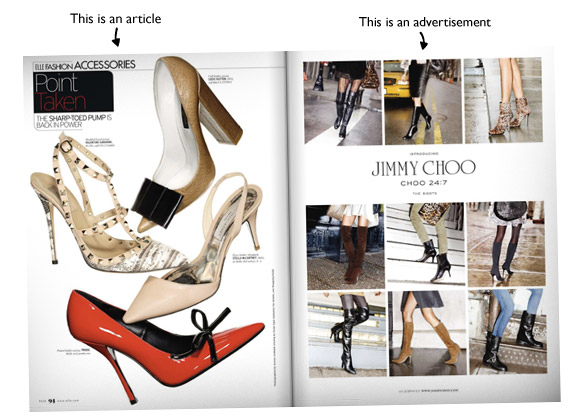
Elle encourages some of the smartest advertising out there, due to its mix of editorial content and related ads opposite the content. A perfect example is the image below (taken from baekdal):

Elle advertising

Immediately you can see how the fashion items being written about look when worn and, for any fashion-conscious person, you can never argue with seeing your new love in action.

It’s this kind of approach that saw advertising spend with Elle rise by over 12% last year. And advertisers don’t buy new ads unless their product campaigns – and, therefore sales – are successful.

Laconia Development

San Diego agency Castle Advertising share many success stories on their website, but one that stands out is their campaign for Laconia Development, a local residential developer.

Laconia’s goal was to sell the remaining units on an urban neighbourhood property, but they were struggling to do so due to the economy and slow real estate sales in general. Castle’s brief was to generate awareness and pre-qualified registrations for a one-day sales event.

Thanks to a strategy that included radio, TV, building banners and email marketing, as well as full-page ads in local publications and unique phone number tracking, the results were impressive: 70% of the units were sold, with 200 registrations pre-sale at a cost of less than $500 per registration.

James Ready Beer

If there’s one market that’s hugely competitive, it’s the beer market (just look at how much is spent by the likes of Budweiser on brand messaging and sponsorship at huge events).

Because of this competitiveness, smaller breweries have to look at ways they can stand out, catch peoples’ attention, and enjoy a return on their limited investment options. Case in point – Canadian brewer James Ready.

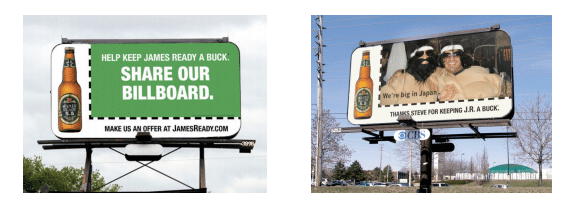
To take them to the next level of awareness and sales, James Ready hired Leo Burnett Canada, with media buying and planning support from Starcom MediaVest. Their approach? A billboard campaign.

James Ready billboard campaign

But instead of this being a standard billboard approach, the creative saw the 10′ by 20′ billboards secured and rented out to fans of the beer for free. The mission? To let fans create ads about why they loved the beer, and the agency would turn this into the campaign to attract new fans and buyers.

The result? An increase of 55% on sales from the previous period, and a growth in market share of 31%, all from a spend of just over $140,000 (excluding production costs). All in all, not too shabby.

Traditional Advertising Does Work – But So Does All Great Advertising

The point of this post isn’t to lay doubts to the Copyblogger graphic. Like I mentioned at the start, social media (or “new”) advertising is hugely effective.

Yet there are many agencies and businesses flocking to social media, when traditional approaches still have their place. And when you couple both traditional and social together, the results can be outstanding.

At the end of the day, the medium that works best is the one that meets the needs and location of your target audience. For some, this may be a Facebook ad; for others, it may be a Sunday slot in the broadsheets.

One form of media doesn’t necessarily trump the other – far from it. Instead, all you need is what you’ve always needed – smart ideas and a solid strategy to back them up.

And that doesn’t have to mean spending 100 million dollars or a 100 year gestation period to be successful…

If You Want Fierce Loyalty, You Need To Be Fiercely Loyal First

Build fierce loyalty

Build fierce loyalty

Loyalty. A funny concept. One that can mean so many different things to different people at different times.

Sports teams have loyalty from their fans. Well, the true ones do. Think Manchester City as opposed to Manchester United, where the latter?s ?fans? are more interested in prawn sandwiches than a good soccer team.

Indie bands have loyalty from their fans. Until they sign that big record deal, that is, then they become sell-outs.

Humans have loyalty from their dogs. But then you would be pretty loyal as long as you had someone cleaning up your shit.

So, yeah, loyalty ? a funny concept. And yet it?s something that?s so important to so many people, they spend their lifetime(s) trying to work out how they can build loyalty around what they do.

After all, build loyalty, you build bigger success, right? More sales; repeat sales; referrals. Get that gold rush and you don?t have to worry about marketing.

Okay, maybe just a bit about marketing (I?m a marketer by trade, so I?d be dumb to say you didn?t need my services, right?).

So, yeah ? loyalty is something pretty much everyone wants to achieve in some form or another. And not just loyalty, but fierce loyalty. Because if you grab that piece of gold, the world is truly your oyster. That shit starts revolutions.

And so companies spend thousands (millions?) on trying to create loyalty programs. Bloggers spend thousands of words trying to say the things they think their readers want to hear to become loyal. Social media ?gurus? spend all day on Twitter when they should be doing real work, just to try and get that extra loyal follower to buy into their crud.

And it?s all a waste of time. Seriously.

Because you don?t need to spend thousands, if not millions, of dollars trying to build loyalty. You don?t need to be that desperate typist. You don?t need to be that good-for-nothing-except-quotes-for-Mashable social media douche whose only loyalty comes from those laughing at him religiously.

If you want loyalty ? fierce loyalty ? it?s easy. Be fiercely loyal first.

Show people you care. Show people you mean what you say. Every time. Show people they can trust you. Show people you deserve that trust. Show people you?re not a dick who simply panders to those stroking your ego (or your dick). Show people every one of them is equal.

And it?s not fucking hard to do this.

  • If you?re a blogger, encourage dissention of your views and don?t let fanboys be your voice.
  • If you?re a business, embrace your critics as much as your fans (if not more so).
  • If you?re a manager, let everyone speak and not just Tommy Kiss Ass.

In fact, no matter what you do, in what discipline and in what medium, it?s really not hard at all to build loyalty.

Think like the person you want to become loyal to you and ask what really matters to them.

Get that simple thing right and you?ll have loyalty so fierce you?ll wonder why you were making it so difficult to achieve to begin with.

This post originally appeared on Sarah Robinson’s 28 Days to Build Fierce Loyalty series.

image: Jean-

Woot Woot, JugnooMe is Here – And You’re Invited to the Open Beta!

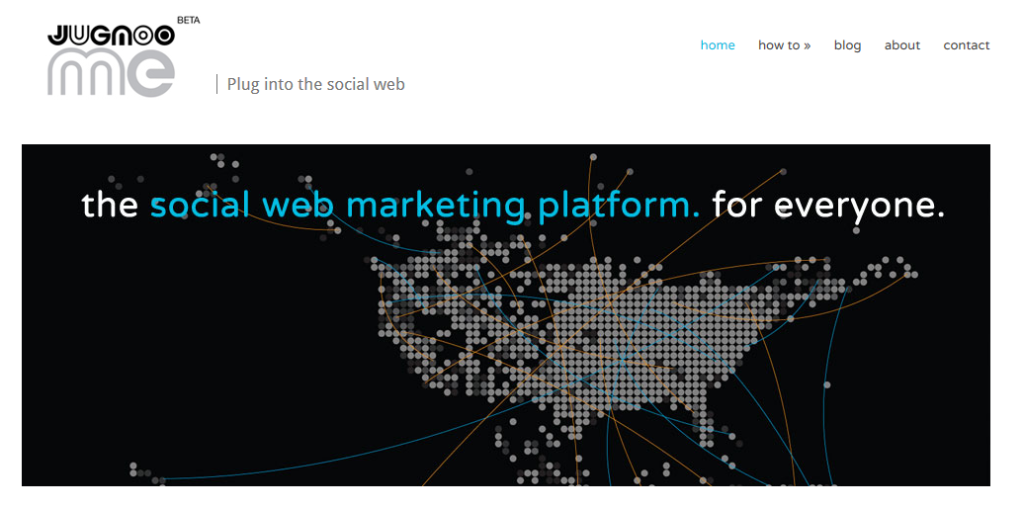
JugnooMe beta

JugnooMe beta

Back in November, I?shared?a brief introduction to JugnooMe, the?first salvo from the Toronto-based?start-up I joined that month.

Since then, we’ve been working like crazy loons to bring our product(s) from?creation, to private beta, to fixes, changes and more.?Yesterday, all that hard work came to fruition as we launched the first release into open beta, with the JugnooMe social dashboard.

So what is it and?how can it help you?

Taking Your Business Social

At?Jugnoo, our goal is simple – to make the social web?simple, accessible and?monetizable for everyone, regardless of expertise, budget and?resources.

To do this, we’re creating a suite of tools that will enable both people and businesses to make the most of their presence online, as well as transfer that to success offline. These include mobile, media and social properties, the first of which is JugnooMe.

The?product itself is?constantly evolving (with the next set of?updates coming in March), but the first release includes features such as:

  • Single social media dashboard supporting multiple platforms and accounts
  • Aggregated Twitter dashboard
  • Social Search and keyword tracking
  • SVM, or social video marketing suite
  • Social post to multiple accounts and social networks
  • In-house analytics to track web campaigns and visitor behaviour

While there are tools already on the market that offer this, our “advantage”, if you like, is that we bring everything under one roof.

This ties back into our ethos of making the social web easy for everyone. And the easier something is, the more time you can spend concentrating on ways to make money from your time online.

We’re Just Getting Started

As?I mentioned, JugnooMe?launched into Open Beta yesterday. Because of the beta status, we’ll be?listening to our users and?adding the kind of tools to really make the?evolving JugnooMe?experience one that helps our community grow they way they want to, at the speed they’re comfortable with.

This will include educational tools like Social Advisor, that will help break down the intricacies of social media with newsletters, webinars, videos and more. And one thing we guarantee at Jugnoo is that we’re always listening, so if a feature makes sense, we’ll add it.

We have an aggressive release schedule in the next 3-6 months, as we move from open beta into full production mode. Social commerce and business will be a key part of these releases, and the tools for our users will reflect that. Oh, and did I mention JugnooMe is free?

For now, here’s a short overview of the beta, made with our very own SVM video platform that’s part of our dashboard.

[youtube]http://www.youtube.com/watch?v=GaZv8sFrEuw[/youtube]

I’m really excited at what’s in store, and would love to have you in?the beta and help us make the platform the kind of social dashboard and business tool that makes sense of?the social web?for you.

If you’re interested, you can get more details and sign up here.

See you there?

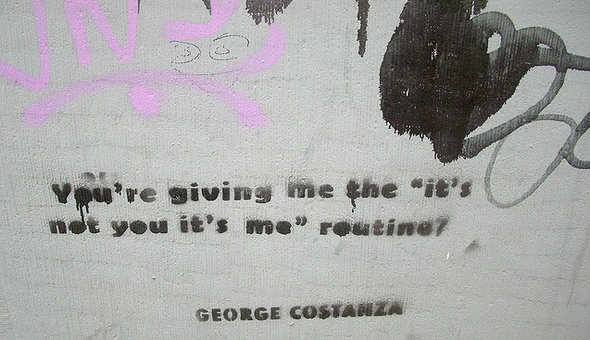
Change Your Routine Or Be Routinely Ignored

Your routine is killing you

You wake up. You wash or shower. You shave (or not). You brush your teeth. You comb or brush your hair. You get dressed. Have breakfast, drink coffee. You go to work.

Safe. Routine. You know what you need to do so well that it becomes automatic. You don?t even need to think about it. Routine is good. Routine makes your day easier.

But your routine is also killing you.

Think about your business. Your customers. Your clients. Your contacts.

Are you?routinely?writing a press release?and mass mailing it?

Are you?routinely messaging your email subscriber list?with the same routine message and the same routine deals and information?

Are you?routinely offering the same Happy Hour drink?deals or 2-for-1 meal offers?

Are you?routinely displaying the same point-of-sale banners?with the same discounts?

Why? Why are you doing this? Is it working for you? Or are you losing mailing list subscribers? Losing sales? Losing customers? Losing contacts from your media list?

Break the routine. Differentiate your contacts, your customers, your clients. Tailor the message. Look at your trends and who?s buying or reading and on what days, weeks or months. Make?that?information your routine.

Routine is good. Routine is safe. But routine also leads to automation and boredom. Break it up a little.

After all, would it really hurt you to brush your teeth?before?you shower?

image:?welovepandas

  • « Go to Previous Page
  • Page 1
  • Interim pages omitted …
  • Page 121
  • Page 122
  • Page 123
  • Page 124
  • Page 125
  • Interim pages omitted …
  • Page 283
  • Go to Next Page »
© 2026 Danny Brown - Made with ♥ on Genesis