
• Skip to primary navigation
  • Skip to main content
Danny Brown

Danny Brown

podcaster - author - creator

  • About
  • Podcasts
  • Journal

guest posts

Ten for 10 in 2010 – John Haydon

This is a guest post from?John Haydon , who has a brilliant blog over at JohnHaydon.com. John inspires me every day and is one of the most giving and genuine folks around.

Every New Year, I think about what I’ve accomplished the previous year. When I’m done, I’ve felt refreshed and ready to get to work.

But many times, looking back doesn’t feel so good. Five years ago I had a bone cancer scare. Three years ago, I went though a divorce. I went from seeing my son seven days a week to less than three which, as any father knows, is heart breaking.

In 2009, I also had a string of heartbreaks, challenges and set-backs. I’ve also had many, many victories. Having hope and conviction is easy when you’ve just had a victory. Not so easy with set-back.

I promise this ends on a positive note, so stick with me, ok?

Firewood

There’s a Buddhist saying that “a fire burns brighter when logs are added.” The idea is that only through challenges does one forge a brighter, more expansive way of living. I mention this because we sometimes tend to see obstacles and set-backs as a negative. We fail to see the growth rings.
Maybe this is because it’s easier to just say?“Oh, I’m sorry… that must be tough”, and think we’re lucky not to be in his/her shoes.

But why?not be in their shoes? Why?not be excited about an opportunity for self-transformation? Is it that deep down, we don’t believe in ourselves?

We see people “crushing it” all around us. Not?despite the obstacles, but?because of the obstacles!

How Mama and Mark Crush It

Mama Lucy lives in Tanzania with her kids. When her children were old enough to attend school in the 1990s, her country had no schools. She had to take her kids to Kenya to get an education – separating them from their home. She stood up against this injustice by building a school with money she earned on as a chicken farmer. And now she has a school with over 350 kids.

Mark Horvath had a promising career in television, but because of his drug addiction, he became homeless. He lost all his possessions and his family. With nothing left, he considered suicide. But then he had a spiritual awakening that put meaning around his struggles. Through his faith he quit drugs, pulled his life together, and eventually launched?InvisiblePeople.TV.

The one thing Mama and Mark have in common is fire. They both burn for different reasons, but have used their struggles as the fuel.

Remember that feeling of failure I mentioned? Now I know that feeling is based on a misconception that winning in life means no challenges. Winning is inside – how we respond to life. To “crush it”? is to burn brightly. To “crack” is to confuse ends and means.

So for 2010, my goals focus on cause rather than effect. On learning how to better start a fire, and fan it with hope.

My sincere thanks to John for sharing his thoughts on what made his past year, and what he hopes for next year – I’d love to hear your thoughts in the comments. I hope you?ll join me tomorrow when I offer up ten of my personal favourites from this blog over the last 12 months.
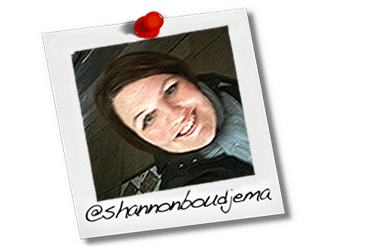
Ten for 10 in 2010 – Shannon Boudjema

This is a guest post from?Shannon Boudjema, who writes over at ShannonBoudjema.com. Shannon is one of the most passionate folks I know, lives social media, and is someone I’m proud to call my friend.

My hat is off to one incredible year for the social industry. I think if I had to sum up 2009 socially, it would be the year that Social came of age.

We have seen staggering results, plausible case studies, and some very smart people with passion and vision doing things that have never been done before and what?s more, they?ve all lived to tell the tale. But as we all know, coming of age means life lessons, experimenting, getting things wrong, set backs and acquiring a bunch of experiences that ultimately define you as an adult.

I think 2010 will see even faster growth, twice as many start ups as were seen in 2009, more tech solutions that simplify how we gather and process content thanks to the biggest mash up of all revealing itself in this coming year.

Looking forward to:

Seeing how authenticity will shape brands in this space beyond the social network profile. Will authenticity be something that we see threaded throughout business this year or will it remain confined to just the parts the consumer can touch? ?Everything from hiring socially to operating within collaborative spaces to bringing the social philosophy to call centers that utilize social tools to fulfill the needs of their customers long before the dreaded complaint.

Watching how the Peer to Peer relationship evolves to reshape how we do business and its effect on the workforce model taking it from a more structured corporate model to a flex-force, entrepreneurial model – a model that in itself will bring change to how we buy, sell, engage and search. It?s true, we have seen this to some degree already with affiliate programs, modern day barter systems and individuals forming strategic alliances but 2010 is likely to see this grow and take shape in more sophisticated ways.

Figuring out how we resolve ?Free?. I thoroughly enjoyed Chris Anderson?s book. He provides a lot of great content and perspective. I also like the book because it was that book that led me to Douglas Rushkoff, who offers some smart insights on how we get past free.

Seeing the end of:

Get Social Quick Schemes. People don?t get rich quick and unfortunately they don?t get thin fast. Getting social quick is also a band-aid for something that requires a fruit salad. That?s right? the get social quick schemes that promise huge amounts of twitter followers are not the answer. A facebook fan page without fans is of no value. But the truth is, these executional fixes are more damaging to you? doing things right the first time are always in your best interest, and more often than not, will be more effective with your time and your money.

Pratt Mill 5
Quality being valued over quantity ? There is a place where Quantity rules ? the quantity of traffic to your site is directly proportional to that site?s revenues. But that?s not what I?m talking about. So what would you prefer, 1000 engaged and active users or 35,000 bots, spammers, and people making noise? In a space where authenticity rules, why are we so scared to be authentic? For those who aren?t comfortable or don?t know how to best engage this space ? learn how to do it right or hire someone brilliant.

Haters being ignored! I firmly believe that your haters are one of your biggest opportunities in this space. Hear me out! Who cares if you tapped a fan club who pledge their love to you. Great! You?re fortunate and we?re pleased for you. But what about those people who are thoroughly annoyed by you?

Those people who tell anyone who will listen how crap your product, service or brand is. Imagine if you could sit down with these fine folk, have a candid conversation, objectively listen and come away with insights that will not only improve business, but if committed action is taken, will turn the hearts of your haters into some of your biggest brand fanatics. ?Hmmmm, this just gave me an idea?.

A few resolutions!

We need to know what to call this space. Social Media, New Media, Digital, Social Media Marketing, Social Technology?? Social is the correct part of the title. Media? Not so much. But then I don?t think it?s New Media either? if it is, then what do we call New Media when it?s no longer new? And p.s. ? it lost its newness about five years ago.

Rear view mirrors play an important role in our life. They keep us safe and they prevent us from doing things we?d only regret. It let?s us look behind ourselves to scan the environment and gather information in order to make informed decisions about our next step forward. In other words, looking back isn?t always a bad idea? and looking back in Social has been made ridiculously efficient by the lovely Peter Kim. Bookmark his wiki warehouse of Social case studies.

However the cards may fall, my prayer for you is that 2010 is your best year yet. So be balanced, be kind regardless of it being reciprocated and always be the first one to smile and say hello!

My sincere thanks to Shannon for sharing her thoughts on the year just passed and the year ahead, I think you’ll agree she says much of what we’re all thinking about (and feel free to leave your thoughts about the year ahead in the comments). I hope you’ll join me tomorrow when I offer up ten people doing amazing things.

Creative Commons License photo credit:?sunsurfr

Why Would You Bother to Comment?

This is a guest post following a great chat I had with Valerie Merahn Simon, and is a nice follow-up on my recent post about Twitter and blog comments.

If you?re like me, you read a lot of blog posts. Many of them are good posts. Some you?ll even share via Twitter or email. But only once in a while will you be motivated to comment. Commenting is a contribution. It requires time and effort and thought.

So why are readers willing to invest themselves in someone else?s blog post?

Controversy

Sometimes it?s hard not to ?jump in?. When David Mullen & Lauren Fernandez asked Should Newspaper Have Outed an Intern for Plagerism? on Communications Catalyst, 107 comments ensued. A recent post on the Bad Pitch Blog regarding the controversial outing of the ?reverse bad pitch? of ?Mike Hendricks and the Laws of Shamelessness? resulted in 57 comments.

Another Bad Pitch post entitled ?Simply put, thank you? about the very successful Bad Pitch Blog Night School garnered 0 comments. Of course controversy does not have to mean scandal. One of the most highly commented recent posts on Marketing Profs Daily Fix was Help! I Have Social Media Rejction Syndrome which inspired a spirited debate over whether it is appropriate to connect with those you don?t know on LinkedIn.

Expertise

Do you believe you can offer value and insights to the conversation? That the post needs your expertise? When Jeremy Porter posted The Best Schools for Journalism on Journalistics, his community was well prepared to contribute (28 comments). Whether they agreed with the schools on his list, or they felt he left off a school, his readers know journalism schools and felt compelled to share their opinions.

Similarly when Lauren Ferenandez asked her readers The 1.2 Million Definitions of PR: What?s your take? a discussion including 50 comments emerged. Her community understood the question, had an opinion and felt that were well suited to make a contribution to the conversation.

Questions

Is the blog a conversation with the reader, or simply offering a monologue? Jerimiah Owyang does a fantastic job of integrating questions alongside valuable insights to engage readers. A great example of this is Owyang?s recent post How to Kick Start a Community- An Ongoing List. With 72 comments the list did become a community undertaking.

Chris Brogan offers a similar example with his recent Simple Touch Points of Loyalty post, which offered 9 Simple Touchpoints of Loyalty and asked for help identifying more. Over 112 comments followed. One of his least commented posts Why I Will Promote Teaching Sells (just 8 responses) doesn?t speak to readers, so much as speak at them. In his words, ?I wanted to share that with you clearly, and tell you a bit about the program, what I like about it, and then, I?ll let you go take a look for yourself.?

Does every post demand comments and interaction? Not necessarily.

Many of my favorite bloggers, brilliant thought leaders such as Shel Holtz, rarely receive more than a comment or two per post. These posts may be viewed by hundreds and shared by many, yet fail to evoke the often elusive comment. There is a unique skill, an art even, to crafting posts that elicit a written reaction from readers.

What was the last post you commented on? Why were you compelled to leave a comment?

Valerie Merahn Simon serves as a Senior Vice President at BurrellesLuce media monitoring and measurement, and writes a national public relations column for examiner.com. She is also co-founder and host of #PRStudChat, a monthly twitter chat between PR professionals and students moderated by Deirdre Breakenridge. She can be found on Twitter or LinkedIn and once in a while, if sufficiently motivated, commenting or even guest posting on a blog!

Hyper-Connected or Disconnected?

Phone > Email > Text > SMS > Blogging > Facebook > Video > Twitter: that?s a quick & dirty look at the basic evolution of our communication channels over the past few years. We?ve grown faster, smarter, technologically savvy, and more efficient with the tools and services we use to communicate with one another in this digital era.
This sort of hyper-connectivity leaves seemingly little time-waste when it comes to responding to one our colleague?s tweets or a friend?s message (or numerous fan page requests) on Facebook. But as we continue to get deeper into the social media realm, I?ve heard just as much talk that our hyper-connected lives have actually made us become disconnected, with the real world.
I?ll be the first one to admit that I?m a technophile and practically sleep with my laptop and iPhone. People who know me online (and off) realize that I am constantly connected online, have a finger on the pulse of what?s happening in the social media space, and studying how companies are utilizing it successfully, or not. It?s who I am, it?s in my genes, and it?s what?s helped me get this far in my career, as I continue to try to make waves.
With that though beckons the questions of this lifestyle:
? Are we sometimes too hyper-connected?
? Do we pass up opportunities in real-life because we?re tending to online activities?
? Are we not spending enough time away from technology?
We?ve built respected communities online that we connect with on a daily basis, but that doesn?t necessarily mean they?re no more real than the people and activities we take part in outside of our home. Where should the line be drawn and a balance created with our online activity and ?outside-the-internet? lives? Or has that line evolved into a blur?
What I?ve come to realize is that this tech/social media world isn?t for everyone. It pushes people to different levels ? working on nights & weekends, creating proposals, continually writing fresh content (as I write this on a Sunday night), responding to tweets all times of the day ? the list goes on. Hyper-connectivity has become somewhat of a prerequisite in this industry and can be seen as unbalance or overwhelming to the outside eye.
But what?s your perspective ? how do you see your online activity? Are you bettering your experiences & skills and building trust within your circles through constant activity, or do you think those who question the technophile?s lifestyle are right? Do you feel that we should find a better balance between these respective worlds?

This is a guest post from Sonny Gill, a social media strategist and community guy whose passion for this space can be well documented through his career experience, as well as via his blog SonnyGill.com.?You can also find him as @sonnygill on Twitter, and writing for his second passion, basketball, at RockinTheRim.com.

Phone > Email > Text > SMS > Blogging > Facebook > Video > Twitter: that?s a quick and dirty look at the basic evolution of our communication channels over the past few years.

We?ve grown faster, smarter, technologically savvy, and more efficient with the tools and services we use to communicate with one another in this digital era.

This sort of hyper-connectivity leaves seemingly little time-waste when it comes to responding to one our colleague?s tweets or a friend?s message (or numerous fan page requests) on Facebook. But as we continue to get deeper into the social media realm, I?ve heard just as much talk that our hyper-connected lives have actually made us become disconnected, with the real world.

I?ll be the first one to admit that I?m a technophile and practically sleep with my laptop and iPhone. People who know me online (and off) realize that I am constantly connected online, have a finger on the pulse of what?s happening in the social media space, and studying how companies are utilizing it successfully, or not.

It?s who I am, it?s in my genes, and it?s what?s helped me get this far in my career, as I continue to try to make waves.?With that though beckons the questions of this lifestyle:

  • Are we sometimes too hyper-connected?
  • Do we pass up opportunities in real-life because we?re tending to online activities?
  • Are we not spending enough time away from technology?

We?ve built respected communities online that we connect with on a daily basis, but that doesn?t necessarily mean they?re no more real than the people and activities we take part in outside of our home. Where should the line be drawn and a balance created with our online activity and ?outside-the-Internet? lives? Or has that line evolved into a blur?

What I?ve come to realize is that this tech/social media world isn?t for everyone. It pushes people to different levels ? working on nights and weekends, creating proposals, continually writing fresh content (as I write this on a Sunday night), responding to tweets all times of the day ? the list goes on.

Hyper-connectivity has become somewhat of a prerequisite in this industry and can be seen as unbalance or overwhelming to the outside eye.

But what?s your perspective ? how do you see your online activity?

Are you bettering your experiences & skills and building trust within your circles through constant activity, or do you think those who question the technophile?s lifestyle are right? Do you feel that we should find a better balance between these respective worlds?

Chasing Your Dream While Keeping Your Day Job

This is a guest post from Andrew Weaver, a photographer, blogger, and self described social media geek. He has an interest in helping others improve their lives both personally and professionally. He authors the blog Leave It To Weaver and you can connect with Andrew on Twitter.

I’m no social media expert. I’m not a PR maven. I’m not a marketing guru. I won’t show you how to get thousands of followers on Twitter.

I don’t have any New York Times’ best sellers. I don’t have a Fortune 500 company to tell you about. I can’t show you how to make millions sitting at home.

I’m just a guy with a dream. I’m going to wager many of you are in the same boat.

I have a love for writing and a dream of growing my photography business. The goal is to one day leave the daily 9 to 5 grind behind and to be doing what I love for a living. If you have the same goals, I understand that it can be difficult to know where to begin.

We live in extraordinary times. The Internet changed the game and social media brought the game to a whole new level. There has never been so many tools available at our fingertips. Geography is no longer a restriction. The list could go on and on. The point is, it has never been easier to start your own business.

If you have a day job that takes up most of your time, it can be a little tricky starting your own business. So how to begin?

If I were to give you just one basic tip, it would be to utilize social media. In today’s world it is imperative to have some form of online presence, especially when starting a business in your spare time.

Social media provides you with exposure and a cheap way to market your business. You don’t have to be on every site out there. Just a couple you can devote some time and effort to. Twitter, Facebook, LinkedIn, etc. Pick your poison and start building.

Build relationships. Build conversations. Build communities. Build fans. Build your network. Build, build, and build some more. By the way, building is much different from non-stop self promoting. No one likes a border line spammer.

Think about this. Without social media how many of you would be reading Danny Brown’s blog? How many of you would know much about Chris Brogan without Twitter? How many of you would care that Guy Kawasaki uses ghosts of anything without social media? If you are building your business from scratch and very few people know much of anything about you, there’s no good reason not to utilize social media. Start building.

Finally, I’m going to throw in one last bit of advice for free. Get rid of the excuses. Whether it’s fear of the unknown or any other reason, quit
using lousy excuses for why you refuse to utilize the tools the Internet has to offer your business.

3 Favorite Excuses YOU Can Not Use

  • No money. How many successful Internet startups do you know that opened with a huge budget? Quit using this excuse.
  • No time. This will be the most tempting excuse if you have a day job. Quit asking about social media if you’re going to instantly turn around and say, “I don’t have time for that.” You can and will make time for anything you really want.
  • No knowledge. It’s good to be knowledgeable in your field. It’s good to do your homework before you dive into a business in any field. At some point though, you have to dive in. You must get to work. Quit hiding behind your fear of starting your own business by saying you don’t know enough yet. Get to work and learn as you go.

You may just be a girl or guy with a dream, but there is no reason you can’t be working to achieve that dream. Social media is one of the best ways available today in helping you get there. I like how Seth Simonds’ bio on his Twitter breaks it down: “Drink some tea, ignore some experts, pursue your dreams…”

  • « Go to Previous Page
  • Page 1
  • Interim pages omitted …
  • Page 5
  • Page 6
  • Page 7
  • Page 8
  • Go to Next Page »
© 2026 Danny Brown - Made with ♥ on Genesis