• Skip to primary navigation
  • Skip to main content
Danny Brown

Danny Brown

podcaster - author - creator

  • About
  • Podcasts
  • Journal

guest posts

Building an Audience with Commenting Communities: Smart, or Sleazy?

Comment strategies

Comment strategies

This is a guest post by Danny Iny.

Have you heard of comment trading communities?

It?s a new fad that seems to be sweeping the blogosphere (or at least a few corners of it). Basically, the idea is that a bunch of people get together and agree to comment on all of each others? posts.

Some bloggers are experimenting with the idea, some love it, and others hate it.

I?ve been thinking about this a lot lately. A short while ago, I emailed a successful blogger whose audience I thought would be interested in a post I had written, asking for a link (this wasn?t out of the blue ? I?ve corresponded with this blogger on a few occasions).

The blogger responded that I could go ahead and post the link in the comment community ? everyone else would take a look and comment, just so long as I did the same for them.

I thanked the blogger and said that I would head on over, but I didn?t ? and I probably never will.

Okay, before we go any further, it?s time for full disclosure: I had participated in one round of this blogging community, which means that I commented on nine blog posts, and nine other people commented on one of mine.

It wasn?t a great experience, for two reasons:

  1. A few of the blogs really stunk. Most were pretty decent, and some were great, but I felt very uncomfortable being committed to leave a comment on a blog that I was completely unimpressed with.
  2. A few of the blogs were about things in which I have no interest. They were good blogs, near as I can tell, but they were about subjects that I neither know anything about nor have any interest in exploring. And yet, I was committed to leave a comment.

So what did I do? Well, I had made a commitment, and I take commitments seriously ? on the good blogs that interested me I left solid comments, and on the others I left comments that were friendly and encouraging, but vague and non-specific.

I feel like I?ve littered on the blogosphere.

Contrived, but reasonable?

My experience was mixed, but I?m not ready to make blanket condemnations. I discovered some really great blogs through it, and sparked a couple of great online relationships. And I?m not the only one.

The most commonly heard argument against these communities is that if people have to leave a comment, then that comment isn?t really worth anything, but I?m not sure that I agree.

I mean, sure, if people leave crappy, fluffy comments, then there?s no value to them, but if the comments are well thought-out, and insightful, then what?s the problem? Bloggers want others to read and interact with their stuff, and at the same time they?re looking for blogs for whom they can do the same. Isn?t this just a way of formalizing and adding some structure to what they want to be doing anyway?

In other words, some might see it as contrived, and I agree ? it?s a contrived solution to a very specific problem, but maybe it works?

My hesitation from doing it again is that I?m not comfortable having to comment on blog posts that I don?t like, or have no interest in.

Maybe this is a solvable problem?

Niche-specific, approval-required communities?

What if a blog commenting community were created that met the following two criteria, to address the main issues that I had with my comment community experience:

  1. Each community is around a specific niche, so that everyone is ? at least in principle ? likely to be interested in everybody else?s writing.
  2. Each community is moderated, and blogs are reviewed before being admitted into the group. This will make sure that terrible blogs never make it in.

If these two criteria were in place, I would give it another shot, and my guess that a good number of other bloggers would do the same. But I may be wrong?

Now I?ll turn the conversation over to you ? I had a feeling that this post would spark a lot of debate, which is why it?s being published here, where the microphone is a little bigger than over at Mirasee.

What do you think? Do you think this middle ground solution makes sense? Do you think blog commenting communities are a false economy, or the best thing since sliced bread?

Let?s get the debate going!

About the author: Danny Iny is an author, strategist, serial entrepreneur, and proud co-founder of Mirasee, the definitive marketing training program for small businesses, entrepreneurs, and non-marketers. Visit his site today for a free cheat sheet about Why Guru Strategies for Blog Growth DON?T WORK? and What Does!, or follow him on Twitter @DannyIny.
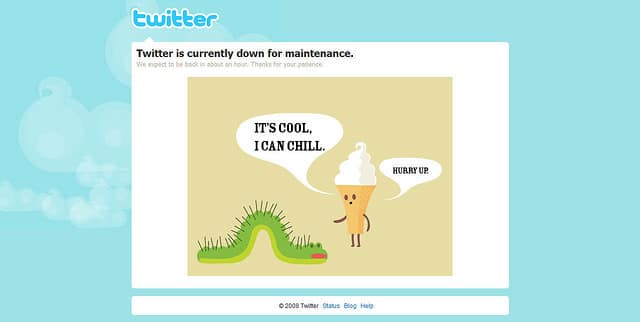
If Twitter Went Back to the Drawing Board

Twitter wishlist

Twitter wishlist

This is a guest post from Jamie Fairbairn.

The web is constantly evolving.

On July 15th 2006 Twitter was officially launched and has since gone on to change the way many of us interact online.

As Twitter approaches its 5th Birthday I thought it would be good to take a look at what it might be like if it was launching in 2011.

Read on below to discover my 10 point Twitter wish list.

Auto DMs wouldn?t exist

Isn?t it great when you follow someone on Twitter because you want to engage with them and have a conversation, only to find an auto DM coming your way?

?Check out my blog, Like me on Facebook? ? or maybe that should that read ?I couldn?t care less about you, it?s all about me?.

Certain words and phrases would be filtered out

Have you ever followed someone only to find they weren?t quite what you expected? Wouldn?t it be great if you could have a list of words or phrases you could automatically block? How about ?make money online?, ?get more Twitter followers? and ?instant traffic? for starters?

I know you can block users but it would be nice not to have to do this manually and have your time wasted.

A daily limit on tweets

There?s always someone who takes their Twitter use to excess. You know the person you follow who is quiet for a while then suddenly launches about 40 updates in as many minutes.

I wouldn?t want everyone to be penalised by this though, so perhaps a ban could be only placed on those who took their tweeting to ridiculous extremes.

A ban on tweet scheduling

I don?t know about you but the relevance on some automatic tweets I?ve seen recently has been questionable to say the least. This week alone I?ve seen tweets with ?10 social media rules for 2010? and similar outdated titles.

In my humble opinion, Twitter should be about real-time interaction and the example above demonstrates how automatic tweet scheduling can go badly wrong and ruin a user?s credibility.

An audio chat function

I?m not a technical person but maybe an audio chat function could work on Twitter? I realise you can go on Skype or pick up the phone but if you?re having a discussion on Twitter with more than one of your followers, perhaps a Skype type function could be incorporated?

I know there are other tools out there that allow for real-time collaboration in this way, but surely Twitter would rather people didn?t leave their site to do it?

A Twitter divide ? business and social

Call me crazy (and I know many of you will) but I can?t help thinking it might be a good idea to split Twitter into two separate platforms ? one for business and one for social purposes.

Now I know what you?ll be thinking ? that just takes away from the whole point of social media, but to be honest I?m sick and tired of ?business? people telling me what they had for breakfast or how many pints of lager they drunk last night.

Since some people don?t seem able to post the inane things from their life on Facebook rather than their business Twitter profile, why not give them a separate social Twitter to blether away on?

An official Twitter jobs board

I think Twitter is missing a trick by not having an ?official? jobs board. It?s always said they?re looking for ways to create revenue but many third parties seem to be one step ahead ? for example www.twitjobsearch.com seems to be doing very well.

An official Twitter jobs board would create revenue for Twitter while also giving its users a fantastic portal for employers and job seekers.

A smarter ?who to follow? function

I think the ?who to follow? function is a great innovation by Twitter but it could do with some modifications.

I recently checked out my ?who to follow? list and was pretty disappointed that it was full of verified Twitter accounts of people I?d never heard of and had no obvious connection to my industry or my existing followers.

A tweet improvement tool

No offence to anyone who uses Twitter but some people post a lot of nonsense. There are also others who post fantastic content but give it a weak headline so nobody clicks through to it.

With this in mind, I thought a built-in tweet improvement tool would be a good idea. Something that could scan what people had written and make some suggestions for improvement would make Twitter a better place for everyone.

A tweet spell checker

Nobody?s perfect and there have been times when I?ve accidentally tweeted something with a spelling mistake in it. Of course you can delete the offending tweet and post it again with the mistake removed.

Wouldn?t it be better for everyone though if Twitter had a built-in spell checker so you could be sure your tweets were error free before posting?

I?d love to know what you think of my wish list and if you have any suggestions of your own, please leave them in the comments below.

Jamie FairbairnAbout the author: Jamie Fairbairn runs SearchBlogger ? an online marketing blog for small business owners. Jamie has helped small business owners in the UK get more from the web over the last 10 years.

SearchBlogger was set up in October 2010 to share Jamie?s knowledge on all aspects of online marketing with a wider audience. You can find him on Twitter @SearchBlogger.

image: theOOBE

The Zen of Social Media

zen of social media

zen of social media

This is a guest post by Stuart Mills.

“Social media is a great way to tell the world what you?re thinking before you?ve had a chance to think about it.” – Chris Pirillo

Have you ever heard of that old saying, “You can take the ‘x’ out of the ‘y’, but you can’t take the ‘y’ out of the ‘x'”?

It implies to social media a lot.

How many people do you know have Facebook? Or Twitter? Or even that old-time favourite, Myspace? Or the more focused ones such as StumbleUpon, Digg, or Delicious? Is it a lot? I bet it is.

Ever since I started my website, I’ve come across so many different ways of connecting, it’s unreal. I could send the same message to you in a hundred different ways. I won’t, but the fact that the potential is there indicates that we are never more connected than we are now. The choice is mind-boggling.

A lot of the ways we can communicate is by social media. I could send you a Tweet, a Like, or a Stumble, and we could get our communication on (if you know what each of those terms mean, then consider yourself connected!). But I must ask now, do we really need all of this? Really?

Facebook Dilemma

I’ve recently had a couple of experiences with Facebook that I feel must be mentioned, as I believe they are examples of the ‘Facebook effect’ on people.

First, myself and my girlfriend were involved in a minor argument about a comment that was left on my Facebook page by someone we know. It was all meant in jest, yet the whole thing got a little out of hand. Its settled now, but you can still look and find the post on my Facebook profile here, and the comments following it.

This is the first time I’ve been involved in ‘Facebook fury’, and it wasn’t a very nice thing to sort out.

The second experience is to do with my Facebook page. I decided to delete the Unlock The Door Facebook page because it wasn’t serving me well. In fact, it was becoming more of a distraction, as it wasn’t growing as fast as my Twitter account, and there wasn’t much interaction taking place at all.

So now, all of my Facebook activity will be concentrated onto my Facebook profile. I believe this will make things simpler for me.

So what does this all mean? It means that Facebook has recently gotten out of hand for me, and I’ve now taken steps to reduce my Facebook activity, and focus more on Twitter as my main social media outlet. I like Twitter, it’s fun, informative, and it just seems a lot more professional.

But what it also means is that I needed to minimise my social media exposure.

less is more

Less Is More

I prefer to liken social media to a whirlpool. It looks fun but it can suck you in without ever letting you go. Before you know it, you’ve just spent those two hours in the morning, which you were going to spend on your website, checking out other profiles on Facebook, and tweeting the latest Charlie Sheen rant. It’s a waste.

Why do you do it?

Why waste those hours doing something which, at the most, might get a couple of cheap laughs? Social media can do that to you, it can turn you into a mindless, pointless status-uploading, zombie. I know, because some of them are my Facebook friends.

How can you get out of this? Simple, cut it back. Social media can become an addiction just like alcohol, drugs, and smoking. Excessive amounts are bad for you, we all know this, but it doesn’t make it any easier when you’re trying to log off from your profile but you just can’t bring yourself to do it!

Cut back on your addiction. Go cold turkey if you have to. I recall Steve Pavlina going on a 30 day Facebook fast after being an active user for two years. You can read his results here. I’m sure you’ll be as surprised as I was at what he learned.

The same applies for any other social media outlet that you find yourself addicted to, as it’s not just Facebook.

Some people are addicted to endless retweeting, others like to click the ‘stumble’ button just for the hell of it. Cut back on these outlets. Disconnect your internet. Banish your computer if you have to, but however you do it, just take a break. Get your head out of the social media sand and look up to the sky. Look around you. You know what you see?

It’s life! Life is waiting for you if you only get away from your social media and embrace it.

Purposeful Social Media

Of course, I don’t advocate that you dispel social media entirely. Some of it is actually quite useful.

Want to share something new that your business/website/yourself has introduced? Use Twitter to tweet about it. Or advertise it on Digg. You can reach a shed load of people in seconds by using a social media outlet, and this is good. This is very practical, and has many uses, but it has to be purposeful.

Why use social media if not for a good reason? Are you just using social media because everyone else is using it? Rubbish, that means you are a sheep, as you are following everyone else and doing what they say is good for you. I’ve been a sheep before, when MySpace was hip and cool, but never again. If I use social media, it will be for my benefit and purpose, not for anyone elses.

Our man Danny Brown wrote a post not too long ago about the philosophy of social media, and what it can mean beyond the trivial conversations and noise. I implore you to check it out here, and learn that social media can be so much more than boring tweets and likes, and it can be a completely different experience for you.

If you let it.

Why Social Media?

Social media is meant to help you by letting you help others. That’s the ulterior, moralistic motive of social media, yet somehow it’s transformed into a hideous, blabbering, tweeting atrocity of a monster. It’s awful to think about it, so the best thing you can do is not to let yourself get sucked into the monstrous whirlpool.

Use social media for your own uses, and help others in order to help yourself. And if you find yourself getting sucked in? Breathe, turn off the internet, and gain a little perspective. The monster is still ugly behind all that make-up.

stuart millsAbout the author: Stuart Mills is an experienced writer who wants to help you improve at life. He thinks you?re awesome. You can often find him here, where he writes constantly to make it a better day for everyone, and you can subscribe here. You can also follow Stuart on Twitter at @theunlockeddoor.

image: SilverLunace
image: artbymags

Yelp Doesn’t Understand Your Small Business

Yelp bad for business

understanding my business

This is a guest post from Joe Hackman.

I received an email this week from Yelp reminding me that they do not understand my business. The first thing in bold red header images I read was:

Don't ask your customers for Yelp reviews.

What Yelp continues to fail to understand is that many small businesses and self-employed professionals don’t have a massive amount of customers. To put it bluntly, if we did not ask our customers to review us, there probably wouldn’t be any reviews, and we think that is a shame because we’ve worked hard to build up our reputation. The message went on to talk about one of the more frustrating aspects of Yelp:

“Another reason to avoid asking for reviews: solicited reviews may get filtered, and that will drive you crazy.”

This is Yelp’s story and they are sticking to it. Every time I’ve gotten a call from their sales reps I complain about the fact that the limited reviews from legitimate customers that I have received over the years ALWAYS seem to get filtered. Instead, it seems you need to fall under some key criteria:

  1. Pay to play (advertise on Yelp).
  2. Drive a lot of traffic to their site (read: have a lot of customers that are more Business-to-Consumer oriented).
  3. Get reviewed by people contributing frequently to Yelp (their reviews don’t seem to get pulled).

It is easy to conclude that Yelp does not really want you. I think the real answer is to focus on Yahoo Local, Google Places and LinkedIn recommendations. At least none of them are calling me asking for money, yanking legitimate reviews or otherwise gaming me to try to get me to do things “their way”.

Rocky Past

Yelp has a bit of a rocky past – a lot of business owners have felt extorted by the tactics Yelp has used to try to encourage advertising. I know I get a bad feeling every time they solicit me. I bring up the issue of the positive reviews being removed and they do their dance, then call me back again in a few months. The whole thing seems like a classroom full of kindergarteners in charge of a candy store.

What do you think? Have you experienced similar frustrations with Yelp?

Joe Hackman is the founder of Managed Solutions, a blogger, podcaster, technology enthusiast, and fan of conversation. He helps businesses use technology more effectively.

There’s More To Competence Than Training

Leon Noone

Leon NooneThis is a guest post by Leon Noone. Leon helps managers in small-to-medium business to improve on-job staff performance. His ideas are too unconventional for some managers. Find out for yourself at Leon’s blog, Secrets of Managing Employee Performance for Better Business Results, where you’ll be able to receive a free copy of his Special Report “49 Practical Tips for Better People Management in Small-Medium Business”.

You need well trained, competent employees in your workplace. That’s a given. I’ll go so far as to say this: the only way to measure whether training’s successful is on job trainee competence.

If the trainee isn’t competent on the job, your training’s failed. And 95% of the time the trainee is not to blame for training failure.

Is Competence Enough?

If by “competence “we mean “skill”, it isn’t. We all know of highly skilled individuals who were unsuccessful and ineffective. But sometimes we’re blind to the limitations of mistaking skill for competence.

Measuring Competence

We tend to measure competence as repeated demonstration of skill and behaviour. Put simply, if someone can do something well over and over again, we’re satisfied that they’re competent. But that’s not enough at work.

Competence Isn’t Effectiveness

All of us need skillful employees. That’s just the start. If your employees aren’t skillful, you’ll face serious business problems. But you may also face serious business problems even when your employees are highly skilled. If you don’t believe me, consider the teams in the NBA or English Premier League (Soccer). These leagues are replete with players of great, even extraordinary, skill. But few of the teams are successful at their business: winning titles. The same is true in any workplace.

Work As A Social Event

Workplaces are social entities. Work is a social event. Unless you’re a sole trader, you work with people. You know that already. The implications are what can bring us undone.

Social Event Not “Love-In”

It’s absolutely essential that employees work effectively together to help create and sustain a viable business. It is not absolutely essential that the employees “like each other”, “relate well” or “get on together”.

I’ll stick my neck out and say that people who work together effectively will learn to “get on”.? If you’re part of a successful team, you’re far more likely to be tolerant of individual idiosyncrasies than in an unsuccessful team. Merely encouraging staff to “get on” is no guarantee of successful on job performance.

Training And Performance

Well trained, competent staff are necessary. But successful on job performance won’t necessarily follow. Poorly trained staff will damage your business. Well trained staff won’t necessarily improve it. Most staff performance issues relate to what employees “won’t do” rather than what they “can’t do”.

Implications Of “A Social Event”

If you want your employees to be successful and effective you must train them well. But because they work with others, you need to ensure that:

  • They know exactly what performance is expected of them. And “exactly” means? just that: no waffly, high sounding, grandly worded phrases, just clearly expressed, measurable performance standards.
  • They know, understand and accept the job roles and goals of the people they work with. Role and goal conflict is common in the workplace. It causes much interpersonal conflict. The conflict’s merely a symptom. I must know what’s expected of both you and I and both of us must accept that each of our contributions are vital to business success. When that’s the reality, disruptions arising from so called “personality conflicts” will disappear as we focus on co-operation for effective business results.
  • You, as manager, put systems in place that make it impossible for your employees to fail. “If your systems are poor, your people will fail”. It’s as simple as that ? and it won’t matter how skillful they are.
  • Your employees not only understand the importance of systems, but are competent to operate them, understand what they exist to achieve and are encouraged to recommend system improvements for better business results.
  • Your remuneration and reward systems reward both successful individuals and teams.
  • You know exactly what performance you expect from your employees and your business:? that’s probably the most important element of “successful and effective”.

The New Employee: A Special Case

Most training effort is usually devoted to the new employee. That?s fair enough. But it’s the new employee who’s most likely to be affected by the social implications. New employees want to “fit in” as quickly as possible. They want to show that they have the skills. As they see it, that’s how they’ll gain respect from their more experienced workmates. New employees need the support of effective systems and clear roles and goals to help them settle and become effective contributors quickly.

Redefining Competence

For effective and successful employee performance, competence means much more than demonstrating skill. Your training must reflect the social realities of the workplace. The basic human unit in the workplace isn’t the individual. It’s the team. Workplaces are comprised of individuals. But the teams determine effective and successful performance. It’s the manager’s role to create that.

Conclusion

Businesses fail for many reasons. In some cases the best systems, skills and people won ‘t make much difference. Training alone, no matter how well done, will not lead to successful and effective on job performance.

Remember? that work is a social event. Managers who understand the social implications of the workplace will always have a better chance of running a successful business than those who don’t.

  • « Go to Previous Page
  • Page 1
  • Page 2
  • Page 3
  • Page 4
  • Page 5
  • Page 6
  • Interim pages omitted …
  • Page 8
  • Go to Next Page »
© 2026 Danny Brown - Made with ♥ on Genesis