• Skip to primary navigation
  • Skip to main content
Danny Brown

Danny Brown

podcaster - author - creator

  • About
  • Podcasts
  • Journal

Latest posts from Danny Brown

Enjoy the latest posts from Danny Brown, and feel free to add your own thoughts in the comments after the post.

Our Wonderful, Imperfect Selves

December 31st. A day that marks the end of the old year and the preamble to the new one just beyond the midnight bells.

A time when, traditionally, we make vows and resolutions to be “new” us in the next 12 months. You know the drill:

  • lose weight,
  • stop smoking/drinking,
  • eat less junk food,
  • work out more.

All good goals. All good things to try and do, regardless of the time of year.

But to say “this will be the new me” says the old, or existing, you is no longer relevant and out-of-date.

And that’s bullshit.

We get suckered into believing we need to be “a new us” in order to be the us we’re meant to be.

Like having a smaller waist, or a bigger bicep, will suddenly make the things that are “wrong” with us go away.

And it’s still bullshit.

Because, in truth, why should they go away in the first place?

Our flaws. Our faults. Our broken promises. Our failures.

Every one of them is who we are. Every one of them is what we use to do better.

To be better.

To live better.

If we don?t have our flaws, we don?t have measuring sticks on how far we?ve come.

And, unless we want to stagnate breathing the same air forever, we need to know where we?ve been to see how far we still need to go.

So, forget the ?new me? mantra. Go with something that?s real.

Something that?s you.

By all means, improve you. Grow you. Revisit you. Remould you.

But don?t lose the quintessential you by chasing something that?s neither shiny or new when the light of the new sun breaks in 2016.

It?s a sales push by marketers and retailers and corporations who tell you, ?The old you sucks, and you suck for accepting it.?

But they don?t know the first thing about you. Fuck ?em, and all their lies.

You?re just fine the way you are. You just need to work on realizing that.

Here?s to you and your wonderful, imperfect self in 2016.

Slainte.

A version of this post originally appeared here.

The Best Decision I Made About This Blog

Memories

As the end of 2015 waves its face in front of us, it’s usually the sign for times of reminiscence, both in our personal lives as well as professional.

The same can be applied to pretty much everything we do, with blogging being one of them.

If I were to look back on where this blog has taken turns since starting it back in September 2008, there have been a lot of directional changes in that time.

There’s one, though, that stands out for me as the best decision I made about this blog’s direction – when I stopped writing primarily about social media and marketing.

Talking About People is Marketing, is Social

For the first five years or so of this blog’s life, the topics were mostly based around marketing, social media, content, and the various tools and technology that joined them all together.

This was all well and good, and helped build the blog a pretty decent following among readers looking for these kind of topics.

But there’s only so much you can say – or want to say – about marketing, or social media, or content, that isn’t being repeated ad infinitum elsewhere.

When you begin to not look forward to publishing another post, because your heart isn’t really in it, you know it’s time to either change things up, or quit.

Since I enjoy writing so much, the decision was made for me – quitting wasn’t an option, but changing direction was.

So, out went the business-specific posts, and in came the more personal ones that looked at life in the bigger picture.

Topics ranged from misogyny to ignorance;??life lessons to hopes; messed up priorities to racism; and more.

As a result, I lost many subscribers – and that’s okay, because as I mentioned in a post detailing the move, the new direction wouldn’t have been for them anyway.

However, in their place remained (and came) those looking for more personal conversations, and topics.

The level of comments, and the depth behind these comments, showed me I was right to make the move to the type of blogging that was important to me.

An interesting side effect was an increase in readers of the Millennial age group.

Given that so many social media wonks advise you to “write for the Millennials!”, I can’t help but smile at the irony of writing for myself, and attracting a new audience made up of ones that we’re meant to be targeting.

Plus ca change.

What Comes Next

For you, the readers who have stayed with me on the personal journey, I sincerely thank you. I’m glad you choose this little part of the web to hang out on, and I’ll try not to disappoint.

This blog will continue to travel down that path, and have some guest writers who I feel are a good fit for that direction.

I’m going to be experimenting in post formats next year, with some ideas I want to try with regards visual presentation – so that should be fun.

I also look forward to growing the Pure Blogging site, as more readers discover that in 2016. We have a great team of writers there now, with more to follow in 2016, so check it out.

It’s been a fun 7+ years so far – here’s to what comes next.

Cheers!

On Seeing Star Wars as an Eight Year Old Kid in 1977

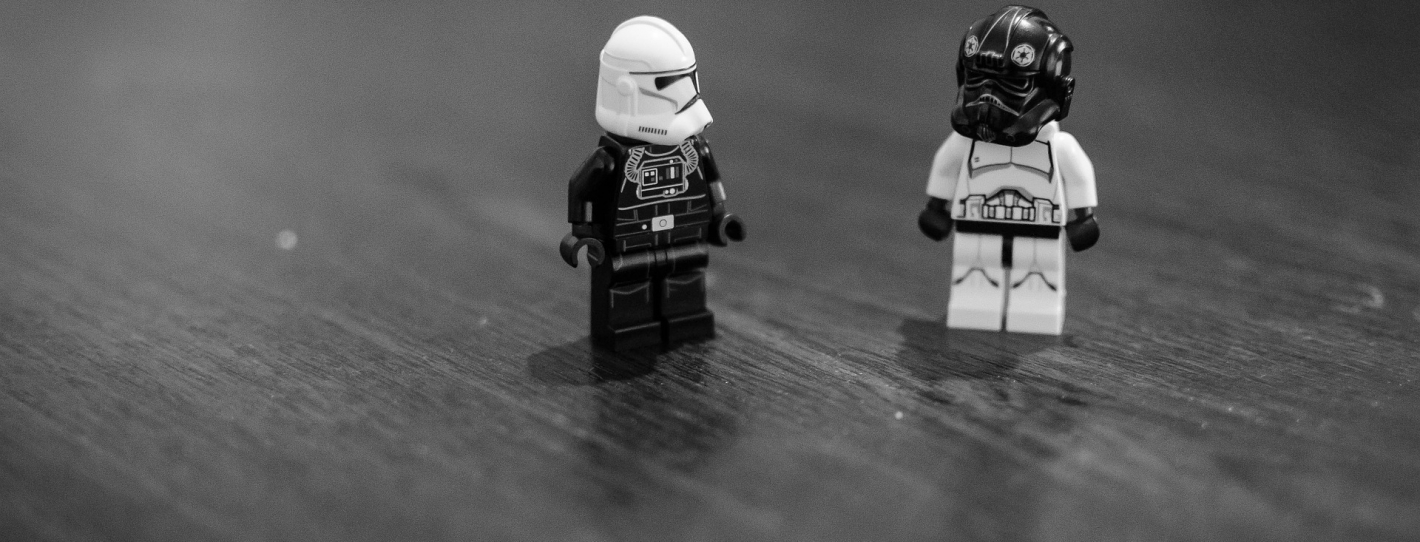
Star Wars lego

Today is a huge day for anyone that’s, A) a Star Wars fan and, B) about the same age as me (anywhere between 40-50 years old).

After a false start with the prequels between 1999 and 2005, Star Wars returns with the global release of The Force Awakens.

Fuck yeah!!! (sorry mum)

So why’s today such a big day? After all, it’s just the seventh movie in a line of great to good to bad movies, right, depending on who you speak to?

Well, if you’re asking that, you probably didn’t see Star Wars as an eight year old kid (or thereabouts) in the theatre when it originally came out in 1977.

And that can make a difference.

Unabashed Fun in a Cinematic World of Grey

When Star Wars came out in the summer of ’77, the movies preceding it had a very different tone.

Classics like Raging Bull, Taxi Driver, Easy Rider, One Flew Over the Cuckoo’s Nest, The Deer Hunter and The Godfather were all dark, sombre affairs.

They had a tone that reflected the time – the Vietnam War and the Nixon scandal being just two that threw America a curve ball.

So it was understandable that movies reflected the nation’s mood. Given that so much of America’s cinematic output drove global audiences, the world of movies was a serious place.

And then Star Wars dropped, and everything changed.

Made by director George Lucas as an homage to both classic Westerns and Japanese historical movies, Star Wars was loud, action-packed, optimistic and – most of all – fun!

Instead of the multiple layers of who were the good guys and who were the bad guys in the likes of The Godfather and Taxi Driver, Star Wars made a clear distinction.

Darth Vader

Bad guys wore dark colours (black and grey) except for the Stormtroopers, who wore white armour.

Good guys were cavalier, ready to take on the world, and not afraid of what lay ahead.

Okay, maybe Han Solo kind of didn’t meet the exact good guy criteria – he shot first! – but you knew his heart was in the right place, he just needed to realize that.

Star Wars was also unlike anything we’d ever seen before.

Prior to Star Wars, the two big sci-fi movies were 2001: A Space Odyssey, and Close Encounters of the Third Kind.

The former was dramatic, with long sweeping space views and slow, lumbering space ships; the latter was a spectacle of what could be if humans and aliens met.

Star Wars was neither.

Instead, it was a glorious, good guy versus bad guy space battle with robots and lightsabers and blasters and, man, did these space ships move!

The TIE fighters versus the X-Wings. The Millennium Falcon versus Star Destroyers. Rebels versus the Empire.

The special effects that George Lucas and his team of whizkids created from scratch made a movie like no other – because Star Wars moved like no other space movie.

As an eight year old kid, you knew you were in the presence of something amazing the moment you get your first glimpse of a Star Destroyer.

Sitting in the movie theatre, and watching in awe as the biggest space ship you’ve ever seen rumbled over your head for what seemed like forever. How big is this thing??

From that moment, you were hooked, and cinema was never the same for you again.

A Trilogy of Broken Hopes

Star Wars was followed by The Empire Strikes Back (the best of all six so far), and the original trilogy closed with Return of the Jedi.

Almost fifteen years went by, when there were rumblings of a new trilogy (based on the reception of the digitally-remastered versions of the originals, released cinematically in 1997).

And so, fans got their hopes up. Finally, we’d see how Darth Vader came to be, we’d see the Clone Wars alluded to in the original trilogy, and we’d see the rise of the Empire/Emperor.

On May 19, 1999, The Phantom Menace was released – and it was?as if millions of voices suddenly cried out in terror, and were suddenly silenced.

This wasn’t the Star Wars we were looking for.

Hey look - there's someone that likes Jar Jar Binks!

For a start, it was too clean, too pristine. The beauty of the original movie was that it looked like a lived-in universe: beat up ships,?aliens that spoke alien languages, and technology that wasn’t guaranteed to work.

The new movie was the opposite, and actually looked more futuristic than the movies it was set 20-30 years before.

Then there were the cardboard characters that no-one cared about, the plot that was all over the place, and the ridiculous use of CGI for special effects and sets.

Cue major disappointment and the realization that maybe Star Wars no longer held its magic.

Except it does – and the new movie looks like it’s about to validate that belief, and then some.

There Has Been an Awakening

In 2012, Disney bought Lucasfilm for $4 billion. As a result of that deal, Disney announced it would be bringing Star Wars back to the cinema, to close out the story arc that began way back in 1977.

While fans like myself were wary, we were also excited. Finally we’d see what happens to Luke, Leia and Han after Return of the Jedi closed.

When it was announced JJ Abrams would be directing, hope grew.

Responsible for some of the best TV shows in recent history (Lost, Alias) as well as new spins on old genres (Cloverfield, a hand-cam take on monster movies), this was someone that had pedigree.

The fact he was an unabashed Star Wars fan (he was born in 1966) didn’t hurt. Nor did his successful reboot of the Star Trek franchise.

Then the first teaser trailer hit, and it didn’t do much to quench original fears, to be honest.

Some snippets of familiar imagery, but nothing more, really (and I’m still torn over that new cross-shaped lightsaber).

And then the first full-length trailer hit, and it was magical.

There has been an awakening – have you felt it?

That music! The Millennium Falcon! TIE fighters! Han Solo and Chewbacca, dammit!

Then the new trailers hit, and we finally see all of what we hoped Abrams would bring, and more. Simply put, this is Star Wars.

It looks like Star Wars. It sounds like Star Wars. It feels like Star Wars. Most of all, it makes this 47-year old guy feel like an eight year old kid again.

It may disappoint, it may be the magic has gone.

But until I find out this evening, when I go see an advance screening, I’ll be pinning my hopes on that it’s going to be the Star Wars I remember.

May the Force be with it.

The Old Man And The Boy

The old man and the boy spent a lifetime sharing tales
Of days when the man was not so old and he’d ride on the backs of?whales

The boy listened closely, held in awe, to the stories that he?heard
And when he saw the glint in the old man’s eyes the boy didn’t doubt a?word

On a sandy beach the two would walk, the man’s dog by their side
Throwing pebbles out to the sea, racing against the tide
Like guardians the two would stand with their winter coats drawn?tight
And in the summertime round an old campfire they’d share stories in the?night

There was love in his eyes when the old man smiled
And the love it was returned
And the boy would pray there’d never be a time
When the fire no longer burned

For it’s a friendship no-one can understand
And far stronger than you and I
It’s a love between two generations
And it’s far too strong to die
For the stories passed between a grandfather
And the grandson he so loves
Builds a wall so strong you could only pass
If you flew in the skies above

These carefree days would pass so slow, each day held something?new
Days spent fishing in the downstream flow ‘neath a summer sky so?blue
The tales of the one that got away made the young boy’s mother?laugh
And when the old man argued handsomely she’d cry “Away and don’t be?daft!”

Yet life is just a short-lived thing and all things must surely?end
For death awaits us one and all around each turn and bend
The old man passed away in wintertime, so gentle in his sleep
And though the boy cries so painfully, there are memories to keep.

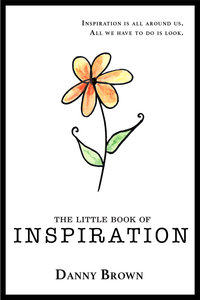
Little Book of InspirationThis is a chapter from The Little Book of Inspiration, available now from Morning Rain Publishing for just $2.99.

It’s a collection of inspirational stories, poems and personal thoughts about our place in the world.

You can learn more about the book, including where to purchase it, here.

An Experiment in Removing Share Buttons Altogether

Sharing

Unless you’ve been hiding under a social media rock recently, you probably know about Twitter removing their share counts.

This meant that, as of November 20, any blog posts that had some form of Twitter sharing button (native or third-party) would no longer be able to show how many times that post had been shared on Twitter.

Cue content marketers and social media sharing companies decrying the move, with dramatic quotes about it “being the death of Twitter”.

#SaveOurShareCounts Tweets

Because, yes, Twitter has nothing more serious to worry about than whether or not it shows share counts…

For the rest of us, it didn’t mean as big a deal. At the end of the day, a share count is simply one metric of a blog post’s “success”.

Given there are enough shady companies and scripts out there that can artificially inflate these numbers, it’s not even a great metric.

Personally, I’d rather go by engagement, reactions (as in discussions and thoughts elsewhere), and growth (either subscribers, readers or share of voice) as metrics that matter.

But it made me wonder – with so many people getting up in arms about a little number, what would they actually feel like if you removed the option to share via on-site buttons altogether?

And so I’m going to find out.

To Quickly Share or Not to Share

Last year, I read a post from a few other bloggers who were discussing the value of social sharing buttons, and whether they helped or hindered sites.

One of the best articles I read was from Sam Solomon, called Why I’m Done With Social Media Buttons.

Sam’s main premise was from a designer’s angle, and how sharing buttons could ruin the user experience.

Yet he also shared a couple of case studies that looked at on-page sharing, and the results weren’t great.

While he admits that he didn’t do any real conversion tracking on his own site before switching off, his points around the topic are very valid, and worth the read.

His closing argument has remained with me since reading his post:

If people really love your content, they?ll share it.

And it’s true.

Yes, having on-page buttons may make it easier – but then do they take away from other calls to action that you’re trying to achieve (comments, subscriptions, etc)?

For example, this company saw conversions increase when they removed their share buttons, which is clearly a more important metric than how many tweets they got.

But perhaps that shouldn’t come as too big of a surprise – it’s simply following the golden rule of marketing: that you have one main CTA and that’s your primary KPI (key performance indicator).

You then set secondary CTAs and KPIs based on the key one – but only if they don’t jeopardize your main one.

If you take this to your blog, your core CTA might be to get a comment. Or it might be to get a subscriber. Or to download an ebook, or something similar.

I’m going to hazard a guess that these will come before social sharing. So are we diluting our goals by the [apparent] importance on social sharing buttons?

Time to find out.

Setting 30 Days Comparable Metrics

If I look at my Google Analytics, I can see how much social traffic means to my blog.

In the last 30 days, my breakdown has been as follows:

  • DB analytics chartOrganic search – 58%
  • Direct – 22.3%
  • Social – 9.5%
  • Referral – 9%
  • Other and email – 1%

Just looking at that simple pie chart, I can see that – in the grand scheme of things – social isn’t a huge part of this blog’s traffic.

While 10% might mean X amount of visits, I tend to find the bounce rate (how soon someone leaves a page) higher for social traffic than search or direct.

Additionally, if I look deeper into my social analytics, I can see that both Facebook and Twitter are the key social drivers – Twitter accounts for 31% of social traffic, Facebook accounts for 29%.

That’s almost 2/3 of all my social traffic coming from just two networks.

So, truth be told, for this particular blog, maybe social isn’t a key driver of visits, even though I’ve continuously made it easier to share with ever-improved social sharing options.

Of course, the argument could be made that perhaps the content just wasn’t shareworthy. In which case, get off my lawn! 😉

One thing I do find interesting (and another reason for this experiment) is that when I look at both my Google Analytics as well as Share Tally, I can see there are a solid number of shares from Buffer and Pocket.

These are two platforms that my current social sharing solution doesn’t support – which suggests that readers are still happy to cut and paste a blog post’s URL onto their preferred platform of choice.

Well, I guess I’m about to find out.

For the next 30 days, I’m not going to enable on-page sharing for the posts I publish.

Instead, whenever a reader enjoys a post and wants to share it, they’ll need to grab the URL and paste it directly into Twitter, or Facebook, etc.

If they do, great. If they don’t, well, maybe great, maybe not – I guess we’ll see based on traffic comparisons as well as network activity.

Either way, I’m interested to see how removing share buttons impacts the shareability of this blog.

Let the fun begin!

  • « Go to Previous Page
  • Page 1
  • Interim pages omitted …
  • Page 35
  • Page 36
  • Page 37
  • Page 38
  • Page 39
  • Interim pages omitted …
  • Page 283
  • Go to Next Page »
© 2026 Danny Brown - Made with ♥ on Genesis