• Skip to primary navigation
  • Skip to main content
Danny Brown

Danny Brown

podcaster - author - creator

  • About
  • Podcasts
  • Journal

Latest posts from Danny Brown

Enjoy the latest posts from Danny Brown, and feel free to add your own thoughts in the comments after the post.

Facebook Fan Page Evaluation Fun with Vitrue

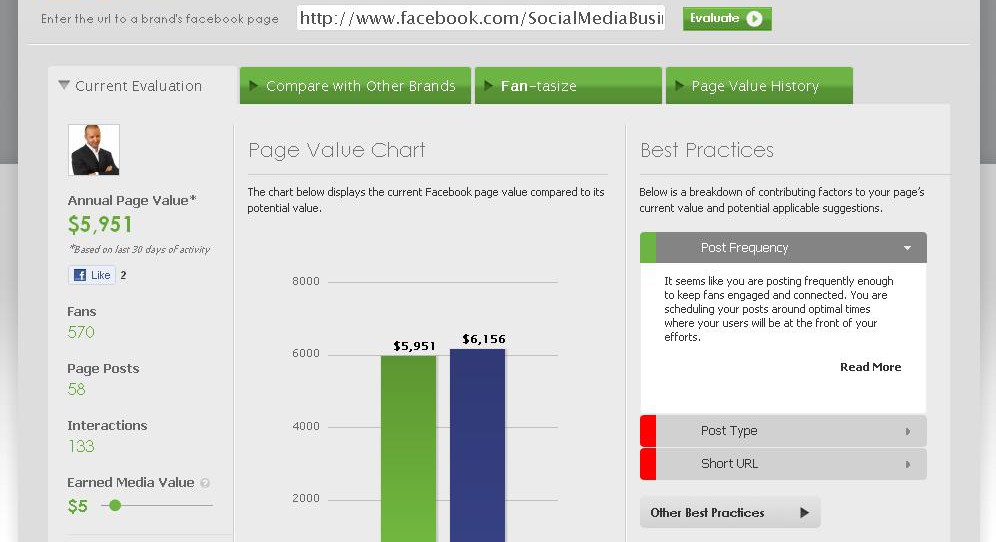
Danny Brown Facebook page evaluator

One of the reasons I set up a Facebook page was to offer an outlet where folks that were more comfortable on Facebook could connect and interact.

Yes, my blog is my home space, and then there’s also Twitter, LinkedIn, YouTube and other social profiles where we can connect. But not everyone likes reading blogs; not everyone’s on Twitter; some folks don’t like to get too involved with LinkedIn, and so on. So, making an outpost available where you’re most comfortable was a no-brainer.

So far, it seems to have worked pretty well. There’s a good mix of extended blog posts, shared resources, exclusives and connections, as well as folks that add comments or make suggestions of their own about resources that may be interesting to those that like my page. And I can’t ask for much more than that.

However, it’s always cool to see how anything we do online is perceived. After all, if we’re not measuring (or at least evaluating) our progress, how can we see where we’re going wrong and correct, or what we’re doing right and build upon?

That’s why something like Vitrue’s Social Brand Evaluator is so interesting.

At its heart, the evaluator is a simple method to see how your Facebook page rates for interaction, social value, and the potential for future marketing or monetary worth.

It also highlights some of the best practices for growing your page, as well as give you a breakdown of page value history (so if you’ve had your page a while, you can see if you’re going in the right direction or not).

While it’s not a direct replacement for proper metrics and measurement, it is a solid enough little app that can show you how you compare to others in your niche or industry. So if there’s someone you really admire, then Vitrue’s evaluator will let you see where you need to be headed to get closer to that page’s social value.

The main problem with it as it currently stands is that it doesn’t really tell you what these figures mean. For example, what does the Annual Page Value indicate – what the page is worth to advertisers, or how much you have the potential to make with offers to those that like your page?

The same goes with the Earned Media Value slider – again, is this for advertisers, page owners, a mix of both or none of the above? A little more clarification on the evaluator would be really useful (though maybe Vitrue is saving that for paid client work instead).

Either way, it’s a decent look at how your Facebook page is being used and viewed, and that’s always useful.

Here’s my social value. If you have a Facebook page, check out the evaluator for yourself and see where you currently sit and where you could either change or improve interactions. And I’d love to hear what you think of the tool and its use.


Danny Brown Facebook page evaluator

Coming Soon…

Bonsai

Bonsai

photo credit: trovster

Community, Loyalty and the Power of Give

DSC_0641Last night on Twitter, I was part of the?#sbt10 chat, part of the Start Blogging Today project (disclosure – I’m a partner in the project). As usual, there were a ton of great topics discussed on how to make your blog work better for you.

One of the conversations that arose was how to reward loyalty – i.e., how to make sure that your blog community knows you appreciate them.

Michael Schechter asked how you’d go about that, and I suggested exclusive content as one option (similar to what I did with my free Facebook marketing ebook).

Of course, that approach on a blog would mean that to really benefit from exclusive content, your readers/community would have to be subscribed to a newsletter or email subscription. Which would then negate the rest of your readers that don’t subscribe this way, but still show loyalty by coming back time and again.

So what ways could you reward on your blog, for both subscribers and everyday visitors/readers?

Loving Your Blog Community

Face it, without a community a blog is nothing more than a broadcast platform. Your community nurtures the growth of your blog; it helps share with others; it defends if needed; and it keeps you growing as a blogger by sharing great insights in the comments.

It doesn’t matter if it’s a personal blog or more business-oriented – community is the real king (sorry, content lovers). For business blogs, community is the relationship to the sale – look after it and look after your business.

So what are some of the ways to reward a loyal blog community?

Exclusive Content

As I mentioned earlier in the post, this would normally be via a newsletter or email subscription, so may negate some of your readers (although it’s a great way to build an even more loyal community on subscription too). Some of the things you could offer could be:

  • A free ebook;
  • White papers;
  • Solid business advice not normally seen on your blog;
  • Discounted offers on affiliate programs.

There’s a lot you can make exclusive to really say “thanks for being part of my community”. You’ll have a better idea of what would appeal to yours – all you need to do is put that into action.

The Freemium Model

Because exclusive content needs an exclusive outlet to really make it work, you run the risk of excluding the readers that visit every day, comment and are as just as important a part of your community as subscribers.

7/365
So how do you make sure that you’re not ignoring them and focusing on your exclusive content?

  • Episodic content. This can work in two ways. You can either write a series of educational posts on topics your readers would find useful, or you can offer the first chapter of any ebooks that exclusive content subscribers receive. That way, “normal readers” still receive value and can decide whether to expand into the subscription option.
  • Actionable content. Want to be seen as a thought leader or serious blogger in your space? Then offer action points that anyone visiting your blog can take away and make work for them.?John Haydon does this all the time for Facebook strategies, while CopyBlogger offers solid tips on writing for search engines. Help others; help you.
  • Highlight your community. Another way to reward your community is to give them some reader love. By coming to your blog every day and commenting or sharing you, your community is helping you grow awareness of you. So do the same for them. Have them guest post on your blog, or post about someone from your community frequently. We all like to feel appreciated; make sure your blog community knows you appreciate them.

Protecting Your Community

Growing your blog community is the first part; but it doesn’t stop there. Just as your community nurtures you and helps you, so you need to do the same in return, but take it to an extra level – by protecting them.

Think about it – if someone’s taking the time out of their life and schedule to read and share their thoughts on your blog, the very least you should be doing is making sure it’s somewhere that they want to hang out, and feel comfortable doing so.

  • Make it clear you won’t tolerate abuse to your community. One of the best things about any blog is the comments section – so many great thoughts and ideas can come from here, and new friendships can be made. So making it a safe haven is paramount – protect your commenters, protect your blog.
  • Have a comment policy. Currently I don’t have one, purely because I’ve been really fortunate in having commenters who pretty much respect each other’s point of view. But it’s an idea I’m thinking of, and it can help you set both guidelines for new visitors, as well as assure your current community you have their best interests at heart.?Ari Herzog has an excellent example of how a blog comment policy could look.

These are just some examples of how you can use your blog to reward the people that make it what it is. There are a ton of other things you could do (and we discuss a bunch of them over in the Start Blogging Today forums).

You could use some of them; you could use all of them – the main thing is you’re at least doing something to reward your blog community.

After all, they reward you just by stopping by each time – thanking and looking after them is the least you can do, no?

Creative Commons License photo credit:?jammcm
Creative Commons License photo credit:?Kelly Schott

Why I’m Loving expo-MAX Analytics

If you run any kind of online business presence – blog, website, e-commerce store – then one of the key things to have in place is an analytics system for measuring your metrics.


This can be to gauge traffic, time spent on site, hot spots and much, much more. If you don’t have any kind of analytics in place, then you’re not seeing the bigger picture and missing out on valuable information that can take your site or business to the next level.

There are a ton of great measuring platforms available, some free, some premium, some of which I’ve spoken about before.?While I use a mix of?Quantcast and Google Analytics for this site currently, over the last few days I’ve been messing around with expo-MAX analytics.

And I have to say, I’ve been pretty damned impressed.

Who is expo-MAX?

Primarily an advertising solutions company, expo-MAX helps both advertisers and publishers to gain a larger share of their target audience.

For advertisers, they help you identify your strengths and eliminate your weaknesses, and tie it in with a fully monitored fraud prevention system so your ad spend can’t be gamed by fraudulent clicks.

On the publisher front, expo-MAX helps put you in touch with advertisers that are relevant to your blog or website. No generic Google Ads or similar – and by doing so, it should help you earn a decent return from any advertising you offer on your site.

But it’s the analytics package that interests me, and might do the same for you too when you see some of the cool stuff it does.

expo-MAX Analytics

While Google Analytics is a great free platform to measure the traffic, bounce rate and more to your site, often it doesn’t give you the information you really want (something Mack Collier points out in a recent post). So, good but not ideal.

expo-MAX, on the other hand, delivers a bunch of extra information with real-time metrics and then some.

For example, say I want to gauge when the busiest time on my blog normally is. While I can get this with Google, it’s a bit of a pain to go through the process of correlating that with other information relevant to that time.

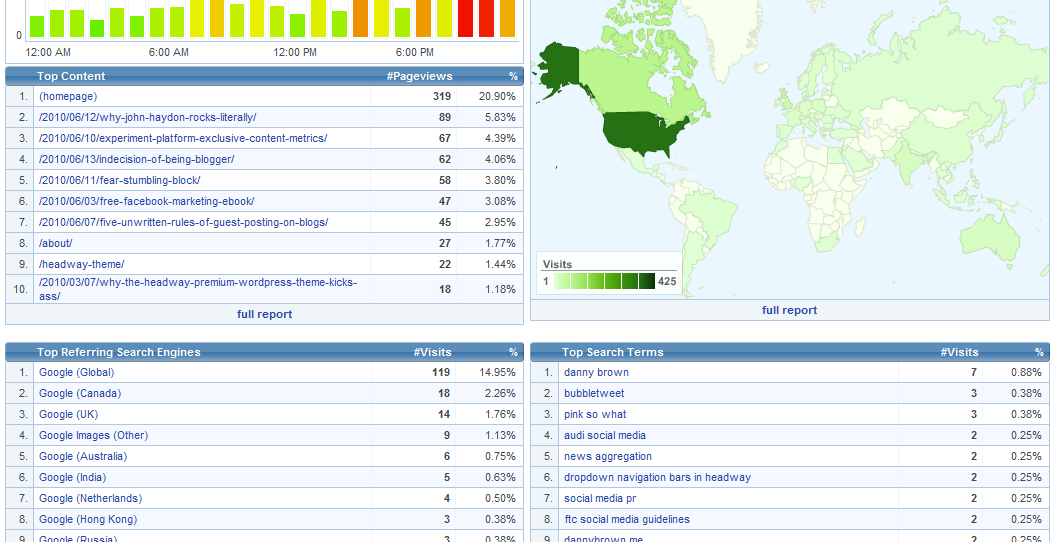
With expo-MAX, however, I can see the time of day that gets peak traffic, as well as the country that traffic comes from at any given time. I can also see referring sites, the most popular content and the top search terms that brought traffic to me – all on the same page. You can then dig deep into this information for even more metrics.

You can see how this would benefit you as a blogger or business owner. Say you have a promotion for North American audiences – you can then tailor publishing that offer to the busiest time of the day for that audience. You can also look at the titles of the posts that gained most traction, and work that into your promotion as well (titles can have a huge sway on visits).

Social Media Analytics

So far, much like Google and pretty much most other decent analytics platforms. And for the most part, that amount of information will be all many bloggers need. But if you really want to get into where your traffic comes from, expo-MAX has a pretty cool trump up its sleeve with social analytics.

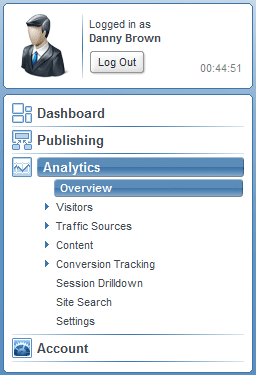
When you’re in your dashboard area, you can delve into your traffic sources and get a feel for who’s sending you the most traffic. Normally you’ll get some of this information on other platforms. But where expo-MAX differs (as far as I’m aware of from other platforms I’ve used) is by showing you the most prolific users.

For instance, once I’m in the traffic sources area, I can click on Referring Sources. This shows me the top 20 referring sites. Currently, Twitter is the site that provides most traffic to my blog, accounting for 19% of my traffic. If I click on the Twitter link, though, I can then see which Twitter user sends the most traffic my way (thanks,?Jim Connolly!).

Click on any of the other top 20, and you get more information again about that site’s top “providers”, if you like.

My current top 5 traffic sources are Twitter, Headway Themes (affiliate link), Google,?Networked Blogs and PR Daily – by clicking each of these, I can see what kind of audience I’m attracting and the type of link that saw them come here in the first place.

Let’s say you wanted to offer a customer appreciation promotion – you can see how having the information that expo-MAX offers in its social analytics would be of use.

Does expo-MAX Replace Google?

For me, yes. While Google Analytics is an excellent platform, it still doesn’t quite offer the amount of information that I’d personally want to use.

As well as the features I’ve highlighted here, you have a huge amount of information at your fingertips with expo-MAX. It even tells you what page of Google you’re on for the search term that brought your traffic (I found out I was on page one for the search term ftc social media guidelines, for instance, and saw how much traffic came to my blog for that term). Then you have conversion tracking, bounce rates, detailed drill down into information…. you need it, you pretty much got it.

I’ve only been messing with the tool over the weekend, and I’m already sold on it. For a free platform, it offers an incredible amount of information, and when I complement it with Quantcast for more detailed demographics, I’ve got all the information I could possibly want on my blog traffic.

From a blogger or business point of view, it’s pretty clear to see the benefits expo-MAX offers. Couple that with the very clean and user-friendly interface and support documentation,?the ability to track multiple sites?and the fact you can choose from a free or premium account, and I can see expo-MAX gaining a huge chunk of the web analytics market.

How about you? Will you be trying it, and what platforms do you currently use to track your metrics?

Note: This blog no longer runs on the Headway framework. Instead, it’s a custom WordPress design by Lisa Kalandjian of SceneStealer Graphics.

The Indecision of Being a Blogger

morning perchSometimes being a blogger is no fun.

I don’t mean that from a, “Oh, woe is me, I have to blog” point of view. Nor do I mean it from a, “Why hasn’t my blog been turned into a book yet?” viewpoint.

Besides, how much of a letdown would a book that’s made up of recycled blog posts be?

No, it’s more from the perspective of getting the best user experience, without overloading that same experience with too much clutter (and when I say user experience, I mean it from you, the reader’s, point of view).

For example, anyone that’s read my blog for a while will know that I’m constantly experimenting with design, features and layout to make your time here worthwhile.

I really appreciate you taking time out of your day to stop by here, read what I’m thinking, and then share your own thoughts in the comments.

So one of the areas I’ve experimented the most in is the comments section. I’ve tried third-party comment systems (then switched back); video and audio comments; and commenter social profiles with Twitter and latest blog post options amongst other experiments.

And still I stay undecided at times. Just the other day, I tweeted that I almost switched back to the Disqus comment platform following their new updates, but that I’d miss CommentLuv too much (Disqus isn’t compatible and I think CommentLuv is one of the best blogger tools out there).

Another option I can never make my mind up about is social sharing. This is where, if you like the post enough, you can share it with your own networks (Twitter, Facebook, Stumbleupon, etc).

I’ve messed around with a few options here too. Sexy Bookmarks, Add This and BackType are three that I’ve used previously.

Currently I use Digg Digg, which provides the floating share option to the left of this post. I also use Share This at the bottom of each post, to offer a wider amount of networks than Digg Digg. And then there’s the Apture Bar at the top of the page, which I’ve just switched back on and only comes into view as you start scrolling down the page. (Note: since posting this I’ve had to switch the bar off as it looked like it was causing formatting issues on my design).

Yet is this too much? Just right? Not enough?

There are a ton of other little things like this that I constantly question when I look at my blog. While I write what I’d like to read, obviously a big part of any blog’s “success” is its community, from readers to commenters to subscribers. So making your experience a good one is just as key as me writing a (hopefully) good post.

Perhaps it’s just part and parcel of being a blogger? Always questioning not just your content but the content area. And perhaps that’s why bloggers are such an oft-misunderstood crowd – if we don’t know ourselves, how can anyone else?

How about you? If you blog, do you go through the same indecision and similar questions? And if so, what are some of the things you’re constantly asking yourself?

Creative Commons License photo credit:?bgblogging

  • « Go to Previous Page
  • Page 1
  • Interim pages omitted …
  • Page 186
  • Page 187
  • Page 188
  • Page 189
  • Page 190
  • Interim pages omitted …
  • Page 283
  • Go to Next Page »
© 2026 Danny Brown - Made with ♥ on Genesis