• Skip to primary navigation
  • Skip to main content
Danny Brown

Danny Brown

podcaster - author - creator

  • About
  • Podcasts
  • Journal

Latest posts from Danny Brown

Enjoy the latest posts from Danny Brown, and feel free to add your own thoughts in the comments after the post.

Why the A-List Conversation Hurts Us

Geoff Livingston

Paragliding Over Waimanalo Bay

This is a guest post by Geoff Livingston.

The ongoing conversation about the ills of the A-List produces the opposite effect than desired. Instead of creating a correction, it builds a stratosphere of influence, and creates a perception of unworthiness for the rest of the social web. This demeans the value of everyone else — literally everyone who is not a top ranked “A-Lister,” a crying shame consider that the rest of the population has as much of a chance of becoming truly useful and influential.

In some ways the “A-List” conversation is fostered by leaderboard systems of top bloggers (Ad Age 150, Technorati) and influencers (Klout, Empire Avenue). It is perpetuated by insider chatter and a corresponding attitude of eliteness from the top tier (perceived or real). This type of influence is popularity driven.

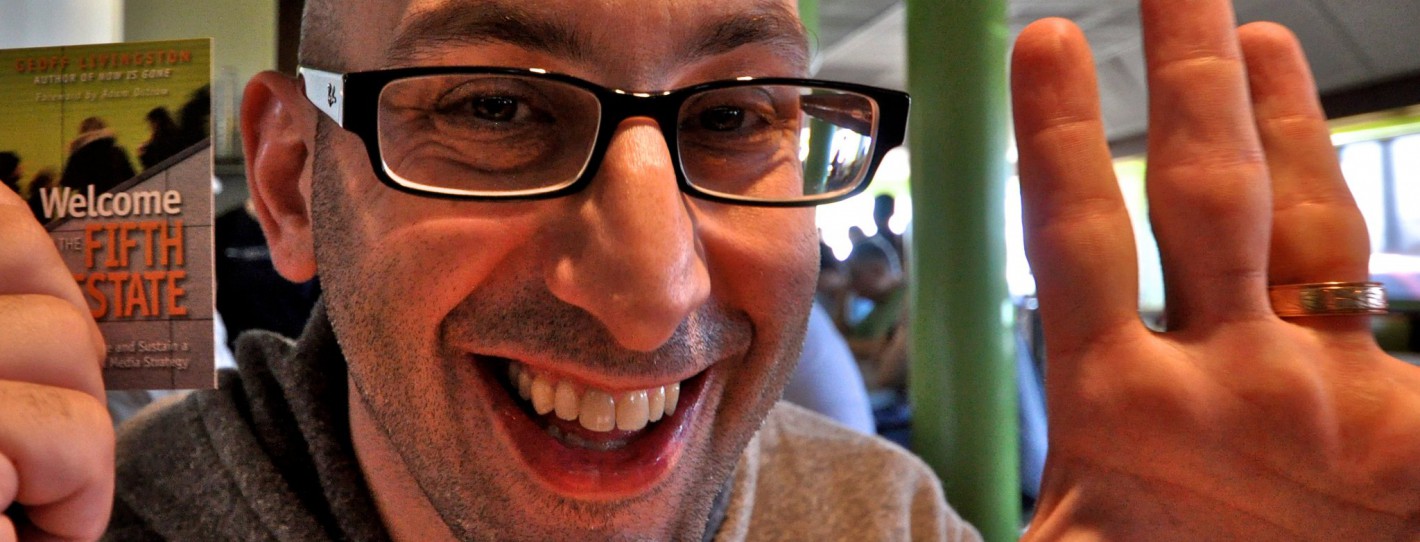
Welcome to the Fifth Estate (yes, I just shamelessly pimped my new book) concludes with a discussion about influence over the long-term. Here’s the truth about influence: It is highly subjective, and shifts with the topic, time, situation and community. Further, leaderboard influencers are not likely to create groundswells of actions. Usually, this type of influencer is a content creator or social network personality — the dog that barks the loudest. When it comes to real action, most of them can’t bite.

Influence and Individualism

Twenty years ago, the equivalent would be to dub a TV star as extremely powerful. Can you imagine Donald Trump winning the presidency of the United States based on the popularity of his TV show, “The Apprentice?” As bad of a job that our elected officials do, indoctrinating a media personality into the profession of governance would likely create much more damage than reform.

That’s why the conversation about the A-List seems fruitless and harmful. It invests time and gives influence to people who can’t accomplish things. Further, the cost of personal equity and a lesser perception of position is harmful. That makes no sense. We should be focusing on moving the needle of progress forward. The reality is that every single person has an opportunity to become influential with their community of interest.

Real influencers are awarded their position for doing great things. They are activists like Stacey Monk, or builders of new technologies such as Anil Dash. They provide real new perspectives to online media like analytics whiz Avinash Kaushik or change the business forever with new thought, like Charlene Li and her still noteworthy book, Groundswell.

These people actually do things. Their influence was a result of achievement. It may wane if they don’t continue doing great things, but in the end, this type of influence is admirable, things that people remember for decades.

Doesn’t it make more sense to talk about the noteworthy influencer instead of the narcissistic A-List? Aren’t the noteworthy successes the ones we aspire to emulate? Which can you learn from, who will make you and your efforts better?

Five Tips to Stop Supporting “A-Listers”

Ultimately, someone is only influential if they are given that influence by their community. If you don’t believe in the A-List’s influence, here are five ways to separate yourself from the conversation.

1) Don’t link to them. Linking above all else helps support their “top tier” positioning. Instead, link to people whose conversation challenges you and provokes the forward motion you are seeking.

2) Give up trying to converse with them. Why try to have a relationship with someone who is not there? Instead focus on those who do participate.

3) Don’t talk about them. Talking about them as unfit leaders still leaves them in a leadership position. This is leadership by perception. Move on, or if you do talk about them, do so in a peer-to-peer fashion. Everyone puts their pants on one leg at a time.

4) Unfollow and unsubscribe from them. If they and their behavior really upsets you, this is an act of self-preservation. Your online time will become exponentially more enjoyable.

5) Stop wasting your time on them. This above all is the most freeing of the tips. When you realize that this A-List conversation has become an energy suck, a waste of your time that is holding you back, you can reprioritize on something meaningful, for example, Danny’s 12 for 12K Challenge, or your own efforts for business, social good, or personal development.

This is mindful and good in its own right. Rather than fighting, you have moved on. Pursue new horizons.

What do you think about the continuing A-List conversation?

About the Author: Geoff Livingston is the co-founder of Zoetica, helping non-profits and socially responsible companies connect with their audience. He’s also the author of Welcome to the Fifth Estate and Now is Gone. You can read more on Geoff’s blog or connect with him on Twitter at @geoffliving.

The Funny Thing About Content Sharing

evil monkey

evil monkey

Over at her blog, PR pro Kellye Crane shares why she doesn’t like the content sharing platform Triberr. It’s an alternate view to ones shared by Gini Dietrich and Shonali Burke. It’s an interesting read, and offers some good points on why it’s not for folks like Kellye.

However, there’s one thing that stands out in both the post and some of the comments – the (perceived) misunderstanding that Triberr is an evil thing that takes away transparency and authenticity, and makes social media less social.

Because tools don’t take away anything – people do.

Triberr – much like anything that automates your social media streams – has a bunch of options that allows you to curate how you feed blog posts into your Twitter stream. This means you can automatically share people you would anyway, or have a manual setting to moderate before you curate.?You can also delete posts you don’t feel are useful to your followers.

So, basically, any annoyance someone has with Triberr – or similar tools – is really an annoyance with the person and how they’re sharing content.

But then that’s where the funny thing about content sharing comes in.

It’s primarily about the content you enjoyed.

That’s why you share – because you enjoyed it, and feel it deserves a wider audience. That’s not to say that your followers or connections will enjoy it too. You hope they will, but they might think you’ve lost your marbles for sharing something that is banal (to them).

But that doesn’t really matter. Because you enjoyed it, and your share is a thank you to the writer, not your connections.

So with that in mind, is any kind of sharing – automated or otherwise – less authentic or social because someone doesn’t like how it’s being shared?

Or are we missing the point on content sharing a little, and thinking it should always be for our benefit, when it’s simply because someone enjoyed something someone else wrote?

image: Azrasta

The Art of Being an Asshat

asshat

asshat

Sometimes you read something, or you hear something, and it just makes you stop and say, “Seriously?!?”.

Often this is from a pitch selling a company’s products or services. It can be from the company directly, or it can be from their marketing or PR agency.

Note – there are many great PR and marketing agencies out there doing great work. This just makes the crappy ones stand out even more.

So it was when I heard about this pitch. Sent to Lani Rosales, Editor-in-Chief of AGBeat, it’s a great example of either crass stupidity or outright superiority. Here’s the full exchange:

On Fri, June 17, 2011 at 5:31 AM,?Joseph Smith?<josephsmith99over@gmail.com> wrote:

Dear Lani,

I would like to send you our press release but I will need you to personally sign a?non disclosure agreement?first.

Signed,

JS

On Fri, June 17, 2011 at 11:00 AM, Lani Rosales <lani.rosales@gmail.com> wrote:

Hi Joseph, I didn’t catch the company name?

LR

On Fri, June 17, 2011 at 11:01 AM, Joseph Smith <josephsmith99over@gmail.com> wrote:

You are required to sign an NDA prior to any communication with me or my client.

On Fri, June 17, 2011 at 11:08 AM, Lani Rosales <lani.rosales@gmail.com> wrote:

Joseph,

I am happy to sign any NDA that we deem to have merit but cannot do so without knowing basic details like a company name. I’m sure you don’t mean to waste my time and I certainly don’t intend on wasting yours, so company name or it didn’t happen.

LR

On Fri, June 17, 2011 at 11:20 AM, Joseph Smith <josephsmith99over@gmail.com> wrote:

[blank email with NDA attached, naming company as “Company Name Withheld”]

On Fri, June 17, 2011 at 11:21 AM, Lani Rosales <lani.rosales@gmail.com> wrote:

Joseph,

I am not authorized to sign that as I have made clear and I feel that you are aware. When you are prepared to share your company name or any basic hints of information, you have my email, otherwise please do not waste any more of my time.

LR

On Fri, June 17, 2011 at 11:25 AM, Joseph Smith <josephsmith99over@gmail.com> wrote:

Lani, you will be missing out on an incredible opportonity [sic] as we have not approached any other news outlet. Perhaps your competitor would be more interested. We will not forget your lack of kindness.

Most sincerely,

Joseph

I have to admit, when I read it, I thought Lani was extremely professional in her patience – I would have really been tempted to have some fun. Something about Joseph signing my NDA about his mom and girlfriend, and the polaroids from Stripper Joe’s…

Seriously, though, is this what we’ve now come to? Asking people to sign a non-disclosure agreement before they even know what they’re signing up for? And then ignoring the person you want to write about you, and sending the NDA anyway? Then, just to top it off, basically using a threat as a closing statement?

No wonder the PR industry gets such a tough time (though, to be honest, I’m wary of this even coming from a PR agency, but it’s not impossible).

Unfortunately, “Joseph Smith” is the John Doe of the communications industry, as a reverse email search doesn’t bring up any information about him. Probably just as well – it’d be pretty embarrassing to find he’s a member of your PR team or business.

So, some simple tips when looking to get people and publications to write about you.

  • Respect their time and intelligence.
  • Don’t be bolshy.
  • Don’t come across as asshat-ish as Joseph Smith.
  • NDA’s are all well and good, but you need to let us know who we’re being approached about first.
  • Did I mention don’t be an asshat?

Honestly, it’s not all that hard. And you’re more than likely to get the kind of promotion you’re after…

image: Lh3

Make Yourself An Influencer By Playing The Klout +K Game

A lot of people continue to talk about Klout and whether it’s something to take note of, or simply another tool that’s fun to use but doesn’t offer real value.

Personally, I’m in the second camp. Probably because I don’t feel you can measure influence purely by what you do online, and most definitely because there are so many variations that make up a single decision that – to me – it’s impossible to say what influenced that decision the most.

But whether you think Klout has value or not, it’s now a lot of fun – because you can game the system and show its flaws, and this is all done by one of Klout’s own tools, the new +K option.

The +K option allows you to vote for people’s expertise on a certain topic. The idea is, the more votes someone gets on a topic, the more recognized they are by Klout as an expert in that field. Which, as the video below shows, can lead to completely ridiculous results .

So, yeah – well done, Klout, for showing your flaws better than any critic could. Now that deserves a +K!

http://www.youtube.com/watch?v=I387sH_9yMY

Note: Big props to Dino Dogan for the idea of this mock interview to highlight how to game Klout.

American Express and Foursquare – So What?

meh

meh

Over at Fast Company, there’s a post about the American Express partnership with Foursquare. While the announcement is interesting, the direction that Fast Company runs with the article is less so.

According to Fast Company, the AMEX/FourSquare deal?“…might finally give us some hard evidence as to whether social media is a worthwhile investment for merchants and marketers.”

Ummm… riiiiigghht.

I’m not sure where Fast Company has – or hasn’t – been looking, but agencies, consultants and business owners have been proving the ROI (return on investment) for a while now.

The Easy Social Media Management Example

Lauren McMullen is the owner of Easy Social Media Management, a consultancy that helps small businesses understand social media and how it can help their bottom line. Her agency was recently involved in a book launch for an anthology called Align, Expand and Succeed – Shifting the Paradigm of Entrepreneurial Success.

The book featured 40 authors, and over a six-month period Lauren used the social networks of the authors and the publisher to build awareness around the impending publication. This included blogs, YouTube interviews, and article directory promotions.

Because of this, the book became an Amazon bestseller on the morning of launch, and held the number one position in the four categories it was targeted to.

The Willis eTech Ltd. Example

John Willis is the founder and owner of Willis eTech Ltd., a small business offering photography, video and websites for other small businesses based in Okanagan, BC.

While flying over the newly-opened Sparkling Hills resort in Vernon, BC, John took some pictures of the resort and uploaded them to his TwitPic account. He tweeted the owner of the area where Sparkling Hills had opened their resort, and was invited to contact them.

That led to a bunch of photography and media projects for John’s company, and his use of other social media platforms saw him become recognized as the go-to guy in his area for social media and how it can be used to drive business. He speaks at local Chamber of Commerce events as well as seminars, and trains businesses on how they can effectively use social media.

Why the AMEX / Foursquare Deal Isn’t All That

These are just two examples. If you want others, just type in?“social media roi success stories” to Google and you’ll find just under 3,000 results. Now, that may not sound much in the grand scheme of things, especially when other Google searches often result in millions of examples.

But that’s more than likely to do with the fact that instead of writing about how the ROI of social media is real, most businesses and agencies are just getting on with proving it to their clients, as opposed to trying to show how great they are in public.

They’re making results happen every single day – which is why the Fast Company angle means less than they might have hoped for.

For instance, according to the article, one of the “big wins” with the deal is that Foursquare will “…help merchants foster customer loyalty.” By encouraging check-ins and rewards, and the ability to tie back into your AMEX card, it means more people will shop at your location.

Great stuff. Except for one major problem – you don’t have to be at a location to check in. You don’t have to physically be there to become a Mayor and reap the rewards for it (like a free meal, or a discount on your clothing, etc).

My house is about 5 miles away from my office. Yet, by not checking in anywhere when I leave the office, I can be at home and check into my office because of the way Foursquare caches my last check-in.

Think about that from the point of view of a restaurant owner. They decide to offer a free meal and drink to the Mayor of their restaurant. I see that, so start checking in, even though I’ve never been there before in my life. I become Mayor, get my free meal and drink, don’t pay a thing and leave.

I then get my friends to do the same, and between us we constantly force the restaurant owner to give us free meals and drinks. But we never go to that restaurant as paying customers.

So… where’s the loyalty building in that?

Until location-based services can actually lock you down somewhere and make it impossible for you to check in somewhere unless you’re there, you’re not going to build loyalty through offers. You will, however, lose the vendor money – and that doesn’t build loyalty or ROI.

image: Slightlynorth

  • « Go to Previous Page
  • Page 1
  • Interim pages omitted …
  • Page 138
  • Page 139
  • Page 140
  • Page 141
  • Page 142
  • Interim pages omitted …
  • Page 283
  • Go to Next Page »
© 2026 Danny Brown - Made with ♥ on Genesis