
• Skip to primary navigation
  • Skip to main content
Danny Brown

Danny Brown

podcaster - author - creator

  • About
  • Podcasts
  • Journal

what is social media

Social Media is a Language of Its Own

Grandiose

This is a guest post from my wife Jacki. I thought it’d be interesting to get the views of someone who has no real interest in social media and let them explain why. And one thing I love about Jacki is her no-nonsense approach to everything. To learn more or connect with Jacki, please visit her blog Just Kickin’ It.

I was recently asked my views on social media and all the glorious tools therein. Truthfully, my mind went blank. I couldn’t tell you the difference between Twitter and Stumbleupon.

I understand Google as a search engine, so when someone says ?She found me on Google? ? well, that makes sense. But what the heck does ?She sent me a tweet? mean?

This is a hypothetical question, don?t answer it ? I don?t care and will likely forget what it means anyways. If I need to find something I Google it. If I?ve read something I liked and am able to comment I will, if not, well my opinion doesn?t mean a whole lot anyways. I?m not overly devastated if I don?t get to share it.

I recently started a new blog. I still don?t fully understand what that even means. What I do is I write a virtual journal, I rant about the latest current affairs, I discuss in great detail all of the things that irritate me and what the world could do to improve. Mostly it?s social etiquette and common sense.

When I?m bored and feeling creative, I might tell a story or two, involving a little bit of research on my part. I assume since it?s on the Web, anyone can read it. Great, go for it. I just learned what it meant to ?tag?, something which makes sense, but I still don?t know how to do it. So if you can?t find me, well I guess that?s my fault too.

For this I use Blogger. I tried to post a couple of pictures on my recent blog and what a pain that was. I think I?ll stick to journal format from now on in. It?s a personal blog, not professional. It doesn?t have any business purpose, so I?m not trying to draw in any clientele.

My other blog, I run with a couple of other ladies. This is a virtual book club. It?s a bit different than the regular book clubs but it suits its purpose. We use WordPress for this. I can honestly say that after playing with it a bit, it?s far more user-friendly than Blogger. And I?ve mastered the art of adding pictures. I think that deserves a pat on the back right there.

Facebook is a given. But someone listed a bunch of other nonsense:

  • Twitter
  • Stumbleupon
  • Digg
  • Friendfeed
  • LinkedIn
  • Delicious
  • Reddit
  • Google Alerts
  • Google Reader
  • Monitter
  • Technorati

What is all of this? It?s a foreign language to me. If you want me to read something, send me a link. I really couldn?t care less what you use to spread the word, or what format you put things in. I?m glad it works for you, really I am. But are all these things really necessary?

Take Stumbleupon for example. There was probably about a month where my husband went nuts with sending me a bunch of things he stumbled upon. One day I watched him send out an email. He had to cut here, paste there, click a few buttons and voila! Seems simple, right? Why the heck couldn?t he just paste the link in a normal email and send that out? Why go through Stumbleupon at all?

And Twitter? This one I can?t get over because it?s all the new rage amongst Social Media Experts and PR Gurus. I guess I don?t understand the Internet world, and what is the point of learning it when it changes on a daily basis?

I use Blogger, WordPress and Facebook. But really, if I want to write something and share it, is there any difference if I use Microsoft Word or Notepad? Couldn?t I just use that and send it off to whomever I want to read it?

If I want it to go public, then using some domain might be an idea, but does it really matter one way or the other what the heck I put it in? Can you tell the difference between Blogger and WordPress, as a reader? Maybe one is more appealing to the eye than the other but it?s more of the same.

So go on and speak your language. But in plain English, you could just tell me, ?Here? read?.

Thanks for listening.
Discussing Social Media with… Mary Higgins

A little while back, I sent out a request via Twitter asking if anyone would be interested in being interviewed for a discussion on social media. With the medium meaning so many different things to so many people, as well as how it can be used, I was interested to hear the views of the people I connect with.

My original plan was to run a ?round table? style of blog post – raise the questions and then have a mix of views as the responses. However, the answers I received back were all excellent, and showed why social media is the mix of interesting people and views that it is. So, I decided individual posts would be far more effective in an on-going series of interviews.

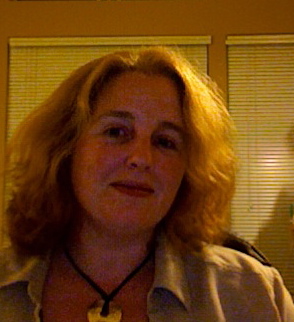
Sharing her views today is Mary Higgins, a writer originally from the UK but now living in Canada. Mary is a self-confessed social media and tech geek who is currently writing her first novel. My sincere thanks to Mary for taking the time to reply and share her views. To connect with Mary, or find out more about her, please visit her blog The Last Geek Bus Home.

If someone was to ask you for your definition of social media, what would it be?

Social Media is using technology to connect with and share ‘stuff’ with other people. I would say there are 3 main elements to Social Media:

a) The Technology: At it’s heart, Social Media is about new ways of using technology so that allows you to connect and share (files, comments, information) with other people (users). There seems to be new applications arriving every day and that adds to the general noise about Social Media and also the confusion. Not all applications do the same things and finding the right one to fit your needs (especially when you are not sure what your needs are or will be) is difficult.

b) The Connection: The applications are available but are meaningless without the people using them. Why do people start to use Twitter, for example? Early adopters used it to connect to each other but more and more people are using it now because they have friends already on Twitter and want to join in. Or a favourite celebrity is on Twitter and they want to follow them.

It’s about connecting with people and building communities and it is a two-way communication. Anyone can follow on Twitter but the real value comes when you start responding, asking and answering questions, building relationships in a real way.

c) The ‘Stuff’ you share: Communities are developed around the technology and/or around a group of people using the technology. You can choose to share as little or much as you want. Some people will unfailingly tell you what they had for breakfast while others will share that they have developed a new application or have published a new blog post. One of the advantages is that you choose what you share and you choose what to listen to from other people.

What is your reason for using social media?

Initially I started blogging because I had something I wanted to? talk about. And when I say ‘talk’, that is what I mean. I didn’t? want to be splurging words onto the Internet for their own sake -? the intention was to engage with other like-minded people and have? discussions, make connections and take part. I was lucky enough to? meet people who took the time to talk to me and show me new things. Tabz (Tabitha Grace Smith) introduced me to Twitter but more than? that she showed me that it’s value was in the interactions with? people, not just following.

Another person who influenced my use of Social Media has been Felicia Day, the creator, writer and star of the webseries The Guild. She uses Twitter, her blog and other applications to connect with fans in a direct way. It has just been announced that the second season of The Guild has sponsorship from Microsoft. I enjoy the social aspects enormously.? I’m a writer and being connected to other people when you work from? home is very important. I’ve been following Felicia for a long time and I’m actually doing a video interview with her this week on my blog.

Do you feel that social media is being used to its maximum effect?

No, but that needs some serious qualification! It is a difficult question to answer because of the 3 elements that go into Social Media. In terms of the technology available at this moment I would say that only a fraction of the potential use of products is being utilised. The ‘Connection’ part is getting better but I think a lot more can be done to integrate applications.

Unfortunately when problems such as the Twitterrank incident happen it highlights the fact that while people want to try new things out they don’t always understand the implications of what they are doing.

What social media tools or applications do you use? Why these ones in particular?

Twitter, Plurk, Friendfeed and MyBlogLog are the main ‘tools’ I use for communication, research and connecting with people. I am part of the? MicroMagnate community because I wanted to connect with other small business owners in Canada. I’m also part of community at Watchtheguild.com because it’s a webseries I love and the people there are fantastic. I am also on Twittermoms and Geeks. I have my own blog and I write for Whedonage.com, and I enjoy replying to the comments people make. There are many other websites and blogs I visit and comment on, also.

Where do you see the future of social media, both in general and for you?

I think the whole area will expand in the short term but then I’m expecting that many of the applications around today will not continue. This is a new area and no-one is sure where it will lead or even where they want it to go. Although Social Media is a big topic in some quarters most people have never even heard the phrase. But humans naturally want to interact with other, are naturally social, so I think this will expand and cross over to the mainstream in the near future.

Are businesses effectively using social media? If not, what can they do to improve?

I don’t follow businesses on Twitter or anything else, but I do follow individuals who represent businesses. I prefer to read opinions of people that I respect personally.? Organisations that understand that it is the personal touch that many people value will probably do better and I know that some larger businesses are using it well. It does take a big commitment, though, and I think the worst thing a company can do is to launch a Social Media campaign and then not put the resources in to maintaining it. Posts, comments, and all feedback needs to be treated seriously and promptly.

What do you feel are the best and worst features/uses of social media?

There was some recent research to show that women bloggers are more likely to be addicted to Social Media than other women. That is no surprise to me! I think it can be very addictive because the feedback you get can be instant. When I am writing I have to take myself out of the loop so I can concentrate otherwise the temptation to keep refreshing the screens to see who has said what and where everyone is up to is very great!

I also think that important issues can be caught up in a storm of argument and counter-argument. Just as in other areas of life, enabling people to have a voice means that some of the things they say are going to annoy, irritate, upset and offend others. There is not always an obvious arbitrator for matters when issues are taken up across blogs, message boards etc. People need to respect the beliefs and opinions of others.

The best parts are when real communities are built up. People are connected to each other and there is a flow of ideas, help and advice. In some cases ‘Tribes’ have helped out members in very practical ways. When podcaster Doug lost his house in the recent fires his Tribe came to his assistance to cover the costs while the insurance ran out and the money was sent to him within days.

  • You can find more ?Discussing Social Media with?? interviews here.

If you enjoyed this post, please consider leaving a comment and subscribe to my RSS feed or via email to ensure you can enjoy the latest post(s).

Reblog this post [with Zemanta]

Discussing Social Media with… John Easton

A little while back, I sent out a request via Twitter asking if anyone would be interested in being interviewed for a discussion on social media. With the medium meaning so many different things to so many people, as well as how it can be used, I was interested to hear the views of the people I connect with.

My original plan was to run a ?round table? style of blog post – raise the questions and then have a mix of views as the responses. However, the answers I received back were all excellent, and showed why social media is the mix of interesting people and views that it is. So, I decided individual posts would be far more effective in an on-going series of interviews.

Sharing his views today is John Easton, founder of Eastonsweb Multimedia, a new media company helping businesses attract the best customers through the use of video, web and multimedia tools. My sincere thanks to John for taking the time to reply and share his views. To connect with John, or find out more about him, please visit his blog Customer Flypaper.

If someone was to ask you for your definition of social media, what would it be?

The use of online, communal tools and their associated communities to engage an audience around a message, idea or discussion.

What is your reason for using social media?

That is an easy question. I use social media to expand my thinking beyond the boundaries I set by interacting with truly fascinating people and to lend my thinking to supportive communities of interest. In addition, I find social media to be a great tool for expanding my professional network.

Do you feel that social media is being used to its maximum effect?

I would say yes. Does this mean that there aren’t unexplored SM applications? Without getting too philosophical here social is just like traditional media. It’s constantly evolving and at its present state of development, the medium is being used and explored by some of the world’s most creative minds and with every Twitter tweet and new blog posting a different angle is being explored. So I’d say it is where it’s supposed to be.

What social media tools or applications do you use? Why these ones in particular?

My choice of social media tools is a function of my capacity, being a business owner and parent. My personal and professional goals are to build relationships with interesting people and grow my professional network and the behavioral profile of those I am looking to engage.

That said I am an active Twitter user, a vigorous blogger and I am an enthusiastic member of several online communities (The Society for Word of Mouth is one). I can interact with each of these communities via my desktop PC, my laptop computer and my BlackBerry and each of these neighborhoods has members who regularly stretch my thinking.

Where do you see the future of social media, both in general and for you?

In general I see social media and its conventions converging more and more with traditional media. The line between the Internet and television as an example will blur. Gone will be the days of cable networks and TV stations. You will watch user generated video alongside professional media wirelessly through your glasses and you will be able to exchange comments with other viewers in real time building relationships as you add perspective to each clip.

I don’t see my goals for the use of SM changing but I will certainly ride the wave and continue to be a bridge between those on the bleeding edge and more middle of the road adopters.

Are businesses effectively using social media? If not, what can they do to improve?

That’s a loaded question. Big business is not successfully using SM. Most of the leaders in this pool approach SM from the old world perspective of controlling the conversation, not realizing that a revolution has already taken place with the power having changed hands from the elite few to the masses. SM is less about controlling the message and more about participating in the discussion, give and take.

Small businesses are doing a better job but still have opportunities to explore. They have to learn to be less revenue focused when it comes to measuring the benefit of SM and consider the wider spectrum of return (building awareness, testing ideas, soliciting new product/service ideas, collaboration, word of mouth, etc).

After all is it better to close one deal or to build a Twitter relationship with someone who can evangelize your offering to several thousand people with the tap of a keyboard?

What do you feel are the best and worst features/uses of social media?

I believe the good and bad of SM is less about the features inherent in the technology and more about the way people use it. At its best social media accelerates the spread of information through networks of linked? communities and at its worst it can be a haven for often mindless and self-promoting chatter. All of this depends on the behavior of community members.

  • You can find more ?Discussing Social Media with?? interviews here.

If you enjoyed this post, please consider leaving a comment and subscribe to my RSS feed or via email to ensure you can enjoy the latest post(s).

Discussing Social Media with… Susan Murphy

A little while back, I sent out a request via Twitter asking if anyone would be interested in being interviewed for a discussion on social media. With the medium meaning so many different things to so many people, as well as how it can be used, I was interested to hear the views of the people I connect with.

My original plan was to run a ?round table? style of blog post – raise the questions and then have a mix of views as the responses. However, the answers I received back were all excellent, and showed why social media is the mix of interesting people and views that it is. So, I decided individual posts would be far more effective in an on-going series of interviews.

Sharing her views today is Susan Murphy, a partner at Jester Creative Inc., a new media production company based in Ottawa, Ontario (and a guest writer on this blog). My sincere thanks to Susan for taking the time to reply and share her views. To connect with Susan, or find out more about her, please visit her blog SuzeMuse.

If someone was to ask you for your definition of social media, what would it be?

I think that social media is one part of the realization of the original vision that Tim Berners-Lee had for the World Wide Web when he created it. Social media is worldwide network of human beings sharing information with one another. It?s people connecting, creating real relationships and opportunities out of those relationships for personal and professional growth.

What is your reason for using social media?

My real attachment to social media stems from my background in community access television. My involvement in community TV started when I was about 10 years old, working with my Dad at a local station he helped start in the small town where I grew up. It was no great surprise when my first job out of TV school was as a staff producer at a community station here in Ottawa.

What we were doing back then, in the 80?s and 90?s, was not unlike what?s going on in social media today. People giving of their own time to create great content. People reaching out and building communities and audiences around their creations.

My first taste of social media was in 2006, when on a total whim I attended Podcamp Toronto. There, I was fortunate to get to know Mark Blevis, Bob Goyetche, Chris Brogan and Christopher Penn. Their passion and commitment to sharing and to building communities really resonated with me. I learned more in 48 hours attending that one unconference than I had learned in the previous 8 years of being involved in web design. It opened my eyes wide and I haven?t looked back since.

Do you feel that social media is being used to its maximum effect?

If you think about how far we?ve come with social media in the past couple of years, we are definitely on the right track. There are still a lot of kinks to work out but I think that this community is by and far very solution oriented, and we?re working through the bugs and continuously moving forward.

As far as whether it?s being used to its maximum effect, I think that we are still living in a bubble when it comes to social media. I realize this every time I post something on my blog and my Mom (my biggest fan – she reads every post!) emails me wondering what a ?tweet? is, or an ?A lister?, or an ?unconference?. Getting over the insider terminology is a first step to bursting the bubble.

The next step is training and awareness, particularly at the community college level. The web designers and developers and PR and marketing people of tomorrow need to know what?s going on in here. And those of us inside the bubble have a responsibility to make sure they understand it.

What social media tools or applications do you use? Why these ones in particular?

All of them! Seriously, I am a power user of Twitter. I monitor my Twitter feed often and have met some of the most amazing people using that tool (including you!). I?ve gotten at least 3 new clients through Twitter and my followers have helped me out of a jam on more than one occasion. I also try to make a valuable contribution to the Twitterverse too, and I hope that I?m succeeding in that.

I am a moderate user of Facebook. I am one of the few who actually likes their new interface. I like that people can comment on status and other things right in the timeline. Makes it more conversational (and isn?t that what it?s all about?)

I am also on LinkedIn, though I don?t visit frequently enough and certainly don?t use the recommendation tools to their potential.

I use Google Reader and StumbleUpon extensively, and often share interesting blog posts that I come across through those tools.

My newest and most fascinating tool is BrightKite, which is a tool that allows you to poke in your current location then write notes or add photos. What I like about it is, it?s a step towards annotating the Web, which is a step towards the Semantic Web. It’s the next realization of what my hero, Tim Berners-Lee, was thinking when he created this whole WWW thing.

Where do you see the future of social media, both in general and for you?

As mentioned above, I see two things. First, I see the young people of today embracing this social Web and doing things with it that us 30 and 40-somethings would never dream of. I see that every day when I am in the classroom teaching these up and coming new media professionals.

Second, I see on the horizon the realization of the rest of Tim Berners-Lee?s vision of the Semantic Web ? a Web that is not just text on a screen, but a Web that is truly informed, that has the potential to impact every aspect of our lives. Imagine being able to bring enough people together and make enough real, human connections to end poverty. I think the Web of the future will be able to help us do that.

Are businesses effectively using social media? If not, what can they do to improve?

In our idealistic and bubble-sighted view, it would be great to say that businesses are effectively using social media. I think some businesses are being guided in the right direction, yes. But I think that in general, there are a lot of misconceptions about what social media is and how it really works. It?s a fundamental shift for businesses from the way they have traditionally done marketing and PR. It?s no longer about pushing ad copy down people?s throats. It?s about making real life, human-to-human connections. That scares a lot of people, because they think it will be a lot of work to reach out to every single one of their customers.

But that?s the beauty of social media. With one feeler in the right direction, you can touch many people at once. Businesses just need help and guidance to figure out how to overcome their apprehensions and take that step.

What do you feel are the best and worst features/uses of social media?

The best feature is absolutely the ability to connect with so many people. Not only have I met and become friends with and done business with people all over the world, I?ve met an outstanding community of people right here in my own city that I never would have otherwise gotten to know. It?s been life and career altering for me.

The worst feature is a tough one. I think, like any new medium, it causes panic. People start scrambling to the top, to try and make a fast buck, and end up stepping on a lot of toes on the way. As much as social media brings out the best in people, it sometimes brings out the worst in people too. It?s the nature of having such a wide-open place with so few restrictions.

However, what I?ve learned about this community is, the naysayers and jerks don?t last too long ? or at the very least they get put in their place.

  • You can find more ?Discussing Social Media with?? interviews here.

If you enjoyed this post, please consider leaving a comment and subscribe to my RSS feed or via email to ensure you can enjoy the latest post(s).

You Know You’re NOT a Social Media Guru When…

This post comes from Susan Murphy. It’s a nice follow-on from my post about what makes a social media guru.

Like Danny, people who brag about the fact that they are social media ?experts? or ?gurus? often irk me. Calling yourself an expert or a guru does not automatically make you one.

After all, guru status is a lot to live up to. Imagine having to spend every day on the top of a mountain, prophesying about the awesome wonders of social media, keeping your believers continuously captivated, as they hang on your every word.

That’s a lot of pressure!

I thought it might be amusing (well, for me, anyway) to put together a list, in the style of “You Know You’re a Redneck When…” by Jeff Foxworthy. So, Danny has kindly provided me with a forum to do that (Thanks Danny!). Here goes…

You know you’re NOT a social media guru when…

  • Your Twitter profile description says “Social Media Expert Guy” but your profile picture is of you with no shirt on.
  • Your blog’s About page would win the Buzzword Bingo jackpot every time.
  • Your “Areas of Expertise” list is 3 pages long.
  • You regularly throw flaming Tweets out at anyone and everyone who “Qwits” you.
  • You think that the best way to “reach out” to your public is to send mass unsolicited emails about your new startup/podcast/e-book/insert-product-here.
  • Your signal to noise ratio is equivalent to trying to listen to a Norah Jones song on your iPod during a Limp Bizkit concert.
  • All of your online profiles talk about your expertise in social media but your blog is about the crazy antics of your 12 cats.
  • Your “10 Things You Must Do to Get Into Social Media” list mentions Facebook, Flickr and Twitter in at least 9 of the steps.

The reality is, those that call themselves gurus ultimately seem less credible in the eyes of others. This often becomes apparent once their followers start to ask them to do real work. Suddenly, they are unable to live up to the high expectations they’ve created. Like not being able to provide any real, tangible value. Or, not being able to back up their claims or expertise.

The point is, these people call themselves experts expecting that the title alone will make them experts. If what they are really after is that elusive “guru” status, they will probably never get it.

However, by engaging with people on a human level, building their audience by making genuine connections and, perhaps most importantly, being open to continuous learning and growth, they will more than likely have other people singing their praises before long (and with much less effort, I might add). In the end, it’s not about being the best at social media; it’s about just being genuinely involved in social media.

It’s when others start to call you an expert and a guru that you’ll know you’re doing something right.

* Susan Murphy is a partner at Jester Creative Inc, a new media production company based in Ottawa, Ontario. She blogs about social media and life in general at Suzemuse. Susan can be found on Twitter as @SuzeMuse.


  • « Go to Previous Page
  • Page 1
  • Page 2
  • Page 3
  • Page 4
  • Page 5
  • Go to Next Page »
© 2026 Danny Brown - Made with ♥ on Genesis