• Skip to primary navigation
  • Skip to main content
Danny Brown

Danny Brown

podcaster - author - creator

  • About
  • Podcasts
  • Journal

twitter

Conversation Is Good

Bored With The Conversation
Image by Clearly Ambiguous via Flickr

Recently, I found a blog post from Paul Seaman, a? PR professional from Zurich, Switzerland. In it, Paul makes predictions about the future of social media and how it will fit in with traditional media and PR.

At the time, while I agreed with some of his points I also disagreed with quite a few. I posted a link to the article on Twitter and asked for people’s opinions.

The responses were varied, but generally they were of the opinion that some of Paul’s predictions were skewed. Not necessarily wrong, but maybe just looking at the subject matter in a slightly offhand manner.

(For the record, I have nothing against Paul – and I’m sure the same goes for the people who responded on Twitter – and his credentials in his bio certainly offer his authority on a number of topics).

Like most things, it’s an “agree to disagree” situation and that’s normally the end of it. Except Paul feels his reputation is being questioned, and has written another post responding to the comments made on Twitter and a blog post by Jeff over at Swatting At Flies. Now normally I’d respond to Paul’s post via his comments section – unfortunately, you have to register at his blog to make a comment, and as I’ve mentioned previously, I’m not a big fan of this type of comment moderation. Judging by the comments on that particular post, neither are most people.

So, unfortunately, I’ll have to respond here. I say unfortunately, since I don’t want this to appear as, or turn into, a “you said, he said” type of affair – fingers crossed. Paul’s initial views are in Italic.

I did say, the term social media will fade, because all media are social, otherwise they are not media, and because old media will converge with new media.

While I agree that “old media” will converge with “new media”, I’m not so sure about all media being social. The basis of social media is the mass interaction it offers users. Compare that to newspapers, where the only interaction might be a letter to the editor, or TV news channels that simply broadcast news with no interaction from viewers, and you have to ask how social that type of media is. Conversation is the difference here – anything else is pretty much just a broadcast.

?Old-fashioned? CNN is already the fourth most followed Twitter. The number one spot is held by President-elect Barack Obama. That shows how the real world elitist institutions are already dominating the Twitter-sphere.

While these figures may be correct, the CNN Twitter account is a perfect example of the older-style media’s non-interaction when using Twitter. Their account is simply a news feed which, while commendable that they’re on Twitter, anyone could get the same information from CNN’s site.

obamatwitterAs far as Barack Obama’s concerned, while his backroom team’s use of Twitter and other social media platforms was undoubtedly excellent during the whole election campaign, the last Twitter message was a victory one on November 5 2008.

The opportunity for Obama (or at least his communications team) to really show his willingness to interact online with his voters looks increasingly like an election tool. Time will tell. In the meantime, for an example of how leading institutions are truly engaging their audience online, look no further than the Zappos Twitter account.

Moreover, any medium that is so limited is never going to be ideal for communicating serious ideas.

I’m not so sure Twitter is limited. Every day you see business-to-business interaction and new client/company relationships forming. You see worthwhile causes like Tweetsgiving and the 12for12k Challenge taking shape and bringing together communities to help millions worldwide.

You see events like JournChat bringing journalists, PR professionals and bloggers together to foster inter-media relationships, as well as initiatives like PRIntern connecting PR students looking to intern and companies looking for these interns. There are thousands of other ways that this “limited medium” is opening up the minds of thought leaders and business owners every day so, yes, I disagree that Twitter is limited.

Human interaction is all about networking and being social. Online discussions today will get better, but I doubt that Danny Brown and his friends will play a significant role in making it so.

Here we seem to agree – although I’ll leave the part about me and my friends for other people to decide.

Human interaction is all about networking and being social, which is exactly what social media is all about – the interaction. Look at Twitter, where there are millions of conversations taking place – personal, business, technical and others. Look at FriendFeed where more conversations are happening; or Stumbleupon, where people are interacting with each other by recommending sites they feel their friends might like.

This is the opposite to the ?not-very-social? digital access to ?broadcasters? and ?narrowcasters? future that Paul predicts.

As I mention earlier, I really don’t want this to turn into a tit-for-tat debate; Paul makes some good points in his initial blog post, and others in his follow-up post. I guess I’m just confused that someone with Paul’s expertise and forward-thinking would pretty much discount one of the most valuable tools in business branding and promotion today.

Of course, we can always agree to disagree – can’t we?

Accentuate The Positives

Amusing Ourselves to Death
Image via Wikipedia

Can you remember when television was called the root of all evil? How it was blamed for desensitizing kids and breaking up the family fibre? American author and cultural critic Neil Postman wrote a book about it in 1985, called Amusing Ourselves to Death.

Postman’s argument was that television lessened the educational growth of people, as well as dumbed down arguments, by going for entertainment and images over political discourse and more serious issues.

While there’s no denying that television can be one distraction too many at times, there’s also no doubting its educational uses as well – National Geographic and The History Channel being just two examples.

Jump forward a little more than twenty years, and there’s a new target – the Internet.

It’s being blamed for everything from turning kids into zombies to the disappearance of social skills in the “real world”. But is it really that bad?

Hey Teacher, Leave These Kids Alone.

Far from turning kids into online-addicted mindless zombies, a new study shows that the Internet-savvy youth of today are far more creative than we were. The Digital Youth Research report, funded by the MacArthur Foundation, uses social network giant MySpace as an example. Just creating a MySpace page and customizing it shows a level of creativity and basic programming skills beyond most offline equivalents.

Of course, this report isn’t on the front pages of traditional media for one simple reason – it offers a positive view of the very medium that sells newspapers when the headlines are screaming negatives. If the report had said the Internet and social networking was hurting our kids’ education, you can be sure it would have been a lead story with quotes from “experts” all too willing to lend their view.

But you know something? We’re just as bad at times.

Pot. Kettle. Black.

One of the foremost sayings about social media is how it’s bringing people together. Opening up doors that had previously been locked, and offering help and encouragement to anyone that needs it. Simply put, the caring medium. But it’s not always like that, is it?

How can it be when bloggers are vociferously attacked for writing a sponsored post? Or when people take being “unfriended” by someone so seriously that they decide to investigate to almost stalker-like proportions? Add in the antagonistic comments that bloggers receive for their points of view, and you have to wonder if we really are that social.

So here’s what we need to do.

Accentuate the Positives.

It’s all too easy to be negative about something. By our very nature, human beings are happiest when we’re complaining. We love it when someone jumps the queue so we can open up on them, or our heroes make a mistake so we can bring them down.

Let’s stop this. Now.

Instead, let’s celebrate the good that social media can offer and concentrate on making that the norm, as opposed to the excuse. Let’s tell everyone about the positive thing that happened to us today because of social media.

Here’s an example. Yesterday, I met with a potential new client that found me through Twitter. His company is in the same city as me, so we met up for coffee and discussed a potential project. And even if I don’t win that project, the product he wants me to promote is so good I’ll be using it myself anyway. Without Twitter, he wouldn’t have been aware of me, and I would have been missing out on a great application.

That’s just one example from one person. I’m sure you have tons of examples of your own.

The question is – are you sharing them?

If you enjoyed this post, please consider leaving a comment and subscribe to my RSS feed or via email to ensure you can enjoy the latest post(s).

Reblog this post [with Zemanta]

Why 2009 Is Going To Be YOUR Year

The Little Queen of my Wild River!!! / La peti...
Image by Denis Collette…!!! via Flickr

You offer me hope.

You continue to amaze me (in the best way possible) with your ability to negate all the naysayers that doubt there’s still kindness in the human race.

You prove the positive nature of mankind is alive and well. And you do this on a daily basis. You are the heart of the future.

Why? Simple.

On Twitter last night, I mentioned that I wanted the community I share space with to write this blog post. I made a simple request: “In one line, how will YOU encourage greatness in 2009?” And you didn’t let me down – not by responding itself, but with the content of the responses.

These are the responses.

  • @haverhill01835 – “Don’t just listen to people, hear what they say.”
  • @3keyscoach – “Encouraging entrepreneurs to take their vision and put it into action on daily basis.”
  • @cognac – “Goodness follows Greatness. Be good, do good in 2009.”
  • @tmonhollon – “Help make work and writing fun through creativity and play.”
  • @sbradley3 – “Good is the enemy of greatness. Never settle for good. Never be afraid to start over when a good idea is not enough.”
  • @marinabroker – “I will always sell the best spot!”
  • @juliebonnheath – “My motto for greatness is what my drama teacher taught: Professionalism is attention to detail.”
  • @LaughingCrow – “I will spend more time with my children, help and inspire others, and spread ripples of compassion.”
  • @isCool – “I will be the change I seek. No one else can be that change.”
  • @russell_cook – “Greatness will be achieved when we give all we have to a purpose greater than ourselves.”
  • @abarcelos – “Using our talents (we all have them) to influence and help others in positive ways personally & professionally.”
  • @KatieKrafka – “I will encourage greatness by REPORTING greatness!”
  • @ShayRockhold – “I will encourage greatness in others by being their constant cheerleader and (when applicable) coach.”
  • @ScottHepburn – “Elevate your less ‘connected’ followers instead of fawning over A-listers… you’ll be amazed at what happens.”
  • @greytblackdog – “Act on the inspiration that I find everyday. The results will show up everywhere in my life, including my writing.”
  • @SternalPR – I will light a fire under people who lost a job and encourage them to find the entrepreneur spirit in a way that changes the world for the better.”

My own motto? Be interested in others. Genuinely interested. Encourage growth and assay fear. Be the rope for others to climb on.

I look forward to continuing to learn from you all in 2009 and thank you, and everyone I’ve connected with, for making this year the one where I really grew. If it’s true that we’re all in this together, I can’t think of any other people I’d rather be in it with.

Now it’s your turn – how will you encourage greatness in 2009? I’d love to hear your plans.

Turning Towns Into Cities

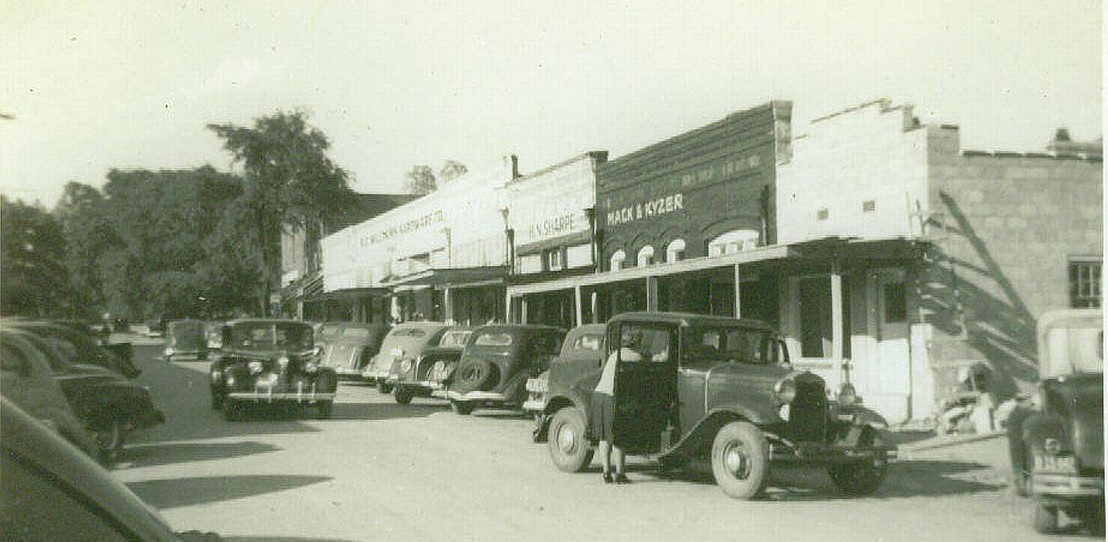
my first real taste of small town Main Street
Image by incendiarymind via Flickr

My good friend Susan Murphy wrote an interesting post yesterday, about how small towns are social networks. She points out that small towns have led the way for years when it comes to networking and seeing social leaders rise to the top. It’s a really good read and I highly recommend it.

It reminded me of something I’ve been thinking of for a while – how to involve the offline community more with the online one. While the likes of Twitter, Friendfeed and other social media tools are in the ascendancy, they’re still only used by a relatively small number of users, personal and professional.

So how do we change this?

How about we offer real-world and relevant use to offline communities so the online ones would experience growth and understanding? If we gave examples – workable examples – and led the way in showing users how to benefit from these self-same examples?

A conversation I had with my friend and PR person extraordinaire Lizz Harmon led me to think that this can be easier than many might think.

Imagine for a minute that you’re looking to travel somewhere for your vacation. Generally, you go by what the travel agent tells you. Now, unless you’re one of the very few lucky ones who’ve had great travel agents, the information you receive often doesn’t tell the whole story. Unfinished hotels, work sites just off the beach, sewer problems – and that’s just the good stuff.

I don’t blame the travel agent completely – after all, their job is to sell you a vacation and that’s where they make their money. I just wish for a little more honesty.

Now, imagine if you’re the same person looking to go on vacation and you get your information from a town or city’s Tourist Information Bureau – but via Twitter. Customer service representatives cover the account 24/7 and are able to answer any questions you might have. They’re not on commission so there’s no need for any imaginative descriptions.

They give you up-to-date information on places to stay and visit, local events and much more. By interacting with the future visitor, the tourist information office is doing everything right when it comes to placing its town or city in a positive light. And for small towns, it lets them keep up with their city equivalents and encourages tourism into their little part of the world.

Why stop there? Why not have councillors or Chambers of Commerce online and answering concerned citizens or incoming businesses respectively? Restaurants or movie theaters could offer discounts and incentives to anyone that brings in a printed deal from Twitter, Facebook or similar.

There’s a multitude of ways that businesses in particular can encourage the online and offline communities to come together. Our job is to help them get there. Who would you want to see online and what services would you use?

If you enjoyed this post, please consider leaving a comment and subscribe to my RSS feed or via email to ensure you can enjoy the latest post(s).

Reblog this post [with Zemanta]

Procrastination Is For Squares

I love the idea..
Image by apesara via Flickr

I had a conversation on Twitter last night with a good friend, Lizz Harmon, the basis of it being why Lizz didn’t blog.

She’s one of the smartest PR people around and always has some interesting things to say, so I mentioned that it might be a good idea for her to start blogging in 2009. Lizz responded with reasons why she doesn’t blog (for now) although it may be something she’ll address next year.

We ended the conversation with Lizz agreeing to write a guest post here, so I guess I’m the winner all-round!

It got me thinking, though, that there are probably a great many that don’t blog even though they could potentially blow everyone away with what they have to say. There are numerous reasons – fear of opening up, leaving a comfort zone, there are already too many similar bloggers so where would their voice be positioned, etc. All valid, yet all equally reasons to overcome as well.

I often say that some of the best points made on my blog are through the comments – some of the best conversations I’ve had recently have been discussing the various merits (or lack of) in my posts. It often leaves me wanting to hear more on what that person has to say, but then there’s no link to a blog.

This is a shame.

So here’s what I hope for in 2009. For anyone that isn’t blogging but has either thought about it or kept putting it off, make the decision to start one. Don’t worry about being lost in the wilderness – we’re all in the same boat and we’ll help each other through. If you’re worried what topics to write about, go for what inspires passion in you. The best voices come from passionate beliefs – yours can be one of them.

Ask for help as well. If you’re unsure how to set one up, or how to design your look and feel, look at blogs that you read and which ones catch your eye. And contact the blogger in question and ask if they’d mind offering some guidance. The good ones will be only too happy to help – after all, it should be one big happy blogosphere, right?

If you really don’t want to blog, then fair enough – you shouldn’t be forced. But if you can share great views in the comments of other blogs, maybe these great views can be the basis of your own rockstar blog?

I look forward to reading you in 2009.

  • Disclaimer – I’m not actually calling anyone squares, the title just seemed to fit. 🙂

If you enjoyed this post, please consider leaving a comment and subscribe to my RSS feed or via email to ensure you can enjoy the latest post(s).

Reblog this post [with Zemanta]
  • « Go to Previous Page
  • Page 1
  • Interim pages omitted …
  • Page 6
  • Page 7
  • Page 8
  • Page 9
  • Page 10
  • Interim pages omitted …
  • Page 12
  • Go to Next Page »
© 2026 Danny Brown - Made with ♥ on Genesis