• Skip to primary navigation
  • Skip to main content
Danny Brown

Danny Brown

podcaster - author - creator

  • About
  • Podcasts
  • Journal

Social network

I’m a Twitter Snob? Maybe

StopI received an email today that said I’m a “Twitter snob”. The reasoning behind it was that my follow-to-follower ratio was skewed – I had more followers than people I follow.

Therefore, I wasn’t using Twitter correctly; instead of following everyone back that followed me (which I should be doing, according to the email), I was obviously a snob that only followed the “elite” and I should “re-evaluate my Twitter use”.

The email ended by saying I shouldn’t advise on social media because I’m breaking a cardinal sin – which is, connect with everyone or don’t connect at all.

Okay….

So, I sat down and thought about it. Am I a Twitter snob? Should I follow everyone who follows me? Maybe. Maybe not. If snobbery is down to reciprocal numbers then, yes, I am a Twitter snob. But (and excuse my cussing), to me numbers on Twitter mean f**k all.

You can have 100,000 followers. But are they all live? Are they all human? Or are they a mix of humans, live accounts, dead accounts, spammers and bots? If they’re not all actual people that are active and engaging, then they don’t count. Unless you’re after false numbers, of course, to make you feel more important than you are. And there’s plenty of that going around…

So, fair enough. I have a skewed ratio. Which makes me a snob. But here’s the thing.

I’d rather be a snob with a skewed and (mostly) accurate ratio, than someone pretending to be something they’re not. Which, after all, is the real snobbery. No?

Creative Commons License photo credit: teotwawki

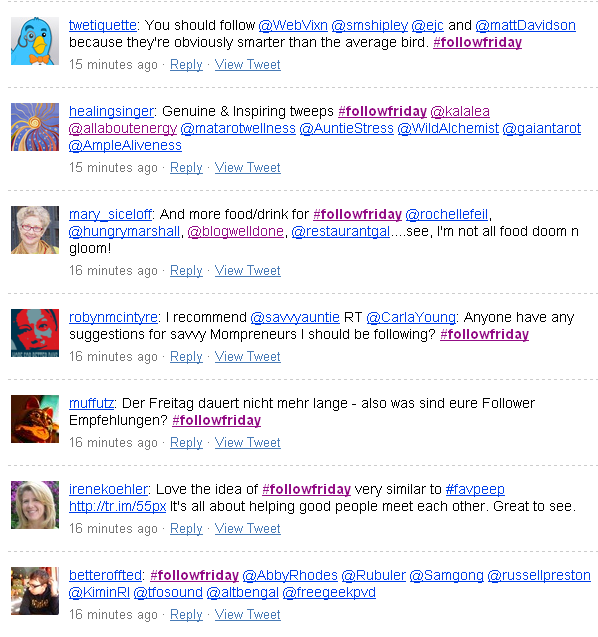
Still Not Convinced? Check Out Twitter’s FollowFriday

Despite its obvious benefits for communication, interaction and connecting, Twitter still finds itself labeled as a fad.

(And my apologies to Chris Brogan who asked us not to talk about Twitter in 2009 – my bad!).

Maybe it is a fad – maybe the detractors are right. But in the meantime, if you want to see why it’s so popular and why it’s hailed as one of the friendliest social media networks around, look no further than FollowFriday, where people all over the world recommend names for others to follow.

That’s true interaction and social media community building right there. We live in a word-of-mouth market – Twitter users are taking that to the next level.

Go to the Twitter search option now, enter #followfriday and meet your new best friends today. See you there.

followfriday

If you enjoyed this post, please consider leaving a comment and subscribe to my RSS feed or via email to ensure you can enjoy the latest post(s)

Reblog this post [with Zemanta]

Clouding The Issue

You would think that industrial pollution woul...
Image by william.n via Flickr

How well do you keep your personal and business life separate? Are you able to separate the two relatively easy, or do they crossover too much to have significantly different views? Or to put it another way, if you had a personal issue with someone could you still work with them professionally?

I ask this as a situation arose today where I had to question whether I was in the wrong, someone else was, or was there even any wrong to start with. Okay, that sounded confusing – let me try again.

For anyone’s that’s been reading this blog or following me on Twitter for the last month or so, you’ll know that I founded a charity project for 2009, the 12for12k Challenge. While ambitious in its fund-raising aim, it’s also (to me) achievable, thanks to the way that myself and the partners that have joined me in the challenge are leveraging social media to raise funds.

Everyone involved in the project is giving their time for free – there’s no admin cost and any man (or woman) hours put in is on top of normal work and personal time. I don’t say this to make us sound like saints, although personally I’ll never be able to thank these people enough for the help they’re giving.

Rather, I say it to show that when it’s a good cause, people generally come out in force to help in whatever way they can. It’s called selflessness and it also goes to you kind people that are donating to each month’s chosen charity.

So today stunned me a little.

One of the hardest things with the 12for12k project (and, I’m sure, other non-profit causes) is raising awareness. Hitting people at the right time, driving traffic to the website for details, getting the word out – it’s not easy. Also, because of the economy and time of year, donations are a little slow at the minute. Which we always knew might happen – January is a tough month for countless charities.

To try and raise awareness, my partners and I are reaching out to our social media connections to ask if they’d help promote to their followers on Twitter. Or write a short blog post. Or record a video message for us, much like Jason Falls did. So far, everyone we spoke to has been brilliant – if they can’t do it right away, it’s definitely on the immediate future agenda.

Everyone apart from one.

Open and Shut Case.

One of the creative partners on the 12for12k team emailed a particular social media “power player” and asked if they’d be open to any of the above promotional suggestions. The response was, “No – I have an issue with someone on the team.”

Uh – run that by me again?

Now, unfortunately, I don’t know what the issue is or who it’s with since no further information was forthcoming, but I’m a little surprised and maybe just a tad disappointed.

This person prides themself on how open and helpful they are to other people, and helping others to attain the goals they set out to reach. Their blog has an excellent and loyal readership and their Twitter account is close to 20,000 followers.

So this is why I’m left scratching my head. I can’t see any issue this person would have with one of our team that they would put it above trying to change the lives of millions of people. I put the question out to Twitter, about personal issues clouding professional ones, and with few exceptions the answer was pretty unanimous – be professional, work around the issue and get the best results.

Of course, if it’s an ethical problem that this person has with either me or one of my partners, then I can understand their point of view. Ethics play a very large part in my personal and professional make-up, so I do understand.

Yet knowing the partners like I do, I just don’t see where an ethical issue could come into play. Which means it must be me, for some reason. Hopefully the person involved will respond to my email asking what the issue is and can it be resolved.

I know there will always be reasons for not liking someone, personally or professionally. I know there are times when you don’t want to work with someone. Yet for all these times, surely the greater good of a project should see you able to overcome personal feelings and get a professional job done.

Or is that asking too much? How about you – can issues be overcome or are the clouds too dense?

Accentuate The Positives

Amusing Ourselves to Death
Image via Wikipedia

Can you remember when television was called the root of all evil? How it was blamed for desensitizing kids and breaking up the family fibre? American author and cultural critic Neil Postman wrote a book about it in 1985, called Amusing Ourselves to Death.

Postman’s argument was that television lessened the educational growth of people, as well as dumbed down arguments, by going for entertainment and images over political discourse and more serious issues.

While there’s no denying that television can be one distraction too many at times, there’s also no doubting its educational uses as well – National Geographic and The History Channel being just two examples.

Jump forward a little more than twenty years, and there’s a new target – the Internet.

It’s being blamed for everything from turning kids into zombies to the disappearance of social skills in the “real world”. But is it really that bad?

Hey Teacher, Leave These Kids Alone.

Far from turning kids into online-addicted mindless zombies, a new study shows that the Internet-savvy youth of today are far more creative than we were. The Digital Youth Research report, funded by the MacArthur Foundation, uses social network giant MySpace as an example. Just creating a MySpace page and customizing it shows a level of creativity and basic programming skills beyond most offline equivalents.

Of course, this report isn’t on the front pages of traditional media for one simple reason – it offers a positive view of the very medium that sells newspapers when the headlines are screaming negatives. If the report had said the Internet and social networking was hurting our kids’ education, you can be sure it would have been a lead story with quotes from “experts” all too willing to lend their view.

But you know something? We’re just as bad at times.

Pot. Kettle. Black.

One of the foremost sayings about social media is how it’s bringing people together. Opening up doors that had previously been locked, and offering help and encouragement to anyone that needs it. Simply put, the caring medium. But it’s not always like that, is it?

How can it be when bloggers are vociferously attacked for writing a sponsored post? Or when people take being “unfriended” by someone so seriously that they decide to investigate to almost stalker-like proportions? Add in the antagonistic comments that bloggers receive for their points of view, and you have to wonder if we really are that social.

So here’s what we need to do.

Accentuate the Positives.

It’s all too easy to be negative about something. By our very nature, human beings are happiest when we’re complaining. We love it when someone jumps the queue so we can open up on them, or our heroes make a mistake so we can bring them down.

Let’s stop this. Now.

Instead, let’s celebrate the good that social media can offer and concentrate on making that the norm, as opposed to the excuse. Let’s tell everyone about the positive thing that happened to us today because of social media.

Here’s an example. Yesterday, I met with a potential new client that found me through Twitter. His company is in the same city as me, so we met up for coffee and discussed a potential project. And even if I don’t win that project, the product he wants me to promote is so good I’ll be using it myself anyway. Without Twitter, he wouldn’t have been aware of me, and I would have been missing out on a great application.

That’s just one example from one person. I’m sure you have tons of examples of your own.

The question is – are you sharing them?

If you enjoyed this post, please consider leaving a comment and subscribe to my RSS feed or via email to ensure you can enjoy the latest post(s).

Reblog this post [with Zemanta]

Turning Towns Into Cities

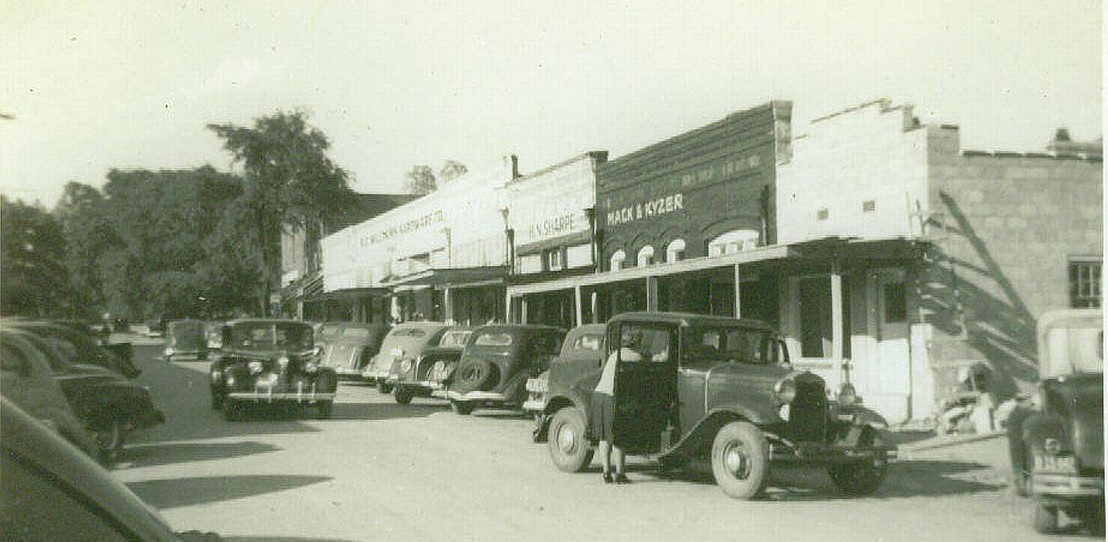
my first real taste of small town Main Street
Image by incendiarymind via Flickr

My good friend Susan Murphy wrote an interesting post yesterday, about how small towns are social networks. She points out that small towns have led the way for years when it comes to networking and seeing social leaders rise to the top. It’s a really good read and I highly recommend it.

It reminded me of something I’ve been thinking of for a while – how to involve the offline community more with the online one. While the likes of Twitter, Friendfeed and other social media tools are in the ascendancy, they’re still only used by a relatively small number of users, personal and professional.

So how do we change this?

How about we offer real-world and relevant use to offline communities so the online ones would experience growth and understanding? If we gave examples – workable examples – and led the way in showing users how to benefit from these self-same examples?

A conversation I had with my friend and PR person extraordinaire Lizz Harmon led me to think that this can be easier than many might think.

Imagine for a minute that you’re looking to travel somewhere for your vacation. Generally, you go by what the travel agent tells you. Now, unless you’re one of the very few lucky ones who’ve had great travel agents, the information you receive often doesn’t tell the whole story. Unfinished hotels, work sites just off the beach, sewer problems – and that’s just the good stuff.

I don’t blame the travel agent completely – after all, their job is to sell you a vacation and that’s where they make their money. I just wish for a little more honesty.

Now, imagine if you’re the same person looking to go on vacation and you get your information from a town or city’s Tourist Information Bureau – but via Twitter. Customer service representatives cover the account 24/7 and are able to answer any questions you might have. They’re not on commission so there’s no need for any imaginative descriptions.

They give you up-to-date information on places to stay and visit, local events and much more. By interacting with the future visitor, the tourist information office is doing everything right when it comes to placing its town or city in a positive light. And for small towns, it lets them keep up with their city equivalents and encourages tourism into their little part of the world.

Why stop there? Why not have councillors or Chambers of Commerce online and answering concerned citizens or incoming businesses respectively? Restaurants or movie theaters could offer discounts and incentives to anyone that brings in a printed deal from Twitter, Facebook or similar.

There’s a multitude of ways that businesses in particular can encourage the online and offline communities to come together. Our job is to help them get there. Who would you want to see online and what services would you use?

If you enjoyed this post, please consider leaving a comment and subscribe to my RSS feed or via email to ensure you can enjoy the latest post(s).

Reblog this post [with Zemanta]
  • Page 1
  • Page 2
  • Page 3
  • Go to Next Page »
© 2026 Danny Brown - Made with ♥ on Genesis