• Skip to primary navigation
  • Skip to main content
Danny Brown

Danny Brown

podcaster - author - creator

  • About
  • Podcasts
  • Journal

people

When Does Convenience of Service Overcome Lack of Ethics?

If you’ve spent any time online in the last few days, you can’t help but see all the bad news that keeps seeming to appear about personal taxi service Uber.

While the service has come under plenty of criticism in the last 6-12 months over some of its practices, the last seven days or so has seen a major upsurge in negative stories around the brand.

  • Uber Executive Suggests Digging Up Dirt on Journalists (Buzzfeed)
  • The Moment I Learned Just How Far Uber Will Go to Silence Journalists and Attack Women (pandodaily)
  • Sexist French Uber Promotion Pairs Riders with “Hot Chick” Drivers (Buzzfeed)
  • Uber Exec Proposes Smearing Female Reporters Who Criticized the App (Valleywag)
  • Uber Driver Told Cancer Patient She Deserves to Be Sick After Canceling Ride (New York Daily News)

Quite the list, huh? And that’s just in the last seven days – run a Google search, and the number of results are staggering. So it’s clear that Uber may not only have some very questionable business practices, but morally questionable ones at that.

Yet for some, this may not matter. Over on Facebook, my friend Justin Kozuch shared?a news story on why the City of Toronto is seeking a court injunction against Uber operating in the city. The story from the Toronto Star highlights a sizeable list of risks, including:

  • increased risk to passenger safety due to lack of driver training and mechanical inspections;
  • unregulated fares resulting in price surging (which Uber did to Torontonians in last year’s bitter winter);
  • increased safety risk to drivers due to lack of training and vehicle security equipment;
  • inadequate insurance that fails to meet municipal codes and may not provide proper coverage for drivers, passengers and other road users.

Again, quite the list. Despite this though, and despite the multitude of examples of Uber’s approach to ethics, it seems turning a blind eye in lieu of convenience is the more popular route. It’s not just Uber where this is happening, though.

When We Silently Complain

Earlier this year, I wrote a post about why the bullshit attitudes towards women needs to stop (warning: contains graphical and disturbing imagery). One of the examples I used in it was that of Ray Rice, who was the running back for the Baltimore Ravens at the time.

Rice was caught on tape hitting his then-fiancee, and (at the time) received a pitiful punishment from the NFL (a two-game ban, which was increased when more details came out about the case).

However, Rice was seemingly just the tip of the iceberg when it came to the issues that were about to unfold for the NFL.

  • NFL Star Adrian Peterson Arrested for Child Abuse (BBC)
  • Face It, Women, The NFL Does Not Give a Shit About You (Jezebel)
  • Panthers Disappointed in Greg Hardy, But No Discipline Imminent (Charlotte Observer)
  • The NFL Needs to Take Domestic Violence Seriously (TIME)
  • Misogyny and Homophobia in the NFL: Is America’s Crisis of Masculinity Playing Out In Its Favorite Sport? (Huffington Post Gay Voices)

Much like Uber, this is quite the collection of events for the NFL, and all from this year. Following these articles, videos, etc., social media lit up with condemnation, and calls to boycott the NFL, etc., especially when this damning Keith Olbermann video came out, attacking the NFL for its degradation of women.

https://www.youtube.com/watch?v=6fc_AnLaBew

Some of my friends over on Facebook were the most vociferous in their condemnation. Then game day one arrived in the new NFL season.

Many of these critics were now cheering on their teams, and paying into the money machine again either by going to games themselves, and buying the relevant beer, food, etc., or they were paying the cable companies to get live access to the game.

While the NFL issues didn’t necessarily appear forgotten, they did seem out of mind now the cheering had begun.

Away from the US, here in Canada there’s currently a case involving media personality Jian Ghomeshi and domestic violence around his sexual preferences:

  • More Workplace Allegations Made Against Jian Ghomeshi (CBC News Toronto)
  • Dirty Little Open Secrets: How the Jian Ghomeshi Scandal Helped Turn the Tide Against Bill Cosby (Salon)
  • Jian Ghomeshi: How He Got Away With It (Macleans)
  • Can Jian Ghomeshi Salvage His Reputation? (Toronto Star)

Again, much like the Ray Rice/NFL case, there was a lot of condemnation and outrage on Facebook and other social media channels, as friends and their connections moved from incredulity to anger and disgust.

Yet according to Facebook today, five of my own friends are still “fans” of the Jian Ghaneshi Facebook Page.

Jian-Ghomeshi

The irony of that,?given the way a Facebook Like can be seen as an endorsement, isn’t lost in light of the way those same folks decried Ghomeshi and his behaviour. Damn you, forgotten Facebook Page Likes!

The Right of Choice and Why It Needs to Be Defended

Going back to the Facebook post I referenced earlier from Justin, many of his friends still supported Uber and stated they’d continue to use the service. And, as Justin mentions himself in his reply, that’s exactly how it should be.

Critical thinking should always trump emotional reaction. If we can’t have the former, then we’re in serious trouble. It’s your choice [to continue using], and I respect that decision.

And that’s correct – people make their own decisions based on their needs at a given time, thanks to the freedom – or the right to choose freely – that so many men and women gave their lives for in order we could live ours without fear of reprisal (where legally acceptable, of course).

But sometimes, don’t you wonder if the choice is a little more black and white than that?

Take Uber. Clearly a company with both business and ethical issues that permeate from the top down. And while they fired the driver that abused the cancer victim, the senior executive that promoted the idea of abuse against reporters he found questionable is still at the company. Not much in the way of double standards there.

Or take the NFL. Since the avalanche of cases related to spousal abuse, child abuse, domestic violence, public violence and more became evident, they’ve gone on a damage control exercise, employing four women whose role it is to advise the NFL on domestic violence issues.

Many, however, see this as mere lip service and not a bigger endorsement of taking the issue seriously (especially given the fact it’s been reported that the players’ union, the National Football Players Association – is attempting to have Ray Rice’s ban lifted).

Perhaps most of all, we should take us and how we react, not just initially but moving forward.

We’re Defined By the Decisions Who Make Us What We Are

As Justin mentioned in one of his replies to his Uber discussion, “critical thinking should always trump emotional reaction”. Never is that more true when it comes to violence, hate, ethics and other emotionally-charged topics, and the discussions and actions that follow them.

While it’s natural for us to take an emotional stand initially, it’s the critical thinking stand that is more important in the long run. Our judgements can often be clouded by emotion – our longer-term thinking, less so.

It’s why we, as humans, sometimes need to ask ourselves how ethics that may not impact us personally impact the bigger human angle around us.

  • If we choose convenience over ethics, are we saying people that get hurt by poor business ethics is of no concern to us?
  • If we support a sports franchise where the owners have shown their true colours, are we in danger of saying “Out of sight, out of mind”?
  • If we take a popular stand on public networks, then don’t follow that through in private, are we really taking a stand at all?

It’s these kinds of questions that Chris Tuttle answers so eloquently over on Facebook:

I’ve had difficulty not using a service that I really like, but I can no longer justify or overlook bullying, sexist intimidation, and privacy issues in order to have a fabulous clean car. #GoodbyeUber”

Yes, we have choices, and the choices that we make should – for the most part – have little or nothing to do with anyone, or anything, that isn’t in our immediate circle of impact.

But if we always take that path, at what point does the human race finally implode on itself and simply look out for our own personal interests? Because, for me, that would be a truly sad day indeed…

Because You Matter

Because you matter

When you start a new adventure, it can be pretty daunting. A new job; a new romance; a new school or college. Online is no different.

The first time you join Twitter, it?s like a crazy maze. When you log into Facebook, there?s no quick set-up guide. If you want to start a blog, the choices can be bewildering.

Then you look around you, and see others that are seemingly way ahead of you. People that have 50,000 followers on Twitter; 2,000 friends on Facebook; are in 30,000 Google+ Circles; have 10,000 subscribers to their blog. You begin to doubt whether you should even be here ? how can you possibly compare with that?

Don?t worry ? you can?t. But you don?t have to. You just need to be you. No-one else; just you.

Think about that person on Twitter with 50,000 followers. Did they join the service with 50,000 ready-made followers? No ? they started with a clean sheet. Zero. And they built. Through seeing how Twitter worked, how to converse, how to?connect. But a lot of it was trial and error ? much like yours will be, and everyone else?s was.

The 2,000 friends on Facebook? Some may be business contacts; some may be personal friends; some may be old school buddies. Some may even be part of the 50,000 Twitter connections. But again, it starts from zero. Just like you will, and we all did.

The 30,000 Circles on Google+? How many are actually interacting, or sharing, or plussing?

The blogger with 10,000 subscribers? With a bunch of comments on every post? With lots of social bookmarks? That all started somewhere. It went through months of no-one reading, or commenting. It takes time to build a community of readers and commenters. But build it you will.

Because?you?matter, and you?re building something special without even knowing it.

That single tweet of yours that someone saw? That made them stop and think, and you mattered to them. That Facebook status update of yours that a mutually connected friend saw and shared with his or her friends??That?made them stop and think, and you mattered to them.

That blog post you wrote that a complete stranger left a comment about, thanking you for sharing just what they needed at that time? That mattered ? all because you wrote something that might be missed by everyone else, but for that one person?you mattered.

We spend so much time wondering how we can be like someone else. How we can have that person?s success. But you know what? There is absolutely nothing wrong with who?you?are. Right here. Right now.

Because at this very moment in time, for someone, somewhere, you matter. And that?s all that?really?matters, no?

image: Phoenix Dark-Knight

It Makes Everything You Worry About So Pathetic

Worry

We worry about the smallest things.

We worry if our boss will like us. We worry if our colleagues will like us. We worry if our online “friends” will like us.

We worry.

But the truth of the matter is, we worry about the little things. We worry about peers; about colleagues; about promotions; about the little things.

Now to some of us, we may worry about big things. But, unless it’s life-changing, how big is that worry? Truly?

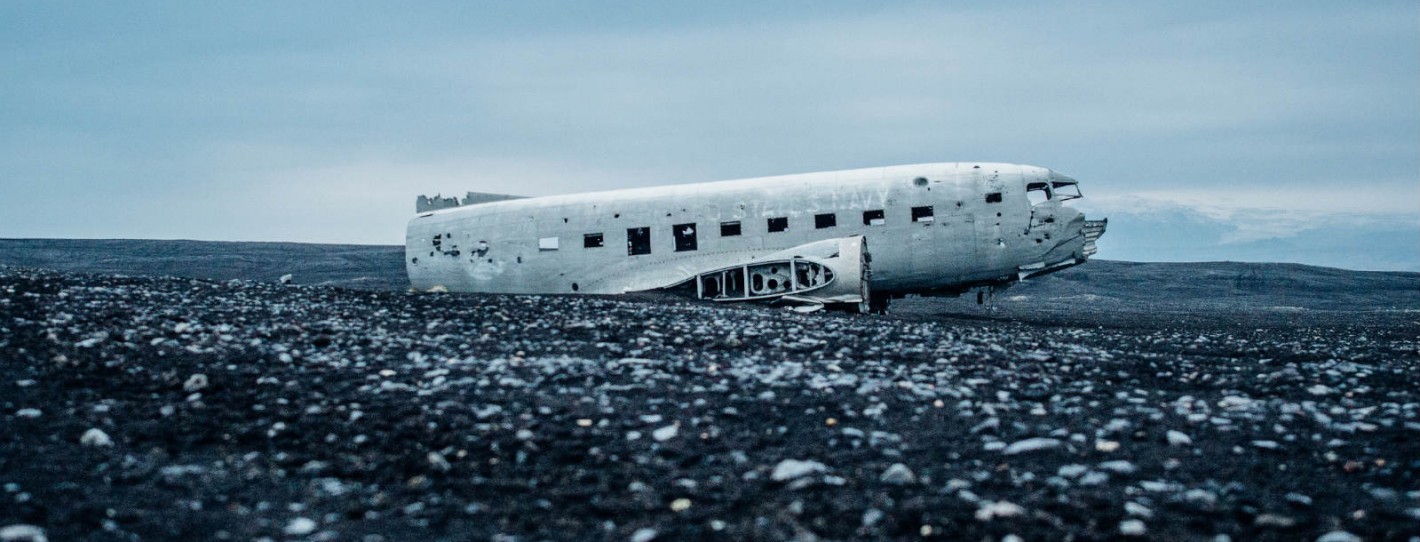
Want to see real worry? Here you go.

image: Len Matthews

Don’t Ever Give Up

This is a Shared Inspiration from Maranda Gibson.

Senior year of college brought a lot of changes for me.

Not only was I about to be done with school, but my economic status had changed and the dorm was the only home I had. I was getting a lesson in the ?hard things? adults deal with as I was responsible for bill paying and managing my family accounts.

I was lonely and sad, trying hard to do what would make my parents proud, and then I started to get sick.

Almost once a week for the year, I would get awful stomach cramps in the middle of the night and it felt like I was being pumped full of air. It would pass and I would be weak the next day, but I would be okay. It steadily got worse and the attacks would last longer, until I was weak and unable to function.

One night in the summer, my cousin?s husband rushed me to the hospital after an eight hour attack that had my parents (who were on the road on his big rig) beside themselves in worry.

It was my gallbladder and it was removed via routine surgery. I rested for about a week and then went back to school to finish out my summer class and be done with college forever. After it was completed, I packed up and moved to Texas.

Once I got to Texas, I started to feel sick again. Pain was in my lower back, I was running a fever, and it felt like I was being sawed in half at my belly button.? I thought I?d pulled something moving or slept wrong the night before.

As it continued over the course of the next few days, the pain got worse, until finally, it was time to go to the ER.

Life Changes

I was admitted almost immediately into the ER. ?When they were finally able to give me some painkillers, I felt relief for the first time in days but something felt off. They were giving me a CT scan and talking to my mom outside of the room. My mom disappeared for a few minutes and when she came back, she looked like she had been crying.

The ER staff hooked me up to a heart monitor and told me that an ambulance was going to come and get me and transport me over to an ICU at a different hospital.

A surgical team would be on standby to potentially remove parts of my pancreas, liver, small intestines, and stomach. The main supply of blood flow to my internal organs was basically a solid from clots and everything below my belly button was on its last breath, and so was I.

At the ICU, things happened fast.

I remember the nurse who held my hand and sang to me so I wouldn?t cry as they put in a CVC.

I remember signing a do not resuscitate order and asking my doctor if I was going to die.

I remember the look on his face when he said ?I?m going to do everything I can to not let that happen?.

I remember telling myself I had to be strong because my mom looked so scared.

It was almost a guarantee I would need surgery to repair the damage to my organs. My survival rate was anywhere between 8 ? 20%. That meant that the likelihood I would die was between 92 -100%.

Understanding

You know, death isn’t a concept that a twenty-two year old can really understand and even now I don?t.

I may not have understood death, but I understood life, and mine had just begun.? I remember the moment when I decided that I didn?t want to die and that I wasn?t going to allow it.

I?m supposed to get married and have a family. I?m supposed to finish a novel and see my words in print. I don?t give up and I?m not going to start now. ?

I fought thrombosis with everything I could. I prayed. I held my mom?s hand. I cracked jokes to my father and I started to remind myself what life felt like. As long as I could remember life, I would fight off death.

When I was moved to regular patient care three days later, my doctor was amazed and called me his little miracle. My mom said I was twice her joy, since I had been a miracle baby in the first place.

Somehow, I beat all of the odds. I managed to hit an 8% chance right on the nose. If you ever meet me, you could never tell how serious of a situation it was because it?s like it never happened.

At twenty-two, I learned things that I will never let go of and I want to share them.

Smile as much as you can. Laugh like it’s the last time you’ll ever hear something funny. I will never take for granted the way cold air feels burning into your lungs on a winter morning or how refreshing it is to jump into a pool when it?s 110 degrees outside.

I may be young ? but let me tell you something that I?ve learned.? Live every single day and smile while you do it. Try something new and hate it. Try something different and love it.

You have the ability to control if you accept something or not. You have the ability to decide if today you will fight, or if tomorrow you will give up.

Don?t ever give up. ?Life is nothing when it isn’t lived to its fullest.

Maranda GibsonAbout Maranda: Maranda is the head writer at AccuConference, a telecommunications company in Fort Worth, Texas.? She has a soft spot for kittens, puppies, and baseball. She?s about halfway through finishing that novel.

[gravityform id=”1″ name=”Inspire Us with Your Story”]

Faded Old Photos

Papa Peters

This is a Shared Inspiration from Ken Peters.

People from all walks of life go to work each day, do the best they can, then go to sleep and start over again in the morning – all the while hoping that what they’re doing has meaning.

Finding that meaning isn’t always easy.

Through the years, the American dream has been recast in the die of celebrity.

Contrary to what television teaches, life isn?t a talent competition, and Warhol?s proverbial 15 minutes aren?t an entitlement.

Merit isn?t measured in notoriety or fame. Value comes from hard work, and integrity. Life takes effort ? effort that sometimes goes unnoticed.

On my bookshelf rests a relic that reminds me of this every day ? a battered and beaten carbide headlamp that once lit my grandfather?s way in the coal mines of Ohio. It represents a work ethic you don?t find much anymore.

For me, it?s a reminder that a life of meaning doesn?t require celebrity.

My grandfather never achieved fame. He never cured a disease or created a stirring work of art. His name never appeared in lights. He never solved great mysteries or made amazing discoveries. You won?t find his pithy quips quoted for posterity on Twitter.

In fact, his was one of those anonymous faces you might ponder in faded old photographs and wonder, ?Who was that guy??

Who ?That Guy? Was

My grandfather was born in 1913, to an Ohio family of modest means. He came of age during the Great Depression and the Dustbowl, in what author Timothy Egan dubbed ?the worst hard times.?

Not much is known about his early life. Part of his young adulthood was spent tramping the Midwest, working in the circus, and doing the kinds of odd jobs available to someone with only an eighth grade education. By 1937 he?d made his way back to Ohio, and into coal mining.

After the attack on Pearl Harbor he enlisted and shipped to the pacific with the U.S. Army 37TH Infantry Division.

There he saw action during campaigns at Bougainville, in the Solomon Islands, and Luzon, in the Philippines ? enduring brutal jungle warfare where the malaria and conditions were as deadly as the enemy. He participated in two amphibious assaults, was awarded the Bronze Star, and attained the rank of Staff Sergeant.

Upon his honorable discharge in 1945 he returned to mining, where he would spend the next 15 years working for the Hanna Coal Company of Ohio.

Why he resigned himself to a life of labor in the mines rather than seek greater opportunity through government programs for returning veterans can only be speculated. Perhaps the lingering pall of the Depression, and a limited education made the familiar seem secure for a man with a growing family.

Through those years he and my grandmother raised three children, including my mother. Eventually, the family moved to Michigan in 1960, where he worked in a machine shop until retirement in the early 1970?s.

An Ornery Man

By the time I was born they tell me he?d become an ornery old man. Downright mean, in fact.

Understandably, early poverty, war, and years of arduous labor could cause a man to develop emotional armor, but I never saw that side of him.

As a child, I was his ?little buddy,? and toward me his manner was always gentle and kind. Heaven knows he often had reason to be angry with me, but he never was.

Decades of inhaling coal dust eventually took a toll in 1994. Pneumoconiosis, or Black Lung, rendered him weak and emaciated, while emphysema tethered him to an oxygen tank. That once strong soldier who stormed beaches under a barrage of enemy fire had become a thin, pale shadow of a man.

Nearing the end, he wanted to see me. He was in Michigan, and I was at college in Arizona, immersed in finals. I planned to visit after the semester, but his condition unexpectedly deteriorated and he died.

Not being there is the biggest regret of my life.

Whatever my grandfather?s aspirations might have been, he was an utterly common man whose life and accomplishments are barely a footnote in history. Yet, that ordinary life had extraordinary meaning that proffers an enduring legacy to all.

Through the years there was purpose without prestige, and fortitude without fame. In such quality of character is found the most authentic measure of a meaningful life.

Fittingly, perhaps, in a metaphorical sense, records from the Hanna Coal Co. cataloging his employment note that, ?All work was underground.?

This post is dedicated to my grandfather ? and everyone toiling in their own mine to make a life of meaning.

This is for people from all walks of life, doing their best each day, hoping that what they?re doing matters and that they?re creating a legacy.

It does, and they are, even if to the world they merely end up as nameless faces in faded old photos…

Ken PetersAbout Ken: Ken Peters is the co-founding partner and creative director at Nocturnal Designs, a brand amplification consultancy. You can follow Ken on Twitter @brand_BIG.

  • « Go to Previous Page
  • Page 1
  • Interim pages omitted …
  • Page 6
  • Page 7
  • Page 8
  • Page 9
  • Page 10
  • Interim pages omitted …
  • Page 27
  • Go to Next Page »
© 2026 Danny Brown - Made with ♥ on Genesis