• Skip to primary navigation
  • Skip to main content
Danny Brown

Danny Brown

podcaster - author - creator

  • About
  • Podcasts
  • Journal

paid blogging

Why Social Media Needs the FTC

While some people might think that Ashton and Oprah on Twitter is the only news, the real social media story happening at the minute involves the FTC (the Federal Trade Commission).

Their announcement that they want to regulate social media advertising has been met pretty negatively by many in the social media field, particularly bloggers and advertisers. The feeling is bloggers will refuse to publish content that could see them being sued for false advertising, meaning a reduced social media-led advertising spend.

Now, call me naive, but personally I don’t see the FTC’s announcement being a problem. If you’re honest.

The Good, The Bad and the Sponsored

Friendly Donkey!!Think about the current discussions taking place about sponsored posts and the ethics behind them. The main argument against sponsored blog posts is that the blogger immediately loses credibility, since you can’t possibly be unbiased if you’re being paid for something.

While there’s some merit to this, I actually do believe you can remain both ethical and unbiased. Of course, it all boils down to the individual, but it can be done.

However, introduce the FTC into the equation, and it immediately lends authority and credence to both the blogger and the advertiser using them to promote their products. Immediate benefits include:

  1. Blogger and advertiser has to adhere to FTC standards
  2. Blog readers can read a product review and know it’s honest
  3. Builds trust between blogger and reader

On a long-term basis, the professional blogging industry gains more respect, advertisers see that social media is a field to take seriously, and consumers get the best of both worlds.

Yet still there are the complaints that it’s a bad move for social media.

Against the FTC

One critic is Richard O’Brien, vice-president of the American Association of Advertising Agencies (4A’s). He claims, ?Bloggers and other viral marketers will be discouraged from publishing content for fear of being held liable for any potentially misleading claim.?

Meanwhile, Nathania Johnson of SearchEngineWatch.com states, “The FTC should go back to elementary school. That’s when kids learn that opinions are not true or false – only facts are. They even have homework assignments about it.”

eyes openLet’s take both arguments at face value.

With regards Richard’s claim, surely the only people that will be discouraged by the new regulations will be the ones that were skirting around false advertising anyway?

Wouldn’t a claim only be misleading if any of the facts are distorted? Which would be the fault of both the blogger and the company using them.

Looking at Nathania’s position, it’s not opinion that’s being questioned – it’s false advertising. They’re two completely different things. Nathania herself points this out further in her piece (and, in a way, contradicts her opposition) when she asks, “When you see a celebrity endorse a consumer brand in traditional advertising, does anyone really believe that celebrity uses the brand?”

No. Most people don’t believe that the celebrity uses that product.

Because it is quite clearly a paid advertisement.

The difference with sponsored or paid blog posts is that it’s not always apparent that this is the case. While the blogger should disclose, not every one does. And this is where the false advertising argument comes into play.

Food for Thought

If I read someone and they say I should eat at Joe Average Burger Joint rather than Wendy’s or McDonald’s because they use healthier ingredients, and I then find out it’s not the case, I’m going to be angry. I’ve been lied to.

If I then find out that the blogger who reviewed and recommended Joe Average Burger Joint has never been there in their life, but instead was paid to write a positive review on their food blog because that’s Joe Average’s core audience… This is no longer opinion – this is paid advertising, and false advertising at that.

If anything, if social media is seen as being regulated properly it may actually encourage more businesses to become involved, knowing that the competition is fair.

The very fact that the FTC wants to step in and stop this kind of unethical and questionable consumer manipulation can only be a good thing. At least for the majority of those affected.

Otherwise, doesn’t it just raise the question of what are you hiding?

Creative Commons License photo credit: tricky ?
Creative Commons License photo credit: Yersinia

Tipping the Scales

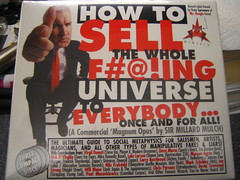
Sir Millard MulchSo there’s been plenty written about why bloggers hate PR people.
From lazy pitches to not knowing names and audience, there’s a veritable mish-mash of scorn poured on us PR nuisances from a lot of bloggers.

And, yes, some of it is warranted and trust me, I’m the first to call out bad PR practices.

But you know that just like anything, there’s always a flip side. Here’s an example.

I was speaking with a very good friend of mine who runs her own PR agency. She’s established a terrific reputation as one of the best PR people around and has deservedly won awards for her approach. Simply put, she’s a role model for great PR.

We were talking about the relationship between bloggers and PR and how we can improve it (“we” being both the blogosphere and the PR industry). This was when my friend shared one of her examples as to why that improvement might be further off than hoped.

She was working with a client whose core audience were “mommy bloggers”. The client’s product was ideally suited to the thousands of moms that have families of their own and blog about products in that niche. So, it would make sense for the PR campaign to connect with the blogging audience it’s suited to. So far, so good.

When my friend approached some of the key bloggers in this field, she had this response: “It’s $75 for a positive review, $100 if there’s an image attached.” When my friend queried this, she was told, “Get your client to splash the cash. If you’re getting paid, we want paid too.”

Say what?

Now, I understand about paid blogging and I have no qualms with it, as long as the blogger is upfront that it’s a sponsored post and that the review remains unbiased. Heck, we all need to make a living, but if you can’t offer full disclosure and non-bias then don’t take the money.

But this isn’t paid blogging – it’s simply a company asking (through their PR agency) if you’d be interested in product testing. You get first shot at the new line and you get to use and keep the product.

But you’re saying that if I pay $75, I’ll get a “positive review”? Isn’t this false advertising, or marketing, or whatever you wish to call it?

What happens if the product is crap? Will you still tell your readers that it’s great, because you’ve agreed to offer a positive review? How do you think your readers would feel about that? After all, aren’t they your most important audience?

Or is this just another point in your one-upmanship game with the PR industry?

Now, I’m not saying all bloggers (mommy or otherwise) are like this, either when it comes to product reviews or in the relationship they have with PR. I have some fantastic relationships with many bloggers and I couldn’t do a lot of my work without them.

But to those bloggers that my friend had the misfortune of dealing with?

A blog is your personal voice. Your readers are your community. Is both your voice and community something you’d happily sell down the river for a few bucks?

Because if they are, then that’s the real bad PR.

Creative Commons License photo credit: rick

Can I Buy You?

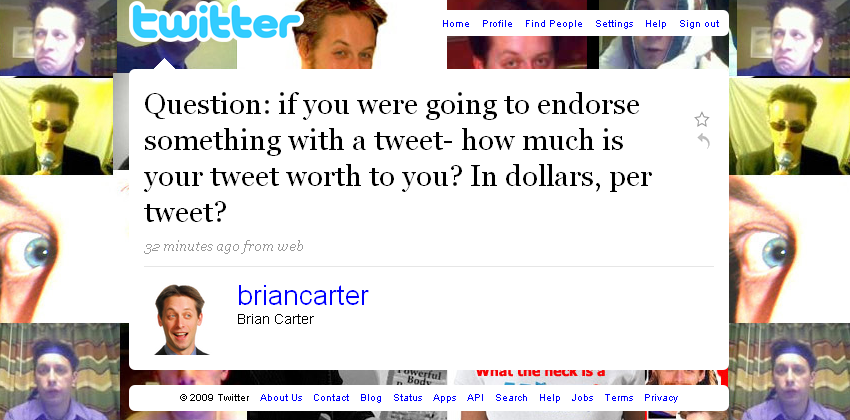
Brian Carter, a guy I admire immensely, raised an interesting question on Twitter today. He asked:

bcartertweetendorse

My own answer was, “It’s a moot point. If I like something enough to endorse it, I’d do it anyway for free. I wouldn’t sell my trust away.” Yet even as I said that, I wondered if I was looking at Brian’s question properly. Is an endorsement any different from a recommendation, or sponsorship?

Looking at the answers that Brian received, there was a definite mixed bag:

  • “I endorse my friends and products for free.”
  • “If I love the product and get a free sample, I would happily tweet for free.”
  • “$1 a tweet.”
  • “I’d say about fifty cents a tweet, $1 to include a link?”
  • “It’s not the matter of the price of my tweet, it’s the price of the endorsement (which isn’t for sale.”

These are just some examples of the mixed reception the question got. (And I’m not saying any of them are right or wrong – these are just some typical examples of the mix). The fact that opinion seems to be evenly split is what makes me question when, or if, paid endorsement breaks the trust barrier?

To me, endorsing something is because you’ve used a product, service or person and you’re completely sold on it. You’re so taken with the results that you’ll wholeheartedly recommend it or them to your friends, family and colleagues. It’s the ultimate compliment – “It’s so good that I’m happy to use it.”

It’s the trust measurement that people who know and respect you will use when making decisions. So would a blind endorsement break that trust?

The fallout can be intensive when someone’s seen to have broken that trust measurement. You only need to look at the recent Izea sponsored posts outcry as an example. Trust is one of our most prized commodities and often it’s what separates us from contemporaries.

But is endorsing something in your Twitter stream for monetary gain any different from advertising on your blog? My own view says there is a difference. Usually you’re not approached by advertisers for a space on your blog (unless it’s a hugely popular one). I’m guessing paid endorsements would see vendors proactively buying your Twitter advertising space more than they might blog space.

Yet with the economy making things hard for people everywhere, should we question people’s rights to make money where they can? After all, we’re sensible enough to make our own decisions on whether a recommendation or endorsement is worth acting on, no?

What’s your take? Is your view for sale?

Paid Blogging and the Art of Transparency

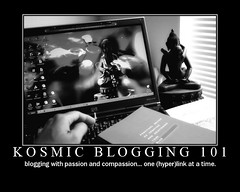
kosmic blogging in samsara (redux)
Image by ~C4Chaos via Flickr

I couldn’t help but notice that there’s a little bit of a discussion going on at Twitter at the moment with regards paid blogging.

As with any discussion, there are two sides that are equally as vociferous when it comes to their views on the topic.

The reason a lot of the discussion started was due to leading social media blogger Chris Brogan writing a sponsored post for K-Mart.

The gist of the argument on Twitter is whether Chris has lost any “value” because he wrote a review that was paid for. K-Mart gave Chris a $500 gift voucher and asked him to figure out what was cool to buy with it at their store, and then write about it. Seems straightforward enough, particularly when Chris himself even mentioned on the blog itself that it was a sponsored post, although all the views were his own.

As I said, where it gets interesting on Twitter is that there have been a few people that feel let down by Chris, and have either stopped following him or made their feelings clear that they’re disappointed. So it got me thinking about paid blogging, and if it does actually lose the reviewer any authority or credence because they’re being paid for what they’re writing.

Honestly, I don’t see what the problem is.

I’m a blogger myself, and I write pretty regularly. But I don’t do it for the money (if I did I’d be bankrupt!) – I do it because I enjoy the conversations that can then take place afterward. I love to write and when someone joins in and adds to the conversation via the comments after each post, then that’s one of the most satisfying parts of blogging. After all, I’m just the conduit – many of the comments are even more interesting than the post itself. It’d be nice to get paid, but that’s not why I’m here.

So I can see why paid blogging could be so attractive. After all, you’re still doing the same thing you’re always doing – writing – with the only real difference being that you’re actually receiving some financial outlay for it. And with the economy like it is, isn’t the ability to make some more money for your family – or, in Chris’s case, buy some Christmas gifts – worth it?

As long as the blogger is upfront and transparent about the post being sponsored, then I don’t have an issue with paid blogging. The bloggers I read, I’ve read for a while – you get to know their writing style and I’d soon spot if Chris (or anyone else) was writing BS. And if I thought that was the case, I’d be the first to call him on it.

But the fact that it was called as sponsored and there was no heavy sales pitch in the post itself? If people can make money on their blogs by writing sponsored posts yet still keep it honest, more power to them.

And for anyone that feels let down by sponsored blogging? I liken it to the indie band syndrome – the band’s great while they’re your secret, but the moment success and money becomes involved, you don’t want to know. Which begs the question – were you really a fan in the first place?

© 2026 Danny Brown - Made with ♥ on Genesis