• Skip to primary navigation
  • Skip to main content
Danny Brown

Danny Brown

podcaster - author - creator

  • About
  • Podcasts
  • Journal

opinion

Haters Gonna Hate? Try Being Equal to Dog Crap

Opinions are great. They allow people to share their thoughts on something, and contribute to a conversation that otherwise may have passed them by.

Opposing opinions are even better, as they stop us from becoming too ego-centric and full of our own bunkum. Opposing opinions can make us re-evaluate our viewpoints with fact and make us better people for learning new ideas.

Of course, the problem with having opposing opinions to something is that, often, the people you?re questioning don?t like it. So they get snarky. Or, if that person?s a blogger, their adoring fans respond to your comment with a ?Haters gonna hate? reply.

Seriously, what the f*ck does that have to do with anything?

Because someone doesn?t have their nose up your demigod?s ass too, all of a sudden that makes them a hater? Get real.

You want hate? Try being gay in Jamaica. Or try being ethnic in some parts of Canada. Or?try being a woman in Afghanistan. Or try expressing your civil rights in Equatorial Guinea.

That?s hate, right there. Where your life is about as valued as dog crap.

The people living in these places and experiencing that hate every day would laugh in your face if you said an opinion on a blog post, or an online thought, meant you were a hater.

The sad thing is, it?s becoming more common to use the ?haters gonna hate? excuse for countering a different opinion.

I?ve seen social media leaders use it, or not do anything to discourage it in their readers, and I?ve seen people use it more when someone expresses a valid opinion or counter-point.

Here?s the thing though ? the ?haters gonna hate? exuse? It?s just a lame cop out by people that have usually been called out on crap, and have nothing valid to respond with.

It means your ass has been handed to you, and all you can come up with is the person that just handed you your ass is obviously a hater.

Trouble is, others see that you?ve been called out too with a valid counterpoint. And coming back with a ?haters gonna hate? soundbite just makes you look as lame as the term itself.

Especially when you put it into context alongside real hate in the world?

If We Lose the Right to Opinion, We Lose More Than Just Page Views

Back in 2009, I published a post about online watch sales company Melrose Jeweler?s.

The post dissected a press release Melrose had put out, suggesting how the actor Owen Wilson had been saved from suicide by seeing his wonderful Rolex watch, and realizing life was worth living.

Ridiculous, right? Not to Melrose, who positioned themselves as resellers of authentic Rolex watches, and used the news release to show just how awesome Rolex is, and why people should buy from their online store.

(Note: Rolex was never affiliated with Melrose, as has since been publicized by a subsequent lawsuit and the closure of Melrose.)

My original post was an opinion piece, and pretty scathing, questioning the ethics of Melrose and their publicity team. Shortly after the post went live, I received a Cease and Desist letter from Melrose?s lawyer, requesting I take the post down as it was harming his client.

I refused, and instead published a rebuttal post that took apart each of the lawyer?s ?statements?, and advised that the post would remain online, as is, as an opinion piece backed by facts.

I never heard from either Melrose or the lawyer again.

For me, that experience with Melrose showed the growing ?allure? of blogging and social media ? the ability for businesses to be challenged?on questionable practices, and be held to a higher standard.

It also showed the growing gap between bloggers and journalists, and why content consumers turned to blogs as opposed to print journalism.

While journalism was often red-taped by editorial decisions and boardroom approvals (based on what political party had the bigger sway with the owner of the paper), blogs could offer stronger opinion pieces that could go straight for the jugular, if you like.

A recent decision by French courts, however, could see the future of opinion pieces, and holding businesses to better standards, become redundant. Or worse.

Opinion Is Great ? As Long As It?s Positive

French fashion and literature blogger Caroline Doudet wrote a scathing review of her experience with the Il Giardino restaurant in the south west of France. Much like any blogger worth their salt, Doudet optimized the post title and content to rank in Google?s search algorithm.

Indeed, her post ? entitled ?The Place to Avoid in Cap-Ferret: Il Giardino? ? ranked so well it came up fourth in search results when Google users searched for that particular restaurant.

It was this placement ? and the accompanying review published by Doudet ? that upset the owner of the restaurant, who promptly sued and took Doudet to court.

In the ruling over the case, the judge ordered Doudet to amend the title of the post, so that it was less inflammatory, as well as pay the restaurant owner $2,000 in damages.

Following this ruling, Doudet actually deleted the post completely, but warns of the precedent this decision sets.

This decision creates a new crime of being too highly ranked on a search engine, or having too great an influence. What is perverse, is that we look for bloggers who are influential, but only if they are nice about people. Source.

That last sentence is particularly telling, both for bloggers and brands alike.

The Neutrality of the Web and the Betterment of Brands

The last few years has seen the rise of bloggers as a prominent feature in any brand?s marketing strategy. This can range from promotional or sponsored posts to working with influential bloggers in a certain field to work through crisis or emergencies.

The trust that bloggers have built with their audiences is hugely attractive to brands looking to reach those audiences ? it?s essentially one of the warmest ?leads? you (the brand) will have with your demographic. Get the relationship with the blogger right, get the approach to the audience right.

Much of this trust in the blogger stems from the fact the audience knows the blogger has their best interests at heart, and won?t shill for the sake of a few bucks.

Trust, after all, is the currency of any successful blogger.

If we get to the stage where that neutrality and power of opinion is removed because a restaurant owner didn?t like a review, or a brand didn?t like the fact a blogger only gave their product a mediocre review, then we?re taking a major step into losing any kind of protective layer between brands and questionable practices.

While the case of Doudet isn?t expected to set a legal precedent currently (it?s classed as an emergency order that?s causing harm to another party), that?s not to say it won?t be used as a weapon in the battle between brands controlling what?s said about them, and the content creators that are determined to hold these brands to a better modus operandi.

The signs are already there.

Review site Yelp has seen cases of reviewers being sued for their postings, while a bishop sued a blogger for an article where the victim claimed defamation, while the defendant claimed it was satire.

The latter example may be a more clear-cut one: after all, if you break the law, expect the consequences. However, the examples of brands suing against reviews and opinions that don?t offer a rainbows and unicorns view of their service or product is a troubling one.

[clickToTweet tweet=”If we lose the right to opinion, we lose more than page views and comments. #pureblogging” quote=”If we lose the right to opinion, we lose more than page views and comments.”]

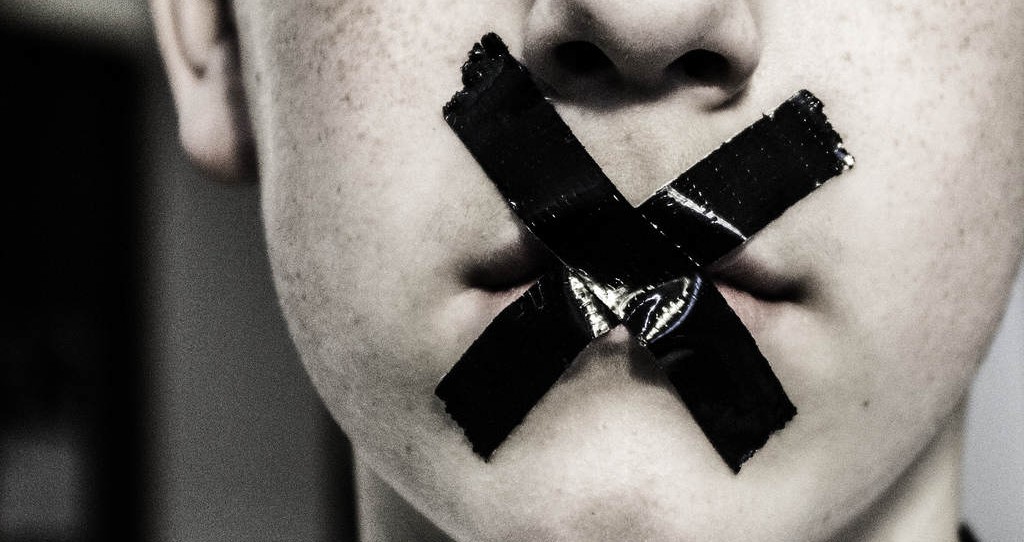
If we lose the right to opine based on fact and experience, and instead are forced to remain silent or face the consequences, we lose more than just a few page views and comments ? we lose the very fabric of what makes the web what it is today.

The only winners when that happens are the brands that have something to hide ? the good brands already use negative opinion to improve their service and product.

Surely that?s something we all want, brands and bloggers alike?

The Beautiful Freedom of Not Giving a Crap

carefree

When I was much younger – say, around 8-9 years old – I used to get in trouble with my school teachers, and other adults in positions of authority, regularly. Pretty much not a day would go by without my mother receiving some troublesome news about me.

I guess, looking back, I simply had an aversion to authority.

And while that continued until my early teens, when I learned what it meant to really show respect and understand conflict with authority was primarily in my mind, I also learned something at that young age that must have made an impression (even subconsciously) from my granddad.

Wisdom Has No Age Limits

I always loved my granddad. He was the safety net I’d cling to when everyone else seemed down on me. He was the one that would let me watch TV just that little bit later. He was the one who would let me read my comic under the bed with the flashlight, when everyone else would confiscate the flashlight.

In short, he was the one that would break the rules and let me be who I wanted to be. Except, not really.

Instead of letting me be an out of control tearaway, looking back he was actually guiding me to be a better person because of the trust I had in him. When he spoke, I’d agree and nod – even if I didn’t like it. And – usually – do as he said.

Whether or not my mother was in cahoots with him in this endeavour, I’ll never know. Perhaps, perhaps not. Either way, he made me stop and think of the things my mother was trying to teach me.

So, when I was having my brush with people in authority, my granddad pulled me aside, and said the following:

You might think grown-ups are bad, and stopping you from having fun. And, sometimes, they will. But it’s only because they love you. Now – you can choose which ones to listen to. And, I know ?not everyone is worth listening to. So here’s a trick – listen to the people who love you, every time. Your mum. Your sister. Me. Your grandma. Listen to your friends, but only the ones who don’t make you feel bad about yourself. And listen to your teachers who make you smile when you’ve done something. These people are all just trying to help you enjoy life. And that’s something not everyone will do.

Now, I know I’ve paraphrased some of his words. After all, this was almost 40 years ago (holy crap, I’m getting old!!). But the gist of the message is definitely there.

And it’s one I use today in pretty much everything I do, and you should too. Here’s why.

Living Life The Way It’s Meant to Be Lived

In a recent edition of TIME, there was a fantastic memorial article by David Von Drehle, about a gentleman named Charlie White. David and Charlie were neighbours, and David’s piece wrote about the lessons Charlie instilled from a life well lived. Charlie was 109 when he passed last month.

The article recounts passages of time from the turn of last century, and is a fascinating and warm look into a period of time most of us will never have known. Yet it’s also a reminder of how to live a life well lived.

Charlie’s “secret” to a happy life was the realization that you have to separate the things you can’t control from the things you can. This was a lesson he imparted to one of his daughters when she was having issues with someone that was frustrating her. Charlie’s advice?

You can’t change people like that. If I let people irritate me, I would have been dead long ago. Source.

The fact Charlie lived such a long and happy life has to have some part in this mindset. It’s the same mindset my granddad had, and is – essentially – the one I try to live to these days.

After all, let’s face it – how important are the words of others who actually have no real impact over who we are and what we stand for?

Those That Matter and Those That Meh

Back in April of this year, I wrote a post on why readers of this blog might want to unsubscribe. It was a post that shared the direction this blog was moving in, and a heads up that if readers wanted to subscribe to a purely marketing blog, this one wouldn’t be for them (and I recommended five other blogs to subscribe to instead).

I’d just become bored of only writing about marketing, social media, etc., and all that entails. We’re people, all of us – we’re not tied to talking about just business in life, so why should we be on our blogs (or other social footprints)?

After this post, I received a whole bunch of emails (as well as comments on the post itself) from others who felt the same, and were “glad” to see someone say it out loud, encouraging them do the same thing. And that’s the real beauty of blogging and content – even if you help just one person make a choice, that’s all that matters.

Arik Hanson, a PR and communications pro over in Minneapolis, shared his thoughts in a post entitled “Is the age of the independent PR blogger over?”. He looked at how many of the bloggers in his feed had either changed direction, or simply given up altogether to concentrate on, well, life and family and all that important stuff.

In the comments, social media guy Jason Falls left quite the entertaining diatribe?(click image to expand).

Is the age of the independent PR blogger over

When I got the update to the comment being left, it made me chuckle – because, really, who gives a crap?

It doesn’t matter what Jason thought (and I like Jason, he seems a decent guy), because it wasn’t for him (hence the dog picture reply). The original post was for the folks who said it helped them make up their minds to produce the content they really wanted to produce.

And that’s why we need to collectively take more of a “who gives a crap?” approach to comments, blog posts, social updates, etc. The people that moan and react usually aren’t the ones that either matter (from an audience point of view), or who have little relevance to you anyway.

If someone on Google+ calls you an idiot for having a point of view, who cares? The real idiocy comes from trying to stifle opinions with rudeness or ignorance. If that person has little effect on your bigger picture, let them stew in their own little miserable bubble.

Same goes for the content you produce. Own it, and be happy to own it.

Enough With the Egg Shells

There was a great post earlier this year from Marc Ensign, called “The Pussification of the Internet”. In it, Marc shares how the web has become this place where we’re too scared to have an opinion, because we’ll be jumped on by others, or called to task, etc.

Because of this, the web is in danger of becoming a sanitized version of what it should be – open, challenging, questioning and, most of all, bare bones honest. It’s a great – if not quite safe for work read – and well worth your time,. Because it’s true.

Last month, the Pew Research Internet Project released its latest report, and it made for some enlightening – and a little bit scary/sad – reading.

Entitled “Social Media and the Spiral of Silence”, it shared the answers of just over 1,800 adults and their thoughts on the impact of the Edward Snowden / NSA fallout in the US and beyond, and how that affected the way these adults conversed online.

There are many interesting takeaways from the report, but two in particular stood out.

  • In both personal settings and online settings, people were more willing to share their views if they thought their audience agreed with them. For instance, at work, those who felt their coworkers agreed with their opinion were about three times more likely to say they would join a workplace conversation about the Snowden-NSA situation.
  • Previous ?spiral of silence? findings as to people?s willingness to speak up in various settings also apply to social media users. Those who use Facebook were more willing to share their views if they thought their followers agreed with them. If a person felt that people in their Facebook network agreed with their opinion about the Snowden-NSA issue, they were about twice as likely to join a discussion on Facebook about this issue.

Now while these two points refer to unease on how the US government is monitoring the conversations of its citizens, it also highlights the growing issue of just going with the flow as opposed to taking a stand.

It’s a walking-on-egg-shells mentality that both limits our growth and inhibits our learning. If we were all meant to have the same point of view,?we may as well quit now because there would be no need for us to be.

That’s not to say we ignore everyone else – far from it. But we do need to start standing up for ourselves and our opinions more, and not just be part of the herd.

Like my granddad said himself, think of who you want to listen to. Think of who you want to take advice from. Think of who actually matters, and whose opinion and feelings you wouldn’t want to hurt. And be respectful of those you disagree with.

For everything else – who gives a crap?

Are We In Danger of Losing the Right to an Opinion?

Back in 2009, I published a post about online watch sales company Melrose Jeweler’s. The post dissected a press release Melrose had put out, suggesting how the actor Owen Wilson had been saved from suicide by seeing his wonderful Rolex watch, and realizing life was worth living.

Ridiculous, right? Not to Melrose, who positioned themselves as resellers of authentic Rolex watches, and used the news release to show just how awesome Rolex is, and why people should buy from their online store.

(Note: Rolex was never affiliated with Melrose, as has since been publicized by a recent lawsuit and the closure of Melrose.)

My original post was an opinion piece, and pretty scathing, questioning the ethics of Melrose and their publicity team. Shortly after the post went live, I received a Cease and Desist letter from Melrose’s lawyer, requesting I take the post down as it was harming his client.

I refused, and instead published a rebuttal post that took apart each of the lawyer’s “statements”, and advised that the post would remain online, as is, as an opinion piece backed by facts. I never heard from either Melrose or the lawyer again.

For me, that experience with Melrose showed the growing “allure” of blogging and social media – the ability for businesses to be challenged?on questionable practices, and be held to a higher standard.

It also showed the growing gap between bloggers and journalists, and why content consumers turned to blogs as opposed to print journalism. While journalism was often red-taped by editorial decisions and boardroom approvals (based on what political party had the bigger sway with the owner of the paper), blogs could offer stronger opinion pieces that could go straight for the jugular, if you like.

A recent decision by French courts, however, could see the future of opinion pieces, and holding businesses to better standards, become redundant. Or worse.

Opinion Is Great – As Long As It’s Positive

French fashion and literature blogger Caroline Doudet wrote a scathing review of her experience with the Il Giardino restaurant in the south west of France. Much like any blogger worth their salt, Doudet optimized the post title and content to rank in Google’s search algorithm.

Indeed, her post – entitled “The Place to Avoid in Cap-Ferret: Il Giardino” – ranked so well it came up fourth in search results when Google users searched for that particular restaurant. It was this placement – and the accompanying review published by Doudet – that upset the owner of the restaurant, who promptly sued and took Doudet to court.

In the ruling over the case, the judge ordered Doudet to amend the title of the post, so that it was less inflammatory, as well as pay the restaurant owner $2,000 in damages. Following this ruling, Doudet actually deleted the post completely, but warns of the precedent this decision sets.

This decision creates a new crime of being too highly ranked on a search engine, or having too great an influence. What is perverse, is that we look for bloggers who are influential, but only if they are nice about people. Source.

That last sentence is particularly telling, both for bloggers and brands alike.

The Neutrality of the Web and the Betterment of Brands

The last few years has seen the rise of bloggers as a prominent feature in any brand’s marketing strategy. This can range from promotional or sponsored posts to working with influential bloggers in a certain field to work through crisis or emergencies.

The trust that bloggers have built with their audiences is hugely attractive to brands looking to reach those audiences – it’s essentially one of the warmest “leads” you (the brand) will have with your demographic. Get the relationship with the blogger right, get the approach to the audience right.

Much of this trust in the blogger stems from the fact the audience knows the blogger has their best interests at heart, and won’t shill for the sake of a few bucks. Trust, after all, is the currency of any successful blogger.

If we get to the stage where that neutrality and power of opinion is removed because a restaurant owner didn’t like a review, or a brand didn’t like the fact a blogger only gave their product a mediocre review, then we’re taking a major step into losing any kind of protective layer between brands and questionable practices.

While the case of Doudet isn’t expected to set a legal precedent currently (it’s classed as an emergency order that’s causing harm to another party), that’s not to say it won’t be used as a weapon in the battle between brands controlling what’s said about them, and the content creators that are determined to hold these brands to a better modus operandi.

The signs are already there. Review site Yelp is currently seeing test cases of reviewers being sued for their postings, while a bishop recently sued a blogger for an article where the victim claimed defamation, while the defendant claimed it was satire.

The latter example may be a more clear-cut one: after all, if you break the law, expect the consequences. However, the examples of brands suing against reviews and opinions that don’t offer a rainbows and unicorns view of their service or product is a troubling one.

If we lose the right to opine based on fact and experience, and instead are forced to remain silent or face the consequences, we lose more than just a few page views and comments – we lose the very fabric of what makes the web what it is today.

The only winners when that happens are the brands that have something to hide – the good brands already use negative opinion to improve their service and product.

Surely that’s something we all want, brands and consumers alike?

image: Rebecca Barray

Everything Is Dead

Everything is dead

The print industry is dead, yet we still use a version of ink for the ebooks that killed print.

The news release is dead, yet we still count print publication mentions as a measure of success.

Advertising is dead, yet we still spend almost $120 billion every three months.

Blogging is dead, even though the platforms reporting this are built on blogs.

PR is dead, despite it pervading every part of a business from customer service to branding to HR and more.

Seems everything is dead, even though we continue to use all of these corpses today.

Great to be alive, eh?

  • Page 1
  • Page 2
  • Go to Next Page »
© 2026 Danny Brown - Made with ♥ on Genesis