• Skip to primary navigation
  • Skip to main content
Danny Brown

Danny Brown

podcaster - author - creator

  • About
  • Podcasts
  • Journal

metrics

An Experiment in Removing Share Buttons Altogether

Sharing

Unless you’ve been hiding under a social media rock recently, you probably know about Twitter removing their share counts.

This meant that, as of November 20, any blog posts that had some form of Twitter sharing button (native or third-party) would no longer be able to show how many times that post had been shared on Twitter.

Cue content marketers and social media sharing companies decrying the move, with dramatic quotes about it “being the death of Twitter”.

#SaveOurShareCounts Tweets

Because, yes, Twitter has nothing more serious to worry about than whether or not it shows share counts…

For the rest of us, it didn’t mean as big a deal. At the end of the day, a share count is simply one metric of a blog post’s “success”.

Given there are enough shady companies and scripts out there that can artificially inflate these numbers, it’s not even a great metric.

Personally, I’d rather go by engagement, reactions (as in discussions and thoughts elsewhere), and growth (either subscribers, readers or share of voice) as metrics that matter.

But it made me wonder – with so many people getting up in arms about a little number, what would they actually feel like if you removed the option to share via on-site buttons altogether?

And so I’m going to find out.

To Quickly Share or Not to Share

Last year, I read a post from a few other bloggers who were discussing the value of social sharing buttons, and whether they helped or hindered sites.

One of the best articles I read was from Sam Solomon, called Why I’m Done With Social Media Buttons.

Sam’s main premise was from a designer’s angle, and how sharing buttons could ruin the user experience.

Yet he also shared a couple of case studies that looked at on-page sharing, and the results weren’t great.

While he admits that he didn’t do any real conversion tracking on his own site before switching off, his points around the topic are very valid, and worth the read.

His closing argument has remained with me since reading his post:

If people really love your content, they?ll share it.

And it’s true.

Yes, having on-page buttons may make it easier – but then do they take away from other calls to action that you’re trying to achieve (comments, subscriptions, etc)?

For example, this company saw conversions increase when they removed their share buttons, which is clearly a more important metric than how many tweets they got.

But perhaps that shouldn’t come as too big of a surprise – it’s simply following the golden rule of marketing: that you have one main CTA and that’s your primary KPI (key performance indicator).

You then set secondary CTAs and KPIs based on the key one – but only if they don’t jeopardize your main one.

If you take this to your blog, your core CTA might be to get a comment. Or it might be to get a subscriber. Or to download an ebook, or something similar.

I’m going to hazard a guess that these will come before social sharing. So are we diluting our goals by the [apparent] importance on social sharing buttons?

Time to find out.

Setting 30 Days Comparable Metrics

If I look at my Google Analytics, I can see how much social traffic means to my blog.

In the last 30 days, my breakdown has been as follows:

  • DB analytics chartOrganic search – 58%
  • Direct – 22.3%
  • Social – 9.5%
  • Referral – 9%
  • Other and email – 1%

Just looking at that simple pie chart, I can see that – in the grand scheme of things – social isn’t a huge part of this blog’s traffic.

While 10% might mean X amount of visits, I tend to find the bounce rate (how soon someone leaves a page) higher for social traffic than search or direct.

Additionally, if I look deeper into my social analytics, I can see that both Facebook and Twitter are the key social drivers – Twitter accounts for 31% of social traffic, Facebook accounts for 29%.

That’s almost 2/3 of all my social traffic coming from just two networks.

So, truth be told, for this particular blog, maybe social isn’t a key driver of visits, even though I’ve continuously made it easier to share with ever-improved social sharing options.

Of course, the argument could be made that perhaps the content just wasn’t shareworthy. In which case, get off my lawn! 😉

One thing I do find interesting (and another reason for this experiment) is that when I look at both my Google Analytics as well as Share Tally, I can see there are a solid number of shares from Buffer and Pocket.

These are two platforms that my current social sharing solution doesn’t support – which suggests that readers are still happy to cut and paste a blog post’s URL onto their preferred platform of choice.

Well, I guess I’m about to find out.

For the next 30 days, I’m not going to enable on-page sharing for the posts I publish.

Instead, whenever a reader enjoys a post and wants to share it, they’ll need to grab the URL and paste it directly into Twitter, or Facebook, etc.

If they do, great. If they don’t, well, maybe great, maybe not – I guess we’ll see based on traffic comparisons as well as network activity.

Either way, I’m interested to see how removing share buttons impacts the shareability of this blog.

Let the fun begin!

Why Social Media Speakers Need to Do Better By Their Audience

Social media speakers

One of the things you can always guarantee whenever a social media conference comes around is all the tweetable soundbites that ensue.

From mind-blowing statistics to feel-good messages, there’s never any shortage of social updates or blog posts that share the best of the best from these conferences.

And, sometimes, you do actually get some great insights from these types of conference, and they deliver on the often-exuberant price for tickets.

And then there are the quotes and statistics that make you go, “Hmm, really?” so you decide to check it out.

The ensuing result is usually a little different from the buzzworthy?soundbite that’s being shared across the web.

You Wouldn’t Eat Out of Date Food, Would You?

A good example of this is the annual Social Media Marketing World shindig put on by Social Media Examiner. It gathers over 100+ (maybe even 200+) speakers for its event in San Diego.

The lead speakers are the usual suspects that speak at the event every year, and then you have the speakers for whom the event is an opportunity to reach a wider audience.

For me, it’s these “secondary” and “tertiary” tier of speakers that actually offer the value – but they’re usually not the ones getting the soundbite love. Which is a shame, since they’re not using out-of-date statistics that get widely shared.

From a post that shares “50 brilliant social media insights” from the conference,

JB tweet SMM

As a statistic, that’s pretty impressive and damning at the same time.

Impressive, as it’s clear social is increasingly the channel of customer satisfaction; damning, as that’s a pretty high number of people unhappy with brands.

Except… when you look into the data that statistic is from, it’s a two year old survey by Dutch survey agency TNS Nipo?(that link is to the Dutch original – you can use Google Translate or see an English snapshot here).

In any kind of research, two year old data can be out of date pretty fast. In terms of social media, two years is a lifetime.

[clickToTweet tweet=”In social media, data that’s two years old is a lifetime. #relevance #insights” quote=”In social media, data that’s two years old is a lifetime.”]

Add to the fact that the original study is about how companies in Holland are perceived, and using that stat for a North American event might be a little misplaced, given the cultural differences and use of social media between the continents.

It’s All Fun and Games Until You Need to Sleep!

It’s not always statistics about customers, and how brands need to shape up or ship out when it comes to social, that makes the tweetable rounds.

Sometimes, it can be inspirational quotes to make you feel like you can do anything.

MH tweet SMM

And it’s true. We do all get 168 hours per week. As my wife likes to say when quoting Empire Records, “there’s 24 usable hours in every day”.

Well, except when we want to sleep… though I get the point, as that can fall into the eight usable hours for sleep, or however many hours you need personally.

But to the “we all get 168 hours” quote. It stems from a book called 168 Hours: You Have More Time Than You Think, by Laura Vanderkam. In it, the author shares her insights about making better use of our time, as well as the thoughts of others who have identified how to make the most of the time we have.

As a call-to-action to live more fulfilling lives on our own schedule, it’s great. As a realistic option? Maybe not so much.

While the book offers some thoughtful early insights, as it progresses the author switches it up a little, and the advice boils down to if you want to do less time doing the mundane things like laundry, dishes, even just looking after your kids etc, then just hire someone. This will free up the time you need to relax and do more personal things.

Erm… okay. That works if you’re a successful author. A day-to-day person and parent? Not so much.

A Percentage of a Percentage of a Percentage Equals…

Perhaps the most shareable of statistics is the kind that shows an almost overwhelming, mind-boggling number that pushes you back in your chair and burns your eyeballs with the sheer volume of the statistic.

These are the ones that immediately have you pumping your fist and shouting, “Hell yeah, social media!”

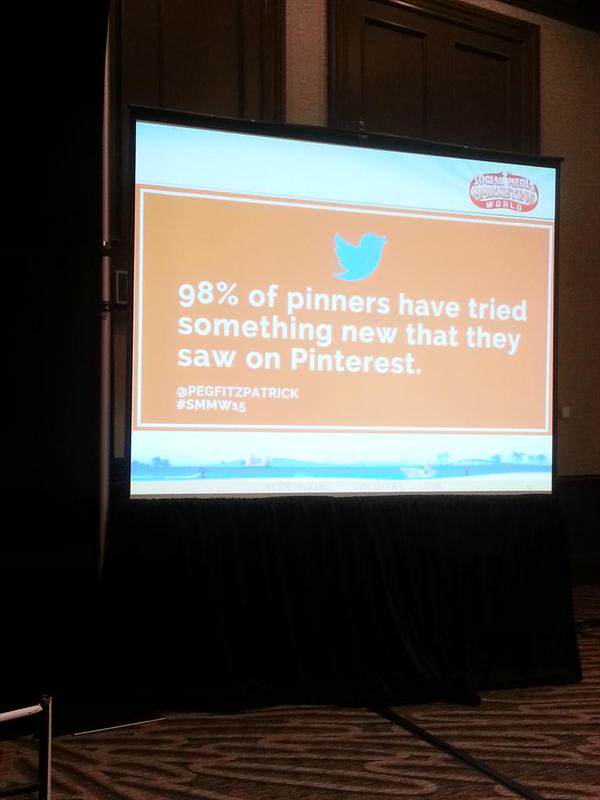
Such a case would be when a percentage is almost as complete as you can be.

Pinterest percentage

98% – I don’t care what your math expertise is, that’s an impressive number by anyone’s standards.?Especially when you take into account that Pinterest is sitting around the 50 million active users mark in the US.

So, of course, it’d be great to get a little more background to this stat.

The figure used in the slide from the image above is taken from the Pinterest Media Consumption Study created by US agency Ahalogy, whose goal is to make marketing on Pinterest easy for brands and content creators.

When you look at their study in depth, they describe their methodology.

The?Ahalogy 2014 Pinterest Media Consumption Study?surveyed?1,300 males and females ages 15+ across the United States?between February 26 and March 11, 2014. Of the 1,300 people?surveyed, 500 were active Pinterest users, meaning that they?use Pinterest at least once a month.

1,300 isn’t a bad number to offer a representation of the public for a survey, though maybe a small ratio for something with millions of users like Pinterest.

Of that 1,300, only 500 were active Pinterest users. 500. Which is just less than 38.5%. So, to the image from the Social Media Marketing World talk, it’s more like 98% of 38.5% try something new – a little less impressive (though still not a number to sneeze at).

[clickToTweet tweet=”We need to all be better, and push for the data beyond the insights. #data #marketing” quote=”We need to all be better, and push for the data beyond the insights.”]

But when you’re talking about 500 users as an indicative number, versus almost 40% of 45 million users, and that is then used as a statistic at a conference where it’s re-shared as an important statistic…. you can see where I’m going with this.

A percentage of a percentage of a percentage isn’t all that much of a percentage after all.

Quotes Are Great, But Insights Are Better

While sharing statistics and numbers makes for great soundbites, the data needs to be current and addressed (in all fairness, it may be that both Jay and Peg advised the audience of the background behind the tweets shared in this post).

If an audience is looking to take away knowledge from a speaker’s session, or an event, or a panel, etc., going away with two year old data, or numbers that don’t tell the whole story, isn’t going to cut it.

The insights given by an event’s speakers relate to the data they share. If the data isn’t relevant to today’s market, the insights lose a bit of weight, and tie into the whole eleventy billion mindset.

We need to all be better, and push for the data beyond the insights. It’s how we learn as people and grow as businesses. Big can be great; focused is usually much more effective.

Something to keep in mind, both as a speaker and an attendee, the next time you’re about to share a quotable statistic.

It’s Time to Push Back on the Growing Fluff of Influencer Metrics

Influence marketing metrics

The end-result of any good marketing effort is to identify, engage and nurture the most qualified prospects, ensuring the leads generated drive the highest customer acquisition rate; or at least it should be.

There?s been a backlash towards the marketing industry, marketing professionals and even some marketing software platforms because of what many see as their inability to measure the direct result of their efforts vis-?-vis the business? bottom line.

Marketing ? and social media in particular ? is often criticized for being a soft-science.

Critics point to exercises such as branding, community building and social engagement as examples of efforts that may raise awareness of the brand name but are rarely able to link directly to the specific sales or profits generated by those activities.

The need to measure the return on investment (ROI) of social media activities ? and by extension marketing ? has become a rallying cry of business executives and pundits alike.

Others claim that many modern social engagement programs are ineffectual due to their focus on short-term strategies instead of long-term value.

Influence, or Influential Fluff?

Here critics point to the trend in acquisition of simple measures of success such as followers, ?Likes? and shares, or even the use of social influence scoring platforms to identify brand advocates.

These short-cuts fall far short in identifying real influence, and instead drive poor and inaccurate results because they avoid the real work required to drive long-term business value and bottom-line results.

Criticisms aside, the practice of influence marketing must be re-strategized if it?s going to become an effective marketing tactic for businesses and gain the favour of executives that control marketing budgets.

The advent and use of social influence platforms where scores are the key metrics is not influence marketing. These platforms are a good exercise in product and brand amplification – but?true influence marketing is about measurable customer acquisition and lead conversion.

The practice of influence marketing needs to return to driving measurable sales instead of broad brand awareness. Our book, and this blog, will help your business drive that goal.

Stay tuned – it’s about to get interesting again.

Six Easy Metrics to Measure an Influence Marketing Campaign

Influence marketing metrics

Measurement is one of social media?s key advantages over traditional marketing and advertising.

Prior to social media?s rise as an essential business solution, marketing campaigns were primarily through print, media including TV and radio, and direct mail. The use of flyers, posters, billboards and print editorials were the staple method of promotion, often complemented with radio spots or television ads.

The main problem with these methods is that it was difficult to pinpoint which ones were working and driving foot traffic to a brick and mortar store.

  • If a business sent 10,000 flyers out, how could they guarantee their intended recipients saw all 10,000?
  • Or if a radio spot played during a certain time of day based on that radio station?s demographics, how could the brand be sure a certain percentage of that audience heard and acted on that ad?

The answer to both questions is simple ? they couldn?t. If there was increased foot traffic to a location or more calls to a call center for a company?s information pack, more often than not the source of that referral was virtually impossible to identify.

Social media changed that.

The ability to create extremely targeted campaigns, combined with platforms that measure which networks and content create the most return on investment, has made social media a key part of every smart business owner?s toolset.

This ability to measure business results is easily transferrable to measuring influencer results ? the difference is in what, and who, you measure.

Measuring the Brand Metric

There are two core metrics that brands need to measure in any influence marketing campaign. The first is the Brand Metric.

Investment

The investment metric is the pre-campaign cost of researching which influencers are right for you by identifying Micro and Macro Influencers; how much it costs to set the program up; and using that as a barometer against how much return (financial or awareness) you experienced.

Resources

The financial investment of an influencer campaign involves more than pure monetary costs. Resources like manpower (how many employees are needed and how many hours they need to allocate to the campaign) and education (how much time you need to allocate to train each influencer on your product and company culture) also need to be measured and added to the bigger financial investment.

Product

To encourage an influencer?s audience to connect with your brand from a lead generation or purchase decision angle, free samples of your product need to be made available to the audience as well as the influencer. Test or demo areas may also need to be set up for more technical-led products or software.

The cost to your company for the amount of products sent out, coupled with the hosting costs of the demo area online, need to be factored into the overall financial investment of the campaign.

Measuring the Influencer Metric

In addition to measuring the Brand Metric, the second key metric to track is the Influencer Metric, which can be broken down into three key areas.

Ratio

The biggest problem many brands have when it comes to results from social scoring platforms is the ?influencer? targeted is simply another number in a database with a large following and an amplified voice online. This lack of differentiation is guaranteed to provide poor returns.

Purchase life cycle paths

Instead, the ratio of community to followers is key ? a thriving, interactive community that reacts to an influencer is far more important than higher follower numbers. It?s these qualitative reactions that provide a higher propensity of actions taken by the influencer?s community.

Measure how many reactions an influencer is receiving when sharing your message as a percentage of their overall following to extract a more exact return on that specific influencer.

Sentiment

Every marketing campaign, whether online or offline, succeeds primarily for one main reason ? the perception of that campaign and the buy-in of the audience.

Using the same metrics to measure your influencer campaign will allow you to understand the sentiment around the brand message, and how the target audience perceives both your brand and the campaign itself. It also allows you to quickly identify areas that upset a certain demographic and amend the message accordingly, or instigate a crisis communication response if needed.

Additionally, you can see which influencer receives a favorable reaction and adoption, allowing you to increase awareness around him or her and helping improve the perception of a less well-received influencer.

Effect

The most valuable barometer to showing whether an influencer campaign has worked or not is the effect it has on your brand.

From a brand awareness point of view, measurement needs to include:

  • traffic generated to a website, microsite or landing page;
  • how many times your brand or product is mentioned online and how many people recognize your name when mentioned;
  • how many new fans or followers you accrue on the social networks your brand is on;
  • how many white papers or fact sheets were downloaded from your website;
  • and how many new subscribers you receive to your company blog or newsletter.

From a more dedicated business angle, it?s much more straightforward:

  • how many new inquiries did your inbound sales team receive;
  • how many referrals did your direct sales team receive;
  • and how many sales were directly attributed to your influencer?s work with their community.

Depending on your product or service, the purchase cycle of your customer may be a longer one than the duration of your campaign ? include a plan to continue measuring the effect of the initial influence campaign on this purchase path.

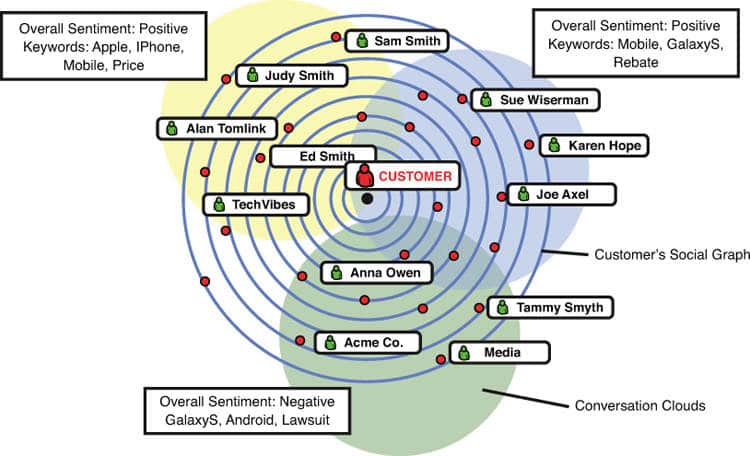
Customer influence and advocacyMoving Beyond the Metrics

While by no means exhaustive, both the Brand Metric and the Influencer Metric measurement examples are key parts of any kind of influencer campaign your brand partakes in. Each metric is a guideline to the core information that needs to be tracked in each example ? your own brand?s definition of additional metrics will be determined by the results you?re looking to achieve.

You may only be interested in awareness, in which case you?d place more emphasis on what platforms will show most return; what new platforms you can take advantage of; where your competitors are interacting online and how you can insert your brand into these conversations via your influencers.

If you?re more geared towards pure sales and lead generation, your outreach and subsequent measurement needs to be focused more on potential ecommerce partnerships with peers and colleagues of your influence; affiliate sales programs for your influencer?s community; strategic partnerships with other businesses in your industry who can benefit from increased exposure through your influencer while introducing you to their audience.

Either way, determining the end goal allows you to chart a path back from there and identify the milestones and metrics that matter for each one. Get this part right, and your influence campaign will move from being a nice to have to becoming an essential part of the puzzle.

image: antony_mayfield

Six Easy Metrics to Measure an Influence Marketing Campaign

Measure

Measurement is one of social media?s key advantages over traditional marketing and advertising.

Prior to social media?s rise as an essential business solution, marketing campaigns were primarily through print, media including TV and radio, and direct mail. The use of flyers, posters, billboards and print editorials were the staple method of promotion, often complemented with radio spots or television ads.

The main problem with these methods is that it was difficult to pinpoint which ones were working and driving foot traffic to a brick and mortar store.

  • If a business sent 10,000 flyers out, how could they guarantee their intended recipients saw all 10,000?
  • Or if a radio spot played during a certain time of day based on that radio station?s demographics, how could the brand be sure a certain percentage of that audience heard and acted on that ad?

The answer to both questions is simple ? they couldn?t. If there was increased foot traffic to a location or more calls to a call center for a company?s information pack, more often than not the source of that referral was virtually impossible to identify.

Social media changed that.

The ability to create extremely targeted campaigns, combined with platforms that measure which networks and content create the most return on investment, has made social media a key part of every smart business owner?s toolset.

This ability to measure business results is easily transferrable to measuring influencer results ? the difference is in what, and who, you measure.

Measuring the Brand Metric

There are two core metrics that brands need to measure in any influence marketing campaign. The first is the Brand Metric.

Investment

The investment metric is the pre-campaign cost of researching which influencers are right for you by identifying Micro and Macro Influencers; how much it costs to set the program up; and using that as a barometer against how much return (financial or awareness) you experienced.

Resources

The financial investment of an influencer campaign involves more than pure monetary costs. Resources like manpower (how many employees are needed and how many hours they need to allocate to the campaign) and education (how much time you need to allocate to train each influencer on your product and company culture) also need to be measured and added to the bigger financial investment.

Product

To encourage an influencer?s audience to connect with your brand from a lead generation or purchase decision angle, free samples of your product need to be made available to the audience as well as the influencer. Test or demo areas may also need to be set up for more technical-led products or software.

The cost to your company for the amount of products sent out, coupled with the hosting costs of the demo area online, need to be factored into the overall financial investment of the campaign.

Measuring the Influencer Metric

In addition to measuring the Brand Metric, the second key metric to track is the Influencer Metric, which can be broken down into three key areas.

Ratio

The biggest problem many brands have when it comes to results from social scoring platforms is the ?influencer? targeted is simply another number in a database with a large following and an amplified voice online. This lack of differentiation is guaranteed to provide poor returns.

Purchase life cycle paths

Instead, the ratio of community to followers is key ? a thriving, interactive community that reacts to an influencer is far more important than higher follower numbers. It?s these qualitative reactions that provide a higher propensity of actions taken by the influencer?s community.

Measure how many reactions an influencer is receiving when sharing your message as a percentage of their overall following to extract a more exact return on that specific influencer.

Sentiment

Every marketing campaign, whether online or offline, succeeds primarily for one main reason ? the perception of that campaign and the buy-in of the audience.

Using the same metrics to measure your influencer campaign will allow you to understand the sentiment around the brand message, and how the target audience perceives both your brand and the campaign itself. It also allows you to quickly identify areas that upset a certain demographic and amend the message accordingly, or instigate a crisis communication response if needed.

Additionally, you can see which influencer receives a favorable reaction and adoption, allowing you to increase awareness around him or her and helping improve the perception of a less well-received influencer.

Effect

The most valuable barometer to showing whether an influencer campaign has worked or not is the effect it has on your brand.

From a brand awareness point of view, measurement needs to include:

  • traffic generated to a website, microsite or landing page;
  • how many times your brand or product is mentioned online and how many people recognize your name when mentioned;
  • how many new fans or followers you accrue on the social networks your brand is on;
  • how many white papers or fact sheets were downloaded from your website;
  • and how many new subscribers you receive to your company blog or newsletter.

From a more dedicated business angle, it?s much more straightforward:

  • how many new inquiries did your inbound sales team receive;
  • how many referrals did your direct sales team receive;
  • and how many sales were directly attributed to your influencer?s work with their community.

Depending on your product or service, the purchase cycle of your customer may be a longer one than the duration of your campaign ? include a plan to continue measuring the effect of the initial influence campaign on this purchase path.

Moving Beyond the Metrics

While by no means exhaustive, both the Brand Metric and the Influencer Metric measurement examples are key parts of any kind of influencer campaign your brand partakes in. Each metric is a guideline to the core information that needs to be tracked in each example ? your own brand?s definition of additional metrics will be determined by the results you?re looking to achieve.

You may only be interested in awareness, in which case you?d place more emphasis on what platforms will show most return; what new platforms you can take advantage of; where your competitors are interacting online and how you can insert your brand into these conversations via your influencers.

If you?re more geared towards pure sales and lead generation, your outreach and subsequent measurement needs to be focused more on potential ecommerce partnerships with peers and colleagues of your influence; affiliate sales programs for your influencer?s community; strategic partnerships with other businesses in your industry who can benefit from increased exposure through your influencer while introducing you to their audience.

Either way, determining the end goal allows you to chart a path back from there and identify the milestones and metrics that matter for each one. Get this part right, and your influence campaign will move from being a nice to have to becoming an essential part of the puzzle.

image: antony_mayfield

  • Page 1
  • Page 2
  • Go to Next Page »
© 2026 Danny Brown - Made with ♥ on Genesis