• Skip to primary navigation
  • Skip to main content
Danny Brown

Danny Brown

podcaster - author - creator

  • About
  • Podcasts
  • Journal

klout

Why the Klout Sale is Bad News for Social Scoring, But Great News for Influence Marketing

Klout - meh

In the last couple of days, it was announced that social customer experience company Lithium Technologies would be acquiring social scoring platform Klout for a figure reputed to be around $100 million.

If the deal goes through, it’ll be the close of a five year journey for Klout since its inception – a journey that saw it initially praised as a conduit to determine online influence, and then berated for various missteps that included profiling minors, privacy concerns, and questions around its algorithm and whether it measured influence or simply social signals.

On first look, $100 million looks a great number for Klout, and validation of seeing through the criticism that’s plagued the service, especially in the last 12 months or so.

However, far from being a success story, the sale of Klout highlights its failings, and in more areas than simply the evaluation.

$100 Million Ain’t a Whole Can of Beans

For any start-up looking to be acquired, $100 million probably looks an attractive figure on face value. However, given the financial history of Klout, it’s closer to a loss than a win.

Take a look at their investment history:

  • Initial seed funding in 2009;
  • $ 1.5 million Series A funding in April 2010;
  • $8.5 million Series B funding in January 2011;
  • $30 million Series C funding in January 2012.

Just by these “standard” investment rounds, Klout had received $40 million in funding by the start of 2012, which saw the company valued between $200 – $300 million just a couple of short years ago.

Add to that venture round funding in September 2012 by Microsoft (to utilize Klout’s services in their Bing search engine), along with further venture round funding by Draper Nexus Ventures in August 2013, and it’s safe to say that a large chunk of the $100 million price from Lithium will be eaten up by investors looking for return on their earlier capital.

When you take away the minimum numbers that need to go back to the investors, the number that’s left – $60 million – doesn’t add up to a success story for Klout.

On average, a company that’s received $40 million in funding is usually expected to be valued around the $400 – $500 million mark.

Look at Foursquare as an example – before their recent Series D investment round that brought in another $35 million, Foursquare had been valued at $600 million, with investment total of approximately $72 million.

Given that Klout’s investment of $40 million is just over half the Foursquare amount, it stands to reason you’d expect the overall valuation to stand at just over half of Foursquare’s $600 million – yet that isn’t the case, despite Klout claiming to have data on 500 million profiles, versus Foursquare’s 45 million users.

Yet it’s these physical numbers that highlight the low dollar numbers when it comes to Klout.

Physical Users Versus Fabricated Users

One of the biggest criticisms leveraged against Klout has been their method of forcing “users’ to opt-out of their service, versus opting in to be profiled. Klout’s method of operation was to create a profile of you on the Klout database, based on your public Twitter profile – but it didn’t matter whether you liked this or not, you had no choice in the matter.

When questioned on why they used opt-out versus opt-in, Klout’s response was their practice was no different from Google indexing websites via their platform. Except… people that wanted to be found on Google opted-in to be indexable. People that didn’t want to be found on Klout had to essentially log in to the Klout platform to delete a profile that had been created, that the person never wanted or agreed to in the first place.

While Klout would never admit to it, this opt-out practice was viewed by cynics as a way to buffer user numbers. It didn’t matter if people knew they had a Klout profile or not – all that mattered was Klout could sell their service to brands and advertisers as “500 million profiles”.

About Klout

Yet there’s a big difference between a profile and an active user. Whereas Foursquare’s 45 million users are active, and therefore valuable to marketers looking to understand shopping behaviours, etc, Klout’s profiles included bots, automated accounts, multiple accounts set up for news feeds only, etc.

You can have 500 million “users” to sell to a potential advertiser – but if only a limited percentage of these users are real people actively offering up useful data, then your service is immediately devalued.

A Lack of Future Strategy

Perhaps where Klout failed most, and in turn lost a lot of the previous evaluation of a few hundred million dollars, is failing to adapt their platform to not only the “influence” industry they in part created, but meeting user needs and reacting to an ever-changing, and more demanding, content-led space.

Klout’s raison d’etre has always been to determine how influential someone is online, and allocate them a score between 1 and 100 – the higher the score, the more influential the person. At least, in theory.

However, the problem with any generic scoring solution – no matter how technical you claim the algorithm to be – is that scores can be gamed, and they don’t reflect the bigger picture.

Even in the early days of Klout being seen as a darling of the nascent social influence space, its algorithms were pulled apart in spectacular fashion when Justin Bieber had a perfect score of 100, while President Obama – arguably the most powerful person in the world – had a score of 88, while the Dalai Lama scored at 90.

As a result of the criticism they received about this, Klout updated their algorithm to show more real-world influence as having a bigger impact. Yet they resolutely continued to use scoring as a measure of influence, despite the flaws that strategy continued to show and despite their peers moving away from the public scoring game.

This lack of innovation and fresh direction was highlighted even more when compared to products like Traackr, who came out with solutions like their Influencer Network Analysis.
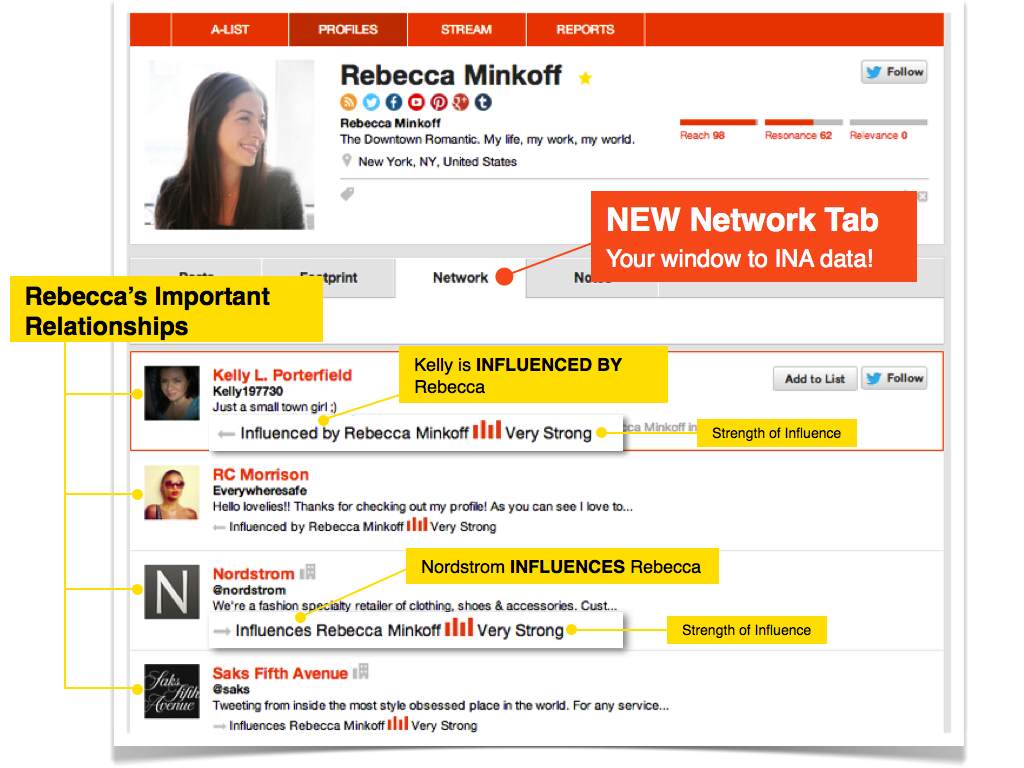
Traackr Influencer Network Analysis

This allowed users of Traackr to not only see who was influential based on real metrics like Relevance and Resonance, but also who essentially influenced the influencers – an added depth of identification that really laser-targeted the people you wanted to connect with.

Or consider Appinions, who measure offline influence as well as online influence, to offer a full spectrum of data and insights. This includes identifying the originating source of something that’s impacted discussion across the web, and how offline news stories and journalists drive online conversation and actions.

When comparing Klout’s social scoring algorithm as a measure of influence against real influence platforms that drive the insights needed for business goals, it was always going to be an uphill battle for Klout to be taken seriously as an influence marketing platform.

And then there were the Perks.

The ROI of Reach and Noise

Touted as a way to connect brands to the army of influencers in Klout’s database, Klout Perks were introduced in 2010 and were seen as one of Klout’s business models to monetize their platform.

Advertisers and brands would pay Klout a premium, which would differ based on the target audience and size of the promotion, and Klout would offer that brand’s product as a freebie to people who qualified based on their Klout score.

The problem was, there was no real relevance or context to the Perks. All that would happen is Klout would identify a bunch of people they perceived as influential in the brand partner’s niche, and – by giving them freebies like car test drives and airline trips – the Klout influencers would share their experiences and drive sales for the brand.

Klout Perks

Except that never really happened – or at least, not in the numbers that the brands probably expected, given the investments and amount of influencers promoting the brand’s goods.

The reason was simple – Klout didn’t dig deep enough into the audience of the influencer. They didn’t know if the followers of an influencer were in the market for the product being promoted; they didn’t know if they had brand loyalty elsewhere; and they didn’t know how contextual the influencer truly was in the area of the promotion.

This meant that, essentially, the Klout influencer was simply promoting without any knowledge of where their audience was in the purchase life cycle – a key factor in successful influence marketing campaigns (and something Sam Fiorella and I talk about extensively in our Influence Marketing book).

When you look at the public case studies Klout shares about their Perks, very few talk about tangible financial ROI. There are lots of examples of social shares, blog posts, etc., which is great for brand awareness. But for actual ROI and sales? Little evidence of success.

For brands that are spending upwards of $25,000 and more on Klout Perks, you want to see returns for your investment. The occasional example of ROI success after at least 400 campaigns and 1 million Perks being claimed is not a number designed to inspire confidence when it comes to breaking down your latest fiscal year’s marketing budget.

Klout’s Failure is Good News for REAL Influence

As I mentioned at the start of this post, $100 million isn’t chump change. However, given the financial history of Klout investment-wise, its business model of Perks, and its uncertainty as to what exactly it wanted to be (a recent pivot to a content curation platform seems too little, too late), you have to wonder what Lithium saw in the platform.

Perhaps it’s to identify influential customers (since Lithium serves the social customer industry), so that their issues can be resolved before they become an online crisis. However, that path could be fraught with negative feedback if customers feel they’re being ignored in lieu of “influencer customers”.

Perhaps it’s access to the data that Klout has. While there’s no question some of the data is for inactive accounts, there’s still a lot of information available for Lithium to integrate into its own solutions.

However, that’s for a future discussion once Lithium’s plans become clear. What’s clear right now is that Klout’s failure is a victory for real influence marketing technologies and strategies.

Social scoring was always a popularity game, with little relevance attached to actual influence – swaying a customer’s purchase decision at exactly the moment they make it – and more weight on social signals and amplification.

Now, with the flag-bearer of social scoring acquiescing to what almost looks like a desperation sale, the companies that are truly pushing the influence conversation forward can do what they do best, and meet the needs of brands and marketers that are looking for more than social shares when it comes to an influencer campaign.

Social scoring is dead – long live influence.

image: Jamie Koroluk

This article originally appeared on DannyBrown.me.

Why The Lithium Deal Highlights Klout’s Failings, But Is Good News for Influence Marketing

In the last couple of days, it was announced that social customer experience company Lithium Technologies would be acquiring social scoring platform Klout for a figure reputed to be around $100 million.

If the deal goes through, it’ll be the close of a five year journey for Klout since its inception – a journey that saw it initially praised as a conduit to determine online influence, and then berated for various missteps that included profiling minors, privacy concerns, and questions around its algorithm and whether it measured influence or simply social signals.

On first look, $100 million looks a great number for Klout, and validation of seeing through the criticism that’s plagued the service, especially in the last 12 months or so.

However, far from being a success story, the sale of Klout highlights its failings, and in more areas than simply the evaluation.

$100 Million Ain’t a Whole Can of Beans

For any start-up looking to be acquired, $100 million probably looks an attractive figure on face value. However, given the financial history of Klout, it’s closer to a loss than a win.

Take a look at their investment history:

  • Initial seed funding in 2009;
  • $ 1.5 million Series A funding in April 2010;
  • $8.5 million Series B funding in January 2011;
  • $30 million Series C funding in January 2012.

Just by these “standard” investment rounds, Klout had received $40 million in funding by the start of 2012, which saw the company valued between $200 – $300 million just a couple of short years ago.

Add to that venture round funding in September 2012 by Microsoft (to utilize Klout’s services in their Bing search engine), along with further venture round funding by Draper Nexus Ventures in August 2013, and it’s safe to say that a large chunk of the $100 million price from Lithium will be eaten up by investors looking for return on their earlier capital.

When you take away the minimum numbers that need to go back to the investors, the number that’s left – $60 million – doesn’t add up to a success story for Klout.

On average, a company that’s received $40 million in funding is usually expected to be valued around the $400 – $500 million mark.

Look at Foursquare as an example – before their recent Series D investment round that brought in another $35 million, Foursquare had been valued at $600 million, with investment total of approximately $72 million.

Given that Klout’s investment of $40 million is just over half the Foursquare amount, it stands to reason you’d expect the overall valuation to stand at just over half of Foursquare’s $600 million – yet that isn’t the case, despite Klout claiming to have data on 500 million profiles, versus Foursquare’s 45 million users.

Yet it’s these physical numbers that highlight the low dollar numbers when it comes to Klout.

Physical Users Versus Fabricated Users

One of the biggest criticisms leveraged against Klout has been their method of forcing “users’ to opt-out of their service, versus opting in to be profiled. Klout’s method of operation was to create a profile of you on the Klout database, based on your public Twitter profile – but it didn’t matter whether you liked this or not, you had no choice in the matter.

When questioned on why they used opt-out versus opt-in, Klout’s response was their practice was no different from Google indexing websites via their platform. Except… people that wanted to be found on Google opted-in to be indexable. People that didn’t want to be found on Klout had to essentially log in to the Klout platform to delete a profile that had been created, that the person never wanted or agreed to in the first place.

While Klout would never admit to it, this opt-out practice was viewed by cynics as a way to buffer user numbers. It didn’t matter if people knew they had a Klout profile or not – all that mattered was Klout could sell their service to brands and advertisers as “500 million profiles”.

About Klout

Yet there’s a big difference between a profile and an active user. Whereas Foursquare’s 45 million users are active, and therefore valuable to marketers looking to understand shopping behaviours, etc, Klout’s profiles included bots, automated accounts, multiple accounts set up for news feeds only, etc.

You can have 500 million “users” to sell to a potential advertiser – but if only a limited percentage of these users are real people actively offering up useful data, then your service is immediately devalued.

A Lack of Future Strategy

Perhaps where Klout failed most, and in turn lost a lot of the previous evaluation of a few hundred million dollars, is failing to adapt their platform to not only the “influence” industry they in part created, but meeting user needs and reacting to an ever-changing, and more demanding, content-led space.

Klout’s raison d’etre has always been to determine how influential someone is online, and allocate them a score between 1 and 100 – the higher the score, the more influential the person. At least, in theory.

However, the problem with any generic scoring solution – no matter how technical you claim the algorithm to be – is that scores can be gamed, and they don’t reflect the bigger picture.

Even in the early days of Klout being seen as a darling of the nascent social influence space, its algorithms were pulled apart in spectacular fashion when Justin Bieber had a perfect score of 100, while President Obama – arguably the most powerful person in the world – had a score of 88, while the Dalai Lama scored at 90.

As a result of the criticism they received about this, Klout updated their algorithm to show more real-world influence as having a bigger impact. Yet they resolutely continued to use scoring as a measure of influence, despite the flaws that strategy continued to show and despite their peers moving away from the public scoring game.

This lack of innovation and fresh direction was highlighted even more when compared to products like Traackr, who came out with solutions like their Influencer Network Analysis.

Traackr Influencer Network Analysis

This allowed users of Traackr to not only see who was influential based on real metrics like Relevance and Resonance, but also who essentially influenced the influencers – an added depth of identification that really laser-targeted the people you wanted to connect with.

Or consider Appinions, who measure offline influence as well as online influence, to offer a full spectrum of data and insights. This includes identifying the originating source of something that’s impacted discussion across the web, and how offline news stories and journalists drive online conversation and actions.

When comparing Klout’s social scoring algorithm as a measure of influence against real influence platforms that drive the insights needed for business goals, it was always going to be an uphill battle for Klout to be taken seriously as an influence marketing platform.

And then there were the Perks.

The ROI of Reach and Noise

Touted as a way to connect brands to the army of influencers in Klout’s database, Klout Perks were introduced in 2010 and were seen as one of Klout’s business models to monetize their platform.

Advertisers and brands would pay Klout a premium, which would differ based on the target audience and size of the promotion, and Klout would offer that brand’s product as a freebie to people who qualified based on their Klout score.

The problem was, there was no real relevance or context to the Perks. All that would happen is Klout would identify a bunch of people they perceived as influential in the brand partner’s niche, and – by giving them freebies like car test drives and airline trips – the Klout influencers would share their experiences and drive sales for the brand.

Klout Perks

Except that never really happened – or at least, not in the numbers that the brands probably expected, given the investments and amount of influencers promoting the brand’s goods.

The reason was simple – Klout didn’t dig deep enough into the audience of the influencer. They didn’t know if the followers of an influencer were in the market for the product being promoted; they didn’t know if they had brand loyalty elsewhere; and they didn’t know how contextual the influencer truly was in the area of the promotion.

This meant that, essentially, the Klout influencer was simply promoting without any knowledge of where their audience was in the purchase life cycle – a key factor in successful influence marketing campaigns (and something Sam Fiorella and I talk about extensively in our Influence Marketing book).

When you look at the public case studies Klout shares about their Perks, very few talk about tangible financial ROI. There are lots of examples of social shares, blog posts, etc., which is great for brand awareness. But for actual ROI and sales? Little evidence of success.

For brands that are spending upwards of $25,000 and more on Klout Perks, you want to see returns for your investment. The occasional example of ROI success after at least 400 campaigns and 1 million Perks being claimed is not a number designed to inspire confidence when it comes to breaking down your latest fiscal year’s marketing budget.

Klout’s Failure is Good News for REAL Influence

As I mentioned at the start of this post, $100 million isn’t chump change. However, given the financial history of Klout investment-wise, its business model of Perks, and its uncertainty as to what exactly it wanted to be (a recent pivot to a content curation platform seems too little, too late), you have to wonder what Lithium saw in the platform.

Perhaps it’s to identify influential customers (since Lithium serves the social customer industry), so that their issues can be resolved before they become an online crisis. However, that path could be fraught with negative feedback if customers feel they’re being ignored in lieu of “influencer customers”.

Perhaps it’s access to the data that Klout has. While there’s no question some of the data is for inactive accounts, there’s still a lot of information available for Lithium to integrate into its own solutions.

However, that’s for a future discussion once Lithium’s plans become clear. What’s clear right now is that Klout’s failure is a victory for real influence marketing technologies and strategies.

Social scoring was always a popularity game, with little relevance attached to actual influence – swaying a customer’s purchase decision at exactly the moment they make it – and more weight on social signals and amplification.

Now, with the flag-bearer of social scoring acquiescing to what almost looks like a desperation sale, the companies that are truly pushing the influence conversation forward can do what they do best, and meet the needs of brands and marketers that are looking for more than social shares when it comes to an influencer campaign.

Social scoring is dead – long live influence.

Update March 31: The Klout/Lithium deal has been signed off, valuing the company at $200 million in a mix of cash and shares in Lithium.

image: Jamie Koroluk

If @Klout is Fixed, Why Are They Profiling an 11-Year Old Kid?

Klout and minors

Klout and minors

Two days ago, social influence tool Klout published a blog post on how they had updated their algorithms to answer critics of their service.

From the post:

Today, we?re introducing some of the most significant product updates in Klout?s history. With these updates, we?ve concentrated on helping everyone to gain a clearer, more accurate understanding of how they influence other people through the ideas they share.

As part of the update, Klout promises “increased accuracy”. Which is great, as this is one of the core complaints about the service. They also promise more transparency, more data, real-world influence. And a shiny new site design…

However, one glaring omission from the post is the question of Klout and privacy.

There have been numerous posts written about Klout’s policy of creating profiles without the explicit permission of users, and the fact you have to opt out of the service if you don’t want profiled.

Worse still, though, was the discovery that minors under the age of 18 were being profiled by Klout, from something as innocuous as being connected to their parent on Facebook.

Due to the backlash against this practice from numerous bloggers, Klout CEO Joe Fernandez came out and stated “Klout has no interest in profiling minors”.

So, why does the Klout website have a profile for an 11 year old kid (click to expand)?

Klout Influence Report 11 year old

This is the son of a friend of mine, Jennifer, who brought it to my attention that both her kids were being profiled by Klout. Her son is the 11 year old pictured here, and her daughter is 14 later this year.

Both profiles are clearly there for all to see. Not only that, but her daughter’s profile on Klout shows who she influences. One is her brother, the other is her friend – also 14.

Klout Influence Report 14 year old

Jennifer spoke with both her kids, and neither of them even know what Klout is, never mind that they have a profile on there.

So, despite all the questions about privacy and minors, and despite Klout’s statements that this would be fixed, it’s clear the company is still adding profiles of children that fall under Klout’s own privacy terms.

Klout Privacy Policy

These terms have actually been updated, since it was previously under-18’s that weren’t “allowed” on Klout. Even so, is it really fair for any company to take a kid’s details and parade them on a site where numbers attract advertisers?

And while Klout advises parents to monitor their kids’ online activities, it’s hard to do this when you have to be logged into Klout to see your kids (if you opt out, you get redirected to a Facebook or Twitter sign-in page).

Now, it could be said that the kid shouldn’t be on Twitter (and thus, Klout) in the first place, since he’s under 13 years old. But as we move towards a more online world, kids are going to go online anyway – the best approach for many parents, and one that they’re taking, is to help guide them on the way.

With that in mind, isn’t it about time Klout quit adding profiles on an opt-out basis, and only has people on there who have voluntarily opted in? Maybe then parents wouldn’t have to worry about their kids being taken advantage of in this way.

Heck, there’s already enough online pitfalls to try and keep our kids safe from without a social score to worry about…

  • Update: The 11 year old also has a profile on Klout competitor Kred, despite their Terms of Service stating it’s for 13 years and older – more reasons for the opt-in process to be standard.
  • Update: Following an email from the 11 year old’s mother, Kred has made her kids’ pages on Kred inaccessible.

    Kred and minors

A Very Short Message to the Idiots at Klout

Klout bullshit

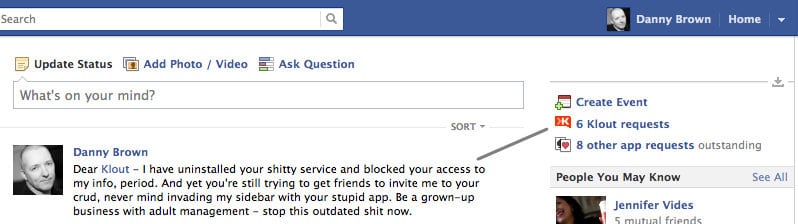
Dear Klout – I have uninstalled your service and blocked your access to my info, period. And yet you’re still trying to get friends to invite me to your crud, never mind invading my sidebar with your stupid app. Please – be a grown-up business with adult management – stop this outdated approach now.

Note: I’m posting this out of frustration, but truth be told, I don’t expect anything to change. After all, why change something when you have so many people buying into it, no matter how invasive your approach..?

Is Klout Using Our Family to Violate Our Privacy?

Klout and privacy

Klout and privacy

First, apologies to anyone suffering Klout burnout here – but sometimes a topic has more than just a simple viewpoint. Especially when that topic is something like online privacy. And that privacy has (potentially) been broken by Klout.

I was on Facebook today, and my friend Tonia Ries?asked about Klout’s ability to make profiles, when users haven’t connected their details with the service. I pointed her to the response from Megan Berry, Klout’s marketing manager, where she says if we don’t want to be tracked, then to make our social feeds private.

Even though I feel having to make your social feeds private to stop any service from accessing it is commercial suicide, especially for a business whose primary custom is online, at least there was an option to stop Klout from grabbing your information.

At least, until Tonia pointed out the example of her son.

He isn’t on Twitter, and he’s not super active on Facebook. He hasn’t given Klout permission to access his account, and he has his Facebook privacy settings at private. Just like Megan advises.

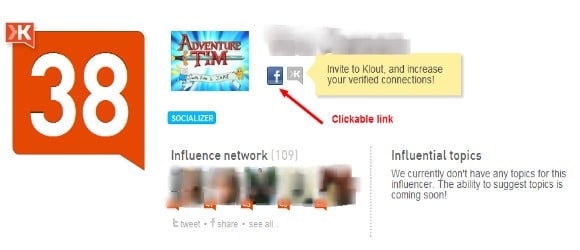
And yet here he is on Klout, with a profile and score of 38. However, that’s not the issue. The bigger issue is this. As you can see from the image (which I’ve blurred to protect his identity), you can clearly see that his Facebook icon is a live one (i.e., not shaded out), which means people can visit his Klout profile and be taken to his very private Facebook profile by clicking the Facebook icon.

Klout Influence Report

So, a private Facebook profile with no access allowed to Klout is now on their system and, worse still, allowing any public visitor to Klout to be taken directly to Tonia’s son’s private Facebook account?

Doesn’t something smell incredibly rotten here?

When looking into the issue more, Tonia mentions that her son commented on her Facebook wall about something. Tonia’s account is public – so does that mean Klout has activated an account for Tonia’s son, based on her being an “influencer” of her own son? All from one single wall post?

Sorry, Klout, but if that’s the case, that’s bullshit, and you’re treading on very slippery ground.

If you’re going to activate accounts for people who have their feeds set to private, and justify it by saying, “But they spoke to someone who has a public account”, that’s crap. That’s like saying, “Well, we’re going to telemarket call your son’s private phone number because we overheard you asking for his new number on your public phone.”

Seriously, Klout?

So, a word of warning to everyone. Your friends and family, who have absolutely no interest in social media, may be getting hawked as an active contributor to the Klout userbase, whether they have a private account or not, simply through their interactions with you.

Something to keep in mind when hooking up your own information to something like Klout….

Updates:
~ Check out Tonia’s own take on the issue in this post?at The Realtime Report.
~ Check out Brian Carter’s take on this post over at All Facebook.
~ Marian Heath from Facebook Safety has advised they are investigating Klout to make sure they’re complying with Facebook’s Privacy Terms.
~ Fernando Fonseca has posted instructions on how to be completely removed from Klout legally.
~ Jure Klepic has published a great resource on how to get completely disconnected from Klout.
~ Update: As of November 1st 2011, you can now delete your Klout account.?

  • Page 1
  • Page 2
  • Go to Next Page »
© 2026 Danny Brown - Made with ♥ on Genesis