• Skip to primary navigation
  • Skip to main content
Danny Brown

Danny Brown

podcaster - author - creator

  • About
  • Podcasts
  • Journal

Archives for 2012

Creating a Corporate Blog People Want to Read

Corporate blogging

Corporate blogging

While many of the tips on blog resource sites concentrate on ?personal blogging?, many can be transferred to a more business-minded blog.

Yet what about corporate blogs, where many of the tips given might not apply, or come up against everyone?s favourite, the?Red Tape Roadblock?

Can generic tips apply to more organizational blogs?

Yes and no ? depending on the company in question, and their willingness to experiment. Here are some ideas for those that might be willing to look at how their organization could use a blog.

Work Around the Legal Blocks

One of the biggest complaints I hear about blogs for organizations and enterprise is that the number of legal hoops they have to go through, just to get a post approved, means it?s not worthwhile to pursue.

By the time the approval comes, it?s too late to miss a hot time for a particular story, or opportunity. Fair enough ? but if you?re missing out on a lead generation or business opportunity because legal is syphoning you, perhaps you have bigger company issues than jumping on a trend?

Organizations don?t always need to write things where legal minefields are visible. There are way more things to write about, that can receive instantaneous approval (if any is needed). These could include:

  • Loyal customer or preferred client showcase / thank-you.
  • Highlighting your great team.
  • How your company came into existence.
  • Cool innovations in your market that aren?t necessarily from you.

These are just some suggestions, but each offer a way to have continuous content without waiting for a dozen rounds of approval.

Use Video and Education

People are visual creatures. We like to see things, as opposed to just reading about them. So why do so many businesses not use video as part of their blogging strategy?

The great thing with video is that you don?t even need to have someone in front of the camera (although offering a face to the company is always a great way of humanizing it).

Video also makes it easy to offer an educational portion to your blog ? how to use your online purchasing system, for example, or how to put together one of your products, as opposed to a fifty page manual.

The opportunities with video blogging for businesses is huge, and it doesn?t even have to be top-notch production. You can get a great set-up ? camera, tripod, external mics, etc ? for under $1,000, which in the grand scheme of things isn?t that much.

Allow Honesty

The reason social media is so popular with customers is because it allows a greater connection between them and the brands they choose to connect with.

Connect well, and the potential for lead generation and sales ? as well as brand loyalty ? is palpable.

Another reason social media is so popular is one word ? honesty. There?s nowhere to hide online, and this is encouraging businesses to be better at how they deal with customer queries, issues and more.

Blogging?s just another facet of social media ? so use it as such, and try and be honest in your blogging.

  • Use it to admit to mistakes made by your company and how you aim to rectify.
  • Correct false news stories and present the facts to back your point(s) up.
  • Use everyday grammar as opposed to techy business talk, or creative talk (unless that?s specifically your audience).
  • Accept criticism of posts, and reply professionally and honestly, accepting the critiques if they?re valid.

Again, these are just some of the ways you can make your corporate blog more interesting.

You could also share examples of how you help in the community; or support local charities; or encourage guest posts from your customers about their experience with you (although this may come under legal, for obvious reasons).

The point is, there?s a lot you can do with a corporate blog to stop it being just another dull news site. And you might just be pleasantly surprised how well your customers ? existing and potential ? respond to a non-dull approach.

How about you? If you?re a corporate blogger, what have you found that works? Or, if you?re a reader, what would you like to see more of in a corporate blog?

image:?maxymedia

How to Get More Blog Readers By Having Your Content Syndicated

For most (if not all) bloggers, one of the key metrics on how their blog has grown comes from how many readers it has.

These don?t necessarily have to be subscribers, either, although I?m a fan of subscribers being more a metric than readers for success, since these are folks that are investing their inboxes with you. But I digress?

But as any blogger knows, wanting more readers and getting more readers can be two wildly separate entities. It?s a big blogging world out there, and people can be sparing with their time and where to invest it.

The good news is, there is a way you can attract more readers to your blog, and that?s through content syndication. The bad news, you may have to give up some control. So what are the benefits and how do you get syndicated?

A Quick Introduction to Content Syndication

Before we look at how you can get your blog in front of the eyes of more readers, let?s just take a quick look at what content syndication means. The easiest way to compare it is to local news journalists and major newsrooms.

For most local journalists, your stories are mainly read by the local township. There?s nothing wrong with this, and it?s a solid enough career. However, now and again you might write a human interest story that gets picked up by the nationals, and your piece is quoted in the New York Times or on CNN.

That kind of exposure can lead to bigger gigs and paychecks, as you?re approached to provide stories (or images) for these bigger outlets, as well as your local publication where it all started. This is the journalism version of content syndication.

Now, take that back to your blog. That?s the local publication, and the bigger newsrooms might be Mashable, or ReadWriteWeb, or Techcrunch, or Technorati ? basically, anywhere that might be in your niche but has an audience hundreds of thousands of times bigger than yours.

If you could get your content into their feeds, then the sky is the limit to where you can go as a blogger. So how do you get out there, and what are the best options for you?

The Do-It-Yourself Guide to Content Syndication

The simplest way to have your content syndicated is to do it yourself.

Yes, it?s also the most time-consuming, as you have to do all the legwork and find the sites in your niche that accept blog feeds to be shared. But until you have the good fortune to be noticed by other websites for your blog content, getting yourself out there in syndication land is the only way to go for now.

To help you make this process a little quicker, here are some of the best (and most widely-read) syndication sites and options currently out there, regardless of your blog?s niche:

  • Alltop: Although Alltop gets a lot of stick from many people, it can still act as a great library of blogs and bloggers. With a complete A-Z of topics and syndication as easy as submitting your blog details, it?s a great way to get your blog in front of a new set of readers.
  • Networked Blogs: Primarily a great way to share your blog posts on Facebook, Networked Blogs also has a library of blog topics to submit your blog to. The cool thing about Networked Blogs is if you can get enough of your Facebook friends and colleagues to follow your blog via their Facebook app, you can rise to the top of the topic list and get even more readers.
  • Scribnia: From my friend David Spinks, Scribnia has become a great resource for finding quality new blogs due to their voting system. People can show their approval (or disapproval, so make sure your quality is good!) of your blog with a vote and description and, like Networked Blogs, this helps you rise in the ranks until your content is in front of thousands. Again, submitting your blog is straightforward.

These are just three options you can begin submitting your content to for syndication. There are more (and this is where ), but I chose these for the width of topics and audience size.

As a way of potentially growing your readership, syndication offers the best ?bang for your buck? when it comes to the number of new readers you could attract. However, it does have some downsides.

I Get a Whole Bunch of New Readers ? So What?s the Problem?

While syndication can get you new readers, by its very nature it can also be a limited amount of new readers. If you take a look at the three options I highlighted above, you?ll see that there are hundreds (thousands) of other bloggers syndicated there too.

So, to make sure your blog stands out, you have to know how to best use each network for promotion. A widget on your blog (Alltop, Networked Blogs and Scribnia all offer this) is a start. As is adding the syndicated feed to your email signature, or other online destinations.

Additionally, syndication often means losing control of your content. For instance, instead of people sharing your blog post on Twitter, Facebook, etc, they share the syndicated feed. So, your work is read but readers still aren?t necessarily coming to your site versus the syndicated one.

Just a couple of things to keep in mind before going down the syndication route. There?s no doubt it can work ? just make sure you?re ready to do the work to make it work.

Then again, isn?t that how all blogging growth really happens?

This post originally appeared on For Bloggers By Bloggers. For more blogging tips on how to grow your blog, you can subscribe here.

image: Google Libraries

It Isn’t Always the Brands to Blame for Social Media Screw Ups

Blame someone else

Blame someone else

If you follow any?brand news in social media, you’re probably aware of the criticism Toyota has been receiving over its Superbowl Twitter campaign.

If you haven’t heard about it, Toyota wanted to promote its new Camry range, so it started numerous Twitter accounts to send tweets to people about the car.

Now, there’s no doubt that having multiple accounts sending out random messages into hashtag conversations is spam. Heck, I’ve written about that here before, and it’s always a big no-no in any of our campaigns at Jugnoo.

It’s pre-Permission Marketing at its worst. And yet…

I can’t help but feel that we’re blaming the wrong people. While Toyota’s team may have been the ones behind the campaign, generally for brands that size it’s an external agency that handles promotions like this.

Sure, Toyota would have had to have signed off on the proposal, but at the end of the day, the expertise and best practices lie with the agency.

I’ve worked on accounts for Ford Canada, RIM, LG and more, and while these companies took the plaudits for the success of their campaigns, it was the agency that conceived, conceptualized and implemented – not the brand itself.

Because of the nature of the client/vendor relationship, it’s very rare that the talent behind a campaign is publicly acknowledged. And that’s how it should be, because you’re generally on a contractual status, nothing more.

So before we start shooting brands for a faux pas (perceived or actual), let’s just take a minute and be sure who the blame should be targeted at, before we scare away brands altogether when we should be encouraging them to be more active.

It’s the only way we’ll truly encourage brands to continue to experiment, and be where their customers increasingly are. And we all win when that happens…

Something Old, Something New, Something Blue

Salem McKellan Brown

Salem McKellan Brown

Hey there! So I really wanted to add the Something Borrowed option too, but couldn’t think of anything, so the three in the title will have to do. So…

It’s been a little quiet here last week, since Kevin Green’s great guest post about LinkedIn (and if you haven’t read it yet, you’re missing a great ongoing discussion in the comments). But there’s a good reason for that, which is where the Something New and Something Old part comes in. And yes, I’m the something old part in the image at the start of this post…

Last Thursday, February 2nd at 11.52am, my wife Jacki gave birth to our second child, this time a daughter to join her brother Ewan, who showed his excitement at the news by offering back-up vocals to his favourite Thomas the Tank song.

[youtube]http://www.youtube.com/watch?v=g1tLP0KKeu8[/youtube].

Salem McKellan Brown weighed in at 6lbs and 15oz, and both mama and daughter are well (they came home on Saturday morning). She’s a cute little tyke, and very wriggly – fun when it comes to diaper time!

So, obviously, my energies have been elsewhere. Normal service will be resumed shortly. In the meantime, you can hop over to Sarah Robinson’s blog where I guest as part of her 28 Days… series. This month, she’s looking at how you can encourage fierce loyalty from your community.

My post is titled If You Want Fierce Loyalty, You Need to Be Fiercely Loyal First. I kind of cuss a few times and talk about dog poo. Hence the Something Blue reference. Check it out if you have time, and make sure to check the rest of the series out too, there are some wicked smart people in it.

Cheers, have a great week and see you soon!

If LinkedIn.com Fails in the Social Network Forest, Will It Make a Sound?

Social network popularity

This is a guest post by Kevin Green.

Would anyone be really upset if LinkedIn?s .com destination up and disappeared tomorrow?

It?s safe to assume that recruiters scouring the site for new talent and current shareholders would be pretty peeved, even if the stock (LNKD) is trading at half price from the IPO.?But how would the lack of an online destination really impact everyday users?

Users that are tethered to their mobile phones and enamored by the promise of applications, innovation and integration?

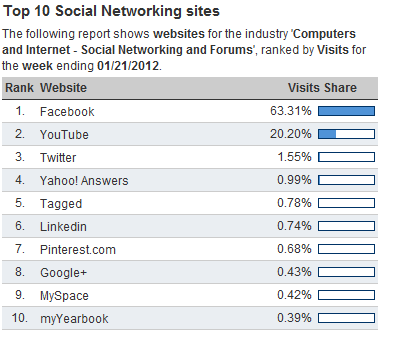
Of the top 10 most trafficked social networking sites, LinkedIn is a bit of an anomaly.?Its success is not dependent on status updates, games or rich media content, but on connecting individuals around professional interests and capabilities.

Even with 135 million registered users, LinkedIn has (not surprisingly) had difficulty keeping the attention of its user base ? with members spending an average of only8 minutes per visit (source: Google DoubleClick Ad Planner).

Compare that to the new social media darling, Pinterest.com. Traffic to Pinterest has grown a whopping 40% in the last 6 months ? and its 13 Million users are spending an average time spent of 15 minutes and 40 seconds on the site ? nearly double time spent on LinkedIn.com.

With numbers like these you can?t help but wonder how LinkedIn will compete for mindshare when interest-based social networks are cropping up everywhere and stealing bigger pieces of the consumer engagement pie?

Social network popularity

If I was Reid Hoffman, I?d A) ? be a lot wealthier, and B) ? try a new approach that liberated LinkedIn from its .com chains, and focus more on applications and integration.

From a pure functionality standpoint, the standalone LinkedIn.com destination doesn?t offer anything that can?t be found or easily deployed within Facebook or Google+.? However, as a brand, LinkedIn has established a lot of credibility with business professionals around the world and has become the de facto standard in online CVs.

But there is only so long LinkedIn can maintain that credibility without innovating to better meet user needs ? because it?s only a matter of time before someone does ?LinkedIn? better.

Opportunities and Competitive Challenges

Facebook?s Open Graph applications present an interesting opportunity and risk for LinkedIn.

Of the initial 80+ applications within the Timeline Apps catalogue, Monster Worldwide managed to squeeze in the LinkedIn competitor Branch Out. Although the application struggled initially, the feature set is nearly identical to what is offered by LinkedIn, and deeper alignment with Facebook could gain significantly more interest.

  • Note – Alison Hillman of BranchOut offered a correction the the comparison Brian makes. You can find more information here.

Considering Facebook?s 800+ million global user base and the staggering amount of time users spend on the social network per visit on average (23 minutes and 20 seconds), Monster?s move to integrate Branch Out deeper into the Facebook ecosystem presents significant risk to LinkedIn?s externally-focused strategy.

To date, LinkedIn has focused more attention on bringing users from Twitter, Facebook and Google+ deeper into its social network.? Users have linked accounts to share their activity in these more populated destinations rather than participate within the LinkedIn destination itself (we?ll see what happens when users realize the Tweets application is no longer supported as of January 31, 2012).

The result has been a redundancy in content and value.? While some of the LinkedIn Groups are thriving, many times it?s still not enough to warrant a separate destination as participation is infrequent and the feature is not dramatically differentiated from circles in Google+ or Facebook Groups.

LinkedIn has traditionally held the user base close to their vest and been strict about third party application development and sharing information.?However, the opportunity to bring down some of those walls, innovate and integrate is now.?While Branch Out may not be a true competitor in the long run, it?s only a matter of time before someone approaches the professional audience and delivers a more seamless experience with a unique feature set.

With such a powerful brand presence, LinkedIn has the opportunity to own the professional dialogue and connectivity across social networks, and not just on LinkedIn.com.

Time for LinkedIn to Re-Engage

As it?s become such a trusted resource in finding, evaluating and hiring employees, the LinkedIn ?Seal of Approval? carries weight and should be amplified to encourage more connections, more conversation and more action.? It?s not a new concept, LinkedIn tried back in 2010 to deploy an application in Facebook, but it failed miserably (9,000 likes compared to 398,347 for Branch Out).? Why LinkedIn chose not to continue its integration with Facebook is a bit of a mystery, but it?s time to re-engage.

The development of a robust application could dramatically increase interaction and time spent among LinkedIn?s core user base.? It also creates an opportunity to gather more data about members and enhance their targeted advertising around interests and behaviors.

If the core functionality of LinkedIn was more portable, then the role of the LinkedIn.com destination moves away from being a standard social network that requires daily participation, to a distributed presence that can more easily integrate with highly trafficked and engaging social networks and eventually, permeate corporate websites.

Just think about how LinkedIn community engagement would change if it was effectively integrated with Facebook, where 81% of users log in at least weekly (in comparison to the 14% of users that log in to LinkedIn)? (Source: Mintel ?Use of leading social networks, June 2011?)

In my opinion, LinkedIn as a social network is too valuable and useful to disappear entirely, but without some strategic adjustments, it faces the biggest challenge from competitors and entrepreneurs.? Segregating itself from others and facilitating fringe connections with Twitter and others is a missed opportunity.

That said, if there was one social network to watch over the next two years, I?d place my bets on LinkedIn, if it strives to innovate and integrate.? Otherwise, LinkedIn could become the MySpace of professional social networking.

Kevin GreenAbout the author: Kevin M. Green is the Vice President, Strategy at Digital Influence Group, a full service digital marketing agency located in the Boston, Massachusetts area.? He blogs regularly at Green Matter Thoughts?and can be reached on Twitter @kevinmgreen.? For more on his professional background, you can visit?Kevin’s LinkedIn profile.

  • « Go to Previous Page
  • Page 1
  • Interim pages omitted …
  • Page 22
  • Page 23
  • Page 24
  • Page 25
  • Page 26
  • Go to Next Page »
© 2026 Danny Brown - Made with ♥ on Genesis