• Skip to primary navigation
  • Skip to main content
Danny Brown

Danny Brown

podcaster - author - creator

  • About
  • Podcasts
  • Journal

Archives for July 2011

Social Media Gurus, Real Work and Diversity

Social media guru

Social media guru

This is a guest post by Olivier Blanchard.

Earlier this year, Danny wrote a post about social media diversity, that received a fair bit of conversation both on his blog, and away from it.

Maybe diversity has nothing to do with it, though. Maybe the answer is far simpler than that.

From where I stand, it says something about 30-40 year old white dudes that so many of them feel compelled to spend all day talking about social media and how to get better at social media, and how to make more money with social media and how to get more followers on social media and how to be more time-efficient on social media and how to measure their influence on social media and how to get jobs through social media and how to become speakers and experts and gurus and f***ing ninjas on social media, and everyone else doesn’t.

Maybe the fact that no one else does this is because most other people out there in the real world are more concerned with solving real problems than becoming the next Seth Godin?

And because these folks are out there doing real work instead of pontificating about Google + or investing in one another on Empire Avenue, they neither have time nor feel the need to create idealized versions of themselves on the interwebs (you know, a version in which they are brilliant and cool and successful instead of being your garden variety slob.)

No Diversity? Think Again

I could be wrong, but from where I stand, there is no diversity problem in social media. I see every religion, nationality, ethnicity, culture and community represented in the social web. You know why? Because I, like you, see beyond the glow of our own little imaginary twitternet stars. The guys I learn from are in Asia. In Africa. In Europe. In the Middle East. In Latin America. They aren’t just SxSW and Blogworld speakers. They aren’t experts or gurus either.

The only real problem touching on diversity I see in the “social media space” is this: About four dozen assholes in the US and Canada making up an imaginary social media “industry,” who suddenly realized a week ago that with all the navel-gazing and ego projection fueling their “thought leadership,” they have mostly managed to cater to people who conveniently look and sound just like them. Wow. How did THAT happen?

By the by, if they ever manage to pull their heads out of their asses long enough to get some oxygen back into their brains, they will either meet or remember having met – among hundreds of thousands of other social media users who are not pre-midlife crisis white dudes – Rohit Bhargava, Maz Nadjm, Jeremiah Owyang, Gabrielle Laine Peters, Karima Catherine Goudiam, Bonin Bough, Liva Judic, Monika Melsha, Guy Kawasaki, Chris Penn, Danielle Lewis, Peter Kim, Charlene Li, CD, Hajj Flemings, and many, many, MANY more who, last time I checked, contributed more to the social media world than all of their “white” social media guru blog posts combined, and managed to do so while being other than strictly caucasian.

So. What’s the next big topic for the “we’ve run out of things to talk about social media guru” crowd: Why aren’t there more foreigners involved in social media?

Someone really needs to pinpoint the exact moment when “social media expert” became synonymous with “dumbass” so we can add that to Wikipedia.

Note: This was originally a comment by Olivier on my post about diversity. I just thought it would be a great standalone post to complement the original, and Olivier kindly agreed to let it run as such.

Olivier BlanchardAbout the author: Olivier Blanchard is Principal at BrandBuilder, Inc., an East Coast-based New/Social Media consultancy and Marketing management firm. He’s also the author of the book Social Media ROI, and owner of The BrandBuilder Blog. Follow Olivier on Twitter at @thebrandbuilder.

image: doughaslam

The Power of a Great Idea

Great ideas


When he was pre-planning Nintendo Wii video game?Disney Epic Mickey, gaming legend?Warren Spector?(creator of classic games?System Shock?and?Deus Ex) took a slightly different approach to how the game would pan out.

Instead of having his best designers, scripters, coders and creatives brainstorming ideas, Spector got a bunch of interns together from the Disney Interactive Studios intern group. He then let them have free range over coming up with ideas on the game’s look, feel and plot.

The result is one of the most unique and successful games from last year’s holiday period, with a great twist in gameplay mechanics. It’s also proof in Warren Spector’s belief in the power of a great idea: you don’t have to have years of experience to come up with greatness.

Now think how your business can transfer a video game’s approach to your overall one.

Age is a Fallacy

As Spector’s use of interns show, age doesn’t always equate to experience. Sure, the older you are, the more experience you?have?of things. But this generation has grown up with the web as a standard; who do you think would be the best people to have brainstorming a web project, for example?

Think of the people you have versus the people you need?- they’re not always the same thing.

Ears Are Better Than Eyes

The first step to any sales success is listening to what the market needs. Sure, as marketers, our job is to provide what the market wants (or at least make the market want our products). But sometimes we really do just need to listen to what the market needs. Our eyes can see trends and results of action; but our ears can get the real story behind the trend (or even before it happens).

Listen more – don’t just rely on sight. Listen to your employees; your customers; your sales team; your competitors. Don’t just accept what you see;?interpret what you hear.

Greatness Never Ends

Just because you have one big hit that pays the bills for the next ten years, don’t accept that that’s necessarily all you need to do. Royalties are great but times change – your great idea from last year might be next year’s black sheep.

Continue to push yourself and ask what worked; why it worked; what didn’t; how it can be improved. Acknowledge the great ideas that others have had, and ask how you can adapt to your own needs. Ideas only stop when you’re dead.

How about you – how are you powering?your?great idea?

image:?Abdulrahman’photographer

“Haters Gonna Hate” Or A Lame Assed Cop Out?

Haters gonna hate

Opinions are great. They allow people to share their thoughts on something, and contribute to a conversation that otherwise may have passed them by.

Opposing opinions are even better, as they stop us from becoming too ego-centric and full of our own bunkum. Opposing opinions can make us re-evaluate our viewpoints with fact and make us better people for learning new ideas.

Of course, the problem with having opposing opinions to something is that, often, the people you’re questioning don’t like it. So they get snarky. Or, if that person’s a blogger, their adoring fans respond to your comment with a “Haters gonna hate” reply.

Seriously, what the f*ck does that have to do with anything?

Because someone doesn’t have their nose up your demigod’s ass too, all of a sudden that makes them a hater? Get real.

You want hate? Try being gay in Jamaica. Or try being ethnic in some parts of Canada. Or try being a woman in Afghanistan. Or try expressing your civil rights in Equatorial Guinea.

That’s hate, right there. Where your life is about as valued as dog crap. The people living in these places and experiencing that hate every day would laugh in your face if you said an opinion on a blog post, or an online thought, meant you were a hater.

The sad thing is, it’s becoming more common to use the “haters gonna hate” excuse for countering a different opinion. I’ve seen social media leaders use it, or not do anything to discourage it in their readers, and I’ve seen people use it more when someone expresses a valid opinion or counter-point.

Here’s the thing though – the “haters gonna hate” exuse? It’s just a lame cop out by people that have usually been called out on crap, and have nothing valid to respond with. It means your ass has been handed to you, and all you can come up with is the person that just handed you your ass is obviously a hater.

Trouble is, others see that you’ve been called out too with a valid counterpoint. And coming back with a “haters gonna hate” soundbite just makes you look as lame as the term itself.

Especially when you put it into context alongside real hate in the world…

image: kenfagerdotcom

Why the A-List Conversation Hurts Us

Geoff Livingston

Paragliding Over Waimanalo Bay

This is a guest post by Geoff Livingston.

The ongoing conversation about the ills of the A-List produces the opposite effect than desired. Instead of creating a correction, it builds a stratosphere of influence, and creates a perception of unworthiness for the rest of the social web. This demeans the value of everyone else — literally everyone who is not a top ranked “A-Lister,” a crying shame consider that the rest of the population has as much of a chance of becoming truly useful and influential.

In some ways the “A-List” conversation is fostered by leaderboard systems of top bloggers (Ad Age 150, Technorati) and influencers (Klout, Empire Avenue). It is perpetuated by insider chatter and a corresponding attitude of eliteness from the top tier (perceived or real). This type of influence is popularity driven.

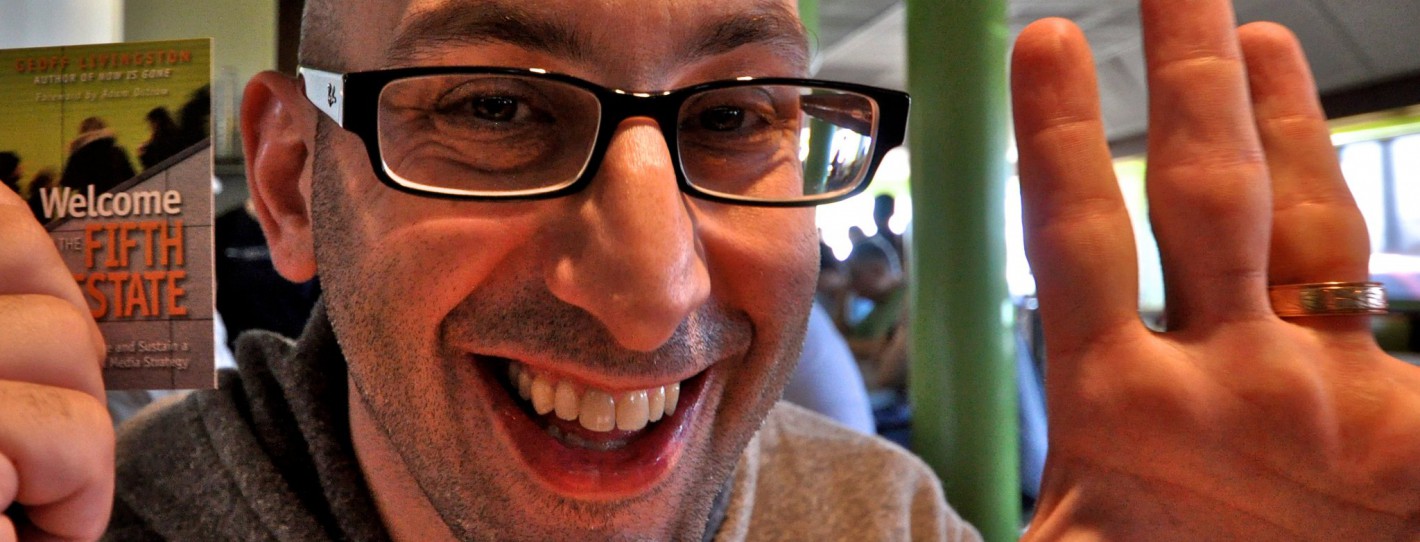
Welcome to the Fifth Estate (yes, I just shamelessly pimped my new book) concludes with a discussion about influence over the long-term. Here’s the truth about influence: It is highly subjective, and shifts with the topic, time, situation and community. Further, leaderboard influencers are not likely to create groundswells of actions. Usually, this type of influencer is a content creator or social network personality — the dog that barks the loudest. When it comes to real action, most of them can’t bite.

Influence and Individualism

Twenty years ago, the equivalent would be to dub a TV star as extremely powerful. Can you imagine Donald Trump winning the presidency of the United States based on the popularity of his TV show, “The Apprentice?” As bad of a job that our elected officials do, indoctrinating a media personality into the profession of governance would likely create much more damage than reform.

That’s why the conversation about the A-List seems fruitless and harmful. It invests time and gives influence to people who can’t accomplish things. Further, the cost of personal equity and a lesser perception of position is harmful. That makes no sense. We should be focusing on moving the needle of progress forward. The reality is that every single person has an opportunity to become influential with their community of interest.

Real influencers are awarded their position for doing great things. They are activists like Stacey Monk, or builders of new technologies such as Anil Dash. They provide real new perspectives to online media like analytics whiz Avinash Kaushik or change the business forever with new thought, like Charlene Li and her still noteworthy book, Groundswell.

These people actually do things. Their influence was a result of achievement. It may wane if they don’t continue doing great things, but in the end, this type of influence is admirable, things that people remember for decades.

Doesn’t it make more sense to talk about the noteworthy influencer instead of the narcissistic A-List? Aren’t the noteworthy successes the ones we aspire to emulate? Which can you learn from, who will make you and your efforts better?

Five Tips to Stop Supporting “A-Listers”

Ultimately, someone is only influential if they are given that influence by their community. If you don’t believe in the A-List’s influence, here are five ways to separate yourself from the conversation.

1) Don’t link to them. Linking above all else helps support their “top tier” positioning. Instead, link to people whose conversation challenges you and provokes the forward motion you are seeking.

2) Give up trying to converse with them. Why try to have a relationship with someone who is not there? Instead focus on those who do participate.

3) Don’t talk about them. Talking about them as unfit leaders still leaves them in a leadership position. This is leadership by perception. Move on, or if you do talk about them, do so in a peer-to-peer fashion. Everyone puts their pants on one leg at a time.

4) Unfollow and unsubscribe from them. If they and their behavior really upsets you, this is an act of self-preservation. Your online time will become exponentially more enjoyable.

5) Stop wasting your time on them. This above all is the most freeing of the tips. When you realize that this A-List conversation has become an energy suck, a waste of your time that is holding you back, you can reprioritize on something meaningful, for example, Danny’s 12 for 12K Challenge, or your own efforts for business, social good, or personal development.

This is mindful and good in its own right. Rather than fighting, you have moved on. Pursue new horizons.

What do you think about the continuing A-List conversation?

About the Author: Geoff Livingston is the co-founder of Zoetica, helping non-profits and socially responsible companies connect with their audience. He’s also the author of Welcome to the Fifth Estate and Now is Gone. You can read more on Geoff’s blog or connect with him on Twitter at @geoffliving.

  • « Go to Previous Page
  • Page 1
  • Page 2
  • Page 3
© 2026 Danny Brown - Made with ♥ on Genesis