• Skip to primary navigation
  • Skip to main content
Danny Brown

Danny Brown

podcaster - author - creator

  • About
  • Podcasts
  • Journal

Archives for July 2011

Should Facebook Remove Holocaust Denial Groups?

Against Holocaust Denial Laws

Against Holocaust Denial Laws

When the Allied forces began to turn the tide of their conflict against Hitler’s Germany in 1944, one of history’s most disturbing events was about to be discovered.

Named the Final Solution by the Nazis, and subsequently known as the Holocaust around the world, concentration camps were found by Allied forces advancing toward Germany. The first major camp was Majdanek, which was found by the Russians in July 1944. This was followed by other camps in 1945.

The concentration camps were built for one reason – the extermination of the Jewish race by Hitler, in an attempt to breed the perfect Aryan race of blond hair and blue eyes.

While the exact number isn’t known, over six million Jews died in these camps – two thirds of the Jewish residents of Europe at that time. Of this number, one million children perished, along with two million women and three million men.

However, the numbers could be far more – many scholars feel the genocide of other ethnic groups by the Nazis, such as homosexuals, disabled people, Romani and other cultures, should be included. This would mean around 11 million people were murdered in the Holocaust, all because of one man’s twisted vision.

Over the years, there have been many claims by groups and individuals that the Holocaust never happened and that it was a myth created by Israel. Despite the public video footage; the images taken by Allied troops; the admittance of guilt by past Nazi generals – many still believe the Holocaust never happened.

It’s a viewpoint that’s raised questions on free speech and opinions and if, by denying the right to deny the Holocaust, people are having their own right to speak abused.

Now that debate and fight is involving Facebook.

Facebook and Free Speech

A caveat. I’m a huge believer in free speech and differing opinions, and often get shit on because of it – c’est la vie. I will admit I don’t agree on all speech being free – clear hate and sex crime/hate, for example, are some areas I feel opinions step over the line. But then does that make me against true free speech? Possibly.

That’s a personal opinion, though, and would affect very few people in the grand scheme of things (and only if I spoke out). A social network like Facebook, with over 700 million users, is a different kettle of fish. It’s a public platform that allows anyone and everyone to post (and access) status updates, thoughts, views and more.

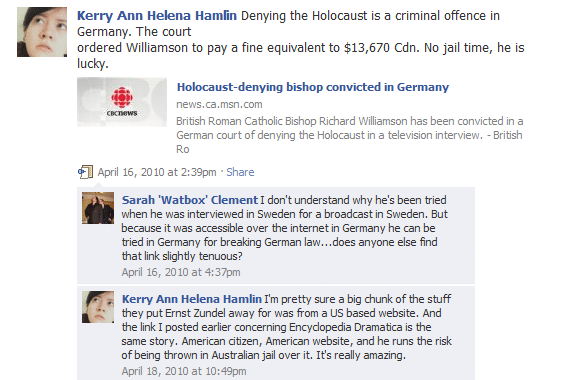
Holocaust denial

Facebook’s policies look to encourage free speech and opinion, and rightly so. But is there a limit to which this should stop, and a different policy invoked?

That’s one of the questions currently being asked of Facebook by survivors of the Holocaust, in a plea to Facebook to remove groups that have been set up to deny the Holocaust ever happened.

In an open letter posted on the Simon Wiesenthal Center website, the survivors ask Facebook to re-evaluate their approach to what’s classed as free speech versus hate speech so that the atrocities of the past aren’t repeated.

In dialogue so far between the survivors group and Facebook, a Senior VP at Facebook has advised of the importance to “…maintain consistency in our policies, which don’t generally prohibit people from making statements about historical events, no matter how ignorant the statement or how awful the event.”

I’m not sure I can buy that.

Free Speech or Road to Conflict?

As I mentioned earlier, I’m a huge believer in free speech and opinion – yet should all speech be free? Opinion is different – you can keep that to yourself. But, by definition, speech is public and has the ability to change mindsets and start movements.

A speech by Hitler in 1938 led to a movement. It resulted in the deaths of at least six million people.

I’m not naive enough to believe that had the speech never happened, the Holocaust wouldn’t have. Hitler was determined in his path to the Final Solution, and if that speech hadn’t happened, others would have (some did). Nazism was much more than words from a balcony.

But if there’s one thing that history can teach us, it’s that words can be dangerous. When hate is powerful enough, it can see words become a powerful weapon. The world saw its results from Nazi Germany. It sees its results in countries where dictators rule by force, and people live in fear of their gender, sexuality, beliefs and religion being used against them.

Free speech is important – it differentiates true freedom from state-defined freedom. The question is, if free speech is silencing voices and historical fact – and has the potential to incite violence – should it still be free?

I don’t have the answers, just my opinion. You?

Polarization, Fanboys and the Non-Middle Ground

One of the advantages that blogging holds over other forms of media is the often unfiltered voice it allows. From bloggers themselves, to those that comment afterward, the best blog posts – much like the best interviews – allow for some stimulating and thought-provoking discourse around a topic.

It’s always been one of the key reasons that blogs have enjoyed the kind of popularity that they do, since authors – at least the good ones – will allow all sides of an “argument” to be heard, while maintaining a level of respect between the debaters.

Or at least, it used to be.

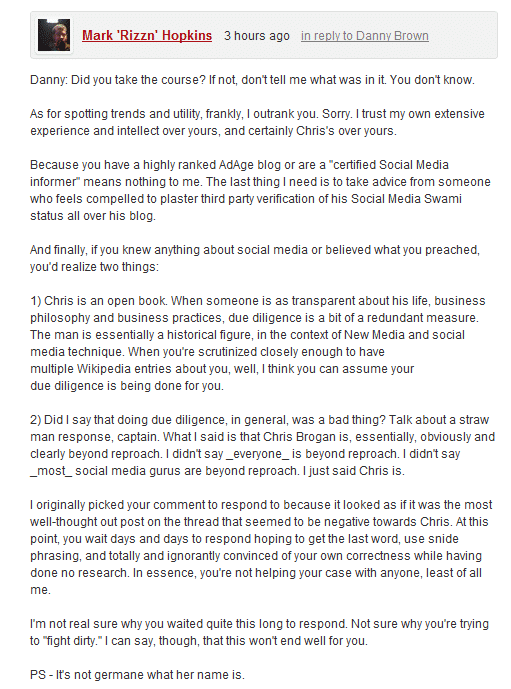
Sadly, many discussions now seem to dissolve into he said, she said kindergarten posturing, as opposed to reasoned discussion. Add to that the “the person you’re talking about is above reproach” (as shown by the image below), and it makes you wonder what happened to agreeing to disagree.

Tunnel vision mindsets

(FYI, Mark – in answer to your question, I took 6 days to reply as I was doing what I get paid to do for my clients, and spending time with my wife and son. I put that first over everything).

There’s nothing wrong with disagreeing. There’s nothing wrong with defending your friends. I’d say both are qualities that should/need to be encouraged more, to ensure healthy debate is allowed and everyone’s voice is heard.

When you start saying someone should apologize for stating their viewpoint, though, or that someone is above reproach, there’s something messed up (as long as the original viewpoint isn’t inciting hate or similar). It takes away the very thing most Internet users celebrate – freedom of opinion and the ability to see all points of view respectfully, whether you agree with them or not.

Instead of questions being asked or viewpoints being shared, you’d be left with people afraid to speak because, clearly, only the opinions of the few and those above reproach are valuable.

Sorry, but I don’t buy that.

Do that, and you might as well start letting the infographics win (hat tip to Marc Girolimetti?for that quip). And just ask Jon Aston what he thinks of infographics to see whether that’s a good thing or not.

Mind you, a lot of this could probably be avoided if bloggers did a better job of looking after all of their blog’s community, and not just the adoring ones…

Note: For the context of the conversation the image represents, click here.?

The Ten Songs The Rolling Stones Wrote About Social Media

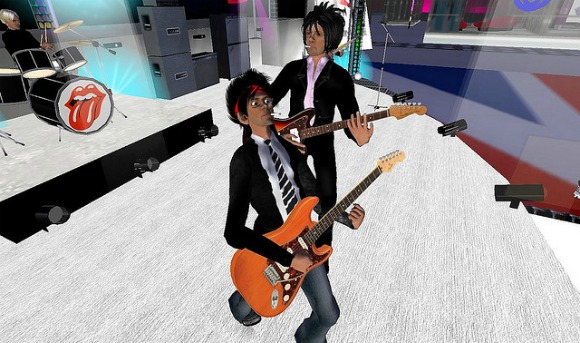
The Rolling Stones social media

The Rolling Stones social media

This is a guest post by Marjorie Clayman.

It’s been a weird year. Grand in many ways. Here’s an example. So, Mr. Brown here, he asked me to guest post on this site you’re looking at, and I thought, “Wow, what an honor!!”

Shortly thereafter, I was playing on Google+ and I got invited to a hang-out with Mick Jagger and Keith Richards. I hadn’t even circled them! How did they know where I was?? Anyway, I agreed to hang out with them because, well, who wouldn’t. Unfortunately, I found out they were not very happy with me.

See, a while back, I wrote a post about how the Beatles had been really ahead of their time because they wrote 20 songs about Social Media engagement. I had written it as a kind of funny joke-type post. Well, as it happens, the Rolling Stones really did write songs about Social Media because they really were that far ahead of their time. I had no idea.

In order to fix this great pain I have caused, I thought I would record here, on Mr. Brown’s site (they didn’t want to be on my site cuz the Beatles were there) my conversation with the Rolling Stones, which mostly was about the 10 songs they really did write about Social Media (they insisted in a follow-up that the Beatles wrote 2 songs for every 1 of theirs).

Oh yeah, and MJ = Mick Jagger, KR = Keith Richards, and MC = me.

1. Can’t Get No Satisfaction

MJ: Right, so the first song we wrote about Social Media was actually Can’t Get No Satisfaction.

KR: Can’t get no…

MJ: You know, we just knew that people would never be satisfied online, no matter how much they achieved. Oh, you got your post tweeted out by God? Well, that’s still not good enough, probably. You do try to get satisfaction, but it just never works, does it?

2. Ain’t Too Proud to Beg

MJ: Sometimes we found a song someone else had done and thought, “Aye, that has to do with Social Media!” – that was what happened with Ain’t Too Proud To Beg.

KR: Yeah, you know, it’s ironical, because uh…because…uh…because a lot of people do beg, don’t they?

MJ: Right, people beg to have their posts tweeted out, people beg for attention. The Rolling Stones would never do something like that, so we covered this song and made it our own. You shouldn’t beg, by the way. It makes you look silly.

3. Waitin’ On a Friend

KR: Yeah, we wrote Waitin’ on a Friend because that’s what Social Media is all about isn’t it?

MJ: Well, you don’t get money off of friends unless you sell ’em, mate.

KR: Yeah, but having friends online is really nice, you know. It makes it fun and sweet and *sniff*

MJ: Are you crying?

KR: Naw.

4. Paint It Black

MJ: Well, Keith’s turn to being morose reminds me that we wrote Paint it Black because we knew that people online would have the tendency to see the dark side of everything and exhibit the darker sides of their nature. It’s really a shame, isn’t it, because positivity could spread really fast online.

KR: Maybe we should have written Paint it White to give people the idea.

MJ: Go wipe your nose, Keith.

5. Wild Horses

MC: Well, not every song you guys wrote could have been about Social Media. I mean, how would Wild Horses relate, for example?

MJ: Cor, you’re daft though aren’t ya? Wild Horses couldn’t tear me away. That’s the Social Media experience, isn’t it? Everyone says, “Ohhhh, I hate it.” But they’re still tweeting that, aren’t they?

MC: So you knew about Twitter in 1969, eh?

KR: I saw into the future.

MC: OK.

Time

6. Time Is On My Side

MJ: Did you know that we wrote Time is on My Side?about Social Media? Very few people get this connection but it’s really true. We wanted people to take their time growing their strategy, their plan, their presence…

KR: And their egos. Heh heh heh.

MJ: Well….yeah. That’s true. But mostly the first things I said.

7. Pleased To Meet You

MJ: We were really shocked that people applied such a mean and dark translation to Pleased To Meet You (Sympathy for the Devil)...we really meant it as a reminder to introduce yourself to new people in the online world, and the “guess my name” part was ironical again. Your name should be close at hand when you’re online, shouldn’t it?

KR: Yeah…

MJ: I wasn’t asking you.

KR: Right.

8. Under My Thumb

KR: We wrote Under My Thumb because the keys are always going to be under your thumb. Heh heh heh.

MJ: Keith, I think there’s a guitar over there that needs tuning.

KR: Where?

MJ: Right, so we really wrote Under My Thumb to reflect the power struggle that goes on in the online world, right? You always want to beat the person above you and manipulate them in some way. It’s crap that people spend their time that way. Anyway, we thought if we would really talk about controlling someone and getting them to do everything you want, it would make a point to people. But people just said, “Oh yeah, great idea, mate. I think I’ll try that.”

KR: People are SO stupid.

MJ: Yeah, really they are.

9. Honky Tonk Woman

MC: Well, okay, what does Honky Tonk Woman have to do with Social Media? I mean, there can’t be a connection there, right?

KR: Oh you’re an ignorant twat. That’s about two things we knew would happen in the online world. First, unprofessional and profane behavior. And second, uh…

MJ: Second was the rumor-mongering aspect of Social Media. You know, “People say…” that part. All about online rumor-mongering.

MC: Of course it is.

MJ: I don’t like you.

MC: I know. That’s cool.

10. Mixed Emotions

MC: So what’s song number 10 in this line-up, gentlemen?

MJ: Well, the last song we wrote about Social Media *specifically* was Mixed Emotions. And there’s a lot of meaning in there. For example, we knew people would often have mixed emotions about Social Media. You love it, you hate it. It’s so much work but so much fun. But also it’s, you know, we say “You’re not the only one,” so it’s…

KR: It’s a reminder that you’re not an island, you’re a person in a big group of people and you should pay explicit attention to what people are doing around you. I mean what are you thinkin, you’re the only one with a bad day or an irritation in your life? Toughen up and look out for other people for a change how about it ya great waste of life?

MJ: Uh, yeah. That about sums it up.

Alright, so, those are the ten songs Mick and Keith say they wrote about Social Media. Once they got going, though, I really felt like they may have written more. It was just too hard to keep Keith’s attention throughout the interview.

So I need your help now. What other songs did the Rolling Stones write about Social Media? Did they actually write about it more than the Beatles? What do you think?

Margie ClaymanAbout the author: Marjorie Clayman works for her family-owned agency, Clayman Advertising, Inc., where she represents the third generation! Margie is the resident blogger at MargieClayman.com, and can be found on Twitter at @MargieClayman.?

image: Melvin Starbrook
image: pietroizzo

Welcoming Livefyre Comments Back to the Blog

Livefyre comments system

If you’re a regular reader of the blog, you’ll notice that I’ve switched the Livefyre commenting system back on, after using the vanilla WordPress option for the last few months.

I was one of the early beta users of the system, and loved the way it took blog commenting and turned it into a real-time chat (as this experiment and the subsequent results show).

However, along with it not really fitting into the blog’s redesign at the time, there were some features that Livefyre lacked, which saw me revert to the standard WordPress comment system (albeit one that was heavily optimized by Bonsai Interactive’s Creative Director, Lisa Kalandjian). But I’ve always kept eyes on the system, and met the team at a conference earlier this year.

And I’m glad I did, because today’s Livefyre is a completely different beast from when I was test-running it, and the features that weren’t around then have made it into the new version. So the time seemed right to switch it back on. So what’s new?

Latest Post or Conversation

Perhaps one of the biggest things that Livefyre lacked previously was the latest post option (or Conversation, as Livefyre calls it). This is what the CommentLuv plug-in offers – the option for anyone leaving a comment to have their last post visible as a link back to their blog.

Livefyre latest conversation option

Where Livefyre’s version differs is that it’s (currently) only for those with a Livefyre account. While it doesn’t offer the same benefits of CommentLuv because of this limitation, it’s a clever way to encourage sign-up. And the cool thing is, if you have multiple blogs, it pulls the last post from the newest publication, so it gives all your blogs an equal amount of promotion.

Simple Site Wide Moderation

When I first had Livefyre switched on, its dashboard area was pretty basic. There were your account details, and the blogs you had registered, and that was pretty much it. It didn’t really allow for analytics or moderation (something the Disqus platform was better at). Not any more.

Livefyre Site Moderation

With the new and improved dashboard, you have much more control. This includes white-listing commenters, banning spammers, marking comments that are offensive so Livefyre can learn them, and more.

It’s a far better system, and makes running the back-end of your commenting system a much easier task.

Improved Social Sharing Options

A lot of bloggers – myself included – have wondered about the effect social networks have on blog comments. Do tweets and Facebook conversations mean fewer comments on the blog (though more overall)? And will the freestyle comment stream of Google+ affect this even more?

Either way, there’s no doubt that a lot of conversations about a post are missed, because they’re taking place on Twitter, Facebook, etc, and not everyone has an account on these platforms. This is where Livefyre is stepping in, to really cultivate the conversation around a post.

Livefyre SocialSync

Their new SocialSync feature gives you the option to have tweets and Facebook posts become a part of the post’s comments. This is similar to the Reactions feature on Disqus, with a difference – Livefyre’s way of doing things seems better suited to social conversations being part of the comment stream.

For instance, simple retweets aren’t counted (or shoudn’t be). Instead, only extended conversations around a post are pulled into the comments. The same goes with Facebook – if you share a post on your Facebook Page, then any wall posts by your connections will be pulled over to your post.

It’s not perfect – for example, I’d love the option to be able to reply to Facebook posts from the blog comment (much like you can with the Twitter sync). Additionally, the SocialSync conversations currently split the comments if there are more than 50, as opposed to being at the end of the comment stream (although Livefyre have said they’re looking to fix this). But as a first attempt at really integrating all conversations around a post, it’s a great start. Especially if Livefyre can work a way to include Google+ comments.

The Little Things

So these are three of the main differences in the Livefyre system since last being activated on here. They’ve also added some nice little features – more sign in options (Google and LinkedIn), along with the option to view oldest comments first. Couple these with more CSS options, so you can code Livefyre to suit the design of your blog a bit better, and Livefyre has pretty much got most options covered for a one-stop commenting system.

There are some more features on the way, too, with perhaps one of the most-asked for additions due imminently – the option to allow guest commenting, where you don’t need to have one of the current sign-in options to leave a comment.

I was a big fan of Livefyre before. I think it’s fair to say that, with the new features, I’m pretty much sold on them as the best commenting option out there. Obviously there might be some hiccups along the way, but I’ve always found the Livefyre support to be second-to-none.

And you can’t ask for much more than that.

10 Free Blog Topics to Help You Get Your Blog On

Free blog topics

Free blog topics

This post is part of our free blog topics series over at For Bloggers By Bloggers.

For many bloggers, coming up with blog topics can be hard. Keeping your blog fresh and interesting for readers old and new can see you hitting the blog topics wall, and often that leads to you just not blogging at all.

So, in this weekly series every Saturday, we’ll provide you with 10 free blog topics to get your mind rejuvenated.

As well as offering you some blog topics ideas, we’ll also give a short paragraph on each topic to help you get off the starting blocks. Hopefully this will give you some more ideas, if the initial titles of the post topics themselves don’t.

So – on with the topics!

  • How Music Helps Shape My Decisions. We all have our favourite songs, and can remember a time in our life based on a certain tune. But how did they help shape your life? Did a certain song give you the strength you needed at a certain time? Was there a song playing when you told your partner you loved them for the first time? Music is all-encompassing – share what your music taste means to you.
  • If The Matrix Was Real. If you’ve seen The Matrix trilogy, you’ll be aware of the concept of humanity being the puppets of machines. But can that be correlated to your actual life? Who would the machines be – your boss, your partner, your bank manager? And how would you overthrow them? (Note – this should probably be written in a tongue-in-cheek manner!).
  • The Best High School Date I Never Had. In high school, there’s always that one guy or gal that we had a huge crush on, but nothing ever came of it. So if you could go back in time and be guaranteed a date with that person, who would it be with and where would you go – and money’s no object?
  • If This Was My Last Blog Post. At some point, we all die – it’s one of life’s absolutes. So, if you could write and schedule the last blog post you would ever write, what would it say, and what would be your parting message to your community?
  • My All-Time Guest Blogger Line-Up. If you offer guest posts on your blog, and you could choose from your all-time favourite bloggers to line up for a week on your blog, who would the seven bloggers be, and what would you have them write about (even better if it’s outside their normal niche)?
  • Lessons Learned From Being Fired. Have you ever been fired from a job? Not made redundant, but actually fired? If so, what lessons (if any) did you learn from that, and how have they helped you in your career or job decisions since then?
  • Remember When??Life moves fast; changes happen all the time. So how about sharing the things that were a constant in your childhood, and why today’s equivalents are better or worse? Take a trip down memory lane, and see how many of your readers connect with their memories.
  • What The Harry Potter Saga Can Teach Us About Branding. Whether you’re a fan of the series or not, with billions of dollars in book, movie and merchandise sales, the Harry Potter saga is a modern phenomenon. So what can businesses learn about branding and longevity from the simple words of an author?
  • Knowing When To Stop. The original Star Wars trilogy remains a favourite to me, even though Return of the Jedi wasn’t that strong. And then George Lucas ruined the memories for me by first updating the trilogy, and then releasing the vapid new trilogy. So when should people stop? At what point does something not get any better? Share your take on your favourite author, movie, singer, etc, and where they should have stopped while they were ahead.
  • The Best Invention No-One’s Invented Yet. There are innovations all around us, helping make our lives easier or better. But what invention hasn’t been created yet, and if money was no object, what would you invent that would change either your life, or the world around us?

Hope these help you get some ideas to start your creative juices flowing again – and feel free to share any posts you write from the above topics in the comments below, or linking back here.

A version of this post originally appeared on For Bloggers By Bloggers, our blog resource centre offering tips, tricks and advice to help make your blog the best it can be. Head on over and check us out, and make sure you?subscribe to For Bloggers By Bloggers so you get each post as soon as it’s published.

image: kentbrew

  • Page 1
  • Page 2
  • Page 3
  • Go to Next Page »
© 2026 Danny Brown - Made with ♥ on Genesis