• Skip to primary navigation
  • Skip to main content
Danny Brown

Danny Brown

podcaster - author - creator

  • About
  • Podcasts
  • Journal

Archives for May 2011

Building an Audience with Commenting Communities: Smart, or Sleazy?

Comment strategies

Comment strategies

This is a guest post by Danny Iny.

Have you heard of comment trading communities?

It?s a new fad that seems to be sweeping the blogosphere (or at least a few corners of it). Basically, the idea is that a bunch of people get together and agree to comment on all of each others? posts.

Some bloggers are experimenting with the idea, some love it, and others hate it.

I?ve been thinking about this a lot lately. A short while ago, I emailed a successful blogger whose audience I thought would be interested in a post I had written, asking for a link (this wasn?t out of the blue ? I?ve corresponded with this blogger on a few occasions).

The blogger responded that I could go ahead and post the link in the comment community ? everyone else would take a look and comment, just so long as I did the same for them.

I thanked the blogger and said that I would head on over, but I didn?t ? and I probably never will.

Okay, before we go any further, it?s time for full disclosure: I had participated in one round of this blogging community, which means that I commented on nine blog posts, and nine other people commented on one of mine.

It wasn?t a great experience, for two reasons:

  1. A few of the blogs really stunk. Most were pretty decent, and some were great, but I felt very uncomfortable being committed to leave a comment on a blog that I was completely unimpressed with.
  2. A few of the blogs were about things in which I have no interest. They were good blogs, near as I can tell, but they were about subjects that I neither know anything about nor have any interest in exploring. And yet, I was committed to leave a comment.

So what did I do? Well, I had made a commitment, and I take commitments seriously ? on the good blogs that interested me I left solid comments, and on the others I left comments that were friendly and encouraging, but vague and non-specific.

I feel like I?ve littered on the blogosphere.

Contrived, but reasonable?

My experience was mixed, but I?m not ready to make blanket condemnations. I discovered some really great blogs through it, and sparked a couple of great online relationships. And I?m not the only one.

The most commonly heard argument against these communities is that if people have to leave a comment, then that comment isn?t really worth anything, but I?m not sure that I agree.

I mean, sure, if people leave crappy, fluffy comments, then there?s no value to them, but if the comments are well thought-out, and insightful, then what?s the problem? Bloggers want others to read and interact with their stuff, and at the same time they?re looking for blogs for whom they can do the same. Isn?t this just a way of formalizing and adding some structure to what they want to be doing anyway?

In other words, some might see it as contrived, and I agree ? it?s a contrived solution to a very specific problem, but maybe it works?

My hesitation from doing it again is that I?m not comfortable having to comment on blog posts that I don?t like, or have no interest in.

Maybe this is a solvable problem?

Niche-specific, approval-required communities?

What if a blog commenting community were created that met the following two criteria, to address the main issues that I had with my comment community experience:

  1. Each community is around a specific niche, so that everyone is ? at least in principle ? likely to be interested in everybody else?s writing.
  2. Each community is moderated, and blogs are reviewed before being admitted into the group. This will make sure that terrible blogs never make it in.

If these two criteria were in place, I would give it another shot, and my guess that a good number of other bloggers would do the same. But I may be wrong?

Now I?ll turn the conversation over to you ? I had a feeling that this post would spark a lot of debate, which is why it?s being published here, where the microphone is a little bigger than over at Mirasee.

What do you think? Do you think this middle ground solution makes sense? Do you think blog commenting communities are a false economy, or the best thing since sliced bread?

Let?s get the debate going!

About the author: Danny Iny is an author, strategist, serial entrepreneur, and proud co-founder of Mirasee, the definitive marketing training program for small businesses, entrepreneurs, and non-marketers. Visit his site today for a free cheat sheet about Why Guru Strategies for Blog Growth DON?T WORK? and What Does!, or follow him on Twitter @DannyIny.
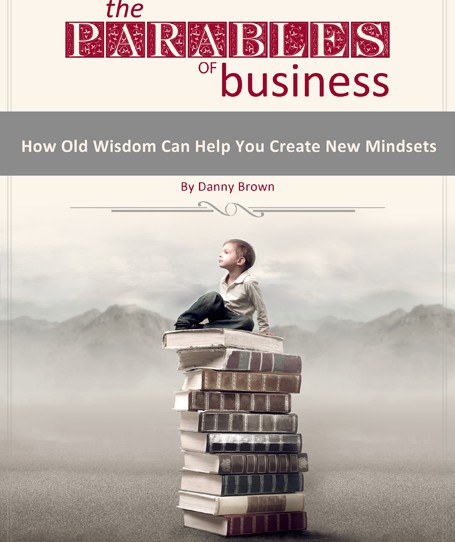
The Parables of Business

The Parables of Business

Next week will see the release of?my premium ebook, The Parables of Business.

Parables of Business

A collection of stories and (as the title suggests) parables and old tales, the ebook looks at business from the eyes of storytelling, and how old tales can help us forge new mindsets.

It’s a mix of original stories and some specially-updated blog posts, all of which have the same goal – share the familiar to help you with the new. This can be your business; your blog as a business tool; your customers’ experience; and more.

I’m really happy with?The Parables of Business and, though I’m obviously biased, I think it’s a nice way to introduce a series of ebooks coming your way from this neck of the woods in the coming months.

Some will be premium and some will continue to be free .

The ebook will be priced at $15, though as a special offer subscribers to?my newsletter will receive a discount of 20%, making it $12. If you wish to “pre-order” and receive this discount – as well as special offers on future ebooks and products – you can sign-up using the form below. A special discount code will be sent out with our newsletter when the ebook is released.

I hope you enjoy?The Parables of Business – hopefully it has some useful business advice for you. But you may just enjoy the storytelling angle as well – stranger things have happened!

Thanks, guys, and if you do buy it – either for yourself or as a gift for someone – let?me know what you thought of it. Cheers!

[gravityform id=3 name=Ebookand Business Guides Sign-Up Form ajax=true]

Is RIM The New SEGA?

PlayBook

RIM BlackBerry

I have a lot of time for RIM, the company behind the business person’s friend, the BlackBerry.

They were the first smartphone company I used when I finally stopped being a technophile and moved away from my trusty Nokia GSM handset. I’ve worked with them a few times on some pretty cool projects. And they have – in my mind – one of the best features on any smartphone, with their instant message BlackBerry Messenger option, or BBM.

And yet…

They seem to have lost their way a little in the last 12 months or so. What was once a company offering huge innovation, and enjoying a large audience within the enterprise world, now seems to be playing catch-up with not only their (recent) biggest competitor, Apple, but the new guys on the block in the shape of Google and their Android system.

In a way, the RIM of today kind of reminds me of video games company SEGA in the run-up to when they dropped out of the hardware wars back in 2001.

Confused Hedgehogs and the SEGA Example

When the video games industry was at its peak back in the late 80’s and early-to-mid 90’s (prior to today’s billion dollar industry), SEGA enjoyed huge success with its Mega Drive/Genesis (depending on your country) system.

The Mega Drive was the first real 16-bit home video game system, which basically meant it was graphically head and shoulders above other home systems like the Nintendo NES and the NEC PC-Engine. From the moment you powered up Sonic the Hedgehog (Sega’s mascot to combat Super Mario), the Mega Drive screamed next generation. Video gamers lapped it up and it was SEGA’s most successful console.

But then they got confused and lost their way. In a bid to compete with Nintendo’s new Super NES and the imminent arrival of the much-vaunted 3DO system, SEGA released some questionable add-ons.

The SEGA CD and the 32X were bolt-ons to the core Mega Drive unit, but were woefully thought-out. This resulted in a lack of any quality games, and the systems essentially tanked.

Because of this, SEGA’s reputation was hurt, and when they released the true successor to the Mega Drive, the Saturn, sales were poor. It didn’t help that Sony had arrived and attracted a much wider audience with its new PlayStation console. SEGA never recovered.

Their last hurrah was with the Dreamcast – still one of my all-time favourite consoles ever. Yet because of the failings with the SEGA CD, 32X and Saturn, not to mention Sony’s continued dominance and Microsoft’s arrival into gaming with the Xbox, SEGA’s glory days were over.

The Dreamcast was their last piece of hardware, and they switched to game development only in 2001.

SEGA had been the leader when it came to innovation and coolness. But with a lack of focus, and what were perceived as rushed releases to compete with their competitors, they lost all but their most hardcore fans to the new kids on the block.

Sound familiar?

Mobile Mash-Ups and the RIM Example

RIM has always been big with the enterprise market. The security on their hardware means business people can access documents and store important information, and feel pretty safe in the knowledge it’ll be hard to breach.

Additionally, they made it easy and cool to be connected to your office while not physically being their. Their email suite and ability to share documents like Excel and Powerpoint was a big factor in their early success. They knew their market and played to their strengths.

Then Apple arrived.

iPhone versus BlackBerryThe success of the iPhone made a lot of people question the need for a BlackBerry. The iPhone had a huge amount of apps – some free, some premium – that could essentially replicate much of what the BlackBerry did.

Additionally, the touch screen option was cool, as was the ability to play mini-arcade games and (perhaps most importantly) sync all your iTunes songs to your iPhone. Simply put, Apple made mobile handsets really cool.

Added to the iPhone threat, Google announced their entry into the smartphone market with their Android operating system. This would allow multiple manufacturers to make a smartphone, and Google would make its software available across these platforms. And, importantly, they made many of their apps free, which took on both RIM and Apple.

So successful was this approach, Android is now the leading smartphone platform in the U.S. While RIM is currently second, their market share is falling while Apple’s is growing, and many analysts expect RIM to drop further in the hardware “war”.

To combat the popularity of the Android and the iPhone’s touch screen, RIM released the Storm and then the?BlackBerry Torch, which mixes the QWERTY keyboard of “traditional” BlackBerry handsets with a touch screen option.

A lot of business owners I know aren’t too keen on it – they feel it’s not enough of a touch screen experience to match the iPhone or Android, and they still prefer the hard pad keyboard. And some reports would suggest that the Torch simply hasn’t excited the consumer market in the way RIM would like.

And then there’s the tablets…

Small Is The New Big?

Building on their iPhone success, Apple released the iPad and it was a huge success. This bridged the gap between a smartphone and a full-size MacBook or laptop, and both consumers and business users loved it.

With the tablet market expected to grow exponentially throughout 2011 and into 2012, not being part of that – and allowing Apple to own the space – would not be a smart move. Enter RIM with their PlayBook. Taking a direct swipe at Apple, the PlayBook is smaller (so meant to be more compact for travellers), as well as compatible with Flash – something many iPad users missed from their platform.

Initial reports were fairly positive, with the feeling that – finally – RIM had a product that would punch Apple in the face.

Then RIM announced that for the first version of the PlayBook, if you wanted to use the secure RIM email service, you’d need to tether your existing BlackBerry to it. Huh? There was also no 3G option – you can only get that with an additional app.

Cue a bit of backlash.

Having messed around with the PlayBook, it’s a smart little piece of kit. But the emphasis is on little. At 7-inches, it’s less than the standard 10-inch plus of other tablets. And with a large border frame around the display screen, it seems even less of a jump in size from the iPhone or Android that I use, the Samsung Galaxy.

This has many folks asking where the PlayBook will find its audience. Will they take away consumers from Apple, or will they build on their enterprise offerings that made the BlackBerry so successful? But how well will a smaller screen go over with business users looking to show slideshows and presentations?

The SEGA and RIM Mirror Image

I don’t know – I see so many mirror images between RIM and SEGA.

  • Leading innovative platform, resulting in (perceived) comfort zones with its userbase.
  • New releases didn’t always offer huge differences in previous versions.
  • New competitors perhaps not taken seriously enough. Again, the comfort zone comes into play.
  • Slow to react to changing landscape.
  • Bolt-ons to compete with competitor features.
  • Do we go after the consumers or solidify our hardcore fans?

I’m sure RIM and their long-term fans will disagree. After all, it’s their baby and who cares what one blogger thinks.

But I’m also a fan of RIM, and it’s sad to see such a great company seemingly falter when they should be charging. And I know other BlackBerry fans feel the same. It’d be a shame to see them follow the same route as SEGA, and just become an operating system and app developer.

SEGA let the others take up the mantle. What’s your thoughts on RIM and BlackBerry doing the same?

The Mind-Numbing Banality of Sameness

Mind numbing

When you start blogging, you usually do it for one of two reasons – you have something to say and want to share it, or you read other blogs and enjoy how they can be used for growing a brand; a business; a mindset; and more.

Often these two criss-cross with each other. Other times they’ll work alongside other goals – to sell products and services; to act as a lead generation platform for your business; or to be a place where your “business voice” can be relaxed, and you can be just another person.

Because of this, blogging is one of the longest-running and most popular forms of social media (regardless of what the Twitter and Facebook faithful would have you believe).

Of course, the problem with any form of popularity is that it can often be connected to banality and sameness.

Longevity and The Power of Oomph

When I first started blogging – oooh, many years ago – the landscape was very different.

Bloggers were viewed as quirks of nature, and/or frustrated writers. Yet some of the best writing around was being published, since the attention span didn’t have to be geared towards 140-characters or compete with a thousand social networks. Because of this longer attention span, the quality over quantity issue was never in doubt.

Now, though, as many bloggers look to grab book deals and be seen as the go-to-guy for sponsored posts and brand advertisements, a lot of blogs have become part of the sameness malaise.

Honest viewpoints are being diluted and replaced by points of view that are geared towards satisfying the masses, as opposed to being a strong opinion that cuts through hype and spin.

Bloggers that were very different ten, five and even just one year ago are now rehashing the thoughts of others, or offering lazy posts knowing that the title and pop culture content will attract the social shares that makes the blogger seem important.

Plus ca change.

Newness and Introspect

Thankfully, there are some great voices around that are countering this blandness.

They write from the heart, and they write non-fluff viewpoints that can often make you feel both uncomfortable and wanting to shout a “Hell yeah!” in equal measure. And to me, that’s what great blogging is all about.

It’s bloggers like the ones mentioned above, and those who I’ve watched turn from great to good to meh, that’s made me think about this blog in the last few weeks.

Danny blog thoughts

While a large part of this blog is steeped in social media and how it can be used in the bigger picture (personally or from a business point of view), at heart I’m a storyteller (or at least that’s my goal).

I like the human angles of social media, and how it can play a big part in shaping people’s lives. It’s one of the reasons behind the tagline of the blog.

But, to a degree, there’s only so much you can say about social media before it just blends into all the other social media blogs that are out there. Some are good; others, not so much.

And, while it might be nice to have tens of thousands of subscribers – and it’d be fairly easy to attain this with popular and continuous Top 10 or List posts – that’s never been a goal here.

I’d rather have the involved community that’s here as opposed to ten times the subscribers but a less questioning community.

So. Over the next few weeks, I’ll be doing a lot of thinking about how this blog continues. Like I say, I’m big on human stories and storytelling in general (something that an imminent ebook will probably show).

Social media is just one part of how people use the web – and I’m more interested in the people than the tools.

I thank you for being with me so far; and here’s to you still being interested enough to continue as I look to really define this blog’s position. Here’s to moving forward.

image: juco

If Twitter Went Back to the Drawing Board

Twitter wishlist

Twitter wishlist

This is a guest post from Jamie Fairbairn.

The web is constantly evolving.

On July 15th 2006 Twitter was officially launched and has since gone on to change the way many of us interact online.

As Twitter approaches its 5th Birthday I thought it would be good to take a look at what it might be like if it was launching in 2011.

Read on below to discover my 10 point Twitter wish list.

Auto DMs wouldn?t exist

Isn?t it great when you follow someone on Twitter because you want to engage with them and have a conversation, only to find an auto DM coming your way?

?Check out my blog, Like me on Facebook? ? or maybe that should that read ?I couldn?t care less about you, it?s all about me?.

Certain words and phrases would be filtered out

Have you ever followed someone only to find they weren?t quite what you expected? Wouldn?t it be great if you could have a list of words or phrases you could automatically block? How about ?make money online?, ?get more Twitter followers? and ?instant traffic? for starters?

I know you can block users but it would be nice not to have to do this manually and have your time wasted.

A daily limit on tweets

There?s always someone who takes their Twitter use to excess. You know the person you follow who is quiet for a while then suddenly launches about 40 updates in as many minutes.

I wouldn?t want everyone to be penalised by this though, so perhaps a ban could be only placed on those who took their tweeting to ridiculous extremes.

A ban on tweet scheduling

I don?t know about you but the relevance on some automatic tweets I?ve seen recently has been questionable to say the least. This week alone I?ve seen tweets with ?10 social media rules for 2010? and similar outdated titles.

In my humble opinion, Twitter should be about real-time interaction and the example above demonstrates how automatic tweet scheduling can go badly wrong and ruin a user?s credibility.

An audio chat function

I?m not a technical person but maybe an audio chat function could work on Twitter? I realise you can go on Skype or pick up the phone but if you?re having a discussion on Twitter with more than one of your followers, perhaps a Skype type function could be incorporated?

I know there are other tools out there that allow for real-time collaboration in this way, but surely Twitter would rather people didn?t leave their site to do it?

A Twitter divide ? business and social

Call me crazy (and I know many of you will) but I can?t help thinking it might be a good idea to split Twitter into two separate platforms ? one for business and one for social purposes.

Now I know what you?ll be thinking ? that just takes away from the whole point of social media, but to be honest I?m sick and tired of ?business? people telling me what they had for breakfast or how many pints of lager they drunk last night.

Since some people don?t seem able to post the inane things from their life on Facebook rather than their business Twitter profile, why not give them a separate social Twitter to blether away on?

An official Twitter jobs board

I think Twitter is missing a trick by not having an ?official? jobs board. It?s always said they?re looking for ways to create revenue but many third parties seem to be one step ahead ? for example www.twitjobsearch.com seems to be doing very well.

An official Twitter jobs board would create revenue for Twitter while also giving its users a fantastic portal for employers and job seekers.

A smarter ?who to follow? function

I think the ?who to follow? function is a great innovation by Twitter but it could do with some modifications.

I recently checked out my ?who to follow? list and was pretty disappointed that it was full of verified Twitter accounts of people I?d never heard of and had no obvious connection to my industry or my existing followers.

A tweet improvement tool

No offence to anyone who uses Twitter but some people post a lot of nonsense. There are also others who post fantastic content but give it a weak headline so nobody clicks through to it.

With this in mind, I thought a built-in tweet improvement tool would be a good idea. Something that could scan what people had written and make some suggestions for improvement would make Twitter a better place for everyone.

A tweet spell checker

Nobody?s perfect and there have been times when I?ve accidentally tweeted something with a spelling mistake in it. Of course you can delete the offending tweet and post it again with the mistake removed.

Wouldn?t it be better for everyone though if Twitter had a built-in spell checker so you could be sure your tweets were error free before posting?

I?d love to know what you think of my wish list and if you have any suggestions of your own, please leave them in the comments below.

Jamie FairbairnAbout the author: Jamie Fairbairn runs SearchBlogger ? an online marketing blog for small business owners. Jamie has helped small business owners in the UK get more from the web over the last 10 years.

SearchBlogger was set up in October 2010 to share Jamie?s knowledge on all aspects of online marketing with a wider audience. You can find him on Twitter @SearchBlogger.

image: theOOBE

  • « Go to Previous Page
  • Page 1
  • Page 2
  • Page 3
© 2026 Danny Brown - Made with ♥ on Genesis