• Skip to primary navigation
  • Skip to main content
Danny Brown

Danny Brown

podcaster - author - creator

  • About
  • Podcasts
  • Journal

Archives for 2010

Sayers and Doers

There are two kinds of people in the world – sayers and doers.

Sayers sure can talk a lot about a great many things. They might even talk about some of the things they’ve done, or are going to do.

Doers, on the other hand, actually do all the things that sayers talk about and then some more on top, just for good measure.

What side of the equation do you fit?
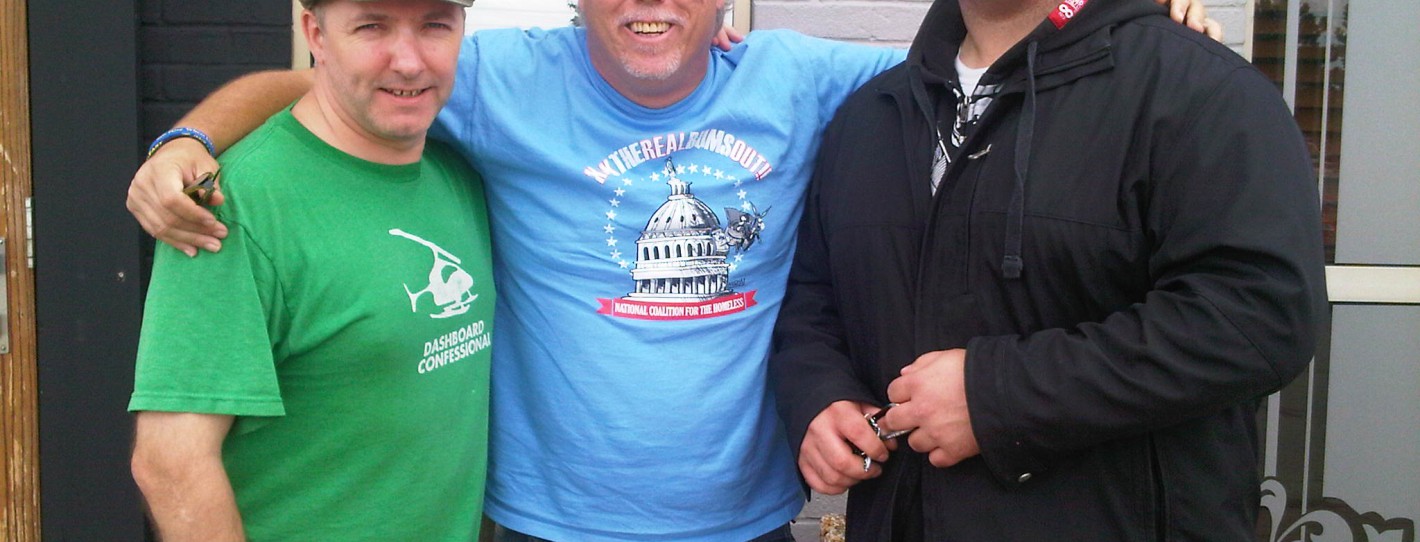
Making Homelessness Visible Through Social Media

Danny Brown, Mark Horvath, Troy Claus

Danny Brown, Mark Horvath, Troy Claus

This weekend just gone, I was honoured to meet a guy I’ve admired for a long, long time, Mark Horvath (Mark’s in the centre, my business partner Troy Claus is on the right).

Based out of Los Angeles, Mark is someone with an incredible story. Fifteen years ago, Mark was homeless and sleeping on the streets of Hollywood.

But he managed to get back on his feet, and then some. He was at the top of his game – working in Hollywood, bringing some of the best-known shows on television to viewers across the world, a great future – Mark was living the American dream.

Then the economy collapsed. Mark fell into a mix of drug and alcohol abuse, lost his job, became homeless, and lost his way. He fought hard to get back on his feet again, and get his life in order. And he did. But he’s always just one step away from being homeless again.

From that time, Mark took the experience of being homeless, and the stories of the people he met on the street, and created Invisible People. A site full of video, it shares the stories of the homeless in L.A. and beyond, and lets you see the person behind the stereotypical image we let ourselves create when we see a homeless person.

It’s been a huge success and has opened a lot of eyes to what homelessness really is. Hint – it’s not all drug abuse and choice.

Now Mark has a new project, and one I really hope you’ll check out and offer your support to.

We Are Visible

We Are Visible is a simple idea – and simple ideas are often the best. Many homeless use their local library’s Internet-enabled computers to connect with others, and try and learn new skill sets that could help them get back on their feet.

They also can find medical help; companies and organizations that help the homeless; lost family and loved ones; and so much more. Yet often they only know the basic email and Internet access.

As Mark’s shown, social media offers an incredible platform to not only connect, but tell stories. And this is exactly what We Are Visible aims to do, by making social media simple for anyone homeless to understand, and use.

There are videos that show you how to set up a Gmail account, as well as a Twitter and Facebook profile. Additionally, We Are Visible shows you how to set up a free blog, and connect your profiles to it.

You can then share your story through the main We Are Visible social networks, as well as be put in touch with other homeless folks. And, where possible, be connected to companies that could help you get back on your feet and/or off the streets.

Last Christmas, 12for12k partnered with Mark to show people how they could help the homeless in their own towns and cities, and we’ll be doing something very similar this year again, starting in November.

In the meantime, however, We Are Visible is a brilliant concept, and one that I’m honoured to share with you. Please, check the program out, and if you feel you can help raise awareness of it, get in touch with Mark and see how you can help.

One way is to order promo cards (if you’re in the U.S.) and these can be ordered here. More information will be available via the networks below.

– We Are Visible website.
– We Are Visible on Twitter.
– We Are Visible on Facebook.

Facebook Loves Porn, Hates Health Advice

Facebook porn 1

Check Your Package testicular cancer campaign

Yep, hands up, that’s a bit of a link-bait title. But I make no bones about it, after reading an article in the Toronto Star today on how Facebook is saying no to a testicular cancer ad by Toronto Public Health for being too “threatening”.

The ad in question is the one at the top of this post (or a version of it).

Seems a great ad, no? It’s provocative in a fun way – always good for catching eyeballs. And it also shares an important message for a disease that can affect a large percentage of the male population, especially younger men. So, win-win all round.

Except Facebook doesn’t agree.

According to the story in the Toronto Star and HealthZone.ca, Facebook won’t approve the ad because it’s not deemed suitable for their audience. According to an email from Facebook ad employee Roger Lu:

The image must not focus on a specific body part, particularly a man?s crotch, and the ?Check Your Package? headline was unacceptable.

Facebook also called the use of the phrase “Men 18-35 are at risk” threatening, as well as being against Facebook’s ad policy of not calling out ages. Which seems kind of ironic, considering part of Facebook ad audience targeting is choosing which age demographic you want to reach.

So, cut a long story short, Facebook seems to be against the Toronto Public Health ad because it shows a guy’s groin and has some questionable wording.

This could probably be a bit more understandable if it was a sexual ad with provocative language. But it’s not – it’s a health ad with some startling but real statistics.

To gauge how idiotic the Facebook stance appears to be, I did a little searching on Facebook pages and profiles. Here are some profile pics and page images that popped up, according to the search terms.

Facebook porn 1

Facebook porn 2

These are a couple of the tamer ones, both from the profiles and the search results themselves.

So, it appears Facebook is pretty happy having full-on and open sex pictures, with some pretty funky descriptions, but not a health ad that could save a ton of lives amongst many of Facebook’s users.

My friend Christina Kingston shared a post about Facebook’s contradictory stance, but I can’t find the link unfortunately. It was another example of Facebook having an issue with something harmless while okaying – or seeming to okay – something that could be more “harmful”, depending on the viewer.

I don’t know about you, but seems they have a bit of a mixed up approach, no?

There’s More To Competence Than Training

Leon Noone

Leon NooneThis is a guest post by Leon Noone. Leon helps managers in small-to-medium business to improve on-job staff performance. His ideas are too unconventional for some managers. Find out for yourself at Leon’s blog, Secrets of Managing Employee Performance for Better Business Results, where you’ll be able to receive a free copy of his Special Report “49 Practical Tips for Better People Management in Small-Medium Business”.

You need well trained, competent employees in your workplace. That’s a given. I’ll go so far as to say this: the only way to measure whether training’s successful is on job trainee competence.

If the trainee isn’t competent on the job, your training’s failed. And 95% of the time the trainee is not to blame for training failure.

Is Competence Enough?

If by “competence “we mean “skill”, it isn’t. We all know of highly skilled individuals who were unsuccessful and ineffective. But sometimes we’re blind to the limitations of mistaking skill for competence.

Measuring Competence

We tend to measure competence as repeated demonstration of skill and behaviour. Put simply, if someone can do something well over and over again, we’re satisfied that they’re competent. But that’s not enough at work.

Competence Isn’t Effectiveness

All of us need skillful employees. That’s just the start. If your employees aren’t skillful, you’ll face serious business problems. But you may also face serious business problems even when your employees are highly skilled. If you don’t believe me, consider the teams in the NBA or English Premier League (Soccer). These leagues are replete with players of great, even extraordinary, skill. But few of the teams are successful at their business: winning titles. The same is true in any workplace.

Work As A Social Event

Workplaces are social entities. Work is a social event. Unless you’re a sole trader, you work with people. You know that already. The implications are what can bring us undone.

Social Event Not “Love-In”

It’s absolutely essential that employees work effectively together to help create and sustain a viable business. It is not absolutely essential that the employees “like each other”, “relate well” or “get on together”.

I’ll stick my neck out and say that people who work together effectively will learn to “get on”.? If you’re part of a successful team, you’re far more likely to be tolerant of individual idiosyncrasies than in an unsuccessful team. Merely encouraging staff to “get on” is no guarantee of successful on job performance.

Training And Performance

Well trained, competent staff are necessary. But successful on job performance won’t necessarily follow. Poorly trained staff will damage your business. Well trained staff won’t necessarily improve it. Most staff performance issues relate to what employees “won’t do” rather than what they “can’t do”.

Implications Of “A Social Event”

If you want your employees to be successful and effective you must train them well. But because they work with others, you need to ensure that:

  • They know exactly what performance is expected of them. And “exactly” means? just that: no waffly, high sounding, grandly worded phrases, just clearly expressed, measurable performance standards.
  • They know, understand and accept the job roles and goals of the people they work with. Role and goal conflict is common in the workplace. It causes much interpersonal conflict. The conflict’s merely a symptom. I must know what’s expected of both you and I and both of us must accept that each of our contributions are vital to business success. When that’s the reality, disruptions arising from so called “personality conflicts” will disappear as we focus on co-operation for effective business results.
  • You, as manager, put systems in place that make it impossible for your employees to fail. “If your systems are poor, your people will fail”. It’s as simple as that ? and it won’t matter how skillful they are.
  • Your employees not only understand the importance of systems, but are competent to operate them, understand what they exist to achieve and are encouraged to recommend system improvements for better business results.
  • Your remuneration and reward systems reward both successful individuals and teams.
  • You know exactly what performance you expect from your employees and your business:? that’s probably the most important element of “successful and effective”.

The New Employee: A Special Case

Most training effort is usually devoted to the new employee. That?s fair enough. But it’s the new employee who’s most likely to be affected by the social implications. New employees want to “fit in” as quickly as possible. They want to show that they have the skills. As they see it, that’s how they’ll gain respect from their more experienced workmates. New employees need the support of effective systems and clear roles and goals to help them settle and become effective contributors quickly.

Redefining Competence

For effective and successful employee performance, competence means much more than demonstrating skill. Your training must reflect the social realities of the workplace. The basic human unit in the workplace isn’t the individual. It’s the team. Workplaces are comprised of individuals. But the teams determine effective and successful performance. It’s the manager’s role to create that.

Conclusion

Businesses fail for many reasons. In some cases the best systems, skills and people won ‘t make much difference. Training alone, no matter how well done, will not lead to successful and effective on job performance.

Remember? that work is a social event. Managers who understand the social implications of the workplace will always have a better chance of running a successful business than those who don’t.

The Most Powerful Marketing

An orphanage for incurables

An orphanage for incurables

Any good marketing pro will tell you the most powerful marketing is the type that gets people talking.

After all, if people are talking about something then it means the marketing team behind the subject has done its job. Sometimes, though, the most powerful marketing is the simplest, and nothing is simpler than a picture in order to tell a story.

Which, at the end of the day, is what marketing is all about ? telling a story to sell an idea.

Witness Photography by James Nachtwey is a collection of Nachtwey?s photographs from some of the most destructive conflicts and social issues in the last 30 years.

From the Far East to Europe and beyond, Nachtwey?s photographs capture the human side of war and social disillusion. They often don?t make for pleasant viewing, but they do make for a powerful argument against the darker side of humanity.

The most powerful marketing is the kind that gets people talking. The most powerful marketing is also the simplest. If the futility of war and ineffective social politics was ever a marketing campaign, Nachtwey?s photographs would be the guaranteed seller.

You owe it to yourself to look.

Image: James Nachtwey

  • « Go to Previous Page
  • Page 1
  • Interim pages omitted …
  • Page 13
  • Page 14
  • Page 15
  • Page 16
  • Page 17
  • Interim pages omitted …
  • Page 43
  • Go to Next Page »
© 2026 Danny Brown - Made with ♥ on Genesis